We’re excited to introduce you to the always interesting and insightful Bryan Daniels. We hope you’ll enjoy our conversation with Bryan below.
Bryan, thanks for taking the time to share your stories with us today How do you feel about asking friends and family to support your business? What’s appropriate, what’s not? Where do you draw the line?
I feel like any small business that is just starting will need help from all potential sources, including family and friends. Obviously there are exceptions, but I can’t imagine how an entrepreneur finds success without a network of loved ones who support your vision. Support doesn’t necessarily mean financial help, although that’s always nice. But often it means physical support like manpower, or emotional support in the form of an understanding spouse. I am so grateful for my wife, my mother, my sister, and my children who have all supported me in tangible ways throughout this journey.
Personally, I am not good at asking for help, especially financial help. Luckily for me I have several friends who wanted to invest in my business idea before I even asked for any money. When the time came to grow, I started a crowdfunding campaign. The results were underwhelming, mostly due to my inability to spread the word about the fundraising effort. If I could do it all over again, I would be less prideful and more forthright about my desire to raise money. I feel like if your intentions are good and your work ethic is strong, there is no shame in asking for help financially.
Great, appreciate you sharing that with us. Before we ask you to share more of your insights, can you take a moment to introduce yourself and how you got to where you are today to our readers.
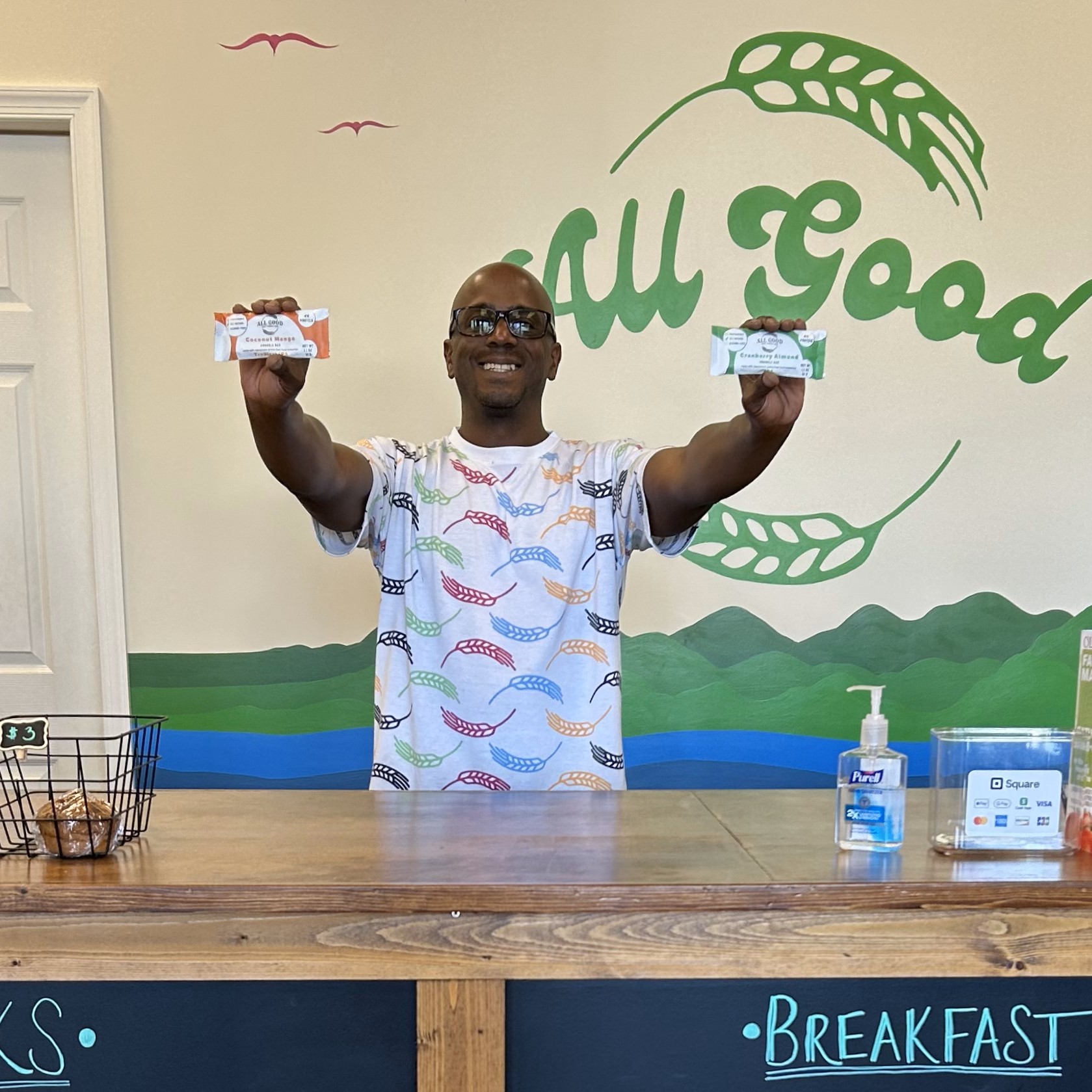
I make granola bars for a living. There is no point in my life before 2019 where that statement would make any sense to me. I got my degree in Information Technology from Virginia Tech in 2002. I went on to work for a health care company that eventually became Anthem. After 15 years or so, corporate life had worn down my spirit. I had always been a sort of entrepreneur even while working my 9-5. I was a nightclub DJ on the weekends and a high school soccer coach when I wasn’t busy spinning records.
In 2018, I got certified as a personal trainer and started training coworkers in the company gym during lunch break. By this time, I had already begun saving money and talked with my wife about quitting my job. My plan was to join my friend’s gym as a personal trainer and offer my services as a wedding DJ. I felt like if I work half as hard for myself as I do for a thankless CEO, I’d be an instant success. And so I left Anthem in the spring of 2019 to pursue these business ventures. I was able to build up some decent clientele and high-paying gigs, but it was clear that I had a ceiling on how far I could take each business.
So this is when I started making granola bars, right? Well, you have to rewind to when I was still employed. Another hobby of mine at the time was homebrewing beer. A couple of friends and myself ended up brewing dozens of ales, some better than others. But regardless of how the brew went, the last step was to throw away the used, wet grain from the beginning of the process. To me the grains smelled like bread baking and I wanted to figure out a way to eat it! I took the grains home one night and dried them in the oven. I looked up recipes for spent grain granola bars and was surprised to find a couple. After a few attempts I made a batch of chewy granola bars that I fell in love with. I shared a few bars with some coworkers and eventually they were placing orders for them.
Fast forward to September 2019 – I’m still personal training and working as a wedding DJ. By this point, my beer brewing friends and I had paused our operation. One day my former coworker called to order some of my spent grain granola bars. I was sad to tell her that due to a lack of grain, I wasn’t making the bars any longer. I suppose I had a light bulb moment right then. I thought “there are so many breweries in the area, they must have tons of grain.” The first brewer I visited was more then happy to give me a bucket of spent grain from the batch he brewed that afternoon. I literally got my business license that week and was selling the bars at a local farmer’s market the following weekend.
It’s hard to believe that was 5 years ago. Since then I have poured myself into trying make my sustainable granola bar company, well, sustainable.
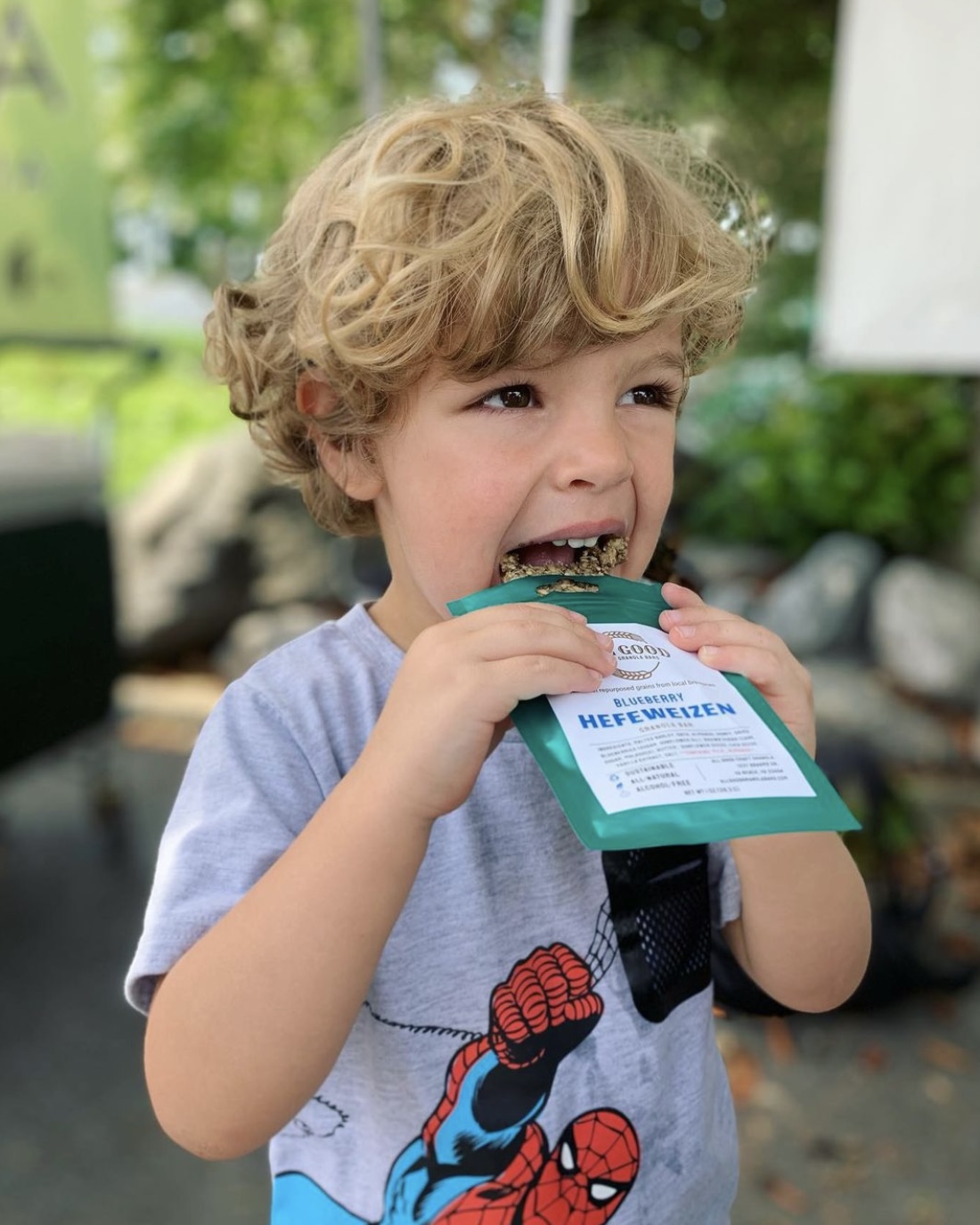
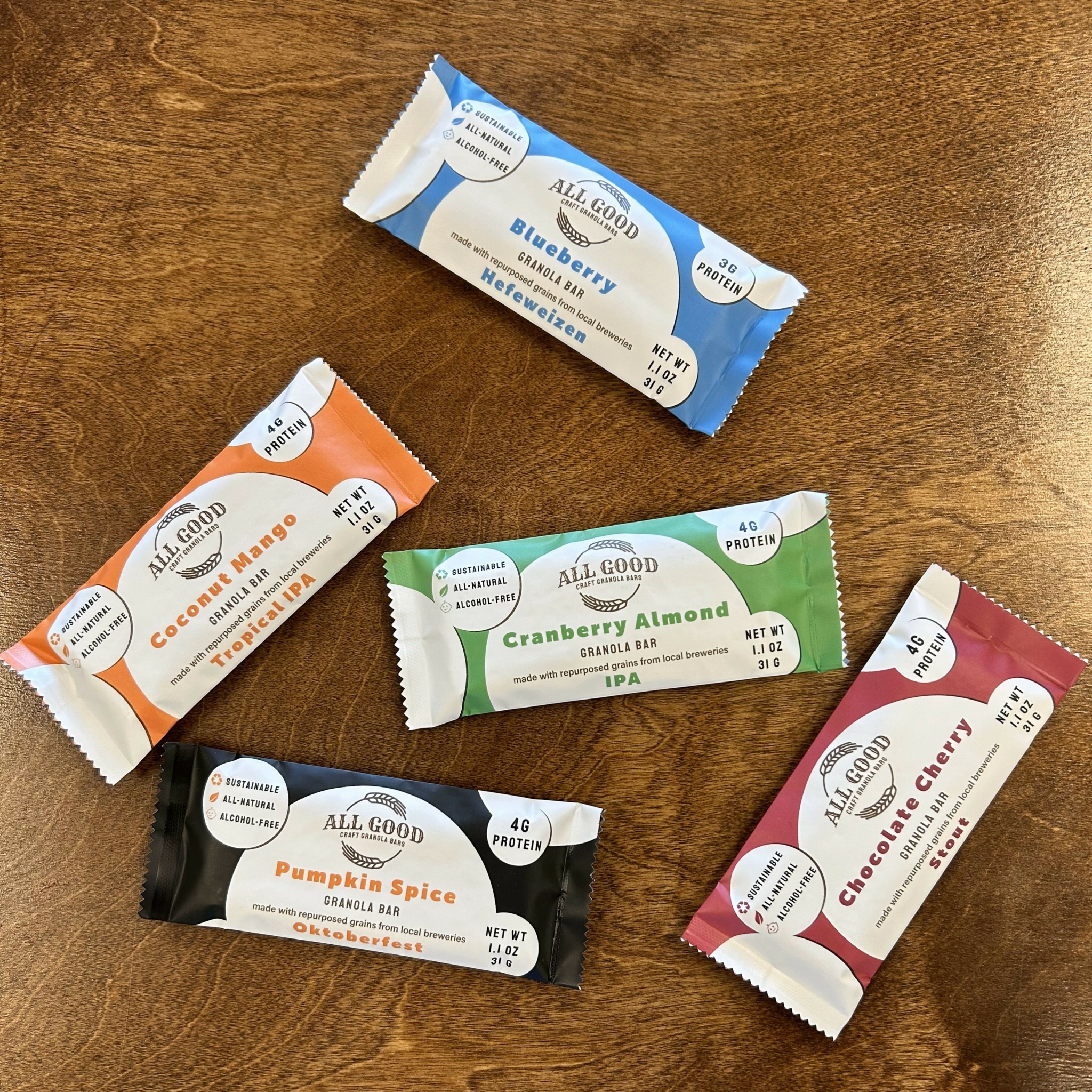
I am still a company of one, but have tons of support from family, friends and fellow business owners. We make and package all the granola bars by hand using all-natural ingredients you can easily pronounce. The bars contain no alcohol, nor do they taste like beer. They are simply our delicious effort to address the enormous problem of food waste. Our main flavors are Cranberry Almond IPA, Coconut Mango Tropical IPA, Chocolate Cherry Stout, Blueberry Hefeweizen, and Pumpkin Spice Oktoberfest.
We have partnered with a majority of the breweries in our area to upcycle their spent grain into granola bars. Getting out into the community, meeting brewery owners, and of course sampling beers has been the most fun part of the business. But the most rewarding has been volunteering for the local food bank and raising money for their efforts to fight hunger. Our ultimate goal is to help bridge the gap between food waste and food insecurity.
We’d love to hear the story of how you built up your social media audience?
Social Media has been an important part of our story from the beginning. The main focus at first was Instagram and Facebook. When I look back on those first posts I see how raw the content was. The product packaging was very basic, with labels I printed from my laptop. But I posted all the little victories along the way. And I encouraged our farmer’s market and online customers to follow us on social media. Soon we had a modest, but loyal social media following.
In the early days, the biggest growth moments came from features in traditional media and influencer marketing, I was on local television and on the front page on the newspaper. We were featured in multiple internet articles by high profile websites like QVC and Black Enterprise. We also partnered with social media influencers in the craft beer space. These partnerships also led to spikes in engagement.
Lately, I have tried to focus on expanding our reach across multiple platforms. You never know which audience needs to hear your message, so it’s a good idea to learn all the major apps. It’s also just fun to experiment with different content ideas and production techniques.

Okay – so how did you figure out the manufacturing part? Did you have prior experience?
I make and package all of our granola bars myself. At one point I talked to a copacker about potentially producing them for us, but nothing ever materialized. I don’t feel like we were a large enough company at the time to make it worth their effort. I do believe that working with a copacker will happen eventually.
In the meantime, being so close the final product means I’m adamant about quality. I’ve worked hard to develop a consistent process that I can teach to employees in the future. I suppose that will play a major factor in what manufacturers I pursue, as I never want to sacrifice the quality or integrity of the product.
Contact Info:
- Website: https://allgoodgranolabars.com
- Instagram: @allgoodgranola
- Facebook: @allgoodbars
- Twitter: @allgoodgranola
- Youtube: allgoodgranola
- Other: twitch,tv/allgoodgranola