

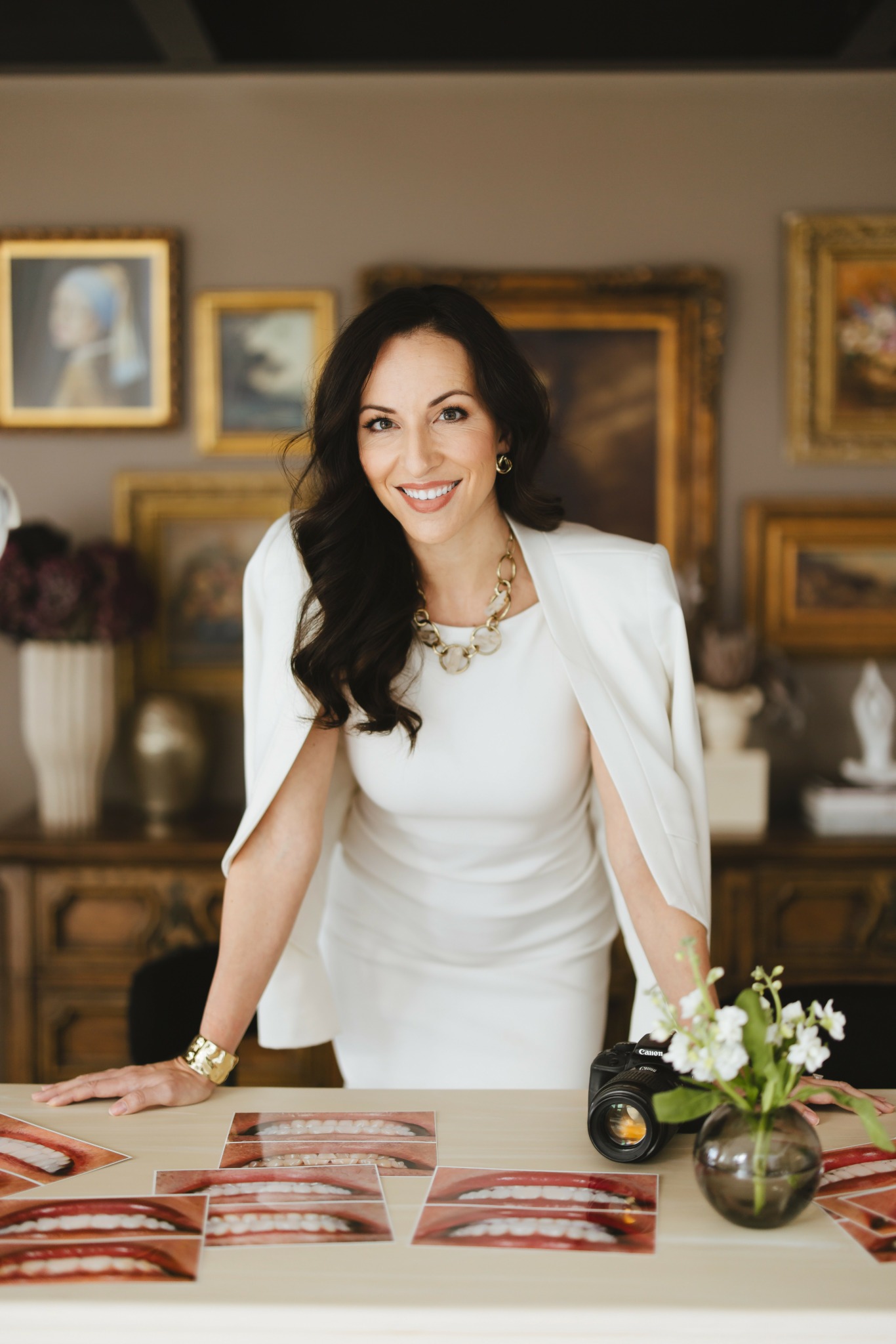

Alright – so today we’ve got the honor of introducing you to Brittany Dickinson. We think you’ll enjoy our conversation, we’ve shared it below.
Alright, Brittany thanks for taking the time to share your stories and insights with us today. Setting up an independent practice is a daunting endeavor. Can you talk to us about what it was like for you – what were some of the main steps, challenges, etc.
When I first decided to start my own practice, it seemed like a quick decision from the outside. In reality, I had been practicing for nearly a decade, honing my craft of cosmetic dentistry and loving how my work could transform a person’s life. I was quietly building my practice for 2 years when I learned of the perfect space coming available by acquiring another business. It sounds crazy, but once I found it, it was 30 days to close and I was able to move my practice there immediately!
It was totally built out, but there were still a few practical things to handle; negotiating a lease, soft furnishings, selecting equipment, working through licensing and credentialing, Evaluating my current team as well as those I acquired, all while building a brand from the ground up. On paper it sounds structured, but living it was a constant balancing act between financial pressure, and business decisions I had never been formally trained to make- all while continuing the high level of cosmetic dentistry my patients had come to expect.
One of the biggest challenges was realizing how little dental training prepares you for ownership. You go from focusing purely on clinical excellence and patient care to suddenly being responsible for marketing, operations, payroll, hiring, and long-term strategy. That shift forces you to grow quickly in areas you didn’t anticipate needing to master.
If I knew then what I know now, I would have hired a coach specifically for long-term strategy. I’ve always been a “figure it out and make it work” type, so the nitty gritty of financials, marketing etc was pretty easy to get a grip on. But for that big-picture long term thinking took me a few years to get in the flow.
I am always so excited to hear about young professionals looking to start their own practice! My advice is this: don’t wait until you feel fully ready, because that moment rarely comes. Most importantly, think of your practice as more than a clinical space. It’s a brand, an experience, and a reflection of your philosophy as a clinician.

As always, we appreciate you sharing your insights and we’ve got a few more questions for you, but before we get to all of that can you take a minute to introduce yourself and give our readers some of your background and context?
I’m the owner of my practice and a cosmetic dentist based in Chicago. I focus on helping people feel more confident through their smile. My work centers around veneers, Invisalign, and teeth whitening, but more broadly, it’s about creating results that feel natural, elevated, and aligned with each patient’s features and goals.
I got into dentistry through a combination of science and aesthetics. I’ve always been detail-oriented and drawn to precision, but I also had a strong interest in beauty, symmetry, and how small changes can completely transform how someone looks and feels. Cosmetic dentistry sits at that intersection—it’s both technical and artistic—and that’s what initially pulled me in. Over time, I realized I was less interested in doing a little bit of everything and more interested in mastering smile design and high-end cosmetic outcomes.
What I provide is highly customized cosmetic treatment. Whether it’s veneers, Invisalign, or whitening, I’m not taking a one-size-fits-all approach. Every case is designed around the individual—their facial structure, lip dynamics, skin tone, personality, and how they want to show up in the world. A big part of my process is helping patients visualize what’s possible and guiding them toward a result that looks effortless rather than “done.”
The problems I solve are often deeper than what people initially express. Patients may come in saying they want whiter or straighter teeth, but what they’re really looking for is to feel more confident in photos, more polished in professional settings, or more like themselves again. My role is to translate those goals into a tangible, natural-looking result that enhances—not overpowers—their appearance.
What sets me apart is a combination of restraint and precision. In cosmetic dentistry, more is not always better, and I’m very intentional about creating results that are refined and believable. I’m also very transparent about what each treatment can and can’t do, which builds trust and leads to better long-term outcomes. On top of that, I’ve put a lot of focus into how I communicate my work—through before-and-afters, educational content, and social media—so patients feel informed and confident before they even walk through the door.
I’m most proud of the level of trust my patients place in me, especially for life-changing treatments like veneers. These are permanent decisions, and I don’t take that lightly. Seeing someone light up when they see their new smile for the first time—and knowing it still looks like them—is the most rewarding part of what I do.
For potential patients or anyone following my work, the main thing I want them to know is that I prioritize honesty, customization, and long-term aesthetics. I’m not here to sell the most treatment—I’m here to recommend what actually makes sense for you. My goal is for people to walk away not just with a better smile, but with something that feels authentic, timeless, and fully aligned with who they are.

Putting training and knowledge aside, what else do you think really matters in terms of succeeding in your field?
Beyond clinical training, taste and judgment are what really separate good from exceptional in this field. Cosmetic dentistry is as much about knowing what not to do as it is about knowing what you can do. Developing an eye for proportion, restraint, and natural aesthetics—and applying that consistently—is critical. That level of discernment doesn’t come from textbooks; it comes from studying faces, refining your work, and being honest about outcomes.
Equally important is the ability to communicate clearly and build trust. Patients are making highly personal, often significant investments, and they need to feel confident not just in your skill, but in your perspective. Being able to guide someone, set realistic expectations, and articulate why a certain approach is right for them is what ultimately leads to the best results and long-term success.

How about pivoting – can you share the story of a time you’ve had to pivot?
One of the biggest pivots I made was rebranding my practice from a more playful, “cutesy” name to using my own name. At the time I acquired this business, it felt aligned with being approachable and different, but as my work evolved—especially as I moved deeper into high-end cosmetic dentistry—it started to feel misaligned with the level of results and experience I was delivering.
The decision to rebrand to my own name was really about stepping into a more classic, timeless identity and fully owning my work. In cosmetic dentistry, people aren’t just choosing a practice—they’re choosing the person behind the results. Putting my name on the door created a stronger sense of trust, accountability, and brand clarity. It also elevated how the practice is perceived, which matters when you’re working with patients who are making significant aesthetic investments. Looking back, it was the right move, but it required letting go of something that had already been built and being willing to evolve as my vision became more refined.
Contact Info:
- Website: https://chicagoaestheticdentistry.com
- Instagram: @drbrittanydickinson

