

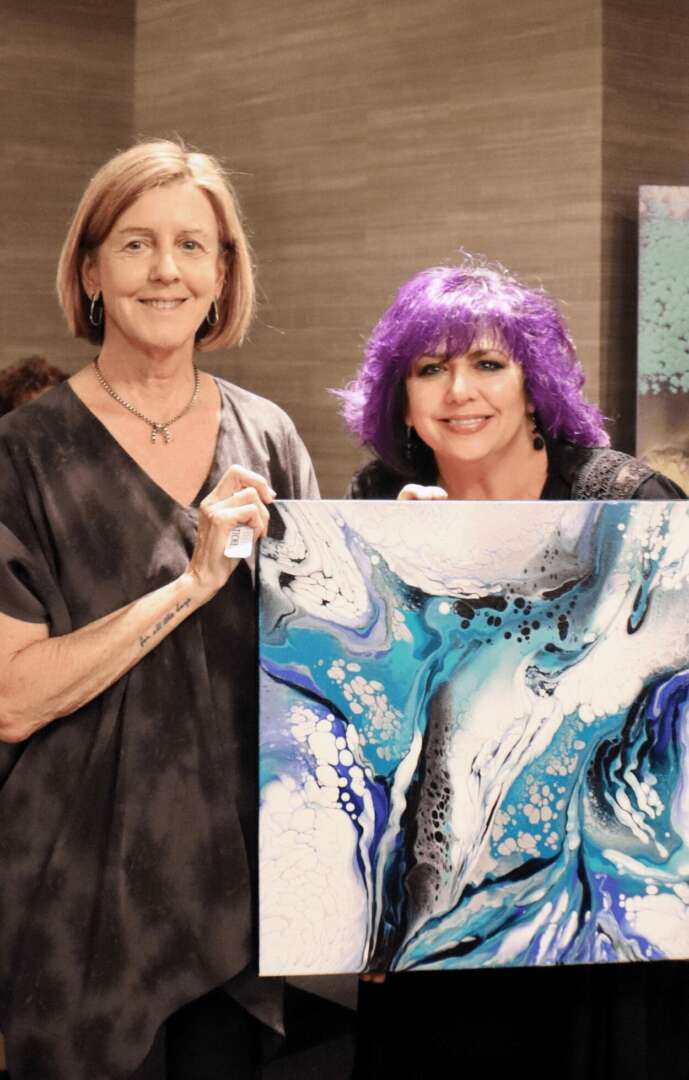

We’re excited to introduce you to the always interesting and insightful Britta Clayton. We hope you’ll enjoy our conversation with Britta below.
Alright, Britta thanks for taking the time to share your stories and insights with us today. Can you talk to us about how you learned to do what you do?
Human beings learn in all sorts of different ways. I am the “show me” learner. In other words, show me how to do it and I’ll take it from there. So I watched. Tons of artists doing tons of different types of fluid acrylic techniques. Trying to learn everything at once. Being completely overwhelmed for months. Until things finally started clicking, and I realized the number of factors involved that can affect a pour. It definitely wasn’t a one-size-fits-all art form. There was some basic science involved if you were wanting to obtain specific results. Learning the correct paint consistency for numerous techniques (which were all different!) seemed to be the number one priority. It also took some serious research into paint densities – specifically, learning the basics of the Rayleigh-Taylor Instability theory (or RTI). RTI is when two fluids of different densities are combined and create a reaction where the lighter fluid pushes on the heavier fluid. In the world of fluid acrylics, this is known as achieving “cells” in your composition, and it’s the most sought-after result in this form of art. It’s also the most frustrating for those that want to side-step the research and aim for instant gratification instead.
When you begin falling down the rabbit hole of fluid acrylics, everything is new and you’re unfamiliar with it all, so when you’re watching tutorials, you don’t necessarily know what to be looking for, or what questions to ask. Knowing what I do now, instead of just watching a video once or twice, I would’ve watched it multiple times, focusing on something different each time. Consistency of paints? Brands and colors used? Medium(s) used? Opacity and/or transparency of the paints? The answer to each of these questions is a major factor of how a poured piece will turn out.
Keeping an open mind and being willing to experiment are essential if you want to be successful at pour painting. Even though it’s hard not to do, comparing your work to the work of other artists, usually artists that have been doing this longer and are much more experienced, is a recipe for self-doubt and disappointment. Each person progresses at their own speed. We all have “ah-ha” moments when something we were previously having trouble with suddenly becomes crystal clear. It takes time and practice, just like any other thing in this world you want to be good at. How proficient you become depends on how deeply your passion for creating beautiful art goes.
Awesome – so before we get into the rest of our questions, can you briefly introduce yourself to our readers.
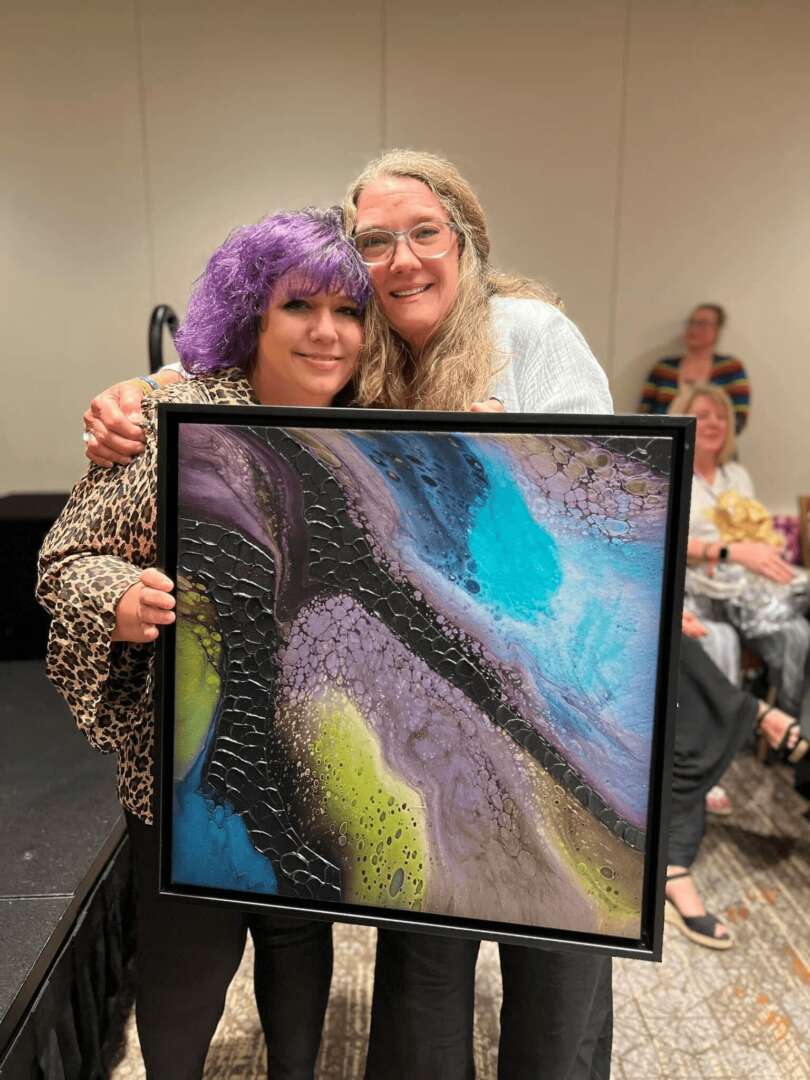
My name is Britta Clayton and I’m a fluid acrylic artist living in Houston, Texas. During the day, I work as a Project and Administrative Coordinator for a local remodeling company in Houston Heights. Much of my creative inspiration is drawn from both the bold and subdued styles of decor I see in my day job. Being a single girl leaves me a lot of time to focus on this passion – putting color to canvas and creating something conversation-worthy and unique. I believe that your art should be just as colorful and one-of-a-kind as you are.
I was raised in New Mexico and quickly developed a love and appreciation for the soothing, earth-tone landscape that surrounded me there. You’ll see many of these earth tones incorporated into my art as “you can leave NM, but it never really leaves you”.
As many people remember, 2020 became the year of monotonous and mundane isolation with little to do while stuck at home. I figured this would be a good time to get some household improvements done, namely, resurfacing my kitchen countertops using epoxy resin. While I loved the results of resin, I didn’t like the fumes or the mess, so one day as I was scrolling through endless YouTube videos, I came across a “fluid acrylic” artist and was completely blown away. The abstract works of art that I was looking at were incredible and it was all brushless. Instead, the paint was mixed with medium until it was fluid enough to pour onto a surface and manipulated by tilting the substrate. It was the same concept that I had learned with resin, but using acrylic paints instead. Needless to say, I was hooked. I was especially inspired by the works of two specific artists and I began following them religiously, soaking in every bit of instruction they were willing to share. This was in October 2020. From that point, there was not a day that went by that I was not pouring paint.
The love of physical beauty is universal – and art is not excluded. Art can make us feel, it can make us remember. It can transport us to another place in our memories that we may have forgotten, or it can trigger a response of either positive or negative emotion. The right piece on a wall coordinated with its surroundings can have a calming, zen-like effect. It can create a sanctuary, a safe haven. It can draw you in to another world. Art is powerful.
Creating art has never been about the money for me. It’s about creating something stunning that speaks to the deepest part of a person. It’s about watching your client’s face light up as your installing their new piece of art on the wall of their home, watching the transformation of a lifeless and dull space into something that brings such dimension, ambiance and emotion to the room that you can literally feel it. It’s about creating joy – both on the canvas and in people’s lives. That’s why I do what I do. I work with clients to create something not only in their color scheme and style but within their budget, because everyone deserves to own beautiful art.
What can society do to ensure an environment that’s helpful to artists and creatives?
Unfortunately, I think the people are taking less of an interest in the arts in general, particularly in schools. It seems that music, theater and traditional art classes are the first to go when budget cuts must be implemented, so they’re not viewed as a necessity in our children’s education. THEY SHOULD BE. The arts are a safe and healthy way of self-expression. It’s how the prodigies of the world are born. Art therapy has been proven to help children who have experienced trauma, it allows them to put their feelings down onto a piece of paper or canvas, and it helps them build self-confidence and self-respect. Keeping this educational genre in schools is vital to stimulating the creative passion in our young ones that will allow them to grow into well-balanced young adults.
There are so many ways you can support local artists in your immediate area that cost you nothing. Visit a gallery and talk to the artists in person. You’ll experience their passion from just hearing about their art and what inspired them to make it. Showing a sincere interest can go a long way. You can promote them on social media for free, as well as leave them positive reviews. You don’t have to purchase a piece of art to love it, and it costs you nothing to share it with your friends and family on various social platforms, such as Facebook. If you’re a business owner and have wall space available in your work area, consider allowing a local artist to display some of their artwork for sale. Most artists are happy to pay a small commission. You get the benefit of having those walls dolled up while providing the artist with a legitimate sales venue.
Of course, if you don’t mind spending some money, you can always purchase or commission a piece of artwork directly from the artist or gallery. Many artists have personal Patreon accounts, which allows their fans to show their support by sending money in the form of a monthly subscription. If the artist is on YouTube, you can also sign up for a subscription to that artist.
What do you find most rewarding about being a creative?
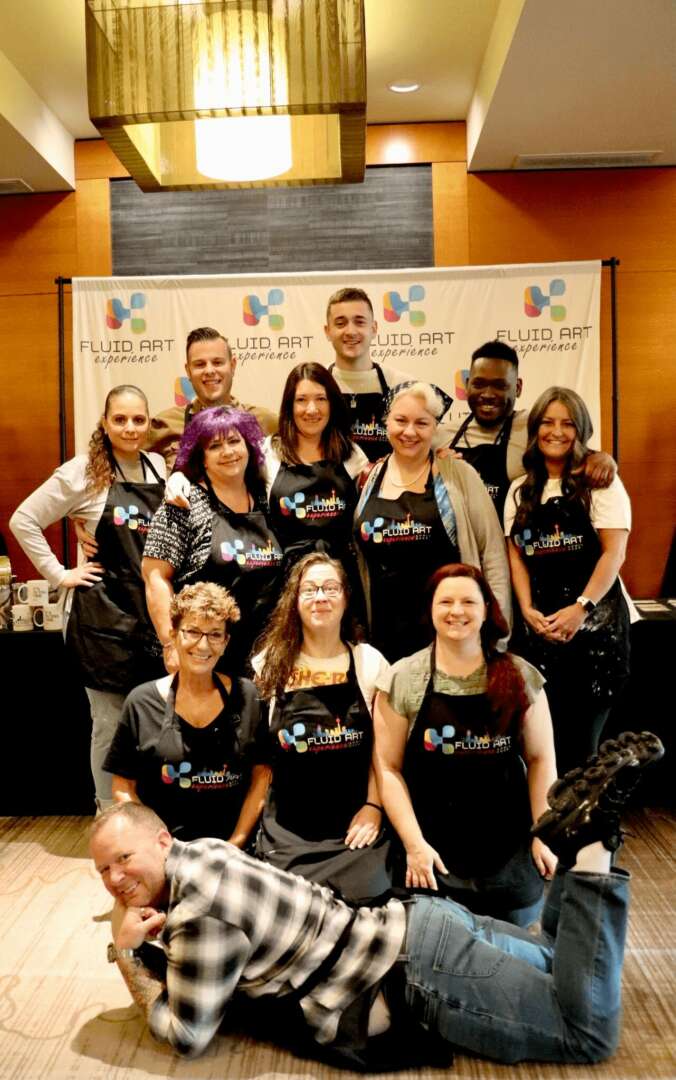
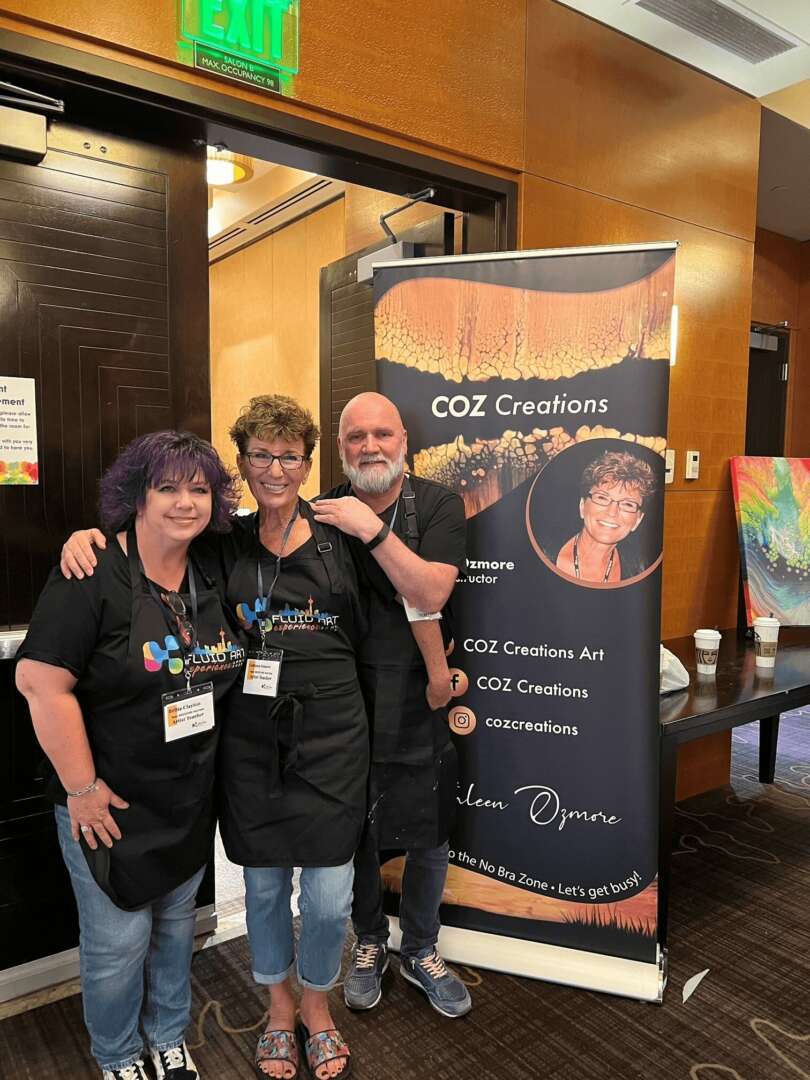
The most rewarding aspect that I’ve experienced as an artist is the COMMUNITY. Not the literal community I live in, but the worldwide community of artists and creatives that I’ve come to know and love. Thanks to today’s technology, we are colorfully connected worldwide in a solidarity of brother and sisterhood. Getting to meet, in person, the artists that inspired me to begin my adventure in fluid acrylics was a phenomenal experience! And after pouring for only two years, I was invited to be a guest instructor at the Fluid Art Experience in Seattle, WA, where I taught two flow art classes in April 2022. FAE is a fluid acrylic educational event held twice a year in various locations around the country. I was fortunate enough to have been asked to return to instruct in Asheville, NC in May 2024, as well as Dallas in September 2024. Teaching this incredible art form to others and sharing with them the joy it has brought me has been another rewarding step of this amazing journey.
Contact Info:
- Website: https://www.BrittClaytonDesign.com
- Instagram: www.Instagram/Britt_Clayton_Design
- Facebook: https://www.Facebook.com/BrittClaytonDesign
- Youtube: https://www.youtube.com/channel/UCaQ1EMk9ru2yVsFbKHI5Uig
- Other: https://www.facebook.com/britta.clayton1
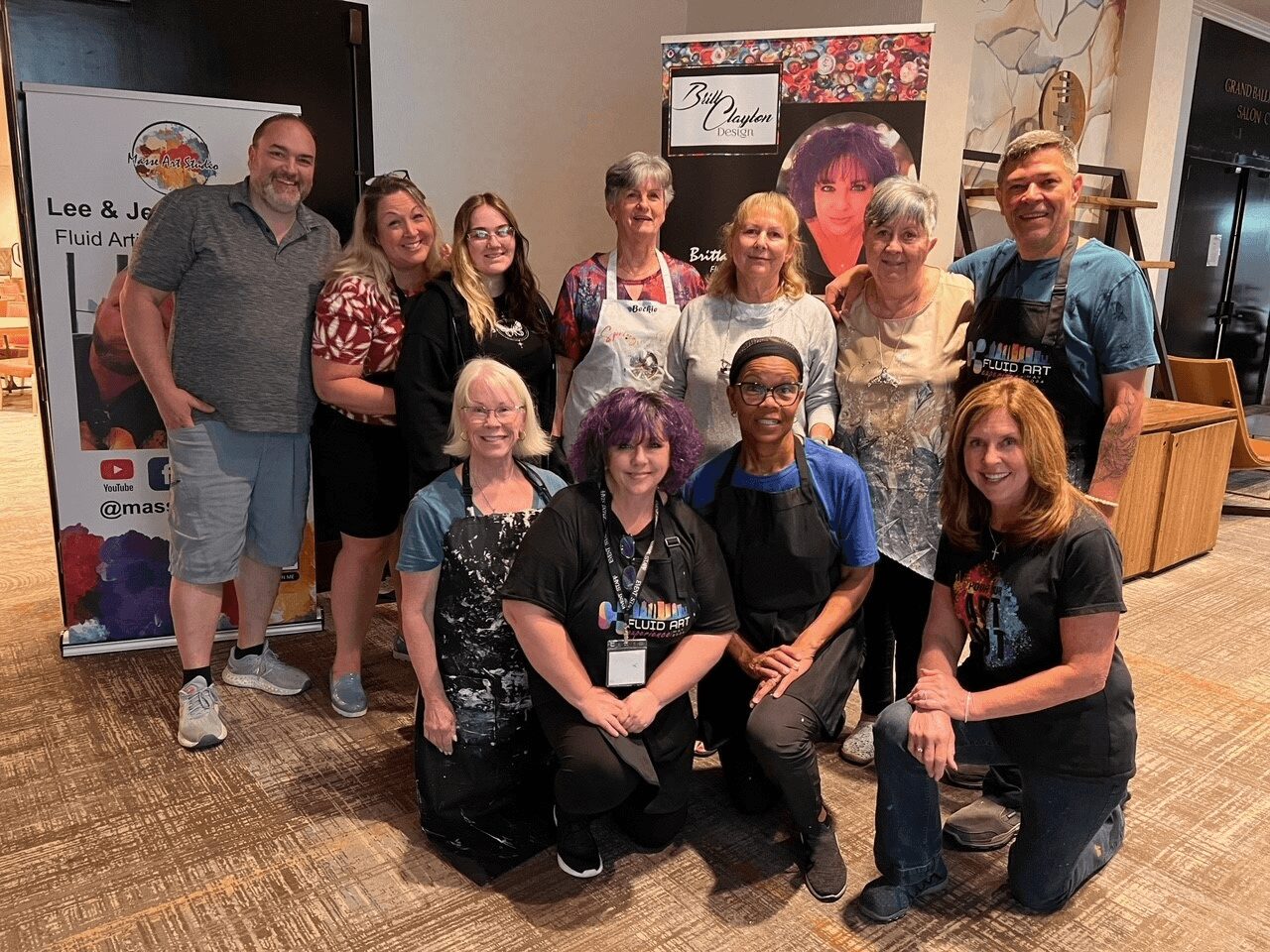
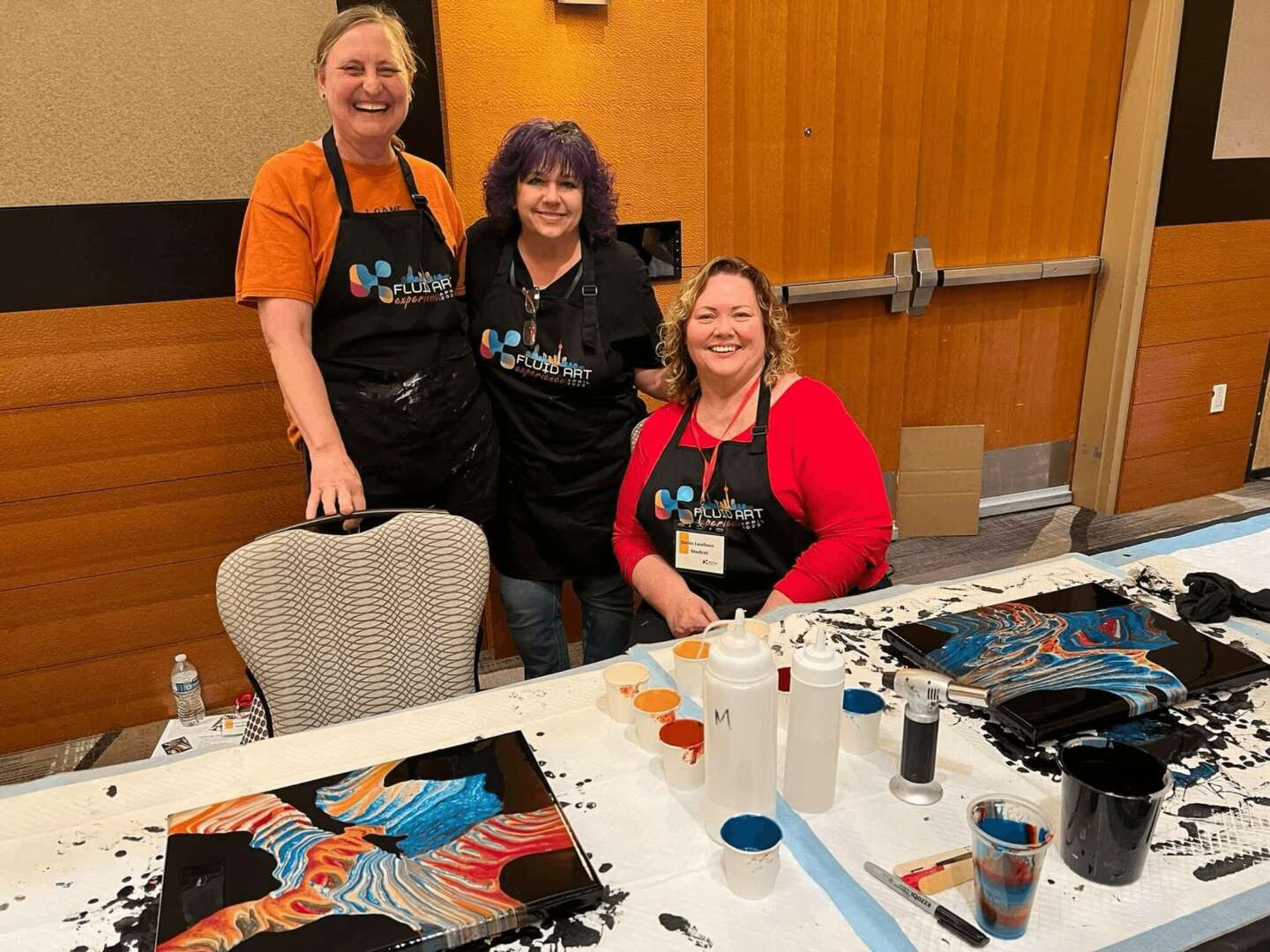
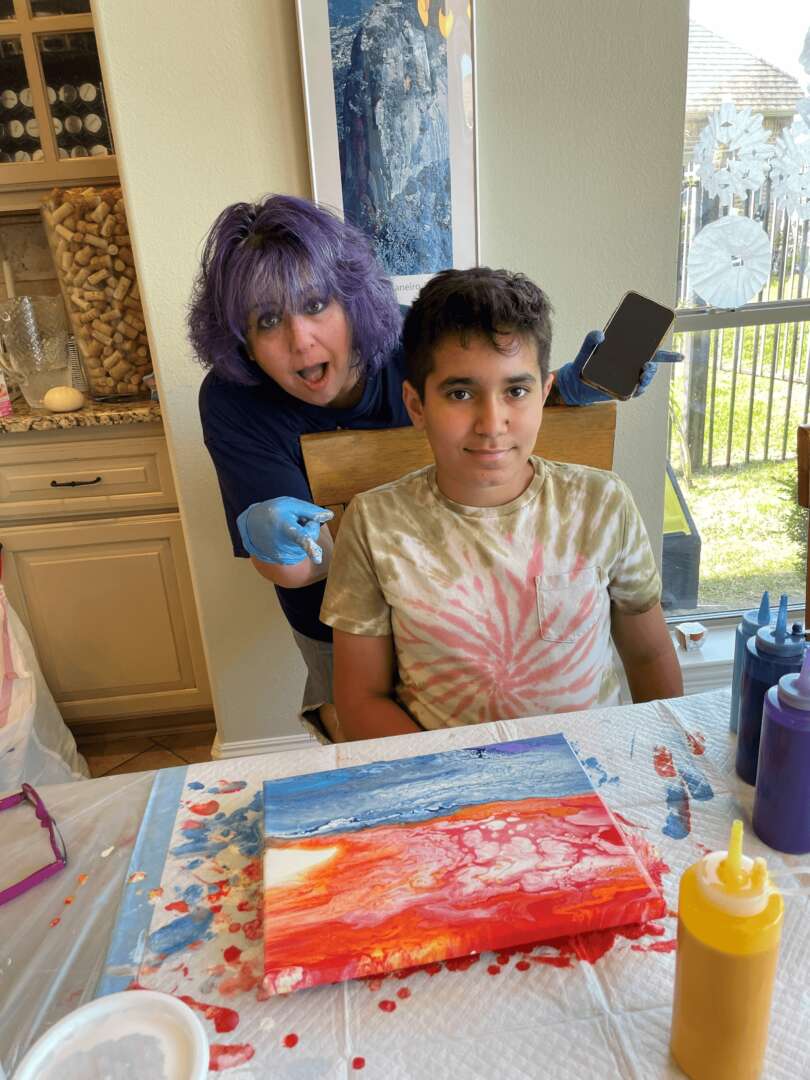
Image Credits
N/A