
We were lucky to catch up with Bridget Davies recently and have shared our conversation below.
Bridget, appreciate you joining us today. Are you able to earn a full-time living from your creative work? If so, can you walk us through your journey and how you made it happen?
Yes, I now make a full-time living from my art, but it definitely wasn’t like that from day one.
I’ve always worked in design, but around 17 years ago I decided to see if I could build a career as a visual artist. I studied fashion at university and was always particularly drawn to the illustration side of the course. Combined with a long-held fascination with the work of artists and illustrators from the 1920s to the 1950s, it naturally led me towards painting women and fashion as my subject matter.
In the beginning, I experimented with lots of different mediums before gradually finding my way to ink, which is what I mainly work with today. For quite a few years, I balanced my art practice with part-time work while I built my portfolio, found my audience, and worked out how to turn my passion into a career.
One of the first big milestones was doing my first art fair in Brighton. That ended up opening a lot of doors. It led to my first publisher, my prints being sold through John Lewis, and representation with my first London gallery. At the time, it felt like a huge step forward and showed me that there was a market for what I was creating.
I spent several years doing artist-led art fairs around the UK, and those fairs played a huge role in helping me develop my work and build my career. Another major turning point came when I started exhibiting at art fairs in London. That’s where I met galleries that went on to represent my work and introduce it to a much wider audience. Through those relationships, my work began travelling to art fairs in the US and Asia, which helped me reach collectors around the world.
These opportunities also led to my work being exhibited in central London and to several solo shows. As my career developed, I was approached by Laurence King Publishing to write a book on ink, which was a particularly rewarding project given how important the medium had become to my own practice. Around the same time, I stopped doing the artist-led fairs that had helped launch my career, simply because there were only so many hours in the day. My focus had gradually shifted towards gallery exhibitions, international art fairs, licensing projects and other opportunities that had grown out of those early years of exhibiting.
Licensing has also become an important part of my career. Through social media and Pinterest, my artwork was discovered for products sold by retailers such as Anthropologie and Nordstrom. It’s been exciting to see my work reach people in different ways, while also creating additional income streams alongside selling originals and prints.
Looking back, if I had to identify the single most important factor in building my career, it would be art fairs. They gave me the chance to meet galleries, publishers, collectors and other artists face-to-face, and many of the opportunities that followed can be traced back to those early events. Honestly, I’m not sure I could have sped it up much. I was always fairly good at putting myself out there and saying yes to opportunities. Looking back, a lot of what helped build my career came down to consistency and time. One opportunity led to another, and many of the bigger breaks came from relationships that had been developing for years. The biggest lesson for me has been to keep showing up, keep making the work, and trust that those small steps add up.
There wasn’t one magic moment where everything changed. It was a series of small steps, opportunities and relationships that built on each other over time. Looking back now, it’s amazing to see where that first art fair in Brighton eventually led.

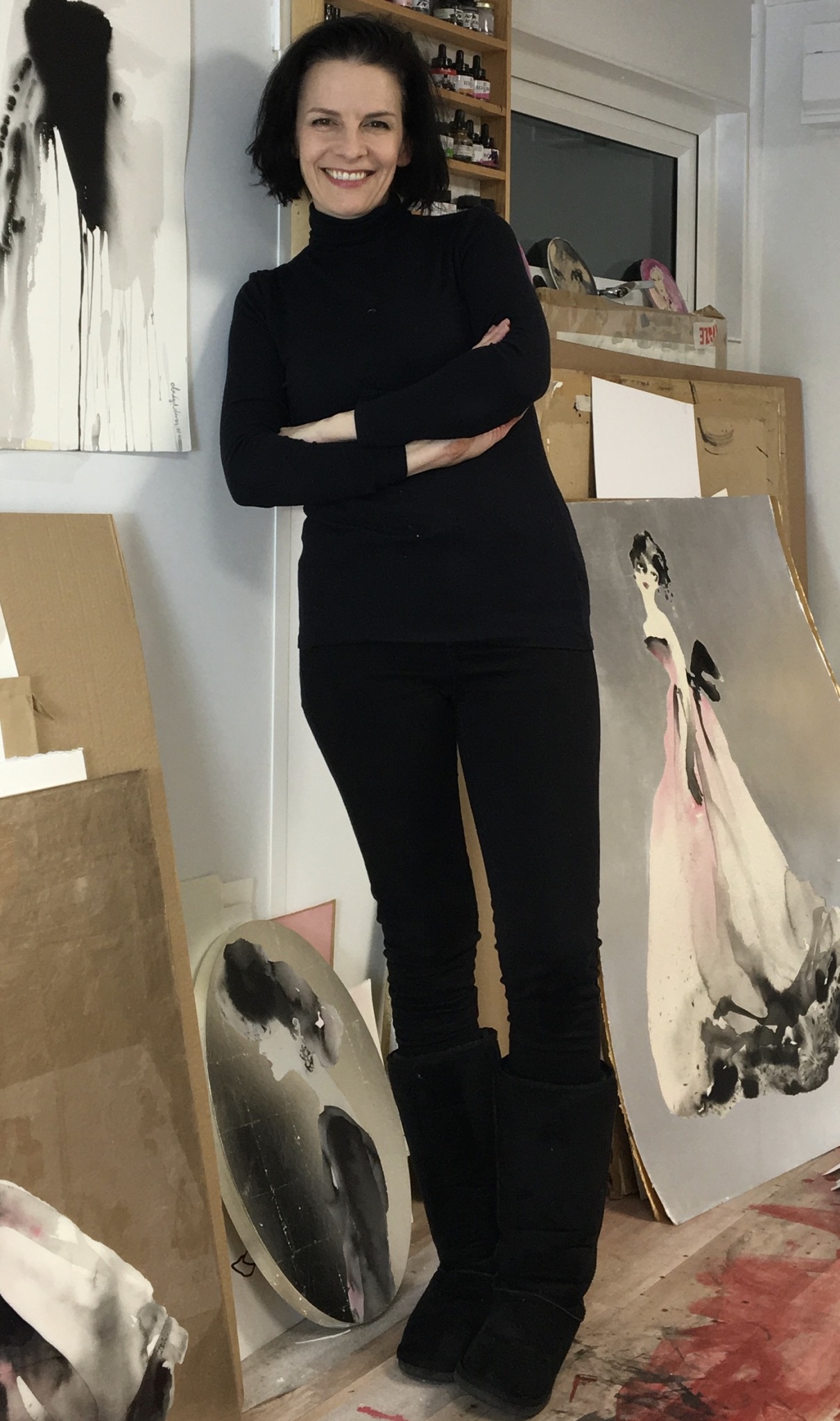
Great, appreciate you sharing that with us. Before we ask you to share more of your insights, can you take a moment to introduce yourself and how you got to where you are today to our readers.
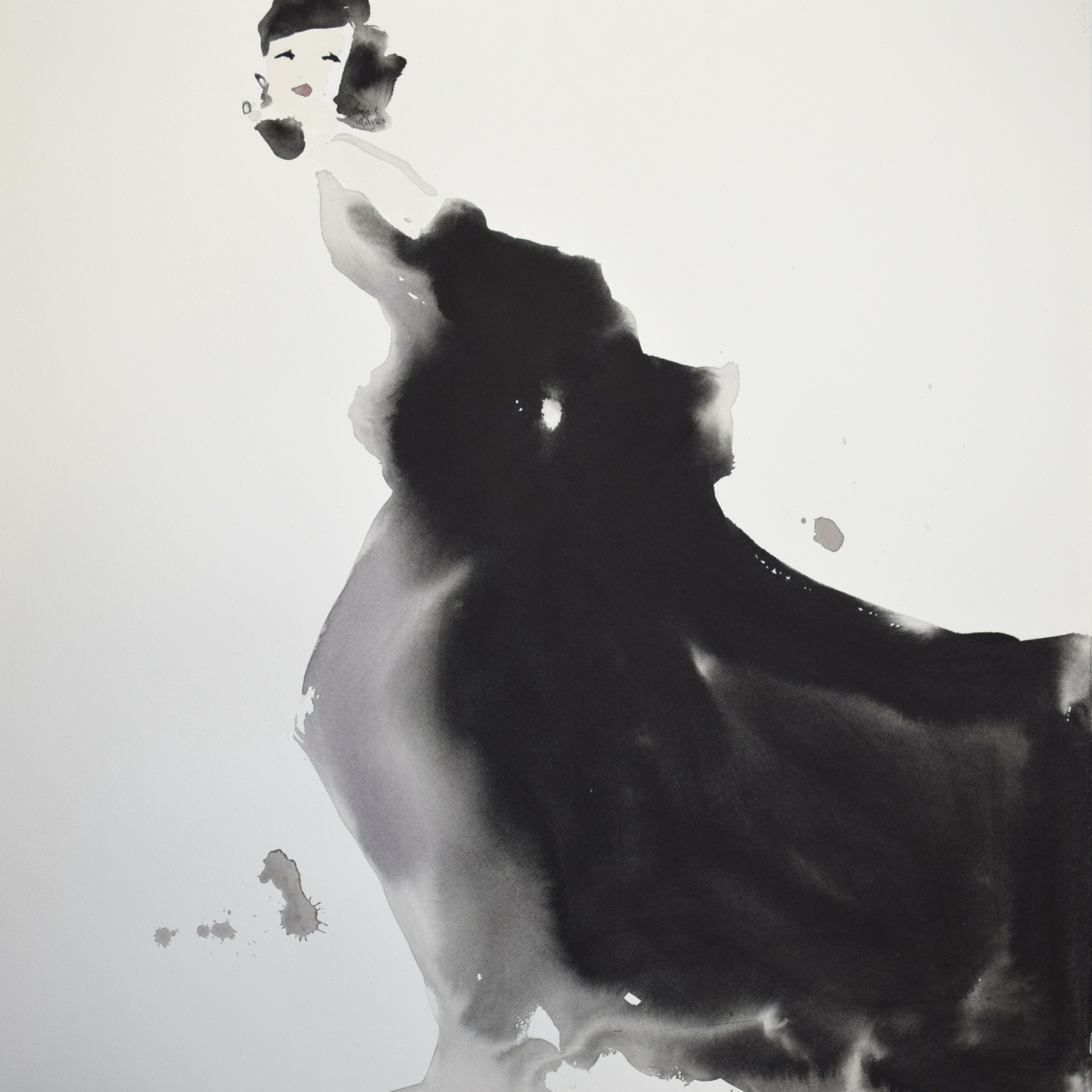
What I love most about ink is its unpredictability. While there is a level of control, the medium often has a mind of its own, which can lead to unexpected and exciting results. I am quite experimental in my approach and enjoy exploring the space between abstraction and representation, allowing marks and washes to become an important part of the finished piece.
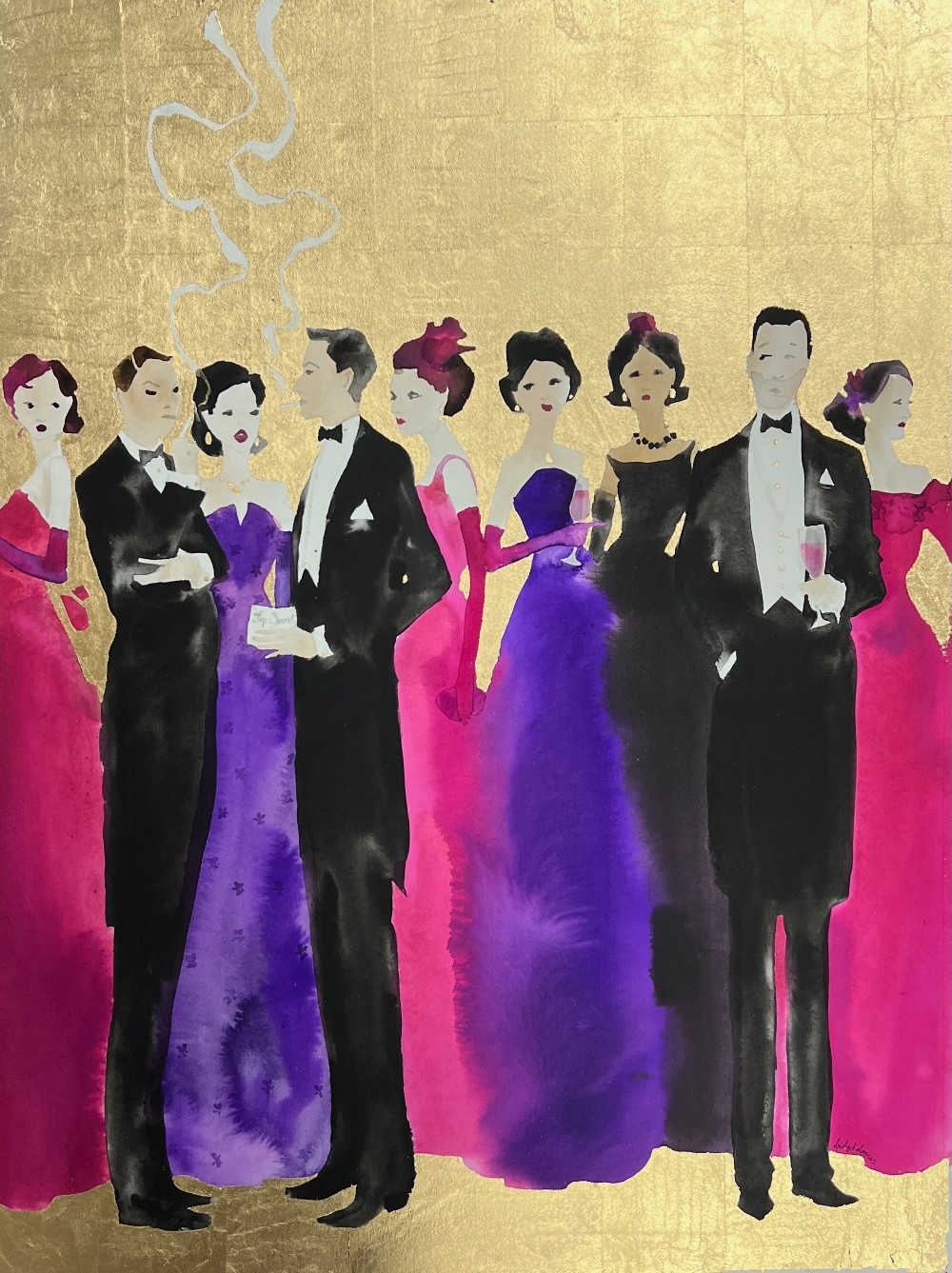
The women in my work are often stylish, elegant and confident, with a mischievous streak. I’m drawn to the glamour and sophistication of bygone eras because they have a timeless quality that never seems to go out of style. For me, the glamour of eveningwear is intertwined with desire, attraction and the rituals of courtship. I’m fascinated by the lengths we go to in order to attract one another and the stories we tell about ourselves through what we wear.
I like my paintings to have a sense of drama, flirtation and intrigue. While the work is rooted in fashion and elegance, I’m also interested in capturing moments that feel slightly open-ended. I enjoy art that makes you stop and wonder, and I hope my work invites the viewer to do the same. Ultimately, I’m creating a world that people want to be part of – a world filled with glamour, confidence, champagne and a touch of mystery, which I hope brings a sense of joy and possibility. If people look at one of my paintings and wish they could step into that world for a moment, then I feel I’ve done my job.
One aspect of my work that I particularly value is its accessibility. Someone might invest in a large original painting, but they can also enjoy the work through an affordable print. I like the idea that my artwork can be collected and appreciated by people at different stages of their collecting journey.
The achievement I am most proud of is writing my book on ink for Laurence King Publishing. It was one of the most challenging projects I’ve undertaken, but also one of the most rewarding, as it allowed me to share some of the techniques and processes behind my work and hopefully inspire others to experiment with the medium themselves.


What’s a lesson you had to unlearn and what’s the backstory?
One lesson I had to learn was not to put all my eggs in one basket.
When I first started out, I think I viewed success in quite a traditional way. I imagined that finding the right gallery representation would be the key to building a career. While galleries have played a hugely important role in my journey, I’ve learned that a sustainable creative career often comes from multiple avenues working together.
Over the years, opportunities have come from art fairs, galleries, print sales, licensing, publishing, social media and retail collaborations. Each has introduced my work to different audiences and created different opportunities. Having that variety has not only made my business more resilient, but has also allowed me to reach people who might never have discovered my work through a gallery alone.
Looking back, I don’t think there is one perfect path to success as an artist. Every artist’s journey is different, but for me the biggest lesson has been to stay open to opportunities, even if they don’t fit the plan you originally had in mind.


We’d love to hear a story of resilience from your journey.
One period that really tested my resilience was writing my book on ink for Laurence King Publishing. It was a fantastic opportunity, but for around six months I was effectively doing two full-time jobs at once.
Alongside maintaining my art practice and creating new work, I was also researching, writing, editing and curating the content for the book. Most days started early and finished late, and it wasn’t unusual for me to be working from 8am until 8pm, seven days a week.
What made it particularly challenging was having to balance two very different creative roles at the same time. On one hand I was creating and exhibiting my own work, and on the other I was researching, writing and curating a book. It meant constantly switching between making art and explaining the processes behind it, which required a huge amount of focus and discipline.
Looking back, it taught me a great deal about discipline, time management and perseverance. It was one of the most demanding periods of my career, but also one of the most rewarding. Seeing the finished book in print made all those long days worthwhile, and I’m incredibly proud that it continues to help people discover and experiment with the medium of ink.
Contact Info:
- Website: https://www.bridgetdaviesart.com
- Instagram: https://www.instagram.com/bridgetdaviesart/
- Facebook: https://www.facebook.com/BridgetDaviesArt/
- Linkedin: https://www.linkedin.com/in/bridget-davies-90479b43/
- Twitter: https://x.com/BridgetDavies1