

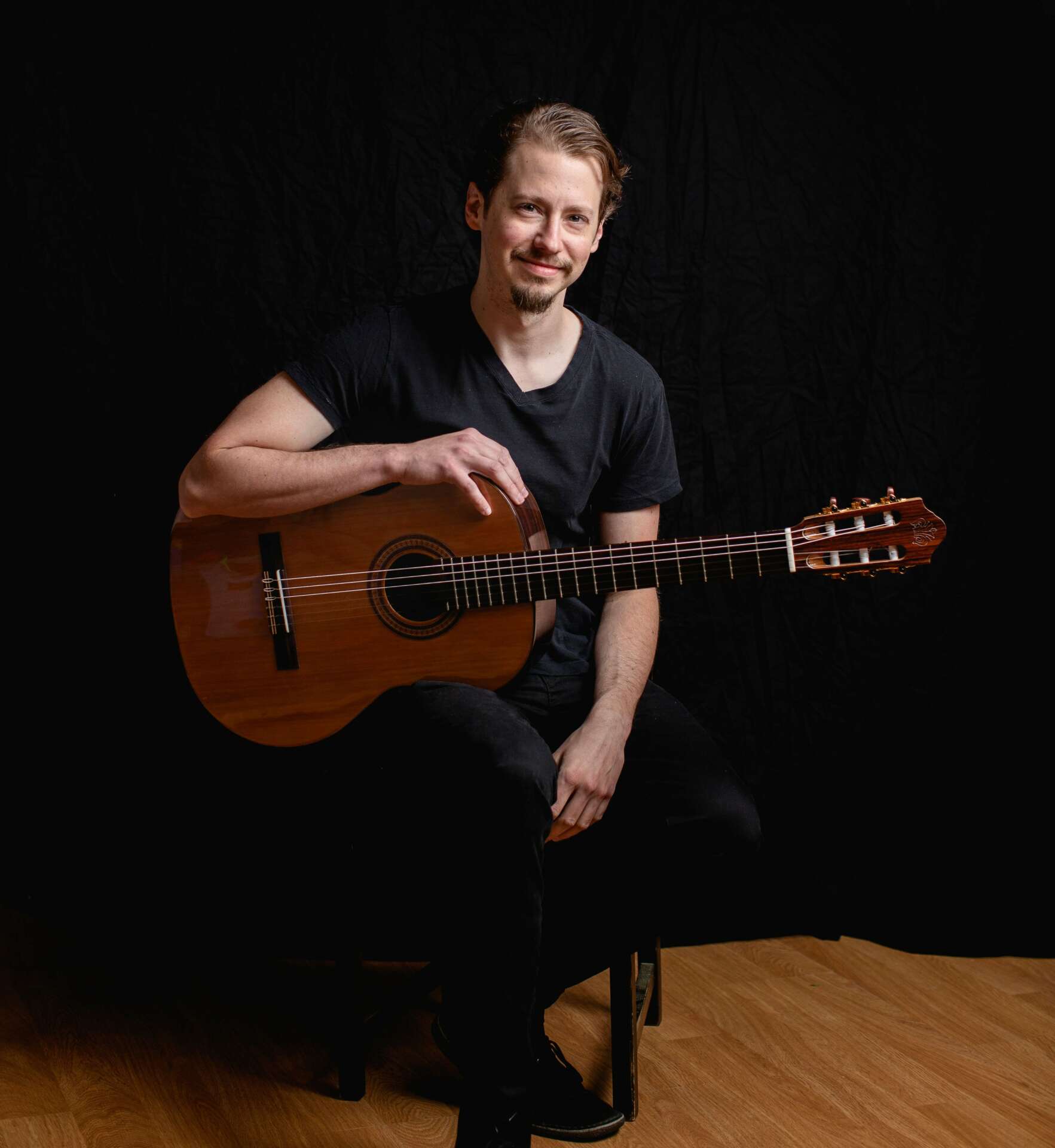

We’re excited to introduce you to the always interesting and insightful Brett Vaughn. We hope you’ll enjoy our conversation with Brett below.
Brett, looking forward to hearing all of your stories today. Learning the craft is often a unique journey from every creative – we’d love to hear about your journey and if knowing what you know now, you would have done anything differently to speed up the learning process.
Any artist, be it musician, sculptor, painter, author, etc. develops skill out of sheer passion and desire. It’s the love of the art form itself that made us want to get involved, so it is that same love we use to propel and motivate ourselves to continually achieve more. As a guitarist, the process began organically by learning bits and pieces from books, magazines or other guitarists I might meet at a jam or music store. Eventually, my ability to pick things up by ear got better and better, so my reliance on outside tools diminished. Ultimately, because I desired to take my skills to a professional level, I went to Berklee College of Music in Boston where my knowledge was formalized and I was given tools not just of a guitarist, but of general musicianship.
My experience while in music school showed me that I had to play catch up compared to many of my peers who grew up with formal music training backgrounds. In a way, I’m grateful that I had this pressure because it only strengthened my resolve not to let these deficiencies prevent me from attaining all that I could. However, if I were to send a message to my eleven year old self, I would say to learn to read music immediately, and get formalized training. Doing so would have saved me a great deal of time and guesswork. However, to play devil’s advocate on myself would be to say that a player’s unique style and personality is developed in these shadows of naivety, so I do not think that one size fits all in this regard.
The essential skills of the guitarist are a shallow layer above the substrate that is the skillset of the competent Musician. That is to say there are skills specific to the instrument of the guitar, but that they are secondary to the skills of the Musician. The Musician understands how keys, scales and chords are constructed. The guitarist is responsible for assimilating this knowledge to their chosen instrument. I would also suggest to any musician to emphasize versatility in genre and style. The more styles that one studies, listens to and absorbs, the more colors and tools at the disposal of the musician, and the more original concoction of flavor to be cultivated.
The major obstacles to growth are always time and motivation. Desire is the key. If you are led by desire, motivation springs forth and you will simply create the time to work on your craft.
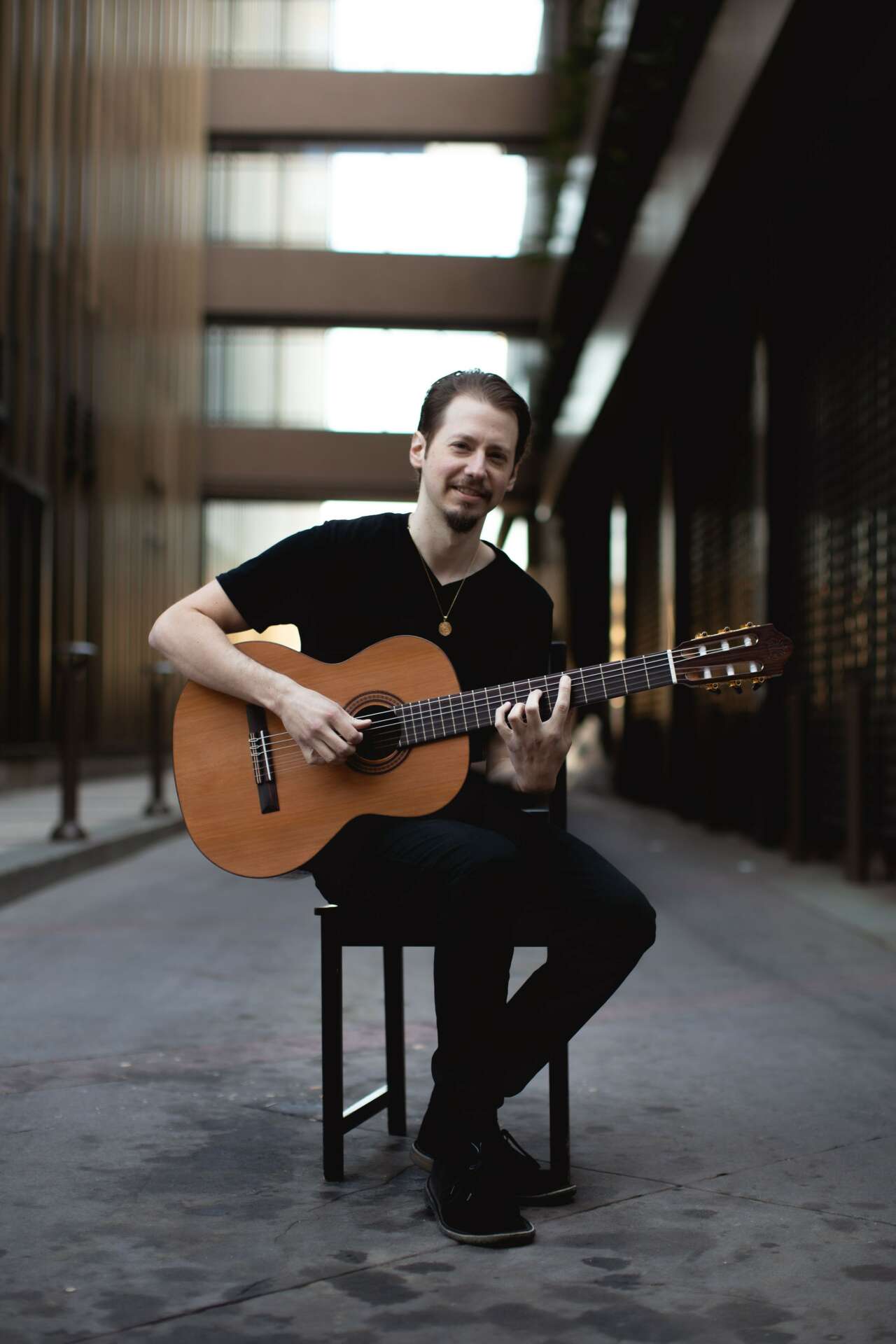
As always, we appreciate you sharing your insights and we’ve got a few more questions for you, but before we get to all of that can you take a minute to introduce yourself and give our readers some of your back background and context?
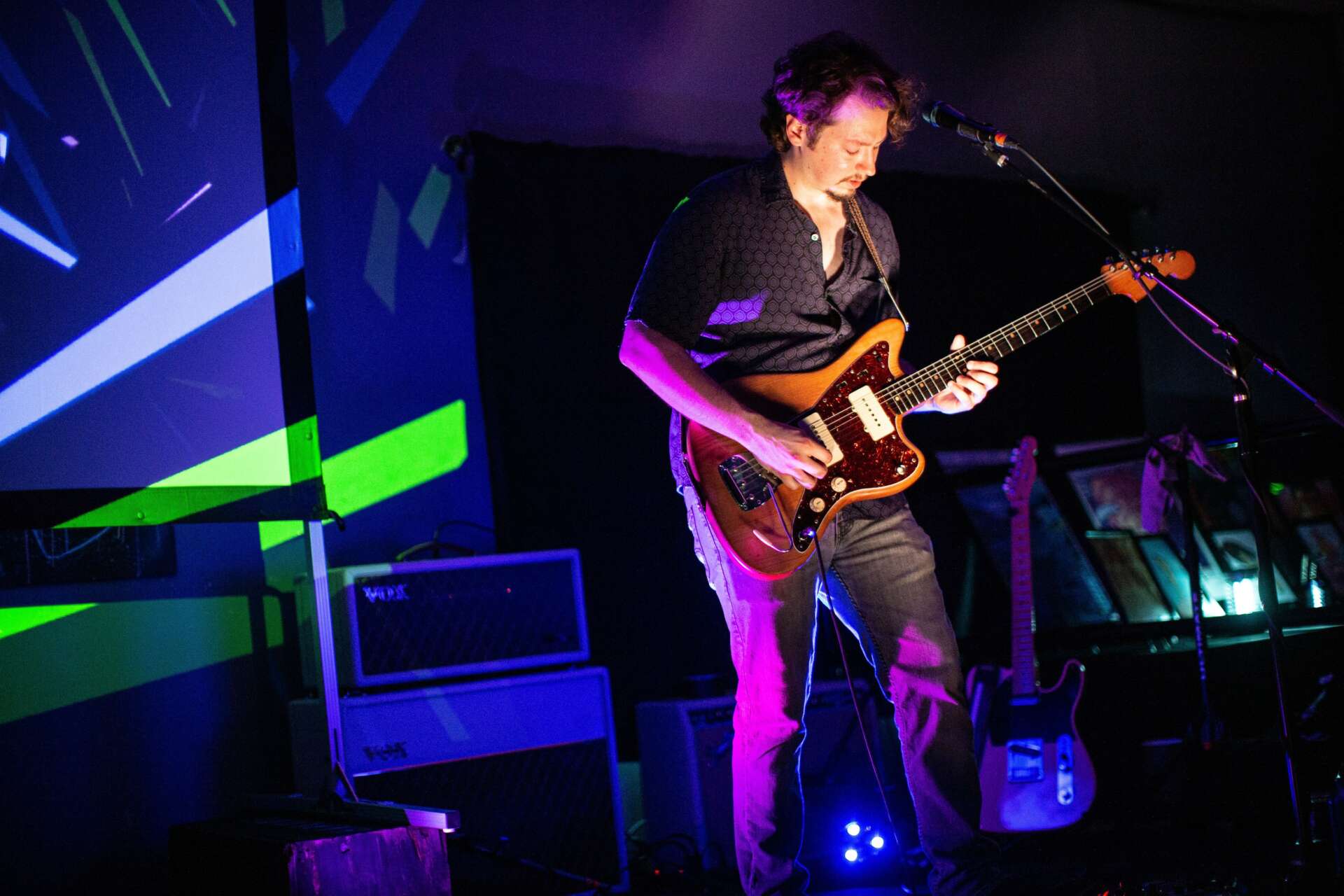
I have been a guitarist for twenty-three years and a vocalist for thirteen years. My father and grandmother were both musicians, and I had a fascination for music from a very early age. My irresistible urge to play guitar came about at age eleven, upon hearing Black Sabbath for the first time, and just being awestruck at the dark atmosphere and immense power of the music. I had heard and enjoyed other rock bands prior, but none had nearly the same effect. Since that dawning of my musical life, I have studied, absorbed and grown to love a vast range of musical styles from blues, jazz, gypsy jazz, funk, all eras of classical music, traditional and outlaw country, and more. My education at Boston’s Berklee College of Music solidified a foundation of skill and approach that I utilize in all that I do musically and educationally.
As a session player, I have performed virtually all styles listed above and more. I also have extensive experience as a songwriter across styles, having released my own original music. As a guitar instructor, I have a very thorough and supportive approach to teaching students, as I build Google Drive folders tailored to each specific student, filling it with relevant materials on their areas of interest. I am proud of the bond I create with my students, delving deep into the sonic sphere and exploring the possibilities.
In your view, what can society to do to best support artists, creatives and a thriving creative ecosystem?
Currently, musicians’ ability to generate revenue from their work is seemingly at an all-time low. Streaming provides fractions of pennies per stream, there are even less venues to perform at than ever post-Covid, and many venues now demand a cut of artists’ merchandise. Simply put, the best way to support independent artists is to buy directly from them. Buy their CD’s, vinyl their t-shirts.
Is there a particular goal or mission driving your creative journey?
The creative journey itself is what carries me on, not the other way around. It’s a feeling of desire to explore realms of expression, just as much as the feeling that there are things within yourself that need to be expressed. I have chosen to pay attention to this inner dialogue and facilitate it by any means necessary. In no way is it a convenient way of living, but I fear what my life would be if I chose to ignore it for the comforts of normalcy. Life always feels worth living through the experience of creative fulfillment, and there are few, if any, other experiences life has to offer that measure up.
Contact Info:
- Website: www.brettvaughn.com
- Instagram: www.instagram.com/inmybookofspells
- Facebook: www.facebook.com/brettvaughnmusician
- Youtube: www.youtube.com/brettvaughn
- Other: www.tiktok.com/@inmybookofspells
Image Credits
Elle Jaye Photography