
We caught up with the brilliant and insightful Brandon Wetzstein a few weeks ago and have shared our conversation below.
Brandon, thanks for taking the time to share your stories with us today What’s the backstory behind how you came up with the idea for your business?
The idea came from multiple angles converging at once.
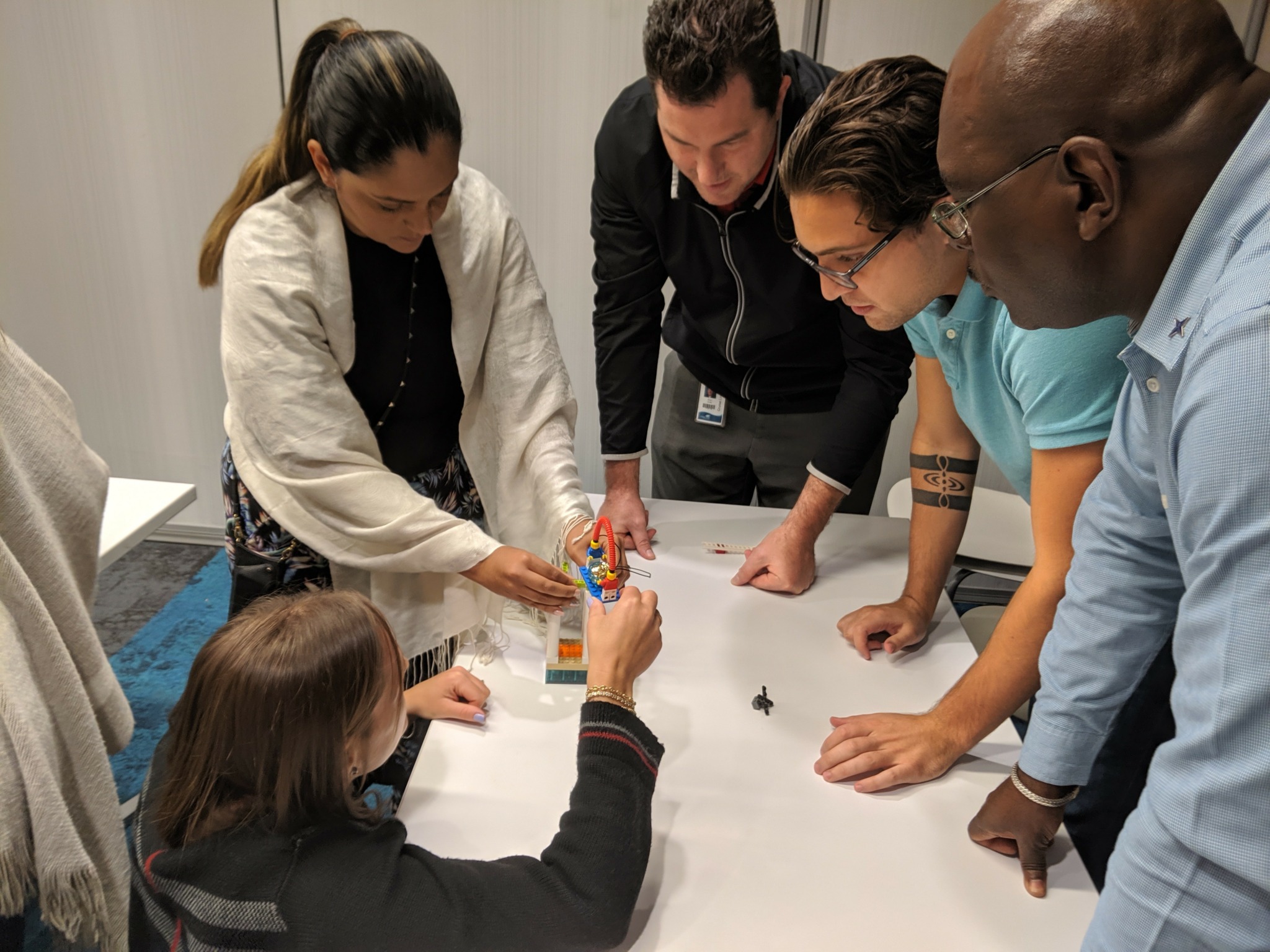
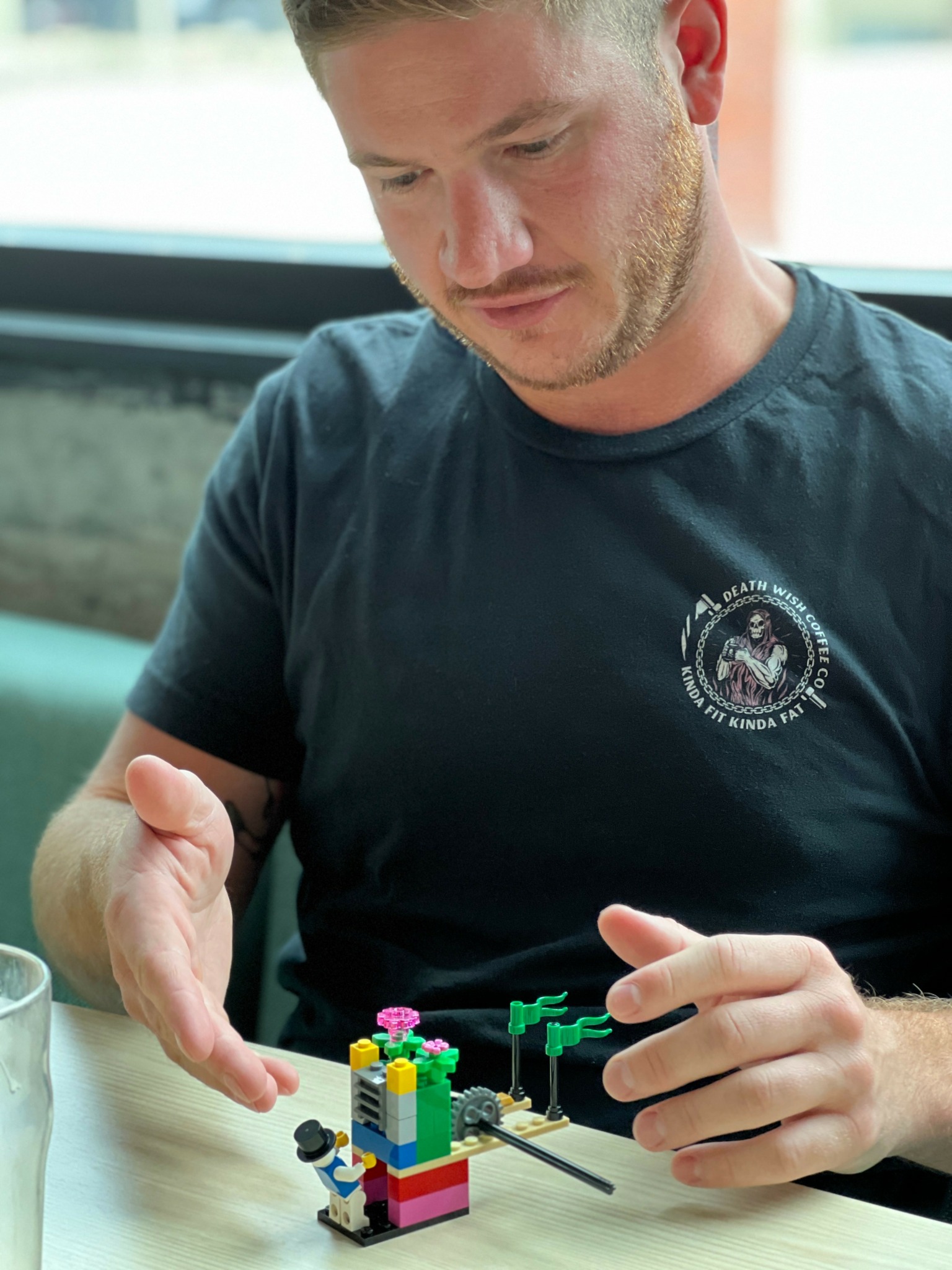
The first was my exposure to the LEGO Serious Play method years earlier in a previous role. It didn’t blow me away initially, but it planted something powerful in my brain. People genuinely love LEGO bricks, and this was a surprisingly effective way to get people talking. After reading everything I could find on the methodology, I finally got certified—and I fell in LOVE with it. I felt like I’d just learned a superpower (because I had). I knew I needed to do something with this.
At the same time, I kept watching group communication fail spectacularly in my corporate role. I could see the breakdowns happening in real time—the things people wouldn’t say, the ideas that died in hallways instead of meetings—but actually fixing those dynamics was a completely different challenge.
Then I got laid off, which honestly made the decision much easier. I was already certain I could use LEGO Serious Play to help teams communicate better. Turns out, I was right.

Great, appreciate you sharing that with us. Before we ask you to share more of your insights, can you take a moment to introduce yourself and how you got to where you are today to our readers.
My roots are in retail—working stores, managing teams, then moving into retail operations across a variety of roles from healthcare technology development to workload analytics. One of my superpowers has always been rallying groups of people to work together toward a shared goal. The win-win scenario has always been my north star. I’m also admittedly guilty of trying to infuse fun into almost everything I do, which is exactly how LEGO® Serious Play® and my work connect so naturally.
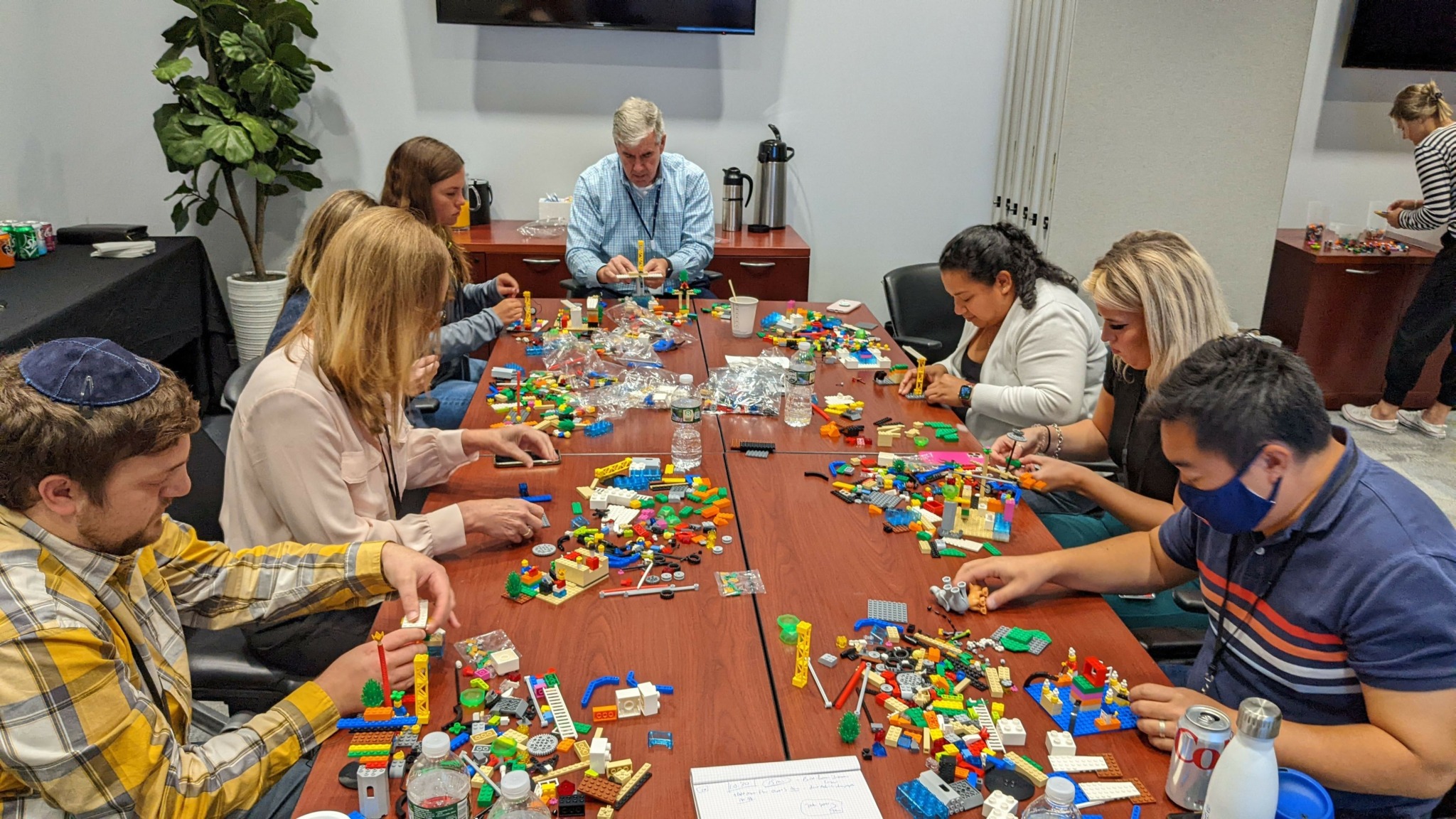
Today, through IN8 Create, I help teams navigate organizational change—whether that’s M&A integration, AI adoption, restructures, or any major transformation where communication breakdowns typically kill momentum. The name itself captures the entire philosophy: IN8 (innate)—your team already has the answers—and CREATE—let them build what’s next. It’s taken a few years to really understand the highest leverage point of LEGO® Serious Play®, and it’s this: getting groups to slow down, truly think, share, listen, and then move forward together.
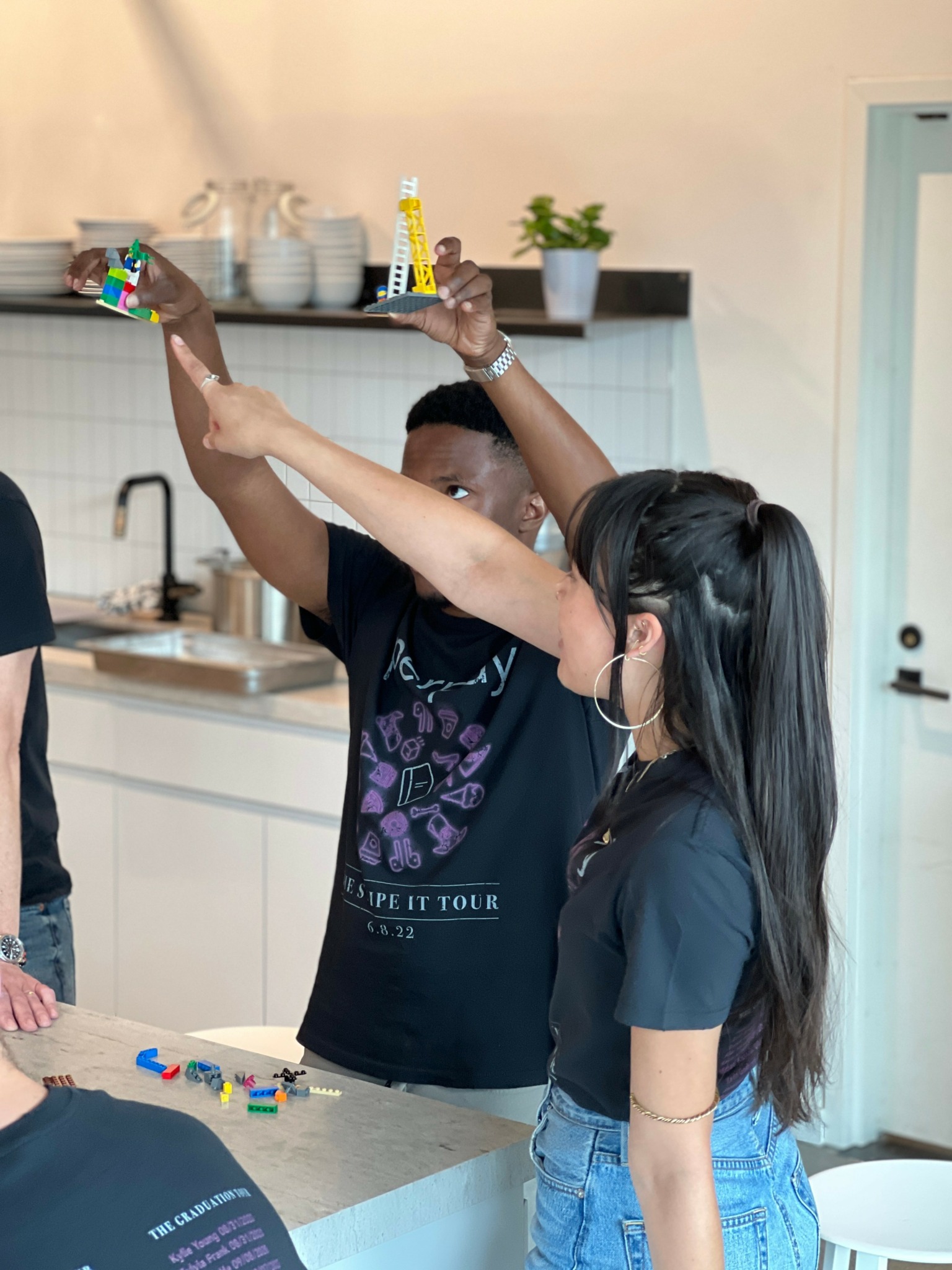
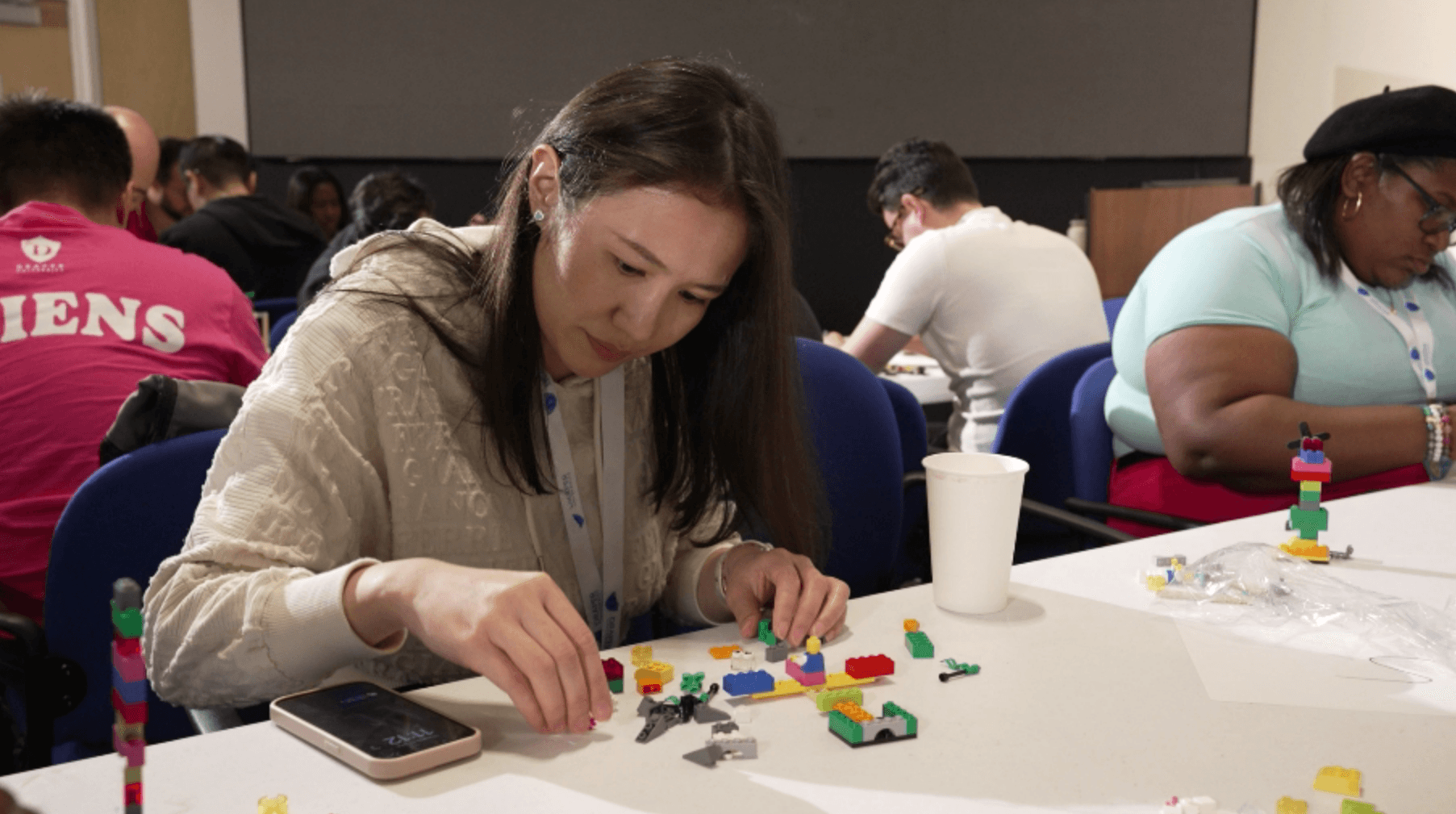
What makes this approach so powerful is the combination of alignment, speed, psychological safety, and genuine buy-in. When teams actually BUILD their own solutions rather than having solutions handed to them, the commitment is unparalleled. Add in the fun and play aspect—plus the psychology of externalizing thoughts through physical building—and you create a level of psychological safety that traditional meetings can’t touch. People share things they’d never say out loud in a normal conference room.
At the end of the day, this is a fun, playful, incredibly efficient shortcut to change adoption while simultaneously reducing risk in major initiatives. Whether it’s AI adoption, post-merger integration, or restructuring, the pattern is the same: teams agree in meetings but resist in hallways. I surface what people won’t say out loud and help organizations address the communication architecture failures that derail transformations.
What I’m most proud of is that this work genuinely helps people feel heard—often for the first time in their professional lives. After every session, I hear some version of “I’ve never felt like my voice actually mattered until today” or “I can’t believe how much we accomplished in just a few hours.” That feeling of being heard, combined with tangible progress toward solving real organizational challenges, is what sets this approach apart.
If there’s one thing I want people to know, it’s this: your team already has the answers. They’re just stuck in people’s heads because traditional communication methods don’t create safe space to share them. My job is to build that space, facilitate the conversation, and help teams move from hallway resistance to genuine alignment—fast.
Can you share a story from your journey that illustrates your resilience?
There was a year where sales were painfully slow. My target market was going through upheaval, and for the first time since starting my business, I actually pulled out my resume. The moment I looked at it, I felt this wave of disgust rise up—like bile in my throat—at the thought of job searching again. That visceral reaction forced me to ask myself some hard questions.
First: Have I really given this my all? My honest answer was no. I had more to give, and I hadn’t yet swung for the fences. I was playing it safe. I owed myself at least six more months of taking bigger swings before I could walk away.
Second: How do I make the day-in, day-out work more enjoyable? I realized I’d been chasing outcomes, which is fine to a point, but I wasn’t enjoying the process—the daily work that, when done right, actually leads to those outcomes. I “knew” this logically, but I didn’t really understand it until that moment.
So I started enjoying playing the game itself, not just winning it. I had more fun with my content. I got bolder in my outreach. Even when the work didn’t produce immediate results, I enjoyed the process, which made it infinitely easier to adjust and keep going. That shift changed everything.
I never gave up. Business picked back up the next quarter. But more importantly, that new outlook completely reshaped how I approach my work. Resilience isn’t just about grinding through—it’s about finding a way to genuinely enjoy the grind itself.
Learning and unlearning are both critical parts of growth – can you share a story of a time when you had to unlearn a lesson?
Stop trying to be the smartest person in the room.
I was an honor student growing up. Getting good grades was never that hard, and being “smart” became a huge part of my identity. But I didn’t realize that identity was actually getting in my way.
When I was working at one of my previous companies, Dr. Marshall Goldsmith came to speak—he was coaching our new CEO. I got a free book and what turned out to be one of the best lessons I’ve ever received. During his presentation, Dr. Goldsmith told a story about a head of surgery—incredibly successful, top of their game—but they spent so much energy proving they were the smartest person in the room. Constantly saying things that didn’t drive the conversation forward, but instead framed them as intelligent.
At the end of the presentation, there was a Q&A. And me, being very driven and well-read on personal development and psychology, did exactly what he had just warned against. I asked a question aimed at making me sound smart, not at getting any useful information. I realized it the moment the words left my mouth. Maybe it was the expression on Dr. Goldsmith’s face, maybe it was the recency of his story, but I saw myself clearly in that moment.
Ever since that day, I catch myself constantly checking my intent before I share something. Am I moving the conversation forward? Am I helping or hindering? As a business owner, this lesson has been critical. Of course I need to be seen as competent and good at my craft, but even more important is being viewed as a partner, confidant, and trusted colleague by my clients.
This lesson has paid dividends. I see this pattern in others all the time now, especially in the sessions I facilitate. People desperately want to be seen as smart, but it backfires more often than not. Real trust comes from listening, from asking genuine questions, from making space for others to be brilliant—not from proving you already are.
Contact Info:
- Website: https://in8create.com
- Instagram: @in8create
- Linkedin: https://linkedin.com/in/brandonwetzstein
- Youtube: @in8create