
Alright – so today we’ve got the honor of introducing you to Bradley Kahabka. We think you’ll enjoy our conversation, we’ve shared it below.
Bradley, thanks for taking the time to share your stories with us today How did you learn to do what you do? Knowing what you know now, what could you have done to speed up your learning process? What skills do you think were most essential? What obstacles stood in the way of learning more?
Right now my full time job is as a Luthier making instruments. I went to Cal State Long Beach and completed a BFA in drawing and painting with a minor in sculpture, and all of those skills have helped me greatly in my craft. The work of a modern luthier is complex and demanding, there are a lot of skill sets involved. Especially since I run the USA Custom shop, I’m not just making simple instruments, I make one of a kind functional art pieces really. Funny enough I never took any woodworking classes or really did any woodworking of any kind before this job, but many of the mold making and sculptural aspects of my schooling have come into use during this time. It has helped me greatly that I’ve got a mechanical background fixing cars and motorcycles and have taken some engineering classes in the past. A lot of my work has CNC machining involved, and a lot of jigs and custom tools I’ve had to make on my own that fit my personal design aesthetics and dimensions. There is a certain aspect of being an artist that is all about problem solving and thinking outside of the box which has helped me tremendously in this kind of work. Using laser and CNC machines in perhaps untraditional ways and just thinking from an upside down/inside out perspective which is how a lot of sculpture and mold making is approached, being able to think 3 dimensionally.
Learning my exact job now has been a combination of luck and trial an error. I was just in the position where my employer at the time wanted a custom shop, had the space and ability to acquire the machinery and materials I needed and just let me go for it. All of the skills I’ve acquired throughout my life have helped, it hasn’t been a simple process of just going to school for this one thing, although there are people that do that, I am not one of them. That would have certainly sped up the learning process, going to a luthier specific school, but I had never set out to be a luthier actually, it just sort of happened. I used a lot of YouTube to learn woodworking and CNC, a lot of YouTube. Many luthiers or really anyone in a specific craft have proprietary processes and things they have made, and they like to hold on to their secrets, so it has been tricky to learn to say the least. I am really open and believe in the sharing of information, teaching others and spreading knowledge, but I do have just one or two things I’ve managed to figure out that are quite proprietary to my process that I’m not ready to share quite yet either, so I understand it. I suppose it’s like any job that would normally require an apprenticeship, you learn from the master, but I never had that option. This was really one thing that really stood in the way for a long time, was just not having specific knowledge about the process. Through trial and error and just not giving up I managed to figure out pretty much all of it. It was a struggle, but I think perhaps a good thing. I don’t come at instrument making with a prescribed set of ideas as to how it has to be, or even a traditional way of doing things, I’ve had to make everything my own and I think it reflects that in the final product. The skills that were most essential were the ability to design and engineer, a familiarity with mechanics and tools, and being able to think outside of the box really.
Awesome – so before we get into the rest of our questions, can you briefly introduce yourself to our readers.
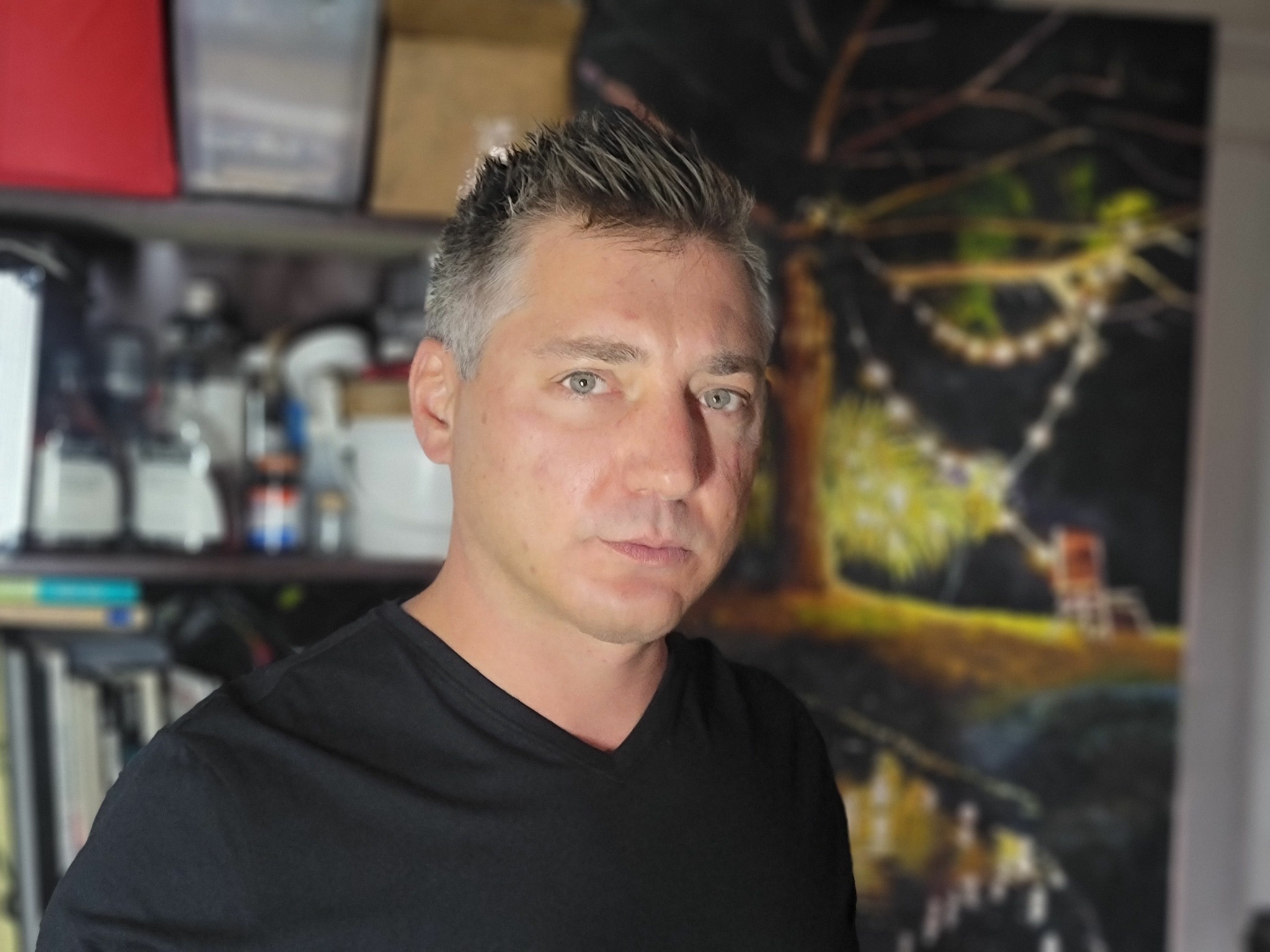
I’ve always been torn between engineering and the arts. I originally went to school for mechanical engineering in Binghamton NY after high school but dropped out after two years. Then went to Musicians Institute in Hollywood for the GIT program, or guitar performance. I played shows for a while around the area, and some years later joined the army as a diesel mechanic. Again, I was just always going back and forth between these mechanical things and art things. After that I ended up taking some drawing classes and Long Beach City college, really enjoyed doing that and just decided to get a bachelor’s degree in that. I decided to go for the BFA in drawing/painting because I knew my skills there were lacking compared to other areas of creativity. I did sculpture as a minor because I really enjoy it, but it comes pretty easy to me. Working with machinery and hand tools is something I have a lot of experience in, so I really wanted to do the drawing and painting to develop those skills and push myself into a new direction. It was quite hard at times, I had never drawn much of anything before or at least had never given it any critical thinking or formal training, so I knew I needed it. I really had no interest in graphic design or animation, I just don’t enjoy sitting on the computer too much. I like the action and tactility of working with your hands on physical things, and the traditional history of it as well. Working on something for weeks or months and having a physical, completed thing in the actual world is really satisfying to me, and the work physically lives on through you, rather than just existing in the digital space. During school I was working part time doing instrument set ups at the company I am currently with, and when I completed my degree, I really wanted to utilize it. Covid hit and business slowed down dramatically. My employer wanted to add a custom shop line to his arsenal of instruments, so that’s what he did. I designed and built the shop, he sourced all of the wood and customers, and for the first year of it I was just really experimenting and learning the craft of woodworking, CNC and 3d modeling, and how to do inlay work. It was really just YouTube videos, trying new and different things to see what worked and what didn’t, and reverse engineering on some instruments so I could develop my own way of making them how I thought they should be. I’ve always wondered how creative people got into these odd jobs that they have or different fields, and at least for me it was just a combination of having the right skills and background for the work and being in the right place at the right time.
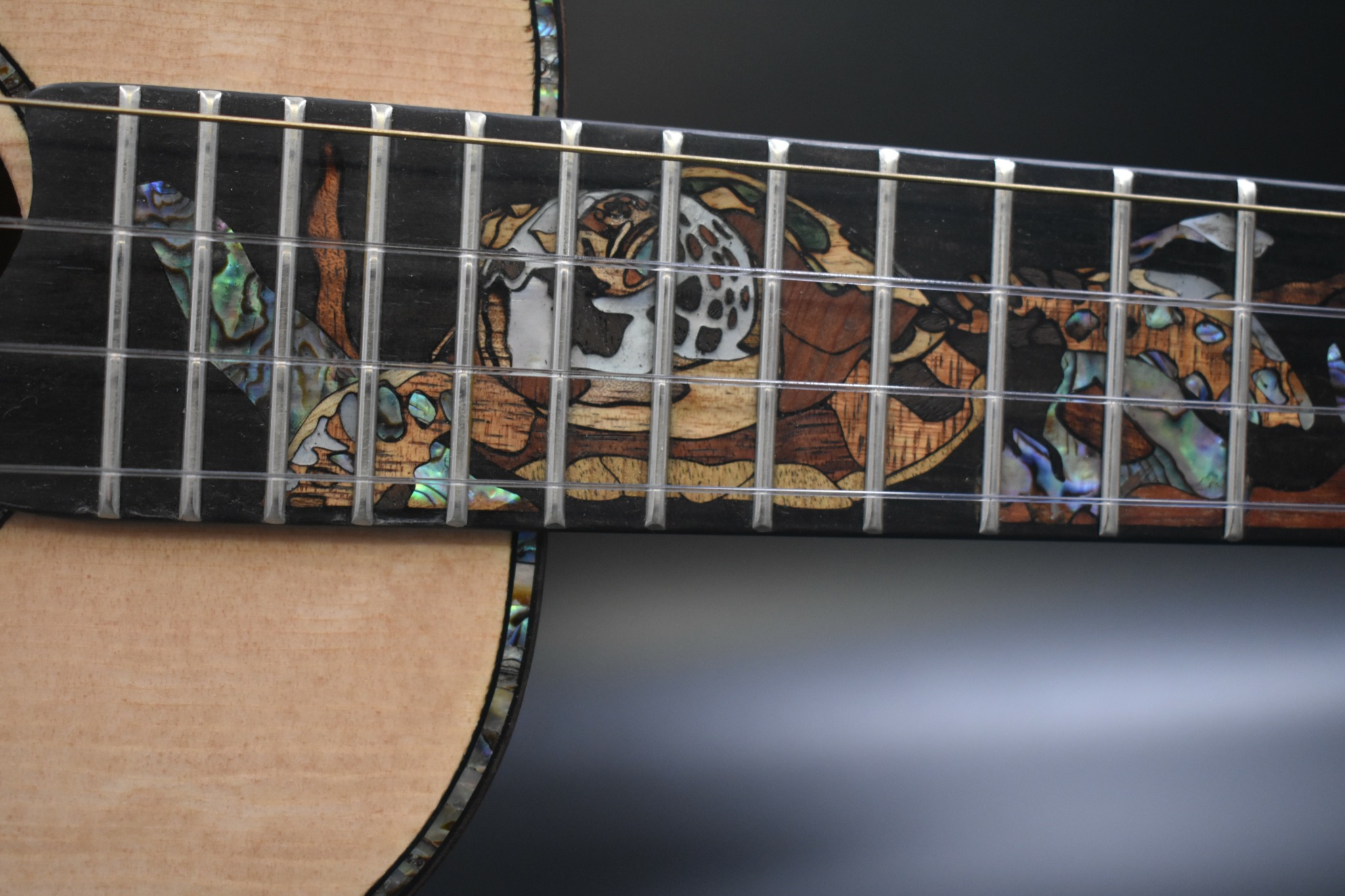
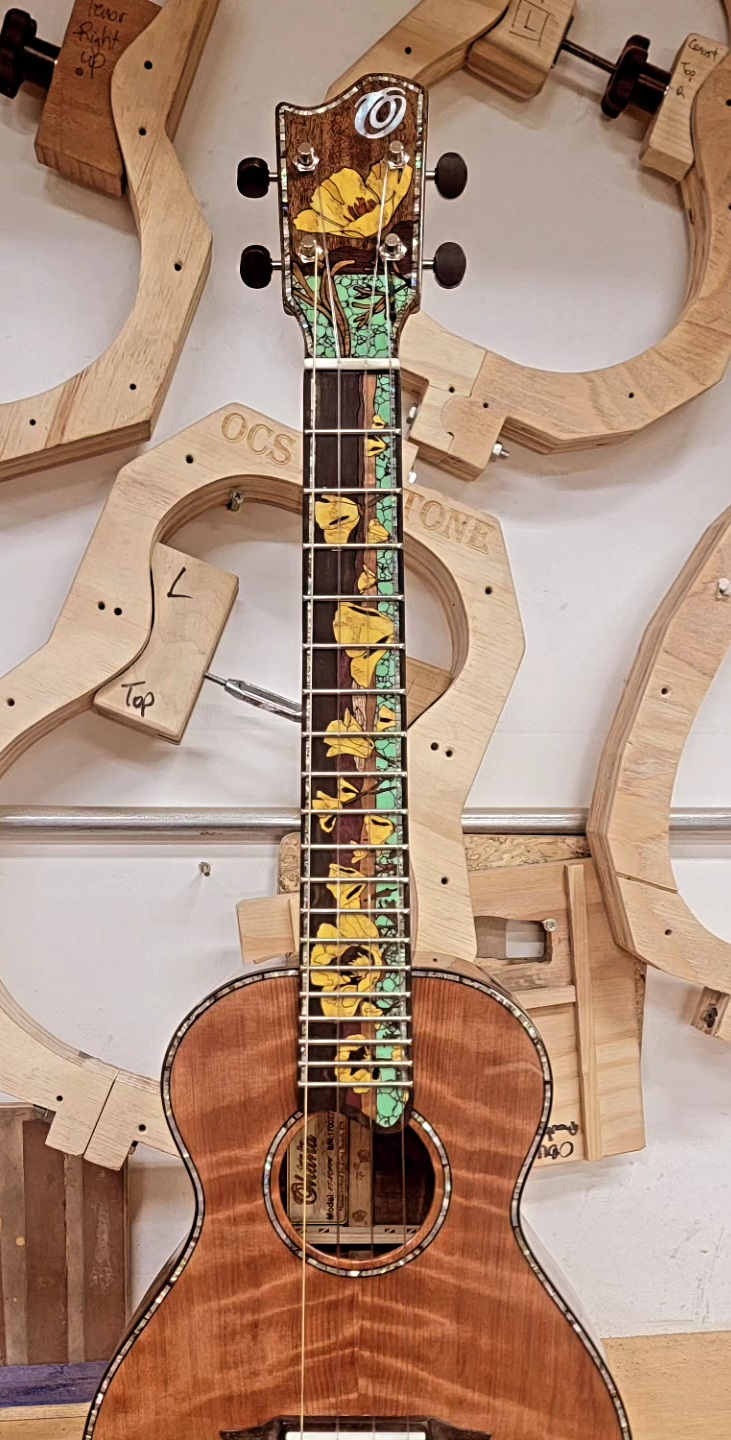
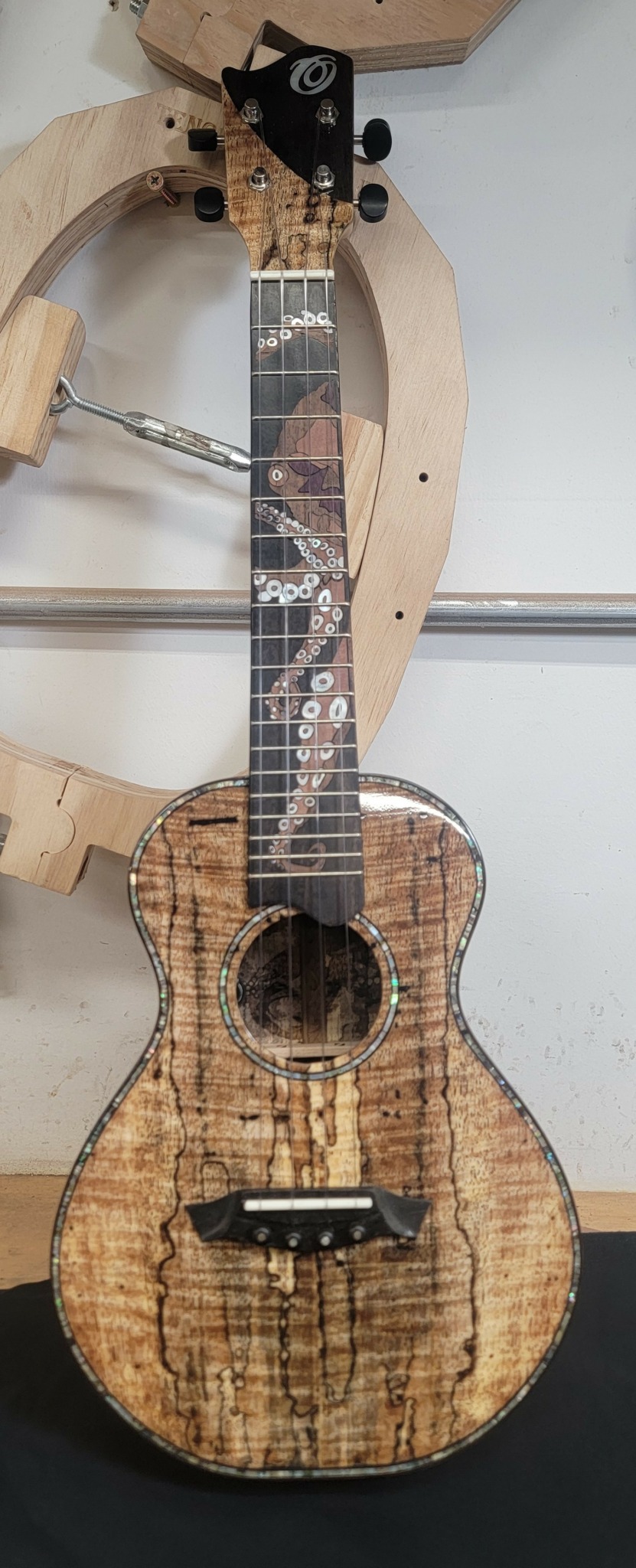
So right now, I am making USA custom shop instruments, specifically ukuleles. I have a few dealer-specific models I’ve designed that hit a certain price point and features that are competitive with the overall market, and those are available for the dealers of the company to purchase. Those locations can be found all over the world currently and are continuing to expand into new locations and countries as we can. I’m only one guy so there’s only so many instruments to go around and I can only build them so fast, but besides the US I’m in Japan, Australia, Germany, the UK, and maybe a few others as well. The real work at my job is the truly custom instruments. These are made to order and cater to a specific customer’s wants and needs and usually involve a lot of inlay work and specific woods and materials that are perhaps unusual in typical builds. Typically, the customer will come to me with an idea or vision they have, and I will do all of the design work, drawings and other specifics until we agree on a final product. I have a bunch of work I’ve done they can look through to give me an idea stylistically of maybe what they are interested in, or even thematically. A lot of my works so far have been different animals either land or sea and are more often based on a broader landscape like my personal painting work. I did a custom octopus inlay uke for one customer, and a field of poppies for another who wanted a truly all California uke, utilizing California woods as well. Any idea they have really, be it personal or just something they are really interested in, I start with the initial drawing and take my design cues for the rest of the ukulele from there.
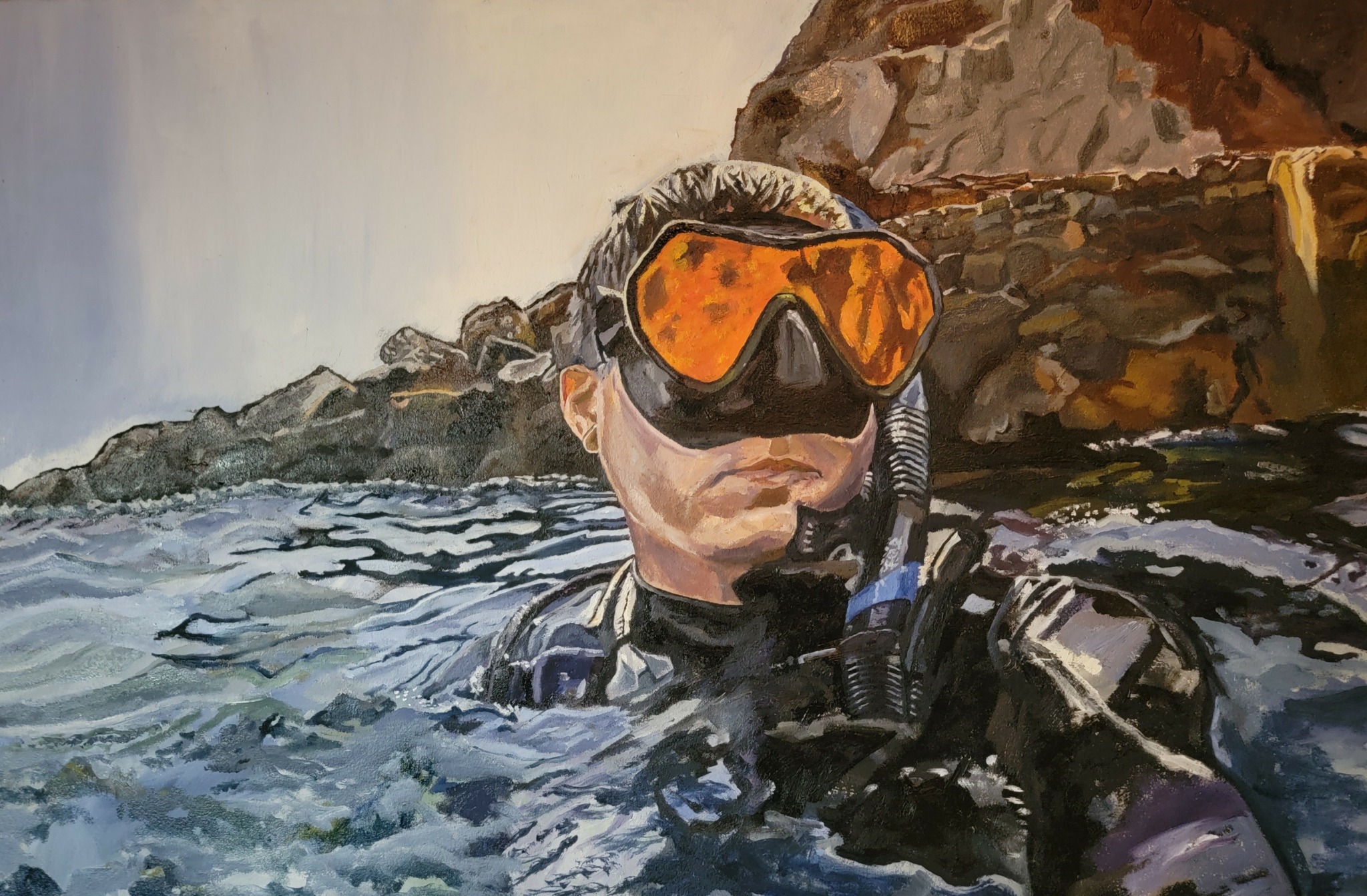
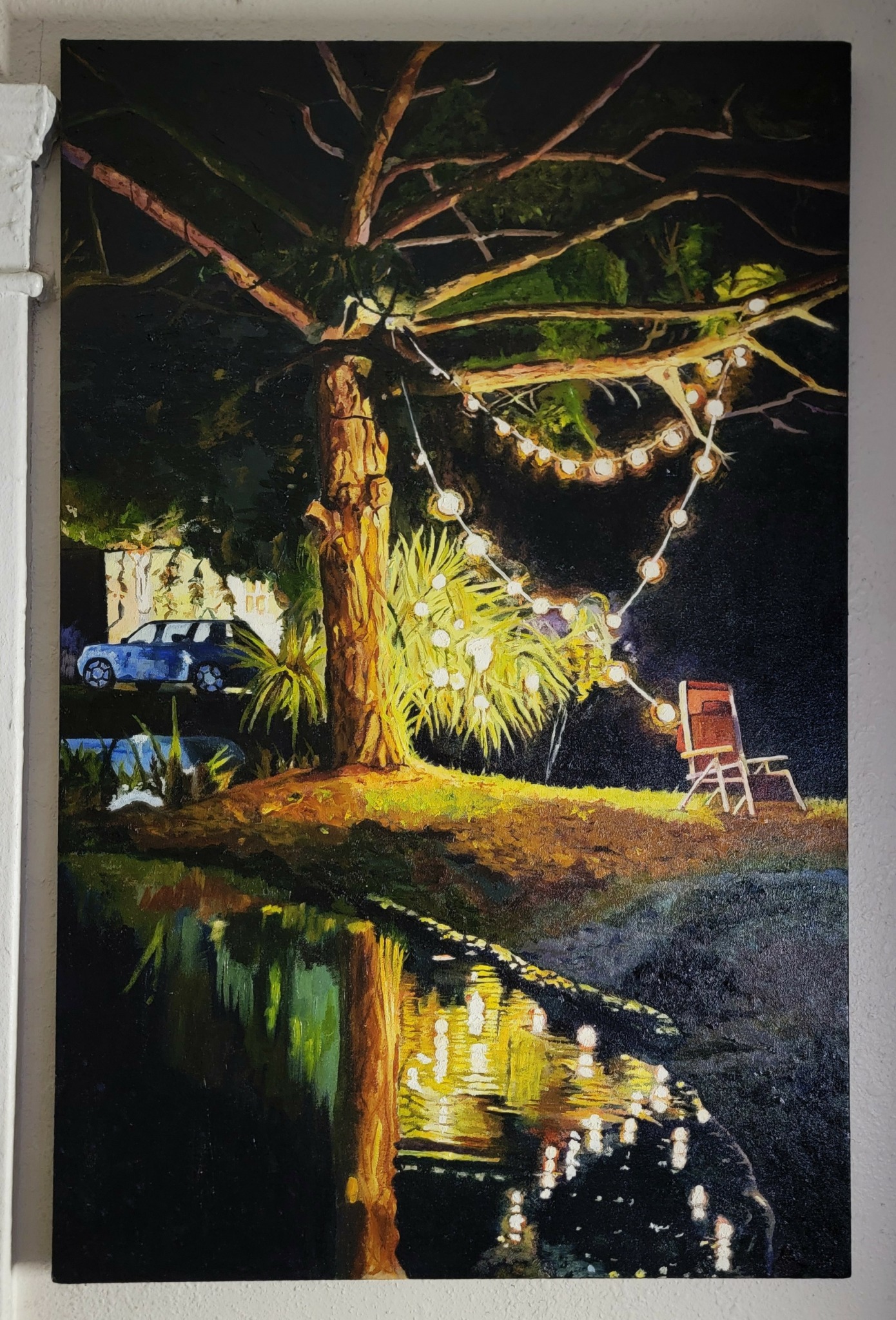
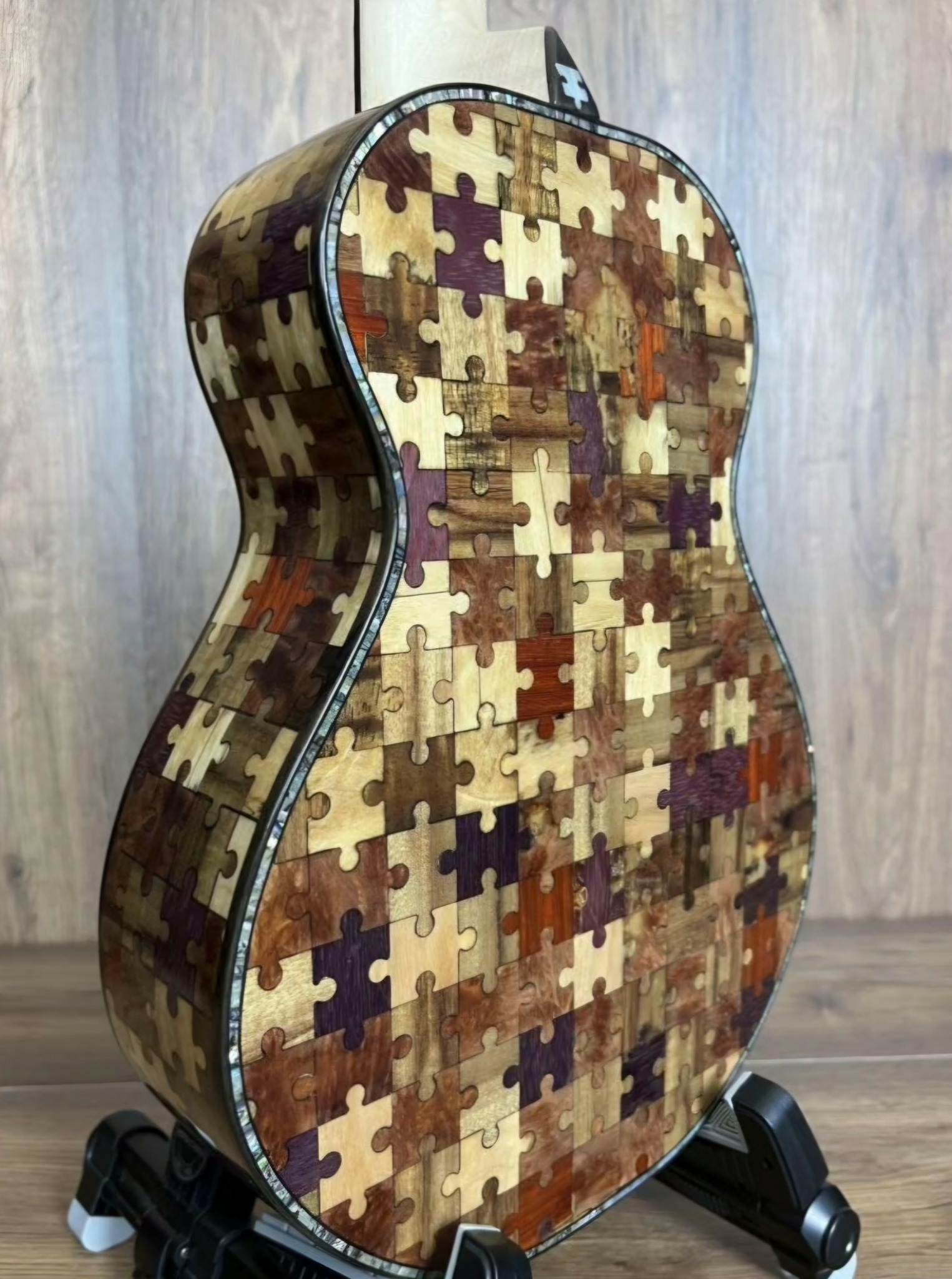
I think what sets me apart from others, at least when the instrument building is concerned, is that I’ve been forced to think outside of traditional means of building from the beginning. I don’t quite consider myself a woodworker, but more of a designer/fabricator/artist really, and all of my official training is really from trial and error and watching videos. I also took it upon myself to really dive into inlay work, how they are made and installed and what it even means to make or have an inlay. I approach them as I do my paintings, which are primarily landscapes. I try and view the function of each part of the inlay in space, where does it belong and what it is doing, and tie these things in with other design features of the instrument as well. I try and treat most of them as if they are telling a story, how landscapes often capture a specific moment or feeling in time and try to replicate that with the materials and skills that are available to me. My paintings also lean heavily towards the realm of realism, which reflects my inlay work as well. I try and keep all of these skills I possess closely tied together so they benefit one another, build off of and reflect these design elements to come together into a homogenous instrument.
The thing I’m most proud of is just never giving up really and making things to the absolute best of my current ability at the time. I always keep an open mind because I don’t know everything and never will, there is always a way to improve, make the next project better, and take what I’ve learned from previous works and import that knowledge into the next one. I never thought I’d be an artist, I don’t even know if that’s what I currently consider myself or how to define what I feel like I am most of the time, but I know I just create the best possible thing I can in this moment. I feel like I’ve been just collecting skills throughout the years, and right now I’m getting to use all of them, including ones I didn’t realize I had. I could have easily just gotten a normal degree and job and just lived life, but I always felt like there was something missing, the creative freedom to make things how I see fit and to make something from nothing.
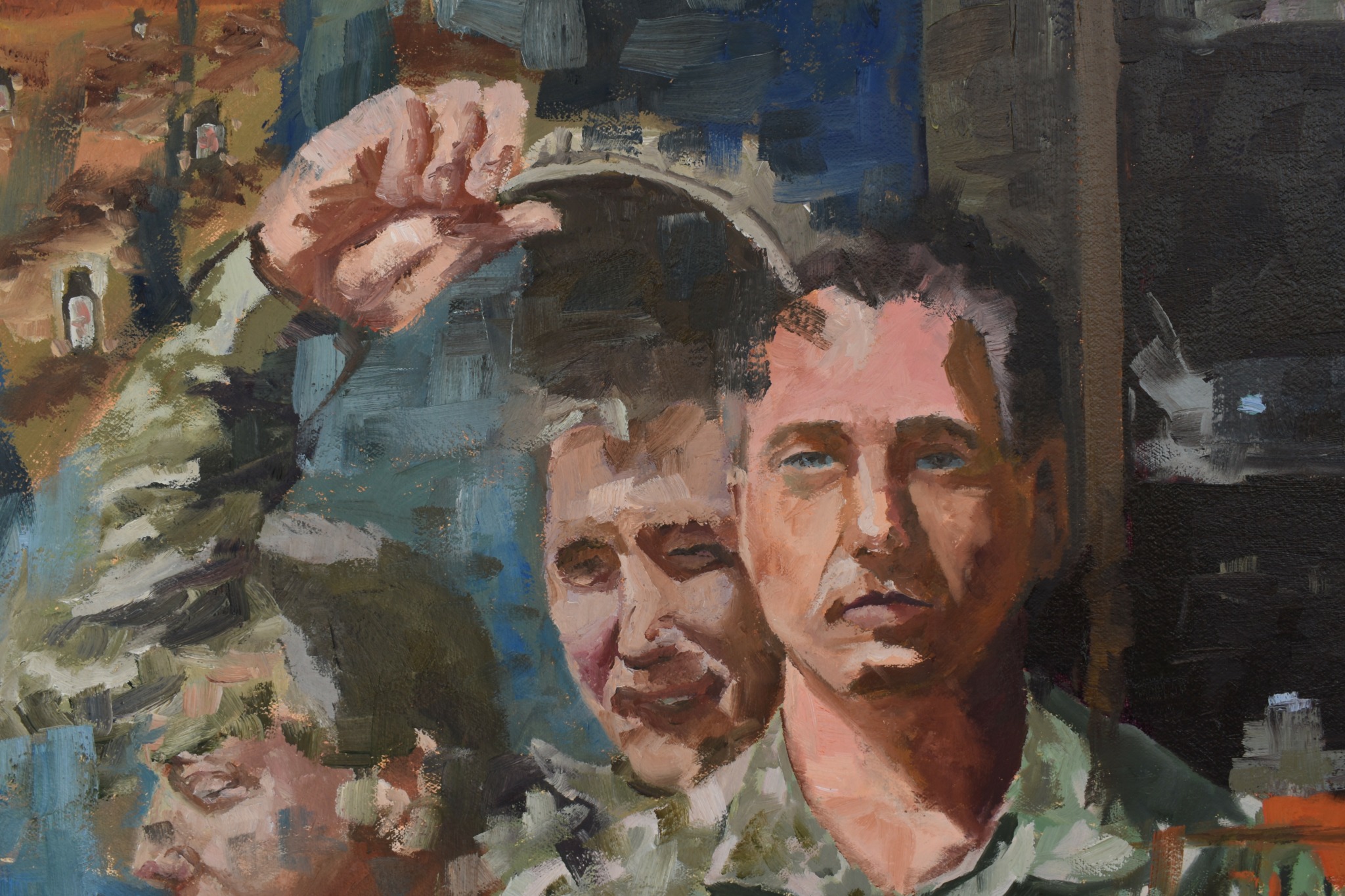
Design and brand wise my work is a mix of traditional and modern. For my paintings I really strive for heavy contrast of lights and darks, broad sweeping landscapes that tell a story or invoke a certain feeling, and portraiture that invokes something of the same feeling. I find myself searching for nostalgic or vintage things, old objects with a new purpose, and images that just have a cinematic sort of sense to them. Rough around the edges yet surprisingly refined is perhaps a good way to put it.
For you, what’s the most rewarding aspect of being a creative?
The journey of creating is filled with many different emotions, excitement, doubt, fear and euphoria. The act of creating is in itself quite a rewarding task. Its learning new techniques and materials, paired with problem solving and application of these things across many mediums, perhaps even combined into new mediums not previously experienced. That part of creating is the driving force behind the final product, and even though the journey itself can be more exciting than the end goal, ultimately the most rewarding thing is having a physical object that I can be proud of and that others can get some use from as well. The elation of the completion of a project is a wonderful feeling. I often look back on things and wonder how I could even make them in the first place, and when people see these things and think or say the same thing for themselves is pretty rewarding. Whether it be instruments, sculpture, or paintings, these things have meaning to me when I make them but often take on a whole new meaning for the next person to own them as well, and I enjoy that aspect of creating as well. One thing may not mean for me what it does for them, and even though I created it with a purpose in mind, if it can serve another purpose or have a second meaning or fill a void in someone’s life, that’s pretty special as well.
Theres just something quite special about having an idea in your mind and slowly watching it grow into an object in the real world. Creating something from nothing, and in the case of the instruments I make, they have a practical purpose as well and will live on to be used and tell many stories of their own. Just being capable to bring these ideas in my head to fruition with all of the skills I’ve learned over the years and getting to actually use these talents is very satisfying. One part of it all I really like is that the work is constantly different and I’m always surprising myself. It’s only as monotonous as I make it, but I’m always finding new ideas to work with and boundaries to push. With any project I’m working on it really helps to break everything into smaller, more manageable parts, and then at the end when it all comes together, I’m always surprising myself by what I’ve managed to do.

Is there something you think non-creatives will struggle to understand about your journey as a creative? Maybe you can provide some insight – you never know who might benefit from the enlightenment.
Theres a saying I see a lot online regarding personal finances and growth, something along the lines of don’t get your passion from your job or only treat a job as a paycheck. There seems to be a sort of stigma to working, especially in the corporate world, that as long as it pays the bills then the job is acceptable even if you are miserable, and to be constantly trying to climb your way up the ladder to the next higher paying job. I’m not saying that’s a wrong mindset to have, I think people do need to be on the lookout for the next job, get whatever pay increases you can, and be aware of how expensive it is to just live, but creative minds have to adjust this mindset a little bit. A lot of my current job has been learning and growing as an artist. I’m not rich by any means but the opportunities it’s created have an intrinsic value of their own to be considered. Being in charge and running my own shop, learning CNC and 3D modeling, woodworking and inlay, it feels like I’ve been back in a self-directed version of art school again. I guess what I’m saying is for most creative people there are many more things to consider than just a paycheck. For me it’s really how does doing this thing make you feel at the end of the day and am I fulfilled or not. I think many creative people are also emotionally reactive or perceptive, and how the rest of your life operates can really affect the outcome of your work. There really is an extra layer to the job to think about, how does this fit into or affect my practice and am I learning and growing as an artist while also retaining my direction and values. The money is really a secondary driver in the equation, I feel much more driven by the work I create and leaving a lasting legacy behind.
Aside from all of that there exists a drive that creatives have that can be hard to grasp for others. It’s hard for me to just do nothing and relax, I feel like I’m wasting time or that I should be making something, like there are a thousand ideas in my head that want to get out constantly. During my time in art school I was at class at 8 am and didn’t get home until maybe 10 or 12 pm every day. The last two years were all studio classes, and I had access to the painting and sculpture studios nonstop it was great. To some people I think it’s hard to understand the countless hours spent on projects, only to have this thing to show for it that they may or may not even appreciate or understand the meaning behind.
Life in general isn’t a straight line, but for me and my journey that has been especially true. Probably this can be said for most creative people and the fields they end up in. It isn’t like a typical college degree where you get the thing and then do that job, so I think you have to be inherently flexible when choosing to be in a creative field. I would have never thought in my lifetime that I would be running a custom shop making instruments, but just by showing up and doing my absolute best, always making some type of progress and just always making in general, this is what ended up happening. I’m also looking to the next horizon though all the time, because the creative journey really never stops, and you never know what will happen next or what doors will open. I’ve often wondered how people get these odd jobs you hear about and wonder how they managed to do it, but I guess I am one of those people. It’s a struggle at times, it can be unstable, but I think in the end its more about the journey itself than the end result.
Contact Info:
- Instagram: https://www.instagram.com/kahabkart/