

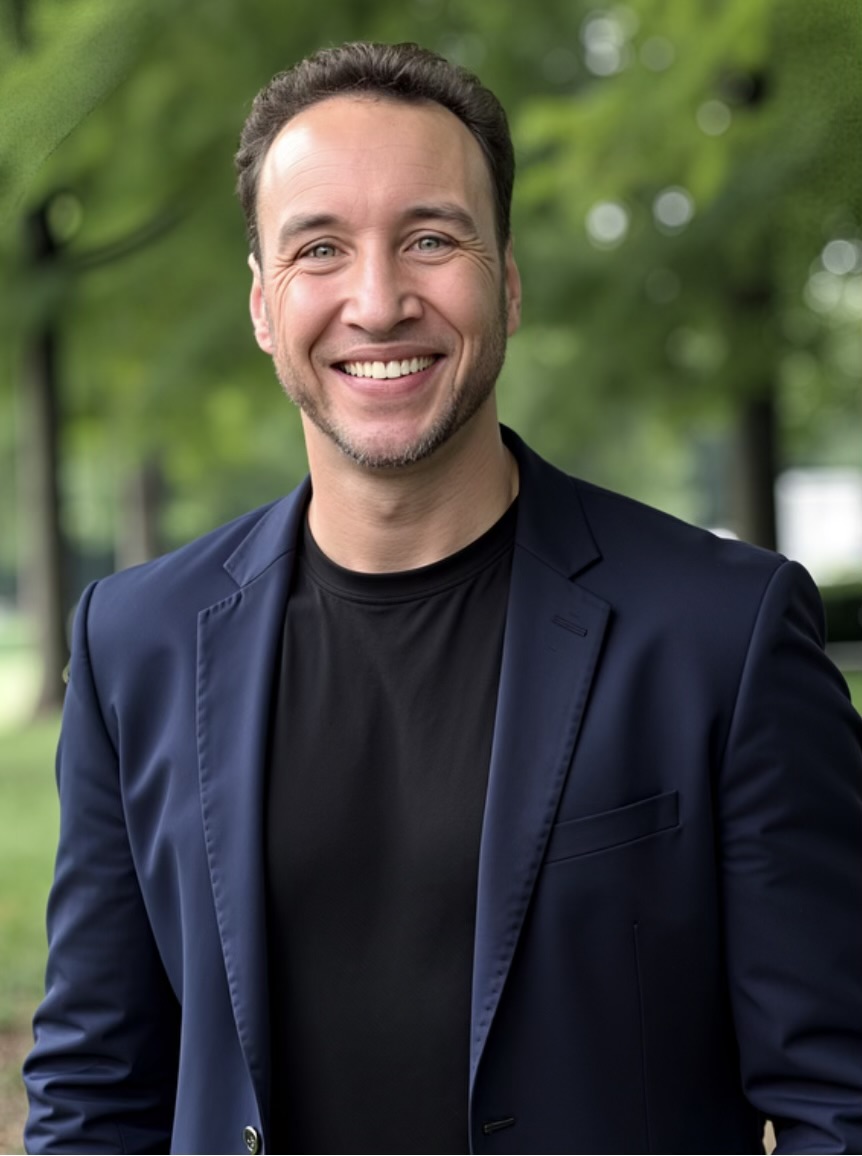

We recently connected with Boyd Melson and have shared our conversation below.
Boyd, thanks for joining us, excited to have you contributing your stories and insights. What was your school or training experience like? Share an anecdote or two that you feel illustrate important aspects or the overall nature of your schooling/training experience.
While a Cadet at West Point, I entered an environment that purposely overwhelmed me with responsibilities during the Academic Year, all four years. Our mandatory Academic-Year schedule was based on an engineering undergraduate curriculum that consisted of 20 credit-hours on average, participation in a sport (either Division 1, Club, or Intramural), and a peer leadership position. Additionally, we had two daily mandatory Cadet military formations, a mandatory meeting on most class days immediately following lunch, rules for our uniforms had to appear, and rules regarding the way we kept our barracks rooms arranged. This cycle repeated weekly for each semester, with 2-4 graded events due weekly in class. In this world, if you do not learn how to cope with anxiety, you will fail. I compartmentalized my priorities to focus on the immediate tasks needed for accomplishment in a given 24-hour period. If this meant I was not sleeping that night because of school work, then I was not sleeping. I focused on the immediate punch in front of me, with my end-state being to make it to the weekend, when I could rest. So long as I was alive, the weekend would. I trained my mind not to worry about all the punches being thrown at me that week, for they could not touch me at all once. I took life one punch at a time, knock out what was immediately in my face, knowing that there were many more punches waiting for me that week, but they could not touch me until I arrived at them. The key was never to remain still and frozen from being overwhelmed, reframing the experience, with a myopic focus on what was required of me in that day, and nothing after, until after arrived and became my present day. Take life one punch at a time, and do not remain still until it is time to rest.

Great, appreciate you sharing that with us. Before we ask you to share more of your insights, can you take a moment to introduce yourself and how you got to where you are today to our readers.
I became a mindset coach the same way I became a champion boxer and a servant leader—by being shaped in hard places and choosing to turn pain into purpose.
I grew up an Army kid near Fort Hamilton in Brooklyn, raised by a Jewish mom and a Creole dad, with grandparents who survived the Holocaust. That mix gave me two non-negotiables early: honor your people, and do something with your life that lifts others. I carried that into West Point, where I studied psychology (with a nuclear engineering minor) and learned how discipline, attention, and meaning drive performance under pressure.
At West Point I found boxing. The Army sent me into the World Class Athlete Program, and I won the 2004 World Military Championships at 69 kg, reached the quarterfinals at the 2005 World Championships, and became a three-time NCBA All-American and multi-time All-Army/Armed Forces champion. Those years taught me how to coach the mind first—the feet and fists follow the mind.
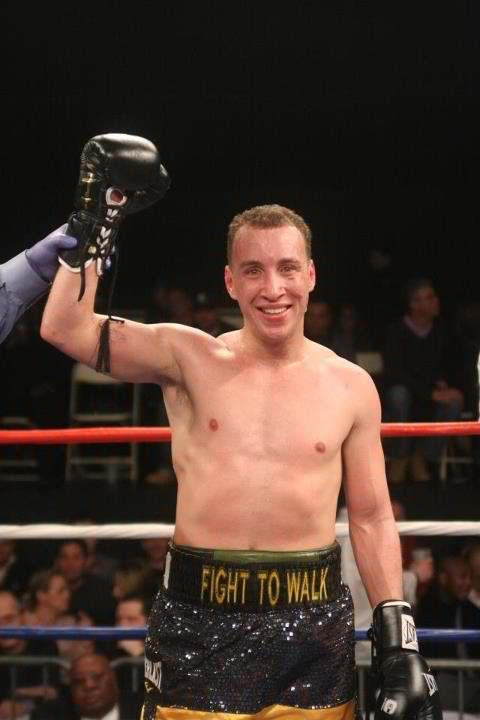
My “why” sharpened when someone I loved was living with paralysis after a childhood diving accident. When I turned pro, I donated my fight purses to spinal-cord-injury research, co-creating Team Fight to Walk and partnering with JustADollarPlease and Rutgers’ Dr. Wise Young. HBO’s Real Sports, ESPN, and The Wall Street Journal told that story, but what mattered was the mission: use a ring to raise hope. The ring became my classroom for resilience.
In 2015 I earned the WBC USNBC title and, not long after, stepped away from chasing belts to chase impact—returning in 2016 for a single fight to spotlight the opioid crisis. Around the same time, my Army Reserve service in Public Affairs had me leading, teaching, and storytelling—translating pressure into purpose for soldiers and communities. Those experiences became the scaffolding of how I coach: mindset, meaning, mission.
Raindrops Mindset grew out of that: a coaching practice built on emotional intelligence, disciplined habits, and a service-first ethos. The “raindrop” is a metaphor—I help you find the single drop you can choose today that changes your weather over time. I work with athletes, veterans, teens, and high performers to build confidence, pattern awareness, and follow-through. We start with relationship and clarity, then craft a tailored plan, then we execute with accountability.
Quantum Power is my complementary framework for clients who want that next layer of mental re-training. It’s about directing attention, belief, and daily action so your brain starts creating opportunities instead of excuses. Different audiences call it by different names—flow, faith, focus—but it’s the same muscle: choose what you feed your mind, and your outcomes change.
Why mindset coaching? Because I’ve seen elite performance from every angle—soldier, champion, fundraiser, community organizer—and the common denominator is the story you tell yourself when the bell rings. My job now is to help you write a better story and live it with discipline, empathy, and courage. Be mindful, pain is the backbone of development.
Can you share a story from your journey that illustrates your resilience?
I have spent 21 years searching for a cure for Spinal Cord Injuries. I risked my life 18 times in the professional boxing ring to create a platform to share spinal cord injury research, and I donated 100% of my portion of my professional boxing purses to spinal cord research. This commitment was featured on HBO Real Sports in 2013, and 12 years later, because I have cared about this dream of mine strong enough and long enough, I am now selected to be featured in a docu-series on InsideSucces TV in their Legacy Makers series, streamed on major streaming platforms, where I will once again remind nation-wide audiences about my mission to fund the research to help people with Spinal Cord Injuries walk again. When you care about something enough, and you care about it enough for long enough, other people will being to care about it with you, forcing the universe to conspire.
Other than training/knowledge, what do you think is most helpful for succeeding in your field?
This answer is not just for my field. Curiosity is the key to unlocking your imagination’s abilities. Our imagination is our connection to God. When you exercise your curiosity, you antagonize the lazy practice of labeling. When you ask questions and purely wonder, your imagination and your curiosity play an intricate dance. They remove ceilings that suffocate the development of your quality of thought. I will say again, labeling is lazy. A person’s lifetime is sacred, and it involves experiences that are 100% unique to their total awareness, for only they have experienced 100% of their experiences; there is not a person alive who has lived 100% of another person’s life. The best thing I can do is to gather as much information as possible from another person, and help lead them to understand their own choices and their effects, their own patterns and their results, and their next chosen behaviors that may increase the opportunity as best possible for them to experience in reality the life they imagine in their minds. Throughout this process, and without ever being absolute, questions fueled by imagination do not guarantee their achieving what they desire, but do cancel out as much noise as possible that prevents them from channeling their intended signal.
Contact Info:
- Website: https://www.raindropsmindset.com
- Instagram: https://www.instagram.com/boydmelson/
- Facebook: https://www.facebook.com/boyd.melson.9
- Linkedin: https://www.linkedin.com/in/boyd-melson-21113612/
- Twitter: https://x.com/BoydMelson
- Youtube: https://www.youtube.com/@boydmelson1016
Image Credits
Boyd Melson