



We recently connected with Bill Battaglia and have shared our conversation below.
Alright, Bill thanks for taking the time to share your stories and insights with us today. Learning the craft is often a unique journey from every creative – we’d love to hear about your journey and if knowing what you know now, you would have done anything differently to speed up the learning process.
How did you learn to do what you do?
I approach my creative work with a combination of practical exploration and an intense curiosity about the materials themselves. Though I did take a lesson in glass casting, much of my knowledge comes from experience and observation. I played around with different materials, experimenting with how heat and time affected them. I focused on repurposed materials like glass, copper, brass, and wood. Theoretical notions alone will not get artists started on splash copper and glass casting; they need time spent experimenting in the studio, where they may sometimes gain inspiration from the materials.
Knowing what you know now, what could you have done to speed up your learning process?
My notes and movies serve as documentation because no other artist is employing this technique. I used to see failure as a setback, but now I see it as a necessary part of the process.
What skills do you think were most essential?
The ability to cast glass, deal with metal, and work with wood are all technical abilities, but flexibility and visual perception are equally important. The capacity to think on one’s feet and make split-second decisions is crucial, as is the ability to imagine how different materials could interact. Another important skill is patience, since it can take a week or more to complete a sculpture and the materials will not always function in the way you want them to. Every day, you will need to be creative to solve problems, particularly when dealing with recycled or uncertain resources.
What obstacles stood in the way of learning more?
Learning on my own was slow at times, and the fact that no local organization was interested in the specific methods I wanted to study added insult to injury. A lot of creative types have to continuously balance the time it takes to deal with the nuts and bolts of making a career with the time it takes to experiment with alternative techniques.

Great, appreciate you sharing that with us. Before we ask you to share more of your insights, can you take a moment to introduce yourself and how you got to where you are today to our readers.
Bill Battaglia Creations was founded and I am its artist. Since I was a kid, I have been fascinated by the interplay between natural forces and human intervention, as well as by the materials and processes involved in sculpture and design. Even though I have a degree in visual design and have done some practical training in glass casting and shop classes, the things that have really influenced my craft are the willingness to experiment and the materials’ expressiveness.
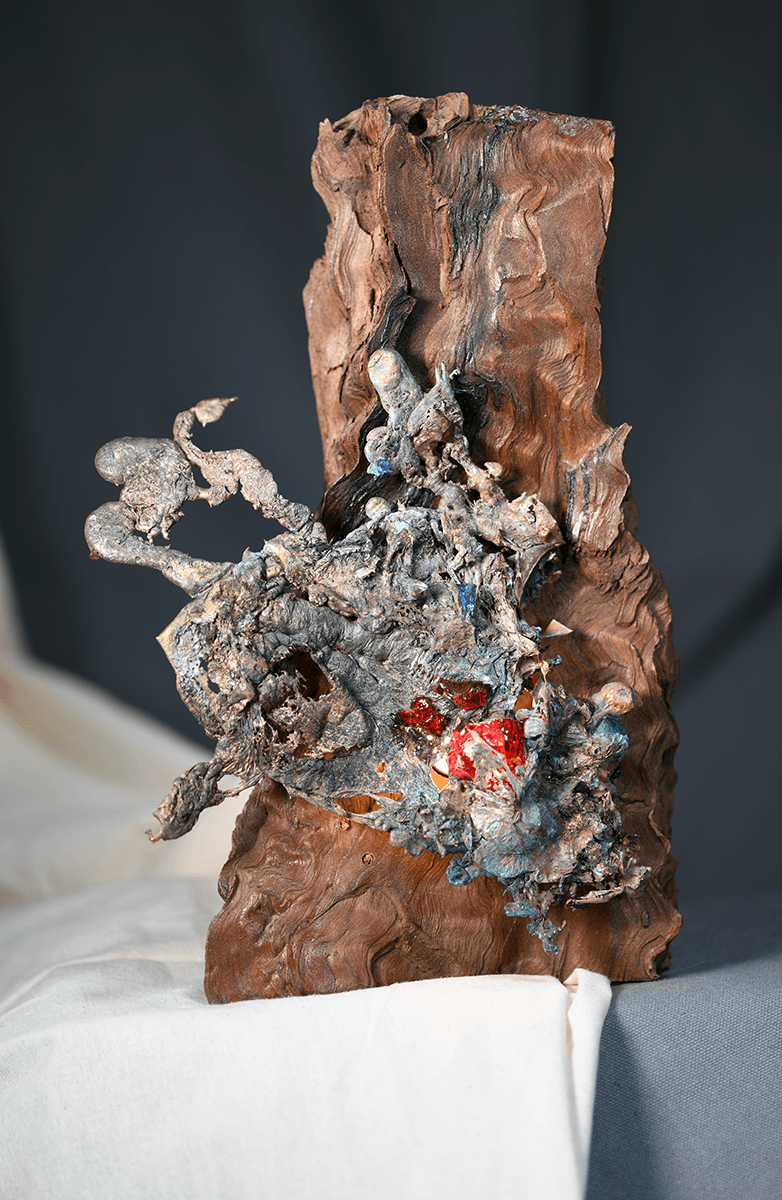
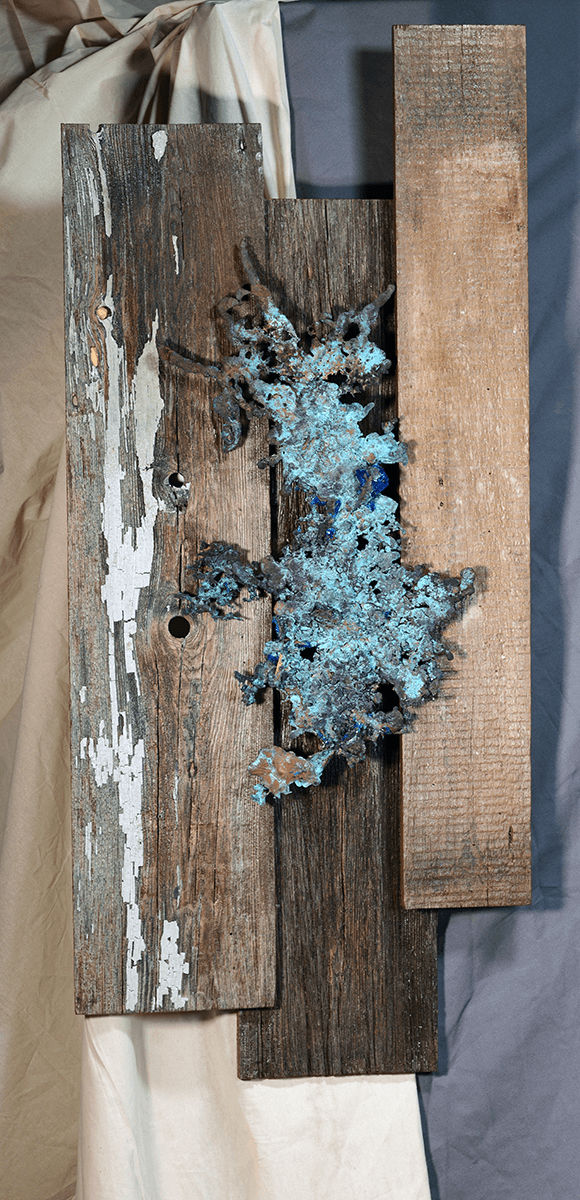
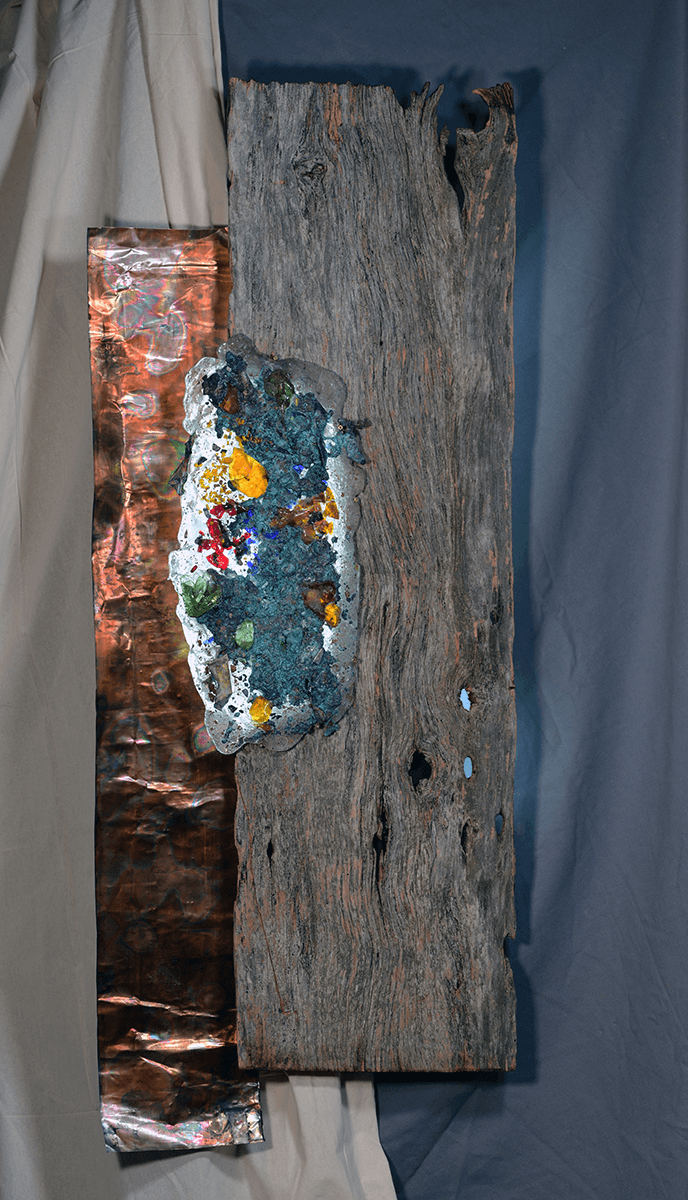
In my art, I often use the contrast between humankind and the natural world. Any time I see recycled materials (such as wood, copper, brass, or glass) combined with modern processes and tools, my imagination runs wild. Some of the techniques I use include glass casting and a splash technique with molten copper. I frequently install these forms on salvaged stumps or abandoned industrial materials. As a result, the finished collection has an unearthly quality while remaining firmly rooted in the materiality of the materials used.
No two sculptures are ever the same because they are all part of a limited edition. The transformations that can occur when seemingly unrelated materials are combined fascinate me. For example, the effects of aging on copper or the refraction of light on glass intrigue me. A significant part of my work is the lighting, which is frequently positioned inside or behind the sculpture to produce changing visual effects as the observer wanders around it.
I create one-of-a-kind sculptures for individuals, homes, interior designers, architects, and any group in search of an unusual and intriguing piece of art. In addition, I take on customized commissions, during which I get to know my customers’ tastes, their ideal display setting, and how my artwork might accentuate those elements. I offer free installation services to local clients to make sure every piece is securely and aesthetically displayed.
My art stands out because I use mostly recycled and found objects, and because I approach each project with an open mind, seeing discovery as important as design. I hope that viewers will consider my pieces more than mere artifacts; rather, they will be opportunities to contemplate how we interact with the natural and man-made environments. I take great pride in the fact that my sculptures have the power to change the atmosphere of a room, start a dialogue, and test how people see commonplace objects.
Above all else, I hope people understand that creating art is a never-ending journey for me. The exploration of novel approaches, mediums, and concepts is an ongoing activity of mine. My objective is that every piece conveys a tale, one that is based on the histories of the materials used yet can be understood in many ways depending on where it is shown.
Check out Bill Battaglia Creations if you are interested in artisanal, forward-thinking art that honors both the natural and the artificial.


Looking back, are there any resources you wish you knew about earlier in your creative journey?
I would have benefited greatly, to begin with, from being able to tap into a network of artists who shared my interests and practices in the use of recycled materials, glass casting, and metalwork. I could have benefited from guidance, advice, and inspiration that I had to seek out on my own had I joined online forums, attended seminars, or even just attended local meetups.
As a last point, I wish I had spent more time in school studying art business fundamentals like marketing, pricing, and making connections with galleries, collectors, and interior designers. These days, anybody looking to get their creative career off the ground may find excellent resources, like artist networks, internet platforms, and even business courses designed just for creatives.
For you, what’s the most rewarding aspect of being a creative?
My favorite part of being an artist is discovering and transforming materials and how people interact with my work. Reusing wood, copper, glass, and brass—objects with histories—to create a unique and surprising sculpture is tremendously fulfilling.
I adore when a piece comes together—how light interacts with glass or weathered copper takes on new character and makes it feel alive. Even wonderful is observing how people react—when they connect with a sculpture, find significance in it, or are amazed by how familiar materials can be reinterpreted. Creating inquiry or contemplation in others is very rewarding.
It is about developing something new that changes how people see the world and themselves. That motivates me to seek fresh approaches and thoughts.
Contact Info:
- Website: https://billbattagliacreations.com
- Instagram: https://www.instagram.com/dezutdog/
- Facebook: https://www.facebook.com/profile.php?id=100089709703230
- Linkedin: https://www.linkedin.com/in/bill-battaglia-18459b2/

