

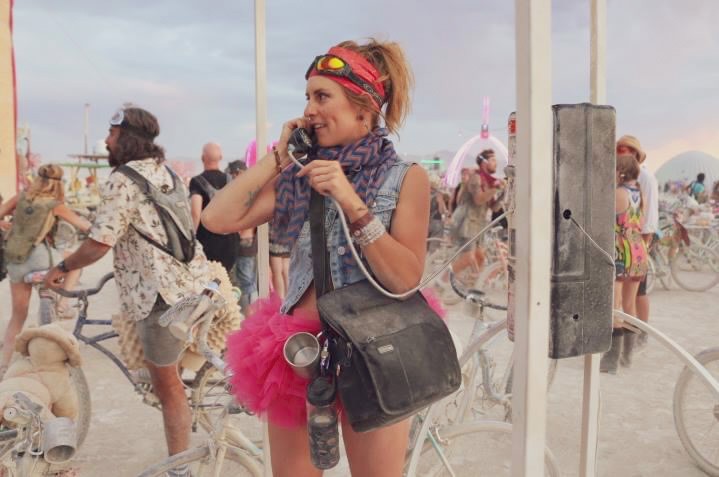

Alright – so today we’ve got the honor of introducing you to Betsy Bower. We think you’ll enjoy our conversation, we’ve shared it below.
Betsy, thanks for joining us, excited to have you contributing your stories and insights. Let’s start with the story of your mission. What should we know?
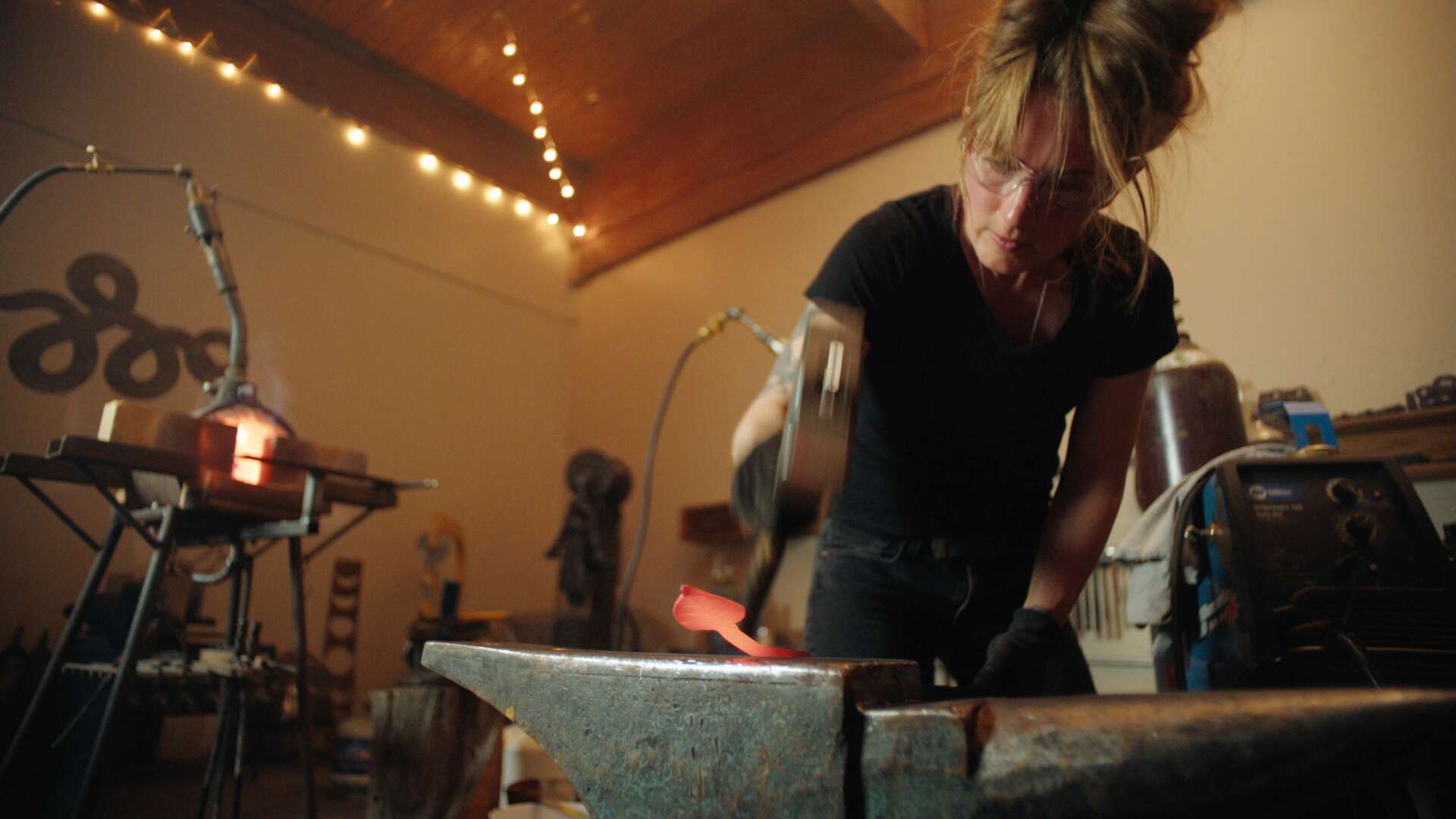
I grew up working in a dusty, cramped shop for my dad, Tom Bower. He taught me how to read a measuring tape, how to finess the settings on a Miller welder to produce a smooth weld, how to wield a torch and a square, and most of all, he took me to blacksmithing demos in Utah throughout my teens. I was captivated by burly bearded men shaping metal with giant power hammers and huge, heavy anvils and well crafted hammers. The smell of the soot and coal fires transported me through time, to a time when the village blacksmith was essential. The blacksmiths made the tools, the weapons, and the everyday items we built our homes with. I didn’t care that I was the only girl in the room. I wanted to swing a hammer and build something too! I observed that anyone can weld two pieces of metal together, but it’s the blacksmiths who practice a craft that takes muscle, vision, technique and a lot of humility. I knew I could never work a desk job, so eventually, it made sense to do what I do best, share my creativity through my favorite medium and create art with it. I believe it will be the artists who imagine and craft a better future for our world.
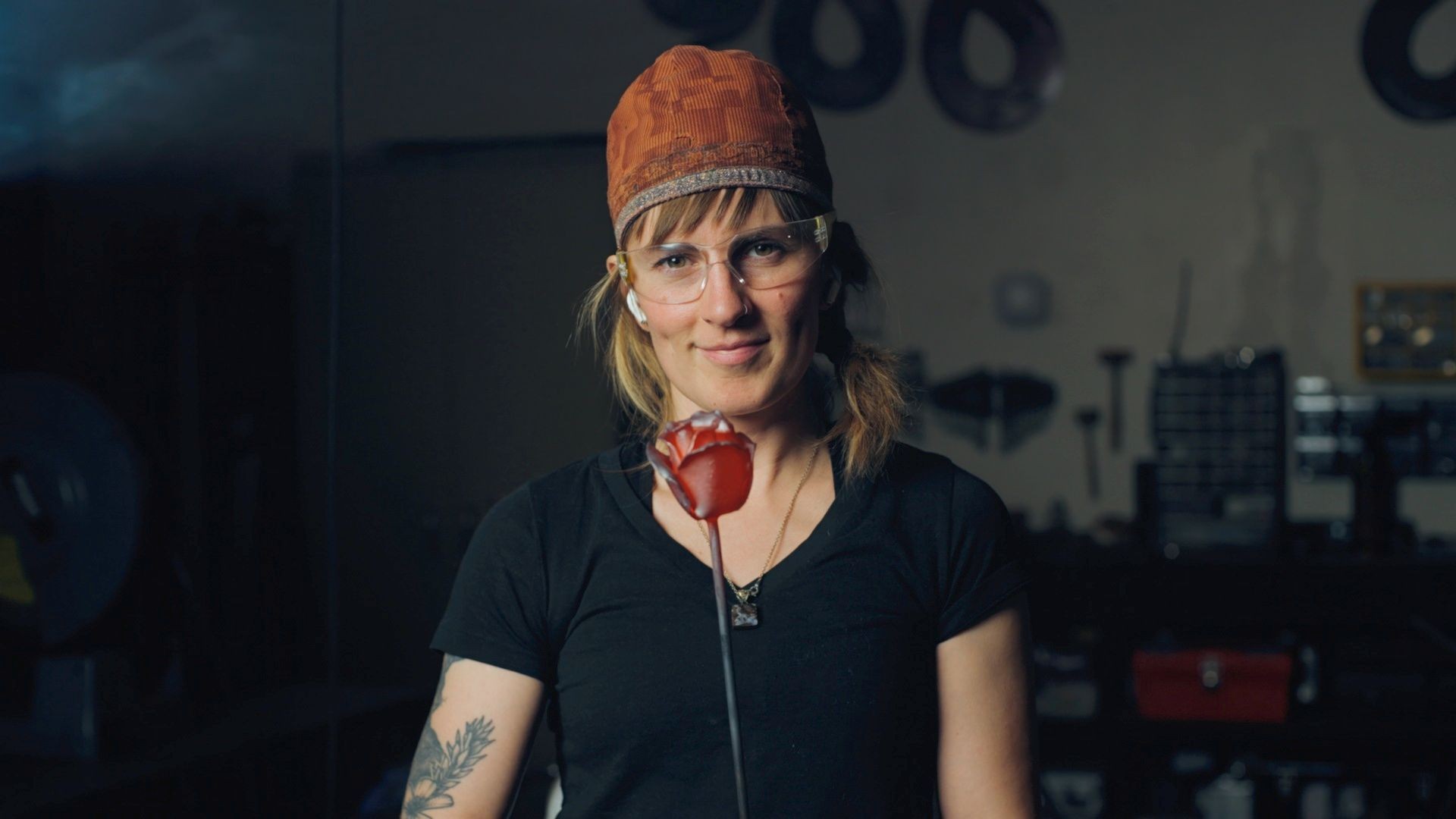
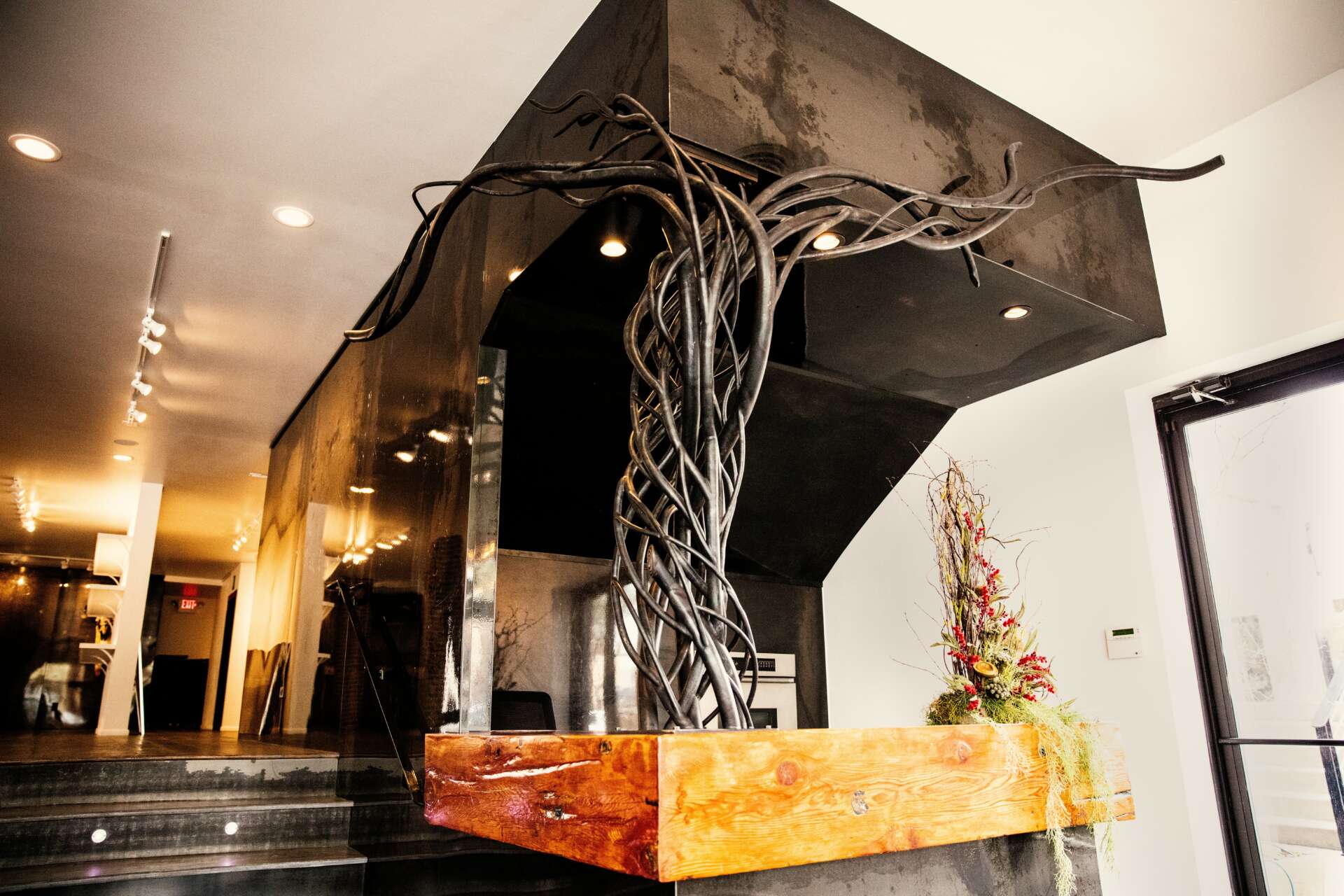
Betsy, love having you share your insights with us. Before we ask you more questions, maybe you can take a moment to introduce yourself to our readers who might have missed our earlier conversations?
My grandma LeeAnn gave me an illustrated book called The Tin Forest by Helen Ward when I was a teenager. It’s about a little old man living all alone with his cat in a small house in the middle of nowhere surround by junk and other people’s trash. He reads books and dreams of being somewhere else, somewhere with exotic animals from a rain forest. Every day he burns and buries trash and keeps dreaming of living in a jungle or somewhere exciting. Eventually he takes the discarded junk and starts to tinker and build flowers and trees and animals too. One day a bird from far away flies through the windswept junkyard and drops a seed that sprouts and grows and spreads. Over time, his tin forest becomes a real forest with life and beauty just like the one he dreamed of. The illustrations are beautiful, and the story rings true for me. I grew up in a windswept place, Casper, Wyoming, where winds reach up to 65 miles per hour. I’d go to my dad’s dusty shop as a kid and I swept the floors for allowance and eventually I graduated to reading a measuring tape, cutting metal, cleaning it, sandblasting, drilling holes, laying out jobs and welding. When I was twelve years old, he helped me construct a flower with a bee perched on it that was about 2 ½ feet tall. I was hooked! He let me create little sculptures with scrap metal and sometimes new parts and pieces he had stacked on shelves or stored in 5-gallon buckets. My dad travelled to conventions for metalworkers in the ornamental iron industry and met a man named Paul DiFrancesco. This man helped run a blacksmithing club down in Utah. Paul built an ornamental iron shop where he hosted blacksmiths from different parts of the world. They demonstrated there and I took these lessons home with me and practiced in the corner of my dad’s shop where his blacksmithing tool collection was slowly growing. He passed the more creative jobs onto me, and I eventually grew out of that cramped corner and into my own shop in the neighboring town, thanks to a friend, Shawn Rivett, who dreamed up many stunning projects for me to work on with him.
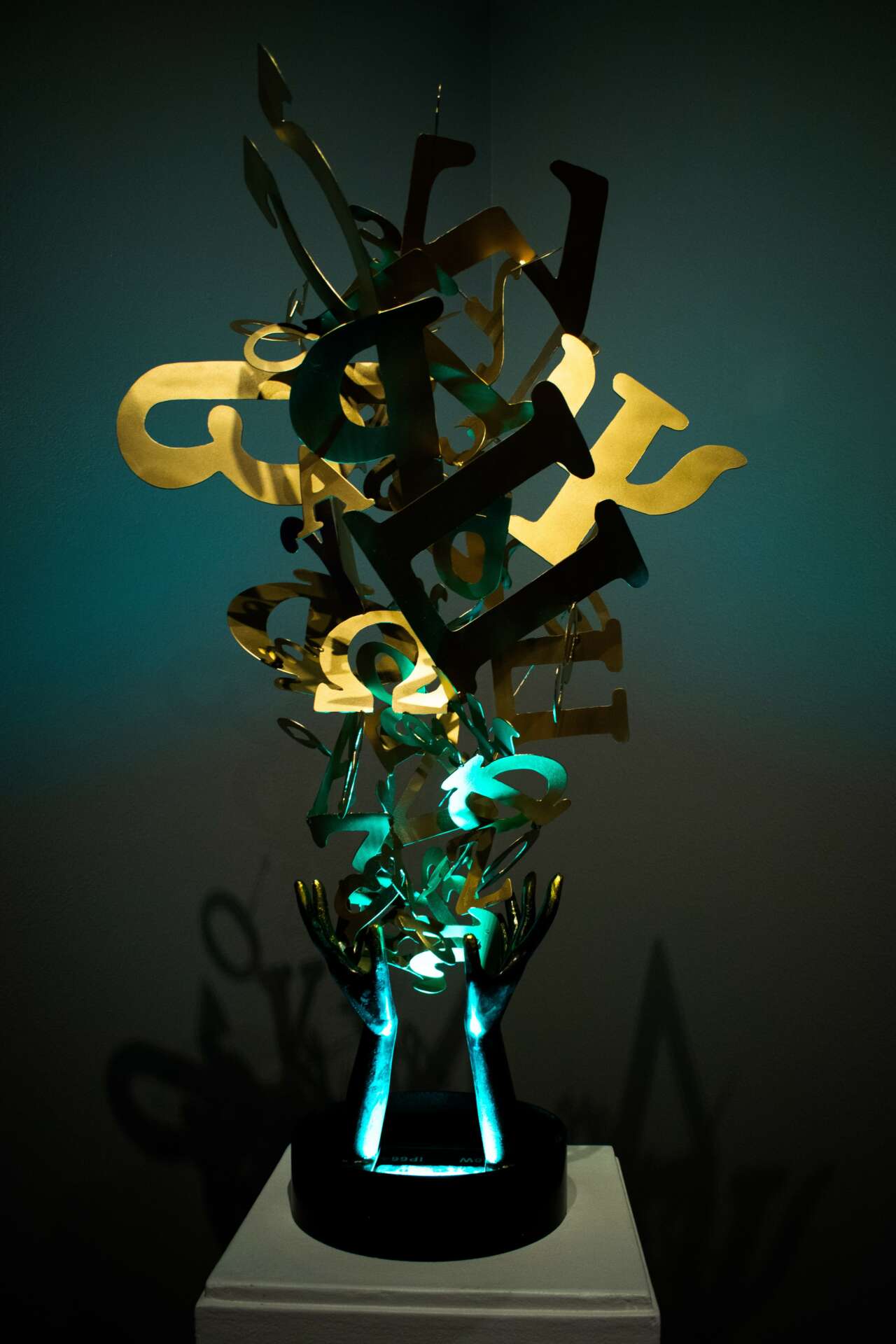
I played bass in a band called The Foreign Life, and I hosted practice in my studio for a while. The drummer, Eric Wimmer, was a museum curator, writer, filmmaker, collage artist and photographer who decided to write an article about me for 307 Magazine. From there, I picked up more jobs publicly and privately, and my own version of The Tin Forest started to grow. In 2020, I was able to put together a show for the Nicolaysen Art Museum, entitled “Dreams.” I’ve spent over a decade recording as many of my dreams as I can remember upon waking. My dream journals started piling up and I wanted to figure out what to do with them. I attended a Dreaming 101 class in Denver by a dream therapist, Naomi Sangreal. Her whole spiel was about how people can solve problems using their dreams. With her help, I concluded that this is exactly the thing I needed to do with my dreams. As per her instructions, I utilized my nighttime dreams as queues and prompts in my waking life. I followed her lead on making art with images from my dreams. I took it a step further and held a workshop where I lead other people through a meditation where they held a dream in mind and allowed it to unfold. After the visualization process, I had them draw what they saw in their imaginations. Bringing material from the unconscious to the waking world is a powerful tool that connects the frontal lobe of our brain to the much larger and more mysterious parts of our brain, thus potentially providing meaningful breakthroughs and connecting the dots of everyday life. For me, it’s been a long, winding journey following a trail of breadcrumbs.
I share this story in a documentary entitled, The Steel Sculptress, by my good friend Anthony Stengel. You can watch it here: https://vimeo.com/799980639 This short film is entering Casper’s very first film festival February 1-3rd. I am also featured in Make Art Wyoming that was also created by Anthony Stengel: https://vimeo.com/472347333
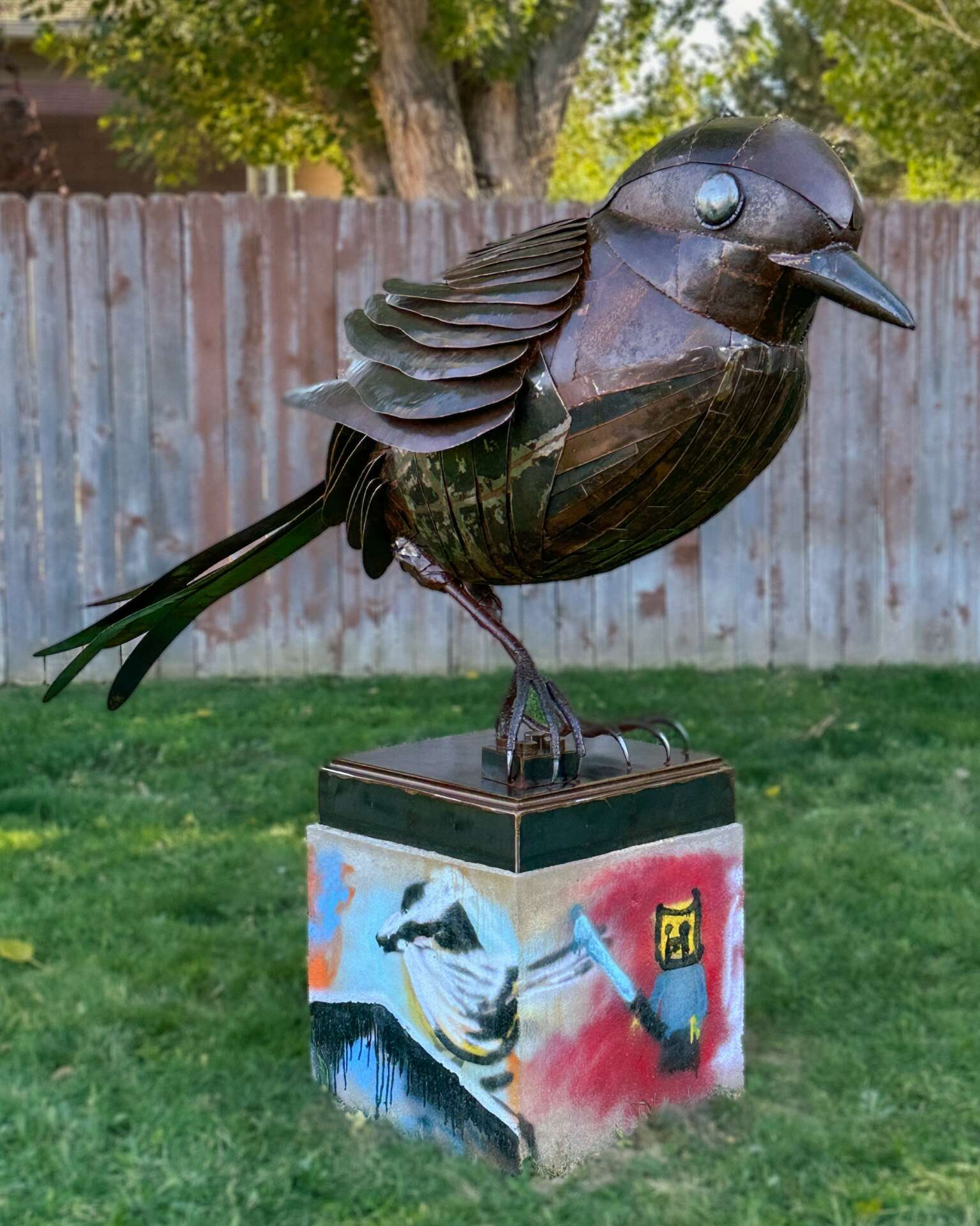
Is there something you think non-creatives will struggle to understand about your journey as a creative? Maybe you can provide some insight – you never know who might benefit from the enlightenment.
Well, yes, but it’s not just non-creatives, it’s also people who don’t stoke the flame of creativity because it’s not always a part of our nature to nurture that which doesn’t come easy. My drumming professor, Dr. Gunderson, taught private lessons to me and my brother, David. He told me that I can really pick things up quickly, but since I don’t have to try as hard, I won’t practice as often, so my younger brother would become a better drummer than me if I didn’t work harder at it. I imagine he told this to my brother as well, warning him that drumming comes easily to me and that if he didn’t practice all the time, I would be better than him. Time has shown the results, and my younger brother is, in fact, the better drummer. Not because of inherent skills, but because he doesn’t stop practicing. I would love to be the better drummer, but I’ve settled on sculptures instead, and nurtured that part of me that craves tinkering in the studio with hammers in place of drumsticks. The other thing I think non-creatives need to know is that creative people invent possibilities, they can be visionaries who see potential futures. But nothing gets done without a deadline. And nothing gets done without supportive structured people. It takes all types of personalities to come together to make dreams come true. This is what I wish they taught in schools: how to integrate whole brain thinking, and how to work together with others. There is a South African phrase called ubuntu, it’s the idea that even though you can go faster alone, you actually go further with others. My friend SJR put it this way, there’s a cake across the field, and everyone is racing to get there first to eat more cake. But with ubuntu, the people know that if they lock arms and arrive there together, the cake tastes better.
Is there mission driving your creative journey?
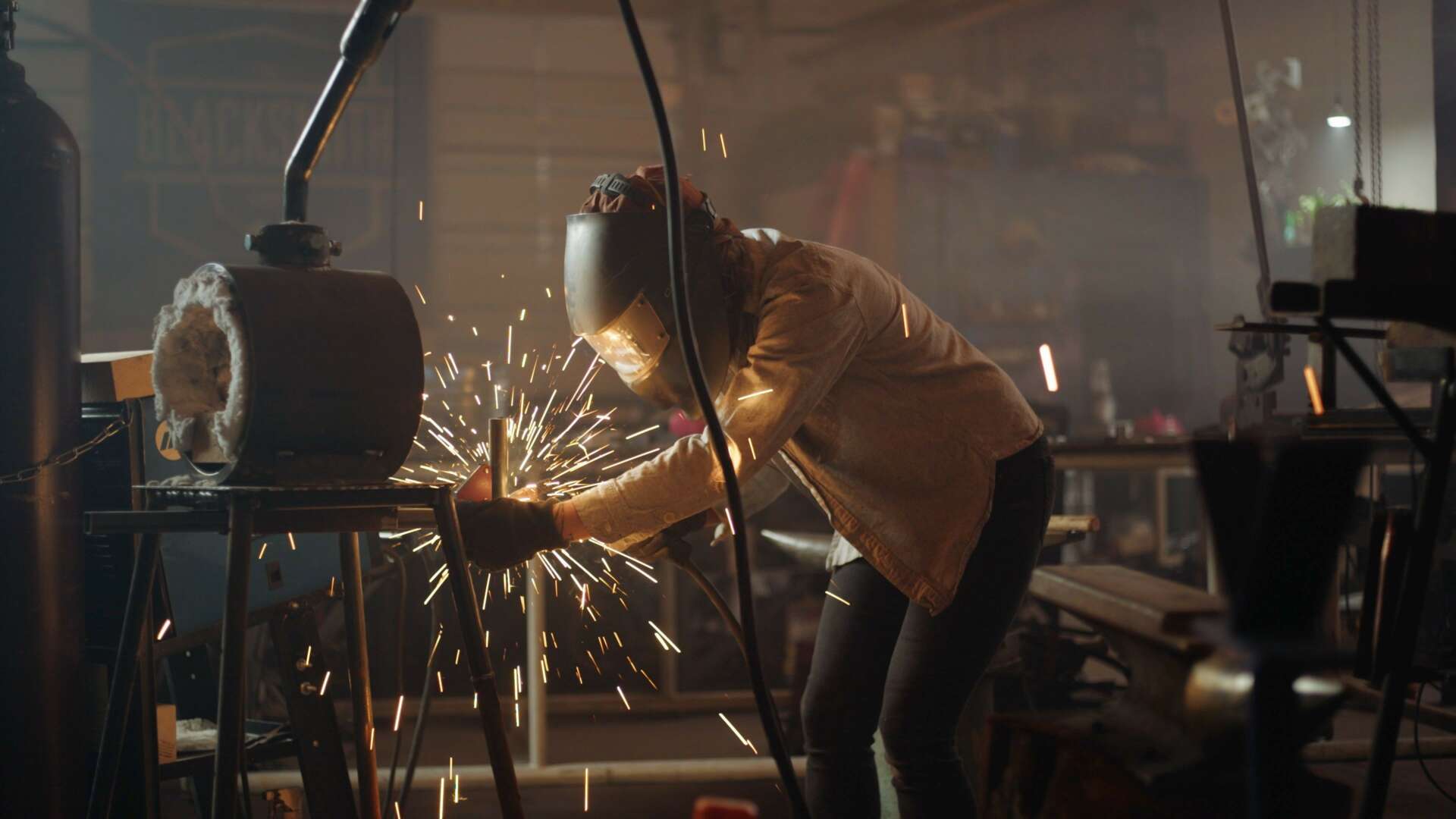
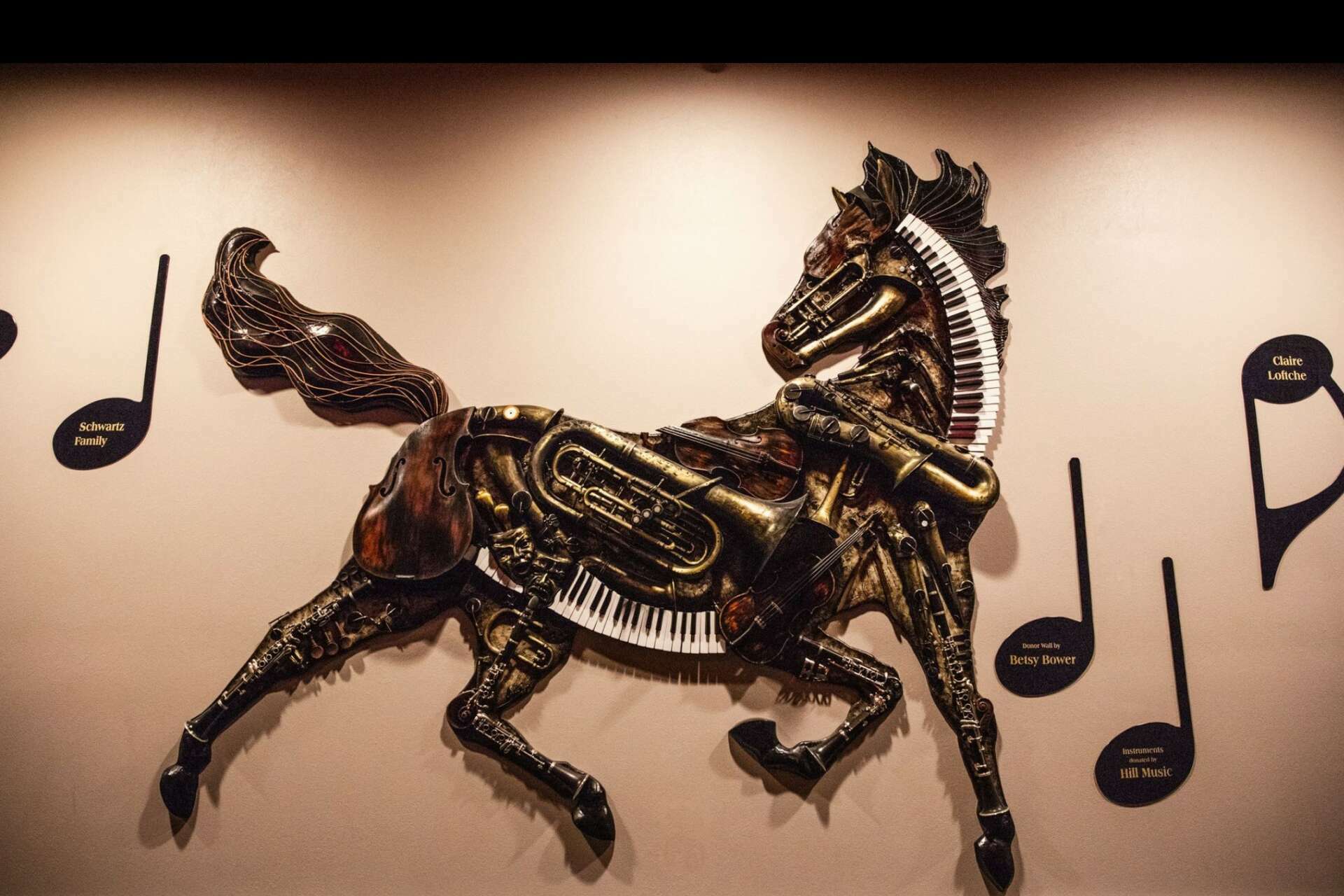
I made the journey to Burning Man in Black Rock City, Nevada, for the first time in 2009. Before that experience, I felt lost, like I was jumping from job to job seeking some type of career that would be fulfilling and utilize my creativity. I wanted a fun job; I tried on so many hobbies. I ran away and joined a circus, became a Reiki master, became certified in Japanese flower arranging, I took woodworking, jewelry classes, drumming lessons, and I lived in Hawaii for a semester, where I took Chinese Language Film as a writing class and got to meet Zhang Yimou, my favorite Chinese director, at a film festival on Oahu. I admired him because our professor informed us that he had few choices in his life regarding his career, and once he made that choice, that was it, that would be the track he stuck to for life. He chose filmmaking because he could tell stories that not only entertained, but his films also empowered the audience by highlighting the resilience of people. Studying a master at his craft inspired me to want to stick to something myself; to really spend time growing in one area. I kept returning to metalworking over and over, welding for my dad, in his ornamental iron shop, and exploring blacksmithing. After measuring and cutting hundreds of boring, straight pickets and building the not so creative, but very functional railings, I decided there had to be more that I could do to bring my creativity to life. This is about the time I bought my ticket to Burning Man, carpooled with a new friend, and ventured out into the desert and found my soul tribe. There, I saw some of the most incredible art of my life. If the vast majority of society operates from the left brain, then the Burning Man community overcompensates with this massive right brain explosion. Everyone I encountered at the Burn was living the lives that they wanted to be living, that they chose from a place of joy. Pilots with the freedom to fly anywhere, journalists writing for cool, feminist magazines, spa owners who practice massage and dive deeper into shamanic work, and a whole community of a hundred women welders who ran pyrotechnics, robotics, and lighting on a larger-than-life metal sculpture they installed in the desert with the motive as simple as doing it for the love of it. This fanned the flame inside of me to do what lights me up. Seeing so many others play as adults, in the child-like wonder of their hearts, showed me that I could be one of them, too.
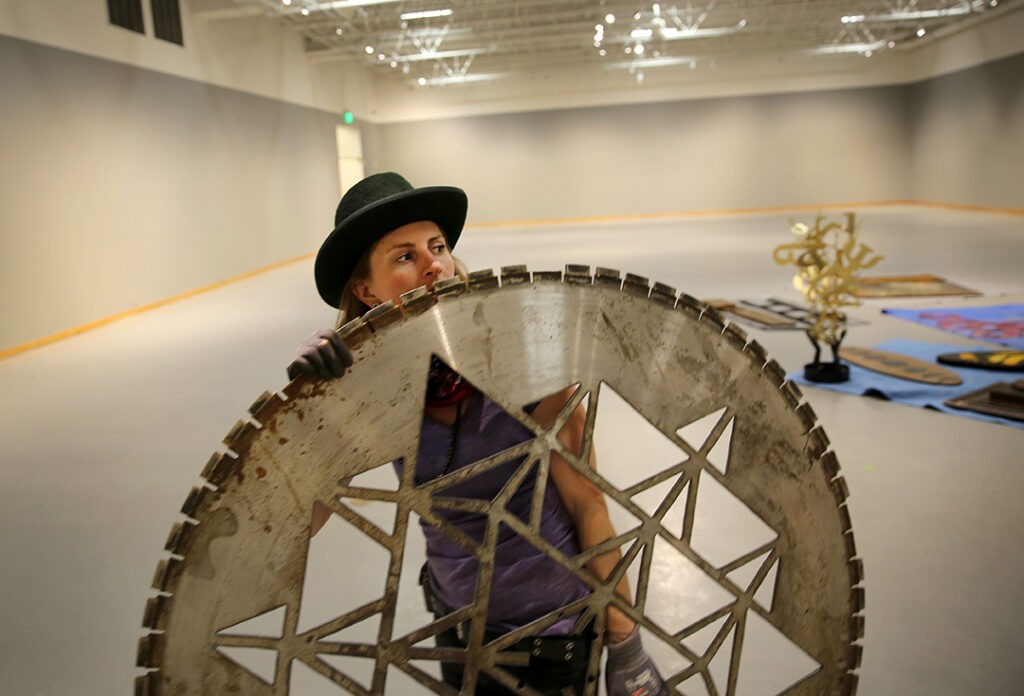
My mission is to light the world on fire with right-brain fueled passion, to inspire more creativity, wonder, transformation, and light. Like in the game of Othello, or Reversi, flip the linear left-brain rigidity into a radical right-brained revolution. The world will always need more art, more beauty, more love, more intuition, more connectedness, and more joy. We all benefit when more people tap into their inner well of creativity.
Contact Info:
- Website: Betsybower.com
- Instagram: @betsyinferno
- Facebook: https://www.facebook.com/betsyinferno
- Youtube: https://youtu.be/SXuQSQkBEwY?si=bjb4gz8ZK-3q2rPW
- Other: https://vimeo.com/799980639 https://vimeo.com/472347333 TikTok: https://www.tiktok.com/@betsybower
Image Credits
Dan Capeda Cari Faye Antonovich Roy Uptain Anthony Stengel of Stengel Media
2 Comments
jack hendrickson
Betsy my name is Jack hendrickson I am a self taught lapidary stone artist here in Casper, I am currently working on a 75# piece of blue dendritic crystal and agate sculpture and need help making a stand for it. This is going to be a very important piece and we need something special for it as it a very complicated shape. I do not have Facebook but I would like to to contact me about his project and further projects as a collaboration. One look at my work will tell you all you need to know, please contact me through my website or call 3072510170, look forward to meeting you. Thanks jack
jack hendrickson
to the website director, could you please forward this message to Betsy, as i do not have contact information for her.thank you