

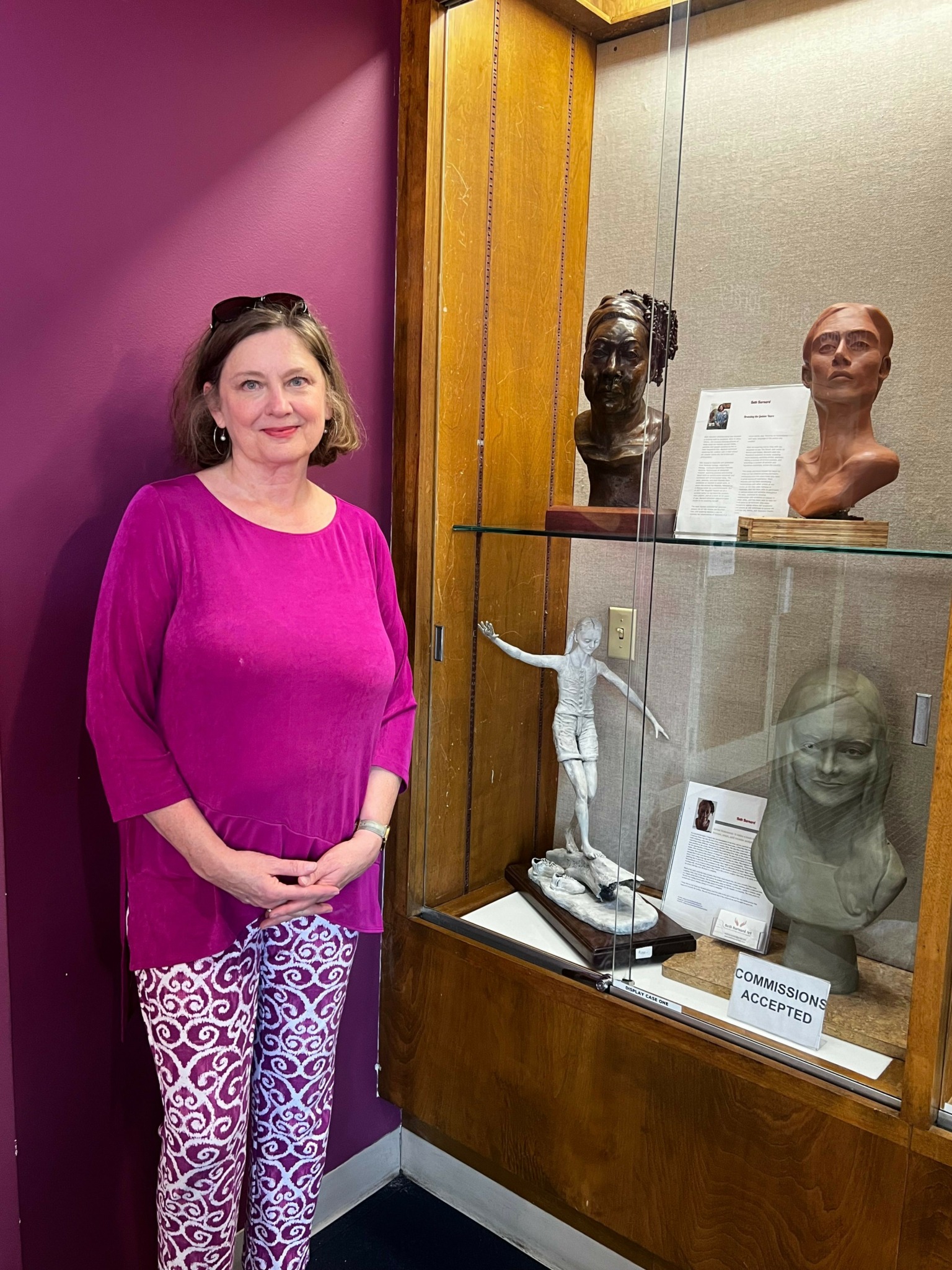

We’re excited to introduce you to the always interesting and insightful Beth Barnard. We hope you’ll enjoy our conversation with BETH below.
BETH, thanks for taking the time to share your stories with us today How did you learn to do what you do? Knowing what you know now, what could you have done to speed up your learning process? What skills do you think were most essential? What obstacles stood in the way of learning more?
Learning the art and craft of portrait and figurative sculpture over the last 7 years has taken me on a journey that’s literally taken me across the country and via video, across “the pond” as they say.
It began here in Nashville, where I live, at the Open Studio of Alan LeQuire, a successful local sculptor, where I first attempted to draw, and eventually began to sculpt from live models. My first attempts at sculpting were pretty abysmal, but I fell in love with clay the moment I touched it. When Alan went out of the country, I then transitioned to work with live models at Warehouse 521, owned by artist Jeanie Smith. I opened a studio at the Clay Lady Campus where I took a class from sculptors Mark Schleiker and Nan Jacobson, both of whom specialize in working with water based clay. Then the Pandemic hit.
The shut-down turned out to be a great time to further branch out and study sculpting from home. A friend of mine taught mold making in the on-line program, New Masters Academy, a program I highly recommend. There I took from very gifted and seasoned sculptors and learned more about drawing as well. About that time, I had also learned via Instagram, about Amelia Rowcroft’s on-line videos, teaching portrait and figurative sculpture.
Just as the country was about to begin to open-up again from the Pandemic, I learned that I had been accepted into an Emerging Makers Tent at the Tennessee Craft Fair, and I also learned that they had awarded me a scholarship to attend a week long workshop at the Appalachian Center for Craft. Since that time, I’ve attended workshops with seasoned sculptors across the country, from Maryland, to Pennsylvania, to Las Vegas, to Illinois, to Chattanooga, to Napa, as well as local workshops.
I’ve found Instagram to be a great place to network with other artists and sculptors as well as a great place to learn about the workshops they provide. The workshops last anywhere from 3 to 6 days and have varied in cost from about $275 for a local water based clay class to $2000 for portrait and figurative sculpting classes.
I think it’s important to learn from as many different teachers as possible because they each give different information, and have varying perspectives and tips. Some focus on anatomy and others focus more on profiles, composition, and finishes. Some are avid about measuring and others are more focused on developing one’s eye. Some use hands for the majority of the creation, only using tools for spots they can’t reach. Some use tiny bits of clay to slowly build a work and others slap larger amounts of clay on an armature. All the while, you’re learning from more and more instructors, you’re also developing relationships with more and more student artists and sculptors, creating more and more of a support network, while enjoying yourself and the comradery. You’re becoming a part of the sculpting community.
One thing I’m realizing about sculpting is that it’s a much more expensive endeavor than I’d ever imagined. Although I’m semi-retired from my career as a psychotherapist, I still need the income from my small therapy practice to finance the cost of my art. I had no idea that the pursuit of sculpture would be so costly. I utilize a foundry, Inferno Arts, outside of Atlanta for bronze work and have molds made and resins cast by Spence Sculpture, in Atlanta. As I get ready to have my second bronze cast, I have to remind myself that there is a possibility that it may never sell regardless of how much it costs to create. I’ve had to learn that I’m not doing the art to make money, I’m doing it because I love to do it and because the act of creating gives me energy when in “the flow.” Still, there are times I know I need to be more financially practical and learn to make my own molds and cast resins myself to save money. That’s truly an art in and of itself and I’m always afraid that I’ll mess up what I’ve created…aside from the fact that I don’t enjoy making molds or casting.
There are times that I wish I would have started sculpting earlier in my life, especially as I see how improvement happens with practice and experience. Sometimes I wonder what my work would be like now if I had started earlier, but I’m not sure that I would have had the persistence and fortitude earlier that I seem to have developed at this point in my life. I look forward to seeing where sculpting will take me in the Winter of my life.
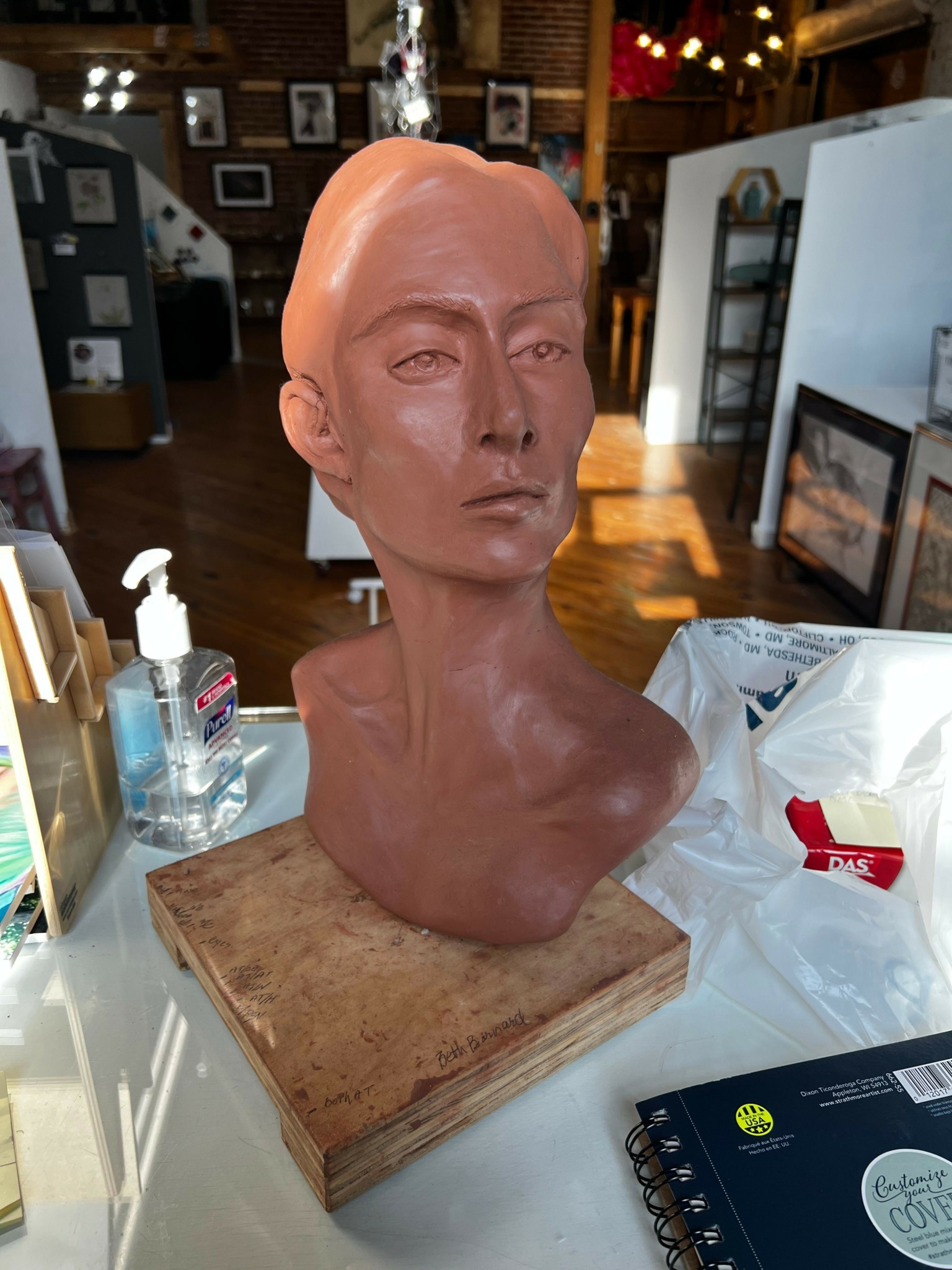
As always, we appreciate you sharing your insights and we’ve got a few more questions for you, but before we get to all of that can you take a minute to introduce yourself and give our readers some of your back background and context?
I’ve been a psychotherapist most of my life, so I’ve observed a lot of really intense feelings and body language over the years. I think that’s helped me portray emotions in the sculptures that I do, as people describe my work as expressive and life like. Most of the time I don’t plan for that to happen, it just does.
Although I came to sculpting as a fluke I previously described, I’ve stuck with it, as anyone does with true passion, mostly because it brings me a fulfillment like no other hobby ever has. I keep wanting to learn more and more and the more sculpting I do, the more muscle memory I build, so it seems to get a little easier over time.
I don’t think there’s particularly anything that sets me apart from other portrait or figurative sculptors except maybe that I started sculpting so late in my life. I think it will really be helpful as I get even more time on the clock to have sculpture to look forward to, to keep working on.
On the other hand, one difficulty that may set me apart from other sculptors may be a condition I have called essential tremor. It affects my voice and sometimes gives me a tremor in my hands. I don’t know whether I’ll ever get to a point where I’ll feel ready to teach, but my voice may be a deterrent from that. I could probably use one of the PA systems that tour guides use, but I would still sound like Kathryn Hepburn in her golden years. So far, I’ve been able to work around the hand tremor pretty well, as at least for now it seems to be effecting my non-dominant hand more than my dominant hand. I also find that when “in the zone, sculpting doesn’t seem to be that much of a problem. I wish I knew more about the workings of the physiology of the mind to understand that.
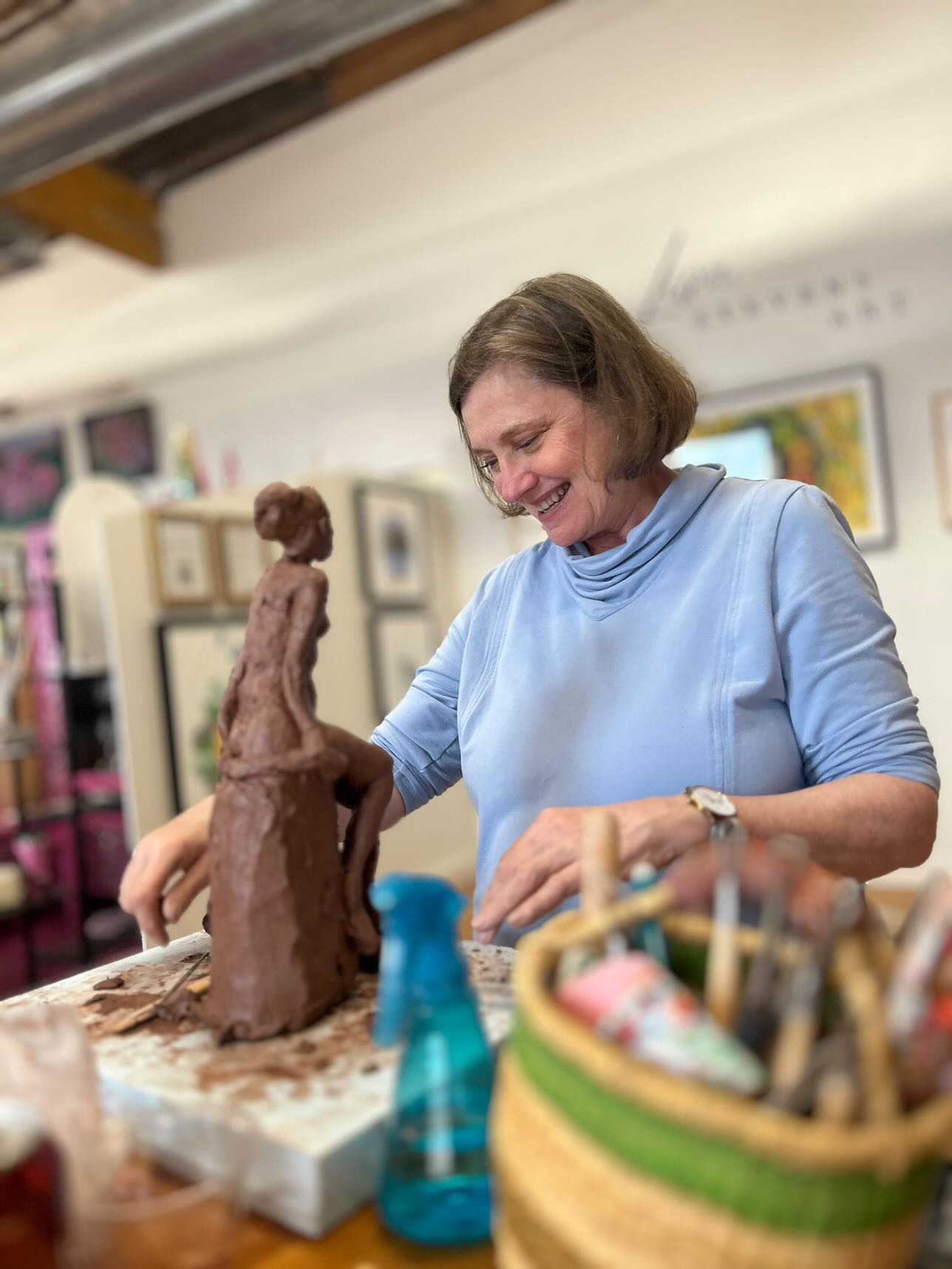
Do you think there is something that non-creatives might struggle to understand about your journey as a creative? Maybe you can shed some light?
I’ve been going to the TN Craft Fair since my college days and especially early on, would look forward to the days when I’d be able to purchase a really nice work of art. I was always struck by the expense of art, but I never gave a thought as to why art was so expensive.
I had no idea about the expense I was getting into when I started to sculpt. It wasn’t so expensive to use water based clay, glazes, underglazes, tools, and brushes. I even bought a kiln. But when I started going to workshops with seasoned sculptors, the costs began to accumulate…seriously accumulate.
First, there is the live model’s hourly rate, the use of Plastalina clay that is about $15 per 2 pound brick, the sculpting stand on wheels, the many, MANY tools, the warming ovens, the workshops (one 3 day workshop cost $2000)!!! Then there is the travel, the accommodation, the food, the cost of getting a mold made ($500 to $750), the cost of resin casting ($400 to $500), then the cost of bronze casting ($2400 for a portrait sculpture with braids).
With the exception of really small portrait sculptures I make, most of my portrait and figurative pieces take about 50 hours to complete. That doesn’t include getting a mold made or cast. What do you get paid per hour? Think about it. I hope this helps you understand why portrait and figurative sculpture is so expensive.
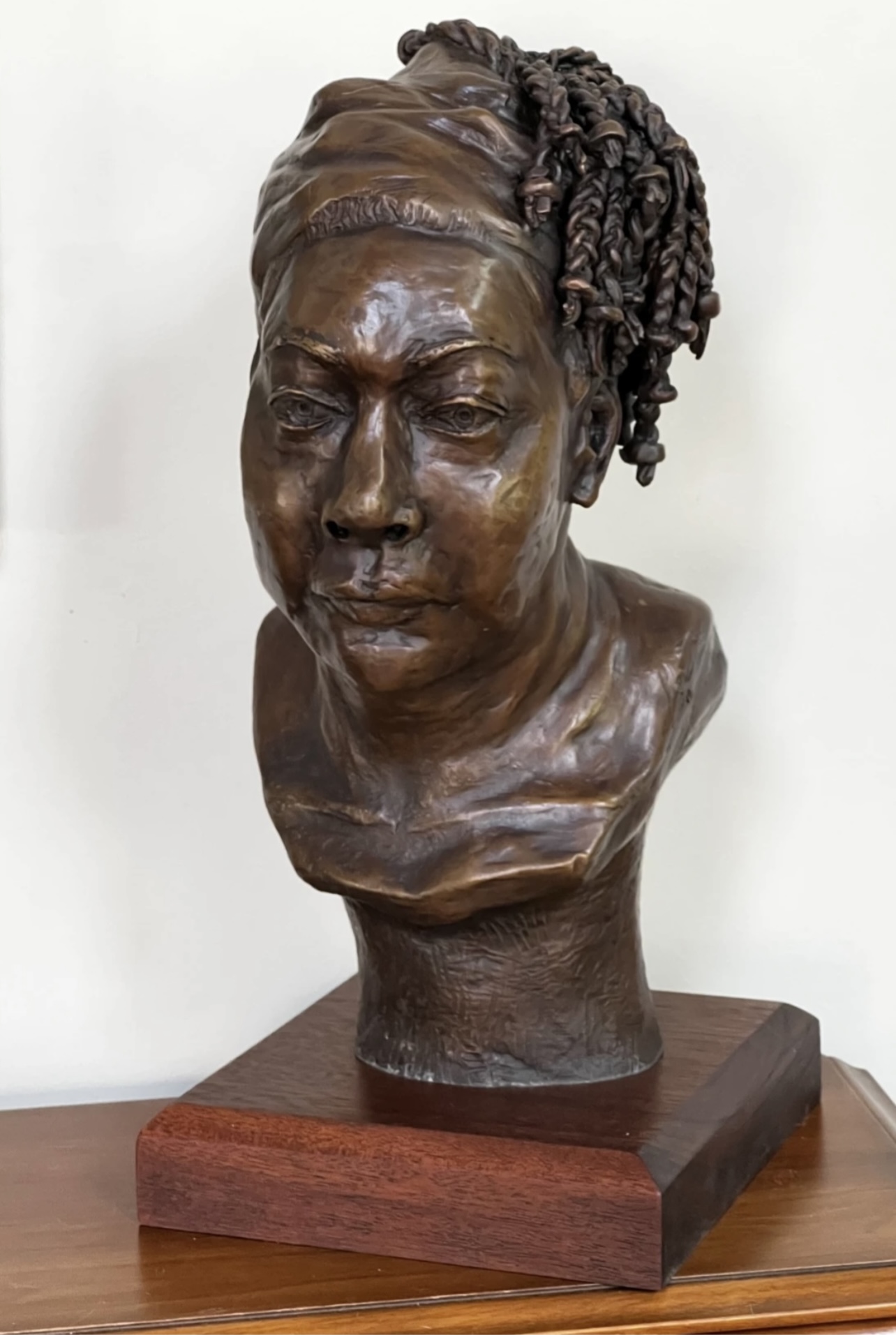
For you, what’s the most rewarding aspect of being a creative?
For me, it’s both the positive affirmation in getting accepted into a show, exhibit, or gallery, as well as seeing the look on someone’s face at one of the shows when they fall in love with one of my works.
Being accepted into a show or exhibit for me seems to validate that I’m doing what I’m supposed to be doing, that my work is appreciated and valued. It gives me a feeling of belonging to a community of artists, and further enriches my sense of self.
When I see someone’s face light up as they express joy in seeing one of my sculptures, whether they make a purchase or not, it’s worth it to see that I’ve brought another person joy.
Contact Info:
- Website: https://www.bethbarnard.com
- Instagram: [email protected]
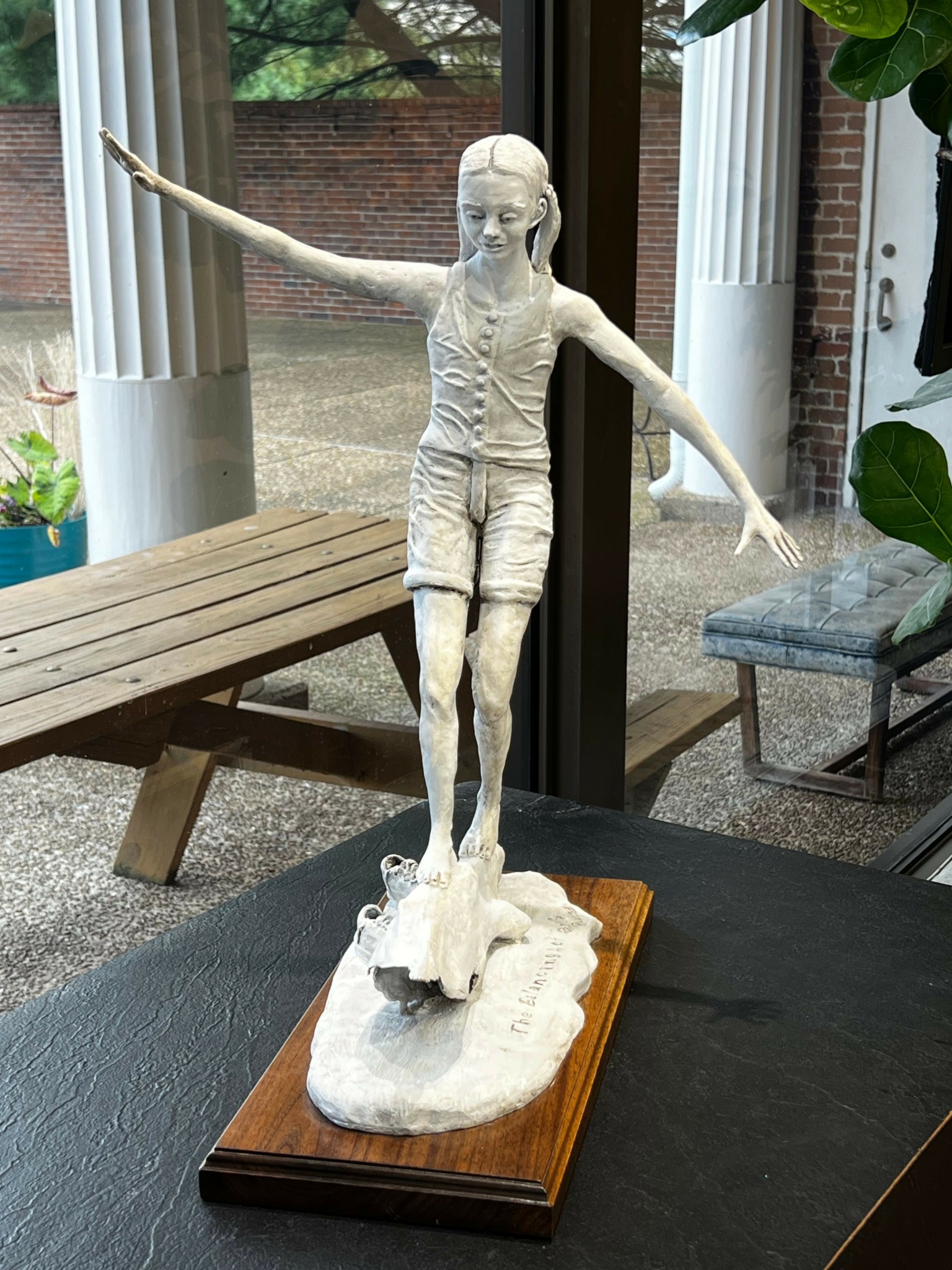
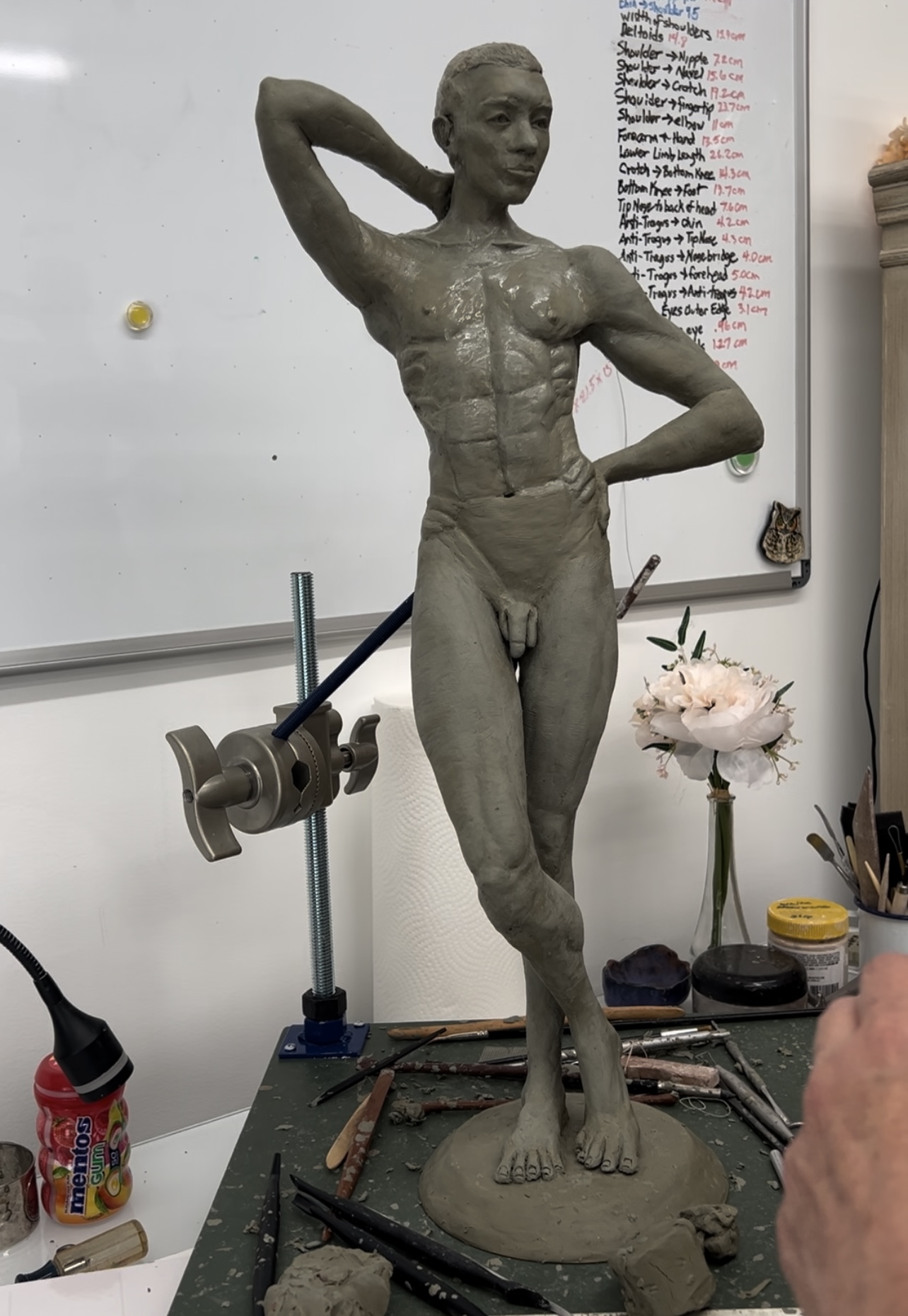
Image Credits
Not applicable