

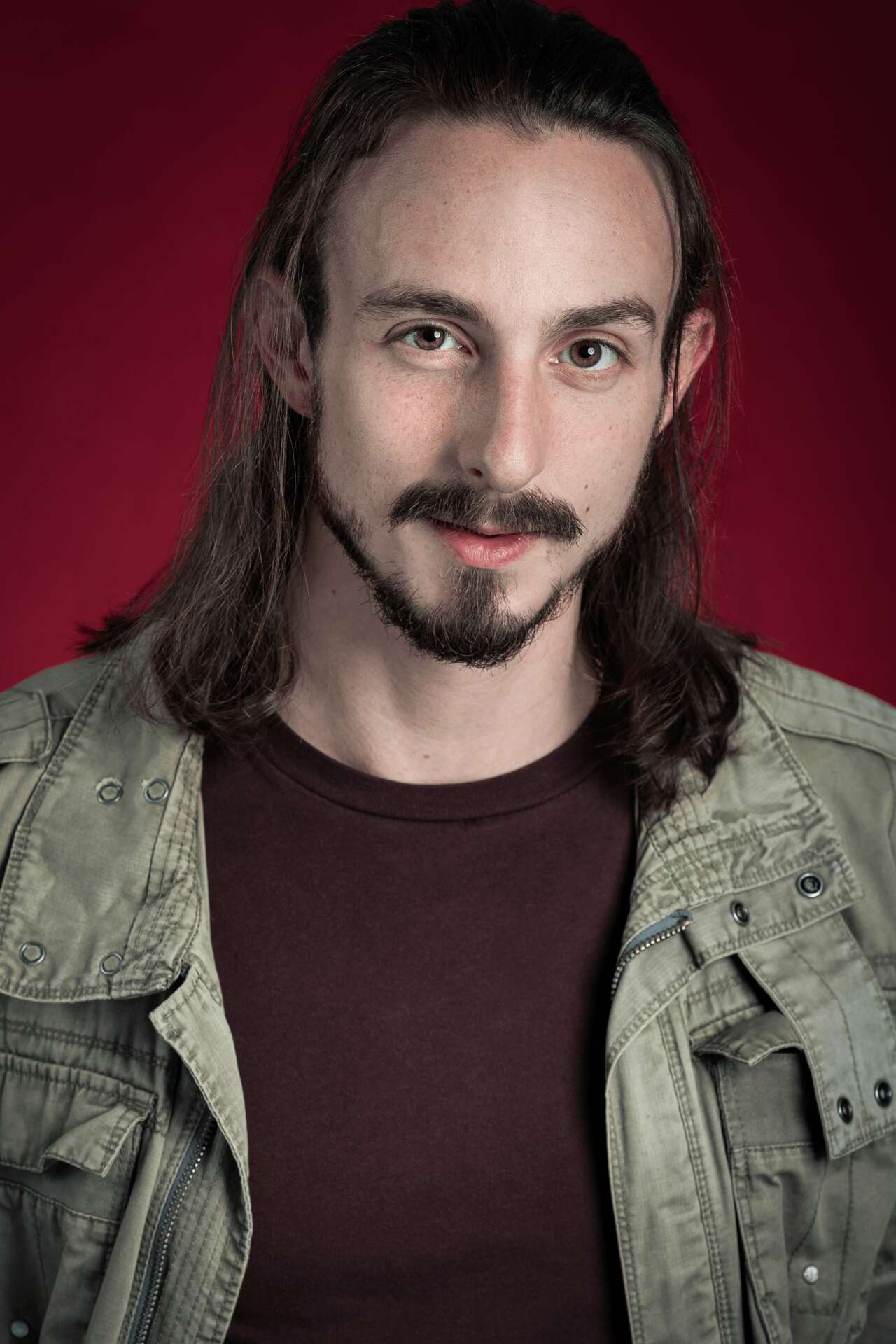

We recently connected with Benedetto Robinson and have shared our conversation below.
Benedetto, thanks for joining us, excited to have you contributing your stories and insights. Are you able to earn a full-time living from your creative work? If so, can you walk us through your journey and how you made it happen?
Is it possible? The short answer is: at times, yes.
The much longer answer is: at times, yes — but only because of the confluence of enormous good fortune, good luck, friends to rely on, a supportive family, and a willingness to cut some corners where comfortable living is concerned. Even with all of that, I have had stints where I have had to take other work outside of my chosen profession as an Actor and Action Performer. Those times are hard, but they are nothing to be ashamed of.
I arrived in the City of Atlanta some ten years prior, and was able to move in with some acquaintances from my college days, which was an early blessing. In the beginning, I worked as a host and server at a fine dining restaurant and auditioned for everything, every chance I got. I supplemented my income twisting balloon animals for children, which I absolutely loathed., and the first contracts that came through as an Actor were terrible. Still, they allowed me to meet people who would later become effective long-term roommates and found family. Those ugly early contracts were essential in beginning to build a community with which to attack the beast of this career, and upon whom to rely.
Sidenote: It’s about the people. Some will say ‘It’s About Who You Know’, but I would go one further- for me, it’s been ‘About Who You Care About’. A favorite anecdote of mine- and of one of my best friends and mentors – is that a Rising Tide Lifts All Ships. When you find success, always have a hand back for those around you. The more care you take to help those around you, the more they – and in turn, the world – will help you.
After those first few ugly contracts, I had the fortune to be referred to a Film and Television Agency by a friend from school. That, as it turns out, is no small fortune, but a great one. If someone can vouch for you in a room somewhere, get your resume and picture in front of somebody with power, it is a tremendous gift and not one to take for granted. Through it, I was able to sign with my first representation.
Even still, the auditions that came through that agency were not enough to pay my bills. I worked – and continue to work – the equivalent of a full time job each week seeking work in theatre, driving for auditions at regional houses around the country. Having access to a car is another blessing.
Through tenacious searching, auditioning, and working to pay my bills, the contracts I received in theatre eventually became a little bit better. By cutting a certain corner on quality of life, I was able save some money on rent by moving into an enclosed porch-space on the side of an apartment whose bedrooms were occupied by two friends of mine. The situation was less-than-ideal in that it was not temperature controlled, which was uncomfortable in the heat of the summer and worse in the cold of the winter. Through some perseverance, sweat, a lot of heavy blankets and a good space-heater, it proved to be a living space that satisfied my needs quite cheaply.
Over the course of the next few years, I began to book better and better work. I was able to save a little bit of money and after meeting a long term romantic partner – another blessing – I was able move with them into a true, insulated apartment room. I developed a skillset as a fight choreographer and action performer along the way; it was something that was related to Acting that I was fascinated by, and it has proven useful in finding work both as an actor and as a fight performer along the way.
Sidenote: it is good, it seems, to diversify your skillset. If something adjacent to your work as a creative is interesting to you, learn it too- be it journalism, costuming, dance, singing, speech pathology, or truly anything else that piques your interest. If you like it, don’t keep yourself from it because it’s not exactly the career you want; do it on the side and enjoy it if you can. Life is short, but life is also very long and it’s not often easy. I think it’s important to take what joys you can, wherever you can find them.
The effort never ceases, and it seems even to this day that things are always one step away from needing to return to a “survival job”. In lean times, I’ve sold headphones for silent discoes, cleaned carpets, worked warehouses, and dabbled in bartending. Do what it takes to survive, and come back when you can. Never give up on yourself, nor on your dreams.
All that said: we are all responsible for the actions we take and the impacts we have on our surroundings, regardless of our intentions. I believe we must rise to that responsibility at every turn.
I’ve found that the life I’ve chosen is a risky one, and sometimes it doesn’t pay off. Still, it must be acknowledged that I ride on a plethora of blessings that suit my career; I mentioned above the fortune of an early pair of housemates from school. That’s a blessing. Having had access to education at all, THAT’s a blessing. Access to a car: huge blessing. A fortuitous recommendation at a fortuitous time: a blessing and a gift. A partner who shares in the burdens – financial and otherwise – of being alive: an huge blessing. All these things are blessings. I am also blessed with a family that has allowed me to attain higher education without incurring crippling debts. I have generally good physical health. Because I am male-presenting and white, I do not suffer workplace discrimination to the same degree as many of my peers, nor do I fear to walk alone at night. All of these things have given me a leg up in holding onto the will necessary to deal with the horrors of everyday life, let alone an attempt at a career as an artist. That must be acknowledged.
Your first order of business is to take care of yourself, those you love, and those you are responsible for. If that requires outside work, do it and have no qualms. It’s all in the service of living a healthy life.
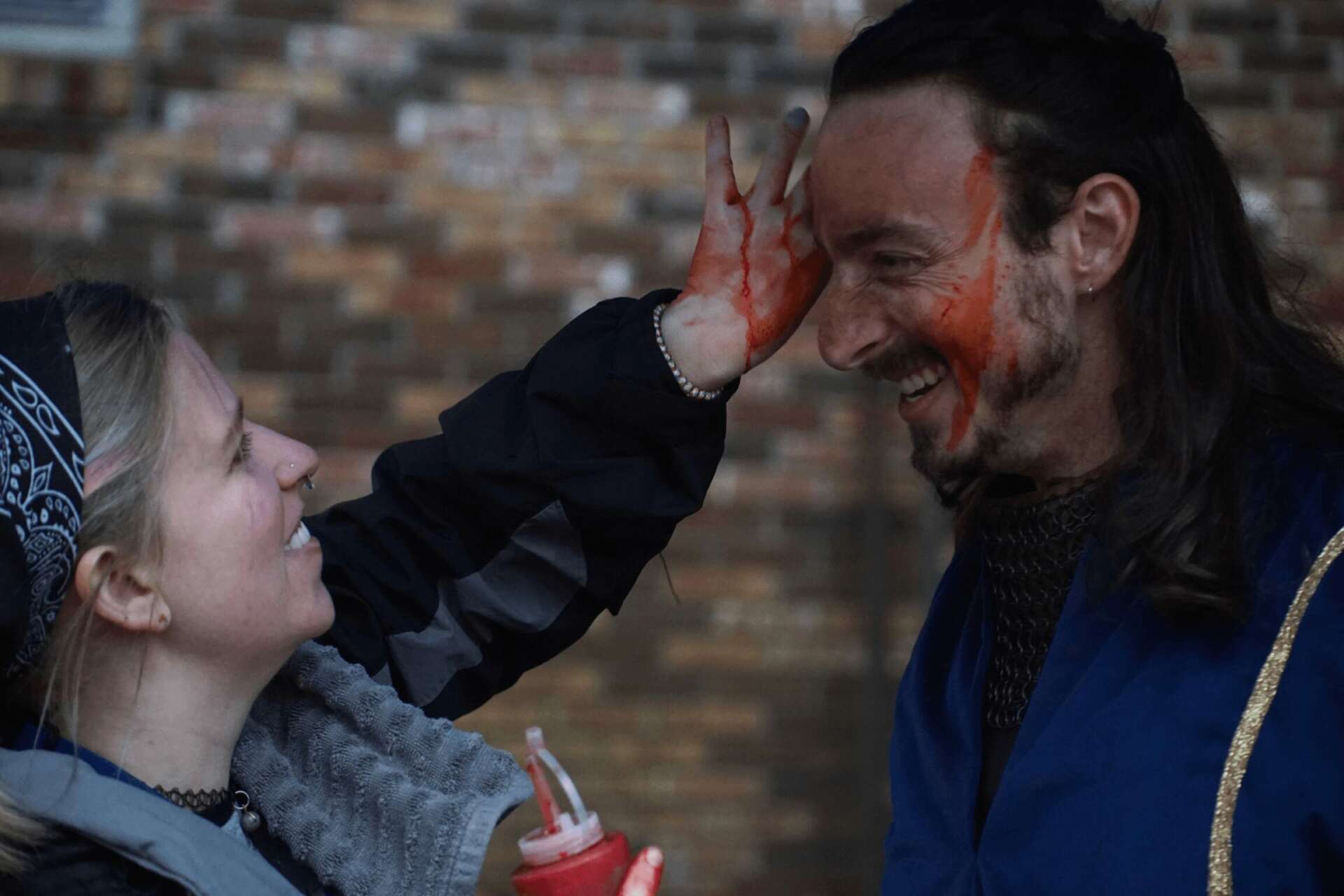
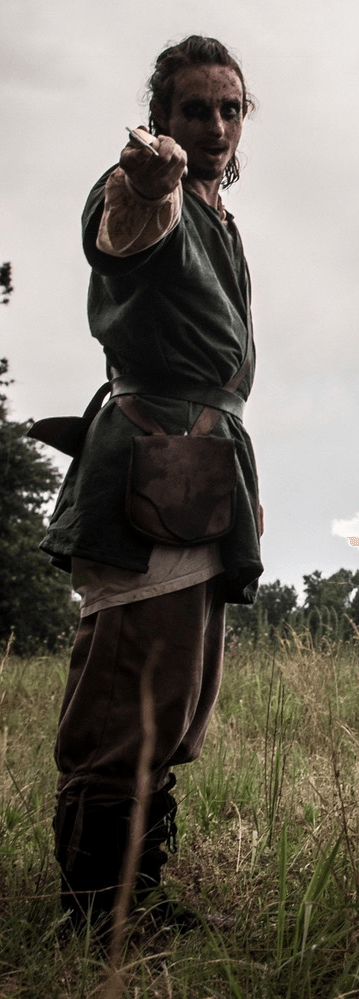
Benedetto, love having you share your insights with us. Before we ask you more questions, maybe you can take a moment to introduce yourself to our readers who might have missed our earlier conversations?
I am an theatre actor and fight choreographer with a strong focus on naturalism; I find that I have the most success in my work when playing characters grounded in reality, characters who are usually pretty far from farce or absurdism. I have a strong preference for period drama and Shakespeare, and a specialty skillset in period style and action performance. Acting is my first professional love, and I am always seeking opportunities to practice it.
I have many years of training in theatrical violence in many different styles with a strong focus on swordplay. I have spent several years as a fight choreographer, fight teacher, and fight performance coach, utilizing weapons ranging from unarmed to longswords, from rapiers to black-powder practical firearms, from knives to spears, and many more in between. I have some experience in armed historical martial arts and in Bobby Taboada’s Balintawak, which is a form of stick fighting designed for close action at high speed. I have a significant amount of fight performance footage readily available to be shared.
I have a strong skillset in vocal production and physical movement, am well-versed in the International Phonetic Alphabet, and have experience with a wide variety of english-language dialects.
I am also a playwright whose work has been produced with consistency over the past four years, and am open and ready to take commissions. The stories I tell are grounded in reality, with a focus on character behavior that is based firmly in their circumstances and individual points of view. My adaptation of Bram Stoker’s DRACULA, entitled DRACULA: THE FAILINGS OF MEN, is a new take on a prolific classic, but features the same dark and realistic tone employed by Stoker in his original. My favorite type of drama is that which is very close to the reality we live each and every day, sometimes with an element of the fantastic or out-of-the-norm which exists as a backdrop, foil, and sometimes even vehicle for the characters’ lived human experiences. A wonderful writing teacher of mine once said that in cases where a fantastical element is in play within a story or script, it *must* not be the focus of that play or script; if you have a story which features a Rocket Launch, a Miracle, or in my case, a Vampire, your story *must* not be about those things, but rather about the experiences of the real human beings who must interact with them. It is my aim moving forward to write a good deal more, and would be delighted to discuss commissions or share excerpts from previous work.
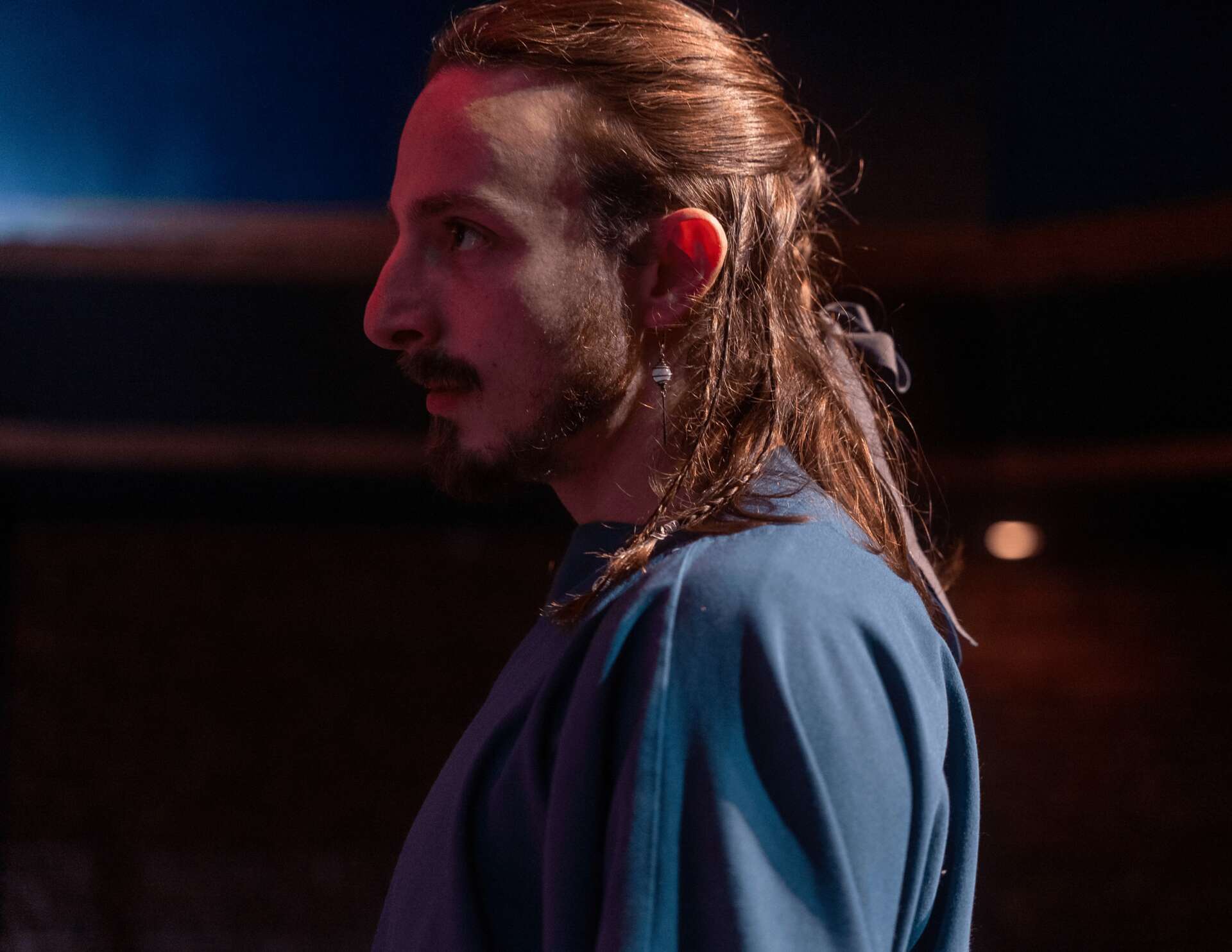
How can we best help foster a strong, supportive environment for artists and creatives?
In this modern world, there’s no shortage of entertainment- and there’s no shortage of things to spend your money on. It’s my belief that storytelling is a thing that human beings have done since the beginning of our organized societies in prehistory. Stories are the way lessons are passed from generation to generation, and stories are *a* way through which the mirror is turned upon our own experiences and struggles. As such, stories afford us the opportunity to reflect upon and learn from the reality we are currently living in. There are many ways to tell stories and many ways to take them in; movies, video games, and digital media are the first that come to my mind. All three require a screen and a power source to be viable.
Theatre is another way to tell a story, and in my opinion, a tremendously valuable way to take one in. There is something special about breathing the same air as the character you champion, identify with, or feel for.
Theatre is also – at least in the part of the country where I make my home – very underfunded. By supporting the arts through attendance, the importance of the Arts in the minds of those entities which have the capacity to fund things increases.
To my eye, the best way to support actors in a thriving creative ecosystem is to champion local theatre. Go to see it. Talk about it. Be in the same space with the people telling you your story. The value will become apparent. If you’re feeling particularly froggy, advocate for the doing of more of it when in non-theatrical spaces- especially those with a political or social bent. There is something invaluable to the human being within interpersonal, cathartic connection. We get it from our loved ones, but we can also get it from going to the theatre and hearing and seeing a story.
Also. This might be the most important: To my mind, at this current moment in our collective cultural history, the best way to support Artists as a whole is to NOT spend money or attention on artwork generated by Artificial Intelligence. In the short time that it has been around, it has proven cataclysmic for actors and artists of all kinds. In a word: AI art at present is trained on materials made by human beings, and functions by regurgitating amalgamations of imagery or text based on previous human artists’ work. This is accomplished very quickly and fairly specifically through the use of individualized prompts, which can feel very appealing.
It is dangerous, though, in that the original artists who’s work is copied for regurgitation are neither compensated nor credited for their contributions. Each piece of creative work generated by Artificial Intelligence is a piece of work that an artist does not get to make. What that boils down to is that it’s a piece of work that does not put bread on the table for that artist, which has a human cost. What’s more, it’s also a piece of work that *could not* exist without relying upon the use of an artist’s previous works. Many artists have spent years, countless resources, and perhaps a lifetime of effort honing a very specific craft to do what they do. Their livelihoods – and mine, with the advent of vocal, facial, and and physical scanning – are very much at stake in a very real, very frightening way.
If you want to do anything to support the arts, be sure it is done in the support of Real Human Artists. Our livelihoods in the very immediate future may well depend on it.
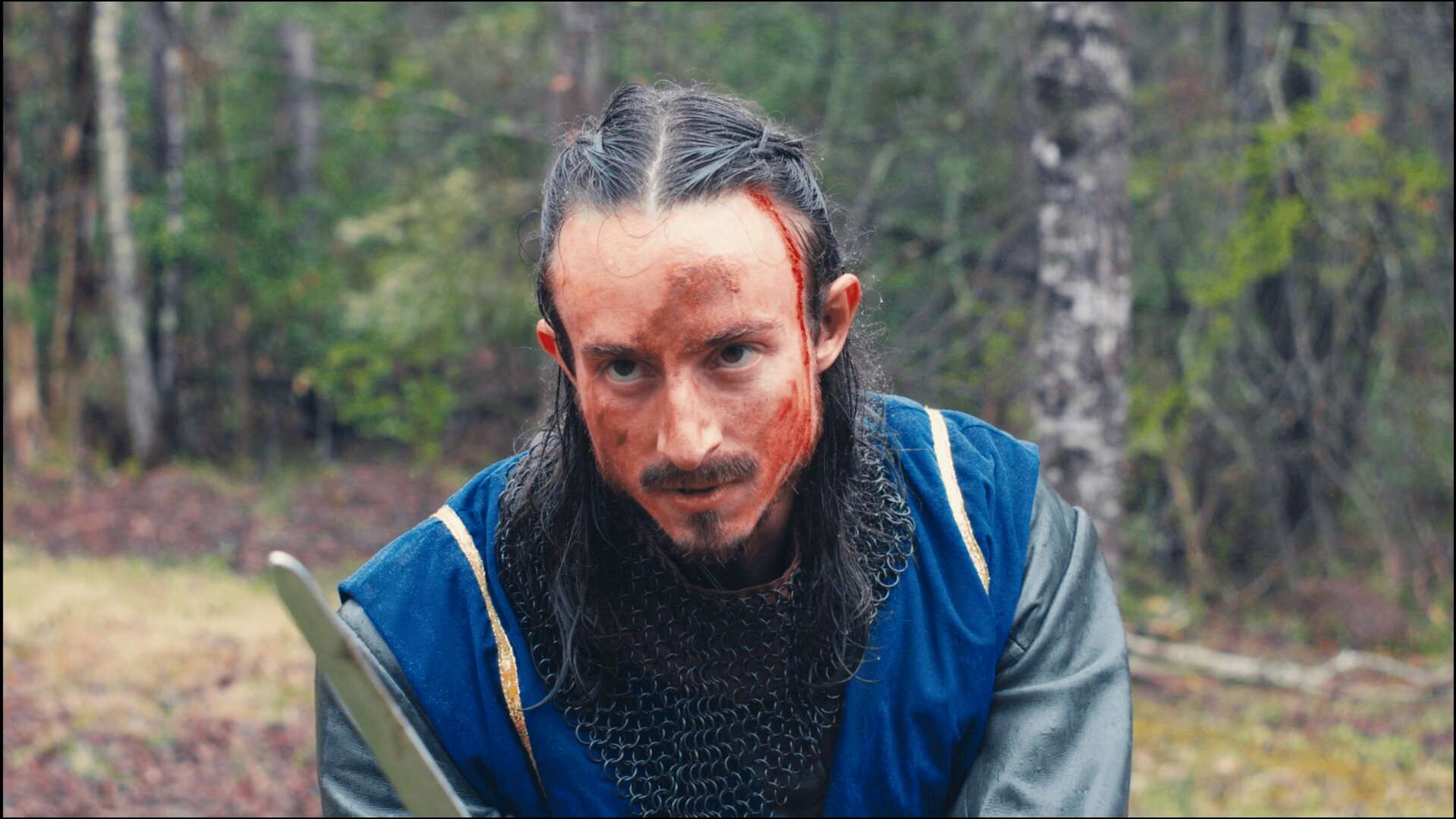
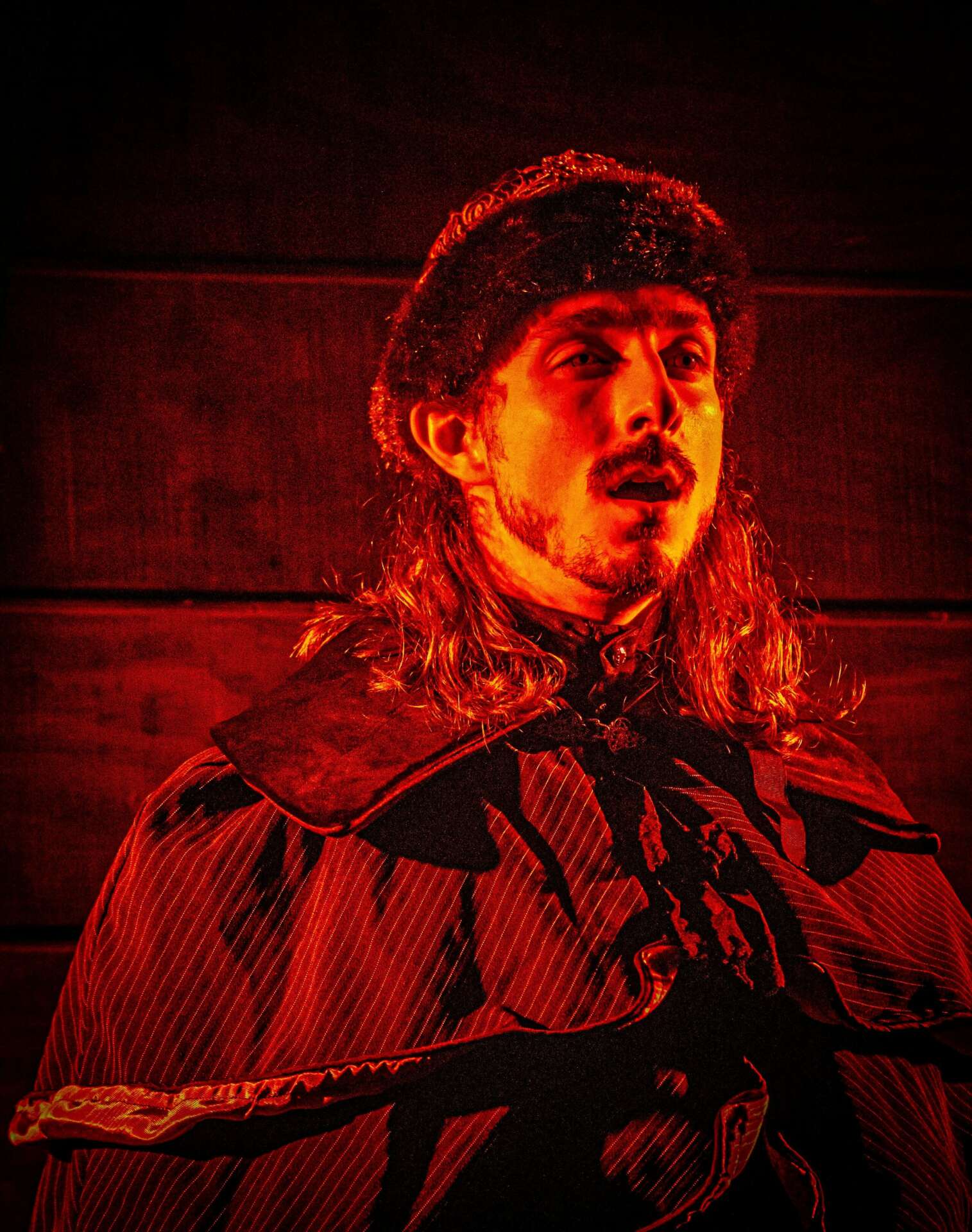
What’s the most rewarding aspect of being a creative in your experience?
That’s a difficult thing to classify or quantify. I know I feel the most alive and the most comfortable when I’m doing my work as an actor. I think if I were to try and specify it, it would be something asking the lines of serving as a vessel for catharsis in other human beings. As a human being myself, I know that life is very ugly and very hard. I *need* catharsis from the nightmare of life, you know? I’m sure many of you do as well. To that end: I have been in the audience of many incredible pieces of theatre, and have been moved at times to rage, to tears, to raucous laughter and to profound joy. I have been made to think; I have been helped to understand things about my own life that I hadn’t thought to question just by going to the theatre and seeing a particularly moving play.
It’s my hope that on my best days as an actor, I can have that same sort of epiphanous effect on others. I mentioned before that, to me, everything is about the people you share your life with; on some level, we share our lives with every other person that our lives touch, even tangentially.
It’s my belief that every action that every person takes has a ripple, and if that action is positive, it carries positive ripples. It’s my hope and my greatest reward as an actor to feel that my work has had a positive effect on someone else- even one time, no matter how small.
Contact Info:
- Website: https://www.benedettorobinson.com/
- Instagram: @bennyandthedett
- Facebook: Benedetto Robinson
- Youtube: @benedettorobinson7579
- Other: https://www.havocmovement.com/
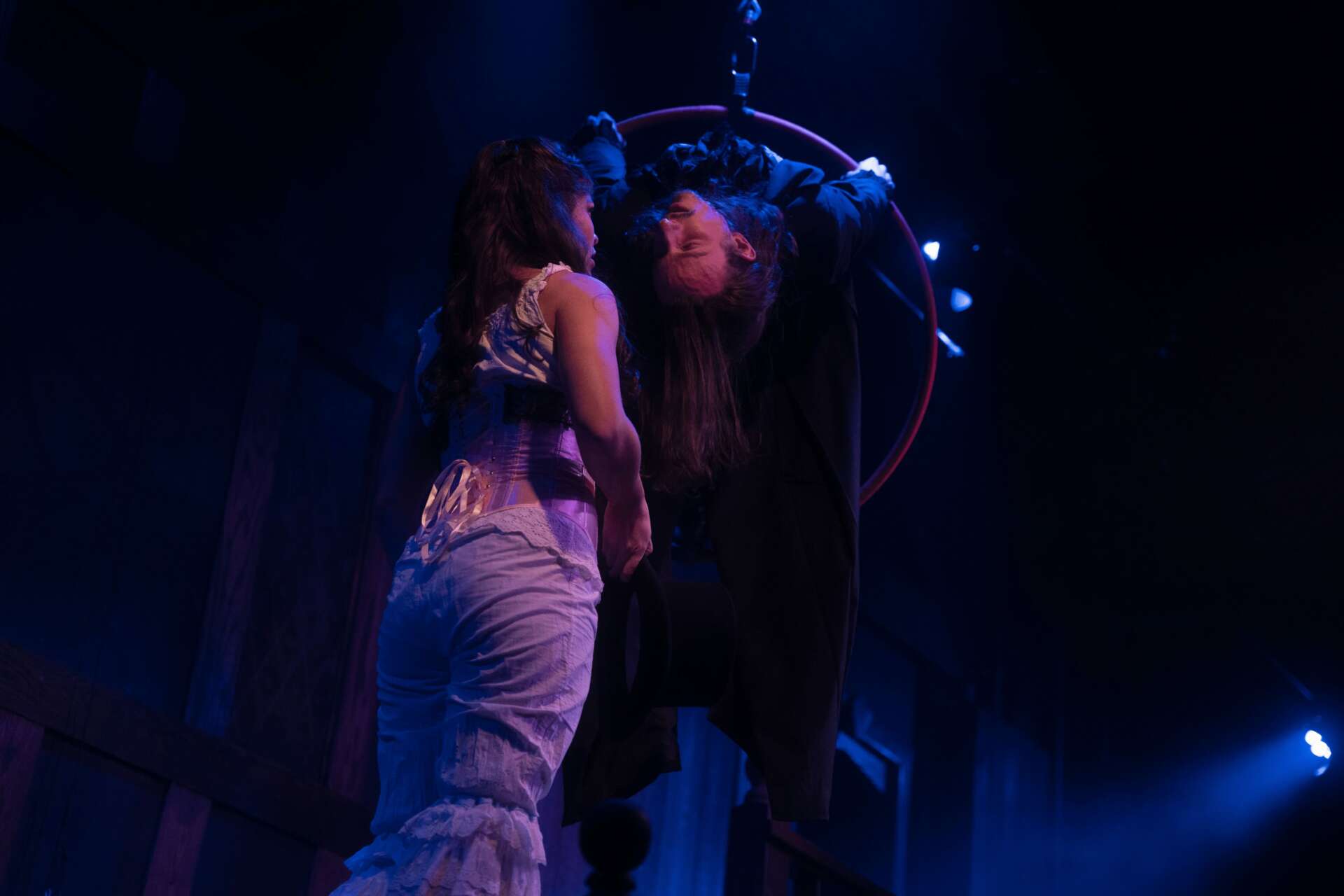
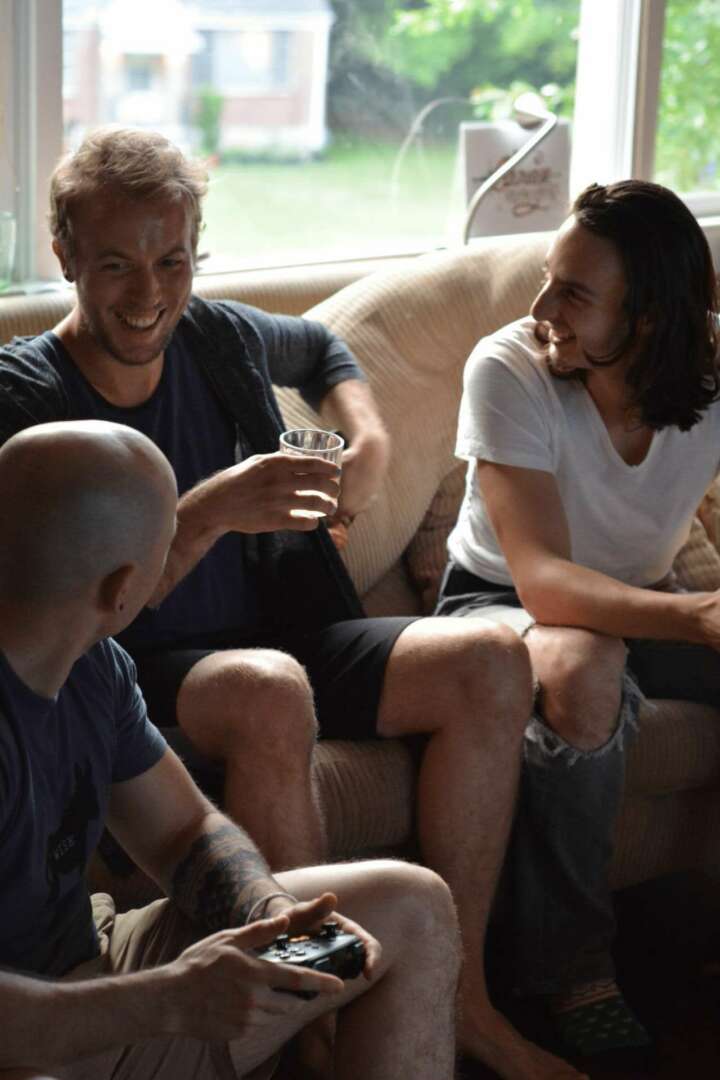
Image Credits
Tyler Fox, Jeff Watkins, Nicholas Tycho Reed, Christian Masters, Kaleb Mitchell, Jake Guinn, Imani Joseph.