



We recently connected with Ben Owens and have shared our conversation below.
Ben, thanks for taking the time to share your stories with us today Can you open up about a risk you’ve taken – what it was like taking that risk, why you took the risk and how it turned out?
The biggest risk I took was betting it all on cannabis.
I put it all on green: my freedom, my education, my career, my reputation, and my personal life.
Opportunities often lie at the intersection of seemingly-unrelated industries. For me, those industries were journalism and cannabis.
I started treating cannabis like I would any other topic or industry and began contributing to cannabis publications.
I was able to use my background in journalism and copywriting to both establish a reputation and familiarize myself within an ever-changing industry landscape. I was also connected with cannabis professionals who proved that the risk I was taking was a risk that pays off.
These efforts led to invaluable relationships that led to paid opportunities to help cannabis professionals articulate their stories.
Now, as a cannabis co-author, those years of risk paid off.
Awesome – so before we get into the rest of our questions, can you briefly introduce yourself to our readers.
My name is Ben Owens – the industry knows me as Cannabenoid – and I’m a cannabis co-author.
Writing has been a focus of mine since high school. I was the editor of my yearbook. But, I chose a career in journalism over the stereotypical, “struggling writer” path.
In J-School, I was introduced to cannabis.
Ok, to be fair, I was well aware of cannabis long before then. But I had not consumed until I went off to college at Mizzou.
Cannabis has been a focus of mine ever since, but it wasn’t always as integral to my profession as it is now.
The plan was to get a “real” job, put in my weekly hours, and follow the generic life plan we’ve all been shown the template for. And I was definitely on my way. At one point, I was married, living in Chicago, commuting to a 9-5 job in the suburbs, writing formulaic copy, and “living the American dream,” as you might say.
I was the one sneaking out of social gatherings to light up; I was the go-to weed guy in social settings dominated by alcohol.
When I moved to CO, everything did a 180. Social outings were largely cannabis-centric, and drinking was largely overshadowed by smoking. This did not bode well for the American dream trajectory.
I went from freelancing in ad agencies and writing copy about HVAC equipment, to working in counter culture and hosting cannabis events.
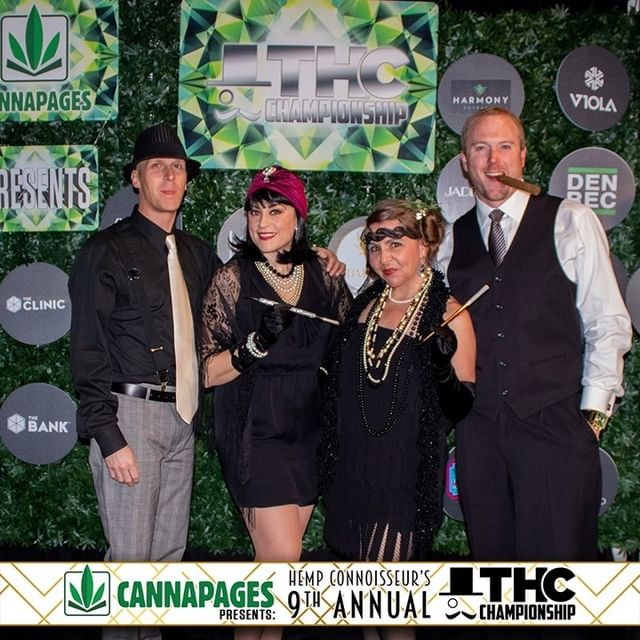
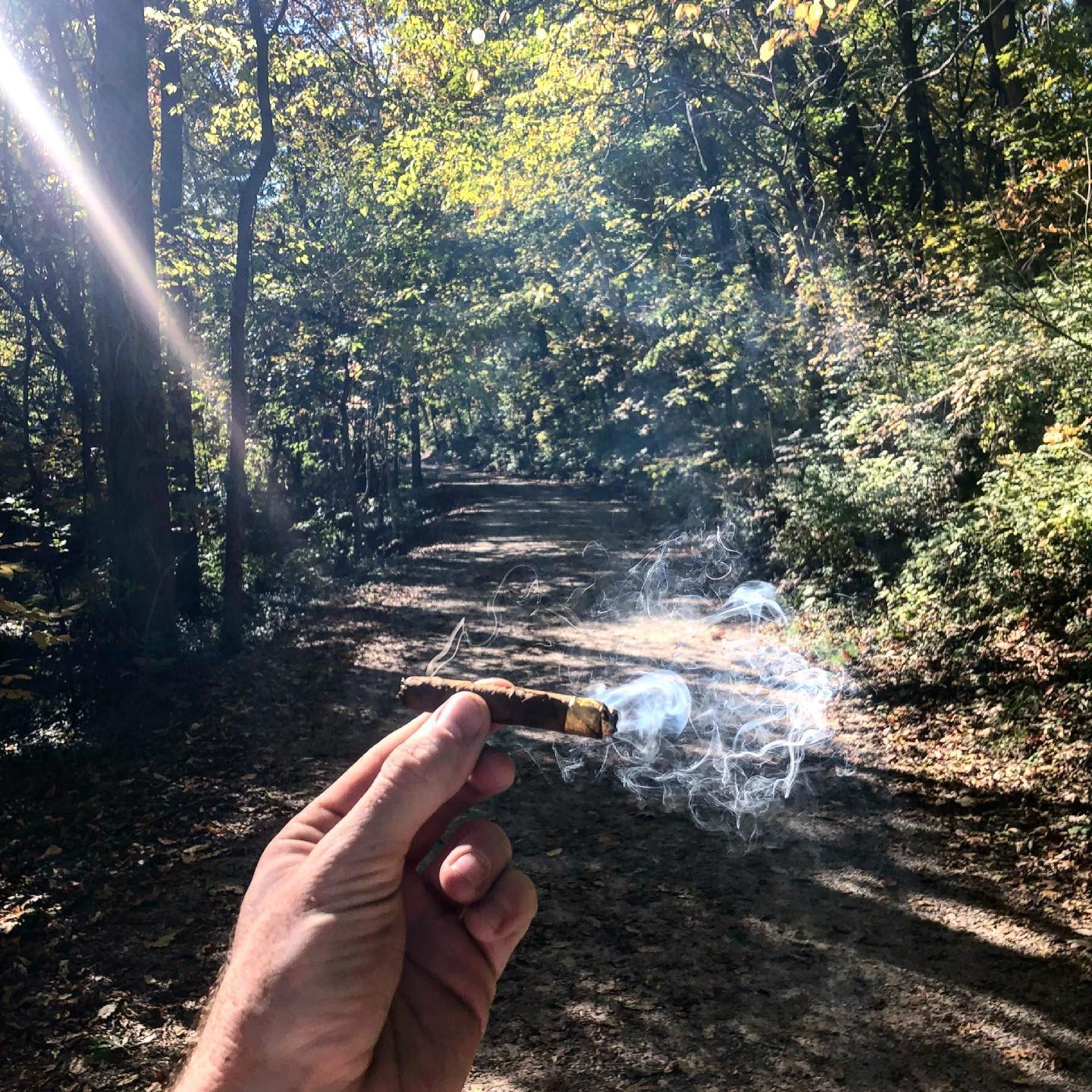
In 2016, I launched CannaVenture®, an outdoor cannabis hiking service now in its seventh season. I started writing for cannabis publications like The Hemp Connoisseur and Grass Roots America Magazine. Cannabis was my rocket ship, and I was fully strapped in, but the launch wouldn’t happen overnight.
Your first full year in cannabis will break you down; this industry hazes its pledges.
Your professional network outside of the industry will shun you. Your banks and merchant services will ban you. Social media will ascertain that you “violate community standards,” but you have to push on.
For me, writing was the answer to overcoming the hurdles placed before me.
Write.
Write more.
Write even more.
I have authored two books, co-authored and ghostwritten countless projects, contributed to numerous cannabis publications, hosted 50+ cannabis events, and spent my days working with as many cannabis professionals as I possibly could before I even started to see a glimmer of light at the end of the tunnel. You have to be willing to do everything. You have to be willing to take new approaches to the same topics.
The breakthrough pivot for me was when I took a night off of Netflix and ended up planting my first cannabis seeds.
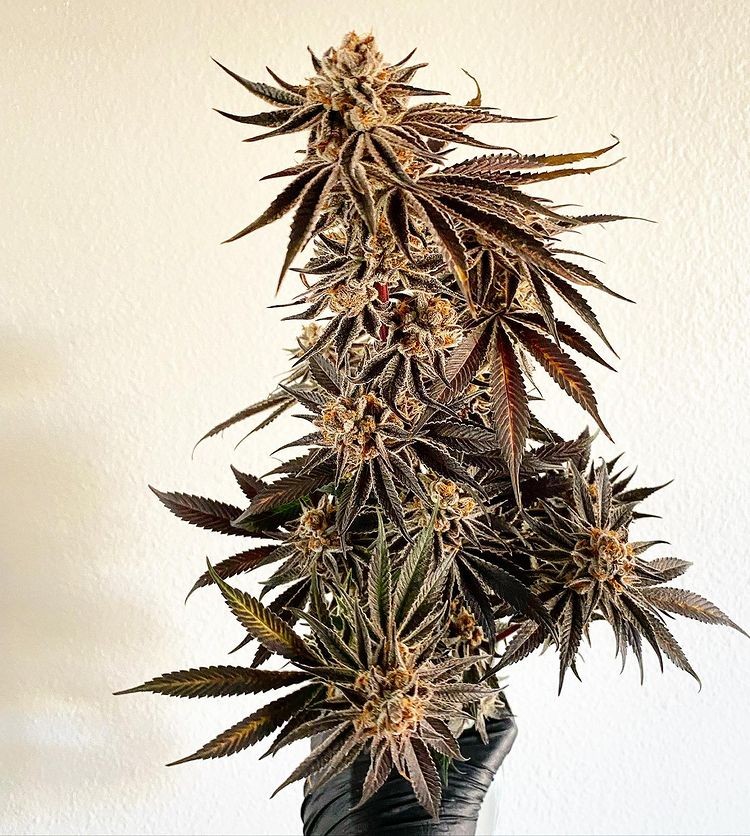
I took my personal relationship with the plant as a decade-long consumer and flipped it on its head. Growing gave me an entirely new perspective on the plant. It also gave me a new niche to focus on professionally.
Because of the legacy nature of the cannabis industry to date, the writing quality in it varies drastically.
You’ve got true scientists running clinical trials and reporting on what they have found. You’ve got guys growing in their basements. And you’ve got people whose buddy’s buddy once saw something at a friend’s grow and thinks it’s relevant.
My experience in journalism and advertising, combined with my personal relationship with cannabis, differentiated me from your average stoner columnist.
The articles I wrote were written as if I was talking about any industry. The subjects of my interviews were treated as professionals. The topics discussed were done so intentionally.
Now, as a published author and co-author, I’m helping true cannabis professionals communicate their experiences with audiences hungry for insight into this burgeoning industry.
If cannabis is to be taken seriously by the general public, it has to be taken seriously by those that work in and alongside the industry first. A personal relationship with cannabis is imperative to accomplishing this. The ability to articulate and communicate what is happening in this industry is not a skill learned overnight.
My clients hire me as their cannabis co-author because I am a serious professional whose personal relationship with cannabis offers a unique ability to articulate their thoughts and stories, developed over more than a decade of working in and around cannabis.
Alright – so here’s a fun one. What do you think about NFTs?
I’m bullish on NFTs, personally and professionally.
NFTs aren’t for everyone. You need to have disposable income (and I mean truly disposable, because you are potentially throwing money away on some of these projects). And you also need to ask yourself the right questions depending on if you are getting into the space for personal or professional reasons.
If you are buying an NFT for personal use, ask yourself:
* Do I like the art? If all else goes to shit, am I going to enjoy having this piece of art?
* What can I do with the art? If all you want is something to hang on the wall and you like it, that’s all it has to do; if you want something with utility that gives you access to a community or has applications in the meta verse, then you’ll want to buy NFTs that fit that goal.
Professionally, the three questions to ask yourself are:
* Will my audience be interested in and benefit from NFTs?
* Is there application or utility for an NFT in my industry/niche/category?
* Do I have the resources to develop a quality NFT?*
*Now, you don’t have to be DaVinci or spend millions on an artist to have a quality token. Clean art, clear utility, and a fair valuation all contribute to the quality of an NFT.
As an event host, the idea of a token certifying membership in my branded community is something I have always considered. This year, for the first time, I launched a CannaVenture POAP NFT that will be given to those in attendance at our season opener in April. Currently, it’s for novelty and collector’s sake, but the goal is to potentially have exclusive offers and events for holders who have verifiably supported our efforts over the years.
I have bought into multiple NFT projects, both from artists and from brands, including a few that tanked.
My first NFT was a stoned Bullish Llama. The project tanked. It’s now worth pennies compared to what I bought in for.
My second NFT purchase was a Bufficorn. The project was based on real-world utility of attending and interacting within ETHDenver, and came at the recommendation of a friend heavily-involved in the space whom I trust. It’s now worth about half of what I bought in for.
My third NFT purchase was my ENS name (a domain name for your wallet). I grabbed Cannabenoid.eth to make it easier to navigate Web3. There is no real quantifiable value to this.
In each of these cases, I’ve liked the art enough to not feel (awfully) bitter if a project’s value declines.
NFTs are trending, but if you think of them as you do other art and tokens, it’s easier to grasp. Your NFT may be a membership card or password to an experience. Or it may just be art you like and want to collect.
I’m bullish on NFTs.
What’s the most rewarding aspect of being a creative in your experience?
The most rewarding aspect of being a creative is turning ideas into realities.
My job is to have in-depth conversations with interesting people, and then write about it so that others can gain value from it. Sometimes, I act as reporter; other times, it’s a collaborative effort. In either instance, the greatest gift is seeing that realization in person.
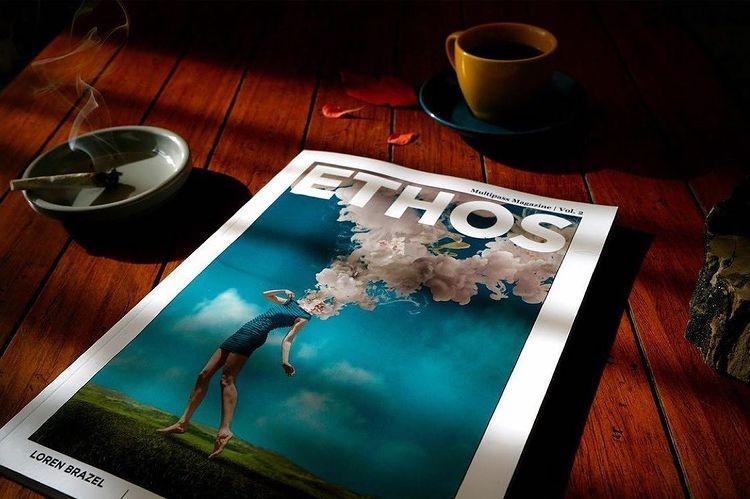
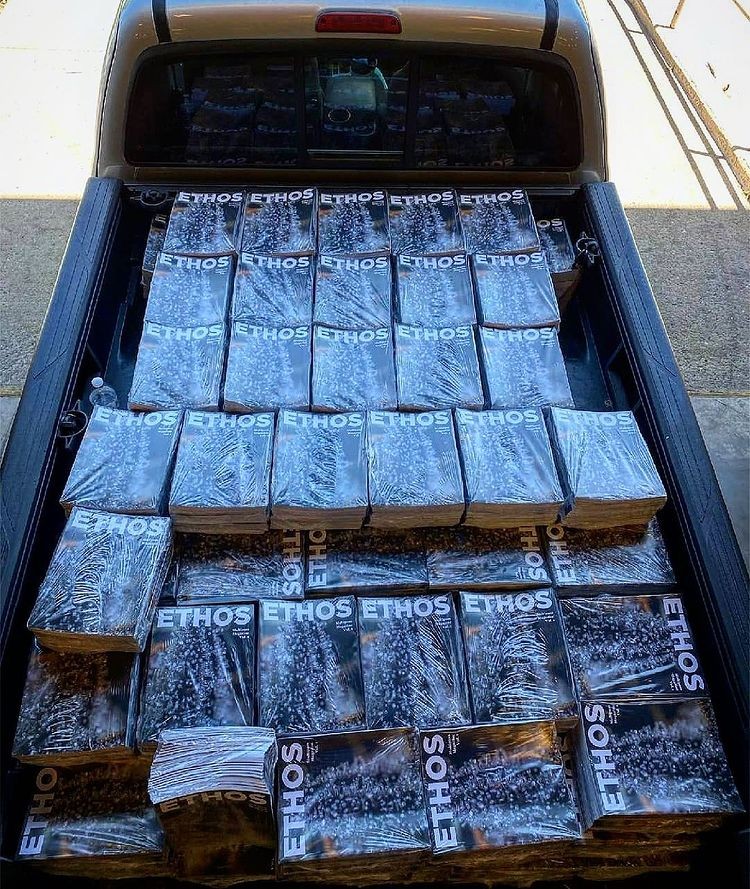
I vividly remember the moment my co-author Colin Gordon held the Ethos Magazine for the first time.
Our work together began in the digital space. The goal was to help articulate the information and experience Gordon had gained over the years in a digestible, engaging format. As we worked, the idea of a magazine started to form.
In our digitally-dominated world, physical publications continue to stand out.
We published countless articles online before the first physical issue of the magazine came out. The articles in that issue had almost entirely been up for months prior to its physical distribution. Yet, when we put that magazine in people’s hands, it was immeasurably more well-received than any of the digital efforts.
Watching others see an idea come to life is akin to watching a parent hold a newborn; it’s magical.
Contact Info:
- Website: www.cannabenoid.com
- Instagram: www.instagram.com/cannabenoid
- Facebook: www.facebook.com/benjaminleeowens
- Linkedin: www.linkedin.com/in/benjaminowens/
- Twitter: www.twitter.com/cannabenoid
- Other: CannaVenture®: www.cannaventure.org Discs-n-Dabs®: www.discsndabs.com
Image Credits
Image credits are in file titles, but: – picture of white magazine on desk was taken by Ascent 420 Photography (Eric Galvan & Anestassia Alderete) – THC Awards picture was taken at the awards event and distributed publicly to guests – Other images are provided and/or taken by me.