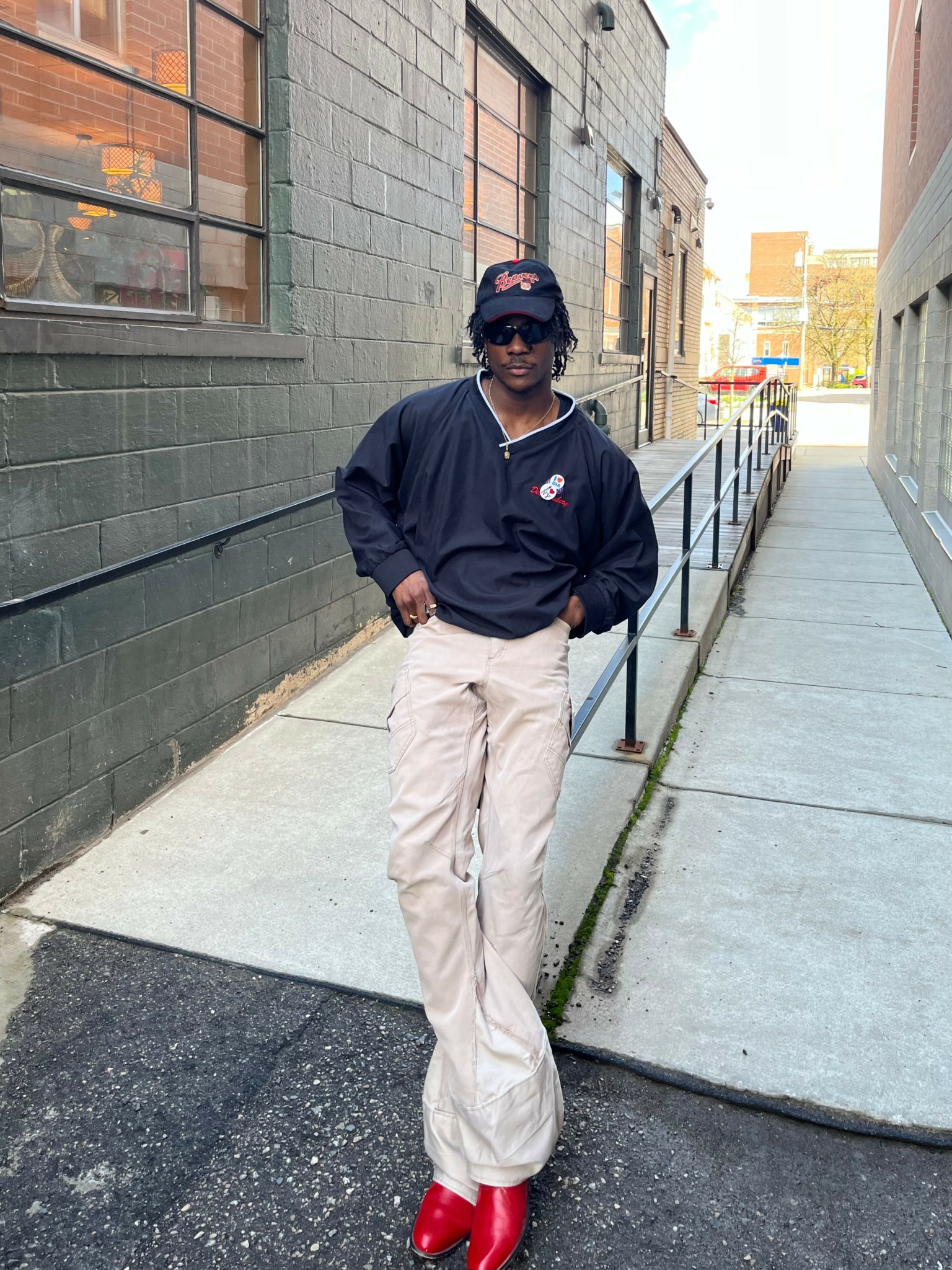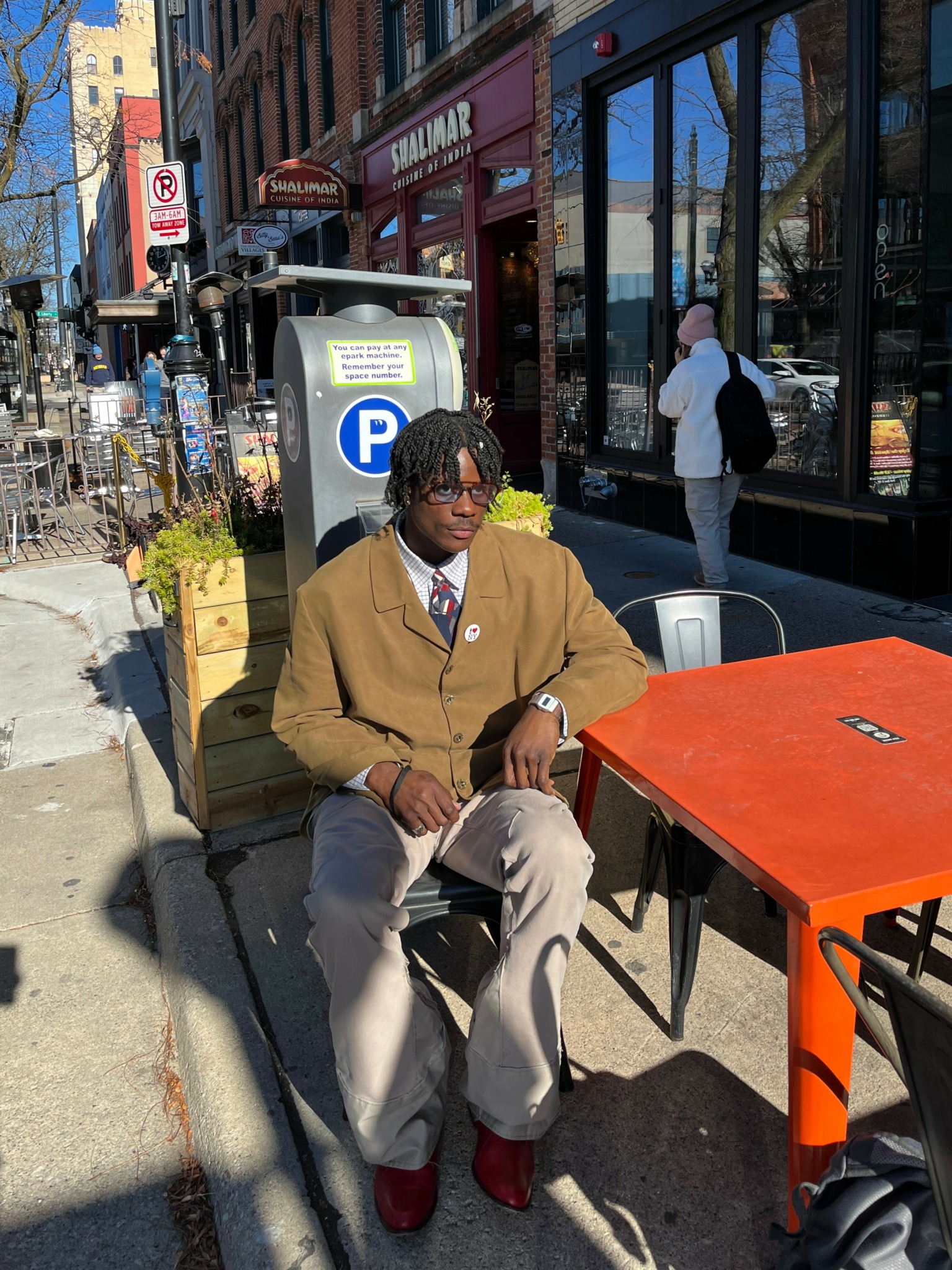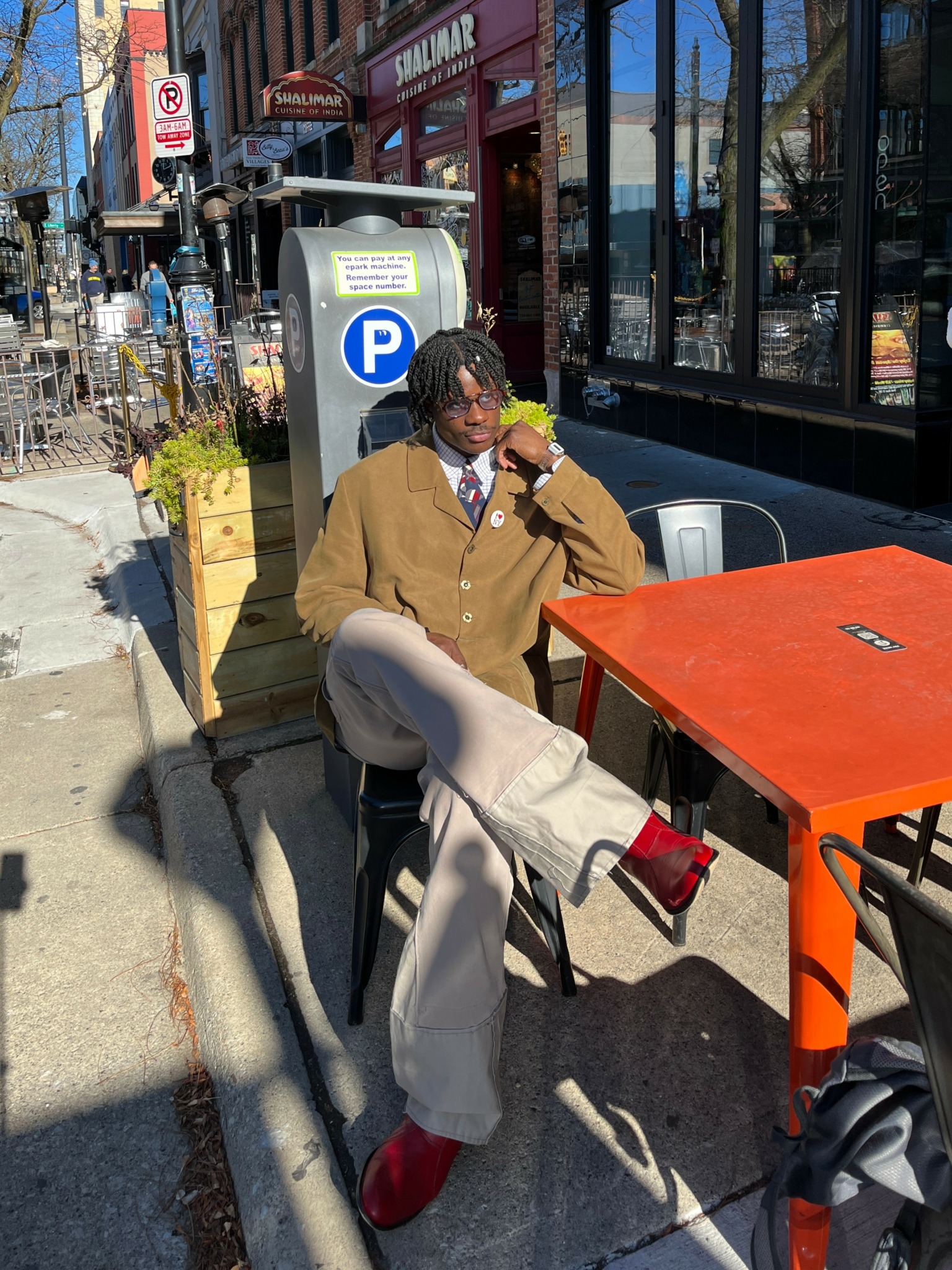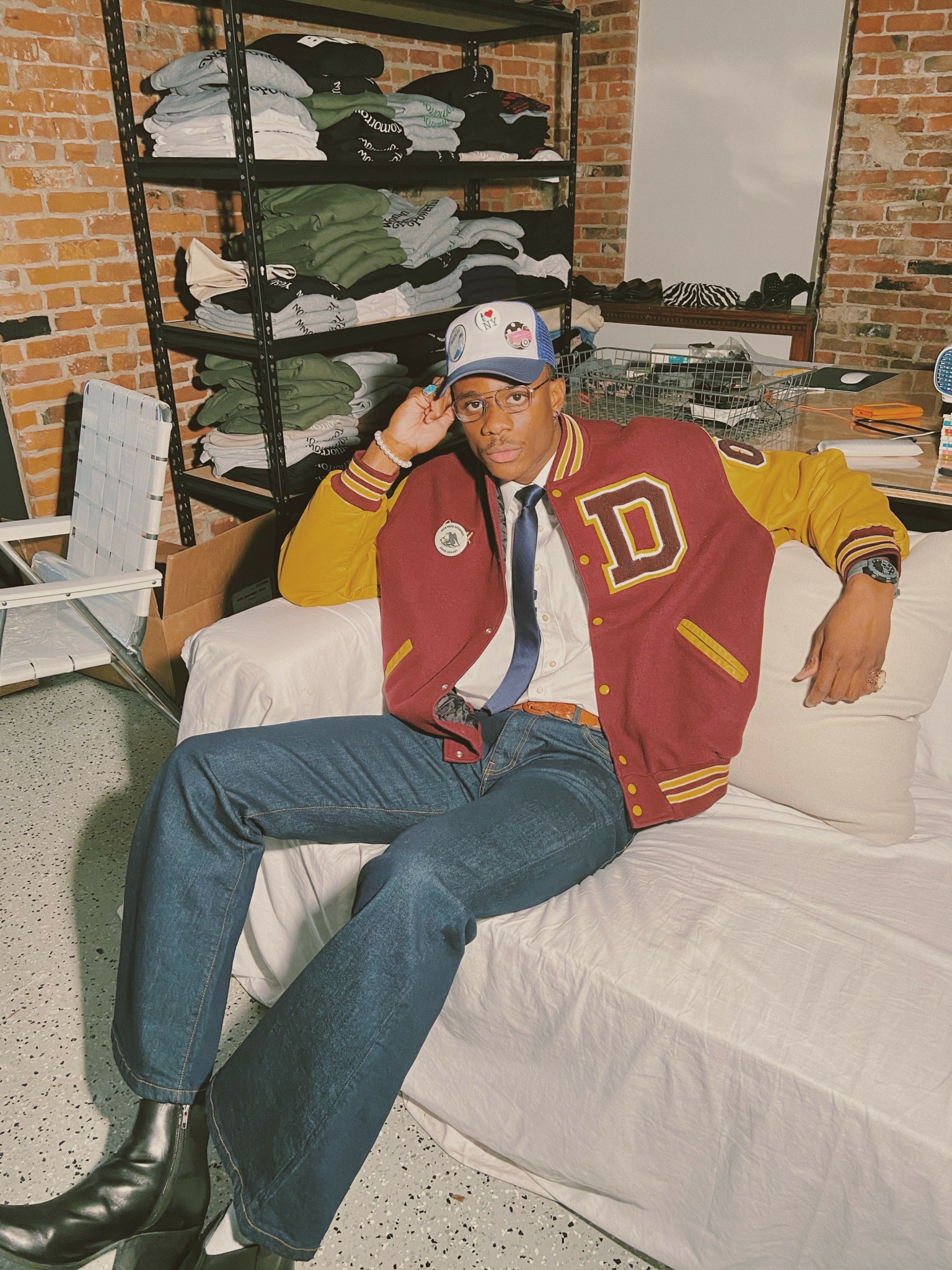

We caught up with the brilliant and insightful Bello Eze a few weeks ago and have shared our conversation below.
Alright, Bello thanks for taking the time to share your stories and insights with us today. What’s the backstory behind how you came up with the idea for your business?
The idea for iNTRPT came from a single moment I think about almost
every day.
It was 2022. I was at a fashion show at the University of Michigan.
The room was full of beautiful women, confident men, music,
conversations happening everywhere. I had been invited there by
the closest thing to a brother I had at the time, a man named
Favor who saw me on TikTok and walked across a street to ask if
I’d model in his show.
I should have been thriving. I was a fashion content creator with
300,000 followers. I had brand deals. A clothing company had
hired me as a creative director. By every external measure, I
had arrived.
And I was standing in the corner of that room. On my phone.
Checking the weather app. Not because I needed the weather.
Because I had no idea how to talk to anyone in that room. I had
moved to America from Nigeria a few years earlier, and the social
muscle most people build in their teens, I had never built. I
hid behind the phone the way I had been hiding for years.
That’s when I saw the problem clearly for the first time.
I had attention. I didn’t have community. I had hundreds of
thousands of people watching my content online, and I had no
one to talk to in real life. The disconnect was not a personal
failing. It was the defining condition of an entire generation
of men.
I started doing something about it personally. I bought Meta
smart glasses and started recording myself approaching strangers,
mostly women, in coffee shops and on the street. I got rejected,
laughed at, ignored. The first hundred approaches were brutal.
By the time I hit two thousand approaches over the next three
years, I had become a different person. I could walk into any
room and have a conversation. I had relationships, friendships,
a coaching practice called forgedEveryday that helped other men
do the same.
But coaching was slow. One person at a time. Meanwhile, the
loneliness epidemic among men kept getting worse. Studies showed
that men in their twenties had fewer close friends than any
generation before them. Men in their thirties reported being
lonelier than men in their seventies. The phone, the thing
designed to connect us, had become the place we hid from one
another.
iNTRPT is what came out of that observation.
The app blocks the social media apps that drain you — Instagram,
TikTok, X, Snapchat — until you complete one small real-world
social action. Wave at someone. Ask a stranger a question. Take
a selfie at the spot where you had a conversation. Log the proof.
The phone unlocks. The next day, do it again.
It is not a productivity app. It is a behavior change app. The
Mechanic is simple enough to explain in a sentence, and difficult
enough to actually do that, the results compound quickly.
I knew it was worth building because I had lived the exact
problem I was solving. I had spent years hiding behind a screen
while a generation of men did the same. There were apps that
blocked distractions for focus, apps that helped you quit porn,
apps that helped you sleep better. There was no app that took
the most addictive technology in the world and turned it into
a tool that forced you back into the real world.
That gap was the opportunity. The corner of the room I used to
stand in, checking the weather app, was the problem statement.
iNTRPT is the answer.
I built this app while broke, while cleaning
houses to pay rent, while biking an hour in Arizona heat to
earn forty dollars. I am still living the product I am building.
Every day I have to show up, ask, get rejected, adjust, keep
going. That is the app. And it works because it asks people to
do the same thing.
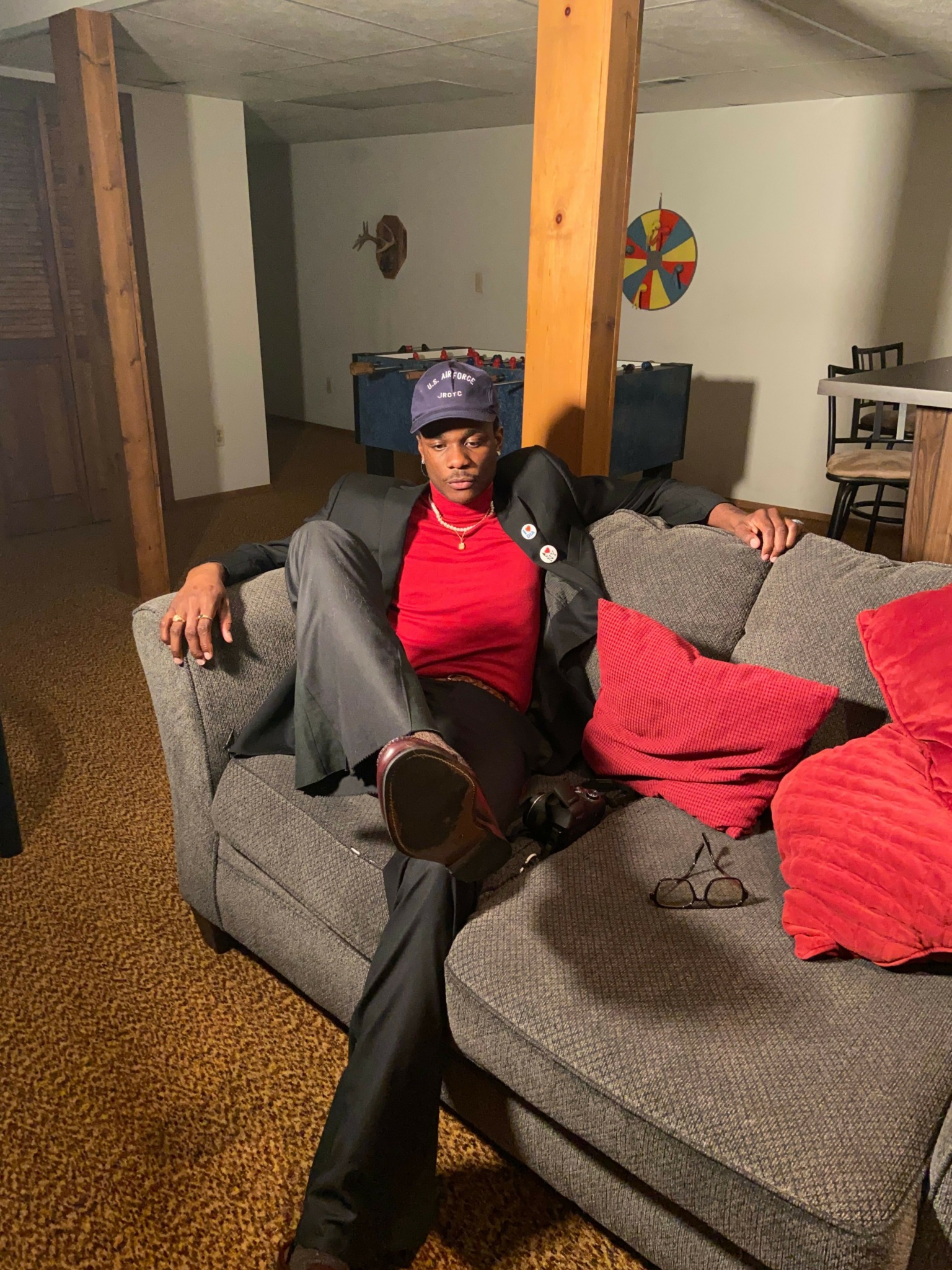
Bello, love having you share your insights with us. Before we ask you more questions, maybe you can take a moment to introduce yourself to our readers who might have missed our earlier conversations?
My name is Bello Eze. Originally from Nigeria,
Currently based in Arizona. I’m the founder of two interconnected
brands: iNTRPT, an iOS app launching in June 2026, and
forgedEveryday, a one-on-one coaching practice I’ve been running
for the last year and a half.
Both brands serve the same mission, which I’d describe simply:
helping men feel human again.
I got into this work the way most people get into the things
they end up devoting their lives to. I struggled with it
personally first.
I came to the United States in 2018 from Nigeria, having grown
up without a father, having grown up surrounded by women, having
spent my entire childhood in a culture where I was never taught
how to lead a conversation, ask a stranger a question, or take
up space in a room. When I arrived in Michigan, I disappeared.
I spent an entire year at community college without making a
single friend. I tried once, stuttered at a girl in a hallway,
got walked away from, and decided I would never try again.
So I hid. I built an audience on TikTok as a fashion content
creator. I reached 300,000 followers. I got brand deals and
became a creative director at a clothing company. I had the
performance of a successful young man, and when I closed the
phone at the end of the day, I had no one to call. The disconnect
between online attention and real-world community was the most
honest crisis of my early years in America
Around 2022, I started doing something about it. I bought a pair
of Meta smart glasses and began recording myself approaching
strangers in coffee shops, on the street, at bars, in gyms. I
got rejected, ignored, laughed at. The first hundred attempts
were brutal. By the time I hit two thousand approaches over
three years, I had become a different man. I could walk into
any room. I could lead a conversation. I could be rejected and
recover. I could ask for what I wanted without folding.
That transformation became the basis of forgedEveryday, the
coaching practice I launched in 2024. I work one-on-one with
men in their late twenties and early thirties — engineers,
doctors, founders, professionals — who can close million-dollar
deals in boardrooms but freeze when they try to say hi to a
woman at a coffee shop. We work through approach anxiety,
masculine presence, conversational flow, social leadership,
and real-world execution. My clients film their own approaches.
We review what worked, what didn’t, and what to try next.
I’ve coached men like Lucas, Daniel, Julius, Hernan, Duc, Ray,
Gagan, and Jalvin. Each one has come back with the same kind
of story: they finally said hi to the woman at their gym, they
finally asked someone out face to face instead of through an
app, they finally became someone their younger self would have
admired.
iNTRPT is the scaling of that work.
Coaching is powerful, but it’s slow. One man at a time. The
loneliness epidemic among men is much larger than what any
single coach can address. The data is stark. Men in their
twenties have fewer close friends today than at any point since
the data has been tracked. Men in their thirties are reporting
loneliness rates higher than men in their seventies. And the
thing destroying our ability to connect — the smartphone — is
the thing we reach for every time we feel disconnected.
iNTRPT solves that loop. It is a behavior change app that
blocks the social media apps men use to hide from their lives
— Instagram, TikTok, X, Snapchat — until the user completes
one small real-world social action. Wave at someone. Ask a
stranger a question. Take a selfie at the spot where you had
a conversation. Voice-log what just happened. Log the proof,
unlock the phone.
The app uses Apple’s FamilyControls framework, the same system
that powers parental controls, to enforce the blocking. It’s
real. There’s no easy workaround. The user has to actually go
outside and act.
I’m most proud of the fact that iNTRPT didn’t come from a
business plan. It came from my life. I built the app I needed
when I was the kid checking the weather app in the corner of
a fashion show because I didn’t know how to talk to anyone.
Every design decision, every feature, every word of copy was
filtered through whether it would have actually helped that
version of me.
What sets me apart, I think, isn’t the app itself. Other apps
in this space exist. What sets me apart is that I’m building
it as a man who has lived the problem and trained his way out
of it, with two thousand documented approaches and a coaching
practice full of clients who have done the same. iNTRPT is not
a product designed by engineers studying the loneliness
epidemic. It’s a product built by someone who escaped it.
For anyone who finds this article and decides to pay attention
to what I’m building: I want you to know that the mission is
not branding. I genuinely believe most of what’s wrong with
men right now is that we’ve stopped showing up in public, and
the cure is one small rep at a time. iNTRPT exists to make
those reps unavoidable. forgedEveryday exists to coach you
through them personally if you need more.
If you’ve been the man in the corner, you don’t have to keep
being him.
That’s the whole point.
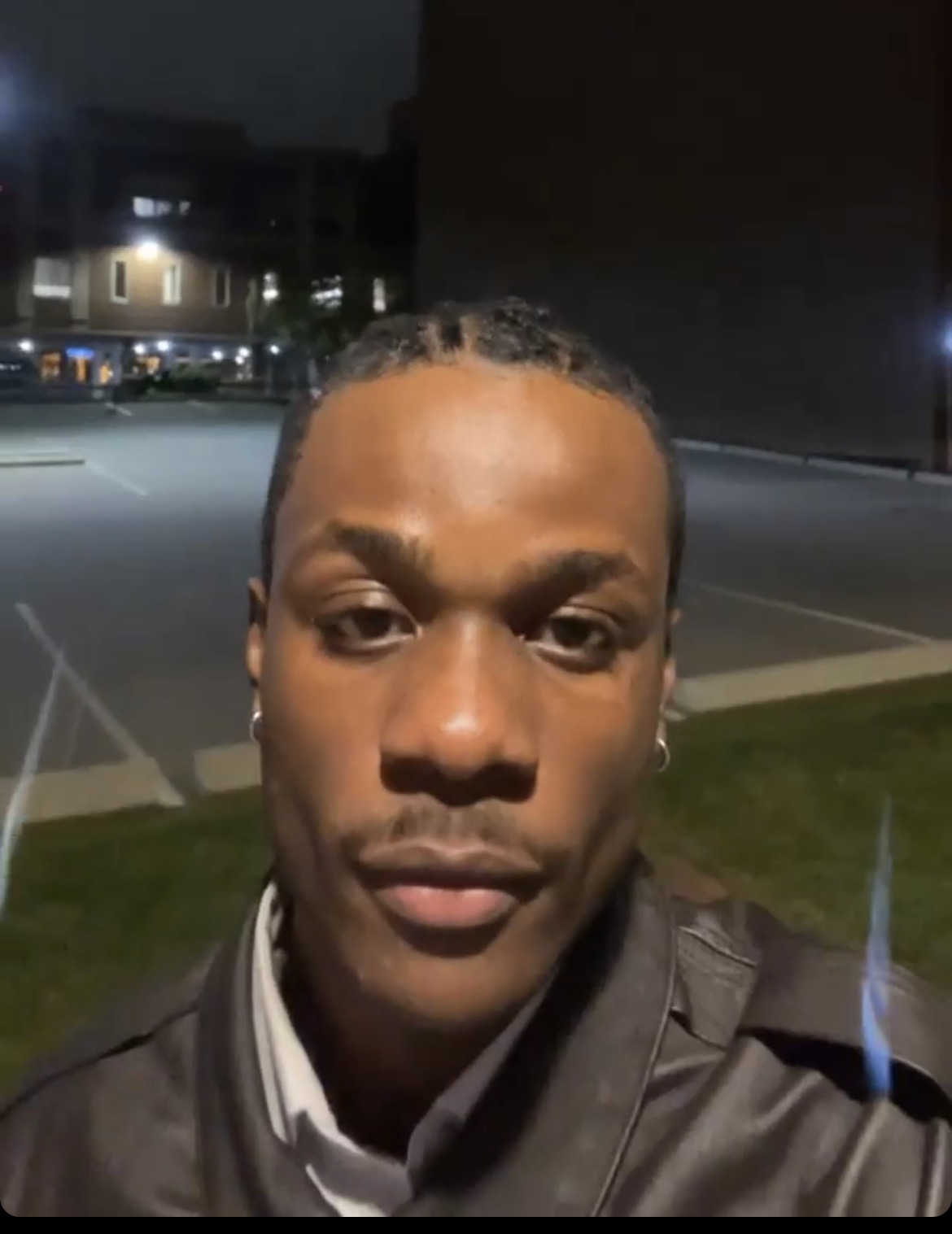
Can you share a story from your journey that illustrates your resilience?
The last six months of building iNTRPT have been the hardest
months of my life. I almost gave up at least three times. The
fact that the app is launching at all is the resilience story.
I started the build with savings from my coaching business and
a belief that I could see it through. What I underestimated was
how long the path between “this app could change men’s lives”
and “this app exists in the App Store” actually was. Three Apple
rejections. A FamilyControls entitlement application that took
months. A bundle ID change because of a name on file with
Apple. A screenshot upload bug on Apple’s side that delayed my
submission by a week. Dozens of late nights debugging code I
didn’t fully understand.
While that was happening, I ran out of money.
By April of 2026 I was sitting in my Tempe apartment trying to
figure out how to pay rent, protect my credit score, keep my
domain subscriptions active, fund the API costs for the AI
coach inside the app, and still buy food. I applied to clean
houses on Craigslist. I applied to be a janitor. I applied to
landscape. I applied to be a mover, a concrete laborer, a
restaurant prep cook. I took a $600 loan from a predatory
lender at an interest rate I was ashamed of because rent was
two days away. I biked an hour in 105-degree Arizona heat to
do $40 worth of cleaning work because that $40 paid for
groceries for the week.
The hardest part wasn’t the labor. The hardest part was the
private question I kept asking myself: am I just delusional?
Am I one of those founders who can’t see that their dream isn’t
going to work?
I kept building anyway. Not because I was sure it would work.
Because the alternative was to stop, and I had already taught
hundreds of men through my coaching practice that you don’t
stop. The principle I had been teaching them — that you keep
showing up, that rejection is not the end, that the only way
out is through — I had to apply to myself in the worst conditions
I’d ever lived through.
Then small things started happening. A woman whose windows I
cleaned wrote me a note saying she was looking forward to my
launch. A man I respected in the tech world reached out wanting
to talk about my app. A coaching client I hadn’t heard from in
months sent me a payment that covered groceries for two weeks.
Apple approved the app. The waitlist crossed five hundred
people. A video I posted on Instagram crossed five hundred
thousand views.
Resilience, I’ve come to believe, isn’t a quality you can find
inside yourself in advance. It’s the result of choosing not to
quit, one more time, when quitting would be the rational choice.
You don’t know if you have it until you’re forced to find out.
The last six months forced me to find out.
I am still broke as I write this. I am still living the product
I am building. The app launches in days. Whatever happens after
that, I will know that I built it from the lowest point in my
adult life, and I refused to put it down.
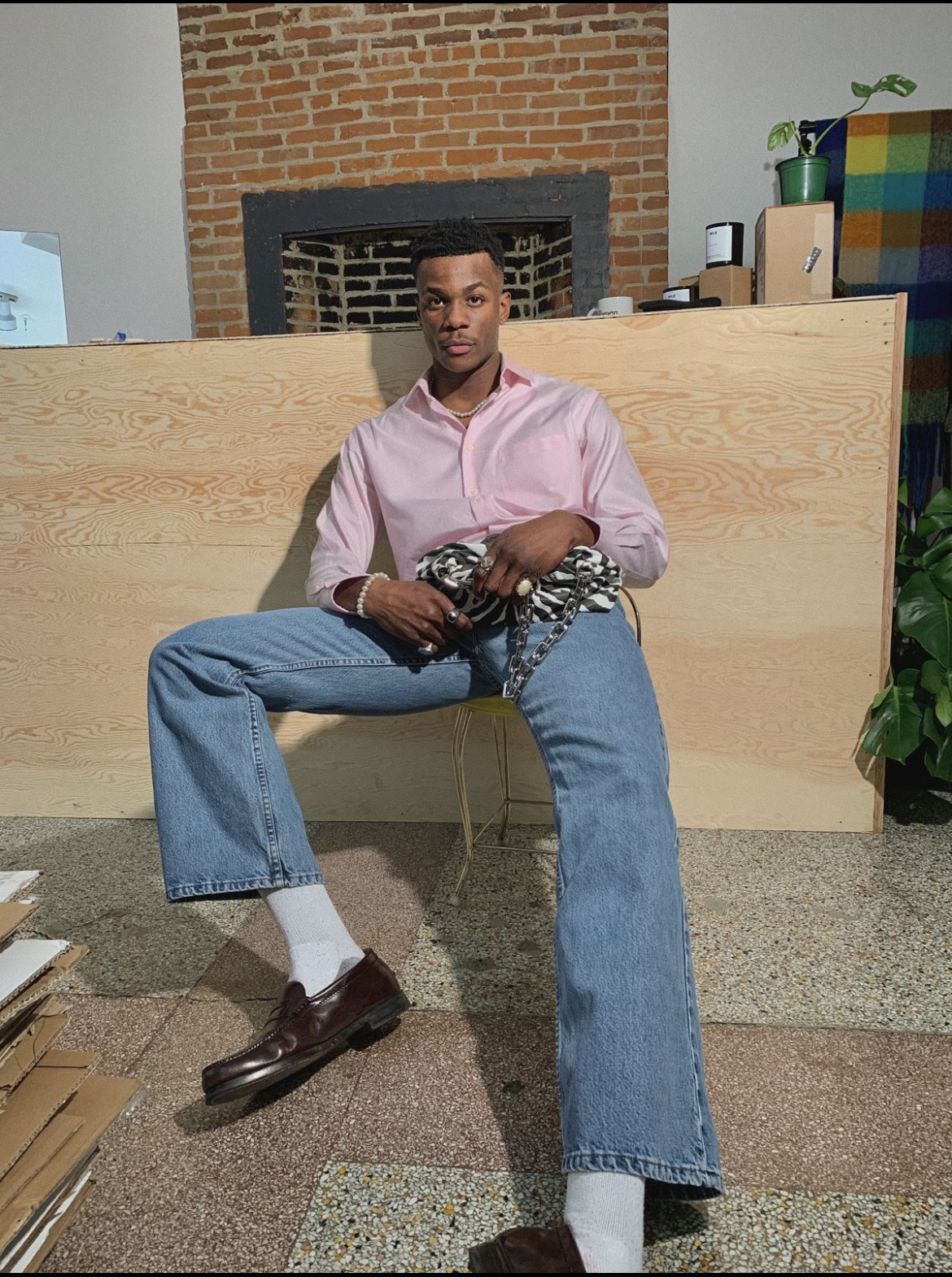
Any fun sales or marketing stories?
About a week before launch, I posted an Instagram reel that
crossed five hundred thousand views in 72 hours.
The video was simple. The hook was “summer social challenges
to do with your boys.” The script was ten escalating challenges:
everyone puts their phone in a pile at the restaurant, first
one to grab it pays the bill. Hit a house party, split up,
whoever met the most people picks the next spot. Lock your
phones for 24 hours, the only way to unlock is proof of a real
conversation. The closing line: “If your friend group needs
this, I’m building the app that makes it official. Tag your
boys and comment PROOF.”
The mechanic was straightforward. I had set up an automation
that would automatically DM the early access link to anyone
who commented PROOF on the video. Comment + automated DM =
captured lead = waitlist signup.
It worked exactly as I’d designed it for about six hours.
Then Instagram suspended my messaging privileges for three
days. Some content on my page had been flagged by their
automated systems, which is a story for another day. The
automation died instantly. I could not send DMs to anyone —
not the people commenting on the viral reel, not anyone.
Meanwhile, the reel kept growing. By the time the suspension
hit, the reel was already viral. Over the next three days, it
would cross five hundred thousand views, get nearly ten
thousand shares, and bring me dozens of new followers per
hour. Tens of thousands of people who would have entered my
funnel were now hitting a dead end.
I had two choices: accept the loss, or improvise.
I improvised. I pinned a comment on the reel saying “Instagram
won’t let me reply right now — tap the link in my bio to join
the waitlist.” I started manually texting every commenter I
could from a different account. I posted Instagram stories
directing viewers to my bio. I updated my bio with the exact
language a viewer needed to take action without seeing a DM
from me first.
The waitlist grew anyway. We went from around three hundred
forty subscribers to over five hundred in the days that
followed. The reel kept circulating. Manual DMs went out by
the hundreds. The link in bio carried the funnel that the
automation was supposed to carry.
The lesson I took from it was simple: do not build your
business on a single platform’s permission. Instagram can mute
you with no notice. TikTok can ban your account. Apple can
reject your app. Every platform you don’t own is borrowed
ground.
The reason I survived that three-day window is that I had built
multiple ways to reach my audience: my email list, my website,
my coaching practice, my direct relationships. The DM automation
was a nice convenience. It was not the foundation.
The biggest sales lesson I’ve learned this year is that virality
is unpredictable but resilience is engineered. You don’t control
when a piece of content takes off. You don’t control when a
platform decides to throttle you. You only control whether your
business has more than one way to capture a lead, more than one
way to send a message, more than one way to keep going when one
channel fails.
The reel that nearly broke my launch ended up being the thing
that made my launch real. Five hundred thousand views, with no
DM automation, during the most stressful week of my year. That
is the story I tell when people ask what I’ve learned about
marketing.
Contact Info:
- Website: https://intrptapp.com/
- Linkedin: https://www.linkedin.com/in/bello-eze-597a883b9/