

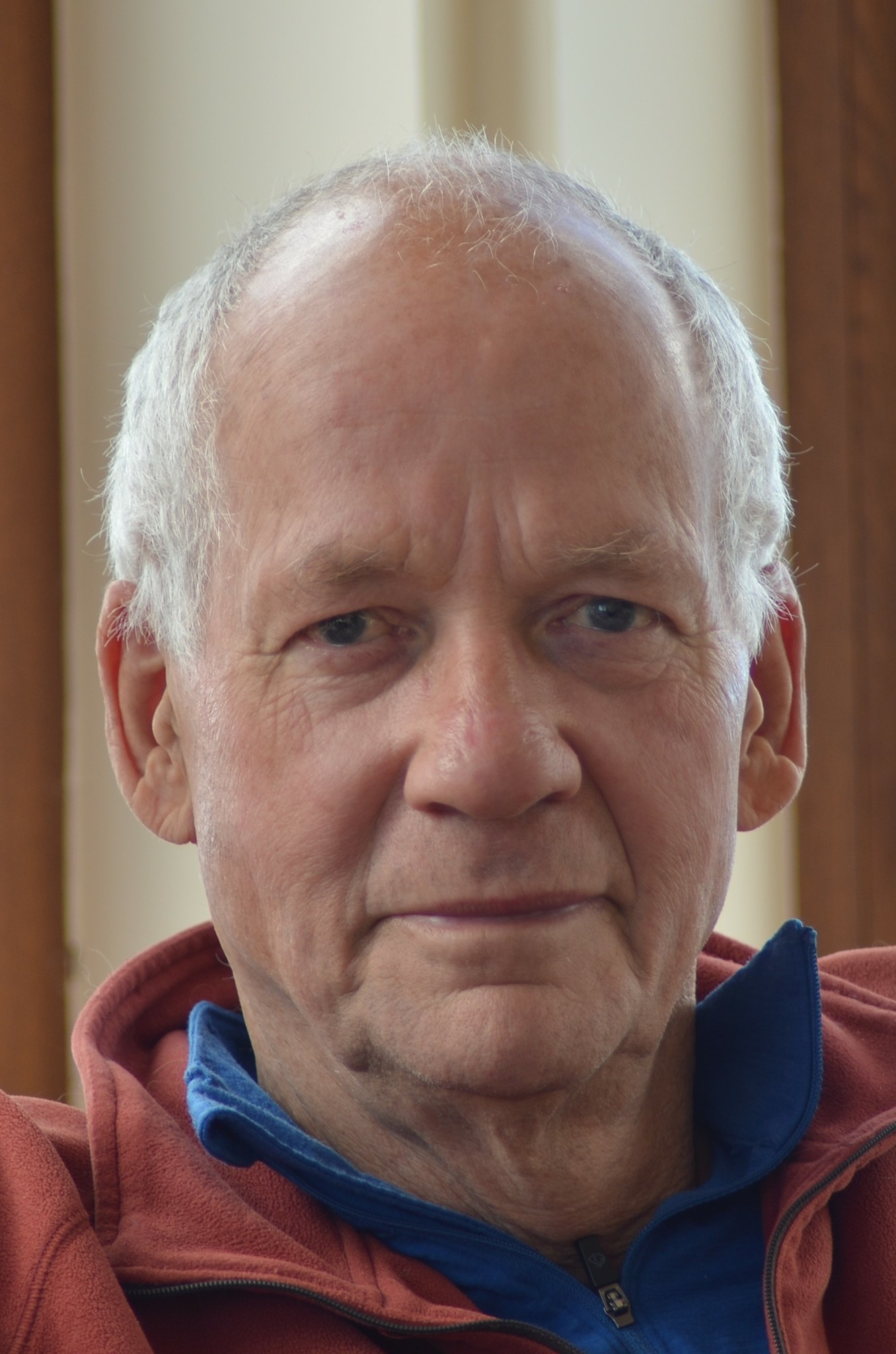

Alright – so today we’ve got the honor of introducing you to Barry Litherland. We think you’ll enjoy our conversation, we’ve shared it below.
Barry, thanks for joining us, excited to have you contributing your stories and insights. Do you have a hero? What have you learned from them?
Generally – and this an unfortunate way to begin to answer a question like this – I don’t have heroes. There are numerous people I admire or respect and even more from whom I’ve learned skills which help me improve my craft. They are people to whom I am eternally grateful. Some of them, I’ll confess now, I have never met and never will do. Notably, a few who are long dead. Generally, I admire those people who stand firm to their beliefs no matter what the cost; people who, if they were offered a million dollars to act against a firmly held belief, would have no inclination in refusing outright. I think we can all reflect on recent distasteful moments when people who are already wealthy, drop their beliefs like a hot coal in order to take financial advantage of a prevailing wind. Nope, not for me. I despise them.
There are literary figures whose work I admire. Goodness knows what they were like to meet. Would I have loved or loathed them. I don’t know. But their work has had a profound effect on me. I think of Graham Greene and Joseph Conrad, Philip Roth and Cormac McCarthy, Julian Barnes and JM Coetzee in the field of novel writing. Then there are those writers whose work can have a powerful effect on young minds. Foremost amongst these, for me, is Alan Garner, recently nominated for the Booker Prize. His tight, imaginative use and control of language is just astonishing. There are many others – William Mayne, Leon Garfield, Nina Bawden, Philip Pullman. And poets – oh, so many – Philip Larkin is a favourite, WB Yeats is another. Magicians with words, And there are playwrights like Harold Pinter,
So many; too many to list. But all influential in their way and all epitomising the kind of excellence I dream of, and will never reach.
Can I select one? Well, bringing matters down to a more fundamental level, I must name Angela Johnson. It’s not a name you will find ranking high in the annals of history but her influence on me when I was sixteen and seventeen, was profound. She was my Grammar School English Literature teacher and her enthusiasm, support and understanding were critical to me at a very bad time in my life. Years on, I still remember her humour, kindness and understanding and her passion for literature. She gave me the confidence to believe.
In the wider world I admire those men and women who stand up and speak out against tyranny and evil, no matter what the cost to themselves. Often, their names are well known and they figure in newspaper and news reports. But there are many more – people who live and die in the shadows, who will not be bought and will not stay silent when they see evil acts, and hideous perversions of trust around them. Perhaps, if I have to pick heroes, it would be those people who live and die firm in their beliefs and in the recognition of the fundamental oneness of all humanity. Yes, choose any one of them. He, or she, is my hero.
Then, in a more modest way, there are some of the characters I create. Yes, I think I sometimes create my own heroes. How’s that for vanity? I like to give them a happy ending sometimes too, and to reward their efforts with success. It’s proper that virtue should be rewarded, don’t you think? And that wrong doing should be exposed for what it is.
.
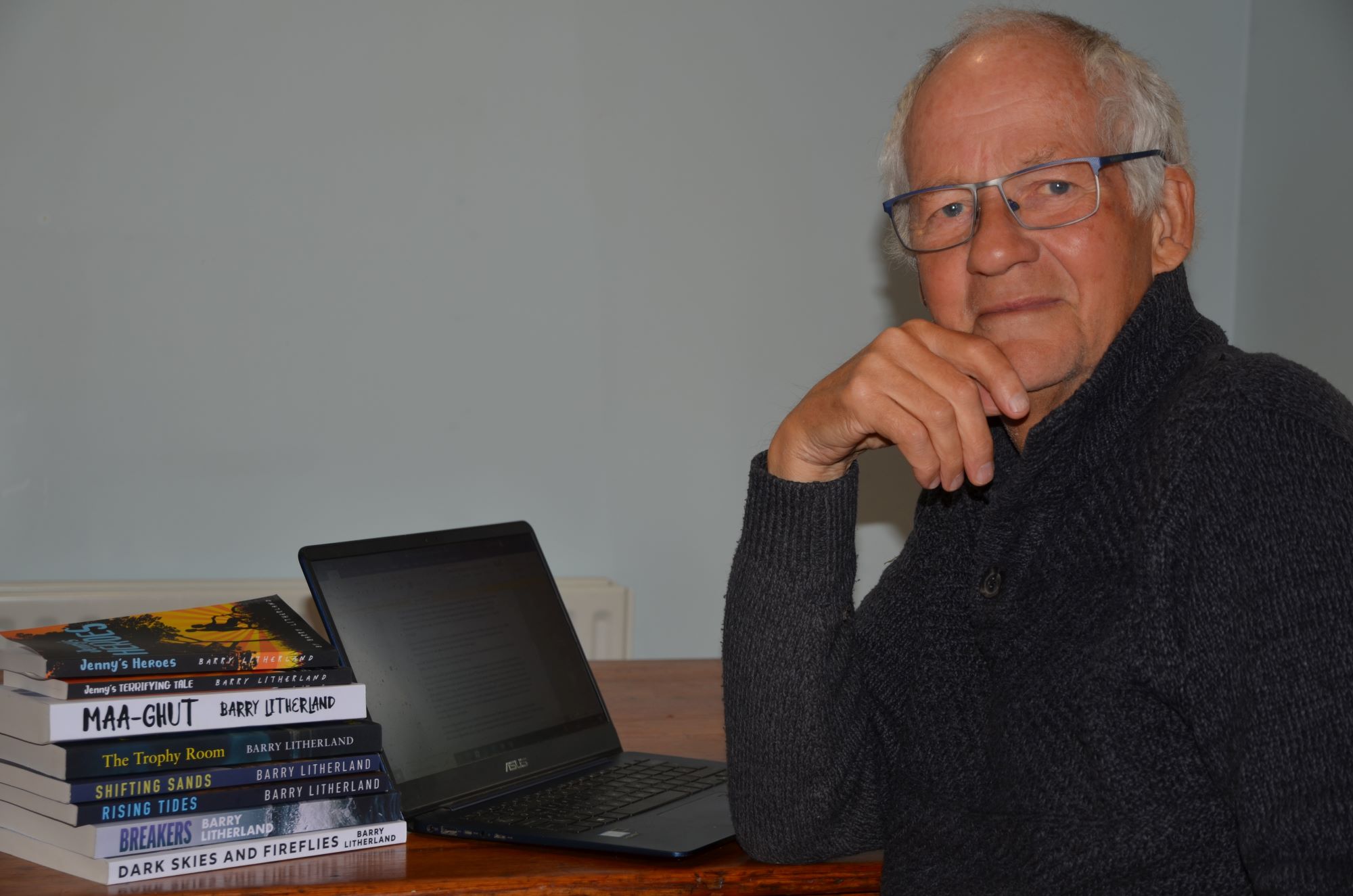
As always, we appreciate you sharing your insights and we’ve got a few more questions for you, but before we get to all of that can you take a minute to introduce yourself and give our readers some of your back background and context?
Let me begin with a story. It’s an appropriate story considering my current creative life as a writer. Once, years ago, I was head teacher at a small village primary school in the UK. Idyllic. Picture postcard. Very successful. No problems to speak of. We were drifting along creatively and comfortably. At the same time a child in a nearby town school was causing some disruption. He’d kicked teacher and helpers, bitten other children, screamed and shouted in class, refused to do any task set for him. Parents were up in arms. Complaints poured in. Cars pulled up alongside his carers as they walked home, drivers hurled abuse, swore at the child, demanded he be removed at once from their class/school. Teachers too were in favour of getting rid of him.
Within days rumours spread like waves towards my little school Parents, with serious, anxious expressions, ‘dropped in’ to warn me. There was talk of him coming to our little school. The stories about him were circulating and growing in menace. Chinese whispers.. You can imagine. You may even sympathise with the parents, fearful for the safety of their children and the impact on educational standards they envisaged. But let me add some details about the child to give you more insight. Let’s see how you feel when you hear his story. We’ll call him Lee. Lee was five years old. Yep. Five. Barely tall enough to open a door. Perhaps not the hardened tyrant you were expecting. He was living with a foster family because he could no longer live at home. His father was forty something and a vicious brute of a man; his mother was twenty, weak and incapable of looking after him. She too was a victim as the age disparity between her and the father and between her and her little boy, shows. She was fourteen when he was conceived. The father was in his late thirties. Lee had ADHD and Autism. He also had cigarette burns on his arms, torso and legs. He had suffered several broken bones during his short life – arm, wrist, leg – and dislocations. The list was long. His father was no longer allowed near him and Lee’s presence at our school was a closely guarded secret. Meetings were arranged by social services for him to see his mother and Lee was collected from school so the secret of his current residence and school was kept secret. She rarely showed up. His disappointment showed up in his behaviour when he got back.
Anyway, to cut the story short, after a couple of pretty awful weeks I made a decision that ours was the perfect school for him and Lee became part of our school, much to the annoyance and disbelief of a handful of parents and teachers. The news went down like the proverbial lead balloon. I prepared for battle and boy what a battle it turned out to be. A powerful faction of the school community were dead against him but I dug my heels in and a war of attrition began.
It was worth it. We could help Lee in that school and, regardless of opposition, I was going to give it my best shot.
At first, Lee was also an unstoppable, disruptive, ineducable object who could no more sit still for five minutes than I could play football for England. But he was also a dark eyed, bright, fascinating bundle of energy and the older kids – within a couple of weeks – loved him, And the two helpers who worked with him – God bless them – loved him too, despite the bruised shins and nipped flesh. And that was enough to secure his place. The majority of parents, trusting the judgement of their children and seeing the benefit of their growing compassion, supported me and his helpers. Inch by inch, week by week, we settle him down and helped him; and the children did too. It was amazing to watch and joyous to be part of. Within a year he was an established part of a conventional classroom. He was academically not far behind his peers and would soon overtake many of them in some subject areas. Not reading and writing though. That level of concentration was harder for him. But he loved hearing stories and would sit wide-eyed while I told them.
But, my goodness, the process took its toll of me. The extent of the malice and resentment his presence caused in a small group of influential parents was boundless and the campaign to get shot of the both of us, was merciless. If they couldn’t offload Lee to another school because of me, then they had to get rid of me. Obvious. However, without going into details, I won, and that success was the proudest moment of my long career – even if it did nearly destroy me. Lee, at the centre of a whirlwind, progressed unaware of the circling winds around him, conscious only of his friends and helpers. ‘ll never forget him. Or them. How could I?
Now, later in life, I write, and some of the themes and moods of that couple of years, and the characters involved in the story come back in different ways. Children are key characters in some of my novels, both the loved ones and the neglected ones. My stories are also full of characters who fight in different ways for what they believe is right. I never use exact representations of either character or story but mould and change them to fit my own creative narrative. They are my source material, the experiences which I can recall and use. My crime thriller novels, for example, have as their central character a young journalist who wants nothing more than a quiet, comfortable, unambitious, trouble-free life. Unfortunately, he also has a stubborn and unrelenting sense of right and wrong and he gets drawn deeper and deeper into dangerous situation. He also had a dry, sardonic humour which makes him a very appealing, He is an often inadequate figure who just will not give up. Suspense and laughter in an uneasy alliance!
Eva, in my award winning novel for young adults, fights injustice, bigotry and greed despite her own youth and sense of inadequacy, and becomes the central force in a fight for survival in a self-destructing consumerist world. Tense. Dramatic. Powerful. And often very moving. And funny.
Perhaps I ought to add at this point that my novels can’t be shoe-horned into genre stereotypes. They are my books. Nobody else’s. I make the rules. That’s a benefit of self-publication. Real authenticity.
And, oh yes, one way or another, I like my characters to succeed, even if their success is only a small, bright light in a dark world. The ending is of paramount importance.
I suppose, in short, what I’m saying is that the events – good and bad – of my life are the bedrock material upon which my creative work, often quite unconsciously, is founded; it’s there, even if I’m not always aware until late in the process of writing. And then, looking back, I know my stories and my characters will resonate with readers. Laughter, tears, edge of the seat suspense, and an ultimate sense of fulfilment when the last page is turned. That’s what I want.
What do you find most rewarding about being a creative?
For me, the sheer act of creation is the most satisfying thing. To begin with a blank screen and gradually bring to life a disparate array of real characters, to describe their interactions and their relationships and then to place them in situations of jeopardy, stress or tension and watch how they react, is an almost magical process. The route they take through the array of challenges the plot demands, their reactions to dramatic, suspense filled situations, the self-preserving strategies they employ and the bonds they create are the core of what I do. And, believe me when I tell you, these characters can take on a life of their own. make decisions or act in a manner which requires me to make changes of my own. Somewhere, deep inside my creative mind, my characters affect my decision making and the direction the story takes. I love it.
Then, when the first rough draft is complete, the second phase begins. Editing! Surprisingly, this phase takes considerably longer than the initial creative process. It can be a hard, concentrated, heavy slog, as I hone words, sentences, paragraphs and the overall narrative to a stage where I think I can do no more. I sit back and imagine I have created perfection; but of course I haven’t. It’s time to let the novel hibernate for a month or two, lying untouched, sleeping, maturing, like a good wine – or cheese – until I’m ready to return to it with fresh eyes. Then it’s time to improve upon perfection. A further draft ensues.
Of course it still isn’t perfect. It’s time to get a professional editor to take a look, to point out the flaws in my perfect novel, to heartlessly criticise and challenge, to point out incongruities, continuity issues, mistakes. I take the blows manfully then start work on my final draft. I picture myself dragging my novel up a mountain slope, heading towards the summit. As I edit, I get closer and closer until finally I reach the windswept ridge and crawl to the pinnacle. Done! Finished! Just the practicalities of cover design, blurb and publication ahead.
Unfortunately, when I raise my head from a moment of self-congratulation, I see, far ahead of me another, higher peak and, beyond that in the distant grey mist, shadows which could be further and higher peaks still. But those are for another time, another book. There is always another summit, further away. Across a different terrain perhaps, It’s just a fact of the creative process. The next book will be the best. And that process too I love. It keeps me going. My readers deserve the very best I can achieve at a particular time. But I must keep climbing.
Beyond this, there are a few moments on the creative journey which give me a feeling of elation which is hard to describe. The perfect ending which brings a smile to my face or tears to my eyes, makes my heart ache and my chest hurt, is foremost among these. I know, when that moment occurs and I have to sit back in total silence while those feelings subside, that I have created something special. I love endings like that. I want my readers to feel the same and to linger after they finish the book, in a moment of complete satisfaction. I want the journey through the novel to have been worthwhile.
When an editor wrote to me (about my book “Dark Skies and Fireflies”) that despite twenty years as a professional editor, she had found herself in tears at points in the novel and at the conclusion I felt an elation which lasted for days. When a reviewer wrote that they laughed out loud during their reading of my Phil Tyler novels I was overjoyed. When another warned readers not to start reading in the evening because they would want to stay awake all night to finish it, I had a smile on my face all day.
So, there you go. The whole creative process is a magical thing to me and I love it. Not all the time of course. There are times when I just want to give up. It’s hard work, very hard, and the rewards are slow in coming and often meagre. Readership is hard to build, especially in the modern world, Financial returns are often negligible. Promotional costs, chasing those illusive readers who I know are out there, can often exceed any income from sales.
But, have I ever wanted to give up? No. That creative urge is in me somewhere. I don’t know where or why, but I know it’s there, and there is always another novel ahead of me, another pinnacle, another stage in the journey towards those pale grey heights of excellence, those sketch lines in the distant mists, which are always waiting for me. I’ll never reach them, but I have no choice but to try.
Is there something you think non-creatives will struggle to understand about your journey as a creative? Maybe you can provide some insight – you never know who might benefit from the enlightenment.
I think this can be summed up quite succinctly. People wonder why I bother being a writer at all. It’s simply not worth it, they say. You labour over 80 -90,000 words, spend months editing, invest a couple of thousand dollars getting a good editor to review everything you’ve done, and an illustrator to create a good design. Then you produce your e-book and paperback and, at the end of that process, you have absolutely no certainty that you will sell a single copy. In the early stages you can be hard pushed to give the damned things away, and getting reviews from people who are not your nearest and dearest (I won’t allow them to review. It’s cheating) is soul destroying. Then, authors beware, you can be easily seduced into the world of book promotion, where your outlay can quickly accumulate into an eye-watering amount with no certainty of a return on your investment. You bombard every independent bookshop within a vast radius and maybe shift a handful. You stir the dying embers of your local newspaper’s interest, prod radio stations, and still do no better. Worst mistake of all, you buy a book by an ‘expert’ who tells you how he or she made a fortune selling their own books without initially explaining that their successful book is the one you are reading and it is idiots like you who have ensured its success. And, of course, (the bit they don’t tell you), it doesn’t work unless you write a book like theirs. The independent writer can feel at times as if they are in a boat throwing wads of money into the gaping mouths of sharks which gather only too readily when they see an idiot in a boat. You read of people who have manoeuvred these perilous waters and made a few dollars or a lot. And you want to throttle them. Why should they have all the luck? Then, just to make your feelings of inadequacy and despair even more poignant, you look at your book on Amazon and find that it lingers at about the five million mark in the ratings.
It’s time to give up, surely? There must be something you can do which offers a greater certainty or profit and doesn’t involve so many moments of disappointment and despair.
Yep, non-creatives will understandably wonder why we writers (and composers, artists and a host of others) bother.
The answers are straightforward but not altogether helpful.
You do it because you have to. There is a mischievous little creature twisting nerves in your brain and it won’t stop unless you create. And deep down, despite protestations, days of lethargy and moments when you want to throw your laptop from the highest cliff you can find (and then follow it!) you actually want to write. The process of writing, tormenting yourself, wrestling words and narrative into place, gives you a sense of fulfilment. It’s an achievement of which you can be momentarily proud. It’s also your legacy. I did this. This is mine. More than that, it’s me. Read it, damn you!
And you want to get better. After every failure comes a period of reflection, then a girding of loins, a gritting of teeth and a fresh start. And you try again. Samuel Becket summed it up perfectly. “Ever failed? No matter. Try again. Fail again. Fail better.” One day, if you’re lucky, you’ll write something you know it’s the best thing you’ve done, something which has reached a standard, if not of excellence, of worth. Next step, the slippery slopes of the rise towards excellence. It’s slow and laborious but ultimately thrilling. For me that process started with my Phil Tyler thriller series, my two children’s books and my paranormal novel, “Breakers”. Readers actually liked the books, and said so. What a great feeling that is! It reached its latest pinnacle in my first young adult novel, “Maa-Ghut” of which I am immensely proud and, at last, a measure of real recognition – a finalist in the book Excellence Awards. I can now count about a dozen books in various genres with which I am truly pleased. But excellence is still out there waiting. I’m getting closer but I will never reach it. But who cares. It’s the journey that counts and the people you take with you.
And finally, there’s always hope. Maybe one day, recognition, acclaim. But I don’t get carried away. I stress, it’s the journey that counts. If you’re after wealth, good luck to you. Some people get there. Millions don’t. But you have to keep trying, don’t you? You have to get better and better at what you do. And with each forward step, hope takes your hand, and offers support and encouragement. Maybe this time. Maybe next time. One day you’ll be a contender. (“On the waterfront” – Marlon Brando).
And yes, maybe it will happen. I hope so. As a writer, I might feel the momentary pang of anguish when I see someone succeed and a temporary fury when some semi-literate ‘celebrity’ cobbles together a badly-written autobiography or (worse by far) a children’s book, but I do, ultimately celebrate the success of the journeyman writer because I know how much they deserve their success; and I want to help. That’s why I also like to review good indie books.
Contact Info:
- Website: https://www.bleaknorth.net
- Instagram: https://www.instagram.com/barry.litherland/
- Facebook: https://www.facebook.com/BarryLitherlandAuthor
- Other: https://www.goodreads.com/author/show/8263447.Barry_W_Litherland
https://bsky.app/profile/bl-writer.bsky.social
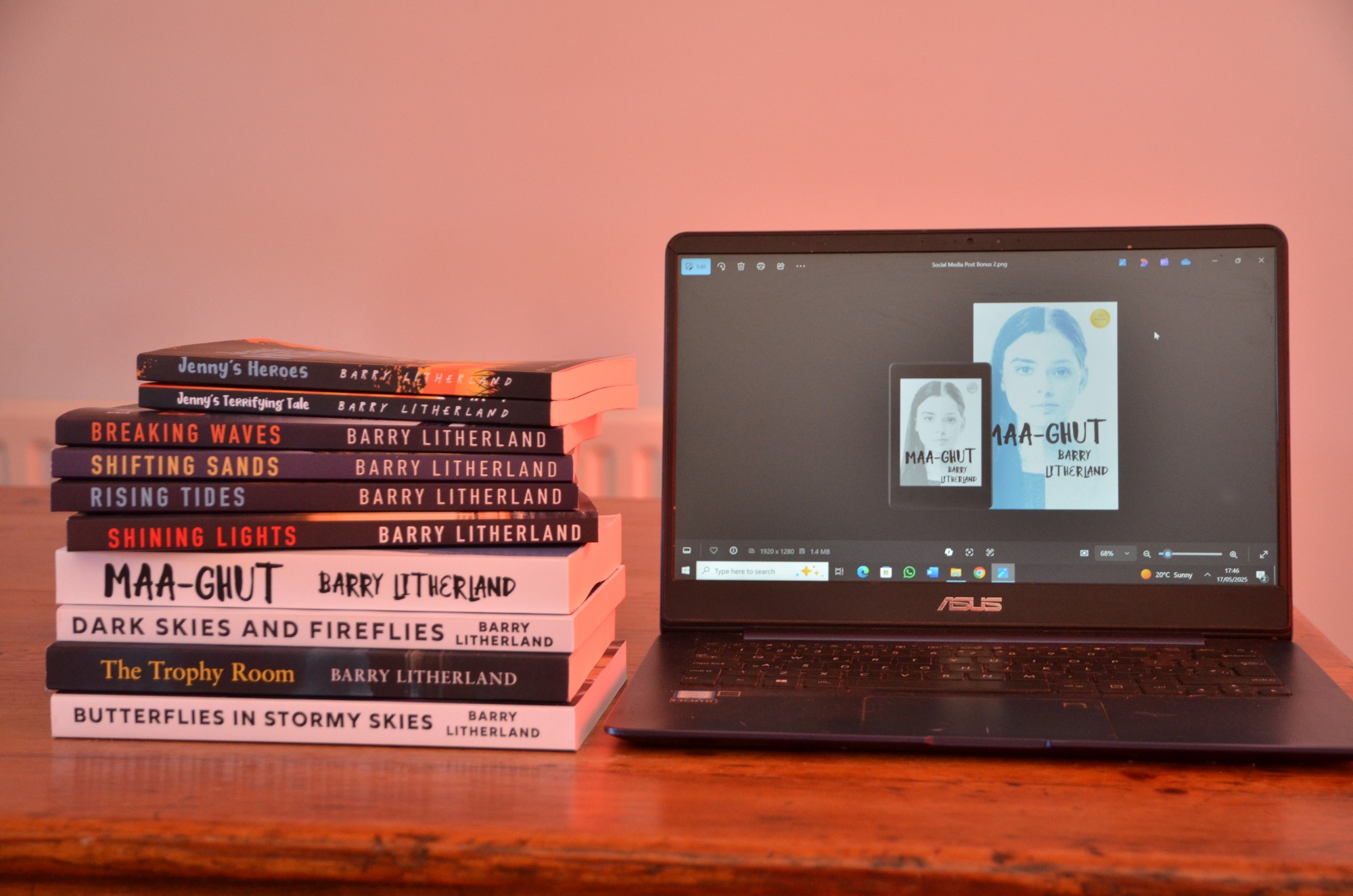
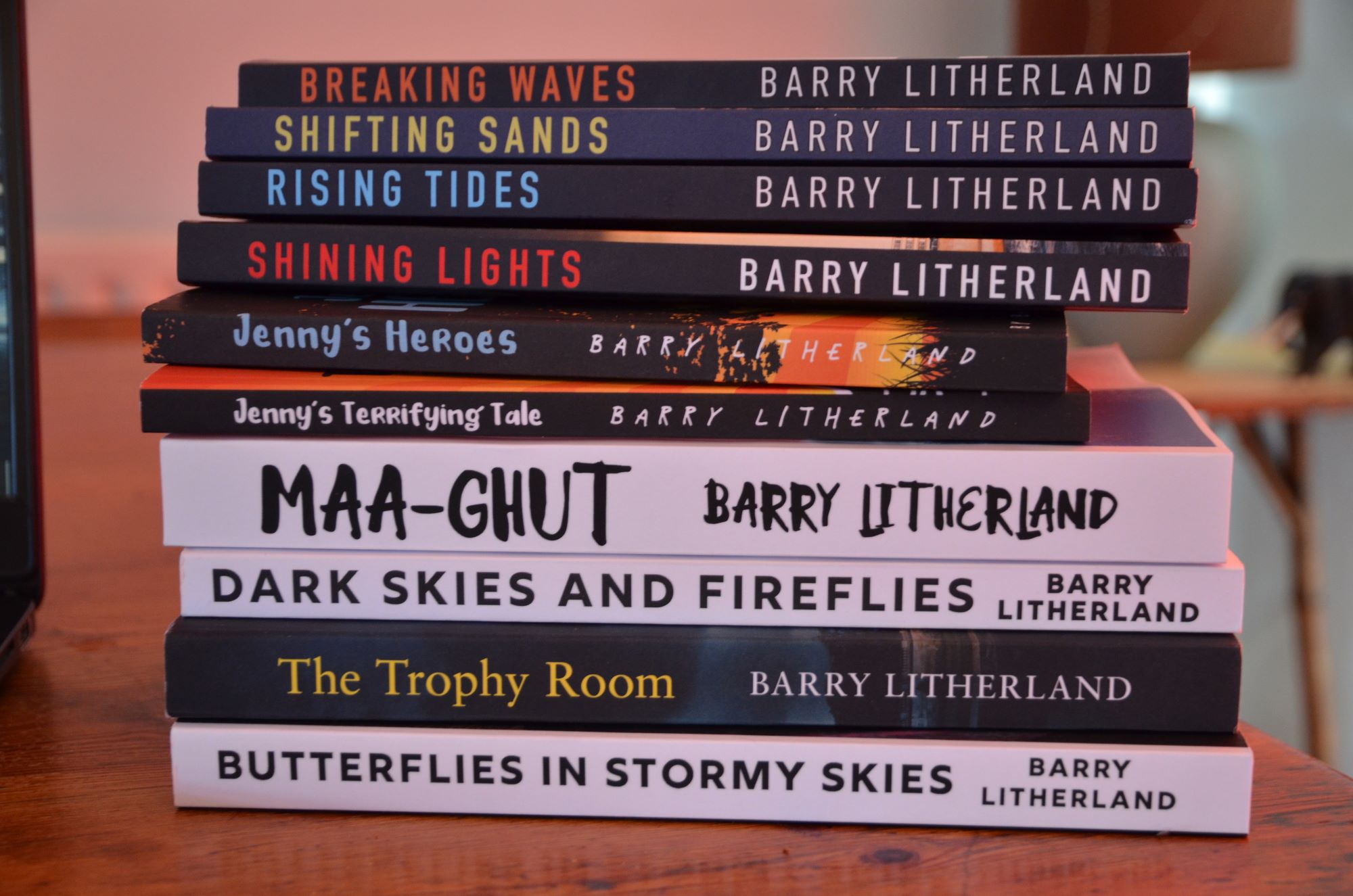
Image Credits
Susan Litherland