



We were lucky to catch up with Barbara Heinrich recently and have shared our conversation below.
Alright, Barbara thanks for taking the time to share your stories and insights with us today. Can you talk to us about how you learned to do what you do?
Simply said, Art is a lifetime process and to be an artist, you have to embrace a lifetime of experimenting and learning. Like many artists, I began with classes from a very young age and continued my education through college and beyond. My courses gave me some fundamental skills in how to use materials but more importantly, I learned techniques that other artists used and ways of looking at a work of art that helped me to see something differently. I also got the chance to try new things and fail…or succeed.
These courses were just a stepping stone because I think that most artists learn by doing. On one level, artists have to master materials and on another they deal with composition and the basic elements, line, color, etc. Since materials change greatly, you learn how to work with them by experimenting. For example, when I was younger, traditional oil paints were the only ones that were accessible. In the past decade or so, water based oils have evolved into a wonderful medium requiring some experimentation to master.
As for the more complicated issues of composition, artists evolve in their conceptualization and how they interpret an idea. I think that being visually curious and constantly reevaluating your perspective is the coursework you pursue after classroom learning. I like to reflect on visual trends across a broad variety of arts. For example, I like to review what is current in the decorative arts as a way to refresh and rethink my color palate.
The process of becoming an artist is not something you can shortcut or rush. But like any other skill set, it improves with practice. So in order to speed up the learning process, an artist needs to do their “10,000 hours to become an expert” in the words of Malcolm Gladwell.
I am a believer that the only obstacles are the ones that you create. However, I recognize that time and money are often constraints on learning more.
Awesome – so before we get into the rest of our questions, can you briefly introduce yourself to our readers.
I have always felt the need to create and I have gone through many iterations as an artist in my career. I have never been satisfied adhering to one direction so I find myself creating representational as well as abstract art. I also am drawn to Japanese (Shodo) calligraphy. I have this sense that doing totally opposite things frees you up to be more expressive.
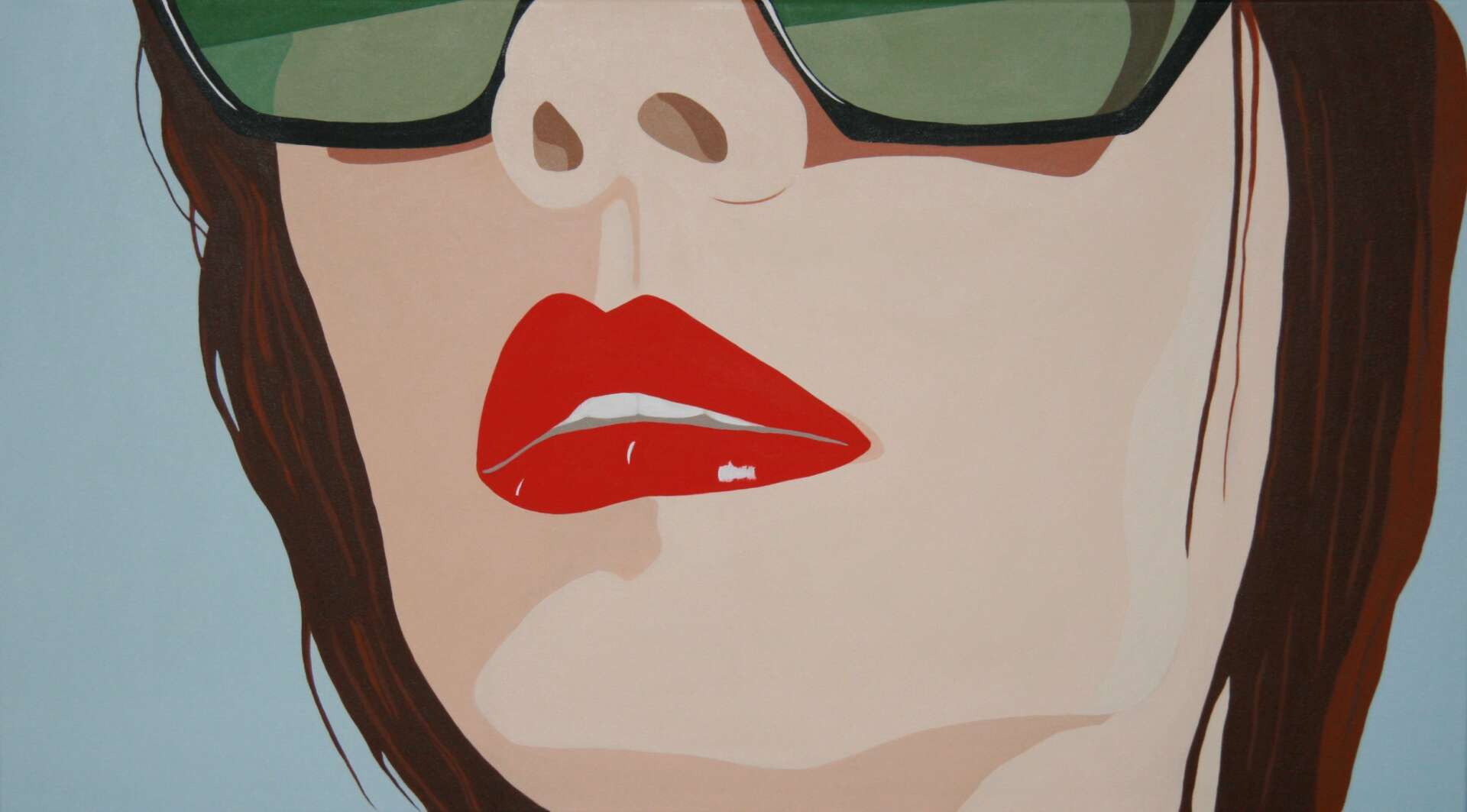
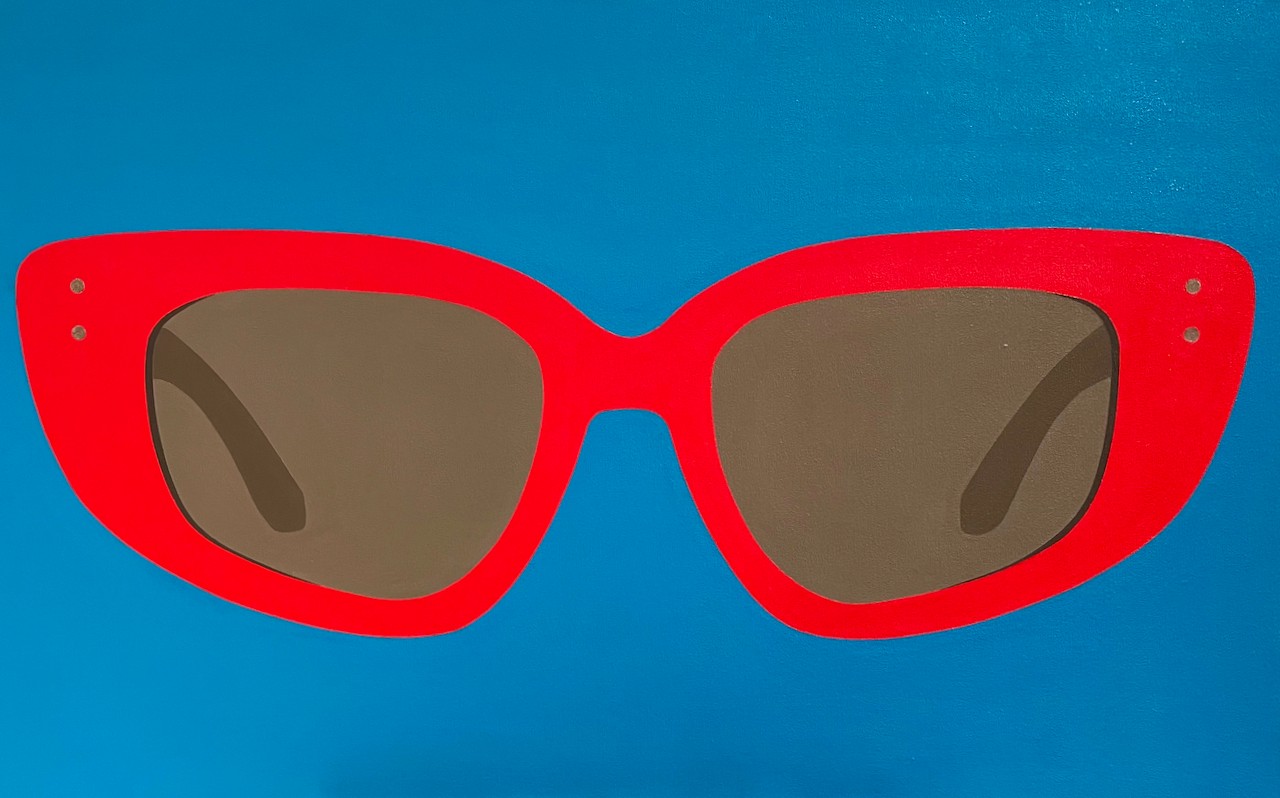
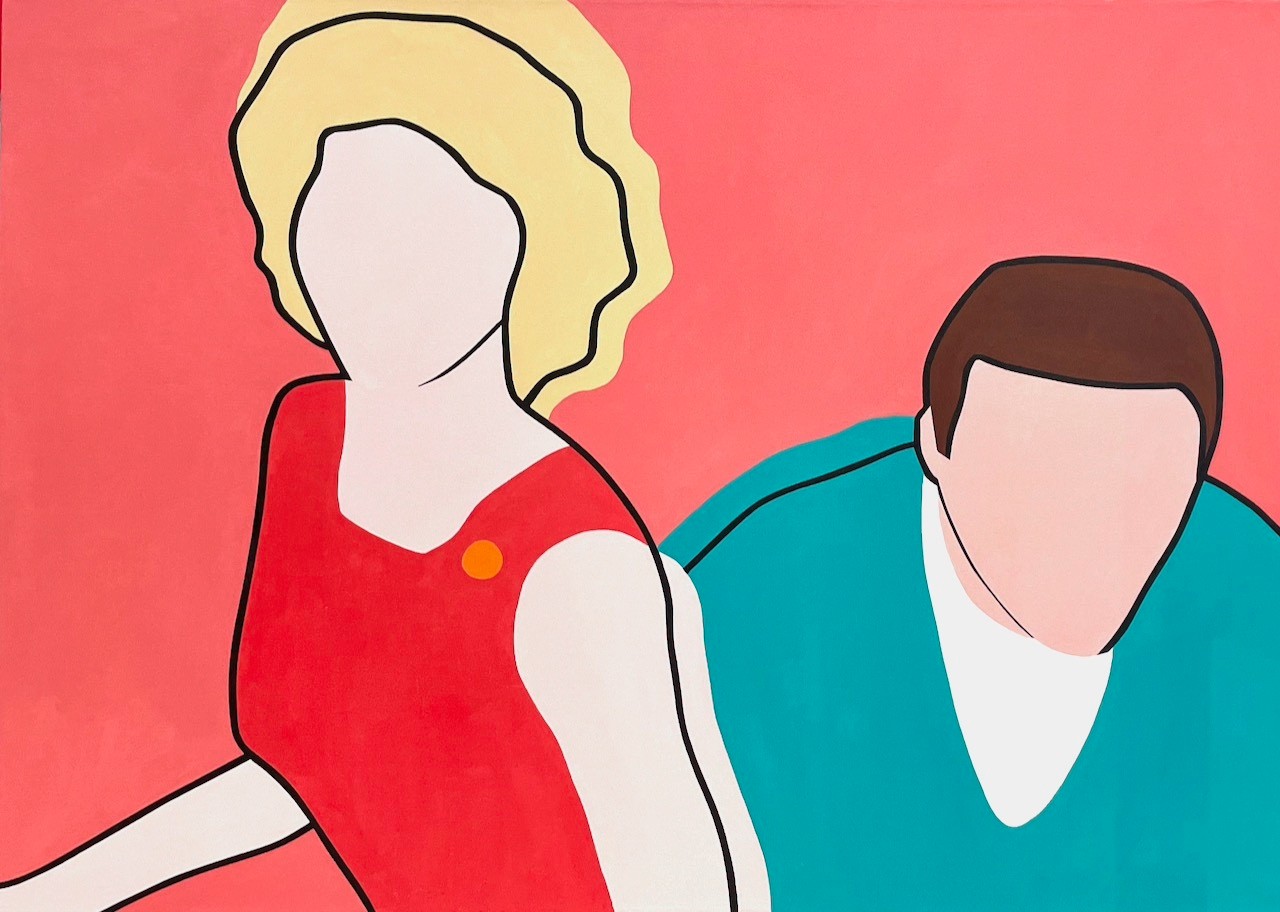
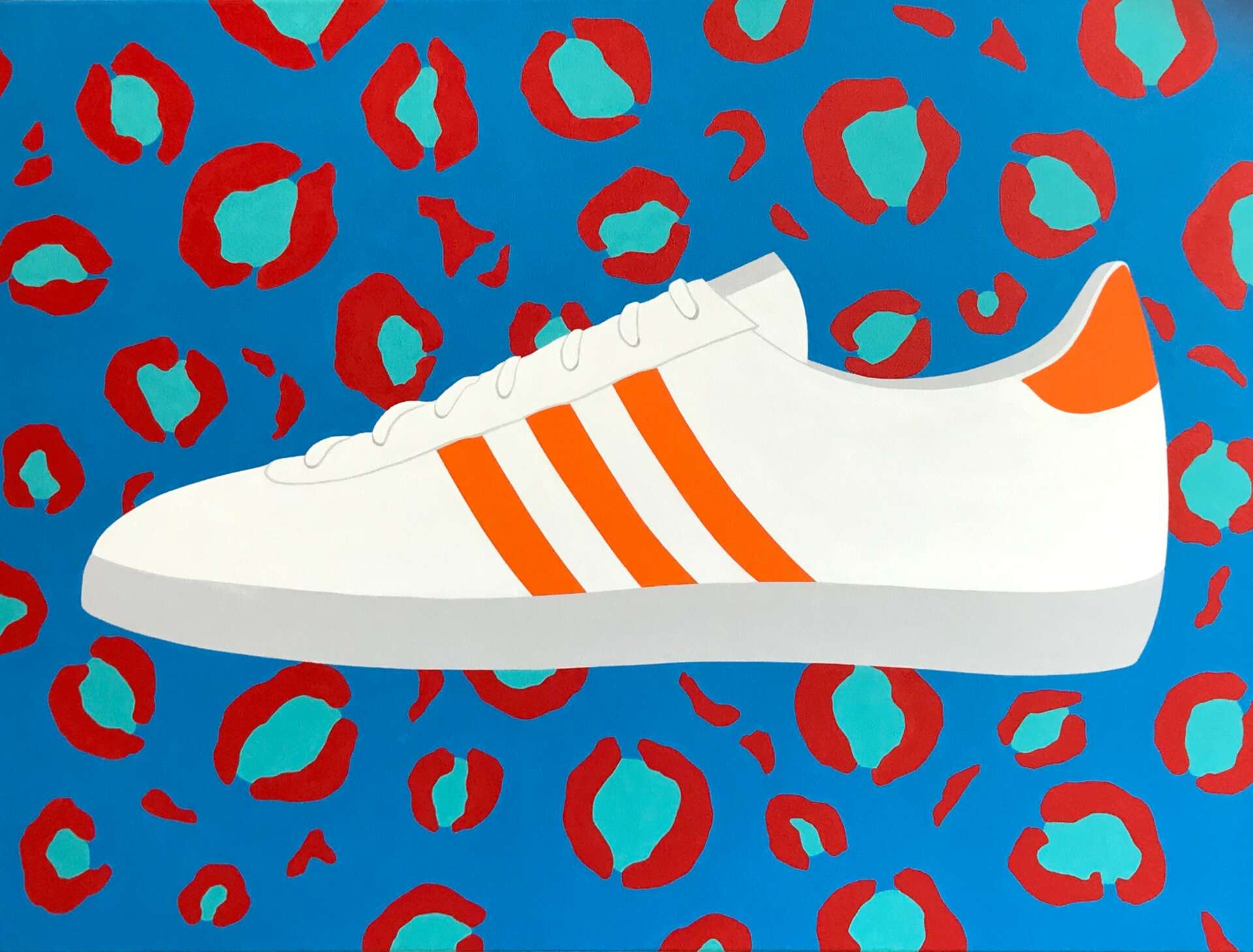
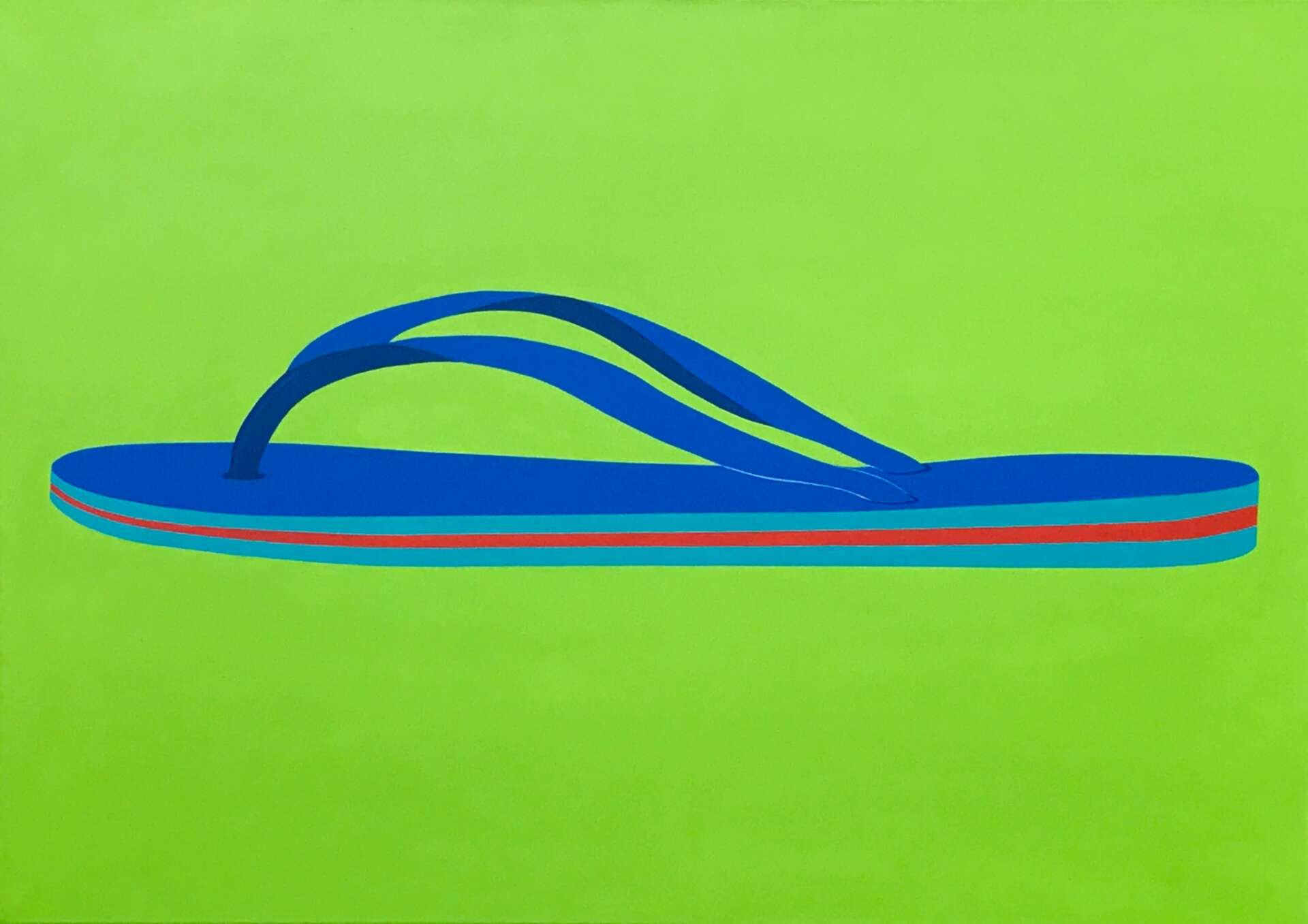
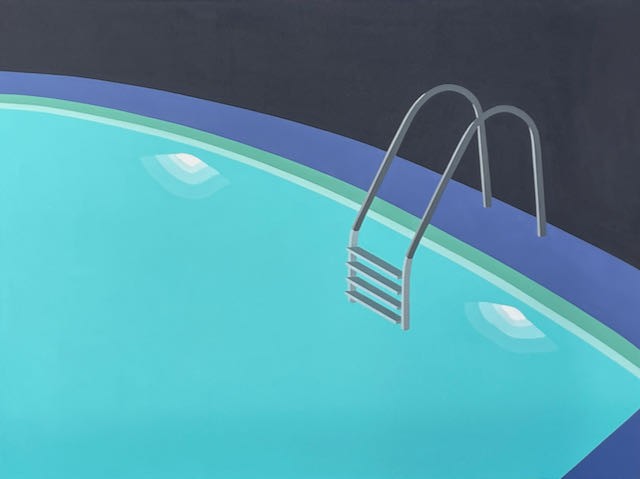
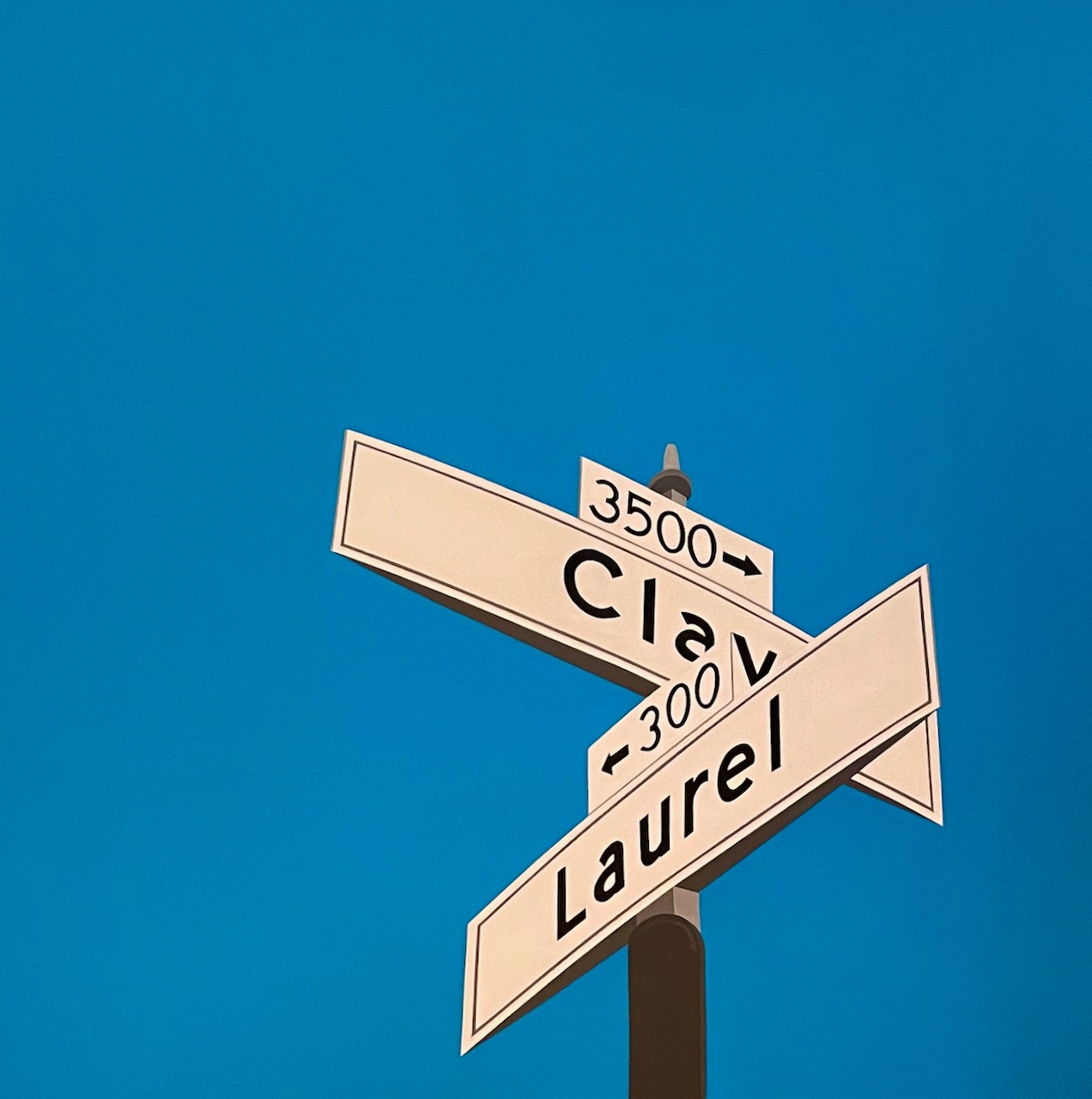
Many of my paintings focus on what I call iconic imagery, objects or scenes that are universally recognizable whether it is Adidas shoes, Ray-Ban sunglasses or a woman sitting at an idealized Southern California pool. I am intrigued by iconic images because they are immediately recognizable and invoke involuntary emotional impressions. Originally, iconic paintings were of holy people or religious objects of worship. Today’s religious objects are created by advertising and the media and offer divinity on another level.
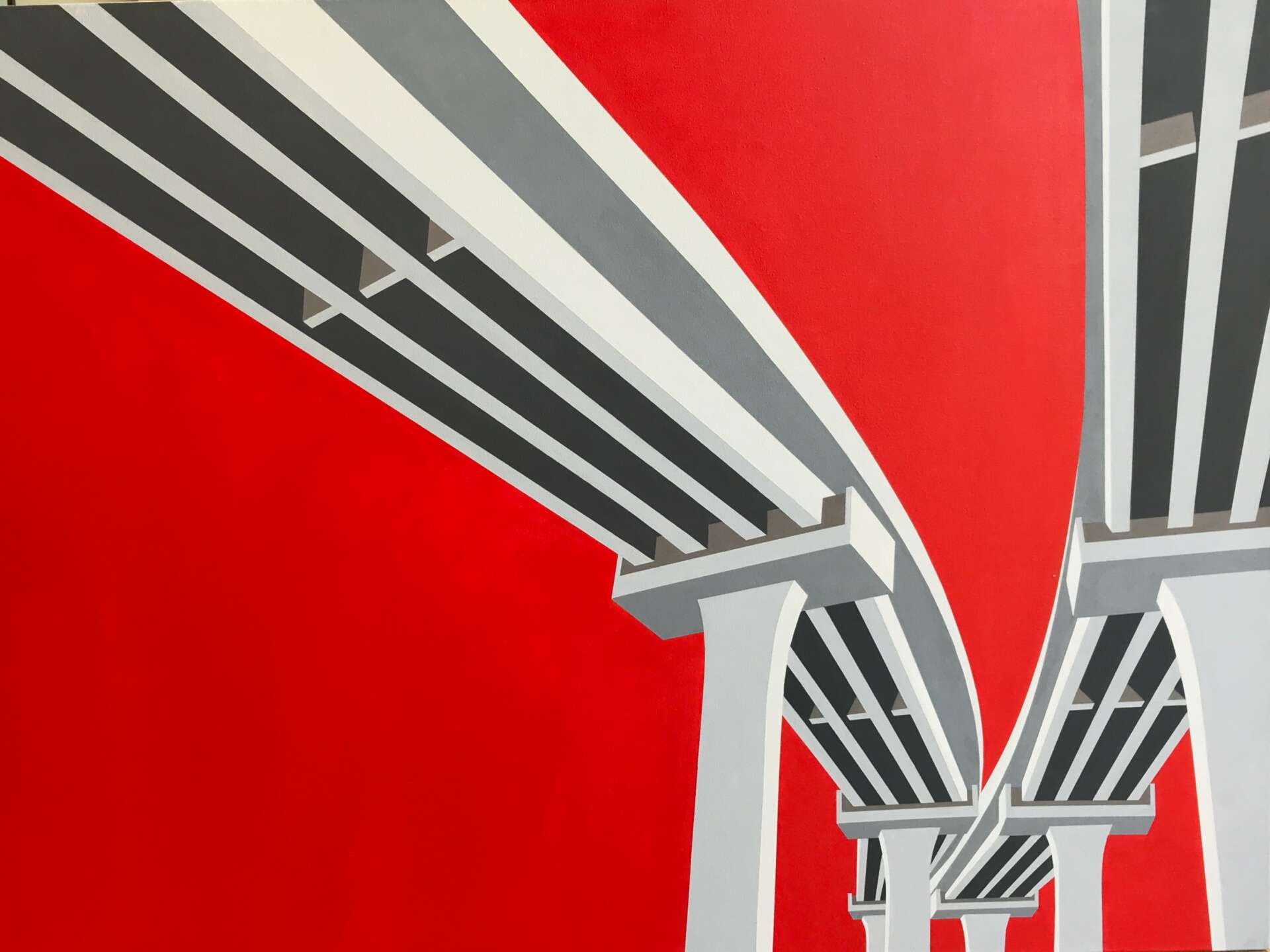
Some of my abstract paintings have a geometrical element in an attempt to explore visual symmetry and a strict internal structure. Others are more free form and focus on patterns of color.
My other path draws upon the discipline of Japanese calligraphy and the bold contrast of monochromatic work. I find that the fluidity and boldness of the brush coupled with the black and white contrast elicits movement and creates a sense of artist spontaneity. Moving from the tradition calligraphy I have evolved a stylized graffiti/tag approach.
I am most proud that people often buy more than one of my paintings and that a lot of my work is sold through word of mouth. It makes me feel that my work really resonates with people. I am also please have have participated in numerous shows at galleries and museums throughout the nation.
Alright – so here’s a fun one. What do you think about NFTs?
Let me start by saying that I might be a bit biased about NFTs because I create NFTs. I believe that more art is going digital and that NFTs will be a (not the) dominant art form. If you look at photography, once it went digital it broadened the reach of photography and allowed many more people to become photographic artists. I think that is happening with other forms of art and is democratizing the production of art. It also makes art more accessible as you no longer have to go to a gallery and look at something on a wall. Digital art and NFTs could be placed anywhere there is internet access.
I think the NFT market will evolve and become more focused. Right now, there is a bit of a “play toy” element to it and I wouldn’t necessarily call some of what is produced “art”. But then this can also be said about painting and other art forms.
Is there mission driving your creative journey?
I don’t find that I have a specific mission that I am trying to achieve. Rather, I just constantly feel the need to create and to grow as an artist. Pushing myself out of my comfort zone has become my modus operandi and I feel too static if I am doing the same things over and over. That doesn’t mean that I have major failures and go slinking back to my comfort zone, but it keeps me moving forward.
I have a friend who is a published author and she will only write if she has a book contract. I am always amazed that she doesn’t feel the need to just write.
Contact Info:
- Website: barbheinrich.com transporterstudios.com
- Instagram: bheinrich1 transporterstudios
- Twitter: @brheinrich @studiotransport
- Other: https://www.saatchiart.com/all?query=Barbara%20Heinrich https://ucurate.com/collections/barbara-heinrich
Image Credits
No need to credit anyone other than me.