


Alright – so today we’ve got the honor of introducing you to Atharva Tyagi. We think you’ll enjoy our conversation, we’ve shared it below.
Atharva, thanks for joining us, excited to have you contributing your stories and insights. Can you open up about a risk you’ve taken – what it was like taking that risk, why you took the risk and how it turned out?
I’ll never forget the night I decided to start SMYL-Fit. I was sitting on my bedroom floor at 12 AM, watching my younger brother, Rey, pace back and forth in the hallway. He is on the autism spectrum, and ever since he was born, I have seen his struggles in trying to “fit in” wherever he goes, rarely finding a safe place where he could be himself. I kept thinking about how Taekwondo had been my refuge for 14 years, where I learned to channel my energy and find my voice. Rey deserved that same sanctuary. That night, I felt an overwhelming need to create it for him and kids like him, so they wouldn’t have to fight the same battles alone.
But here’s the thing. I was terrified. I mean, after all, I was just a teenager with a black belt and a dream: no therapy degree, nonprofit experience, or safety net. The logical voice in my head kept saying, “What if you mess this up? What if you make things worse for these kids?” But then I’d see Rey struggling and think about all the other kids like him who were invisible to the world.
The scariest part was the heavy weight of the responsibility I felt, especially because this was a cause personal to me. These weren’t just students; they were someone’s entire world. When a child’s mom entrusted us with her for our first session, she whispered, “She hasn’t smiled in weeks. Please be gentle with her.” That’s when it hit me for the first time. I wasn’t just teaching kicks and punches. I was holding their trust, their hope.
That first class was chaos. Kids were overstimulated, parents looked skeptical, and I questioned everything. But then something magical happened. This one kid, Ayan, who hadn’t spoken for the whole session, quietly walked up to another student and offered him his favorite fidget toy when the student was having a hard moment. No adult prompted it. No one was watching. It was just pure human kindness. That’s when I knew we were building something special – not just a program, but a community where being different wasn’t just accepted; it was celebrated.
Awesome – so before we get into the rest of our questions, can you briefly introduce yourself to our readers.
Hi, I’m Atharva Tyagi, a biomedical researcher and aspiring physician-scientist. I’ve interned at Yale, Harvard Medical School, and ASSIP, with publications in Frontiers and Advances in Genetics. I’m also the founder of a health tech startup developed through the Haas School of Business, a certified EMT Cadet, and a USABO Semifinalist. But none of those experiences shaped me more than Rey’s older brother. Watching him navigate a world that wasn’t built for him changed how I understood leadership, not as authority but as advocacy.
Taekwondo has been my second home for the past 14 years. It taught me focus, confidence, and discipline, giving me over 500 hours of experience teaching as a Junior Master. As I grew older, I began to appreciate the challenges kids like Rey face every day: the judgement, the stares, the shunning. I started to wonder: could taekwondo be a way to support kids like Rey, who are often excluded from traditional group activities? I began to read up, and as I researched, I found real scientific grounding: movement-based programs can help neurodivergent children with self-regulation, coordination, and emotional development. That was when I stopped asking if martial arts could help and started building something to ensure it would.
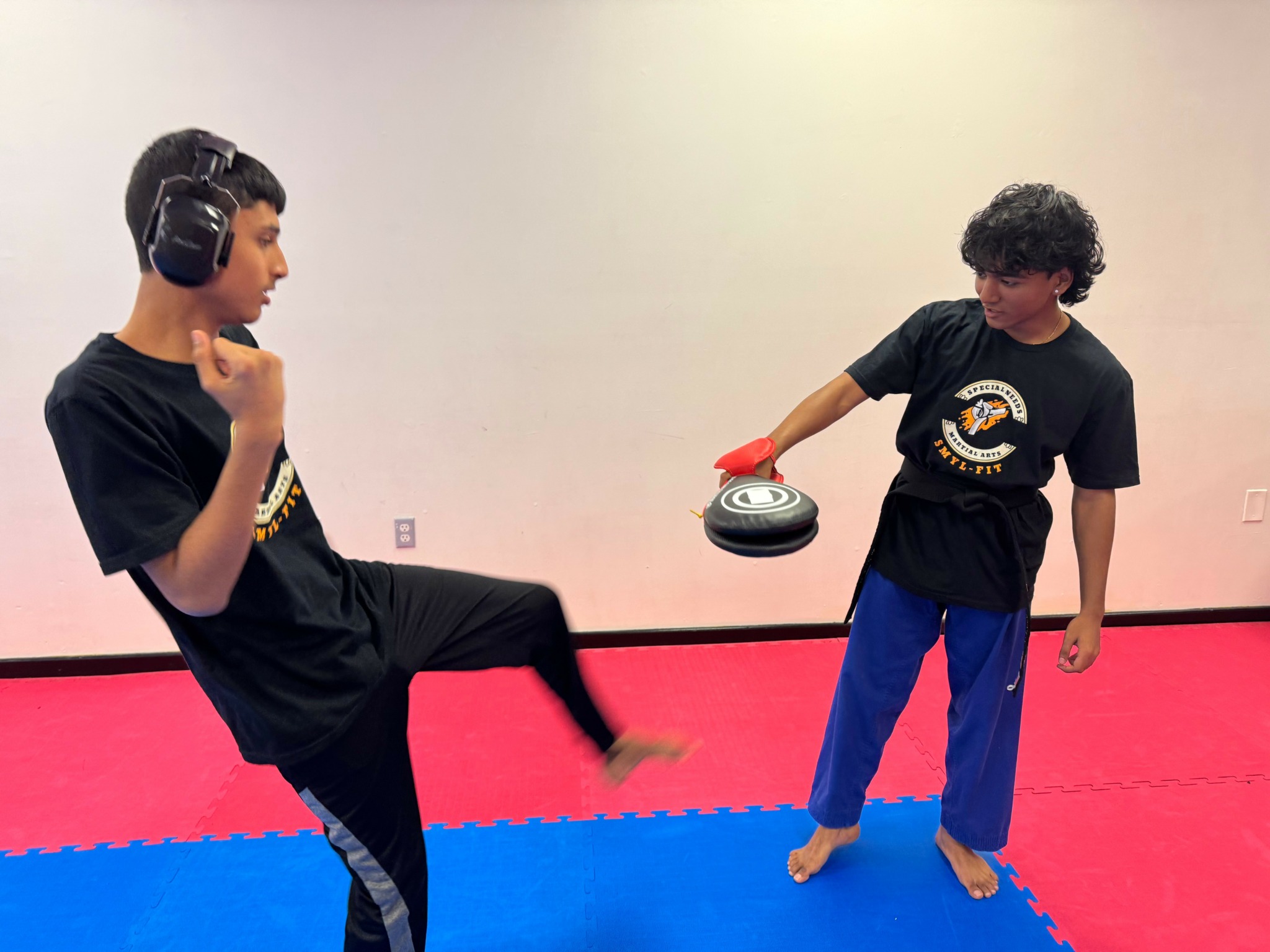
And there you have it! SMYL-Fit was born as a 501(c)(3) nonprofit designed to make martial arts accessible, safe, and empowering for neurodivergent kids. Our classes are built around the principle that no child should have to change who they are to belong. Whether that means adjusting lighting and sound, modifying drills, or celebrating a simple wave hello like a gold medal moment, we meet every child where they are. We’ve partnered with Graham Behavior Services and top martial arts schools like Young Moo and United Black Belt to deliver clinically informed and deeply personal programming. For me, the most rewarding part is watching a kid who’s been labeled “too much” realize they’re just enough. That’s the heart of SMYL-Fit and the impact I want to keep creating in everything I do.
Can you share a story from your journey that illustrates your resilience?
There was this session that nearly broke me. Three months in, I thought I had everything figured out. I’d planned this elaborate lesson and walked in feeling confident.
Within five minutes, everything fell apart. Sammy had a complete sensory meltdown – music too loud, lights too bright. He was crying and hitting himself while his mom looked mortified. Rey was pacing because routine changes overwhelmed him. Another kid froze in the corner. The volunteers looked at me like I was drowning, and honestly, I was.
But what got to me was Sammy’s mom apologizing to ME. She was saying sorry for her son’s disability for disrupting MY class. I realized I’d failed. I’d created another space where kids had to apologize for being themselves.
I went home and cried – not just because the class was hard, but because I’d hurt the kids I was trying to help. My mentor said, “The most dangerous thing isn’t failing these kids once; it’s giving up on them entirely.”
So I called every parent individually, not for updates, but to listen, really listen. I asked what a good day looked like for their child. I observed our most successful moments and found out that they were all quiet ones: gentle touches, children sharing space, and genuine connection.
I completely rebuilt our approach: lower lights, softer music, and flexible timing. I trained volunteers in patience and in seeing the child before the behavior. My mind began realizing that, some days, success meant a kid just staying in the room.
The following month, Sammy came back. When he needed a break, he walked to our quiet corner, used breathing techniques, and returned when ready. His mom didn’t apologize. She thanked me.
That taught me resilience isn’t pushing through – it’s having the courage to change course when you’re headed wrong. It’s loving these kids enough to fail better.
Any advice for managing a team?
After all the ups and downs SMYL-Fit has been for me, I wish to leave whoever is reading this with the following advice: Lead with your heart on your sleeve. Your team needs to see you’re invested in them as people, not just the mission.
I learned this when one of our volunteers started showing up less. Instead of assuming disinterest, I asked what was wrong. He was struggling with anxiety about working with kids with disabilities, which was honestly an extremely relatable feeling: being afraid of saying something harmful. He had been carrying this weight alone.
So we sat down, and I shared my fears – how I still worry before every session and sometimes call Rey crying because I’m scared I’m failing him. He looked at me like I’d permitted him to be human.
He is one of our strongest volunteers because he knows vulnerability is okay. He connects with kids deeply because he’s not trying to be perfect – just present.
Kids like ours sense authenticity immediately. So, I model the vulnerability I want to see. When I’m having a hard day, I tell my team. When I don’t know something, I admit it. When sessions don’t go well, we talk honestly.
Now here is the key piece of advice: celebrate “invisible” wins. We celebrate new techniques, but also when a shy kid waves hello, when siblings stop fighting to work together, and when parents say their child talked about class all week.
I tell volunteers: “You’re not here to fix these kids. You’re here to see them.” Everything changes once your team understands their job is a connection, not a miracle. The pressure lifts, joy increases, and kids feel it immediately.
Contact Info:
- Website: https://smyl-fit.org/
- Linkedin: https://linkedin.com/in/atharva-t-0b34842a8
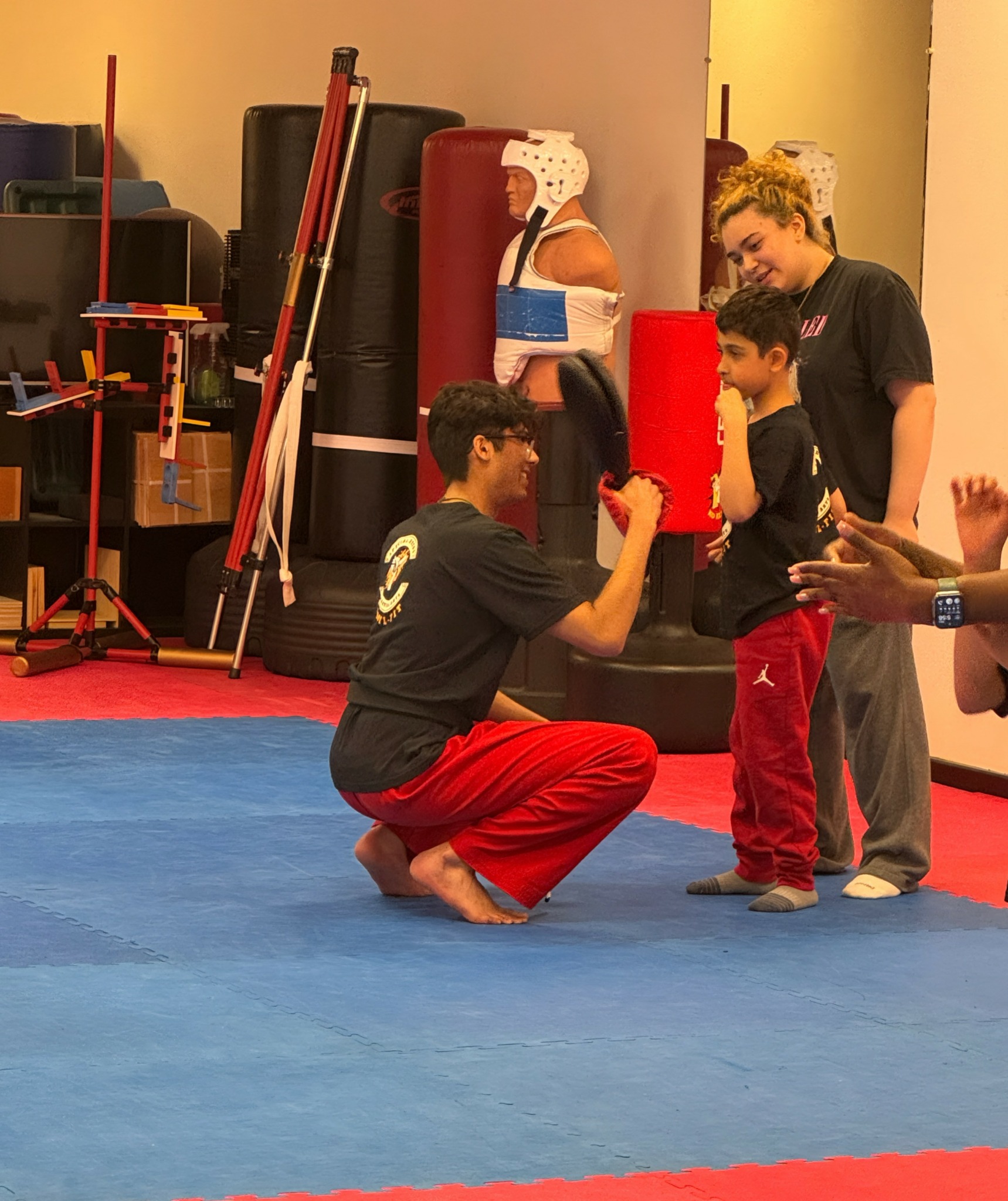
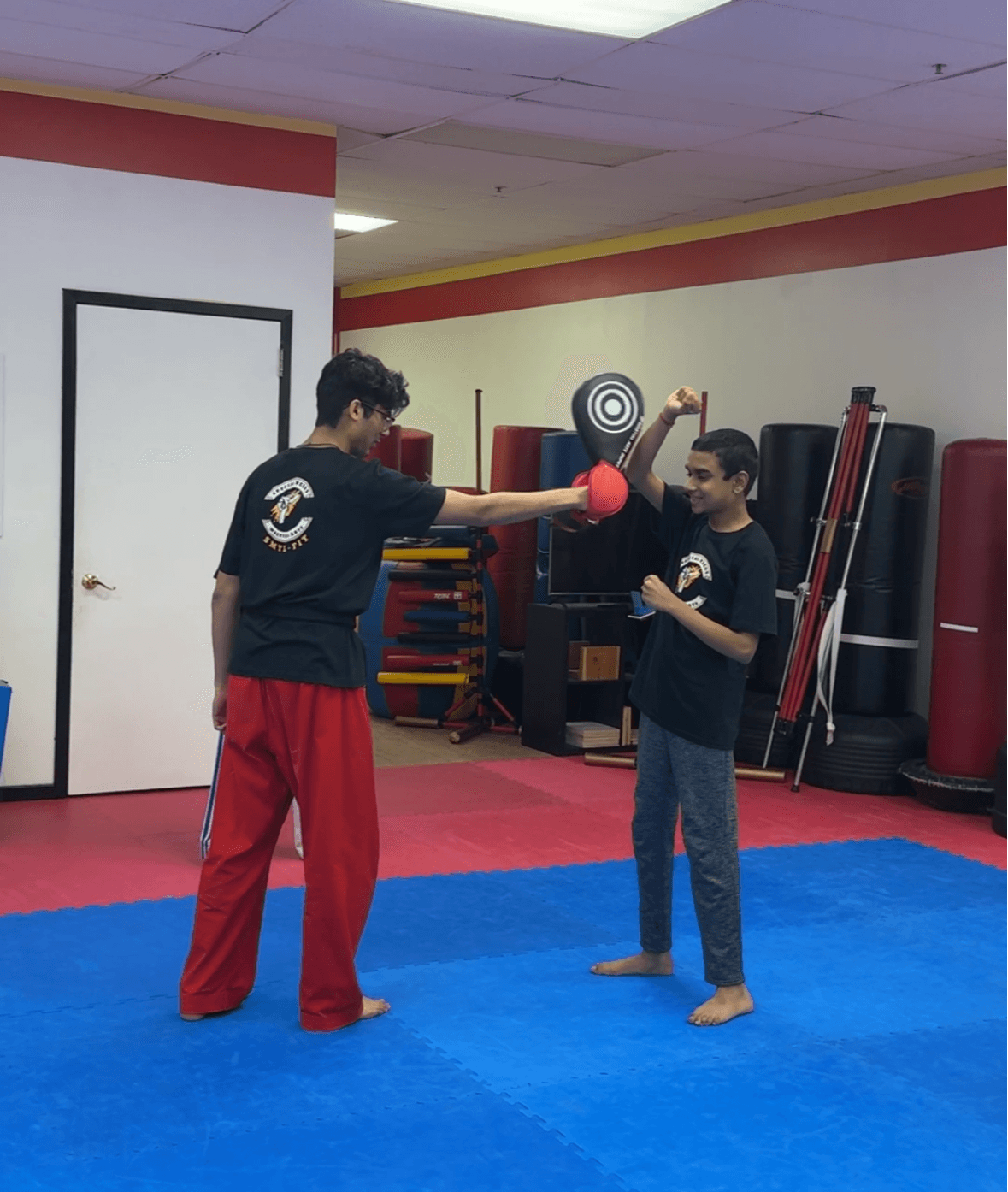
Image Credits
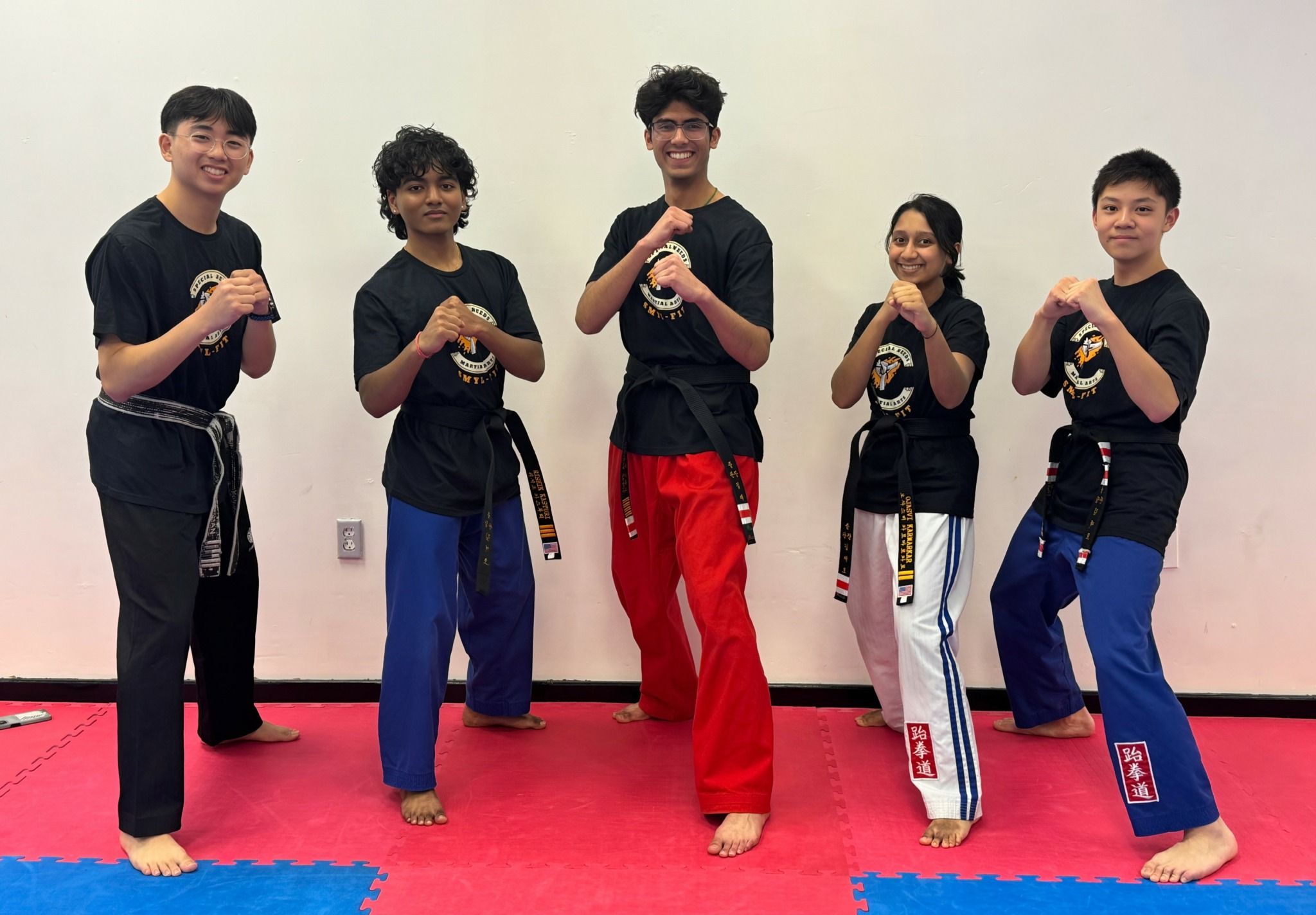
****The picture with 5 volunteers is my team. From left to right: Connor Han, Rishik Kasturi, Atharva Tyagi (me), Ojasvi Karmarkar, and Yuqi Zhou
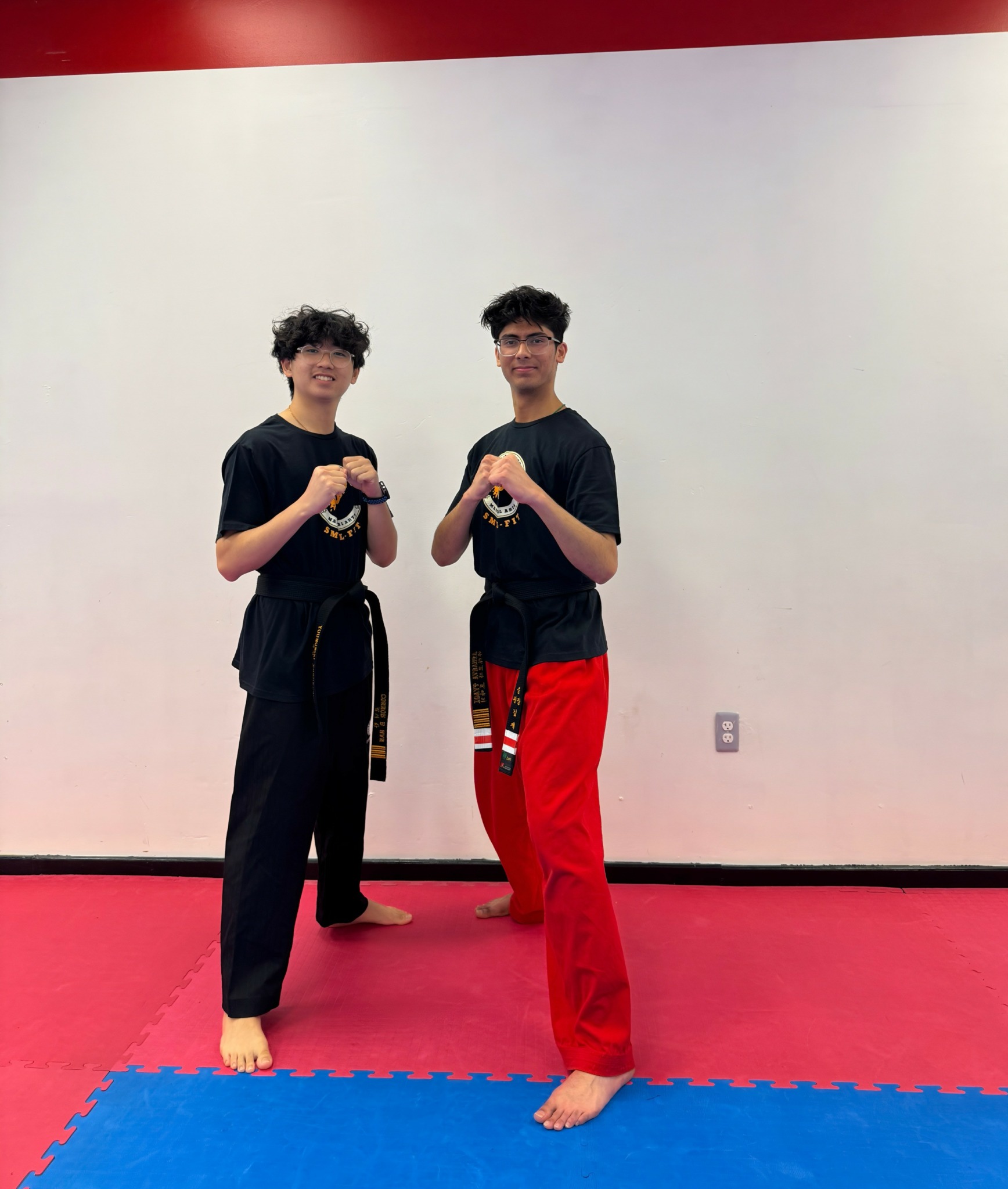
****The picture with me and another volunteer is actually of me and my co-founder, Connor Han.
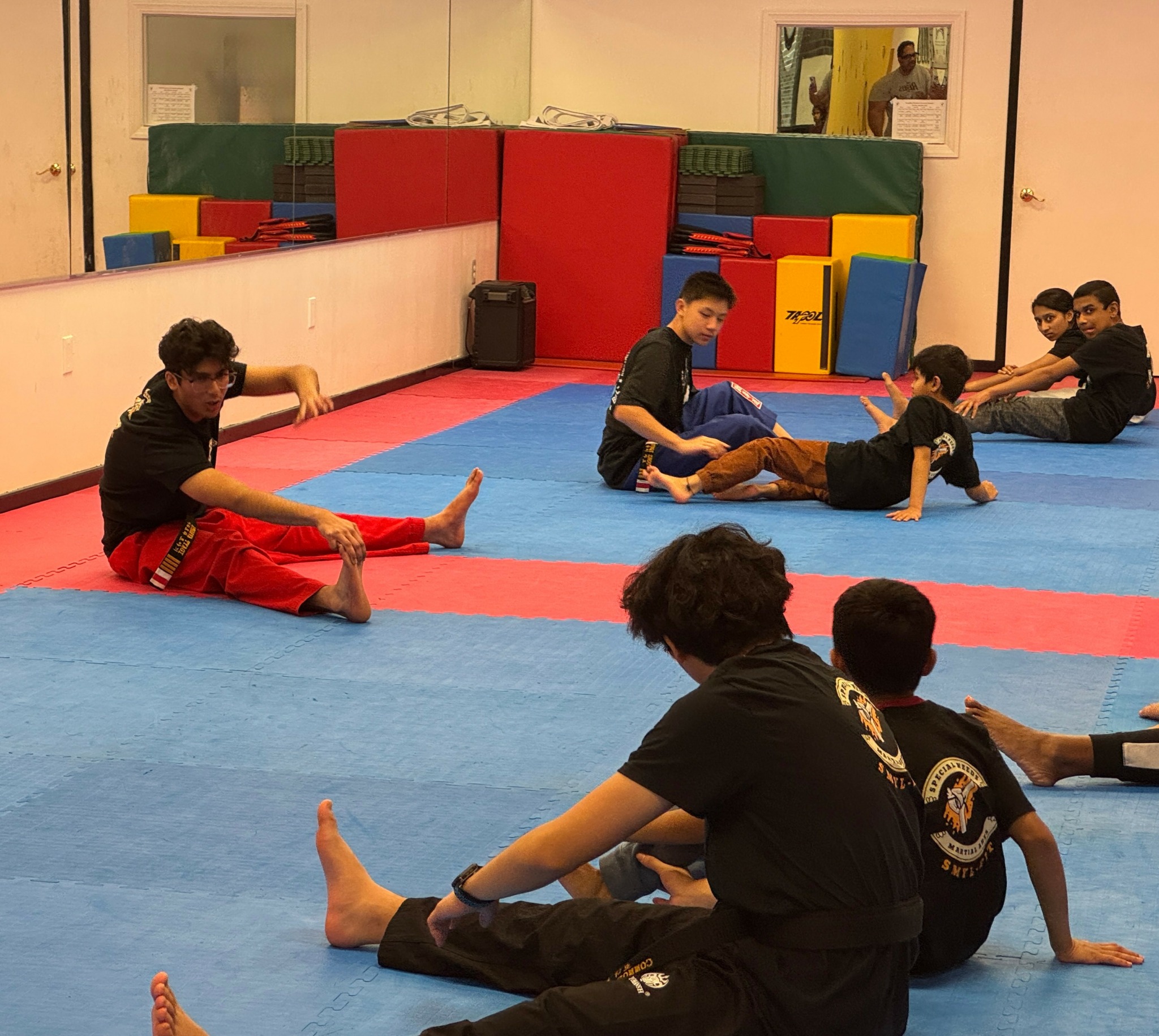
****The Personal Photo where I am stretching is a picture of me leading the class and showing how certain modifications (1 volunteer per kid, not doing a full split but a half-split) makes things easier when teaching the kids.