



We recently connected with Ashley Snyder and have shared our conversation below.
Hi Ashley, thanks for joining us today. We’d love to hear the story of how you went from this being just an idea to making it into something real.
Designing “Heracles”: From Ancient Greece to 1940s America
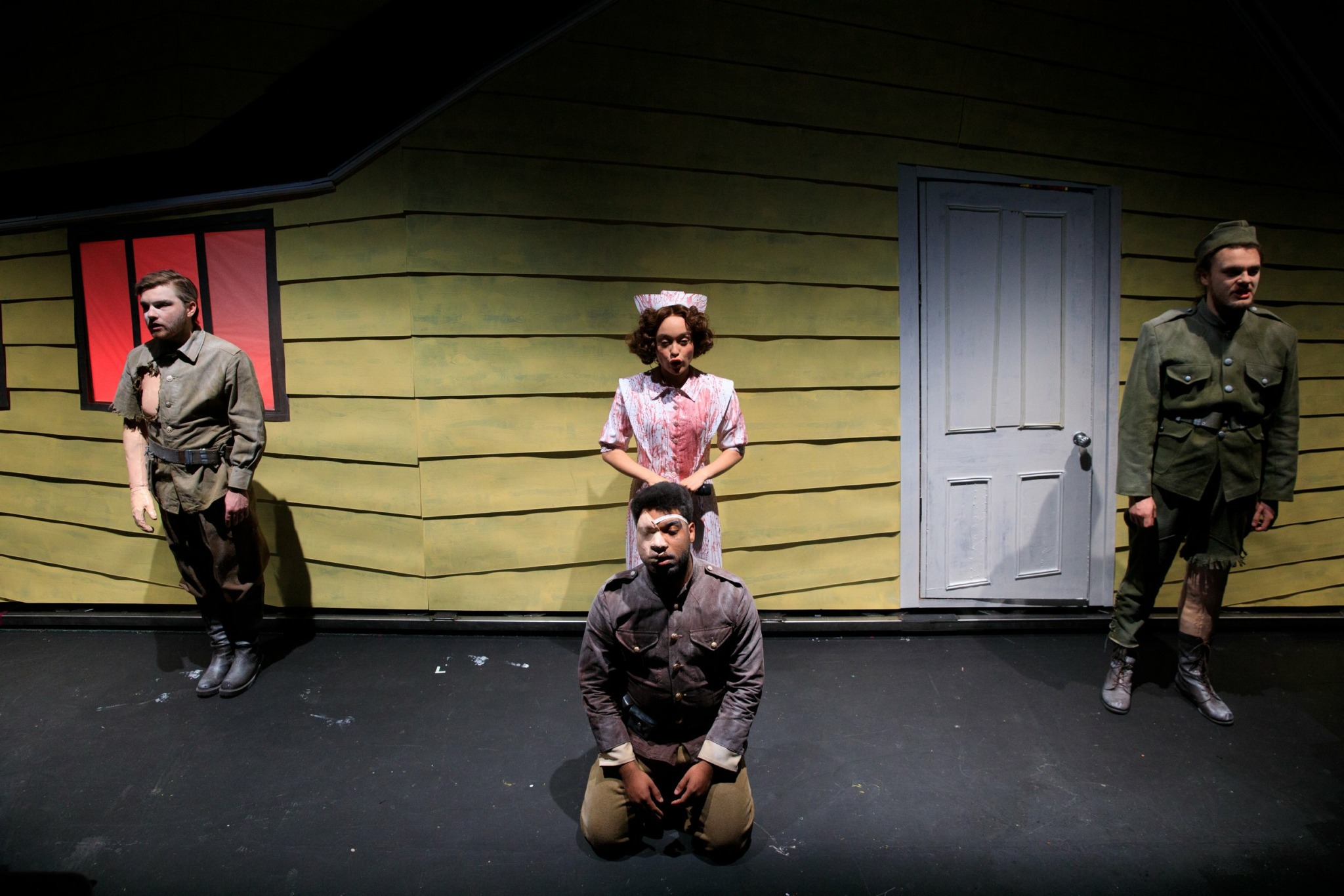
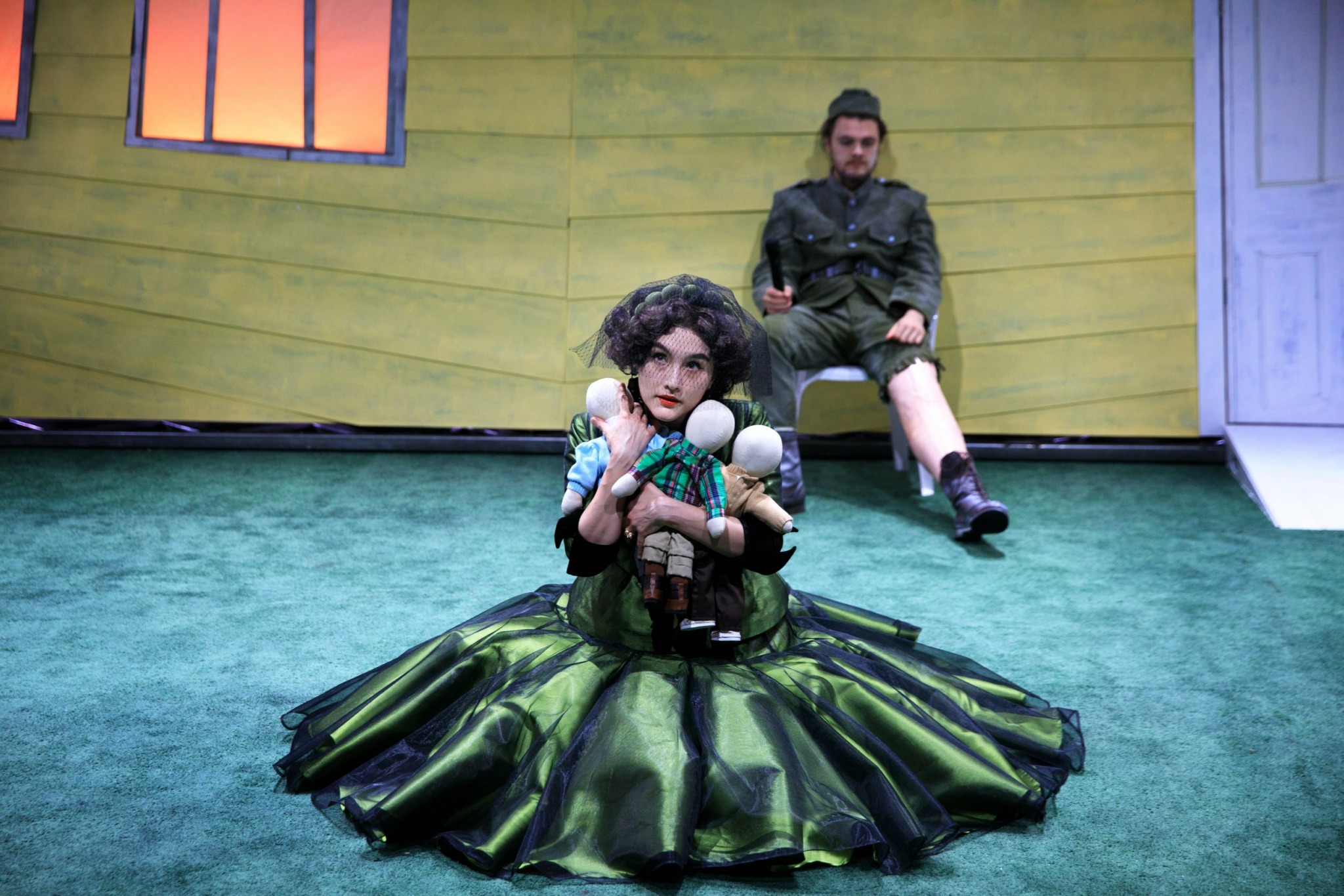
It all starts with a script. When I was brought on to design costumes for a stage production of Euripides’ Heracles, I received the script alongside Anne Carson’s H of H Playbook, a fragmented, collage-style interpretation of the myth. Director Hunter Mahmoud Abal envisioned a fusion of the two, reimagining the Greek tragedy in 20th-century America. So, I began where I always do—with questions. How long has Heracles been gone? What happens to a lion’s body over time? If Megara is royal in ancient Greece, what does that look like in postwar America?
Once I absorbed the material, I brought my curiosities to our first design meeting. The goal was simple: build a believable, emotionally resonant world grounded in the script.
My visual research pulled me into unsettling images of 1940s-50s American family life—eerily polished, and nuclear. This surreal Americana clicked with the team, and we landed on setting the play in a post-WWII Midwest America.
Then came practical research. How would characters translate into this world? Megara forced to become an heiress-turned-housewife. The Chorus transformed into WWI soldiers, lost in limbo, bearing witness to Heracles’ descent into madness. Inspired by Full Metal Jacket, I envisioned them powdered in ghostly white dust. Hunter also wanted to explore prosthetics used post-WWI, so we sculpted personalized, haunting prosthetics for each Chorus member—adding a layer of historical horror to the show’s emotional core.
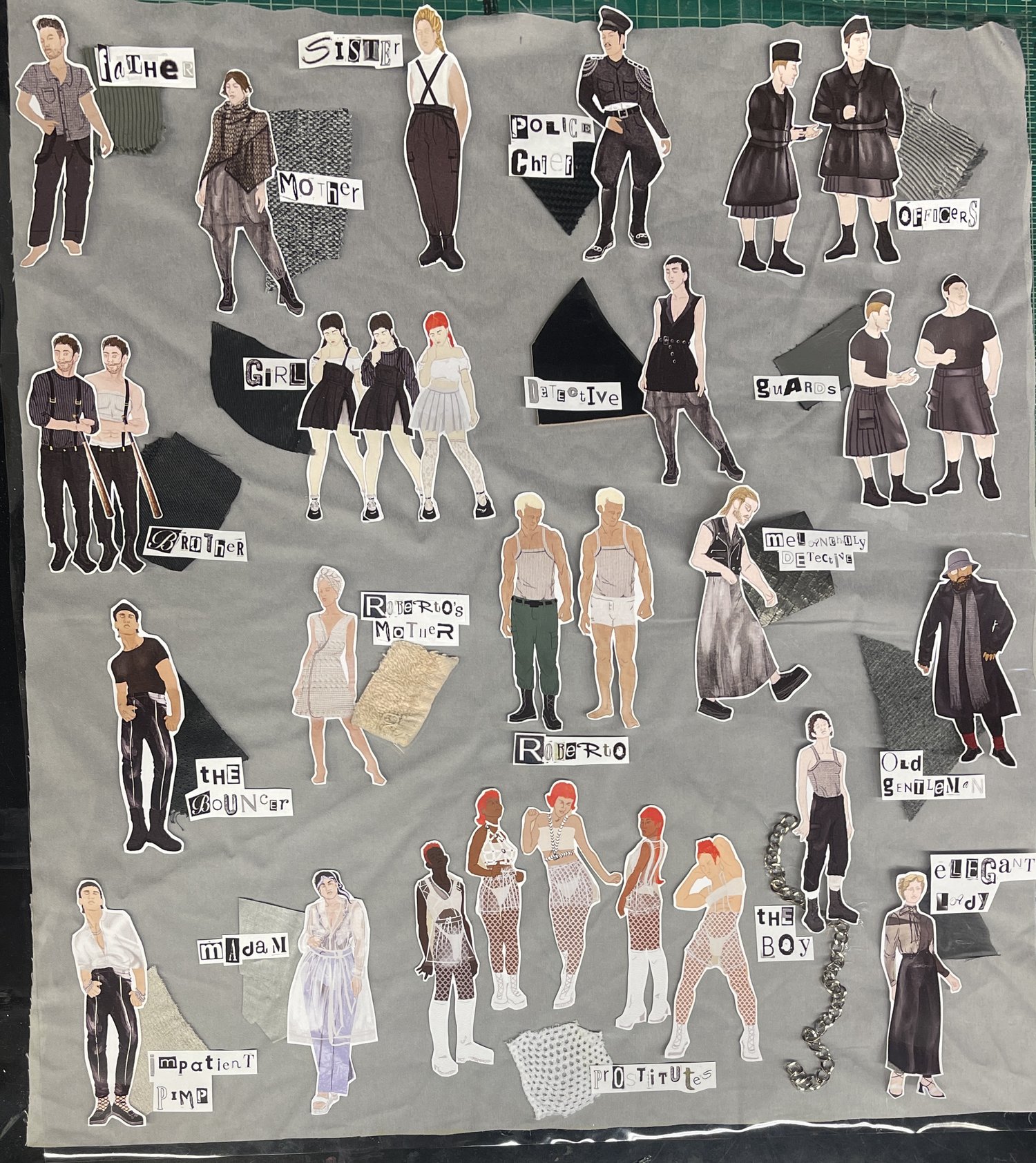
With the world set, I moved into sketching. Using Procreate, I created digital collages that blended historic silhouettes with swatches of texture to visualize each costume. I built out a spreadsheet to track every garment—its cost, whether it needed to be built or sourced, and how it would be constructed. For custom builds, I made technical sketches for the costume shop, led by Hunter Wells, detailing seam lines, volume, and shaping.
I also developed a working budget, which I proposed and got approved. That kicked off the fun (and chaotic) part: shopping for fabric, sourcing vintage pieces, and building prosthetics from Worbla, a moldable thermoplastic. No costume could be rented—every piece needed to withstand distressing or be doused in glittering stage blood.
Over two months, we brought actors in for fittings, tweaked each look to match the design, styled period-accurate wigs, and crafted makeup guides for the cast. I created two more spreadsheets—one for quick changes during the show, another for wardrobe care and assignments for Briana Newson, our wardrobe supervisor.
Finally, it all came together in dress rehearsal. I took in mentor feedback, made final adjustments, and watched the production breathe for the first time. That’s when the real reward arrives—seeing the world you’ve imagined come alive under stage lights, and watching the audience step into it, even just for a night.
Ashley, before we move on to more of these sorts of questions, can you take some time to bring our readers up to speed on you and what you do?
I’m a non-binary, queer Costume Designer and Performance Artist, and I proudly lead with that identity—it’s a core lens through which I experience the world and create art. I work across film, theatre, opera, dance—anywhere clothing and character meet. My journey started with a bin of costumes at home and performances inspired by Shirley Temple and The Backstreet Boys VHS tapes. That childhood spark led to musicals in my teens and a deep love for vintage fashion, nurtured through countless thrift trips with friends.
I earned my B.S. in Media Studies and dove into the Austin film scene by being endlessly curious and active in Facebook groups. One gig led to another—people remembered my energy, work ethic, and collaborative spirit. It’s a truth I’ve carried into my current chapter in LA, where I’ve been ever since starting my MFA at CalArts in 2021.
What sets me apart? I lead with kindness and joy. I believe in creating spaces that feel safe, playful, and full of love. Work doesn’t need to feel like work—we’re telling stories, dressing worlds, and bringing characters to life. That should be fun! I’m always chasing that spark of wonder I felt as a kid in clacky, plastic princess heels, building dreamscapes in my living room. Now, I get to do that for a living—and that little kid would be so proud.
I’m adaptable, intentional, and fueled by connection. Every project is a chance to grow, play, and collaborate with people who truly care.
Any resources you can share with us that might be helpful to other creatives?
This is so silly, but LIBRARIES. Ones with real, actual, books. I’m a product of an online world and until my fellowship with Camille Benda I would really only use the internet as a source for research.
Libraries are now my safe haven. I was a regular at the CalArts library throughout the course of my MFA.
Did you know many metropolitan libraries also let you borrow tools and frequently have resources to use such as 3D printers and software like Adobe Photoshop and more!!
Seriously! DO NOT sleep on libraries!!
How do you keep your team’s morale high?
My advice for maintaining high morale while managing a team is to remain optimistic. Leading with the mindset that every problem has a solution. It’s also important to always treat people on your team as well as other collaborators with respect. Anything is achievable with respect and optimism.
Contact Info:
- Website: https://www.ashleykaesnyder.com/
- Instagram: https://www.instagram.com/ashleykaecostumes/
- Linkedin: https://www.linkedin.com/in/ashley-kae-snyder-b16485133/
- Other: https://www.imdb.com/name/nm10860744/?ref_=nv_sr_srsg_1_tt_3_nm_5_in_0_q_ashley%2520kae
Image Credits
Angel Origgi
Max Harper
Elisabetta “Fox” Piantoni
Alejandro Caminos, Cad Apostol, and Jim Doyle
Rachel Lambright