



We caught up with the brilliant and insightful Ary Bird a few weeks ago and have shared our conversation below.
Hi Ary, thanks for joining us today. It’s always helpful to hear about times when someone’s had to take a risk – how did they think through the decision, why did they take the risk, and what ended up happening. We’d love to hear about a risk you’ve taken.
It’s funny, I don’t think of myself as being a big risk-taker, but when I reflect on how I got to where I am now, I recognize my path is full of risks I’m really glad I took.
The first risk was life changing. Due to numerous circumstances, I didn’t go to college right after high school. In my early twenties, I taught myself to weave and was overcome with the urge to pursue it “seriously.” Without any financial help or much guidance, I decided to finally go to college. Nearly ten years later, I now have my BFA and MFA in textiles and fibers. I am so proud and fulfilled in this life I’ve built for myself, despite all the challenges and unknowns.
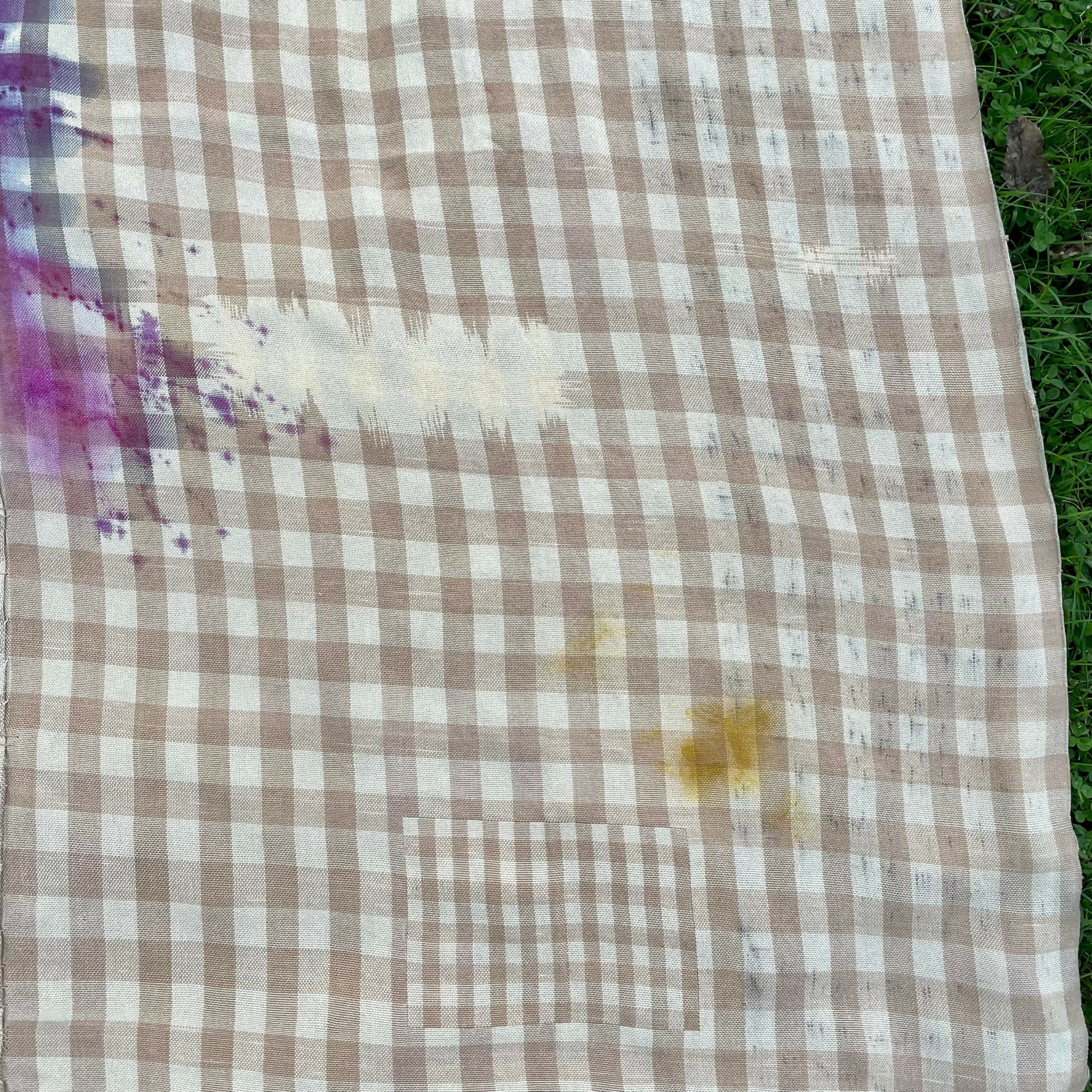
Risk has also always guided my work. I consider myself a very careful planner, but I also love being playful and experimenting. Weaving is the perfect medium for me to satisfy both ends of my creative drive. I spent much of my time in undergrad meticulously weaving large and/or intricate pieces that I would later chop up or spill dye all over. Once the piece was off the loom, it felt like every move I made was risky. That’s when I really came to find that the more I let go, the more the work felt like a reflection of me. Even in times when I was ultimately unhappy with the results, in many ways I still preferred the work because it taught me something I could try again (or avoid!) in the future.
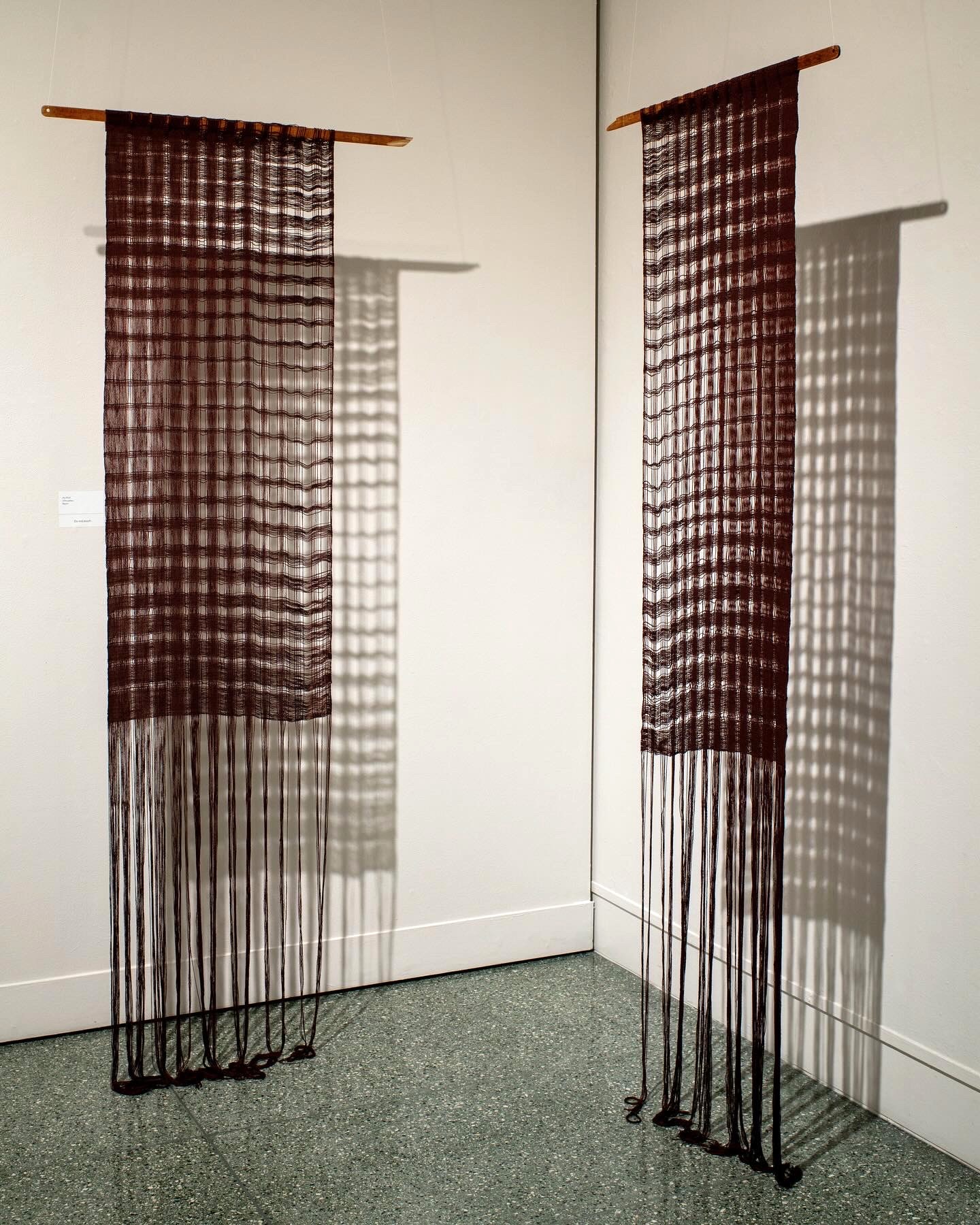
I really carried this motivation for making with me through my graduate program as well. I loved having the time and support to constantly try new things. While I learned a lot through that process, not much directly struck me as being thesis “worthy.” About a month before I was set to install my exhibition, I didn’t have any work that felt right to show. It was then that I decided to weave a quadruple layer piece out of monofilament, something I had never done before but had been thinking about for years. Structurally, I did it! But I hadn’t anticipated how the weight of it would make it sag so much you literally couldn’t tell it was anything more than a single layer of cloth. Once again, I tried something new by making a table I could lay it on, standing it up on it’s side. It was something I couldn’t have planned for with the knowledge I had prior to making it, and I couldn’t have been happier with the results. Not only was this sort-of architectural display of a textile interestingly unexpected, but the shadows it cast were captured by the table, adding an incredible amount of texture and dimension; there were points where it felt almost mind bending trying to figure out what was the table and what was the weaving.
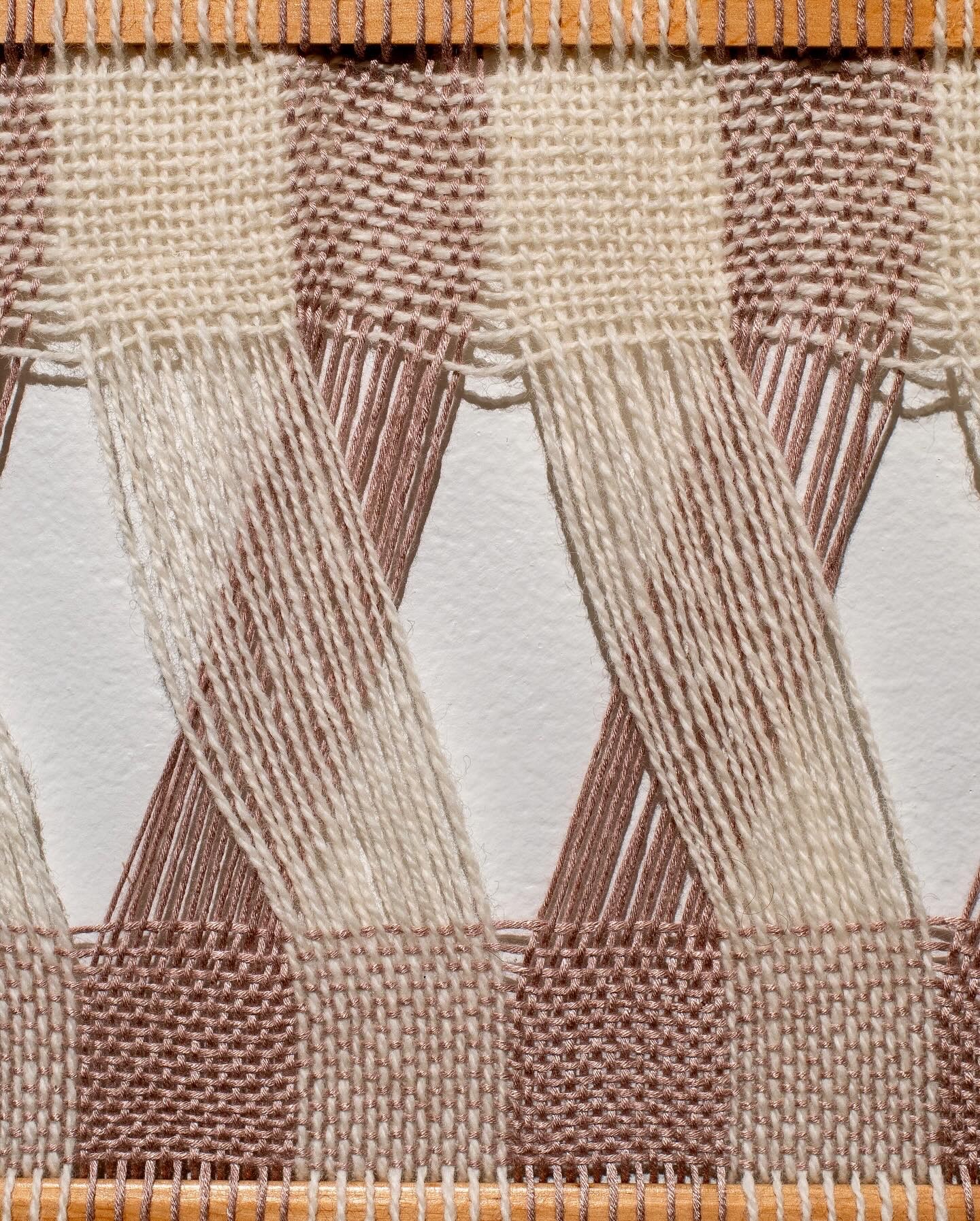
Unfortunately, that wasn’t enough work to fill the space! While I kept making pieces, I continued to be underwhelmed by the ideas I tried that felt “safe.” I found myself a week out from install, still needing one more piece. I had been wanting to try crossing the warp threads in a weaving (something that looks simple but is rather complicated to do), so I just went for it. And failed three times. Frustrating as that was, it taught me what needed to be done in order to attempt to execute this technique with probable success. Days before install now, I broke a part of one of my looms and crudely cobbled together a more modular replacement part, hoping this time it would actually work. And it did!
Taking these risks were well worth it to me for so many reasons. The pride I felt showcasing those pieces, and retelling the story of chaos that led up to my exhibition, was beyond measure. The fact that I could test a theory, with little time or know-how, and come out on the other side feeling so accomplished, ultimately made me trust myself more. I was learning new skills and answering technical questions I had, sure, but I was also becoming more comfortable and confident in myself.
As a teacher, this is something I really like to emphasize to my students. It’s not about making the “best” work, it’s about trying, and learning. Sometimes failure is the most important outcome, because of how much it can teach you and help you grow. No artist is just born with all the information and skills necessary to be great, it’s a process that everyone has to go through.
I wouldn’t be the person I am without having taken risks.
Great, appreciate you sharing that with us. Before we ask you to share more of your insights, can you take a moment to introduce yourself and how you got to where you are today to our readers.
My entire life has revolved around textiles. I learned to sew around age seven and ended up making a lot of my own clothes in high school. I then worked as a seamstress for an antique and vintage clothing rental store where I also helped with clients on period costuming. During that time, I was painting a lot, often inspired by the fabrics I was surrounded by at my job. I started printing on fabric when I wondered how the fabric itself was made, which led me to weaving. Once I started weaving, I never looked back. I feel most creative and fulfilled when weaving.
As a weaver, I am most driven by challenge and experimentation. During a critique in graduate school, I was asked what aspect of the body of work I might move forward with and my answer was none! I had already done those things, so moving forward all I wanted to do was try things I had never done before. Building my technical knowledge allows me to test out the weird ideas that pop into my head, so learning as much as I can is a priority of mine. I often ask myself “what if” and love the unpredictability of those outcomes. I might not like everything I make, but I always like making it.
For you, what’s the most rewarding aspect of being a creative?
I love how my art is a physical manifestation of me, of my love, my care, my ambition, my eagerness, my resilience.. so many parts of myself. For so long, I thought of every piece I made as a self portrait because of this. I don’t always have a reason, or a ‘why’, when I go into making something, so it’s nice to be able to learn about myself and the way I think through my work. Sometimes words just don’t cut it, and it’s more effective for me to be able to show what’s on my mind.
Making art gives me a space to reflect and respond to the world around me in ways I otherwise can’t. It makes me look around in new ways, seeing things like I’ve never seen them before. I’m sure other creatives will understand, but to get genuinely excited and inspired looking at a friend’s ratty old sheets, or shadows cast by a railing, or a stain on the sidewalk, or the reflection of a building in a puddle, or anything so mundane and ordinary.. that feels like a special gift to me. It makes me so appreciative.
In your view, what can society to do to best support artists, creatives and a thriving creative ecosystem?
Support living artists, they are currently paying bills! However you can – buy their work, share their work, ask them about their work, show up to exhibitions/shows.. anything.
I think money is often a hurdle for people, myself included. If it’s a big purchase, I think of it like any other investment I might make. Artists are often open to trades as well! Even if you aren’t an artist yourself, it’s possible you can share something of value in return.
If you can’t purchase anything, tell people about artists! The more people that know about them, the more likely it is that someone who can make a purchase will come across their work.
Support goes a long way and can come in many different forms. Sometimes even just some encouragement can make an artist feel supported and able to keep making work!
Contact Info:
- Instagram: @ary.bird

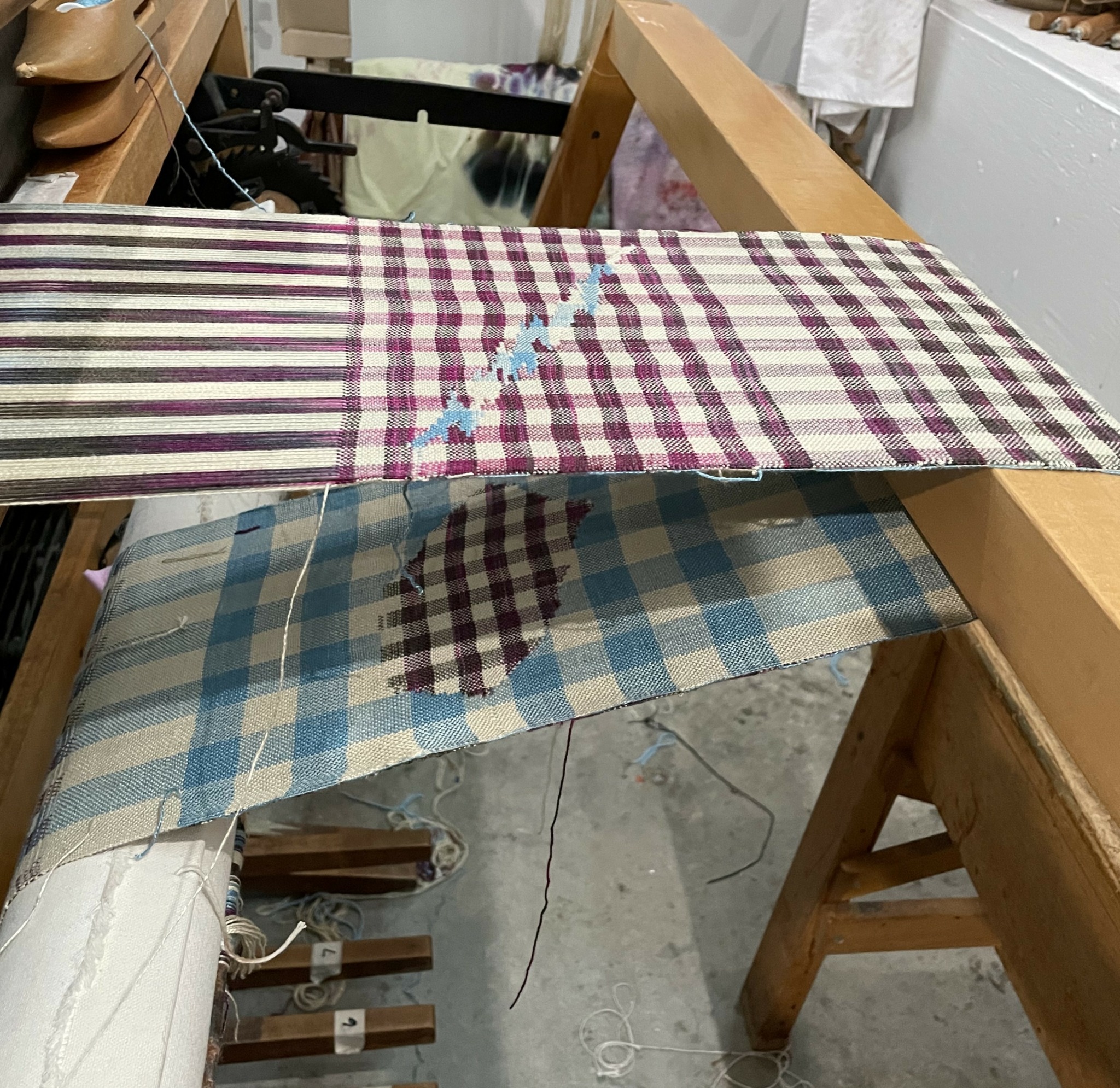
Image Credits
Ary Bird