

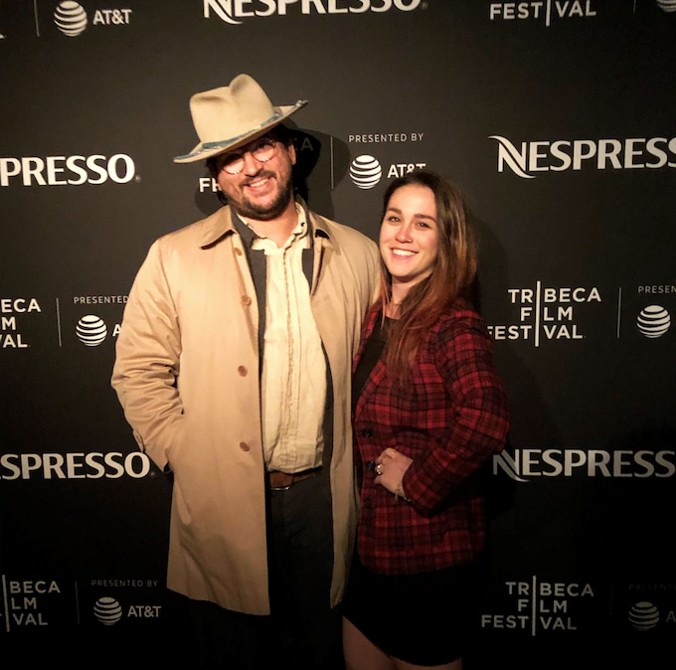

We caught up with the brilliant and insightful Ariel Kaplan a few weeks ago and have shared our conversation below.
Ariel, thanks for joining us, excited to have you contributing your stories and insights. We’d love to hear about when you first realized that you wanted to pursue a creative path professionally.
The moment hit me like a lightning bolt. But not without a bit of a struggle.
I think I was doomed to be a creative from the start. I didn’t have a say in the matter.
I come from a long line of artists.
Not that I’m upset at all about being a creative.
But as any creative can tell you, especially in your formative years, sometimes it can feel as though this world was not built for us.
My path to finding my purpose is an example of that.
Even before I could draw, I would shred paper napkins and twist the flowy tendrils into what mildly resembled legs, arms, and heads. In toddler gibberish, I would create stories with the crude paper people, often loudly in public, much to my parent’s chagrin.
But from the moment I could hold a pencil, my world blossomed.
Slowly but very surely, I gradually shifted into a die-hard storyteller.
What began as random doodles on paper turned to comics which turned to storyboards which eventually became claymations and then in its final form, directing film shorts with my friends.
My weekends became centered around creating these shorts. And once we were finished filming, I’d stay up all hours of the night, completely transfixed on editing my newest film.
But despite my love for the short films I was creating, I can distinctly recall not giving film “my all.”
Unfortunately, there wasn’t a lot of representation for female filmmakers in the late 90’s and early 2000’s.
So to me, film just didn’t seem like a viable career path. As a millennial, we were told that our careers were everything and we had to decide what they were by the time we were 14. And if you didn’t follow that career path, go to college for four years, you’d end up “on the streets,” as my mother would so gently put it.
So when I entered high school, I chose practicality over passion and went into the art program. My mother and my grandmother were both successful artists and I had been drawing my entire life. So given the choice between the art program and the science program, it just made sense.
And unlike in film, in art I could name plenty of successful females and identify viable career paths.
But two weeks into my freshman year, I realized there was a big problem.
I HATED the art program. And I mean, I despised it.
In the public school systems’ attempt to convert art into a lesson plan, they had managed to strip away everything I originally loved about drawing and turned it into this unrecognizable, rigid practice.
For the first two weeks, all we did, was paint bowls of goddamn fruit.
Over and over and over again.
And not only was I doing something I deeply disliked, I was apparently doing it wrong.
For every piece I turned in, I would get it back with nothing higher than a big, fat “D” marked in red across my bland bowl of apples, bananas and grapes.
And, on top of that, it seemed I was the only one failing. My friend’s fruit bowls were all apparently superb and they adored the class. I can recall feeling incredibly stupid and alone.
When I asked the teacher why I was consistently failing in the only thing I thought I was ever good at, all she would say was that I was drawing it “wrong.”
Which honestly broke me a little bit. Because up until then, I didn’t know art could be “wrong.”
As a kid, I would create worlds, creatures and characters, and never for a second did I think that the way I was expressing my creativity could ever be…incorrect.
It just was as it was.
I don’t remember exactly what I said to the teacher that compelled her to not only kick me out of the class but out of the art program entirely. But it must’ve been bad.
(I know this question was about how I decided to be a professional artist and this response thus far seems like the exact opposite but I promise, I’m getting to it.)
After I was forcefully removed from the art program, I was utterly distraught.
Who was I if I wasn’t an artist? What could I possibly do that would both fulfill me and pay me?
At 14 years old, I was truly having my very first existential crisis.
Without ever counseling me, the school counselor (ironic, I know) filled the now-empty space in my schedule with Film 101.
I remember getting a printout of my new daily schedule and almost scoffing at the counselor’s choice. There was no career path for me in film. Why did this woman want me to end up on the streets?
I’ll never forget walking into Film class for the first time. It was unlike any other classroom I had ever been in. Located in the school’s eerily quiet and creepy basement, instead of unbearably bright fluorescents, the classroom was incredibly dark, with just a singular floor lamp in the corner. Even the windows were covered in bed sheets and poster board to shield the class from all outside light. It felt like I had entered into a secret.
Or a drug den.
When my eyes finally adjusted, I saw the teacher, feet propped up on his desk, not lecturing or scolding as I had become accustomed to, but instead, casually reading a magazine. When I scanned the room, I saw that the students (of which there were only 10 max) were each glued to a computer screen. They fervently scrubbed through and edited their own footage, their faces contorted, lost in the sort of fixation that only deep passion can produce.
And for the first time since I entered high school, I didn’t feel alone.
I recognized myself in every single one of them.
I know I can pinpoint this memory as the moment I realized that I was destined for a career in film because it was the first time I can remember ever having a sense of genuine belonging.
That feeling has persisted to this day.

Ariel, love having you share your insights with us. Before we ask you more questions, maybe you can take a moment to introduce yourself to our readers who might have missed our earlier conversations?
How did I get into my industry?:
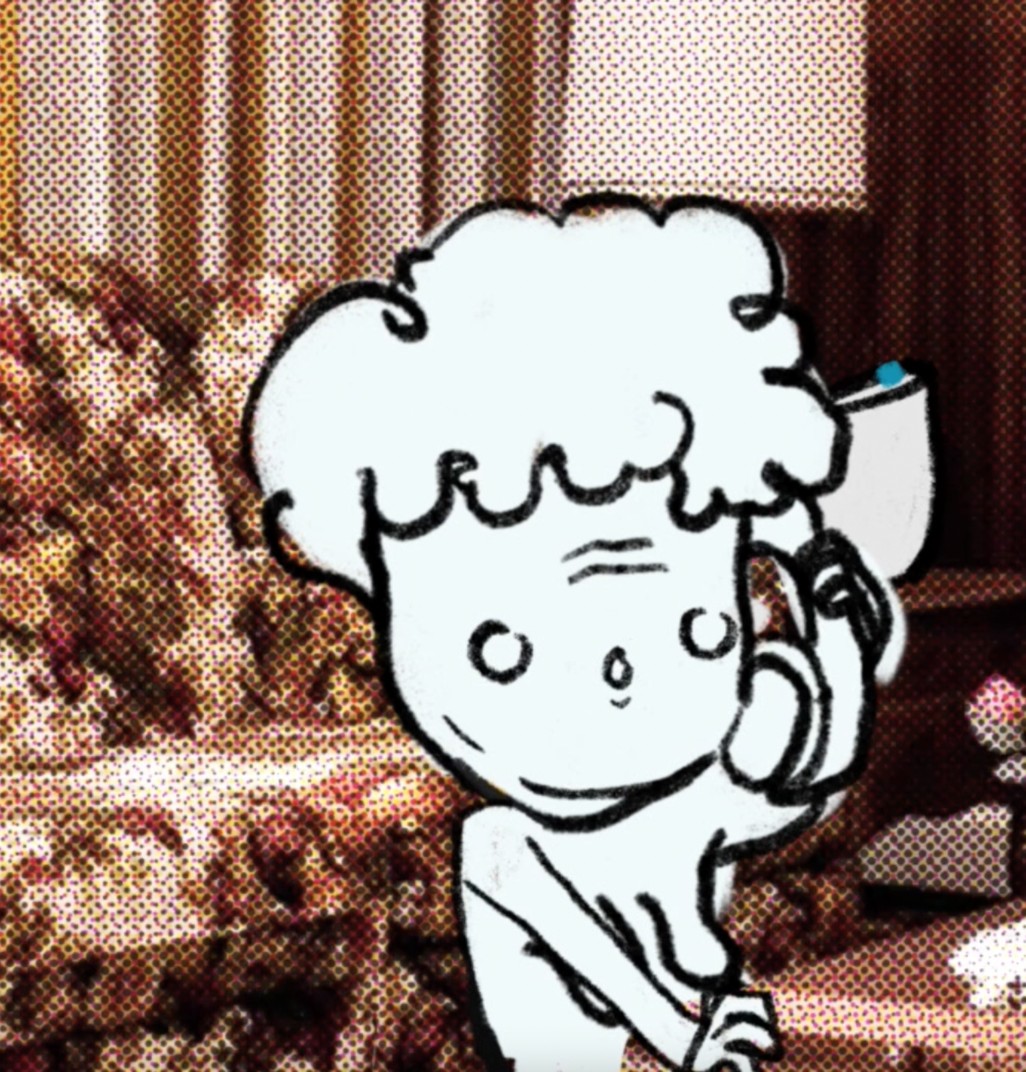
I’ve been immersed in the world of animation for quite some time, diligently refining my unique style and exploring diverse realms of interest. In the beginning, my animations were simply personal projects—quirky depictions of imagined characters navigating relatable situations, often inspired by my comedic inclinations. As my comedic journey took off, I began animating 60-90 second portions of my sets, sharing them on social media and much to my surprise, garnering significant attention. Soon, fellow comedians were seeking my animation skills to breathe life into their punchlines, creating a ripple effect of demand.
During this period, Georgia was amidst its intensely important governor runoff between Brian Kemp and Stacy Abrams. Driven by a fervent desire to contribute to the discourse, I channeled my energies into crafting animated Public Service Announcements—digestible yet humorous insights that demystified the political race. Eager to support Abrams, I poured my heart and soul into these animations, which gained considerable traction. A pivotal moment came when someone from Abrams’ campaign reached out, commissioning me to animate a segment for their online platforms.
This exposure paved the way for subsequent opportunities. I was commissioned to create an animated comedic segment for the Georgia Senate runoff, followed by projects ranging from music videos to short films, each venture expanding my creative horizons. My multidisciplinary skills aptly suit the roles of animation director and producer, as they encompass a broad spectrum of my capabilities.
How does the process work? – from inception to completion:
Typically, clients approach me with a preliminary vision, often consisting of fragments—audio tracks, references, or abstract concepts. Regardless of their starting point, my primary objective is to delve into the essence of their vision, capturing the intended emotion or sentiment. Together, we construct a captivating animated universe, where every line, color palette, and character resonates with significance.
What sets me apart?:
I believe what sets my work apart is its distinctiveness, frequently described as “unique.” This stems from my unconventional approach, as I didn’t embark on my animation journey through traditional methods. Instead, I melded tangible and digital techniques, often improvising with tools that best complemented my distinctive aesthetic.
While I once questioned my unconventional path, I’ve come to realize that it’s this very aspect that draws people to my work. Over the last few years, I’ve harmonized my approach with animation software, enhancing efficiency without compromising the artistic essence that defines my style.
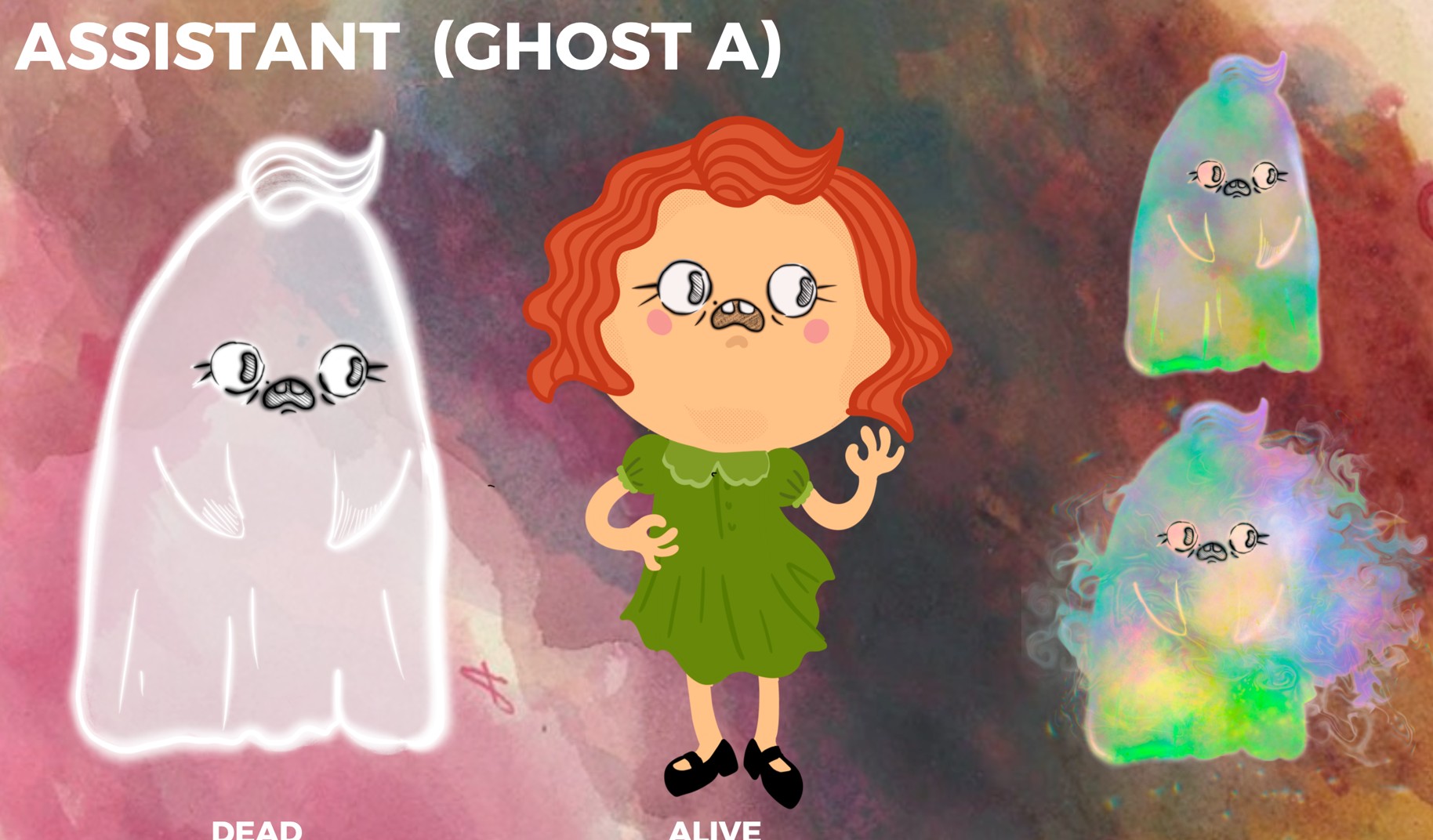
My artistic range is expansive, with a penchant for creepy-cute characters and a hand-drawn aesthetic operating at 12 frames per second. I’ve even been likened to a fusion of “Adult Swim” meets “Don Hertzfeldt”—an accolade that deeply resonates with me.

Can you tell us about a time you’ve had to pivot?
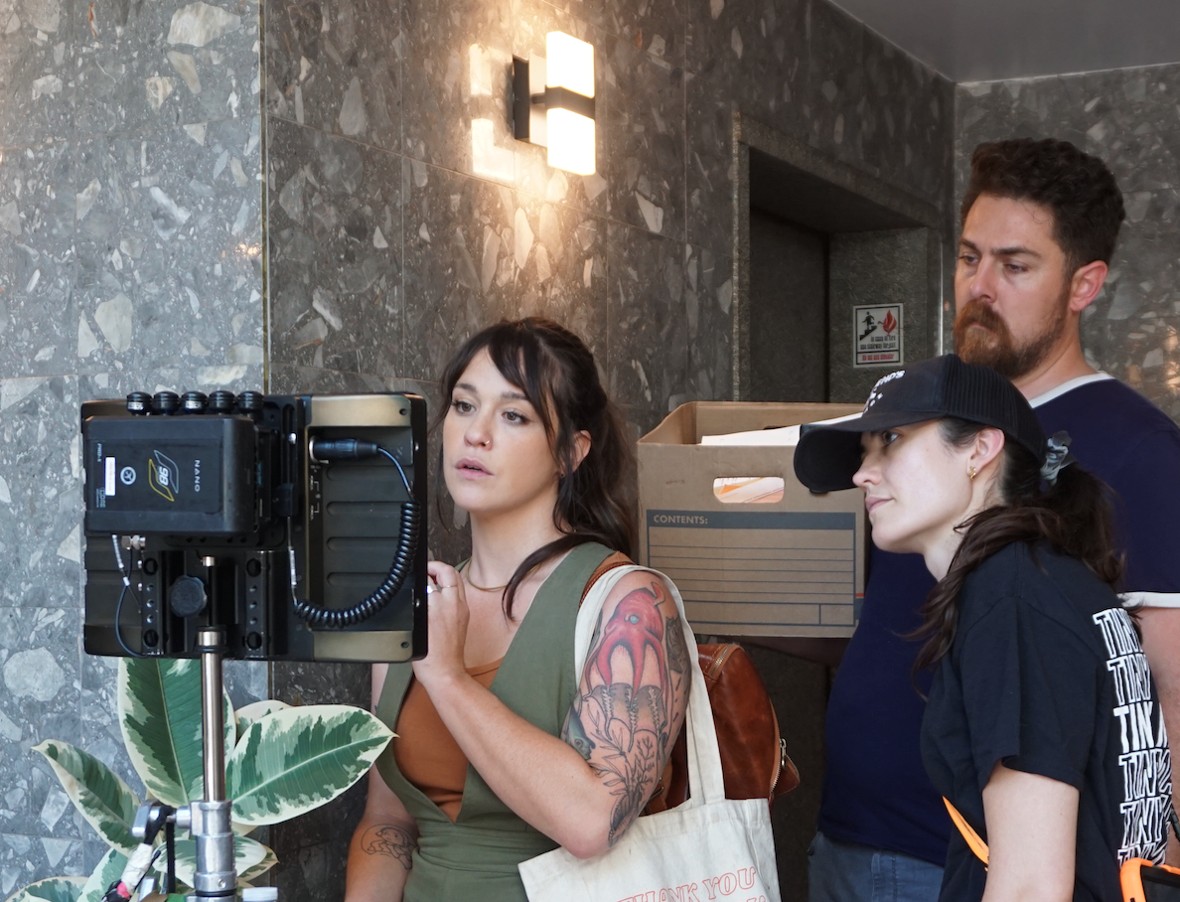
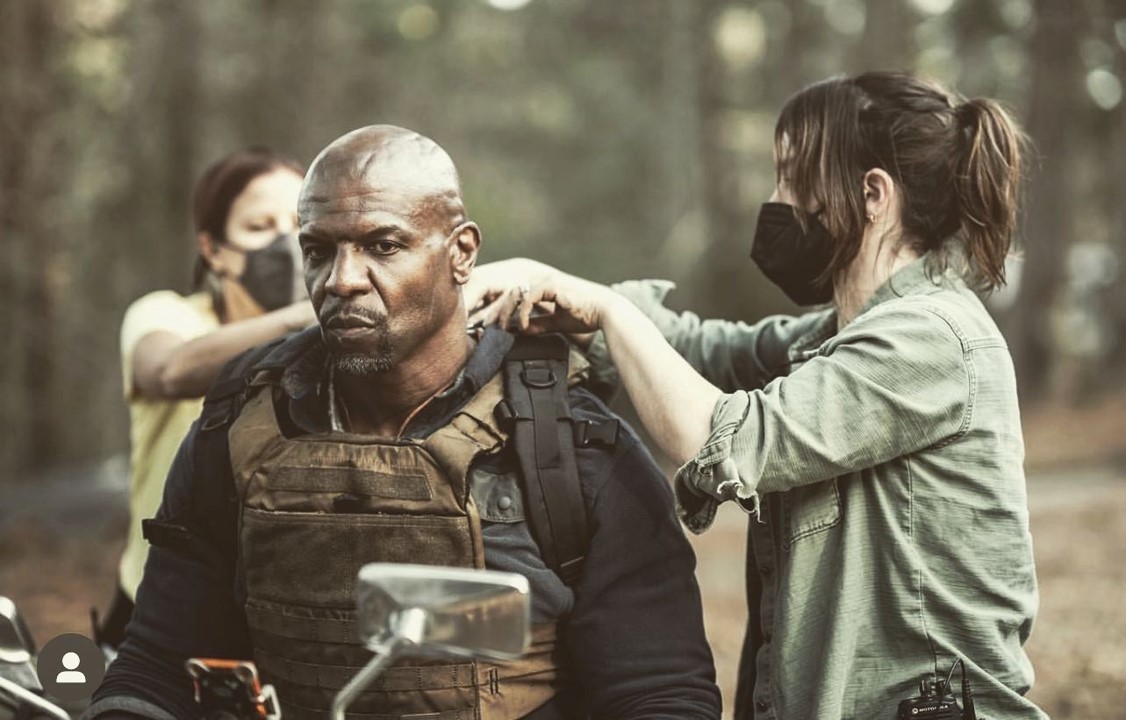
I’m actually in the midst of making a shift right now. For the past decade, I’ve been working as a production designer and propmaster in the film industry. But the world of film sets is incredibly demanding—physically and mentally. While I’ve had a strong affection for it, especially in the behind-the-scenes roles I’ve held, I’ve realized that I need a change. Those positions, though impactful in shaping the production’s look, often came after the story, characters, and world were already established. I’ve yearned to get closer to the heart of storytelling, which felt somewhat out of reach.
My current aim is to fully transition into animation and live-action directing and producing.
I’m looking to step off the set in my current capacity (not now, obviously, due to the ongoing strike) and return in a higher position where I can contribute more significantly to world-building and storytelling. Despite the financial challenges posed by the strike the mental toll that the day-to-day uncertainty has caused in film workers, it is also pushing me to fully embrace the “sink or swim” scenario and pivot entirely towards personal upward mobility.
Do you think there is something that non-creatives might struggle to understand about your journey as a creative? Maybe you can shed some light?
My journey as a creative has been extremely non-linear, as I believe most things in life are. My career, both on films sets and as an animator, did not happen in a snowball affect, gathering momentum and speed consistently. Rather, it was full of fits and starts, more like a car stalling out in the snow. I’ll get a little distance then the car will give out. Setbacks, detours, and moments of uncertainty have been woven into the fabric of my journey. It’s akin to constantly having the car unexpectedly stop, stepping out or aside, and pondering how to navigate forward. And if it’s worth doing so at all. (It almost always is.)
In addition to the consistent obstacles, there also an intense amount of self-loathing and doubt that plagues nearly all creative individuals.
While others may view my work favorably and express admiration for my creative talents, there’s an underside to the equation. The gift of creativity is accompanied by substantial risk and vulnerability. It involves putting pieces of your soul out into the world, knowing that they’ll be scrutinized. It’s simpler and less risky to create lighthearted, nonsensical art; most people tend to appreciate those more, I’ve found.
However, the pieces that matter—the ones that expose or take a part of you—are the most daunting to share because a rejection of those pieces is akin to a rejection of the artist as an individual.
I think for people who don’t feel the burning desire to create every waking moment of their lives might assume that artists craft their work solely for others, as if to say, “Here it is, enjoy.”
But real art isn’t made for others. It’s made for yourself.
Those are the pieces that make the history books and evoke real emotions from people who the artist has not and may never meet.
The real gems are the ones that carry fragments of the artist’s soul, pieces that resonate deeply with their own identity.
The artist looked inside themselves, found something really integral to who they are as a human being, something near and dear to their heart, and vomited it out via their medium of choice.
It’s a cathartic process, akin to revealing an intimate part of oneself to strangers.
But it requires a decent amount of courage to showcase these innermost pieces, and it’s worth keeping that in mind and celebrating those who are willing to do so.
Every artist, regardless of their medium, knows the anxiety that comes with presenting their creation to the world and then obsessing over how it will be received.
So, to those who appreciate art of any kind, when you provide criticism—something you’re absolutely entitled to, something that you should absolutely do as it improves us—please remember the individual behind the creation and the courage it takes to share a piece of oneself with the world.
Contact Info:
- Website: arielrosekaplan.com
- Instagram: ariel___rose
- Linkedin: https://www.linkedin.com/in/ariel-r-kaplan/
- Youtube: https://www.youtube.com/@arielrosekaplan
- Other: https://vimeo.com/user12177033
Image Credits
Photo by Rachel Stamler-Jonas