



We caught up with the brilliant and insightful Anna-vija Mccloud a few weeks ago and have shared our conversation below.
Anna-Vija, thanks for taking the time to share your stories with us today How did you scale up? What were the strategies, tactics, meaningful moments, twists/turns, obstacles, mistakes along the way? The world needs to hear more realistic, actionable stories about this critical part of the business building journey. Tell us your scaling up story – bring us along so we can understand what it was like making the decisions you had, implementing the strategies/tactics etc.
Scaling up became, for me, more about bringing in the right people that I really wanted to work and really wanted to work with me. And it was more than the need to go from being a freelancer to a million-dollar company overnight. My scalability plan was much more about building a solid foundation with manageable, measurable growth over time. I had seen that if people grew too fast, they weren’t likely to keep it very long because they hadn’t built any sort of systems or again, a team or something to rely on. And so when things get busy, it’s like, well, gross revenue is amazing, but then there is no foundation or systems in place to maintain or service that business, you’re just going to lose it, right?
For me, it definitely became about studying companies that had scaled successfully and had a positive company culture. At the time, those companies were Netflix, Google, Amazon, Epic Technologies in Madison Wisconsin (my brother works there), and Southwest Airlines. I did a lot of research online into what those companies were implementing that made them good, what helped them scale, and what helped them attract and retain good talent. I then cherry-picked the things that I liked, that I knew that I could take advantage of or could do, and started to implement those items.
The challenge was compatibility for a small company such as mine. For example, it’s great to say, “Company A has a profit-sharing plan but they’re a billion-dollar business.” That didn’t really work, right? So I had to take scalability phase by phase, step by step. In phase one, hiring help; I could only hire part-time contractors. So I had to bring in freelancers or even interns and get them to help me. So profit share didn’t make sense, right? There are some things you’ll see as beneficial opportunities, but they don’t necessarily apply to where you are. You have to take your big goals and break them down into small steps to say what’s one thing I can do or two things I can do now, at the level I’m in, and if I work on it and it as an established system, policy, or process that kind of keeps itself going and it’s great. That’s just par for the course, right? One of those steps for me was project management tools. At the time we used Basecamp, but now we use Asana.
A project management system was a must-have. It was the only way that I felt comfortable delegating things to other people, where I could see what they were working on. We could have conversations in one central location. It was full of 50 different threads, with 20 different people, communicating who’s doing what now. The project management system was free, it was fast, and it was implementable. It was so easy to just say, this is what we do. And then everybody that I brought on was like, wow, this is so well organized that I want to keep working with you. You’ve made this easy, you’ve made it clear, and you’ve made it fun. And so that was an early-on retention tool.
As we began to grow again phase 2 became about tracking time. With that scaling became about increasing my pricing, but to do that I have to know how much I’m spending. Project to project, client to client. And so step 2 for me became having a very clear clocking system with tags in it. As people were logging hours on the project management system, I could pull reports and see how long it took them to make an email blast or how long did it take them to do the social calendar. This assisted in adjusting pricing, I had solid data to make me feel comfortable knowing we’re charging what we need to charge to really be profitable. Profitability is what brought me to that next level.
And so the scalability over time has been about keeping good, happy people, being very clear and structured and organized with systems so that they want to keep working with me, and then using what we’ve gained, things like profitability and goodwill and leveraging that up to the next level. A few examples of this are our programs such as benefits for full-time employees, profit sharing, and a four-day workweek, which are all indicative of how those things started so small and then evolved over time.
Try and remember as a growing business/entrepreneur, if you’re just starting don’t compare. I love this quote, “Don’t compare your chapter 2 to someone else’s chapter 20”. I do it all the time. I’m constantly meeting people going, “God, I wish I was doing what they were doing,” and then I’m like, wait, that’s what I’m working towards. I’m doing great for the chapter that I’m in now, and maybe one day I’ll be in that chapter.
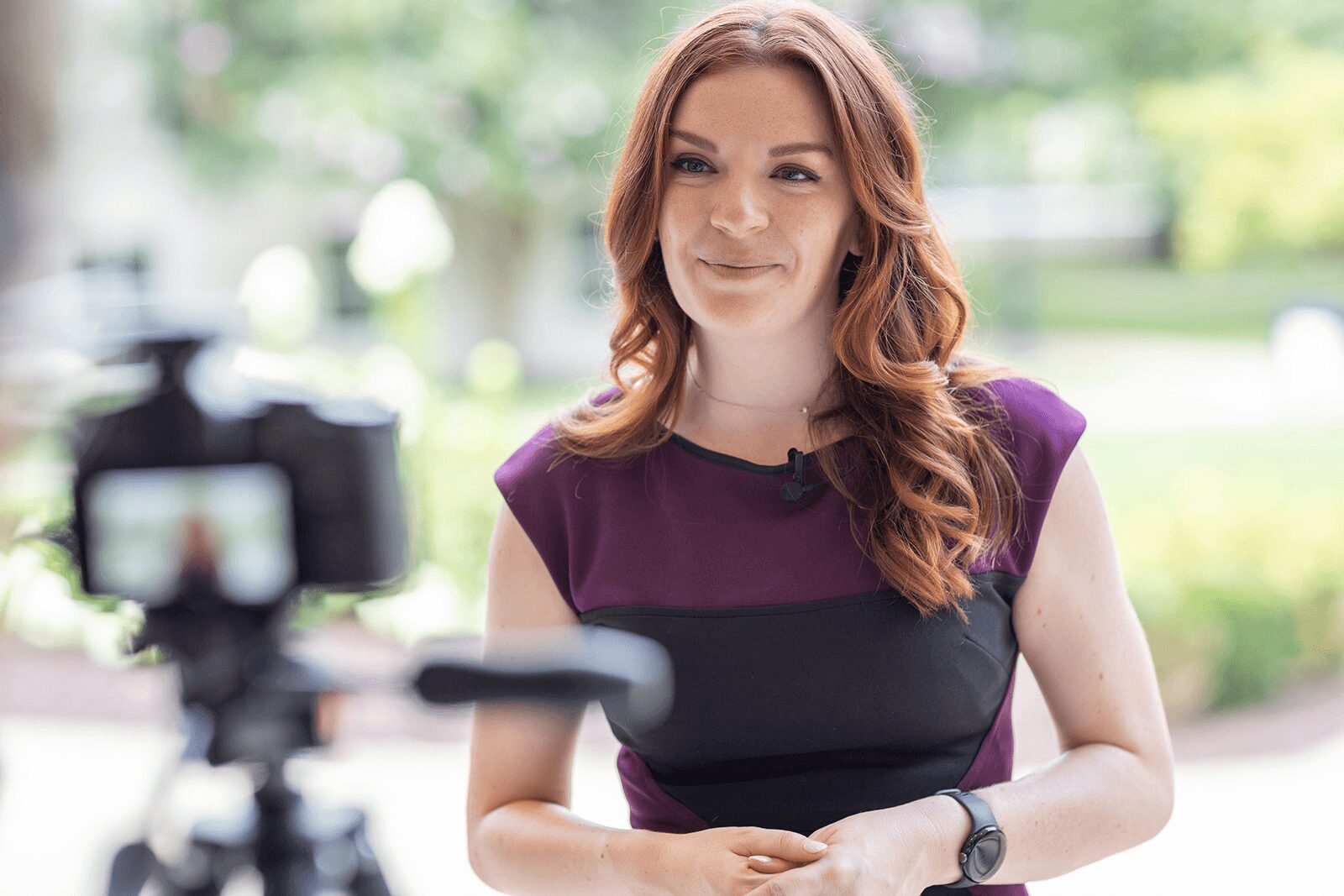
Anna-Vija, before we move on to more of these sorts of questions, can you take some time to bring our readers up to speed on you and what you do?
In the spring of 2014, I was on unemployment and trying to find a good job that fit my experience and skills but only coming up with part-time contractor gigs. I was also clinically depressed and having panic attacks. I was spending most days in my house looking online for new opportunities but I did manage to get myself to a few networking events that I had frequented when I was managing the Nashville City Club the year before. Many of my networking partners knew that I was looking for a job, and in the meantime, they offered me some marketing project work.
After several of these opportunities came along, I started to notice a trend. Smaller business owners didn’t have great options for growing their business with marketing. At the time, there were far fewer independent marketing firms in the Nashville area. Owners of smaller, growing companies had the choice of hiring a full-time in-house Marketing Director (likely costing between $50,000 and $120,000 per year plus benefits), hiring a larger ”box agency” that generally specialize in creative development at higher project fees, or trying to find someone on Craigslist that would be affordable, but would need to be directed and managed every step of the way.
I got great feedback from my first few engagements, and realized there was an opportunity to create a marketing firm “built for small businesses.” At the time, my goal was just to pay my bills. With my background in hospitality and private club management, I was experienced at researching new marketing resources, developing strategies, and creating content on a shoestring budget. A little desperate, and a little bold, I decided to open my own agency/ consulting business.
Using what I knew about marketing and the power of referral leads, I put together an email blast announcing my new venture and sent it to everyone in my CRM (maybe 2,000 people?). I got several immediate responses, and within the first 6 months, I had 17 new clients. It was growing so quickly that I had to hire part-time help. Our initial clients paid small fees, but we’re so happy with the work that I was able to increase my services and pricing over time. There’s such a huge market for outsourced marketing in Nashville, that we have grown steadily ever since!
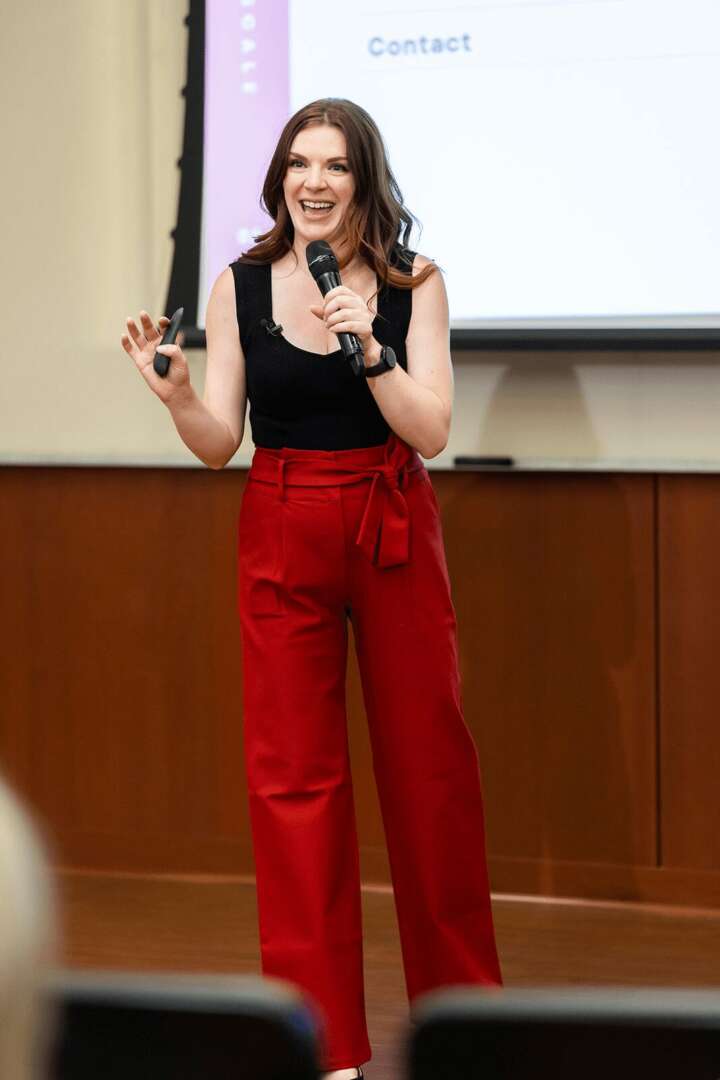
Can you share a story from your journey that illustrates your resilience?
I started the company in 2014, and we grew for the first four years. We had gotten to the point where we had a really steady 20 to 25 retainer clients at any given time and that was working really well until around the summer of 2018. Four years in it was, “Thank you. Bye-bye”, all of a sudden, and we had a ton of clients quit. Even my own mother, who was a client of ours, quit and I was like, what is happening? What we realized in the shuffle of people leaving was that we taught them too much, which sounds kind of counterintuitive. You want your clients to feel comfortable with the work you’re doing, how you’re doing it, and the results. What we found is that as a company, we have a mindset that is so teaching-oriented. I mean our second core company principle is, “We are a teaching company.” We spent more time teaching clients how to do their own marketing without realizing we were teaching ourselves out of a job. So instead of clients renewing, they came to us saying, “You are so great, we’re just going to do it ourselves”. Some of it wasn’t cool; it wasn’t like we had given them everything with that intention. Sometimes it was clients saying, we’re just taking all of your templates and systems, and we’re just going to do them ourselves. We’re going to give them to the woman at the front desk to do part-time as part of her current job as the receptionist. We were like, oh my God, we did not realize that we had been too generous in sharing the recipe on how the sausage was made.
And so we had to let a couple of people go. It was the first time that I had to lay people off and it was painstaking. I was physically sick about it for weeks; physically sick because I have Meniere’s disease, and I was dizzy and had fog anyway. I was running into walls and stuff because I was so disoriented from being stressed out about having to let people go. But we had to make a hard decision to do that. One of them was younger, and it was her first or second job, so it was a little easier because I was able to help her find something else. But the other woman was on maternity leave, and it was like, “Hey, I don’t have a job for you anymore to come back to,” which was crazy. She ended up getting a really great job, and we’re still friends, but my point is, it was very hard to look at it and say, we were too open with our books and our processes, and now we have to let people go. And so very quickly, I mean, within a two-month process, we had to let people go.
We started looking at everything; every single detail of what we did for clients, and saying, where can we pull back, where can we keep some things to ourselves, and what is our intellectual property versus what is the client deliverable. We had to draw really clear lines around what that was, and once we did, it made it a lot easier for us to manage clients going forward, their expectations, and their deliverables. Six years later, we’re in a really good position where clients, if they leave, we give them everything that is theirs that we’ve made for them, but we don’t give them the keys to the kingdom.
I think that that demonstrates resilience, it takes a lot to have to make hard decisions and lay people off and then say, why did this happen, and then go, wait, we need to change a lot about what we’re doing to make sure that this doesn’t happen again.

Can you tell us about a time you’ve had to pivot?
A time when we had to pivot. So by 2020, I had been in business for six years. It was the most profitable year we have ever had to date. We have seen an increase in gross revenue each year, but have not been as profitable as 2020. During that time, during the pandemic, our company almost exclusively sold 12-month retainers. We would meet a company, assess their needs during the discovery and sales process, and we would give them a recommended proposal. Then we would try to get them to agree to a 12-month retainer. And that had worked. We had grown steadily over time and been fairly successful that way. When the pandemic happened and people began fearing recession into 2021, that really changed. We were able to maintain the clients that we had, but we really were not selling a lot of new business. After about 12 months of that, so March 2020 to the top of March 2021, I realized that it wasn’t working. The way we were packaging a 12-month retainer and trying to get people to sign was too big of a commitment for them to feel comfortable anymore for a couple of reasons. One, I realized they didn’t know what kind of help they needed. They didn’t know what the state of the economy was, what the state of their business was, and they didn’t know who they needed to be talking to; just like us, right, their audience was changing. And so they didn’t know what to ask me for on the front end to give them. They had to bring everything in-house and cut expenses. They weren’t working with any external marketing helpers. And they kind of learned, like in 2018 the story I just told, that they could do some of their own marketing in-house and either really enjoyed it or they liked the quality they got by having someone on the ground in the office. Plus they didn’t want to outsource all of that again. They wanted to save money, and they wanted to be part of the process.
And so spring of 2021, we began asking, “Why isn’t this working?” We had the opportunity to look at what people were doing and what they would commit to. And so we took a peek at that to see if we can make it work. I will tell you, it did not happen overnight. We didn’t all of a sudden decide, oh yeah, we know exactly what we need to do. It took a lot of surveying, researching, asking around, and coffee meetings with people and asking, what are you seeing in your business? How are people buying differently than they did before? What are the ways that you’re restructuring or changing? Essentially, how would you buy? Would you feel more comfortable buying marketing if it looked like A, B, or C? What would make you feel more comfortable? So, we spent another six to 12 months not negotiating but trying to figure out what that looked like.
It was challenging because you’re coming out of a pandemic. We’re trying to, you know, be careful about our own finances, but we’re growing. It was just kind of slow and steady, but slow. Inevitably, I got to the point where one day somebody called me. It was a friend of mine and she said, “Hey, we’ve got this company. We know we need marketing help, but we don’t know what we need. I don’t even know what to ask for in a retainer. Like, what do you, and what can you do?” And on a whim, I just said, “Why don’t you just bring us in for the strategy? Just the assessment and the strategy. Pay us for that time and work, and during that process, we will be able to better come up with what we want a retainer could look like. And if you hire us, great! If not, you can take that strategy and run with it because you’ve already paid for it.” And I remember it coming together on the phone. I mean, I was in the moment talking to this woman and I remember it coming together and just feeling like, this is amazing! I don’t know why this feels so right but it did. It just felt like my time. My gut was like, this is what you need to do. And she said, “That would be amazing. That’s exactly what we need. We would love to have that assessment strategy first so that we can make better choices.” And I was super surprised. I’m was like, I can’t believe that. Okay, great, let’s do it!
We charged several thousand dollars, which was at the time, equivalent to a month’s retainer. We spent that time as a team breaking it up where it was like, “Many hands make light work,” and everybody had a little piece of it. If we were going to bring on this client as a retainer client, we worked on what we would recommend and what each team member would do in their department – SEO, website, email, and that kind of thing. It ended up working out really well. Ironically, we went to the client and said, here’s your 25-page deliverable strategy, and by the way, don’t hire us for a retainer. You need so much work, and it will be so much better quality if you hire an in-house marketing director. They have since done that, and we have loved watching their brand flourish and grow online because they followed those steps.
We took that and we really drilled down and asked, is this it? So for the next six months, we beta-tested that package. We came up with a name, and an entirely new branding campaign, put it on the website, started to share it with people, and gave discounts where we needed to so we could get a few early clients.
Now the Marketing Launchpad is our most profitable package. As we move forward, more and more people are going, I don’t even want to talk about a retainer until I get a strategy. And it’s like, great, we don’t either. We love starting with the strategy first, giving an audit and assessment. This lets the business really understand who they are and their goals so they know if it is a good fit to work with us to meet those goals. And I think that pivot is a really good example of it’s not overnight.
Maybe it is you. Maybe you have an epiphany moment where you go, “Oh my God, this is it right?” But for us, it wasn’t an overnight sensation. It was something that took a couple of years to be needed and then another year to really formulate it into a concept. And from there, it’s still taken another two years for us to really get it going and to put it out there often enough that people know what it is. We’re making recommendations and referrals, and we’re hand selling it. That pivot three years ago took time, but it has been a game changer for our business.
Contact Info:
- Website: https://www.piccolosolutions.com/
- Instagram: https://www.instagram.com/annavija/
- Facebook: https://www.facebook.com/annavija/
- Linkedin: https://www.linkedin.com/in/annavijamcclain/
- Twitter: https://x.com/annavija

Image Credits
Scoobie’s Photographic images
Hannah Webb