

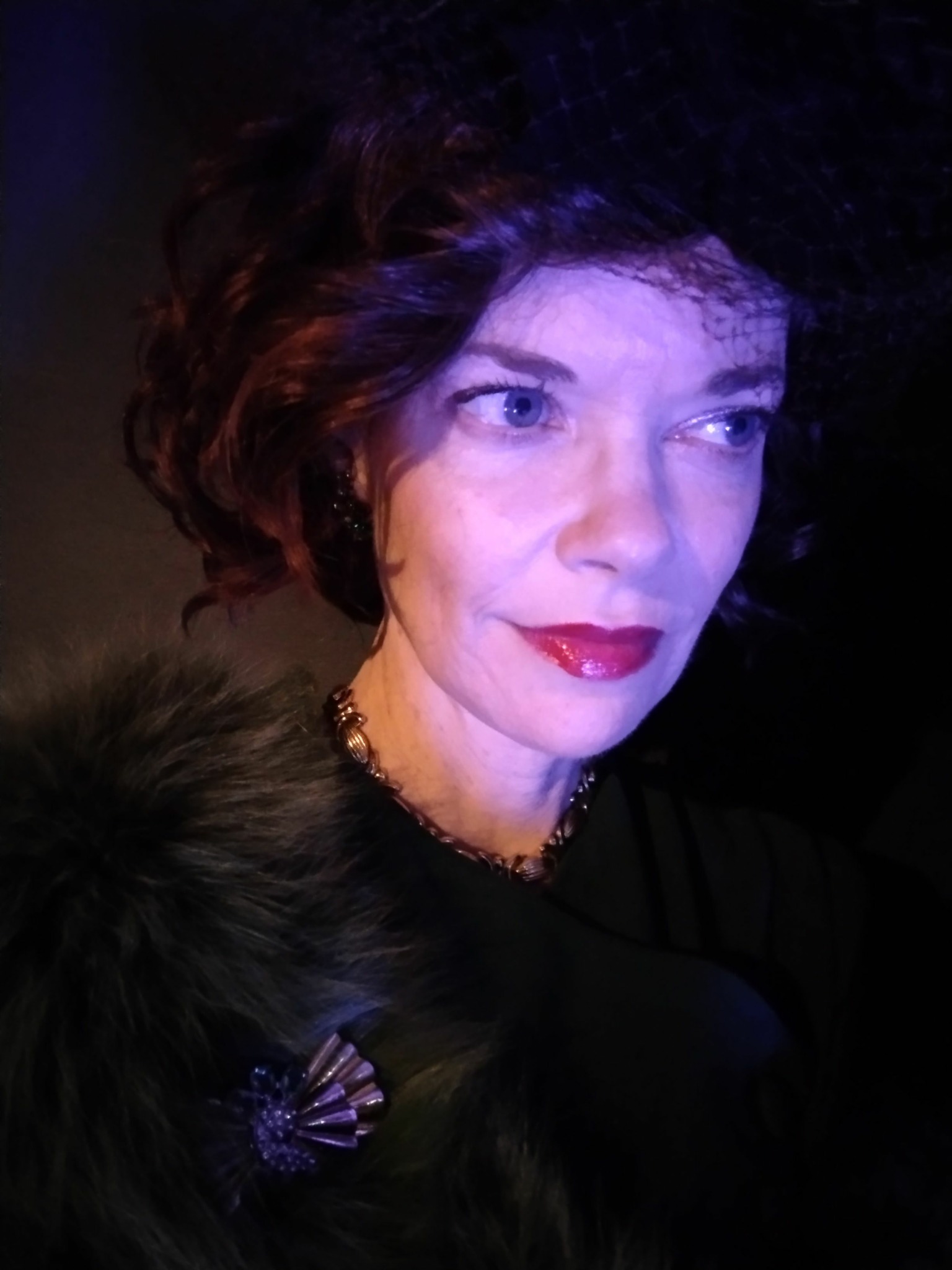

We were lucky to catch up with Ann Noble recently and have shared our conversation below.
Alright, Ann thanks for taking the time to share your stories and insights with us today. How did you learn to do what you do? Knowing what you know now, what could you have done to speed up your learning process? What skills do you think were most essential? What obstacles stood in the way of learning more?
How did I learn to do what I do? A lot of listening. A lot of practice. A lot of failure. A lot of trust. A lot of paying attention. A lot of courage. I have found that so much of what the artist must learn to do is not only what I call our Work, but we also have to learn how to learn. I spent so many years thinking that all there was to learning a craft, whether it was acting or writing or directing or teaching, was acquiring the right tools and then implementing them skillfully. So, once you learned the steps, you just sort of “walked up them”. And that’s how you got “good”. How you became an expert. And while that certainly is a part of it, the really hard part, I have found, is truly understanding WHO is doing the learning? Who is doing the art? Making it? Crafting it? Chucking it in the bin because it’s crap? Who is willing to stay when it’s hard or walk away when it’s the right time to do so? As artists we don’t just “do” our Work. We ARE our Work. And I don’t mean that in some kind of narcissistic self-righteous clingy kind of way. I mean it in the way a mother gives birth to a child. That child IS her. And it’s not. And every child is different, and every child is the same. And every birth-giving is different, and every birth-giving is the same. As artists, we must encounter ourselves and our lives not as mere receptors of sensory events, but we must bear witness to that reception. We must watch what we do, what others do; and notice it all. There is this wish that once you get “good”, once you are an expert, then you can just “do” what you do. But that takes “you” out of the equation. We must keep “being there” while we do our Work. It can never get unconscious. We must be present for it, remember it, assess it, then do it again…and this time, maybe a bit differently; or maybe the same. I guess what I’m saying is that we’re never done learning. If you’re a student forever, then everything is there to teach you something. Then everything is happening in the time it should. And there are no obstacles at all, really. So, for me, the way to get really, really good is by staying IN the craft. Not by merely “doing it”. Yes, get a great teacher, get many great teachers; yes, get the right tools and skillsets. And practice wherever and whenever you can. But, at the end of the day, it’s just you up there. Or in there. I have learned how to be “me” in my Work. I got the tools by being in the presence of people who were/are excellent at what they do, AND at who they are. And I got my courage to stay present and continue to learn by just getting back up every time I fell down. And I never stop asking myself: “who is this who is doing all this falling down and getting back up”?
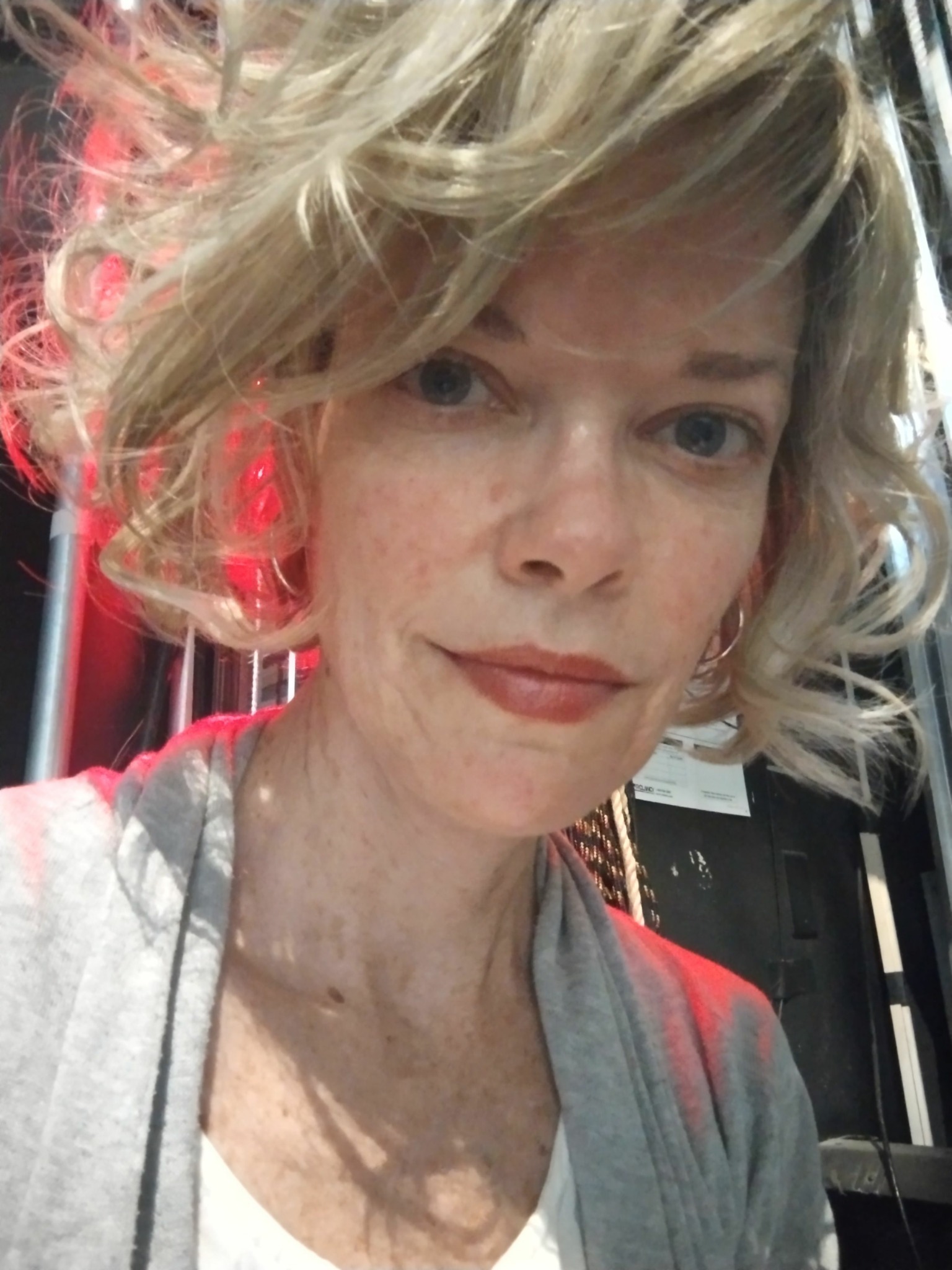
As always, we appreciate you sharing your insights and we’ve got a few more questions for you, but before we get to all of that can you take a minute to introduce yourself and give our readers some of your back background and context?
So, I was lying in bed one morning worrying about something, I can’t remember what exactly, but there was something I couldn’t figure out, which always makes me crazy, because I still falsely believe that I should be able to figure out everything and anything…well, you can see the stress mounting…and, well, it just came to me: this thought that what I do will never–ever–fit into the description box of “Occupation” on a job application. This was a terrifying thought. And, at the same time, a complete relief. Obviously, it was so powerful that I have, to this day, been unable to remember the “stressor” that was causing all the worry in the first place.
I’ve been a creative since I was a child. I have been inventing stories and sharing them with anyone who would listen since I can remember being alive. I have also really, really loved telling people what to do so that MY story will be told in the best possible way. Yeah, I had a little problem with “directing” since way back then as well. Fortunately, I had parents who, even though they had left the theatre world, had great respect for artists in every aspect of the performing arts, from acting to writing to directing to music. So when I was clearly an “expressive” child, they got me into classes at once. I was also extremely fortunate that my parents had the resources to do so. I learned, from a very early age, that if you wanted to be an artist, you better get trained and trained well. So I did. And there was never really any question for me, that I would be involved in the theatre in some way.
I had a lot of ideas, when I was young, about what my “artist career” should look like, and, well, that was continually a problem. My real life as an artist very rarely matched up to what I thought my life as an artist should be. And for years, it was sort of crushing. Yet, somehow, I kept going. Definitely that tenacity was instilled in me by my parents: “it takes a long time to become great, so, keep going”. Now, as it turns out, I am very grateful that my life doesn’t look anything like what I thought it would. In fact, if I want to get really, really upset, I just look at anyone my age working in the entertainment “industry” and compare my living situation or bank account or IMDB page, and oh boy…
The best part about my youth is I said yes to everything. I worked backstage, on stage, front of house–sometimes all at the same time; I helped other people with their projects; I learned how to do everything in the theatre, with the possible exception of using a hot glue gun. They scare me.
I cut my teeth, you could say, in Chicago. Fresh out of Northwestern as a Theatre Major, I crashed into the Chicago Theatre scene with gusto. Wrote a play that I produced with some friends and my family which then launched me into the world of writing and producing, as well as continuing to act. I got some notice which got me some L.A. notice, and, after ten years in the Mid-West, I threw myself into the Hollywood scene with as much gusto as I had before. My original plan was to become a TV Writer, and act “on the side”. But Life had other plans, and well, I ended up back in the Theatre (thank God), which led me to work at a ton of extraordinarily brilliant little theatres (and then some big ones), but, probably the most important thing that happened, was I got sober. Or, I should say, I HAD to get sober.
Before sobriety, I was always hustling, always climbing, always stepping on others to get where I needed to go, always promoting myself, always trying to figure out how I could get THEM to pick ME. After sobriety…heh, there is no “after”…so I will say, NOW that I am sober, I help others. I do my Work. And I help others to do their Work. It really is that simple. And I still say “yes” to everything, well, almost. I still do too much, I still over-extend myself, however, I very much try to see where Life (or God, however you want to say it) wants me to go, whether or not I want to go there. I assess carefully what I do, and, probably most importantly, what I’ve done. My sober artist self now happily finds themself in the following arenas:
I act. A lot. Mostly Theatre in Los Angeles and its environs, but I do a ton of short films, new media, etc. But only when people call. I do not submit myself for projects On Camera. I either do my own, or help my friends do theirs. I write. A lot. I have written over a dozen plays since I started writing back in high school. My plays are produced all over the world, and probably would be at more places if I worked a bit harder to promote myself. But I don’t. And I kind of don’t care. It’s very sad when you write and write and write and theatres don’t want what you write, but that’s the way it is a lot of times, so I just do it myself now. Or, I just focus on other things and, again, people call. I direct a lot. Again, I don’t pitch myself, I just let people ask. Because of the extensive amount of work I have done in and for the Los Angeles Theatre community I have a reputation that has weight. I show up and am kind and professional, and I do great work. So that means something. But…
All that, all this means absolutely nothing if I’m not doing what I consider to be my GREAT Work. I teach. And I chaplain. I get paid to teach acting, writing and solo performance. But I will teach anyone anything they want to learn. Except, of course, how to use a hot glue gun. I love to teach. I don’t know what it is, but watching the light come on in someone’s eyes, someone who has always loved acting and never really thought they were “good” enough or “brave” enough. Watching someone smile or cry with genuine pride at their own Work, at gaining an understanding of themselves or their craft…well, it just knocks my socks off. I was so friggin’ blessed to have the family that I had and grow up with resources to get a great education and be supported and cared for along the way, that I HAVE to pay it forward. Our culture has gotten more cruel and more atomized and more commercialized, and most people have zero support and zero idea how to even begin to get trained or mentored in the world of the arts. It is a mission of mine to make sure anyone who wants to learn this craft can learn it. Regardless of whether or not they have the funds.
The other piece of my Great Work is my work as a chaplain. Once again, as Life (this time it’s absolutely God) would have it, I ended up serving incarcerated people. It started with doing a Shakespeare program in a Boys’ Home, and grew into an enormous project where our little group of actors was working in four different educational facilities and teaching everything from writing to poetry to drumming to mask-work to just, you know, being a person and accepting love. This work that was grounded in the arts has morphed along the way into chaplaincy. It’s a story too long to tell, but suffice it to say, I met a sober monk who did prison ministry…and now, I am part of a group called Prism Restorative Justice. And I go into the jails once or twice a week and sit with people and on Sundays we do church. It’s incredible. And it is, indeed, what allows me to do everything else that I do in the way I do it.
So that’s me. For now.
I’m still working on my website, but you can find me. I’m around.
What’s a lesson you had to unlearn and what’s the backstory?
As an actor, I always thought I had to show everyone how smart I am. That I “get it”. And that meant that I was “a good actor”. And boy do I see a lot of actors who think acting is all about showing the audience, or the camera, that they “get it”. It’s as if their performance is really saying “see, I get it!” “See how cool my choices are?” “See how pretty I am?” “See how funny I am?” “See how I AM this role????” See how there’s always a question mark at the end of these “statements”??? Heh.
I used to think this was the goal: to figure it out and then to show you how awesome I am that I figured it all out. Because I thought acting was about doing it perfectly so the audience will love you, then they’ll want to see you again, then the theatre (or producers) will hire you again, and you’ll be employed forever and then you’ll be a STAR! Ugh. What a crock. But it took a long time to learn that it was a crock. My job as an actor is to tell the truth. That’s it. Tell the truth of this moment in this scene from my character’s point-of-view. Full stop.
I was working on a solo show that required me to talk to several imaginary people. So the audience is watching me have a conversation with “nobody”, basically. The director kept telling me that the “person” wasn’t really “there”. Meaning, that it looked like I was talking to nobody instead of somebody. In other words, the imaginary person wasn’t “real”. I kept trying to show this director that they were “real” that they were “there”. This went on for quite some time, until the director finally said to me “Stop trying to make me see them, just you see them. That’s enough.” After he said that, my first thought was “that won’t work; it’s NOT enough.” I then said this thought out loud. And while I felt very stupid saying it, I’m glad I did. This wonderful director then said to me, “Okay, let’s do an experiment. You just look at them (this imaginary person I’m supposed to be talking to), and you make them real for you, and I’ll tell you when I see them too.” So we did just that. I sat there, on stage, and looked at “nothing” and tried to make it “something”. Or someone, rather. And it took quite a while, before I realized that I had been, all this time, trying to make my body look like I was really looking at someone, instead of just really looking at them. And, it was miraculous, the moment I really saw the person-who-wasn’t-there as really-there, my director piped up with “There they are!” I didn’t believe him, my director. But I trusted him, so I kept working in that way, and now, I know it’s a fact. If you see it, I will see it. Don’t show me that you’re “really looking”. Just look. And see. It really is enough.
For you, what’s the most rewarding aspect of being a creative?
Everything that happens to me or around me is food. The worst, most horrible events have a place in my life’s journey because they can always have a place in my Work. As an artist, everything means something. I think, as humans, the most devastating thing to us is when shit happens to us for what appears to be no reason. This world beats us up, takes from us, throws us into the spotlight and then promptly tosses us aside. The ONLY saving grace there is is that it all can make a great story. Our pain, our trauma, our grief, our shame, our mysterious inner selves do indeed have a place in this world, but only when they are filtered through the worn, weaving fingers of a true artist.
Contact Info:
- Instagram: @sparksjacks
- Facebook: https://www.facebook.com/ann.noble.311/
- Twitter: @sparksjacks
- Youtube: @annnoble6187
- Other: https://www.thecflc.org/
Image Credits
Ann Noble