



Alright – so today we’ve got the honor of introducing you to Anggie Arivia. We think you’ll enjoy our conversation, we’ve shared it below.
Alright, Anggie thanks for taking the time to share your stories and insights with us today. It’s always helpful to hear about times when someone’s had to take a risk – how did they think through the decision, why did they take the risk, and what ended up happening. We’d love to hear about a risk you’ve taken.
Being the youngest child, I’ve always been closely protected by my parents and siblings. I don’t blame them—after all, their concerns stem from a desire to keep me safe. However, I firmly believe that personal growth comes from taking risks and stepping out of one’s comfort zone.
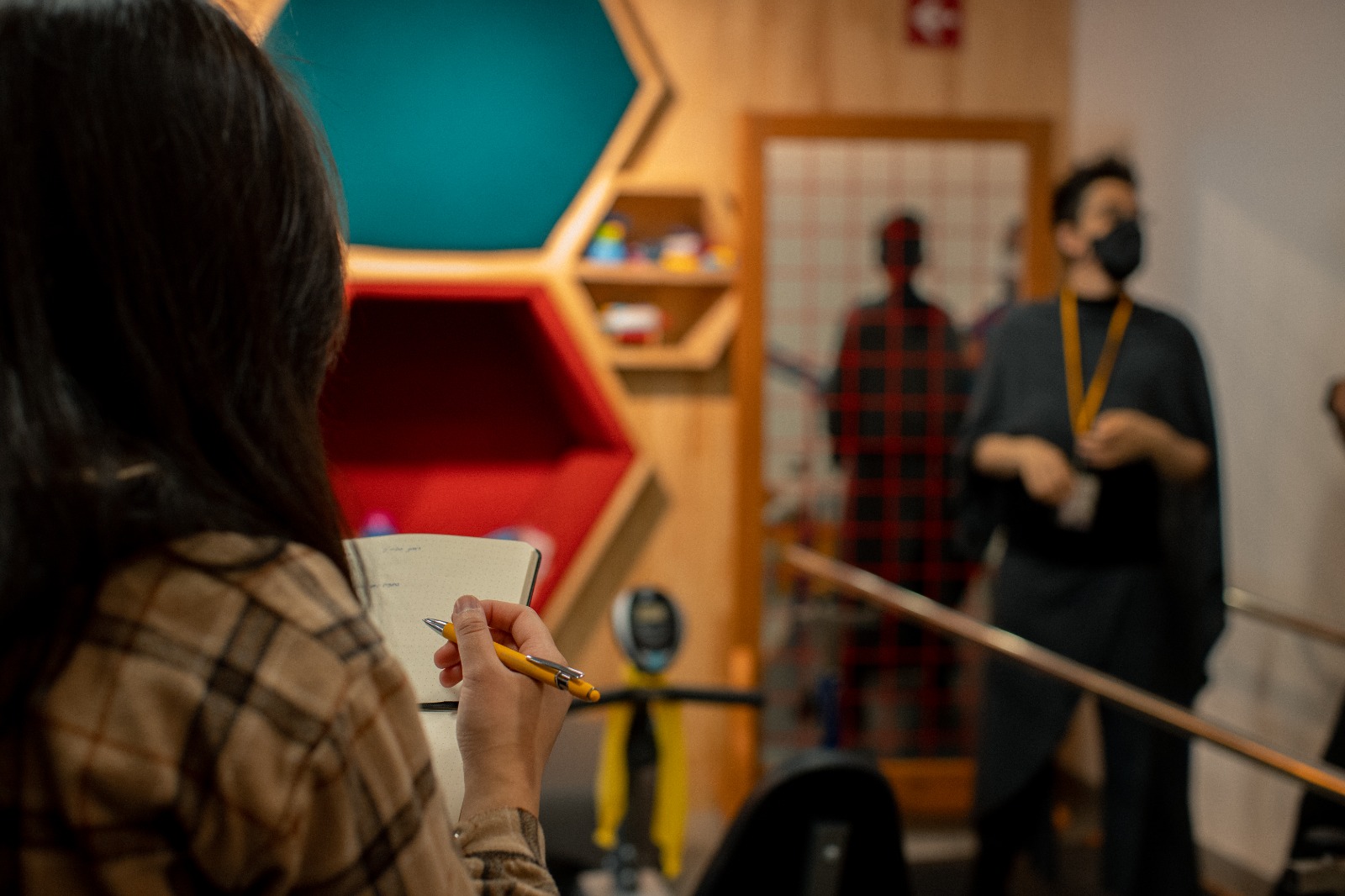
In the summer of 2023, I decided to take a risk. Before the start of the summer term at ArtCenter College of Design, the Spatial Experience program announced a transdisciplinary studio class called Safe Niños: Concepción. This class included a two-week study-away research trip to Chile, South America.
Despite knowing my family would be anxious about me traveling to a foreign country, I applied for the class and attended the interview. To my surprise, I was accepted, and my journey began.
Now, a year later, I often reflect on that pivotal decision. Taking this leap of faith brought me a wealth of opportunities. I learned to be more independent and dependable, collaborate with students from various majors and clients, and understand the importance of empathizing with the users of our designs.
This experience also introduced me to diverse media and disciplines. Through the studio class itself, I discovered the critical considerations involved in illustrating for spatial environments. Later, during my honors term in the fall of 2024, I had the chance to study interaction design, which allowed me to further refine solutions for the remaining design opportunities with the goal of improving pediatric patient care at the COANIQUEM clinic in Concepción.
Awesome – so before we get into the rest of our questions, can you briefly introduce yourself to our readers.
My name is Anggie Arivia. I was born and raised in Indonesia, a country rich in cultural and traditional diversity. Surrounded by various cultural and historical artifacts, I’ve always been fascinated by the significance of patterns, shapes, and colors. Understanding these elements helps me as a designer to express emotions and tell stories with intention. I am particularly passionate about using design to convey powerful narratives and evoke strong emotions.
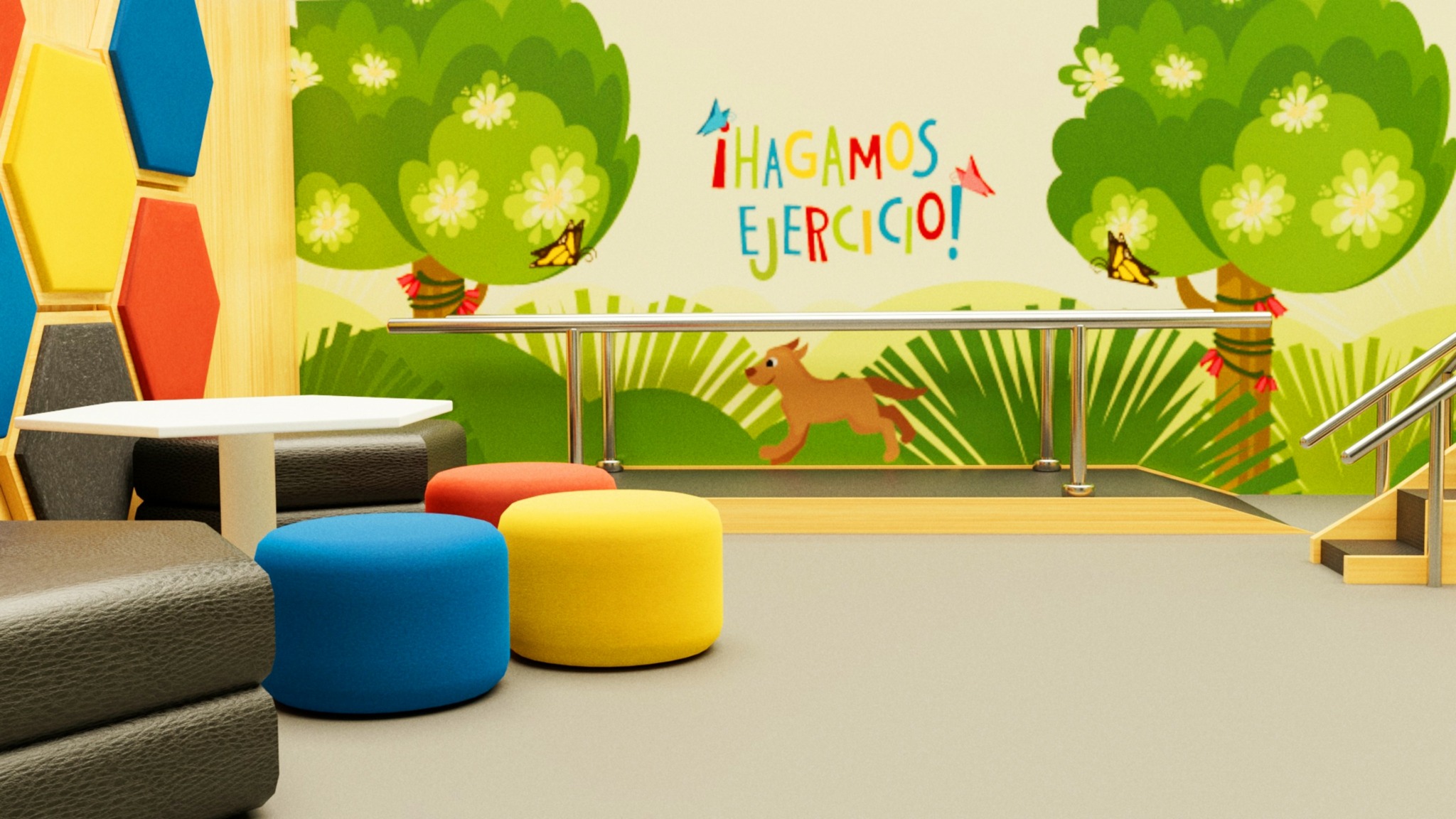
In terms of working experiences, I’ve had the opportunity to work on projects focused on social impact, such as the Safe Niños: Concepción project, where my peers and I collaborated with COANIQUEM, a Chilean non-profit organization that provides free, specialized treatment for children with severe burn injuries. The project spanned two terms, during which my team and I worked on storytelling and spatial graphics. The storytelling was expanded from the original storybook developed by Alvin Oey and illustrated by Bella Lee, which became part of COANIQUEM’s visual identity. It tells the story of two children, Camilla and Lucas, who travel across the Andes to find the Healing Tree. Along the way, they meet animals that help them on their journey, with each animal representing a different department within COANIQUEM. For the clinic in Concepción, we expanded the story by incorporating natural and cultural elements from the Biobío region into the illustrations.
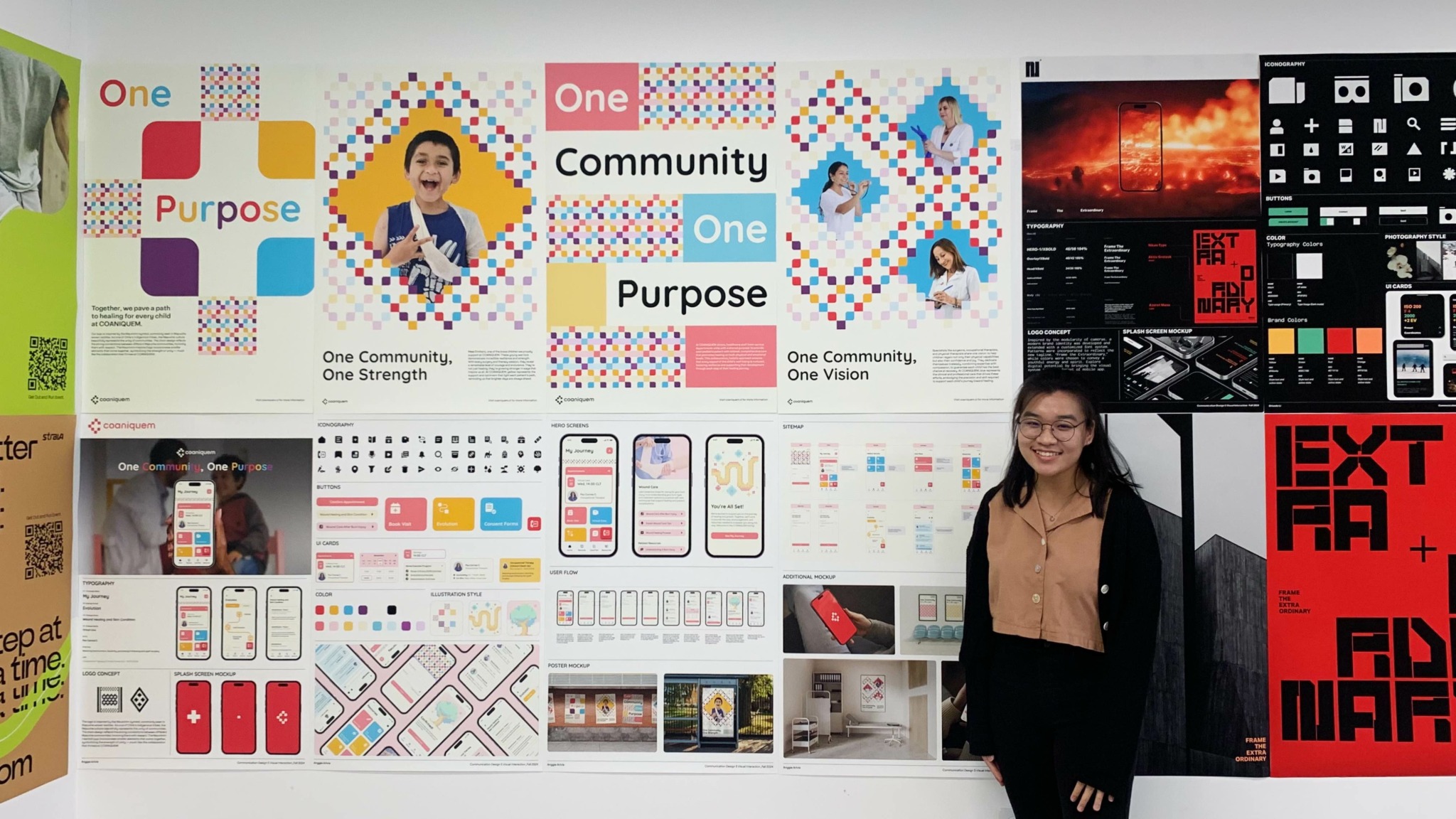
After completing the project in the fall of 2023, one key question lingered in my mind: “How might we extend the patient’s journey beyond the clinic?” I didn’t have the chance to fully explore this question—until I was awarded an honors term, during which I developed a patient portal project. I worked independently on this project, focusing on the needs of both staff and patients through interviews. I then developed a cohesive visual identity system and an in-depth mobile app prototype. The goal was for the brand to embody COANIQUEM’s noble mission and commitment to providing excellent care, while the app prototype aimed to improve the care and quality of life for pediatric burn victims through enhanced collaboration.
As a designer, what sets me apart is my dedication to creating meaningful impact through my work. I am passionate about engaging in projects that tackle real-world social issues and have the potential to make a significant difference through thoughtful research. Whenever appropriate, I also emphasize impact by being expressive, using bold colors, shapes, and design language. While anyone can create aesthetically pleasing designs and follow trends, I believe in designing with authenticity and in serving the needs of my clients and society through thoughtful, research-driven approaches.
Ultimately, as a storyteller, illustrator, and motion designer, my goal is to create designs that feel relevant by focusing on the details and intricacies of different cultural elements, to enrich the world with a little more uniqueness, expression, and color.
Can you share a story from your journey that illustrates your resilience?
One of the most defining moments in my journey as a designer occurred during my honors term, when I had the opportunity to take studios in a discipline completely different from what I had learned (illustration and motion design). While I was proud and excited to receive this opportunity, I also felt a great deal of anxiety. I was particularly overwhelmed because I was dealing with burnout from completing four consecutive terms, and the honors term would be the fifth. On top of that, I was exhausted from the demands of my graduating term. I feared that my exhaustion would prevent me from delivering a quality project, especially as I needed to learn an entirely new discipline, a new workflow, and a new design tool, Figma.
At one point during the term, I felt completely overwhelmed by the amount of new information I had to absorb. Concepts like Information Architecture, MoSCoW Prioritization, and user flows were common for interaction design students but were entirely new to me. Even though these terms were explained in class, I had to dedicate extra time to research them on my own—learning how to apply them practically, how to use Figma, and familiarizing myself with iconography and human-centered design.
Given the high expectations and tight deadlines, it would have been easy to feel discouraged by these challenges. However, I decided to confront the situation head-on. I asked numerous questions, not only to my peers and instructors but also to professionals I connected with on LinkedIn, seeking additional insights. I conducted multiple user interviews and gathered as much information as possible to ensure that my design was human-centered and user-friendly.
The process was far from easy, but through persistence and a commitment to improving the project, I was able to turn things around. I successfully developed a comprehensive UI design that resonated effectively with the target audience. This experience reinforced my belief in the power of resilience and taught me that setbacks are simply stepping stones to improvement. Ultimately, it showed me that perseverance and adaptability are essential for overcoming challenges and achieving success.
Are there any books, videos, essays or other resources that have significantly impacted your management and entrepreneurial thinking and philosophy?
There is one book that profoundly influenced my perspective as a designer: “The Design of Everyday Things” by Don Norman. Before reading this book, I approached design with the intent of communicating messages clearly to an audience through illustrations and visual elements. However, that alone is not enough. My designs were often influenced by my personal experiences and knowledge, which sometimes led to biases.
This book introduced me to the concept of human-centered design, highlighting the importance of understanding human psychology when interacting with design. It taught me the value of empathy, showing me how crucial it is to consider the perspective of the user rather than simply focusing on what I, as a designer, think is best. Norman’s insights made me realize that a solution that seems perfect to the designer may unintentionally create new challenges for the user. This understanding has made me more mindful of the impact of my designs on the people who use them.
One of the most important lessons I took from the book was the significance of user testing. It became clear to me that what we may think is the “right” solution could be fundamentally flawed once tested by the end user. Norman emphasized the importance of iterative design and testing, which led me to adopt a mindset where failure is viewed as an opportunity for learning and improvement. Rather than fearing failure at the final stage, I learned to embrace it early in the process. Failing early and often has allowed me to refine my work, ensuring that by the time the design or product is launched, it is as effective and user-friendly as possible.
This shift in mindset has been transformative in my approach to design, helping me to create more user-focused, practical, and intuitive solutions.
Contact Info:
- Website: https://www.helloanggie.info/
- Instagram: nggnoodles
- Linkedin: https://www.linkedin.com/in/anggiearivia/


Image Credits
Image credits belong to ArtCenter College of Design / Juan Posada, Alice Wibisono, and Anggie Arivia