We were lucky to catch up with Andrew Gomez IV recently and have shared our conversation below.
Alright, Andrew thanks for taking the time to share your stories and insights with us today. Earning a full time living from one’s creative career can be incredibly difficult. Have you been able to do so and if so, can you share some of the key parts of your journey and any important advice or lessons that might help creatives who haven’t been able to yet?
I have been a full-time designer for the better part of seven years. I didn’t go full-time until we were in the thick of the pandemic. At that point, the whole world’s economy was eviscerated by the effects of the virus. Established industries were brought to their knees, and what was considered “steady” work was a ghost of its former self.
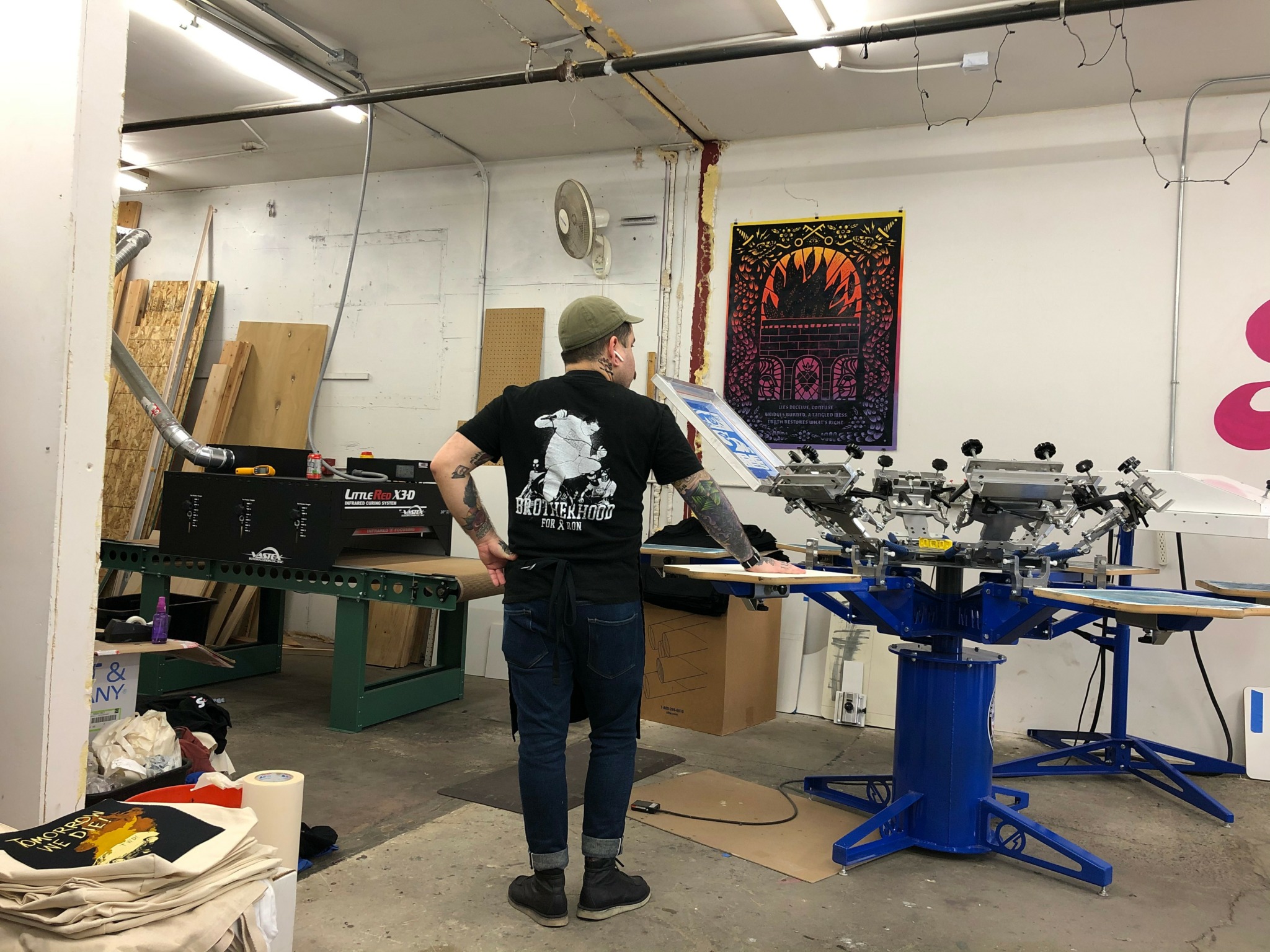
I was transitioning from my day job as a chauffeur and doing creative work for side money to starting up my screen printing shop. But with all the shutdowns, the death count ever rising, no one was requesting print work; we were all just trying to survive. People had to get scrappy and find new ways to make ends meet. What was once considered in my head as “side work” or not a “real” career-oriented space like designing/illustrating, was the only thing that kept me from being destitute.
You have to understand something. I was brought up in a somewhat traditional Latino household; you work hard, you provide for your own, first and foremost. To me, the notion of being able to make a decent living designing or illustrating is something I couldn’t fathom. A distant pipe dream. So I treated it as something as side work, a way to make extra money. Now I found myself doing it full-time, where my “steady” work flat-lined, my side work took its place. So you have to imagine this was a real sea change mentally for me. From there, I knew there was no going back. I needed to see how far I can take this.
Awesome – so before we get into the rest of our questions, can you briefly introduce yourself to our readers.
I think I have a pretty familiar story to some creatives who consider themselves to have a “non-traditional” upbringing. I have always been artistic in the most fundamental sense. What I mean is, as a kid, I had a high-functioning imagination. Almost to a fault. I would be constantly drawing or making my toys out of tape and other found items around the house. My mother always pushed my creative streak; I think that permeated into the rest of my life. We didn’t have a lot of money for things like toys and video games. Like, we had toys, but not a lot. So my mother made sure it was made up by way of support and coddling of my creative tendencies.
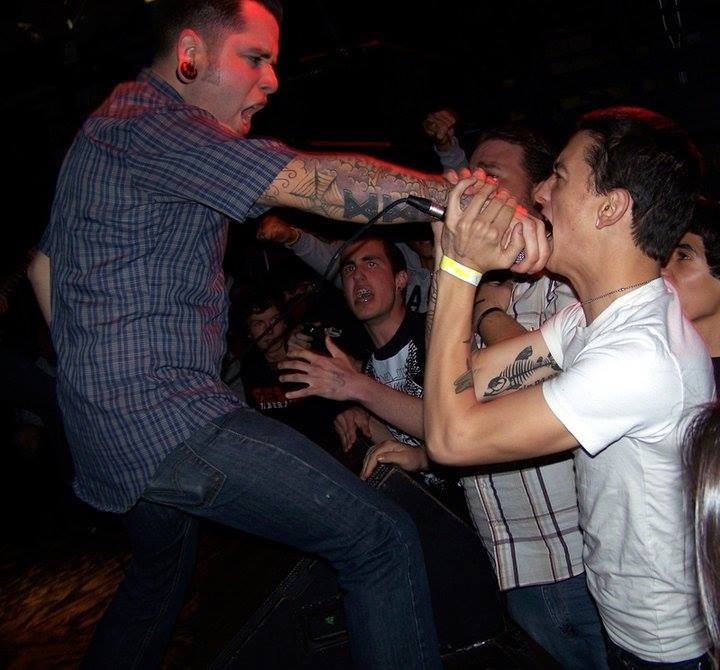
Later on, I got into hardcore/punk rock in my early teens. At this time, I wasn’t doing well in high school. And eventually dropped out in my sophomore year.. We were well into the Bush years, and as a country, we were processing a post 9/11 climate. I found myself expressing and translating all I was absorbing from that and the normal growing pains through music and art. Going to DIY shows, seeing hardcore bands operating in a system that was completely autonomous from the regular retail space, was something to behold for me. When you imagine a band, like a fully functioning band. You think in terms of what lens that has been fed to you: MTV, VH1, and the like. You never (at least I at the time) think you can just pick up instruments and go, or figure out how to book shows and go, and finally design your own shit, and go. And here were these bands, full of kids my age or just a little bit older, doing the damn thing. It shattered my worldview. And really instilled this was a vehicle for me to catapult my expressions.
From there, I was in bands, booking shows, designing our own merch, and making records. Essentially, project managing our endeavors with my friends. It was a real crash course on a lot of finer points I would lean on for the rest of my career. I guess it started to show that I had a knack for designing, cause bands we played with and labels we rubbed elbows with started hitting me up for work. I took every project that came my way with a seriousness I think most kids at my age didn’t. I thought to myself, “This shit is crazy, they are really giving me money to do this”. So I made sure I would execute the project with a level of professionalism that would get around. I was their only choice if you wanted the job done and done well. To this day, that’s how I operate. There are millions of designers out there; I keep that in the front of my mind every day. It’s not lost on me that if I take this for granted, there are a million others right behind me chomping at the bit to take my place. It’s a great insurance policy mentally to do the best for my clients every time.
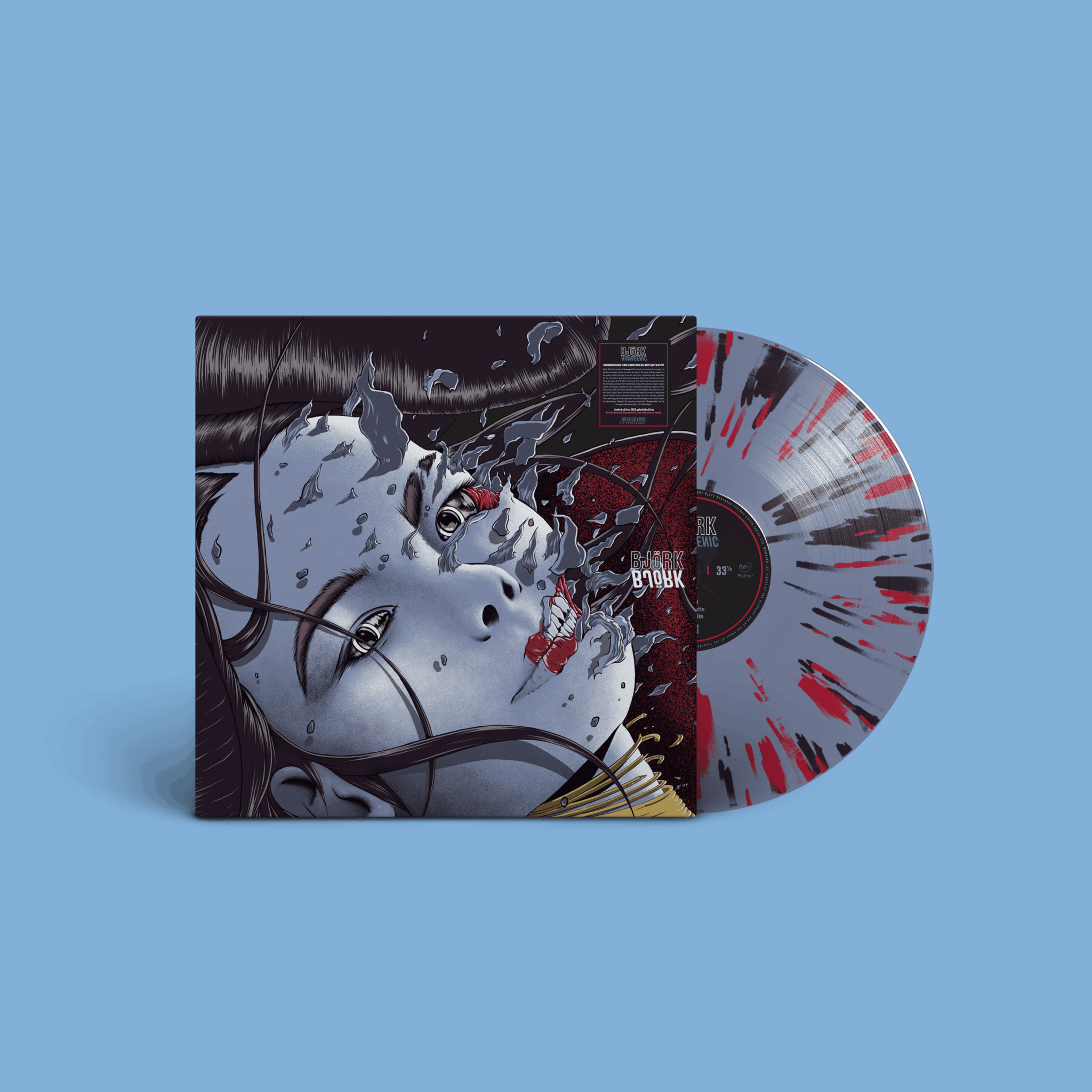
Throughout my career, I have pretty much touched on all aspects of design. Brand work, layouts, packaging, merchandise, web design, small companies, Fortune 500 corporations, you name it. I probably fucking did it. What I tended to get known for in my early years was layout design for records, not just the covers (started out that way), but the entire layouts. As conceited as it sounds, when I was just doing the covers for bands and labels and hand them off to another designer to get laid out. More times than not, I was disappointed with the final results. The designers who laid the rest of the records out were probably just a friend of the band or label and didn’t know their head from their ass on designing. Too many typefaces, too many color choices, cropping non-existent, and alignment on assets that a blind person could do better. I started offering to do the layouts and covers as a package. From there, I built a process where I can really make covers more cohesive with the rest of the layout. Rather than the cover just being placed at the helm of a record jacket or book. There was now a clear relationship throughout the work. I loved picking up records that fold out and visually steer you through them. It’s a command you have on the viewer they don’t know about. Not too much different from sequencing the track listing from the bands themselves. The ordering of a record track-wise is a curated journey in which they want you to process their work. I believe and respect that, so I try whenever possible to look at the totality of the layout before I start grinding away to ensure it’s visually going to make sense top to bottom. Have it be a record layout, or packaging for a food product, a manual for a device, to a menu for a restaurant. There’s a story to tell visually.

Is there something you think non-creatives will struggle to understand about your journey as a creative?
“Respect the process”. I think non-creatives at large don’t put enough respect on the title. I believe it’s a symptom of modern society where we look at creatives through a romantic lens, yet we chastise them when we ask for validity as any other trade.
Look, almost everyone owns a small set of tools. A hammer, nails, screwdrivers, wrenches. You might know how to use them around the house. But would you honestly say you can do the same level of work as a bonded construction worker, plumber, or carpenter? Some might, but not most people. Some people played sports in school, and maybe played catch on the weekends. But you look onward to professional athletes as not equals but masters of their trade. So why not creatives? Sure, you can share some of the same streaks of creativity with the very people out here day in day out that consider themselves professionals in the game, but why do we as a society make an exception here? I think it’s a projection of our own insecurities as individuals and what we surrendered in trade for economic security.
We romanticize the concept of the “starving artist”. But when said artist wants a living wage or respect, we have a “how dare they” reaction sometimes. There’s a whole lot more to creative work than just “making cool shit”. There are real problems to solve, and most people can’t solve them. That’s why you hire professionals in areas they specialize in. Do you make donuts? Hell yeah. You trade in hedge funds, good for you. But don’t mistake having artistic preferences, or even having some creativity for what we can do for you. They are in the places they are in for a reason. To visually encompass a message or identity that projects exactly what you need for the situation. I’m sure some people are going to read this the wrong way, and that’s fine.
Learning and unlearning are both critical parts of growth – can you share a story of a time when you had to unlearn a lesson?
Taking in criticism and not taking it personally. I believe this is a work in progress for all creative people. As you get older and move through your career, you either learn to deal with it in your way or you let it consume you alive.
I’ve learn over the years that at the end of the day, you are not going to be 100% happy with your work. That is a true as the day is long. That is also true for your clients. They are never going to be 100% happy with the work you give them, cause it’s never going to look like how they envisioned it in their heads. Once I understood that, it was liberating for me, helped me operate in a much healthier frequency.
We can always strive for perfection; that’s what keeps the drive. But we will never reach it. All we can do is get as close as we can to it with every project.
Contact Info:
- Website: http://andrewgomeziv.com
- Instagram: http://instagram.com/andrewgomeziv
- Facebook: http://fb.com/andrewgomeziv
- Linkedin: https://www.linkedin.com/in/andrewgomeziv/