



We recently connected with Anastashia Chavez and have shared our conversation below.
Anastashia, thanks for taking the time to share your stories with us today Can you talk to us about how you learned to do what you do?
I came into the restaurant industry later than most. For my formative years, I spent training to become a professional ballet dancer and it wasn’t until I was about twenty, injured and dealing with a lot of health issues that I started really cooking. It began as a way to deal with my demons and get healthy, but I fell in love with the craft. So much so I quit dance and went to culinary school. I didn’t stay to graduate, because I started a job as an assistant to a pastry chef early on and dove straight in to the world of culinary arts.
Looking back, I’ve realized that ballet gave me the skills I needed to succeed in the kitchen. Discipline, respect, dedication, perseverance, and fluidity of movement. Because I dove straight into the kitchen, I ended up being more of a self-taught chef. I was given my first head pastry chef job at the ripe age of 20, only a year after I’d began in kitchens. To say I wasn’t ready is an understatement. But again, perseverance and dedication led me to succeed and get to where I am today.
There’s so much I wish I would have experienced as a young pastry cook, instead of immediately having a managerial role. I was green and not ready, but sometimes being thrown into the fire causes you to learn fast, think on your feet and adapt. It was just like being on stage and though challenging, it came to me with ease.
Everyday in the kitchen is a learning day. It never stops, and that’s why I love this craft. Always adapting, forever evolving, there is never a limit to what you can learn and improve on.
Anastashia, love having you share your insights with us. Before we ask you more questions, maybe you can take a moment to introduce yourself to our readers who might have missed our earlier conversations?
As stated previously, I got into kitchens after a long career in my youth of training to become a professional ballerina. Through injuries, eating disorders and inner demons, I found therapy through cooking and baking.
Looking back, I think it was more of an escape, however I came to love the craft dearly and realized the healing powers of cooking along with the amazing community that comes with it. I think
many chefs have found therapy in cooking, so many of us fight inner demons, but the ability to be vocal about it and come together to overcome these is why I’ve stayed in this craft.
I’ve always felt that I’ve been very blessed with a supportive, large family and realize how lucky I am to have that support system. In the world today, plagued with turmoil, unrest and economic insecurity I know not to take this for granted. Cooking allows me to give back to my community, to help those in need in the nest way I can. I’m proud to have been involved, and help coordinate numerous charities bake sales, dinners, raffles etc to both donate funds and food to anyone and everyone in need of love and support.
For me, cooking isn’t about the awards, the Michelin stars etc, it’s about heart. Food brings people together, it provides community and peace, if even just for fleeting moments, in this world on the brink. It’s a beautiful thing to be a part of.
Looking back, are there any resources you wish you knew about earlier in your creative journey?
I think people and books are the best resources when it comes to working in the restaurant industry. Other chefs, food writers etc are filled with knowledge, experience and their own stories. Picking another’s brain and not being afraid to ask questions will teach you so much! Being open to new ways of learning from other experienced chefs is imperative. Otherwise you won’t grow. I didn’t realize this until about a decade in. I thought I was just on my own journey alone, but when you open up your mind to other’s, only beautiful art and growth will come.
And books. I could spend hours in the library reading cookbooks. They are a Chefs brain in tangible paper form. Fascinating learning.

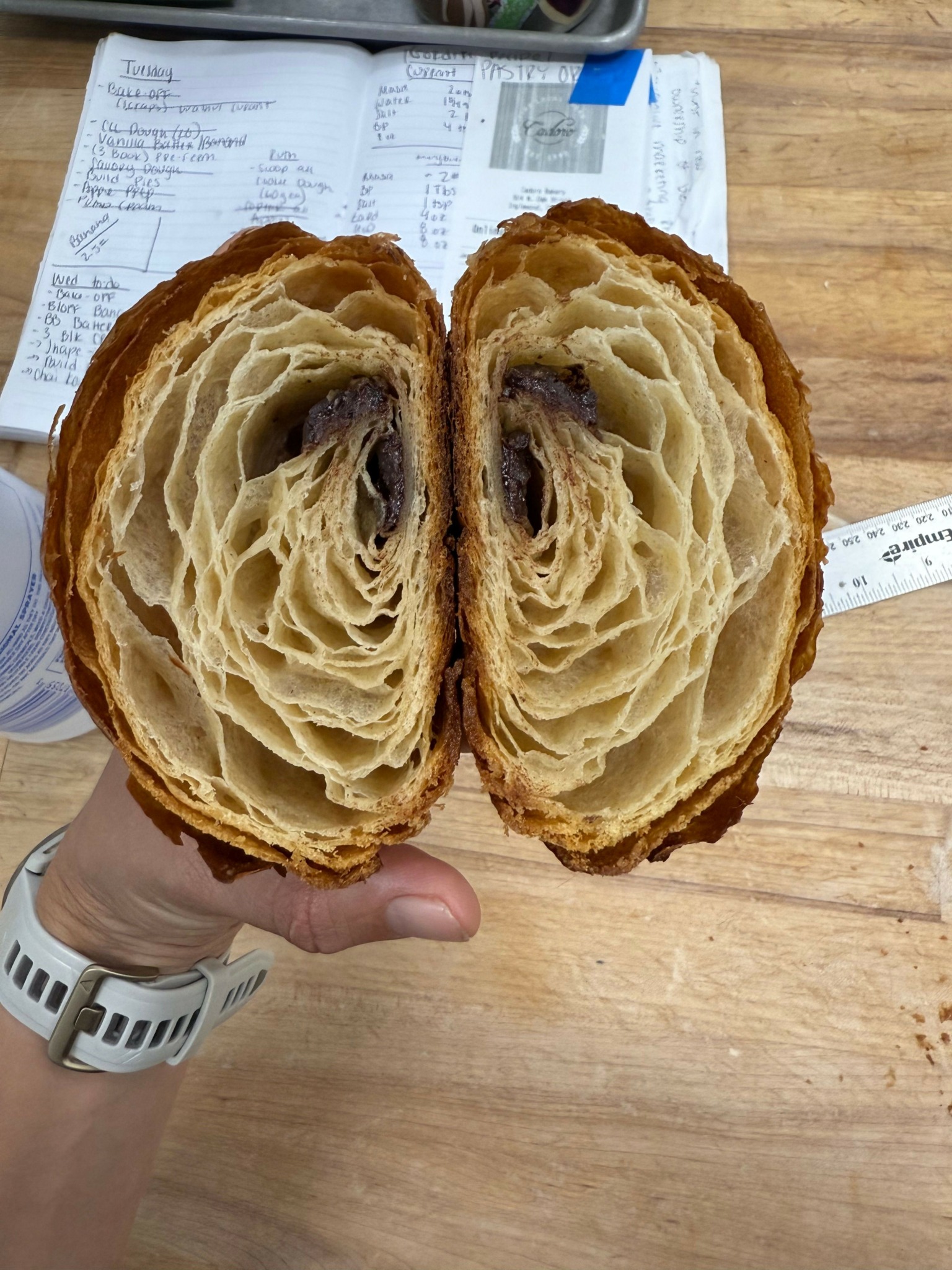
Learning and unlearning are both critical parts of growth – can you share a story of a time when you had to unlearn a lesson?
Overthinking and letting emotion overcome me. Learning to separate myself from my work took a very long time, and is something that I’m still figuring out how to manage. I think it stems from my ballet days. I saw my success as an extension of my personality, of my character. If I didn’t get the lead role, or couldn’t nail the choreography- to me it meant that I failed and that it affected my worth. It bled into my cooking career. If my croissant didn’t turn out right the first time, or another chef didn’t like my dish then I’d see it as failure of self. It’s an unhealthy way to live and once I realized that my worth wasn’t tied to my work- that it was necessary to separate myself my personal life from my job, then I began to thrive. It’s something I still deeply battle with, but I think to succeed and have longevity in this tough career- having those mental boundaries and realizing at the end of the day, that it’s a job not your whole entire life will get you far. And keep you healthy !
Contact Info:
- Website: https://Cadorobakery.com
- Instagram: @anmairi

Image Credits
Viktor Budnik, Willhouse Photography