

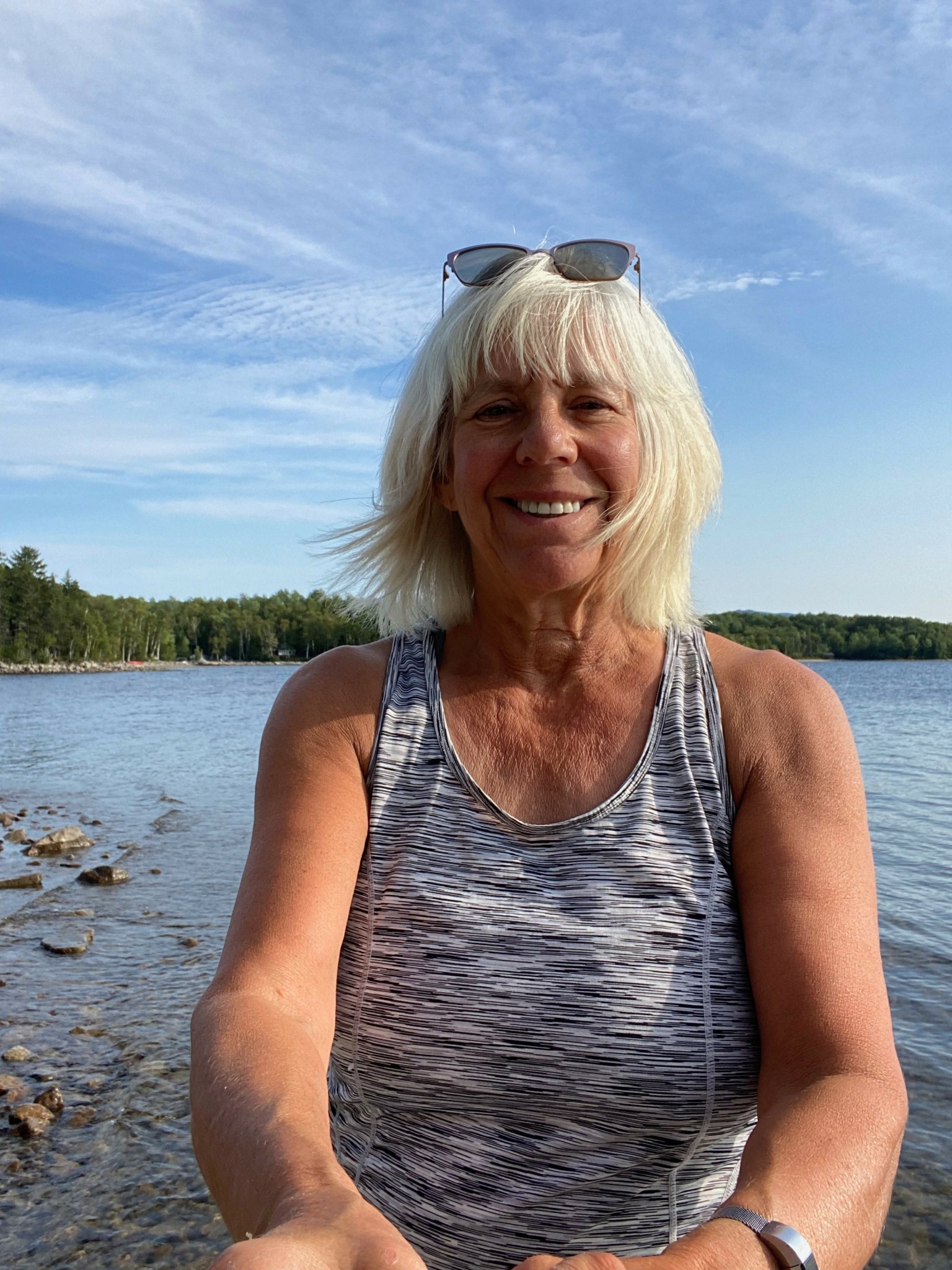

We’re excited to introduce you to the always interesting and insightful Amy Sarner Williams. We hope you’ll enjoy our conversation with Amy below.
Amy, thanks for joining us, excited to have you contributing your stories and insights. Are you happy as a creative professional? Do you sometimes wonder what it would be like to work for someone else?
I have spent most of my career in the field of ceramic art – teaching, creating and exhibiting. I love being an artist, yet art-making can at times be a lonely endeavor. After around 20 years as an independent artist, I felt a longing to connect more deeply with a community, to work with other like-minded people toward a common purpose. So in the early 90’s, I made the decision to get a “regular job”, but still one very much related to the field of ceramics. I joined the development staff at The Clay Studio in Old City Philadelphia. I knew the organization well, having been one of its early resident artists and instructors. I was successful in my job, writing grants and reporting on results, managing special events, and cultivating donors. In 2001, I became The Clay Studio’s Executive Director. I gained management, financial and leadership skills that have made me a stronger, more well-rounded person. During my ten years at the helm, I doubled The Clay Studio’s organizational capacity and increased its financial strength. During that time, my own art-making became secondary to the greater needs and goals of others. After 17 years as an arts administrator, I felt the calling to focus again on my personal artistic expression. Still, it is one of the great joys of my life to see The Clay Studio open its brand new, state of the art facility in the spring of 2022.
 Across the Great Divide
Birchbark collage on paper
Amy, before we move on to more of these sorts of questions, can you take some time to bring our readers up to speed on you and what you do?
I first worked with clay in the early 1970’s, while a liberal arts student at the University of Pennsylvania. Only fine arts were offered at Penn, so I studied ceramics at Moore College of Art, receiving academic credit from Penn. It was during this time that I realized my love of the material and my desire to explore it in depth. After graduating from Penn, I continued my exploration of ceramics at Tyler School of Art. My plan was to apply to MFA programs, but then I heard about The Clay Studio.
In 1975, The Clay Studio, in existence for only one year, was a collective of artists sharing space and facilities in Old City Philadelphia. The Studio’s artists had so much knowledge and expertise to share. I chose to stay and learn all I could from them within a context of a working studio, rather than continue with a formal education. The Clay Studio grew into a non-profit charitable organization with an educational mission, and I grew with it. I taught classes and explored my artistic vision, while building a sense of community. I left and set up my own studio in 1982. For the next decade, I exhibited my work at prestigious craft shows and galleries throughout the US.
The inspiration for my work has always been the beauty of the natural world and the sense of wonder awakened through personal connection with the landscape. My goal is that each unique piece speaks to the viewer’s inner spirit, providing comfort and nourishment to your imagination. For in today’s frenetic world, the creative yet receptive spirit is so often drowned out, hidden or asleep. The power of my work is in the awakening of that spirit, keeping it present, transforming everyday life into a life of wonder, mystery, and oneness with all.

Emerging
Birch bark collage on wood. Soda fired pots on wooden tray, handmade oak frame
In your view, what can society to do to best support artists, creatives and a thriving creative ecosystem?
I think most important is to encourage participation in the arts in grade school and beyond. When I grew up, art and music were an important part of the curriculum. Now it seems, with pressure on school budgets, the arts are the first things to be cut. I think that’s a terrible mistake. Arts can be incorporated into the study of math, literature, social studies and science, and make learning fun. Children who learn to appreciate art may not grow up to be artists, but may have a life-long interest in galleries, museums, theater and musical performances. They will become the future audiences that all artists need to thrive.

How about pivoting – can you share the story of a time you’ve had to pivot?
In the Covid summer of 2020, I found myself isolated, unable to work in my chosen medium of clay because of the communal setting of my studio. Then it dawned on me, if I am alone and cannot partake of the city’s cultural life, why not fully embrace that aloneness? So I left the city and quarantined at my family’s rustic cabin on a lake in the mountains of western Maine. There, I became acquainted, maybe for the first time, with the magical space of quiet solitude. I spent endless hours looking out at the lake, watching the light dance on the waves, watching the reflections of the clouds and moon in the water. Then one day as I was walking through idyllic pine and birch forests, I picked up a piece of birch bark, a material that had always intrigued me. With its myriad peelable layers, birch bark unveils a hidden array of colors, textures and patterns. I collected the fallen bark, prepared it by soaking, peeling into layers, and flattening. This new medium allowed me to create collages of mystical and enchanting beauty, capturing the spirit of the ever-changing landscape.
Contact Info:
- Website: https://www.amysarnerwilliams.com
- Instagram: @amysarwil
- Youtube: https://www.youtube.com/watch?v=Trb1U3kfb4Y


 Landscape Bowl
Wheel thrown, electric fired with masked, taped and sprayed engobes

Image Credits
Amy Sarner Williams, John Carlano