



We recently connected with Amit Patel and have shared our conversation below.
Hi Amit, thanks for joining us today. Risking taking is a huge part of most people’s story but too often society overlooks those risks and only focuses on where you are today. Can you talk to us about a risk you’ve taken – it could be a big risk or a small one – but walk us through the backstory.
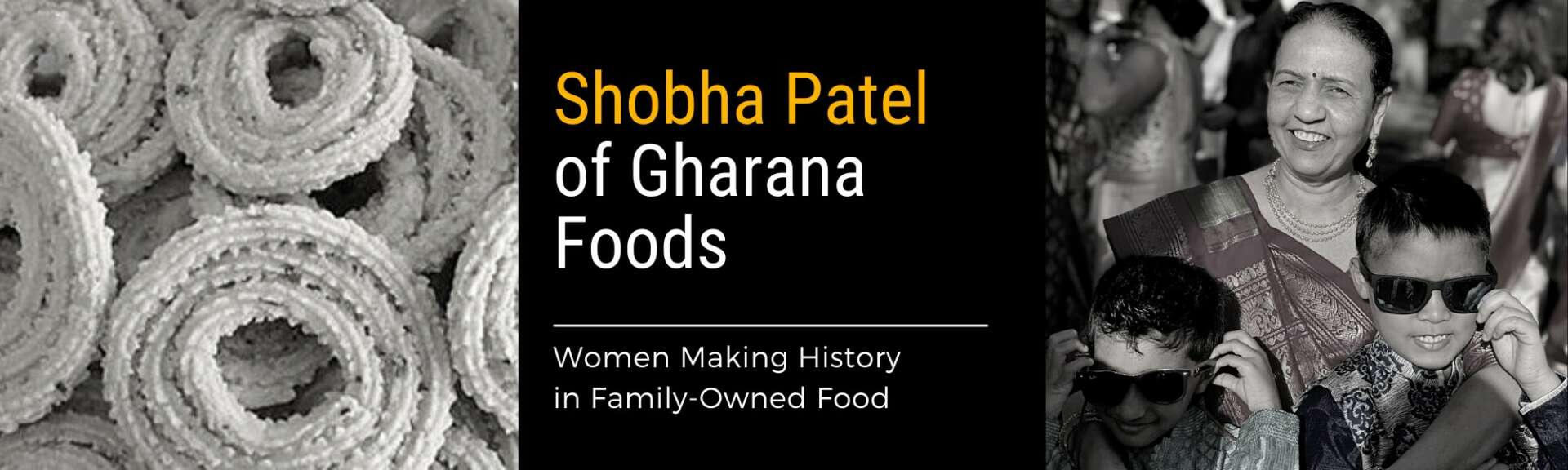
Three parts to this story: Gharana Foods was started as the result of a necessity versus a desire. In an immigrant household, stay at home parents tend to find work in creative ways to help make ends meet. My mom started making our flagship product, Chakri, and selling it to local grocery stores. At 50, my dad suddenly lost his job when his company was sold and had trouble finding new work. We were approached by a local ethnic store distributor who asked my parents to start a formal business. He would guarantee a minimum weekly purchase, and after doing the math, realized it would be enough to help makes ends meet at the home. My dad, who is an engineer by trade, helped design and implement the first machine to make our chakri. Taking whatever savings my parents, my sister and brother-in-law, and I had at the time, we risked everything and started Gharana Foods. We worked 60-80 hour weeks in a 1,000 sq.ft. facility learning how to run a business and fulfil the distributor’s initial order. Thankfully we were able to complete the order, the distributor came and picked up the order, and paid us. We survive for another week. This process goes on for the next 3-4 weeks and each week we get incrementally better on completing the order. At week 4, the distributor stops picking up our calls and doesn’t come to pick up his order. At week 5, we have double the inventory and no progress towards contact. At week 6, we stop production as we have no space and no contact. At week 7, the distributor contacted us and said to drop our price in half and will come pick up all inventory. We panic. We need the money to pay the bills, but the price being asked for would essentially mean we are operating at a loss. We have to make a decision – continue the business on our own, shut down, or bow to the demands of the distributor. We knew we had demand for our products and we decided to take the risk and move on by ourselves. My brother-in-law and I packed up his explorer, used MapQuest and Yahoo to find Indian grocery stores, and blindly hit the road through the NorthEast in the hopes of selling our inventory. Over 5 days, we meet with dozens of stores and sold all our inventory – in some cases without up front payment. We received payment and additional orders for about 80% of those stores and the rest is history.
We started the business right after I finished college and I decided to not enter the workforce to help the family start Gharana Foods. At the 2 year mark, the business was generating enough revenue to pay the bills, give everyone a small salary, and afford a couple of employees. My parents told me to get a job and off I went. I entered the tech sector and built myself a strong career while the business continued to grow. My parents continued to take incremental risks to help scale the business. We eventually grow out of our 1,000 sq.ft facility and leased a 4,000 sq.ft facility. The cost to grow was 3x, but we knew the business was strong and would grow into the space. We went from frying in small pots and pans to having 5 deep fryers in the spam of 12 years. We had as many as 22 FT/PT employees and grew our product line to 5 different products.
In 2019, my parents wanted to retire and we had another major decision to make – do we sell the business or do I leave my job and take over the business. I left my job in Dec 2019 and took over. While I was still involved in the business doing maintenance and any technology requirements, I was not fully prepared for what awaited me. Every day was a grind and a struggle to the point that I developed anxiety. You never knew who was coming to work, what production you could get done, and doing this 6-7 days a week. 3 months in, I was at a breaking point and we had to decide again – sell the business or invest in modernizing our equipment. Everyone agreed we wanted to continue and I went through the process to find vendors to help bring new scale to the business. In 2020 COVID hit and equipment designers/vendors were sitting with delayed or cancelled contracts. For us, it opened the door into these vendors that would have never looked at our small business before. We signed 2 contracts in 2 months. In 2021, we received delivery of our first significant upgrade which reduced our man power requirement from 22 to 12. It freed up my time to continue to improve process and scale the business. Today, we continue to heavily invest in the business to improve our operations and are in the process of receiving our last major needed upgraded.
Great, appreciate you sharing that with us. Before we ask you to share more of your insights, can you take a moment to introduce yourself and how you got to where you are today to our readers
Gharana Foods is a family owned and operated Indian snack foods manufacturer which is now being operated by the 2nd generation. We’ve been in business since 2004 and selling into ethnic grocery stores across the US and sell B2C through our website. We have accounts with business cafeterias and training facilities as well as Morton Williams in NJ/NY.
All Gharana Foods products contain no artificial colors, flavors, or preservatives.
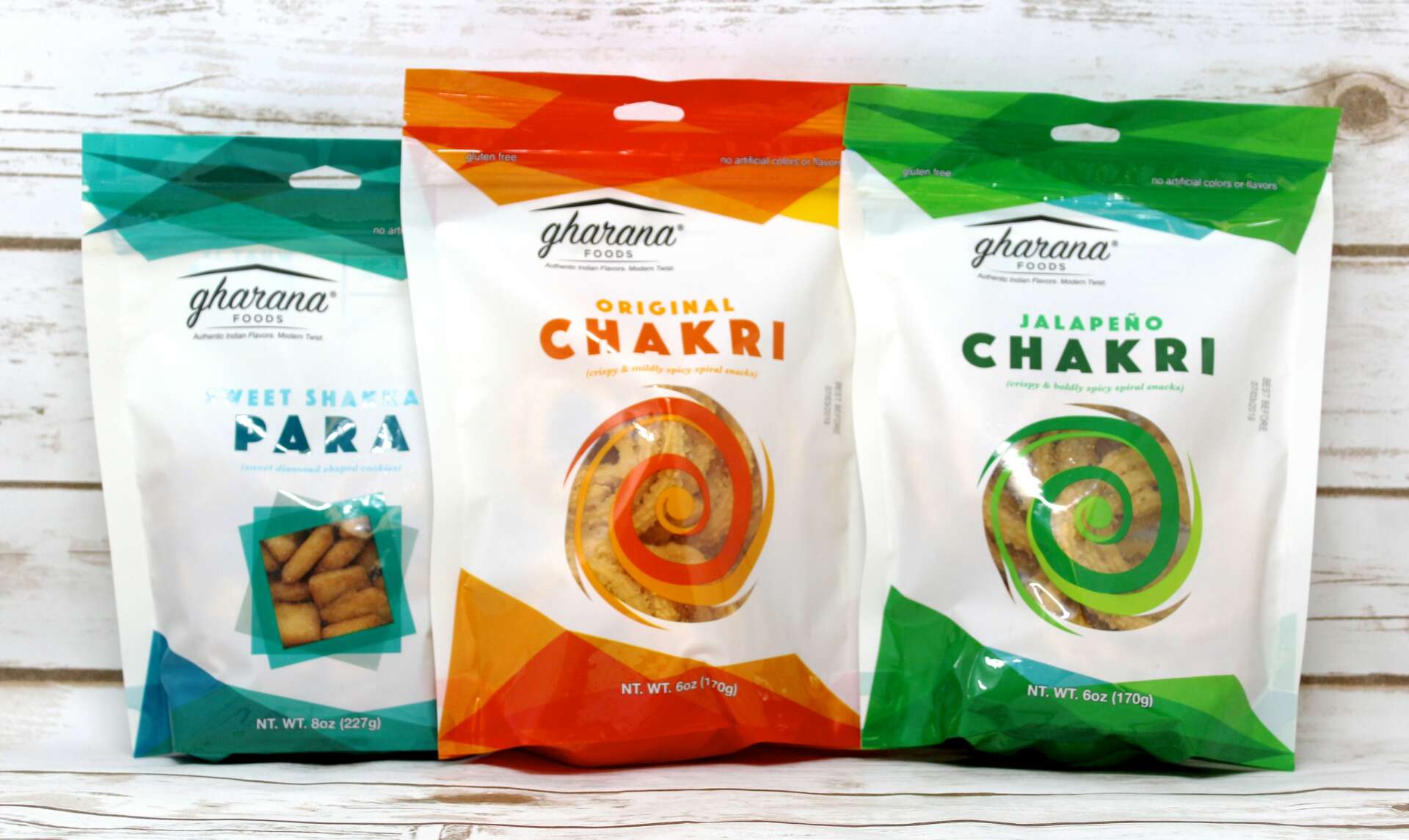
Our 3 main products are:
Original Chakri is our flagship product and is a traditional Indian snack generally eaten with tea or coffee. It is a savory, super crunchy rice flour-based snack with a mild chili spice. It is gluten free. Our customers have also recommended dipping it in salsa or hummus.
Jalapeno Chakri is our twist on the original. We use crushed, dried jalapeno flakes to it a kick. When you first bite into it, you will get the savory, super crunchy texture of the original. After a few moments, you should feel the jalapeno heat creep up the back of your throat that will not be overpowering. Each bite cleanses the palate so you taste the buttery, crunchy texture each time; however, the heat will creep up and build with time. This is a great snack to eat with a cold beer or – like the original – used to dip into something ‘cooling’. It is gluten free.
Sweet Shakkar Para literally translating to ‘Sweet Sugar Pieces’ can be best described as the crispy edges of a funnel cake. It is a dense sugar cookie that leaves a light sweetness in your mouth leaving you craving more. It is not gluten free.
Have any books or other resources had a big impact on you?
For me, this is a two-fold answer. First, my upbringing. Growing up in an immigrant household where you know that money is tight, having a father who had formal engineering education and self-taught on many other trade – fixing cars and all sorts of electronics, plumbing, electrical, etc, and having a supportive mother. This helped my troubleshooting skills and helped me learn to appreciate the support I’ve had, the luck I’ve had, the opportunities I’ve had.
Second, working in corporate America for 13 years and working my way up the corporate ladder. I learned process skills, what it means to have delayed gratification, leadership and management skills, presentation skills, contract/vendor management skills. Without this experience, I do not believe I would have been able to transform the family business to where we are today. One of the biggest lessons learned coming from the software development side – continuous improvement. Identify the big goal you had and take incremental steps towards reaching it. No matter how small, it’s still progress and be appreciative of that progress. Not all goals take 1 month to achieve. Sometimes it’s 1 year, 5 years, etc.
Contact Info:
- Website: https://www.gharanafoods.com
- Instagram: https://www.instagram.com/gharanafoods
- Facebook: https://www.facebook.com/gharanafoods
- Linkedin: https://www.linkedin.com/in/appatel/