

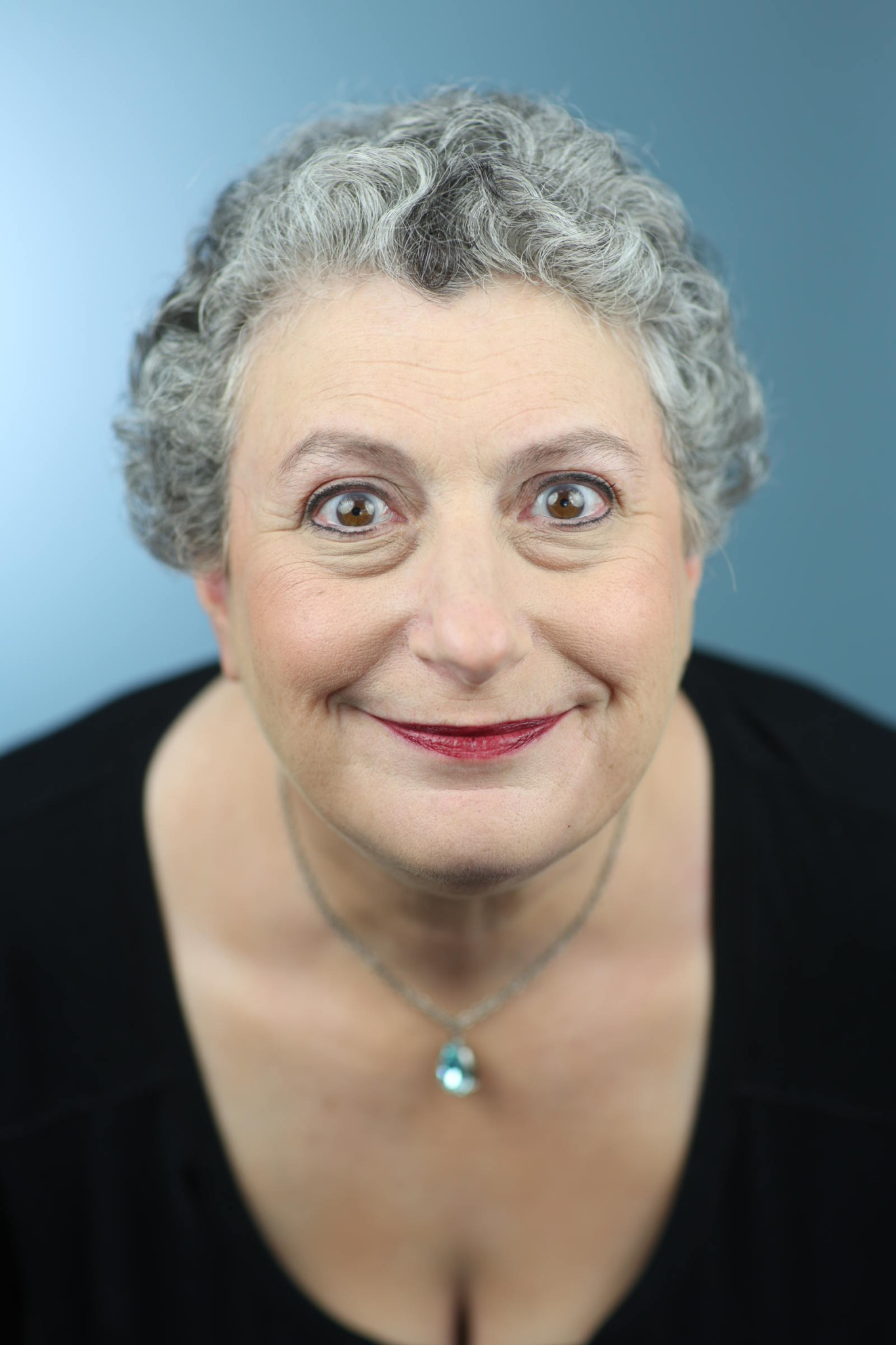

We were lucky to catch up with Amanda Cohen recently and have shared our conversation below.
Amanda, looking forward to hearing all of your stories today. To kick things off, we’d love to hear about things you or your brand do that diverge from the industry standard.
What I do differently from the industry standard is be a woman and be older. The vast majority of comedians working today are straight white men. They deny this…they say they can’t get booked anymore because clubs are only looking for women or POC, but the reality is that they still dominate every show that isn’t some variation of “[women or minority] Night” in the title. Look at almost chain comedy club’s lineup for the year and you’ll see mostly straight white men. Some clubs do better than others at booking a little diversity, but away from the coasts it’s still a challenge.
So I lean into my differences. I do comedy about being older and being a woman. The average audience is half women, but the average club lineup is about 10% women (we make up about 15-18% of the standup industry). GenX is having a bit of a resurgence so I lean into that too. But even among older women I have my differences. I’m single, never married, no kids, and I love it that way. I talk about my individuality, my beliefs, and my experiences as a non-traditional woman in a world that increasingly loves “tradwives” and other abominations.
I didn’t consciously set out to write jokes on these subjects, but as a comedian, your life informs your act, and this is my life. I’ve learned over the years that some of my material is a little much for some audiences, particularly my jokes about being an atheist and being pro-choice. The first bit I wrote when I came back to comedy after an extended break for improv, was a bit about my experiences as a clinic escort and some of the bizarre things we heard from the anti-choice protesters. I’ve since learned to write about less divisive issues, but when I get to do a long set with a good audience, I’ll go back to those darker subjects. Being too dark is one of my weaknesses. I think a lot of comedians have a dark side and I’m not good at hiding mine until an audience gets to know me. There’s a lot of comedy in darkness.
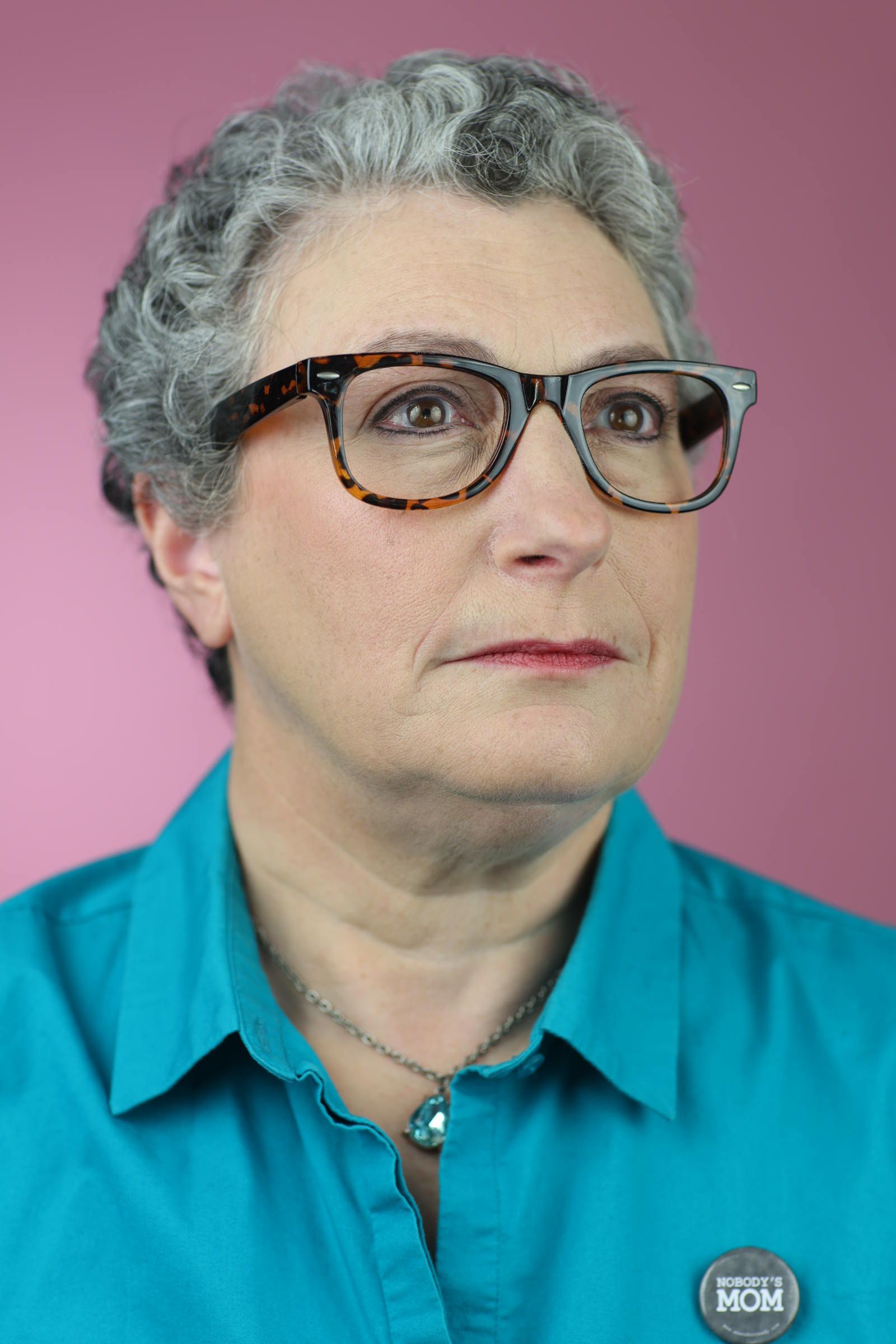
Amanda, before we move on to more of these sorts of questions, can you take some time to bring our readers up to speed on you and what you do?
As young as 5 years old I remember hearing my parents’ comedy albums. I didn’t know what most of it meant, but I loved the dynamic of a single person speaking and an audiences laughing. I learned many years later that my parents bonded over Lenny Bruce, and we some of his lines are still part of my family’s language. Around the age of 8 or 9 I saw a rerun of the first episode of Saturday Night Live. The only thing I remember from it was the man in the three-piece-suit and the tshirt standing on the stage runway and imitating bacon sizzling and saying things that made the audience go nuts. A few years later I learned that was George Carlin. I was obsessed…I bought his albums at the used record store (when my friends were discovering music) and listened as much as one could listen to tapes at the time (portable audio was barely a thing). I memorized hours of Carlin, learned the rhythms and the punch of the punchlines. I remember hauling firewood into the basement regularly and listening to Carlin, Monty Python, and a few other comedy albums. I also listened to a local radio comedy hour every Sunday that played clips of mostly standup, all going back decades. Every week I would record the show and write down the name of each comic during the show and test myself at the end when the listed all the artists in the clips. Then I would go back to the used record store and see who I could find.
So I was well-steeped in comedy history when I decided I had to try it in the high school “cabaret.” I didn’t know how to write it yet, so I did a Carlin routine for the audition, promising to write something original if I got cast, and while it killed, the director wisely told me to come back next year with an original act. A lot happened that year, including getting my driver’s license, so that was the main subject of my act for the next audition, and I got into the show in my senior yer. That went pretty well, so all full of myself I went to the local monthly comedy open mic at the age of 17 and died the death I deserved. An audience of parents and fellow teenagers was not a real comedy audience. Call it a soft launch.
I kept going back to that open mic all summer, til I went to college in Pittsburgh. I still went to the mic when I came home on breaks, and found other open mics that would let me perform in Pittsburgh (mainly student showcases and one comedy class at a local club). I was still pretty bad, but I had a few bits that would eke out just enough laughs to make me starve for more. I was in college as a writing major but had to take other core classes, including a chemistry class. My notes from that class are a mix of molecular structures and little setlists I was trying to memorize for upcoming open mics. Eventually the local open mic put me on the booked showcase they did before each mic, and then I was one of the boys. For a few years I was the only woman doing comedy in Pittsburgh. A couple others came and went, but I was the one clubs called when they needed a woman on a show. I got a booker in Cleveland and some weekends I went out on the road, usually as an MC. That’s unheard of today…usually the MC is a local comic, and only the headliner and sometimes feature were from out of town.
At the same time I found a way to start writing about comedy shows for local newspapers. It was an excuse to interview every comedian I could get my hands on. The articles only slightly reflect what a comedy dork I was. I was also working as a producer at a radio station after college and took every opportunity to book comedians on our talk shows. I also joined an improv troupe called The Susquehanna Hat Company. I was unofficially in charge of booking and I got us a few paid gigs. I really loved doing improv and after 10 years in Pittsburgh. I was still doing standup, but I loved improv and still had this dream of being on Saturday Night Live. I had heard of this thing called Second City and dreamed of going there, so eventually I moved to Chicago and got into the Second City Conservatory. This and finding work took up a lot of time, so standup just faded away. This is one of my biggest regrets. I was in Chicago but the boom of the 1990s was over. I might have gotten better in local clubs but I was discouraged by the way new comics had to start from scratch when they moved to a new scene (which is still true today). I didn’t have the patience anymore, and I felt like what I wanted to talk about and what audiences cared to hear were rapidly diverging.
Most improv students will tell you that improv classes are a scam, and they sort of are…we all go in expecting to be the next Gilda Radner and slowly learn that the theater identifies its favorites early on, so by the time you get to audition for the touring company (gateway to the mainstage), the chances of success are slim. I was already a few years older than most of my classmates and honestly not as funny as I thought I was.
Then came the off-years. I still did improv and wrote about comedians, but my standup dreams faded. I still loved comedy and saw many amazing comics as often as I could, but it wasn’t an art I practiced. I belonged to a small theater group and enjoyed doing shows with them. When they started a burlesque show, all my friends were in it but I didn’t have the balls to do it, so I had a few character acts I occasionally did on the show. The biggest name to come out of that show was was Kumail Nanjiani, who probably wouldn’t know me today. Years later when another friend started her own improv troupe, the Better Boobie Bureau, she asked me to host. Something about holding a microphone and talking to an audience struck me deep in my brain. It was fun. It was right.
In September 2015, I was able to see a comedian I had long admired, Dana Gould. He was also from Massachusetts and I had seen him somewhere when we were young, and he’d always stuck in my head as a next-level comedian. I was devoted to his podcast, and when I met him after the show we found out we know some of the same dead people. I’d almost forgotten comedians were human. Driving back from that show, I listened to his podcast. He had just performed a keynote address at the Just For Laughs pro-track. The theme of the address was “You’re already doing it.”, and one thing he talked about was that despite the crushing reality of the cutthroat comedy industry, all you had to do to be a comedian was pick up a mic and walk onstage.
I started writing and returned to comedy in October 2015. In 2017 I moved to LA and I’m still going!
Is there something you think non-creatives will struggle to understand about your journey as a creative?
It doesn’t stop. There are no vacations, no breaks, no walking away from creative work. You may take some time off, but part of the creative mind is always grinding. Carry a notebook, or write notes on your phone. You don’t have to work all of it out when you think of it but be ready to save any fleeting thought for later, in case it can become something bigger.
Most of us can’t do the 9-5 thing. I can’t imagine going back to a job where I have to drive to an office every day, arrive when everyone else arrives, leave when everyone else leaves, and not think about it the rest of the time. I don’t make a living from comedy yet, so I do PowerPoint for individual clients and a few agencies. When I get a new project, I usually work on it til I fall asleep or finish, whichever comes first. Sometimes I finish that “40 hour week” in three days because I don’t work human hours.
Comedy is not human hours either. Until you reach the level where they fly you everywhere, you’re driving hours upon hours at a time. The time on stage is the fun, rewarding part. Even when they do fly you, the ratio of travel to “work” is ridiculous. You either adapt or quit. If the idea of driving six hours, doing a half hour show, then driving back makes no sense to you, then standup is not for you.
Learning and unlearning are both critical parts of growth – can you share a story of a time when you had to unlearn a lesson?
Comedy is not a meritocracy. You can work your butt off for years and get really funny, but unless you have a look, style, and/or attitude that match whatever is happening in the world at that moment, it doesn’t matter how good you are. You can crush every room and still never get a TV gig. You can win all the contests and still not be funny enough for chain clubs. If you know someone who can “walk you in” to clubs, that helps tremendously. Short of becoming a major headliner, the dream is to be “adopted” by a headliner who brings you out on the road to open for them regularly. There are comics I consider to be brilliant who rely on those kinds of bookings to make a living. No shade at all…I wish I could do it.
Also, you have to be true to yourself. You can’t write comedy based on what you *think* they want to hear. I tried that briefly and it was a disaster. Find a way to take what’s funny to you and make it funny to audiences. Not every audience is going to love you, but the better you get, the more audiences will like you. It’s a balancing act if you don’t have a “normal” sense of humor.
Contact Info:
- Website: https://www.amandacomedy.com
- Instagram: amandacohen27
- Facebook: https://www.facebook.com/amandacohencomedy/
- Linkedin: https://www.linkedin.com/in/amanda-cohen-ppt-comedy/
- Youtube: https://www.youtube.com/@amandacohen27
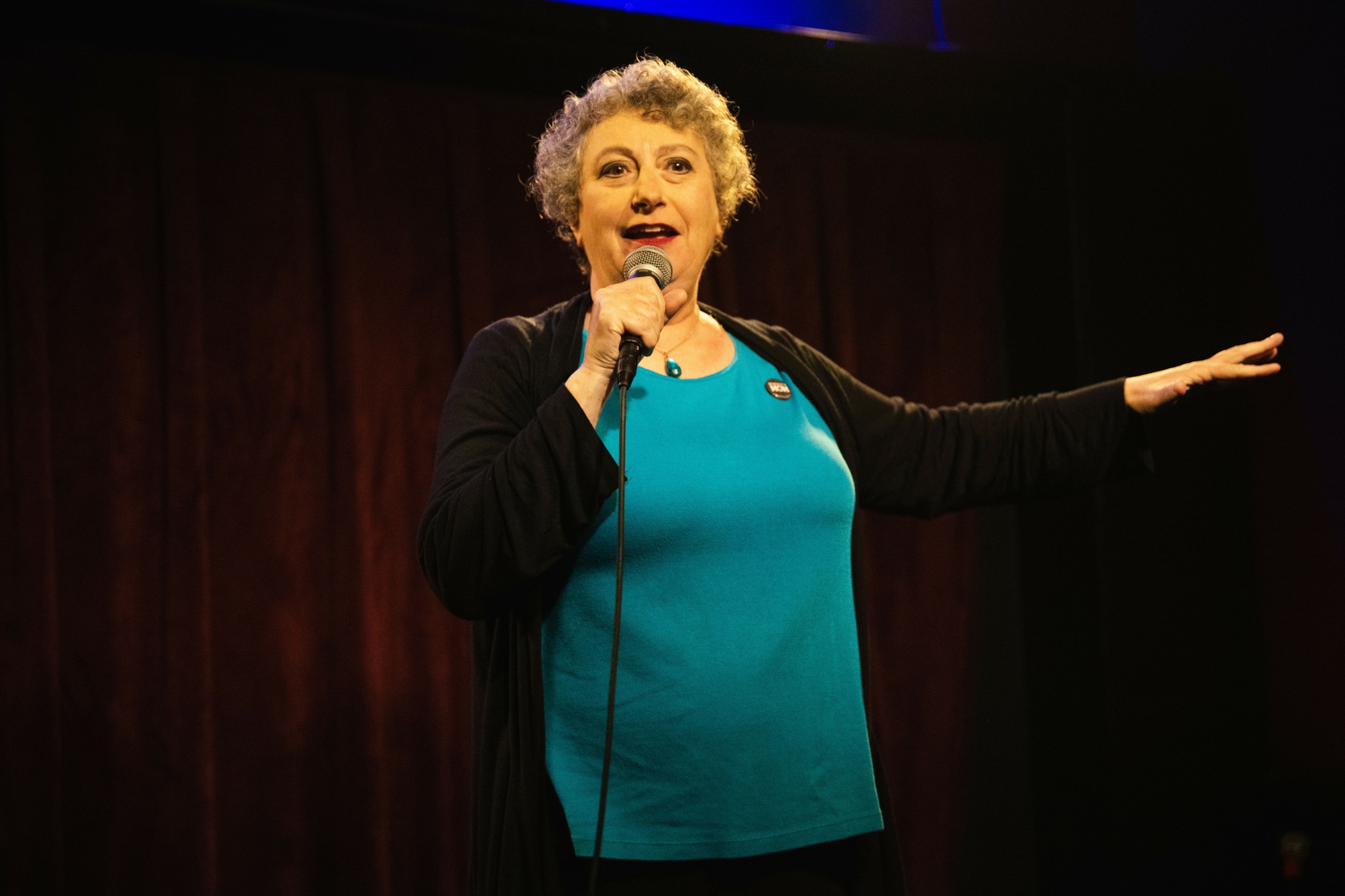
Image Credits
First two photos by Keida Mascara, performance photo by Michael Tari