

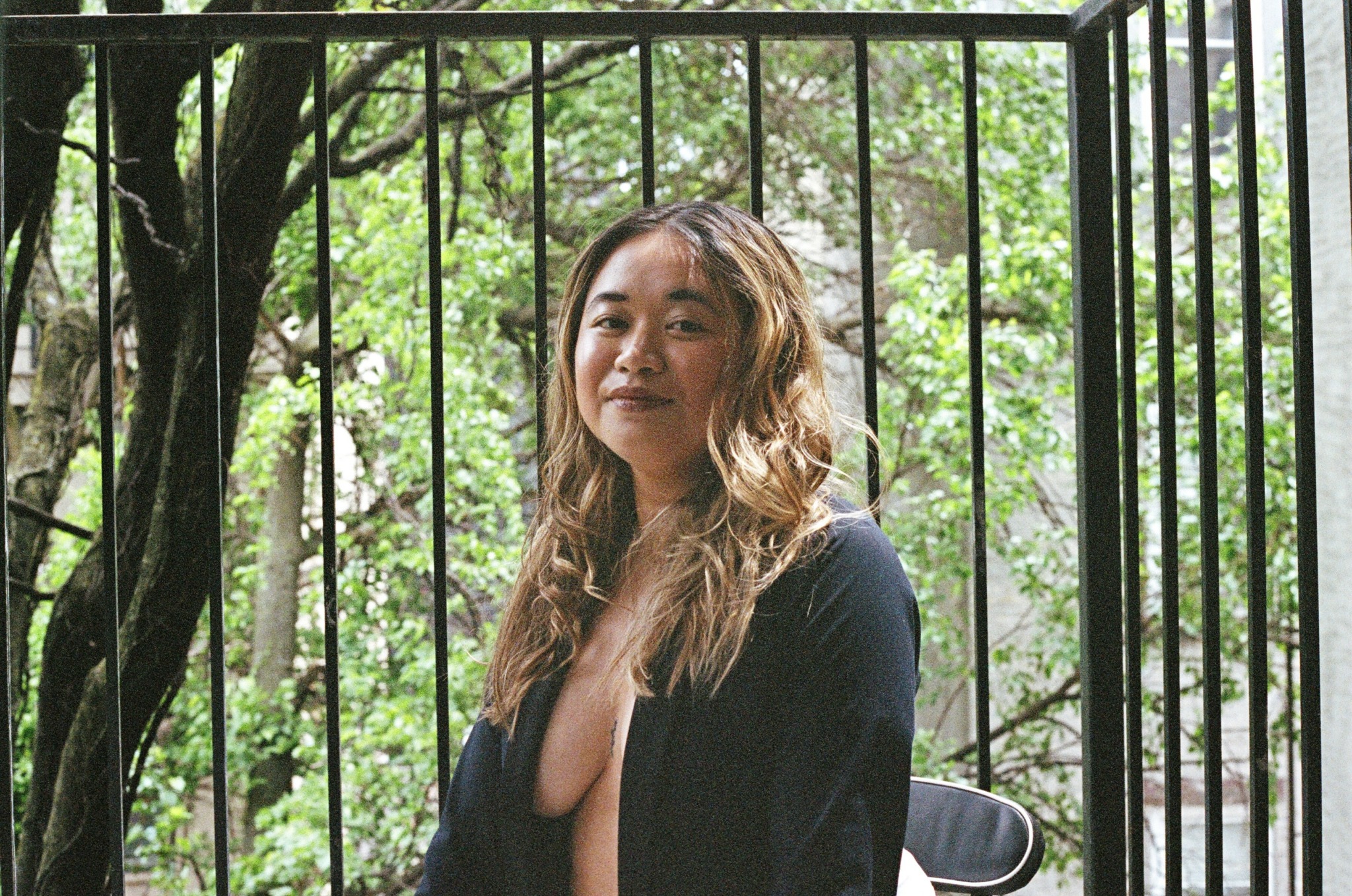

Alright – so today we’ve got the honor of introducing you to Amanda Centeno. We think you’ll enjoy our conversation, we’ve shared it below.
Amanda, appreciate you joining us today. We’d love to hear about the things you feel your parents did right and how those things have impacted your career and life.
My parents are amazing people; the way that they have stayed committed to themselves as individuals and seek to be of service to their community is unparalleled.
The things they have done right are countless, but I will narrow it down to three main ones.
1. They got divorced. I know this may not seem like a typical answer, but the fact that they committed to providing me with an upbringing full of love and peace in fraught circumstances is the reason I believe in love, in people’s capacity to change, and in the unconventional. (Coincidentally, those are also the reasons I believe in art).
Watching other friends grow up as collateral in their parents’ divorces (or in their parents’ loveless marriages), I know what a difficult commitment it was for my parents to make as the one they held for years was severed. As they entered into different romantic partnerships and my sister was born, the road of integrating everyone was not always easy. But my dad celebrated his bachelor birthdays with my mom, stepdad, sister, and me. My mom and my dad’s girlfriend greet each other with laughter, catching up about the Filipino community gossip. My mother saved a box of memories between her and my father for me to look at if I ever want to; my dad and I kept it safe and unopened as we organized my childhood mementos to keep and give away in the wake of selling my childhood home.
In a second-grade speech I gave my friend Nicole during a pretend manicure, I lauded divorce as the best thing to ever be invented. You get two of everything: two bedrooms, two allowances, two sets of gifts on holidays. Though I would never be so glib today, what divorce did afford us as a family was abundance: an abundance of people to love and support each other as I grew up, an abundance of places to call home, and an abundance of possibility that surrounded any decision going forward: that whatever the circumstances, there was a way to include grace, forgiveness, and the potential for something new to grow. Mistakes as fertilizer, mistakes as an essential part of the garden.
2. They genuinely encouraged me to pursue what I was passionate about professionally, despite their fears. As an Asian-American daughter of two doctors, it came as a surprise to people around me. The stereotypes (and sometimes truths) around the pressure Asian-American children have to fulfill certain financial and practical criteria when choosing a career gave an air of admiration and surprise when I would tell friends, teachers, fellow actors, that I was totally supported in my decision to lead an artistic life.
As I mentioned, both of my parents are doctors; one was called to it (my mother) and the other pressured into it (my father), which definitely framed how they supported my decision.
Because my father did not know what he wanted to do, he always encouraged me to follow my passions. Though I am not a parent, there appear to be choice points where a parent can either perpetuate the limitations they were subjected to onto their children, or encourage them to continue where they left off. My father has always given me every opportunity to surpass him, while simultaneously growing himself. He is someone I deeply admire and seek to emulate in emotional intelligence. When it came to my career, his reticence to ask himself what he really wanted translated into supporting me in whatever I wanted. He has supported my by word and action throughout my entire life.
My mother was definitely scared of me becoming an actor. She cried when I got accepted into NYU, not as a response to my success, but as a response to her own fear: how would I make money, would I make it out there after, did I even know how to act (this was a valid question – I had only ever done musicals and never had substantial roles). But she knew what it was to find her purpose, to love the life she lead professionally; the same seven year old girl who gave the fish in the pond by her house “surgeries” was the woman who treated patients at the same allergy practice since I was in kindergarten. The stability in her life and the value she placed in it so contrasted the great unknown of an acting career, but she knew that our differences meant that we would of course seek different types of lives. And her belief in herself transferred into her belief and pride in me.
3. They trust and celebrate the person I am. Throughout my life, both of my parents have encouraged my intuition, interests, and intelligence – without ownership over who I should be in their eyes. Even when that was farther away from the person they raised.
One big component of this is Catholicism. When I was growing up, I was Catholic, and I really loved it. I liked going to church, I loved having a personal relationship with God, I believed that my talents were an extension of his mission and my existence was a ritual intertwined in his purpose. In college, I distinctly realized that most of the things I loved about religion were found in theatre, and I could not condone the actions of the Catholic Church as a whole. To live authentically, I could not take that belief system with me through life any longer, and I found other outlets to express those parts of me
There is a give and take here; I go to masses and events in support of my parents, who have both grown even more religious as they’ve aged. I care about the structures that make up their lives, just as they care about the structures that make up mine. We seek to infuse each other with faith and fortitude, no matter what, and though it used to be a hard thing for me to do, I developed a security in my own beliefs that allows me to support them in theirs. There are ongoing components of this story; as I get married and raise a family, there will be other conversations to be had about where that tradition will live. But on the foundation that I have always been lauded for my inner truth, I know that those conversations will be worthwhile and expansive.
Amanda, before we move on to more of these sorts of questions, can you take some time to bring our readers up to speed on you and what you do?
I am an actor who got my start in the school musicals, as many people do. I always loved performing, but in college, I moved from being a musical theatre actor to the beginnings of my journey as a creator. A journey I am still navigating and moving through at this moment.
The pandemic really changed how I thought about my artistry; I went from being a completely reliant actor, despite my cross-disciplinary training at NYU via Playwrights Horizons Theatre School, to an actor who just wants to be an actor at times – and also wants to write, eventually direct, maybe even program an entire season of theatre. I always knew that I wanted to be more than an actor, but until the pandemic halted the audition grind, I hadn’t really given myself the space to make my own work, or ask myself what kind of work I wanted to see.
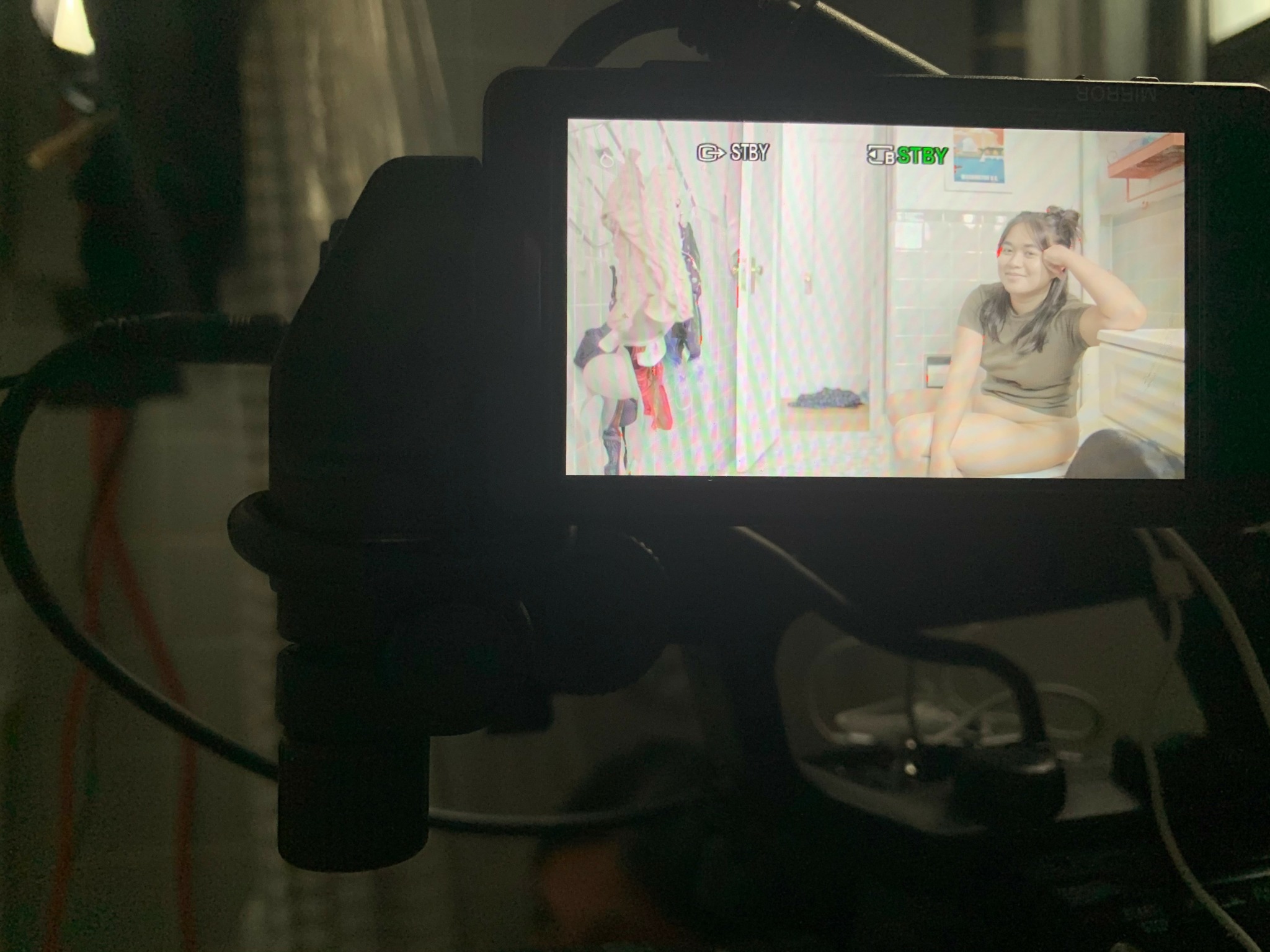
Since the quarantine, I have both expanded the artistic spaces I work in and brought myself back to places I left behind. I wrote my first short film, Disaster Panties, and shot it with my friend Alisha in my apartment; it went to a couple of festivals. I honed in on writing and auditioning practices that have wavered in consistency, but at this moment, feel alive in me. I started writing prose again, went back to tap dancing class. And maybe someday soon I’ll sing.
Right now, I have two short film projects in preproduction that I am looking to film next year. I have a community of actors and collaborators at The Mercury Store that is a consistent stream of inspiration and fun in my life. And auditions are always peppered in the mix. At this moment, my focus is closing the loops on projects that I’ve been working on – and staying receptive to all of the opportunities I don’t even know about yet.
What can society do to ensure an environment that’s helpful to artists and creatives?
Fund the arts. Both privately as individuals with traditionally steadier financial lives and publically through our government. Art takes time. Art takes support. And art is an industry where everyone is a consumer, both actively and passively. We are in a moment where people are creating from depletion, from scarcity, from people-pleasing, skimming the surface. We are faced with the reality that artists are often privileged; they are afforded the advantages of time and resources, and can structure their lives towards calculated risk, free from the industrialized existence so many people must take on just to get by. I want to live in a world where artists can be nourished as individuals and bring our stories to life from full cups, where their stories are not desperately seeking their audiences on a time crunch, but allowed to grow and change and shift as they do. I also think that we should encourage more funding for arts outlets for people who consider themselves “non-creatives.” Art is not just for artists – or it shouldn’t be. The separation between artists/creatives and the rest of the world ignores the fact that the emotional and creative skill sets artistic activities foster exist in other industries and endeavors – and that every person has the capacity to benefit from these skills. We should invest in activities that are designed to bring people together, to express ourselves, to build new things – our world is in desperate need of people feeling understood. I think a stronger connection between “creatives and non-creatives” will not only promote art that is aspirational for us as a society, but a society that we feel equally invested in and sourced by.
What’s the most rewarding aspect of being a creative in your experience?
The most rewarding part of being an artist or creative is the community aspect of it: the conversations created, the act of being seen and understood, the moment where you get to step out of time and come back into step with time, bequeathed with a renewed sense of the world – and ultimately, the moment where you get to share that with someone else. From an industry standpoint, those come from products: movies, art exhibits, theatre shows, dance pieces – you pay to play. But the potential for this exists outside of these sanctioned walls – and often, those are the most rewarding interactions. When you can remind a fellow artists, a secret creative, your mom, that we can bend time and appreciate the world and rewrite this story that’s been replaying in our psyche since we were twelve. Artists are not the owners of those skills – but they have the potential (I might even say responsibility) to remind those around them of possibility and curiosity at as many junctures as possible.
Contact Info:
- Website: https://www.amandacenteno.com
- Instagram: amandangeline
Image Credits
Joshua Lacle, Buck Lewis