

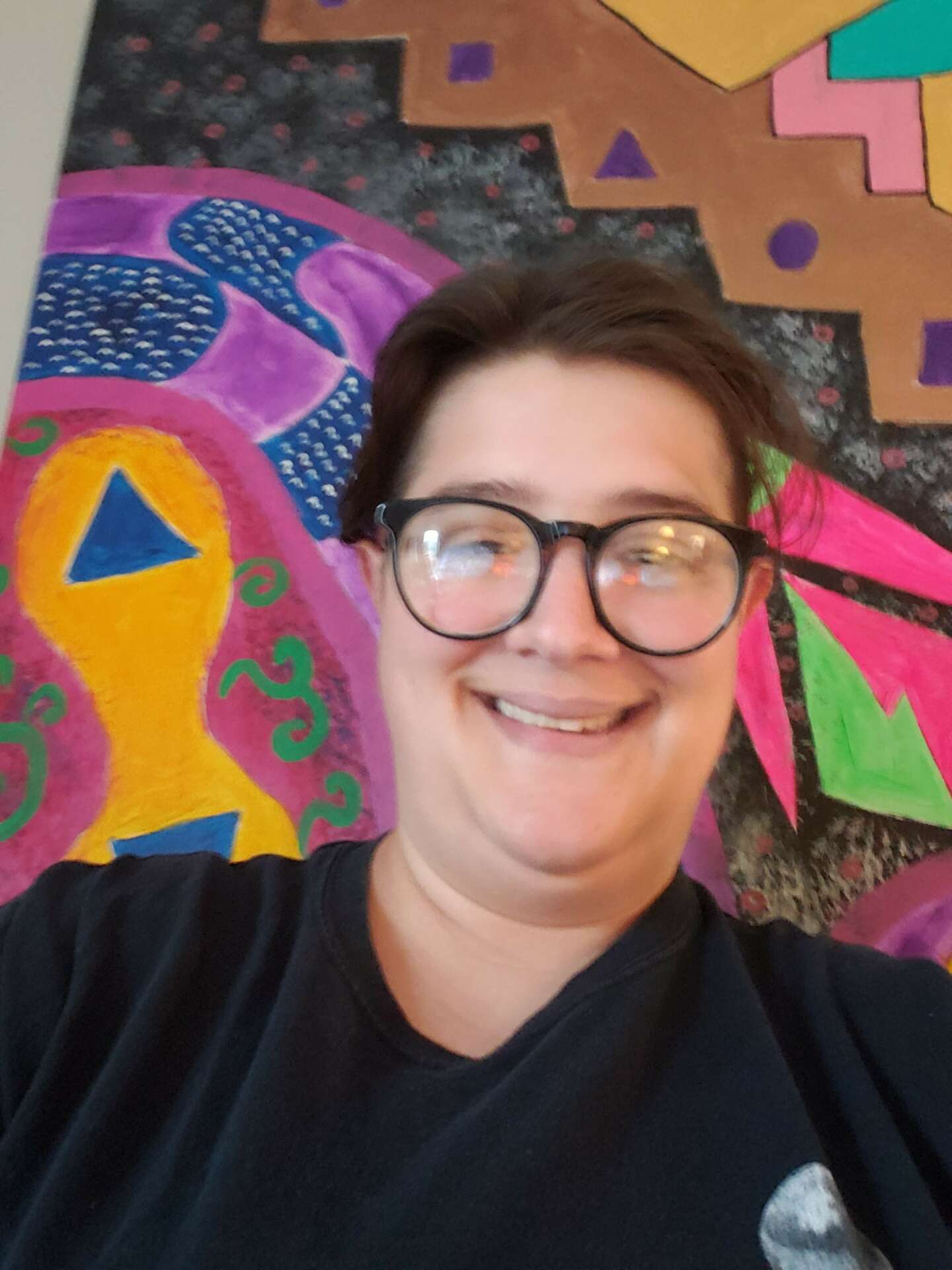

We were lucky to catch up with Ally Manno recently and have shared our conversation below.
Ally, looking forward to hearing all of your stories today. What’s been the most meaningful project you’ve worked on?
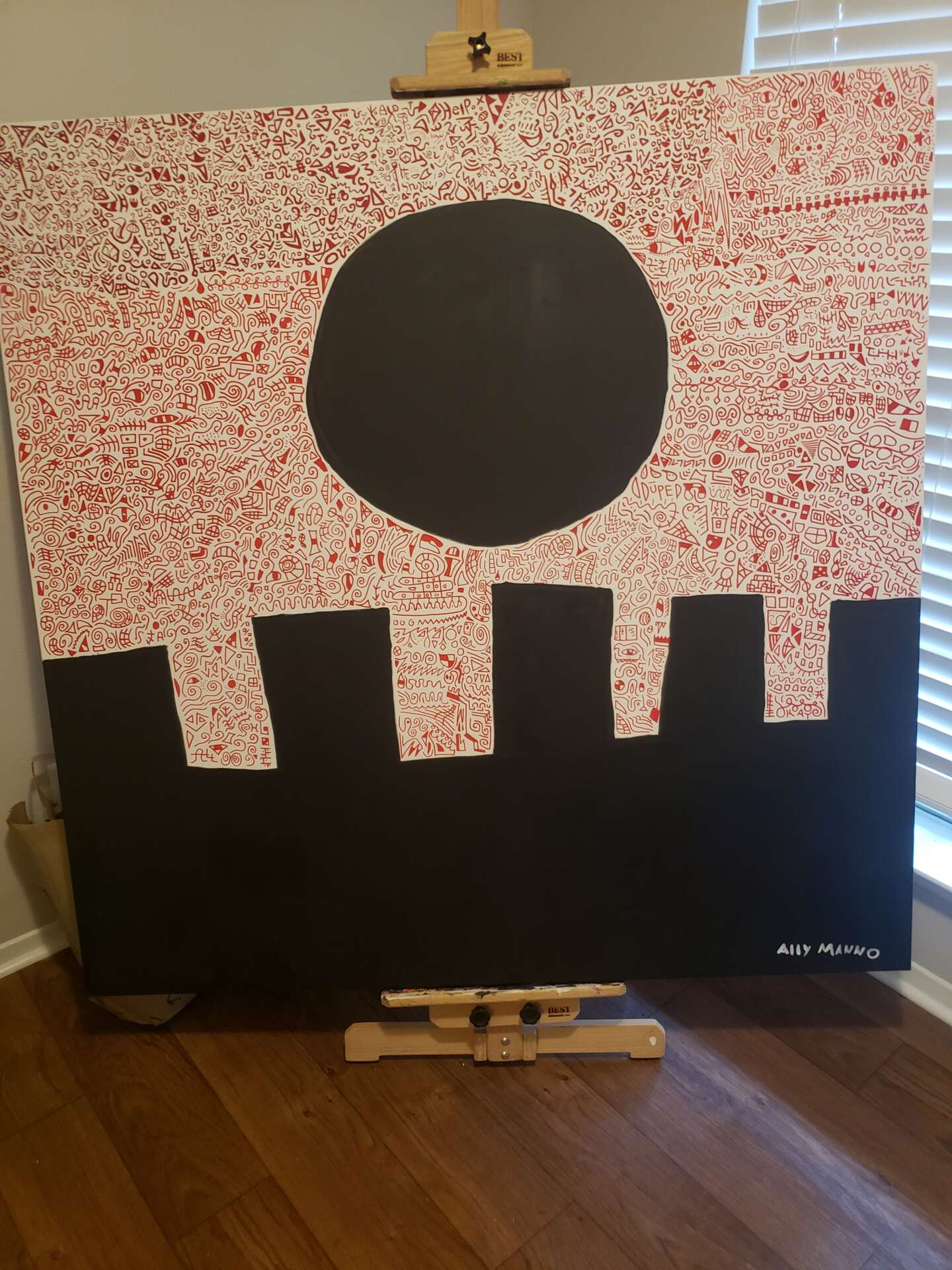
The most meaningful project I worked on was also the hardest, which is what gives it its meaning. I painted a fairly big painting, 54×54 inches, and it is of a black circle with black blocks going up and down, and tons of minute red details hand painted painstakingly. The backstory of this particular painting isn’t all that exciting; I just considered it a challenge piece for myself. I have always wanted to paint larger pictures on bigger canvases, and I simply like the way the shapes flow over and under each other in an organic and natural way. To be honest, I gave up painting it with a traditional paintbrush and opted for a paint pen to fill in the rest of the details, but even so, that painting took over a year and a half to finish. As far as context is concerned, the artwork itself is the context of its own meaning, given how incredibly difficult it was to have the willpower to complete something of that magnitude. Though the painting itself was simply started as an ambitious challenge, I am proud of myself for reaching that goal and being persistent enough to see it through to the end. There are also a lot of hidden Easter eggs within the painting; for Undertale fans, Flowey is there saying, “Howdy!”, there’s a picture of a person in a dunce cap saying “sorry” (because the paint pen and the actual red paint don’t match), and there are many words spelled out in there scattered throughout the painting. The rest is just the artist equivalent of gibberish that sounds like actual speech, due to the way the shapes and lines organically flow off of each other.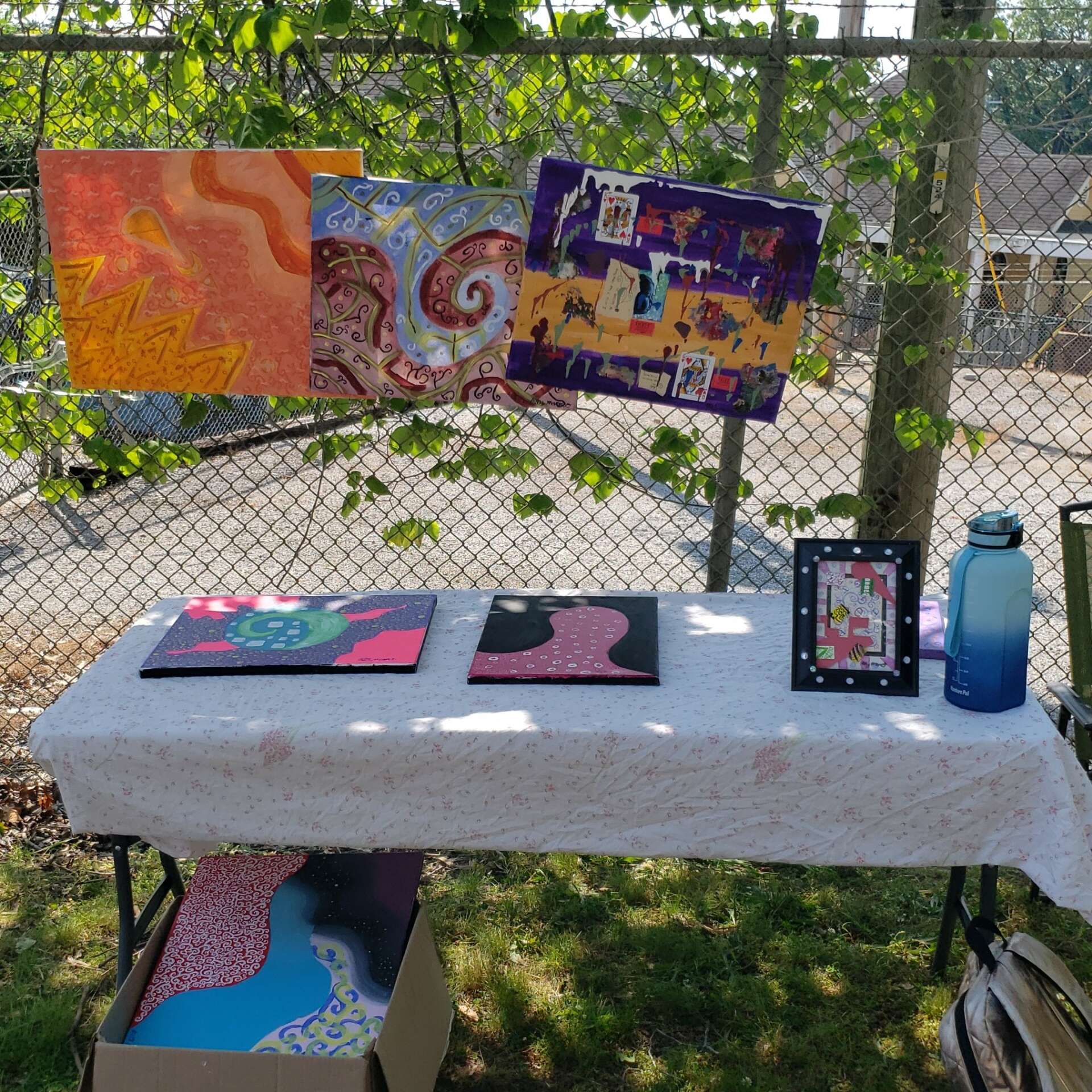
Great, appreciate you sharing that with us. Before we ask you to share more of your insights, can you take a moment to introduce yourself and how you got to where you are today to our readers.
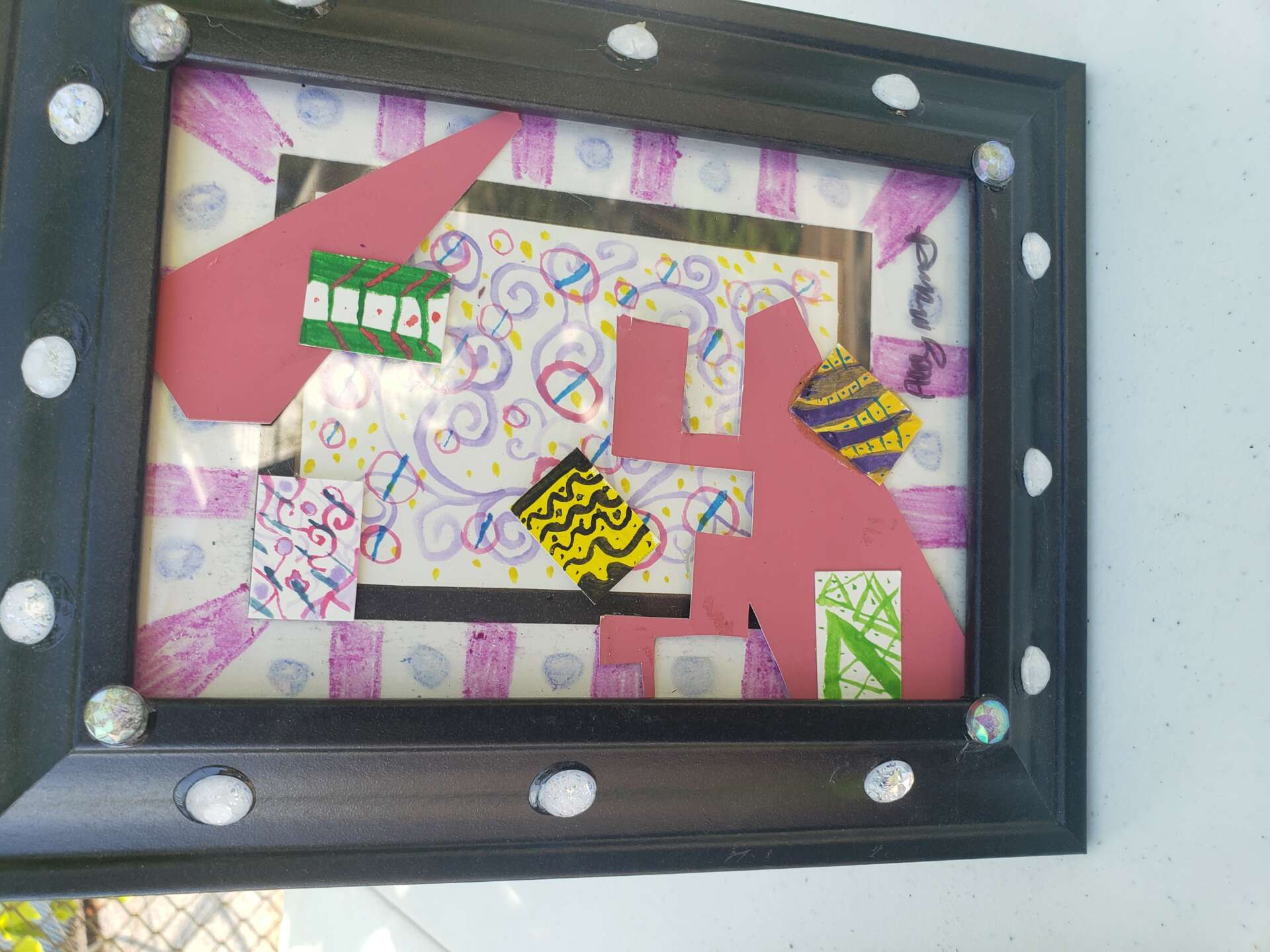
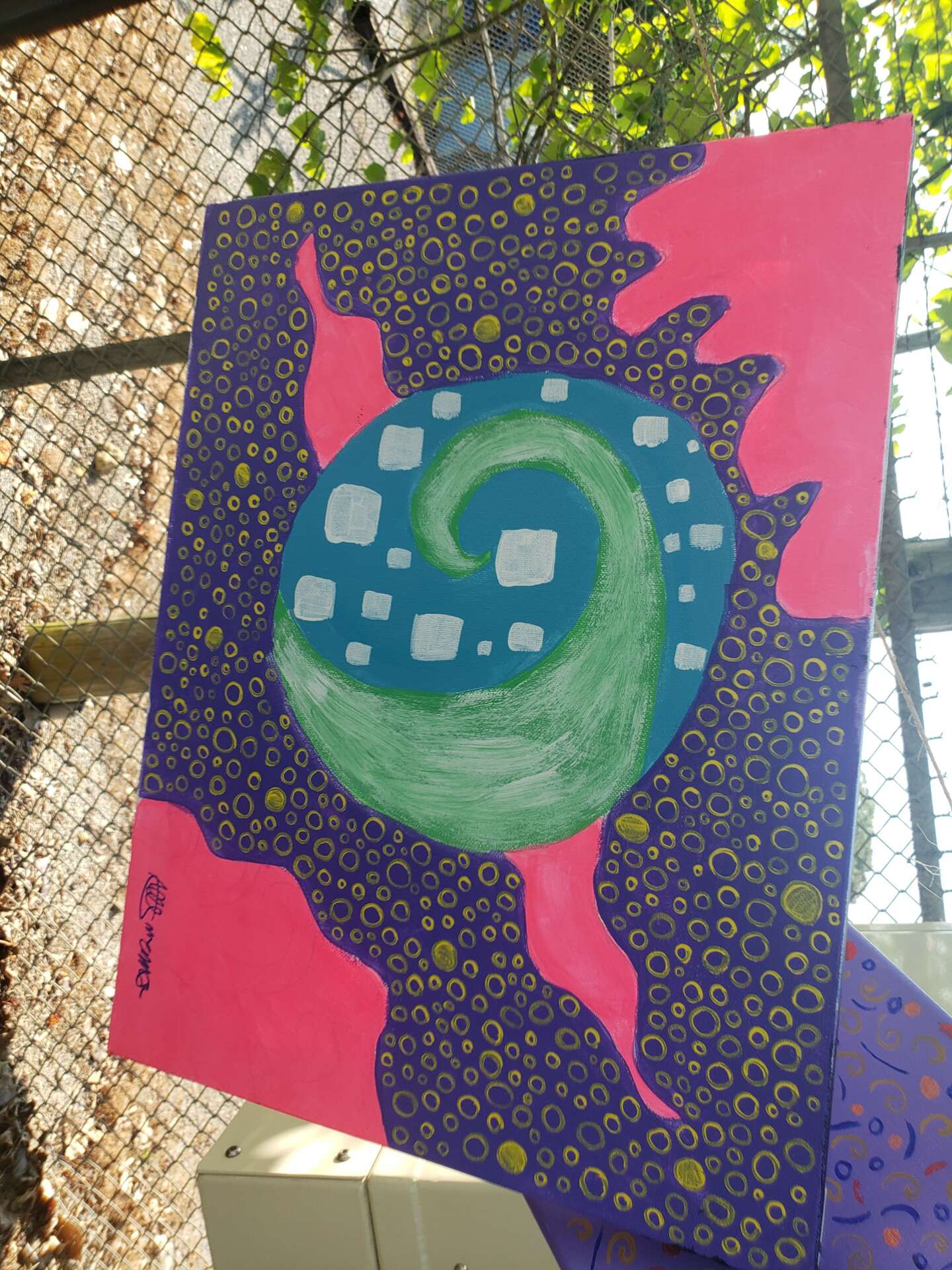
My name is Ally Manno, and I am a local artist in Chattanooga. I am autistic and I also teach sensory/ beginner friendly abstract painting classes at the Hunter Art Museum. I have been a self taught painter for many years; I have been painting since I was at least 15 years old. I specialize in abstract acrylic paintings, and the way I like to describe my motivation and style of my art is that it is similar to how one would arrange furniture in their favorite room. Sort of Feng Shue. I am most proud of my accomplishments at the Hunter Museum because I love it when people are open to learning new things from me, and I equally love teaching them in return, despite not having the most formal education in this particular field. As far as my brand goes, I do not have any particular one except that I may be distinguished from others due to being autistic. But with the internet the way it is these days, that may not be entirely unique anymore. However, I am actually more well known within my circle for being a classical singer. I sing in the Chattanooga Symphony Orchestra Chorus during its season, and I may want to branch out and do more exploring of my musical talents in addition to what I know now as a hobbyist artist.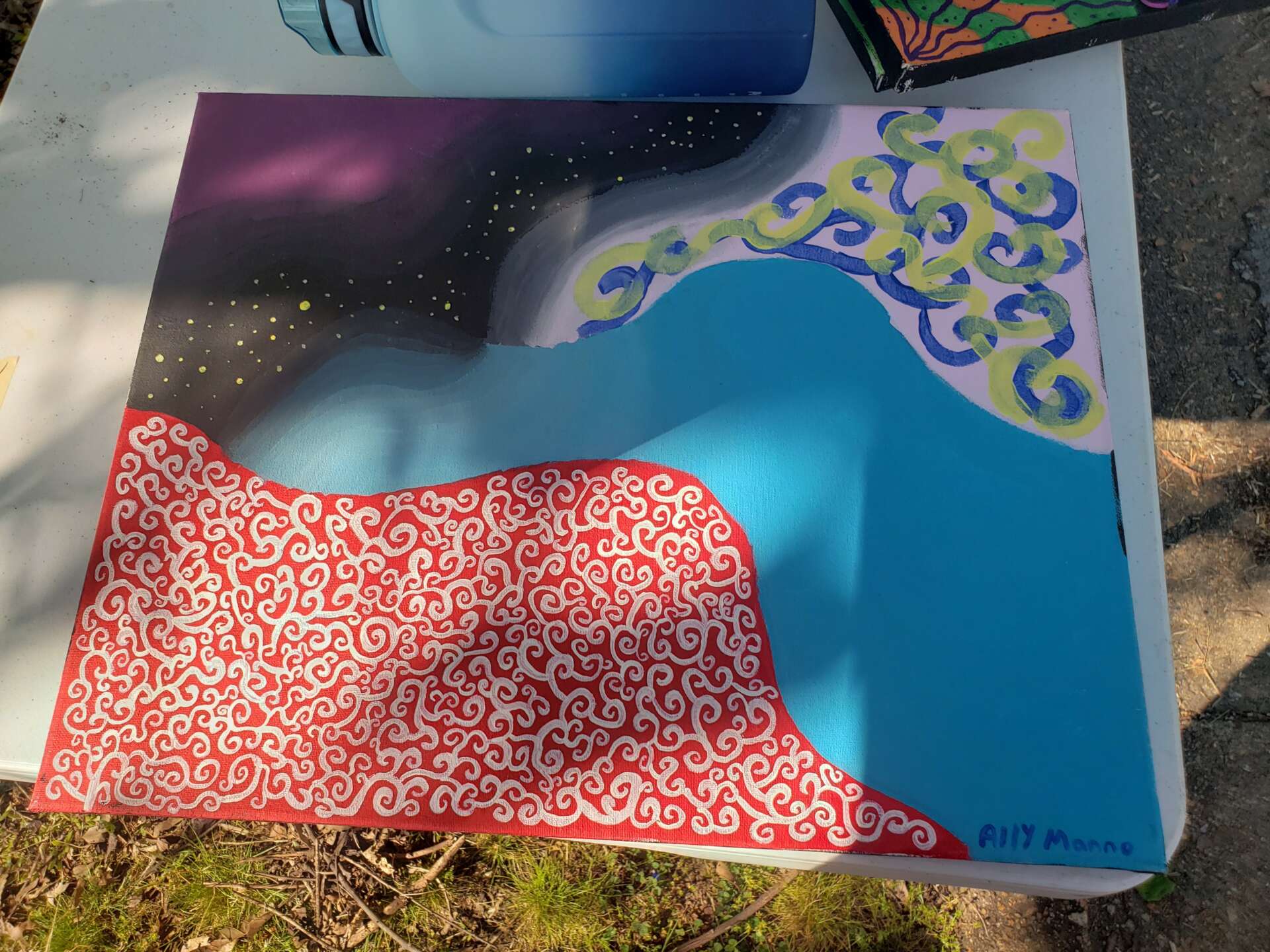
In your view, what can society to do to best support artists, creatives and a thriving creative ecosystem?
Society, particularly American society, is grossly unjust within its education system when it comes to encouraging critical thinking and creativity. I am a former assistant teacher in a preschool, and it’s tragic to know that nearly all of those children will be inundated with an education that will leave them indifferent to the arts at best. The same goes for physical education as well. What I’ve learned from my experience as a teacher’s aide is that the early years really do matter much more than many people think it does. In my personal opinion, anti-intellectualism has been on the rise as a direct response and rebellion against the present education system and the academic elite, who typically frown upon different and dissenting opinions without much thought as to why these ideas exist. If we want to support the arts, we have to address what’s going on in our public schools and universities. We have to let people come up with “crazy” ideas and let them choose their interests, and we ABSOLUTELY must make reading fun and enticing again. It’s very tragic and pathetic that so many people, myself included, don’t read books much anymore outside of an academic setting. Hot take: I don’t think an education only consisting of reading “the classics” is as enriching as people think. All old books were once the new, hip, and popular sellers at one point, and while it is important to learn why they are timeless, timelessness in and of itself is not enough to justify only reading those things. In order to regain an interest in reading, I’d say let the students vote on a particular book, “classic” or not, and have meaningful discussions based on the themes within them. You can only write so many book reports about the same thing over and over before you get bored and frustrated with the process. Sorry for the random tangent. It just annoys me when people scratch their heads wondering why people don’t appreciate intellectual and artistic pursuits, when the same people in charge of them snub the “commoners” who are rejected by the very education they so often seek.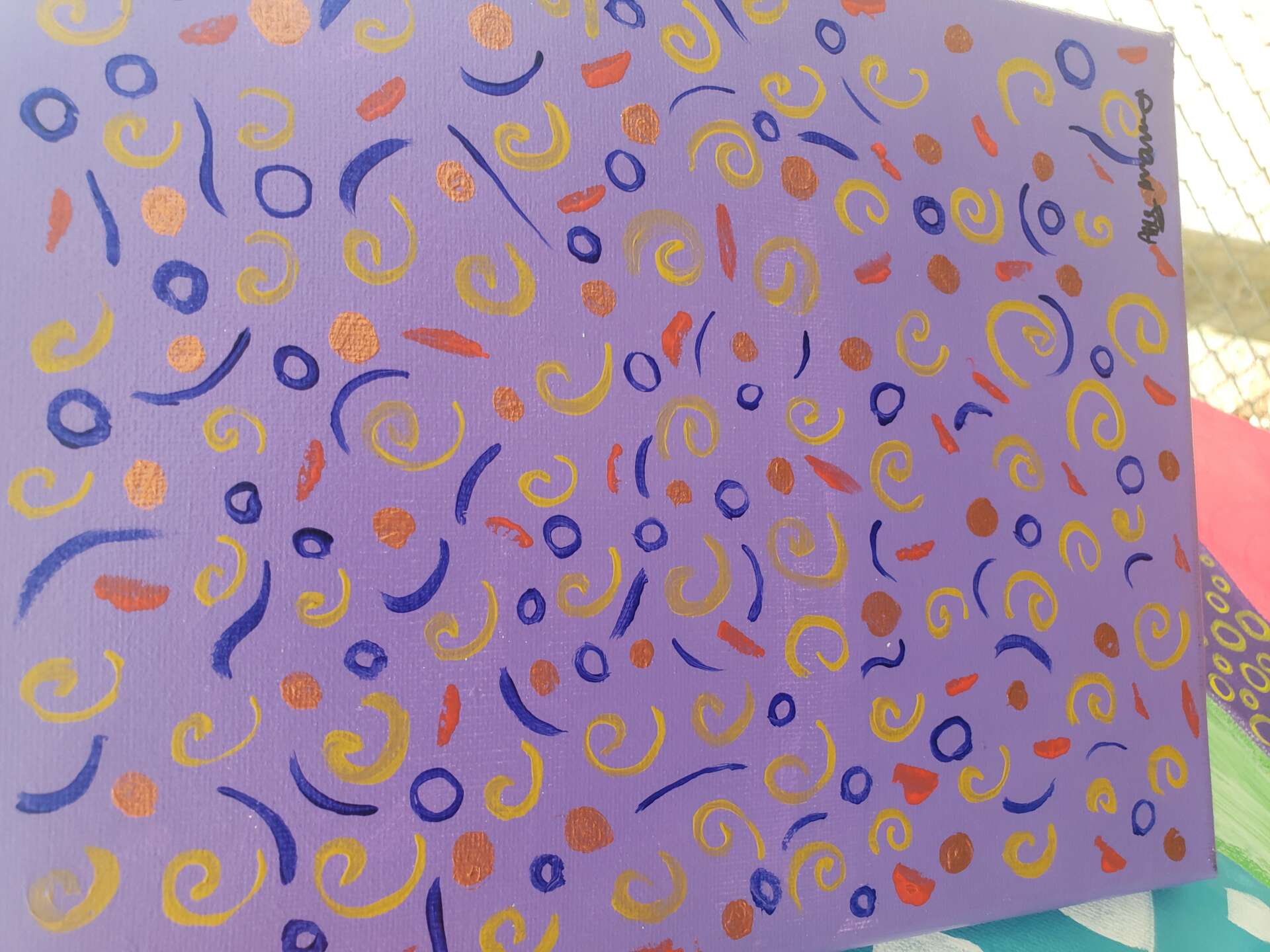
We often hear about learning lessons – but just as important is unlearning lessons. Have you ever had to unlearn a lesson?
This is a lesson I have not fully unlearned, but I am making headway into it: I am unlearning the opinion that I am incompetent and inferior. Having a disability such as autism makes many people look down on you and think they are better than you simply because they are neurotypical. I haven’t experienced much discrimination yet, but I know I will in the future. I’ve been trying to over-compensate for many years to deflect that notion by being fiercely independent and feeling guilty if I ask for help from other people. Most disabled people are viewed as burdens, and whether people intend to be this way or not, they often infantalize disabled people, most notably those with autism or other developmental/intellectual disabilities. But at the same time, even with all of this going on, I always ask myself the same question: where does bigotry end and accountability begin? For me, it begins with following through with my commitments, using my coping skills I have made for myself, advocating for my needs, and asking for clarification if I need it. It’s a long and arduous process to keep this in mind, but I do my best every day I can. 

Contact Info:
- Instagram: allymannoartist
- Facebook: Ally Manno
- Other: [email protected]