
Alright – so today we’ve got the honor of introducing you to Alisha West. We think you’ll enjoy our conversation, we’ve shared it below.
Hi Alisha, thanks for joining us today. Let’s start with a fun one – what’s something you believe that most people in your industry (or in general) disagree with?
I see this myth a lot in popular culture and I think most writers, and even agents and editors, think it’s true—talent is the most important aspect of a successful writing career. While inborn talent is a necessary part of what it takes to become a paid author, it’s not everything. And, it might not even be the most important thing. And, if that’s where the conversation starts and ends, as it so often does, a writer is being set up for a lot of disappointment and rejection.
Side note: Success can mean different things to different people. As a literary agent and freelance editor who spends every day championing the careers of authors, I define a successful career as one in which the author is published (self or traditional) with as wide an audience as possible, and a paycheck that supports the author’s family to the level that author feels they need. There are lots of other markers of success along the way for sure, but this is how I am defining “success” in answering this question. (Of course, finishing your novel should always merit cracking open a bottle of the bubbly, if you partake!)
If your goal as a writer is to become successful in the way it’s just been defined, I hope the following words help you on that path.
I believe there are five essential ingredients it the recipe of “Successful Author.”
12 gallons of skill building
6 heaps of discipline
12,000 tablespoons of perseverance and patience
a dollop of lucky break
A dram of talent
First—especially if you want to write commercially viable, popular fiction—you have to learn how to do it. I have an English degree and spent four (ahem, six to eight) years reading some of the best literature our language has to offer. I learned how to write meaningful, well-structured essays. I learned how to critique another author’s words, parsing the text for meaning and syntax and subtext. But, until I took my first intro into novel writing class, I was clueless about how to create a novel for the contemporary marketplace. Boy, did I have some skills to build. From the moment I picked up STORY by Robert McKee, I began to understand there is a craft to this business, and it can be learned.
Yet, I cannot tell you how many queries I receive each year from writers who clearly have a gift with words and yet have no idea how to craft a story! They can write beautiful, poetic sentences. But I feel nothing when I read them. Or, I can’t follow the story because the plot makes no sense. Or, there is so much dialogue in a scene that it begins to feel like two talking heads going back and forth but I have no sense of how those characters are moving about their world, interacting with the setting or each other, or what the point of view character is feeling inside their body and thinking inside their mind in reaction to what’s happening in the scene. That’s just not interesting, no matter how well written the sentences.
If you haven’t read a dozen or more of the most highly recommended books on the craft of storytelling, watched excellent Youtube videos, taken classes or seminars or whatever you can afford, had your writing critiqued by other writers, revised and revised and revised and revised—then you’ve wasted whatever innate talent you may have.
There are lot of writers who are afraid to build their skills, thinking their natural creativity will be hampered if they are encouraged to follow “rules” or use a specific structure for their book. And, there are some books out there that encourage specific methods (*cough* something about a cat that needs rescuing?). But most great books and teachers don’t do this. They simply offer the tools needed to write the very best stories you can; they provide ideas to bring your words to even greater life and meaning; and they illuminate what audiences love and respect in great storytelling.
Get over the fear that building your craft will stifle your creativity. It won’t. It will ignite it. I cannot count the times I was reading a book on writing when I had to set it down and jot down a few notes for a scene I was working on, or a plot point that wasn’t quite right because the book on craft had inspired my creative mind to see something new.
Building your writing skills is ALWAYS where the conversation on becoming a great writer should begin. I think a lot of people would fight me on that, but I’m ready to throw down. Let me take my earrings off…just kidding.
There is another vitally important component of becoming a successful author. Discipline. Sitting your butt at a computer (or wherever you work), turning off distractions, and writing words! Whether you are a daily writer or a binge writer due to your schedule, there must be some time commitment to this work. It is WORK. I know a writer who is only able to write during school breaks. So she blocks off her calendar whenever there is a break, and for one to two months over the summer. This is discipline. It’s making your writing a priority. Other writers must sit down for a few to many hours a day (depending on where their career is at) to work. This is essential.
Brace yourself though.
I’m going to make a controversial statement now: There are times in life when making writing a priority simply isn’t possible.
Gasp! And that doesn’t mean you’re a failure or have no discipline or commitment to your craft.
I know many people in this industry would say I’m preaching the exact opposite of discipline with these words. I’m not. And I’m not saying that your little excuses and procrastinations are good reasons not to write. But, if you just had a baby and you’re getting four hours of sleep on a good night—it might be time to put the laptop down. If your partner is going through chemo and you’re suddenly in charge of most of the housework, yardwork, etc. while they focus on healing—it might be a good time to set the notebook aside. Temporarily. Or maybe not. It depends on the human. We’re all different and we all deal with times of great stress and change in our own ways. But, just because you’re going through a season where writing simply cannot be your top priority, doesn’t mean you can’t do this. If it’s important to you, give yourself some grace now, and get back to it as soon as you can.
Because, in the long-term, writing will need to be a priority if you intend to become a published author. It may not be your top priority. But it should be in the top three to five, or chances are, you have a fun hobby, not a job. And there’s nothing wrong with that either, btw.
Another thing writers need? Perseverance and patience. Publishing is not for the faint of heart. Yes, what a cliché that is. Also, unfortunately true.
You will face rejection. Lots of rejection.
There’s no way around this and I have no pithy words of encouragement. But, if you’ve put in the work and built your craft and you’re receiving positive feedback from other writers and beta readers, then you’re on the right path. (Notice I didn’t say you’re receiving positive feedback from friends and family. They’re biased. Find people who can tell you the truth even if it hurts your feelings.) Sometimes the path to publication is short and sometimes it’s six to seven novels deep or years ahead. There’s only one way to guarantee that you’ll never find your audience—if you give up. That is the only guarantee in this business. Otherwise, I’m telling you there’s a chance.
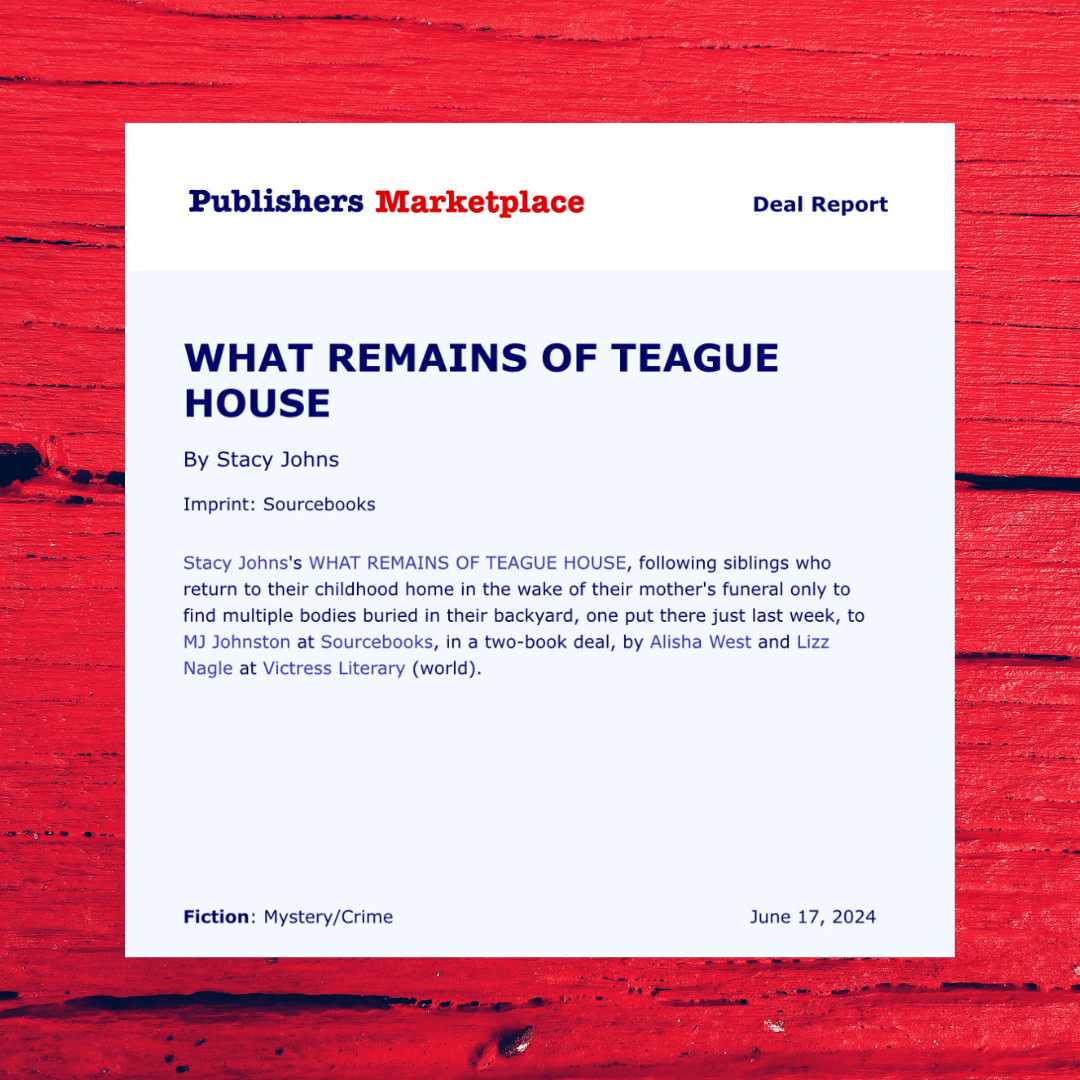
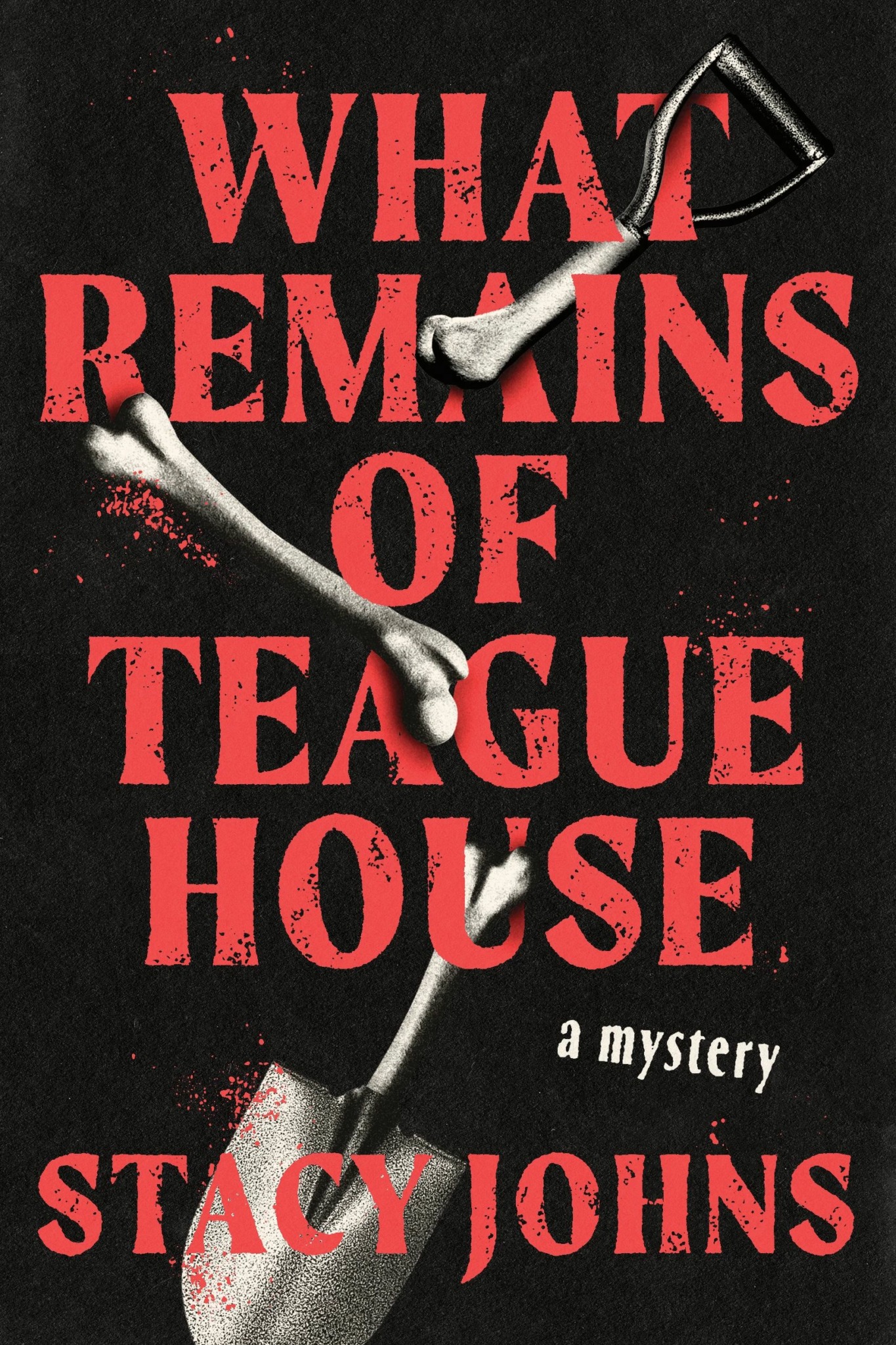
The first client I signed had written two novels that came out with a small, independent print-on-demand press. After many rounds of edits with myself and my business partner, Lizz Nagle, her most recent book sold to one of the largest independent publishers in the U.S. and was just last week on the display shelves at Barnes & Noble next to Frieda McFadden’s latest release. (Shameless plug: Look for it if you love dark, suspenseful mysteries. It’s called WHAT REMAINS OF TEAGUE HOUSE by Stacy Johns). Lizz has another client whose book she spent five years submitting to editors until it finally found a home with St. Martins, a Macmillan imprint. SUNFLOWER HOUSE by Adriana Allegri has sold thousands of copies and is being translated into a dozen languages.
I hate this and wish it wasn’t so, but luck plays a huge role in this industry. I wish it was just about who works the hardest and has the “best” book. I tell my clients that finding the right editor for their book is like finding their soul mate. You have to be at the right place, with the right personality/look (right book for the market), at the right moment, and the other person has to be open to the connection (not buried in six other projects). But it’s even worse in publishing because that editor usually has to convince a whole team of other people that your book will make them money too. Back to the soul mate analogy—if their family doesn’t like you, the engagement just isn’t going to happen. There’s not a lot of eloping in publishing. And by the way, all of this is also taking place on the worlds most complicated season of THE BACHELOR because there’s one editor choosing from thousands of hopeful soulmates.
Okay. Finally. Let’s talk about how talented you are. You’re the kid who was put in advanced English classes, whose papers won contests and were published in school papers, maybe you edited your high school newspaper, and teachers in college saved your papers to use as examples in future classes. You were told over and over and over from the time you could hold a pencil and make words how good you are at it. Or maybe it didn’t start as early as childhood, but somewhere along the way, you started writing and other people started noticing. I do think this kind of talent is important in rising to the top. If this is you, good news, you have a great head start! But, I must say it again. It’s not enough. Mix it up with everything that is above though, and I truly believe you will find your audience one day. I can’t guarantee it, because we don’t do that in publishing, but I’ve seen it happen. I’m telling you, there’s a definite chance.
If you’d like even more book recommendations from our amazing Victress Literary authors, please check out our bookshelf at: https://www.victressliterary.com/victress-bookshelf/
Alisha, love having you share your insights with us. Before we ask you more questions, maybe you can take a moment to introduce yourself to our readers who might have missed our earlier conversations?
I have two jobs so we’ll start with my work as a literary agent with Victress Literary (www.victressliterary.com). In 2019, just before this thing called COVID-19 shut down the world, I went through my first mid-life crisis. Great timing, I know! I quit my job in the nonprofit world to pursue my childhood dream of writing a novel. Yes, I was one of those kids who was told over and over and over from the time I could pick up a pencil and make words how good I was at it. And, I’m very lucky to have a supportive, financially stable partner. Not everyone gets an opportunity like I did.
I began taking writing classes where I learned (upsettingly) quickly that I had none of the skills or know-how to write a novel. But, after a half-dozen classes, that had changed and I was mostly done with my practice novel. Yet, the whole time I was learning and building valuable skills that benefit me in my current job, I wasn’t having much fun at the writing. It felt more like a chore than something I couldn’t wait to sit down and do every day. According to the great Stephen King, that’s a big red flag that you’re probably not meant to be a writer. However, I was enjoying the hell out of applying everything I’d learned to my friends and critique partners books and offering suggestions that were actually appreciated! I had people email me (one time months after our class together had ended), thanking me for my feedback and saying how helpful it was.
That’s when I realized I may have chosen the wrong career. Fortune stepped in, as it often has in my life, and I met Lizz Nagle, my now business partner, at a conference in 2022. We talked for an hour, bonding over life events and how difficult the pandemic had been on us and our families. Lizz’s former business partner, founder of Victress Literary, the wonderful Shannon Orso, had died unexpectedly the previous year and Lizz was finally recovering from her grief enough to begin to rebuild the staff of Victress. So we stayed in touch and few months later I was her junior agent. I have since been promoted to Associate Agent and I have a nearly full client list of some of the most hardworking, patient, brave, and talented folks in the world.
Maybe I should back up though. You might be asking yourself: What are literary agents? Good question, my new friend. We’re sort of hinge on the gate between writers and editors at publishing houses. It’s our job to help open the gates. We find writers whose projects are complete and, from what we know of the publishing landscape, might be of interest to the market, and we pitch those books to editors in hopes they will be allowed to edit and later publish them. Additionally, Lizz and I are editorial agents which means that we sometimes take on books that still need revisions and we help the authors make those books even better than they already are. When the books are in the best shape possible, it’s our job to find the right editor at the right house at the right time.
Agents wear a lot of hats. We negotiate contracts with publishers, we spend tons of time networking with editors, we attend conferences and teach classes/seminars, we read hundreds of books every year (published and unpublished), we follow the market trends and even do a little marketing for our clients’ books. Did I mention our Victress Bookshelf that can be found at https://www.victressliterary.com/victress-bookshelf/? At Victress, we also try hard to help our authors continue to grow their writing skills by recommending great books to read and hosting info sharing sessions on various topics like storytelling, scene and structure, taxes for writers, etc. We’re huge on collaboration so we encourage our writers to work together, critique for each other whenever possible or provide beta reads, and support each other’s books when they make their way into the world. Sometimes we even host fun parties over Zoom just so we can see each other’s faces and spend time together. Victress isn’t just a business, it’s an active, artistic community and we care for each other beyond just books and sales.
I think we’re unique when it comes to how we treat querying authors too. No—not in how long it takes us to get back to you. I’m sorry authors! I really am. I carry so much guilt every day for how long it takes me to respond to your queries. But, when we do respond, we always try to give constructive feedback instead of just a form letter response. And everyone who queries us gets our best advice on the resources to help them build their writing skills. This takes longer, and it takes more from us. But we do it because we value writers and the bravery it takes to put your words out there the way you do. And we want to see writers succeed, whether they end up working with us or not.
My second job is as a freelance editor with Pink Pen Editors (www.pinkpeneditors.com). There are two reasons I decided to start a second business. One is practical: there’s very little I can control when it comes to selling books to publishers and even less we can control when it comes to how many people buy those books. I need a stable income. It’s as simple as that.
But the second reason I started this business is much more important. We receive hundreds of queries each year as literary agents and only a small percentage of those books should be hitting an agent’s inbox. Often, books shouldn’t be in our inboxes because of what I discussed in the last question about how important it is to build writing skills. The writer isn’t ready because they haven’t done the work. And that’s why we provide resources and feedback to everyone who queries us. But very often, the manuscripts shouldn’t be in our agent inboxes yet because editing is important! New writers often underestimate how many times a book might need to be edited. And it’s very hard to edit your own work. Writers are simply too close to their beautiful babies. Sometimes a writer needs outside guidance to help fully realize the vision of their story.
At Pink Pen editors we offer a range of services that depend on where an author is at with their book. Let’s say someone has written their novel completely and has had critique partners provide feedback but they’re struggling with plot, characterization, or structure. Maybe the feedback they’re receiving mentions these things, but they aren’t sure how to fix it. Then they might want a developmental edit. Developmental editing is a process where we help writers improve characterization, plot, scenes, and structure.
We also have an editor trained in copy editing, which is most often appropriate as one of the last steps prior to self-publishing or seeking an independent publisher. Lizz and I also offer query and synopsis evaluations for when a writer is ready to start looking for an agent or a publisher.
We consult on nonfiction book proposals which require an equally, though different, set of skills to write. Lizz and I teach a class titled “Nailing the Nonfiction Book Proposal,” so that information is where we start with our clients. In the end, the proposals we send to editors most often get comments of “impressive,” “fascinating,” and “intriguing” which are all adjectives a nonfiction writer wants on the tip of an editor’s tongue when reading about their book.
Is there a particular goal or mission driving your creative journey?
Both Lizz and I believe in the power of words. We believe the profound words of Unitarian minister and Transcendentalist, Theodore Parker who famously said: “The arc of the moral universe is long, but it bends toward justice.” Education and knowledge are the most influential factors that bend the arc of history toward justice. Stories change hearts and minds; they change the world for the better. Left to our evolutionary, selfish impulses, human beings can be terrifying. And, right now especially, it does feel that we’re going down a scary path toward totalitarianism. Straight out of a fascist playbook libraries, museums, and other institutions of knowledge are being attacked, defunded, and degraded.
Stories give us the chance to understand another person’s experiences even though they are drastically different than our own. People in power have always known this, and those who want to use their power to maintain the status quo have no interest in allowing the free exchange of knowledge. Some people don’t want stories from marginalized, oppressed groups to be told widely because then we might act to end that oppression. And those people are getting very good at making it nearly impossible to uncover truth beneath the heap of propaganda our modern world has buried us in. Because developing empathy changes how we behave toward one another. If we never understand how the structures and institutions of our society have disadvantaged certain groups, while giving advantages to others, then we’ll never work to change those structures. And books often teach us the true lessons of history that we weren’t taught in school. If you’re never allowed to pick up a story and read about what it felt like to be in another person’s very different shoes, to walk through any joy, pain, mistreatment, fear, love or abuse they may have suffered—well, it’s much easier to hate that type of person.
So books have never been more important. In whatever format they reach the reader – from paperback to audio to video novel – the world needs stories that matter, that are socially relevant, that reveal what it means to be human in our difficult, often oppressive world. Our mission is simple, though incredibly difficult: find these stories and help them reach as wide an audience as possible.
For Victress Literary, we are often closed to queries because our agency is so small. BUT, we keep our query inboxes open to writers from traditionally underrepresented groups all year long. At Pink Pen Editors, we offer a 20% discount to writers from traditionally underrepresented groups. These are the stories that haven’t yet been fully told, fully examined, or fully internalized by the majority of Americans. White supremacy is on the rise for many reasons but one of these reasons is that stories of BIPOC and LGBTQ+ human beings, their contributions to our world, and their oppression for centuries that continues to this day, are not a big enough part of the publishing landscape. Yet.
What’s a lesson you had to unlearn and what’s the backstory?
There’s a pretty dominant idea in American culture that working as many hours a week as you can is a great way to get ahead in business and to build your career, especially when you’re starting out. There are so many industries where this is an expectation. To add to that, for most of my young adult life, I did most of the housework, most of the household management like paying bills and making sure we had light bulbs on hand, and I was the primary caregiver for my step-kids. It was nearly impossible to finish my degree while working full time and doing all of this extra work as a wife and step-mother. Fortunately, in many ways, that first marriage didn’t last. But I still held those social expectations.
On top of that, I also have an innate drive to do any job I take on to the best of my ability. Or, maybe it isn’t innate so much as my parents lectured me about my “work ethic” my entire childhood and teen years while they forced me into child labor in the hay fields and woods of Eastern Washington. (I’m not bitter or anything.)
By the time I was in my mid-30s, I’d often be working from home until 10 or 11 at night trying to keep up with running a small customer service department for a testing company. I was tired all the time, and even though I been on a journey to learn about nutrition for a few years, I wasn’t very good at it. And then I started noticing that my head felt fuzzy a lot, and my right leg would sometimes give out on me. My balance was off, and I even yelled at my partner for giving me a playful little push on the shoulder because it scared me; I thought I was going to fall over. Something wasn’t right.
I went to the doctor, and she did every test imaginable, but she couldn’t find anything wrong. Was it just perimenopause? I was so young. Finally, one day at work I tried to write something on a Post-it note and my hand was extremely weak. My writing was illegible. When I told the doctor this story at my next appointment, she ordered an MRI. A week later when the doctor called me just as I was heading out the door for work and told me to sit down. My partner was waiting for me with the keys to the car in his hand and an impatient look on his face. But I sat and listened as she explained that I had some very large lesions on my brain, and she was almost certain I had Multiple Sclerosis. Many more tests later (including an incredibly painful spinal tap), it was confirmed.
For months, I tried to go about my life as if nothing was different but the stress of working too much exacerbated all of my symptoms. I was getting worse, and I was afraid I wouldn’t be able to walk soon if it kept going the way it was. I cut back to part time hours but found quickly that the stress wasn’t much less. By this time, I was trying to run a large licensing program for Cosmetologists in multiple states, and it just couldn’t be done part time. Besides that, I had lost my benefits by going part time and was making less money while still doing the same essential job. And my body was giving up. When I finally quit that job, it felt like I failed as a human. I couldn’t work, so what use was I? When I had to buy myself a cane for my 40th birthday, I really thought I was on a downward spiral to total physical disability and eventual death.
It took many years of reading books, changing my diet, becoming more physically active even when it felt like I would drop from exhaustion, and taking only part-time jobs to get back to the place where I knew I was ready for a career again. But I also knew that I needed a career and a business partner who understood that my health is my top priority. I can’t work fifty hours a week, or even forty.
And then I met Lizz at a conference, and it just so happens that she’d judged the category for a contest I’d submitted an essay in and had chosen me as one of the winners. So she knew my story and she knew my needs. And she had her own story and her own reasons for choosing to live life for life and not for just work. It was meant to be.
Unlearning the lesson that work is all that matters was vital to saving my life. I love my clients, and I give them the best of everything I have for a few hours every day. And then I give the best I have to myself and my partners and my fur babies. And, after living with MS for ten years, I’m happy to be able to say that I am healthier than I was in my 20s. I have lost no mobility (in fact, I’ve regained mobility and never need the cane these days). I walk one to two miles nearly every day, I work in my yard, I hike, I eat as many vegetables as I can shove into my mouth, and I have a career that makes me happy every single day.
Contact Info:
- Website: www.victressliterary.com / www.pinkpeneditors.com
- Instagram: @VictressAlisha