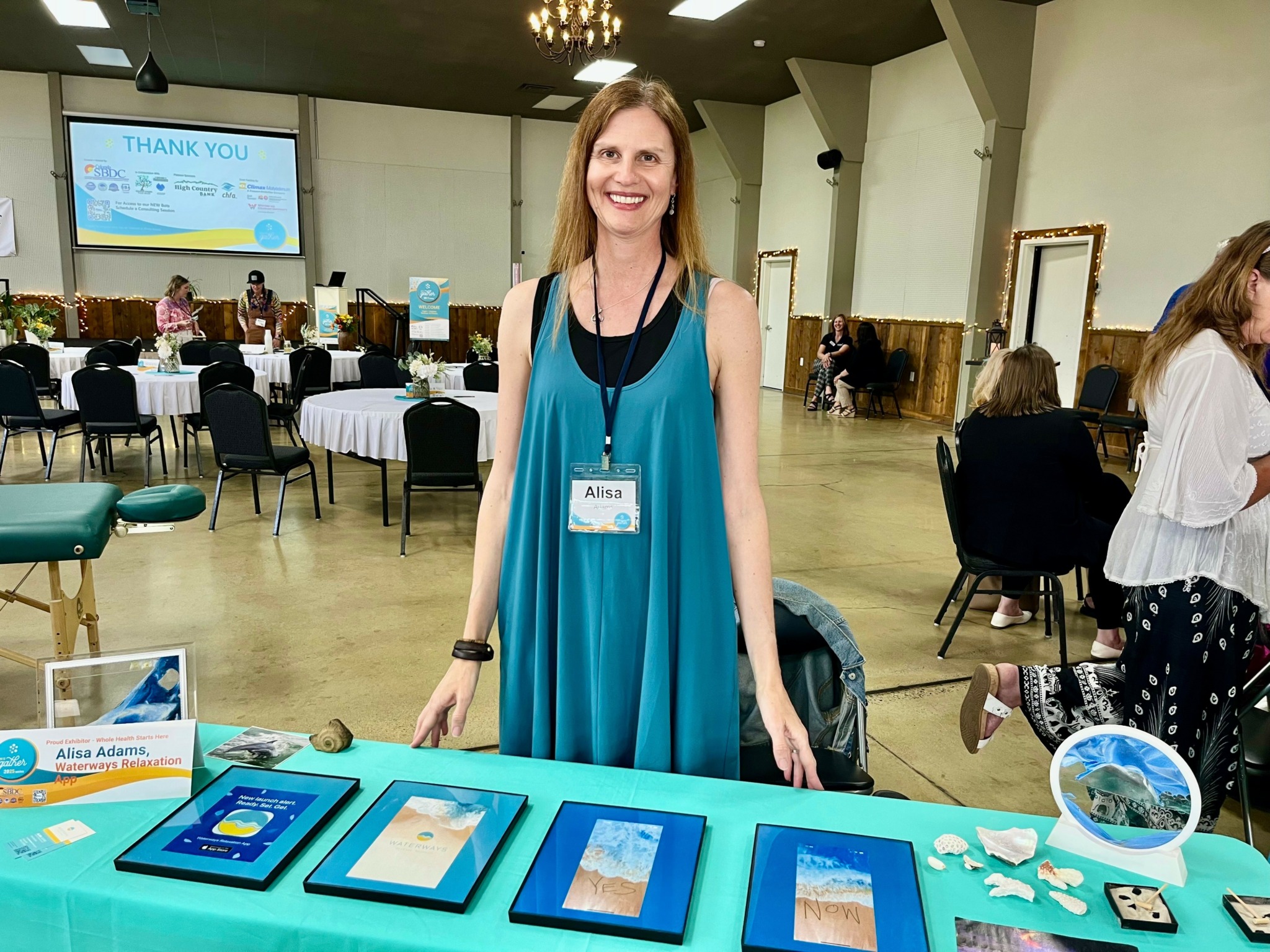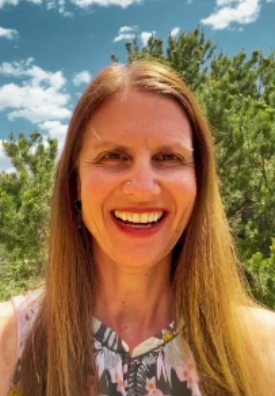

We’re excited to introduce you to the always interesting and insightful Alisa Adams. We hope you’ll enjoy our conversation with Alisa below.
Alisa, thanks for taking the time to share your stories with us today If you had a defining moment that you feel really changed the trajectory of your career, we’d love to hear the story and details.
Growing up in Madison, Wisconsin, I always enjoyed artmaking. I had an elementary school art teacher who I thought was so cool because she let her young students paint colorful designs on her car, and she kept it painted with children’s art and paraded it around town (and drove it to school every day). I attended summer camps at area parks with lakes and always enjoyed the camp art activities. I took elective art classes in high school and elective studio art classes in college. I loved learning about art and making art. In kindergarten, I said I wanted to be an art teacher when I grew up, and I sadly learned that schools don’t always budget for art. It will be no surprise to hear that I was told in high school when I was considering my career path, that art was a fun hobby, and making a living by making art was seldom achievable.
While getting a political science degree at UW-Madison, with plans to become a lawyer, a literature professor my senior year asked me if I’d ever considered becoming an art therapist for children. I hadn’t heard of that career (this was in the 1990s) and I changed my career path and got a master’s degree in counseling and art therapy at University of Illinois at Chicago.
I worked full-time as a counselor in a men’s prison, meeting individually with prisoners in crisis situations and leading mental health groups. I was able to provide markers and typing paper and play recorded music in the groups, and prisoners drew pictures of peaceful places, images of the four seasons, and cherished memories from their lives. I also led a mindfulness and meditation curriculum with prisoners. At that point as a counselor, I had worked for years with children and teens in public schools, residential and day treatment services, home-based family services, and in a children’s hospital supporting patients and families with medical procedures and treatments. My years of counseling often incorporated artmaking with a variety of art materials, and the images that clients created supported many people who’d experienced trauma and neglect. I told some of the prisoners that I met with individually, that I created a visualization with ocean imagery for myself decades earlier, when I struggled to fall asleep at night. Those prisoners reported back to me that the nature visualization that I taught them helped them to manage their own anxiety in their cells. The Department of Corrections provided digital tablets to all the prisoners to have in their cells, and I realized that the nature visualization that I imagined for myself, and that was already helping prisoners, could be digitized and built as a tangible, immersive, tactile, multisensory app.
Alisa, love having you share your insights with us. Before we ask you more questions, maybe you can take a moment to introduce yourself to our readers who might have missed our earlier conversations?
I have enjoyed art and artmaking since I was a young child. When I was in kindergarten my family lived in a house with new housing construction surrounding us. (I spent a lot of time outdoors as a child; swimming, biking, climbing trees, camping). I remember cautiously climbing around house construction at the age of 5 when workers left for the day and picking up small wood scraps and drawing pictures on the scraps with my crayons. (I drew anthropomorphic cat and dog families). I loved children and when I got to be old enough to babysit, I babysat for a lot of families in our community. In college I worked with a child who I babysat when I was in high school and she was a baby. She was not cognitively or socially developing at the expected rate, and her parents asked me to play with her, sing to her, read to her and draw with her to support her development. She would say animals that she wanted me to draw, and I would draw them for her. She would sing along with songs that I sang and request songs to sing. She was diagnosed with autism at the age of five, and I learned that drawing and singing and reading fostered our connection and encouraged her growth and communication. The process of creativity is powerful and can be transformative.
I heard about art therapy as a career after I committed to a political science degree with plans for law school. I went back to college after I got my Bachelor of Arts degree and took college psychology courses and additional studio art courses so I could apply for a graduate program in counseling and art therapy. I believed in the power of creativity because I had enjoyed participating in creative endeavors my whole life. I attended a summer theater program when I was in middle school which culminated in a stage play production. I sang in middle school and high school choir, enjoyed art classes, painted paintings, wrote and illustrated a children’s book for college credit, sang with friends who were musicians, acted in friend’s Chicago film school films, and acted in a Chicago play. When I was accepted to the University of Illinois at Chicago graduate program for Counseling and Art Therapy at the School of Art and Design, I was in my element.
I had a 9-month 30-hour week Art therapy internship at University of Chicago Children’s Hospital Child Life Department where I led group art activities with patients in the Child Life Department and led individual art activities in children’s hospital rooms. I painted and drew pictures for patients who were too weak or ill to make art themselves. I participated in medical rounds with doctors and consulted with child psychiatry. I experienced the emotional and physical pain and trauma of children needing organ donation, gunshot injuries resulting in paralysis, cancer treatment resulting in limb removal and other medical procedures. I saw beauty in art’s ability to bring solace to people experiencing pain and trauma.
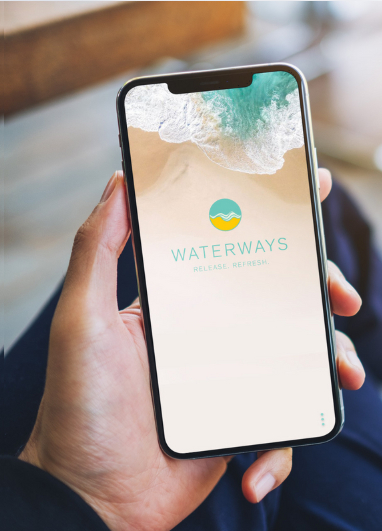
When I went to work full-time as a Licensed Professional Counselor in a men’s prison several years later, I led art therapy groups and taught a mindfulness and meditation curriculum. I saw similarities between patients immobile in hospital beds and prisoners in cells. Both populations were removed from their families and communities and unable to get out to nature and beautiful places. The Department of Corrections gave all prisoners digital tablets, and I got the idea to create a tactile mindfulness activity using nature imagery so that people who can’t get out to enjoy the healing benefits of nature can conveniently simulate an immersive experience. I created Waterways Relaxation app to promote breathwork, introspection and peace of mind. It supports people in moments of distress by providing a tangible, convenient tool to practice deep breathing and positive neuropsychology.
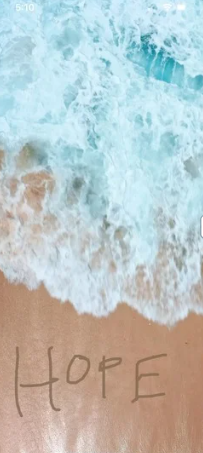
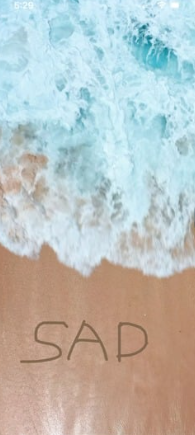
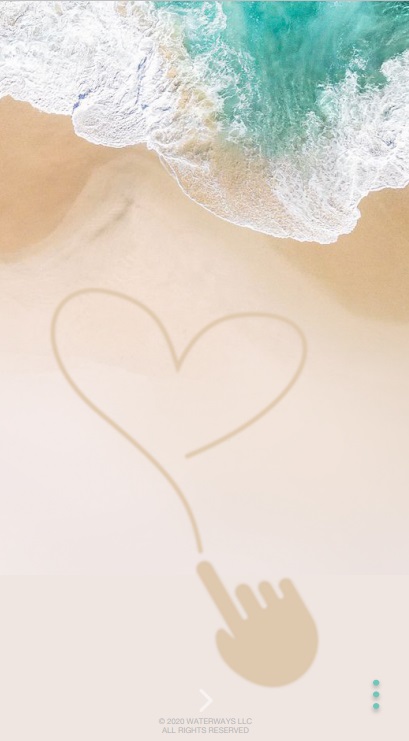
Waterways Relaxation app is unique in that it is self-directed and tactile. Unlike other mindfulness and meditation apps, where the user passively follows directions and visuals and audio, the Waterways Relaxation app user is immersed into a beautiful natural scene and writes whatever they want with their finger on their screen. The app user confidentially processes whatever seems necessary for them to uniquely process. No data is collected.
I have heard from tech professionals that the Waterways Relaxation app is a “mesmerizing” activity that allows them to quickly refresh and reset during their demanding workday. Nursing staff in hospitals have said that instead of watching reels on their phone like other medical staff, they subtly use the Waterways Relaxation app to clear their minds and center themselves and continue with their shift. A person shared that after the loss of their mother they struggled to adjust and found it soothing to write “mom” and a draw a heart in the sand and breathe along with the ocean waves.
The Waterways Relaxation app is currently a one-time download for iPhone in the Apple App Store. The app provides a soothing and refreshing reset for people struggling with distress or motivated to focus on intentions. Instead of a stress ball, fidget spinner, putty, glitter wand, Pop It, a vape or a lava lamp, the Waterways Relaxation app provides an unassuming activity because the user can benefit from subtly being soothed by their phone.
How’d you build such a strong reputation within your market?
When I worked as a clinician at a day treatment and residential treatment center for children and teens in Denver, Colorado, I was trained in-person by Dr. Bruce Perry, M.D., the senior fellow of the Child Trauma Academy in Houston, Texas and an adjunct professor of psychiatry and behavioral sciences at the Feinberg School of Medicine in Chicago. Dr. Perry is an international expert on trauma and its effect on the brain. I was trained to incorporate brain maps into the clinical treatment of my clients using Dr. Perry’s evidence-based Neurosequential Model of Therapeutics (NMT). I was trained in gathering information on developmental histories of clients and deciphering possible developmental insults. I was taught rhythmic, relevant, relational, repetitive activities that can create new neural pathways and because of neuroplasticity, heal the brain after traumatic events. My trauma-informed training and my experience presenting a case study to Dr. Perry and having him consult with me on my client, has contributed to my recognition in my mental health field as being an expert in trauma-informed therapeutic interventions. I have also worked in multiple clinical settings that have given me years of experience in supporting people with complex trauma.
Let’s talk about resilience next – do you have a story you can share with us?
I became a therapist because I wanted to support children with life challenges so that I could help them to build healthy coping mechanisms and strengths and resilience, and in turn prevent future societal problems like addiction, intimate partner abuse, child abuse and other crimes. I wanted to help to heal the world, to be a part of the solution. After working with children and families for several years, I was offered a clinical position in a men’s prison, and I questioned what role I could play in a prison. I wondered how I could support prevention working in a prison. I took the position with the goal of providing compassionate, unconditional positive regard to prisoners and helping people who had experienced childhood trauma, abuse and neglect themselves, and who hadn’t received help earlier in their lives. I never imagined, coming from my past experience before becoming a therapist, working at day care centers and as a teaching assistant at Preschool of the Arts, that I would work in a paramilitary organization and be trained in the use of pepper spray, physical restraints and self defense. Prison was an environment that was not therapeutic and I was told by my direct supervisor that I managed to create a therapeutic environment in my mental health groups and individual meetings with prisoners. I transformed my experience working at the prison into a tangible therapeutic tool that provides mental health support.
Contact Info:
- Website: https://www.waterwaysapp.com
- Instagram: @waterwaysapp1
- Facebook: https://www.facebook.com/waterways.2024/
- Linkedin: https://www.linkedin.com/in/alisa-adams-430822249