
We recently connected with Ali Yilmaz and have shared our conversation below.
Hi Ali, thanks for joining us today. What’s the backstory behind how you came up with the idea for your business?
I came to the United States for my master’s degree, and at the same time I was working full-time as a product manager. Life got very busy very quickly. At twenty four, I was promoted to senior product manager leading a team of engineers and designers who were older and far more experienced than me. On paper it was a dream. In reality it came with a level of self doubt, pressure and loneliness I wasn’t prepared for. I didn’t have family or close friends here, so when stress piled up, it all stayed in my head. My thoughts spiraled easily and turned into anxiety and eventually depression.
I tried looking for therapy but the process itself became another source of stress. The online options were very expensive and didn’t accept insurance. The local therapists who did take insurance still ended up charging a lot, and I couldn’t trust that system. I am a curious person so I started asking myself a simple question. What is actually happening behind the closed doors of a therapy session that makes it so expensive and inaccessible?
That question led me to discover cognitive behavioral therapy. I learned that CBT is the most proven and widely used framework in mental health and that it is also commonly used as self help. I started learning it on my own, applying the exercises, reflections and small habits. Within days I noticed an improvement. My thinking was clearer. I could stop myself from believing every thought as a fact. I was looking for evidence rather than reacting to assumptions. My life got better.
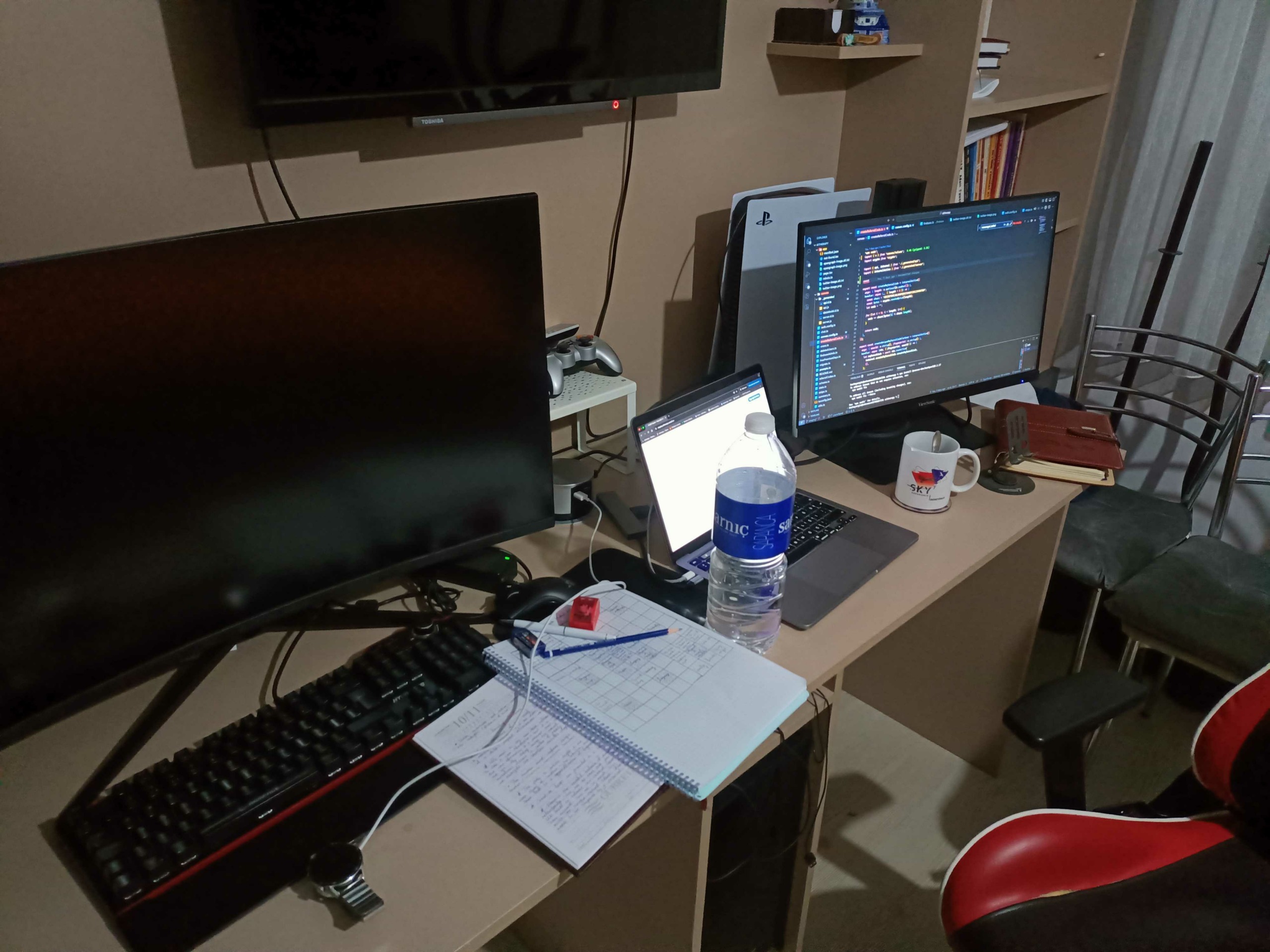
Since I was already working with AI at the time, something clicked. CBT is structured and formula based. Computers are very good at structured and formula based things. I wondered if artificial intelligence could guide someone through CBT conversationally, the same way a coach would. So I built the very first version of Aitheray with a very simple interface, no login and no history. It was just for me and it was working better than reading a book or using pen and paper.
One day my roommate asked to try it, then he shared it with his son, and his son shared it with his daughter. That was the moment I realized there is a very big need in the mental health space. People can’t go to therapy and even if they do, they can’t talk with their therapists 24/7. Books were there 24/7 but people do not want to read a book on CBT when their mind is spiraling. They want conversational support at the moment. Something that talks with them, not at them.
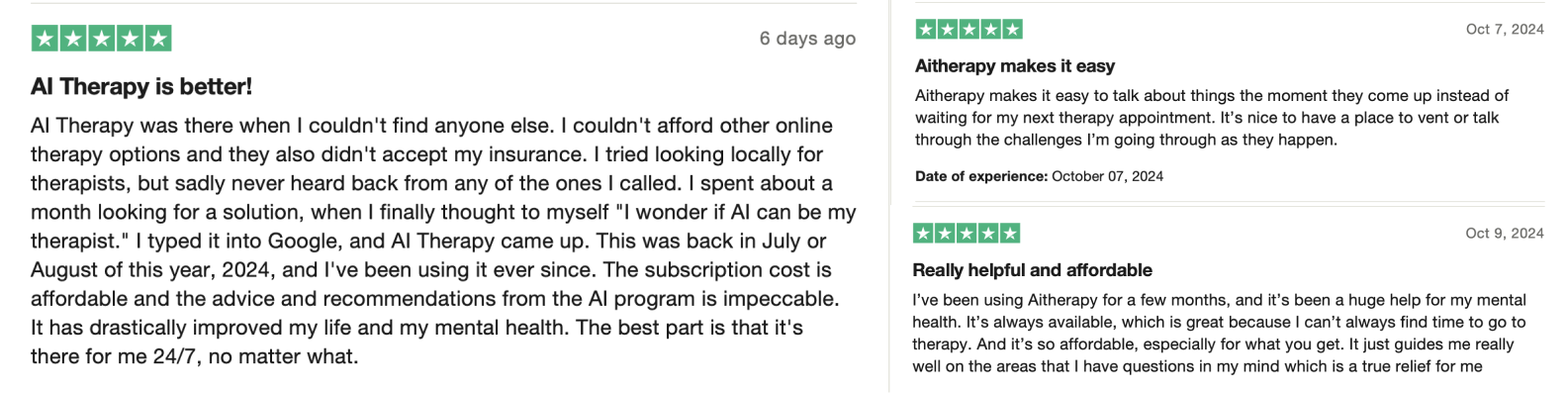
So I put the early version online without thinking too much about it. People started using it. Strangers. Then they started emailing me. One early message I received was from a woman who had tried everything. Online therapy, in person therapy, multiple therapists. She wasn’t doing well financially and the cost of mental health care had become another stressor. She searched “AI Therapy,” found the website, and have been using it for months. She emailed me that Aitherapy made her feel “understood”. She wrote that it helped her reflect on her thoughts without muddying the water. That sentence stayed with me. I believe a lot of the mental health system today muddies the water to make it look deep. I realized Aitherapy was able to keep things simple and accessible.
Early users were passionate and supportive. They asked for features. They asked for bug fixes. They were willing to pay. At one point it felt like they were going to show up at my home and force me to improve it. That was when I realized this wasn’t just a side project anymore. This was a real need. A real product and a real responsibility.
When I asked the best engineer I knew to join me, I told him something simple. We have an opportunity to change the world we live in. We can make mental health support as accessible as Netflix. He didn’t think too much before joining. We brought in therapists we trusted to guide us and make sure the product stayed evidence based but not limited with bias.
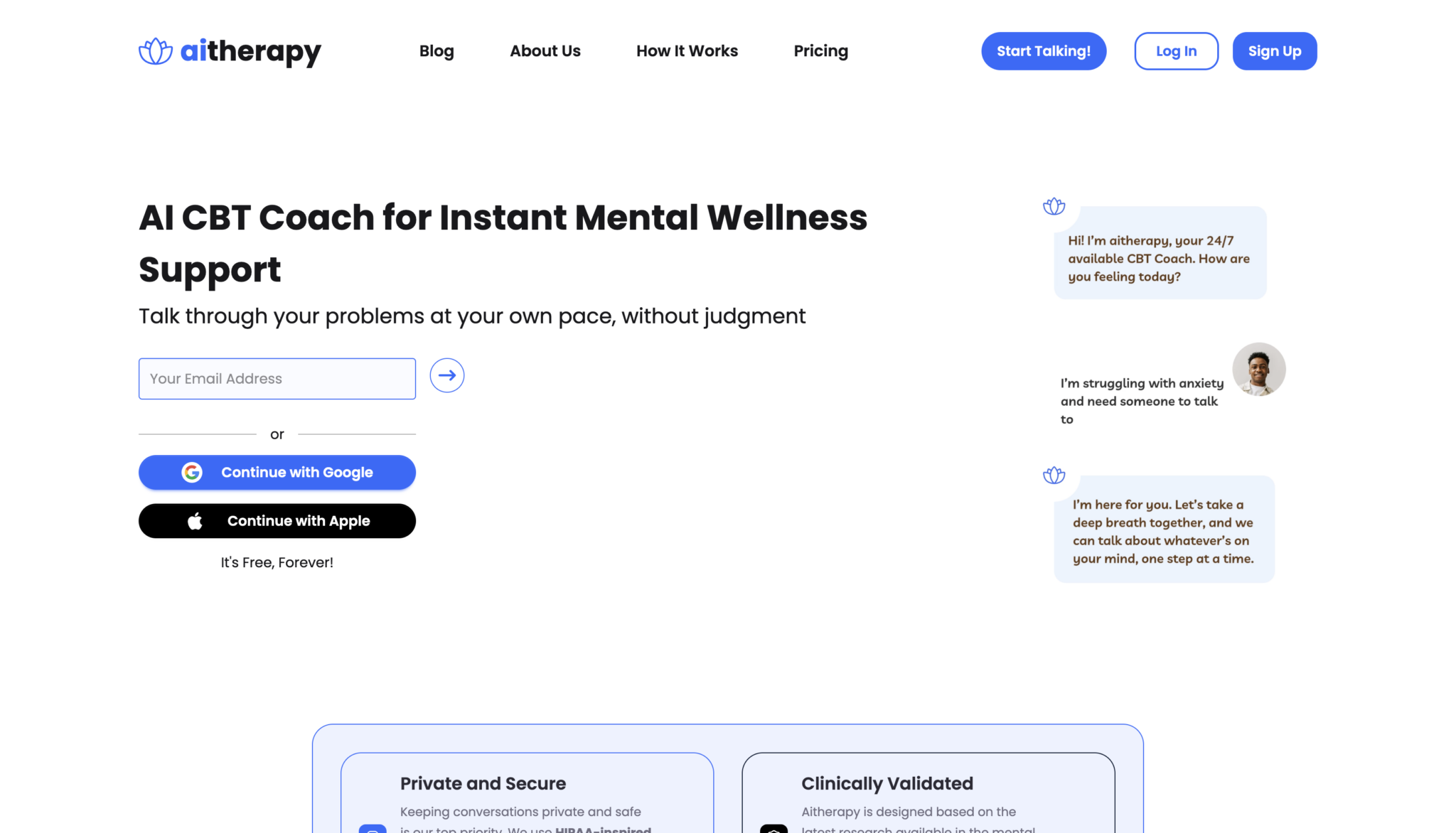
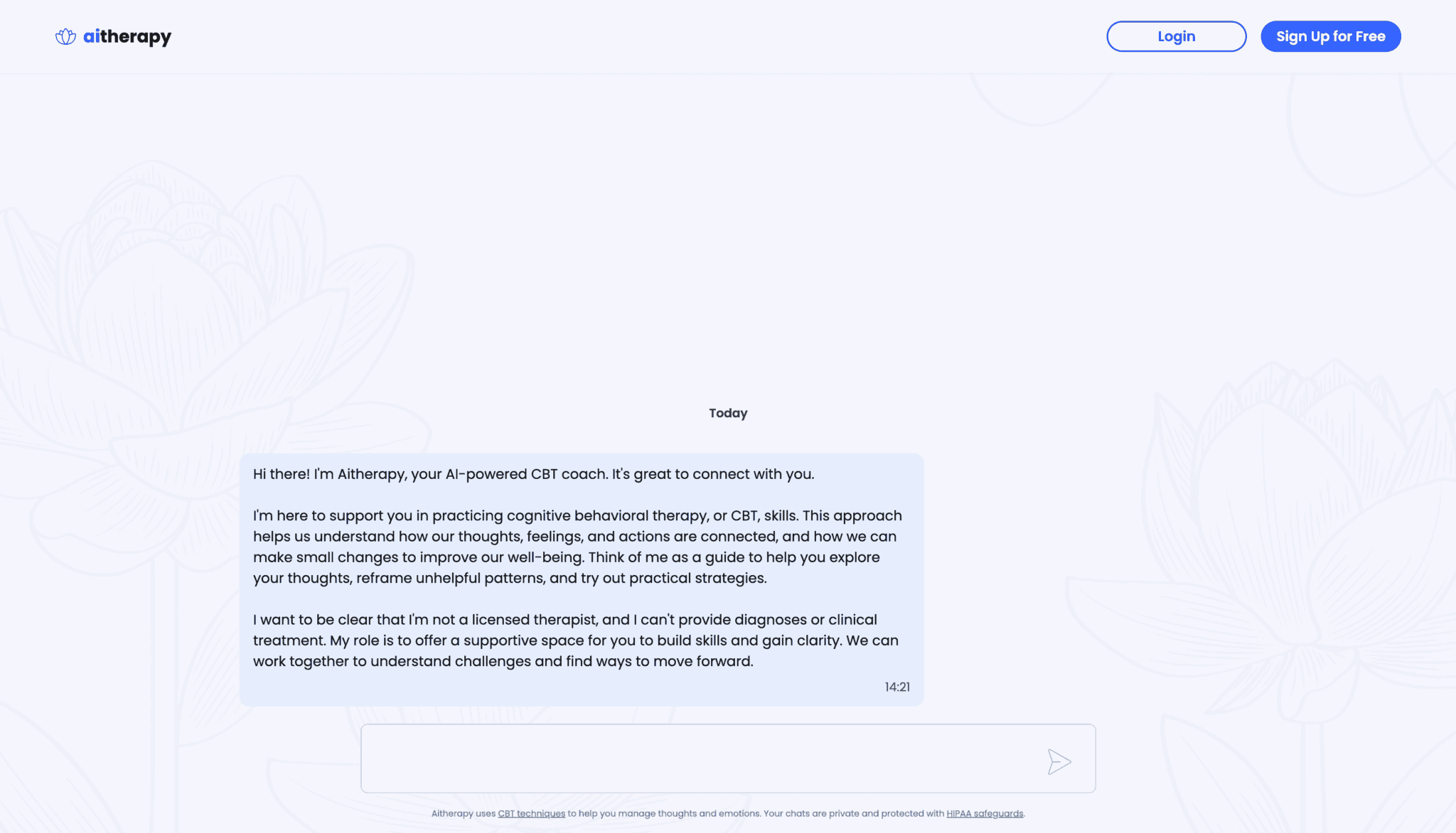
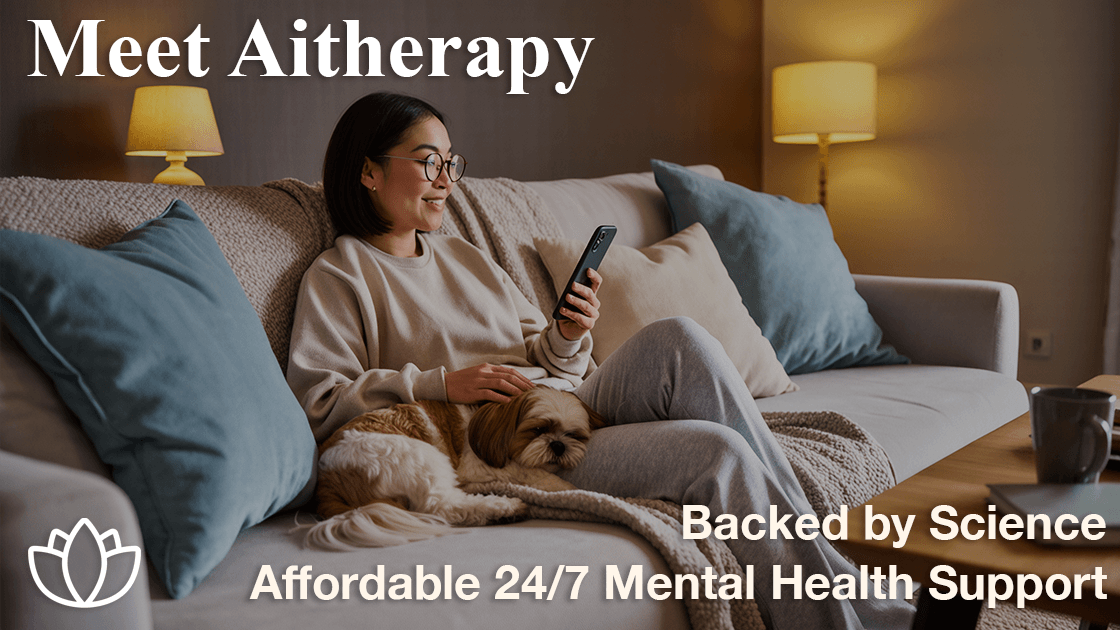
Aitherapy’s core idea is conversational support. Traditional CBT books and courses are passive. They expect you to do the emotional heavy lifting exactly when you feel least capable of doing it. Aitherapy makes CBT active. It guides you through the method step by step while your thoughts are unfolding. It doesn’t replace therapy but it offers something therapy cannot offer, which is instant access any time a person needs clarity.
I built Aitherapy because I know what it feels like to be alone with your thoughts and spiral into stress, anxiety and depression. And we continued building it because people kept showing us they needed it, they valued it, and they believed in its potential even when it was just a rough prototype. That combination of emotional truth and clear demand made me certain this was a worthwhile endeavor.
Ali, before we move on to more of these sorts of questions, can you take some time to bring our readers up to speed on you and what you do?
I’m Ali, I’m 27, and I live in Las Vegas. I’ve always been a curious person with a high tolerance for risk and a love for creating things. Creating products was a natural fit for me because it brings together psychology, design, technology and problem solving. I enjoy understanding how people think, how they use things, and how design can make their lives easier. My style is simple, direct, transparent and warm. People who know me usually describe me as curious, driven and resourceful.
My path into mental health wasn’t planned. It became important to me because of my own experience. When I moved to the United States for my master’s degree, I was also working full time as a product manager. At twenty four I became a senior product manager, leading a team of experienced engineers and designers. It was a proud moment, but also a heavy one. The pressure was high, my family and friends were far away, and the stress quickly turned into anxiety, self doubt and eventually depression. This experience opened my eyes to how difficult, expensive and inaccessible the mental health system is for ordinary people. I realized how many barriers exist between someone who is struggling and someone who can help them.
That is what led me to Cognitive Behavioral Therapy. CBT is the most evidence based framework in mental health, and it is commonly used as self help. When I started learning it, the first idea that changed everything for me was very simple. Not every thought is a fact. You have to look for evidence, not just react to what your mind is telling you. This alone helped me stop negative spirals, calm anxiety and think more clearly. It helped me every day.
Since I was already working with AI, I wondered if CBT could be practiced conversationally through a chatbot. CBT is structured and formula based, and computers are extremely good at structured methods. So I built the first version of Aitherapy for myself. It was just a simple interface with no login and no history. But it worked. Then my roommate tried it. Then his family tried it. Then strangers online found it, used it and emailed me about how much it helped them.
One early user wrote that she had tried everything. Online therapy, local therapy, multiple therapists. She was financially struggling and therapy bills became another stressor. She searched “AI therapy,” found Aitherapy, and emailed me after using it for months to tell me that Aitherapy made her feel understood and helped her reflect on her thoughts without muddying the water. That message meant a lot to me. It confirmed what I suspected. The mental health industry today is often confusing, overcomplicated and financially inaccessible. People need a simpler, more honest approach.
Aitherapy is not just another chatbot using a large language model. It is a complete therapeutic system based on Cognitive Behavioral Therapy. We use multiple layers of logic, safety, guardrails and structured CBT guidance on top of third party LLMs. This is what makes Aitherapy fundamentally different. Traditional CBT resources like books and courses are passive. They require effort, discipline and emotional clarity, which people do not have when they are anxious or overwhelmed. Aitherapy is active. It guides you step by step through your thoughts as they unfold. It gives instant, caring, conversational support any time you need it.
The core problem Aitherapy solves is emotional isolation. People live with anxiety, overthinking, loneliness, stress and negative patterns because getting help is too expensive, too slow or too complicated. We remove those barriers. We make emotional support accessible in seconds. We help people practice CBT even if they’ve never read a book or been to therapy. And we do it in a way that feels safe, warm and human.
Today Aitherapy is used by people in many countries and across multiple continents. That is what I am most proud of. Not the numbers, but the diversity of people who found relief through something I built out of my own struggle.
My long term vision is simple. I want Aitherapy to make mental health support as accessible as Netflix. Instant, affordable and available to everyone. I believe in transparency, trust and creating technology that genuinely improves people’s lives. That is what drives me as a founder and that is what defines Aitherapy as a brand.
We’d love to hear about how you keep in touch with clients.
For me, staying in touch with our users isn’t a marketing strategy. It’s part of the product. People come to Aitherapy because they don’t want to feel alone with their thoughts, so I make sure they never feel alone with the product either.
Most of our users actually have direct access to me. I talk to people through email, calls, Reddit, social media and sometimes even text. Many users end up with my personal phone number because I genuinely want to hear how Aitherapy fits into their life. I usually respond immediately. Not because I have to, but because I want people to know there’s someone on the other side who cares about their experience.
Some of my favorite moments are the small ones. Someone can’t sign up, or a link isn’t working, or they think something is broken. They write to support, and it’s me replying. They realize the founder is the one troubleshooting with them. It surprises people in a good way, and I think it shows exactly who we are. A small team that truly cares.
User feedback impacts everything. We fix bugs the moment they show up, and a lot of our features exist because people asked for them. Users guide the product as much as we do. That alone builds loyalty, because people can see their fingerprints on the app.
The tone we want people to feel is simple. Aitherapy cares. It’s not just a tagline. It’s the way we operate, communicate and build. And I think that’s what keeps people with us. They don’t just use the product, they feel like they are building it with us.
What’s a lesson you had to unlearn and what’s the backstory?
One of the biggest lessons I had to unlearn was waiting for the perfect timing. For a long time I believed I needed the perfect product, the perfect plan, the perfect moment. But perfect timing doesn’t exist. It’s a trap that keeps you stuck.
The backstory is simple. I built the very first version of Aitherapy just for myself. No login. No history. No design. Just a basic tool that helped me practice CBT. I never thought it was good enough to share. But when other people started using it by accident, they didn’t care about perfect. They cared about relief. They cared about feeling understood. They cared that something was there when they needed it.
Then people started emailing me asking for features, fixes and improvements. They were patient, kind and supportive. It made me realize the only person waiting for perfection was me. Users weren’t asking for a perfect product. They were asking for a helpful one.
Unlearning the idea of perfect timing changed everything. Now when I build, I focus on usefulness, not flawless execution. I ship fast, learn fast and improve fast. If I waited for the perfect version of Aitherapy, I would still be waiting today.
My advice to other founders is this. Build the version you can build today. Release it. See what people do with it. Let them shape the product with you. Perfect timing is something you create, not something you wait for.
Contact Info:
- Website: https://www.aitherapy.care/
- Instagram: https://www.instagram.com/aliismetyilmaz_/
- Linkedin: https://www.linkedin.com/in/ali-ismet-yilmaz/
- Twitter: https://x.com/aliismetyilmaz_