



We were lucky to catch up with Alex Righetto recently and have shared our conversation below.
Alex , thanks for taking the time to share your stories with us today We’d love to hear about a project that you’ve worked on that’s meant a lot to you.
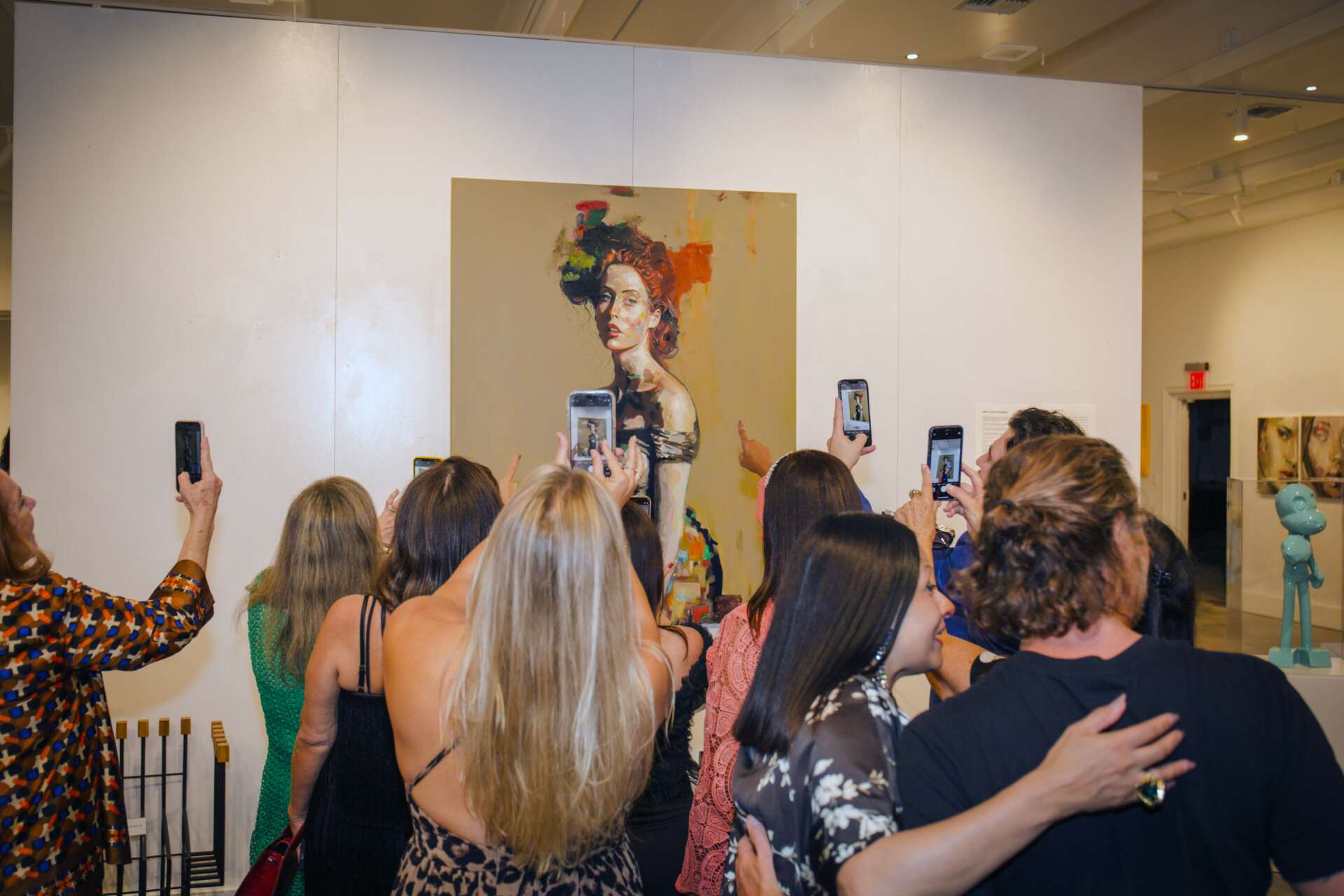
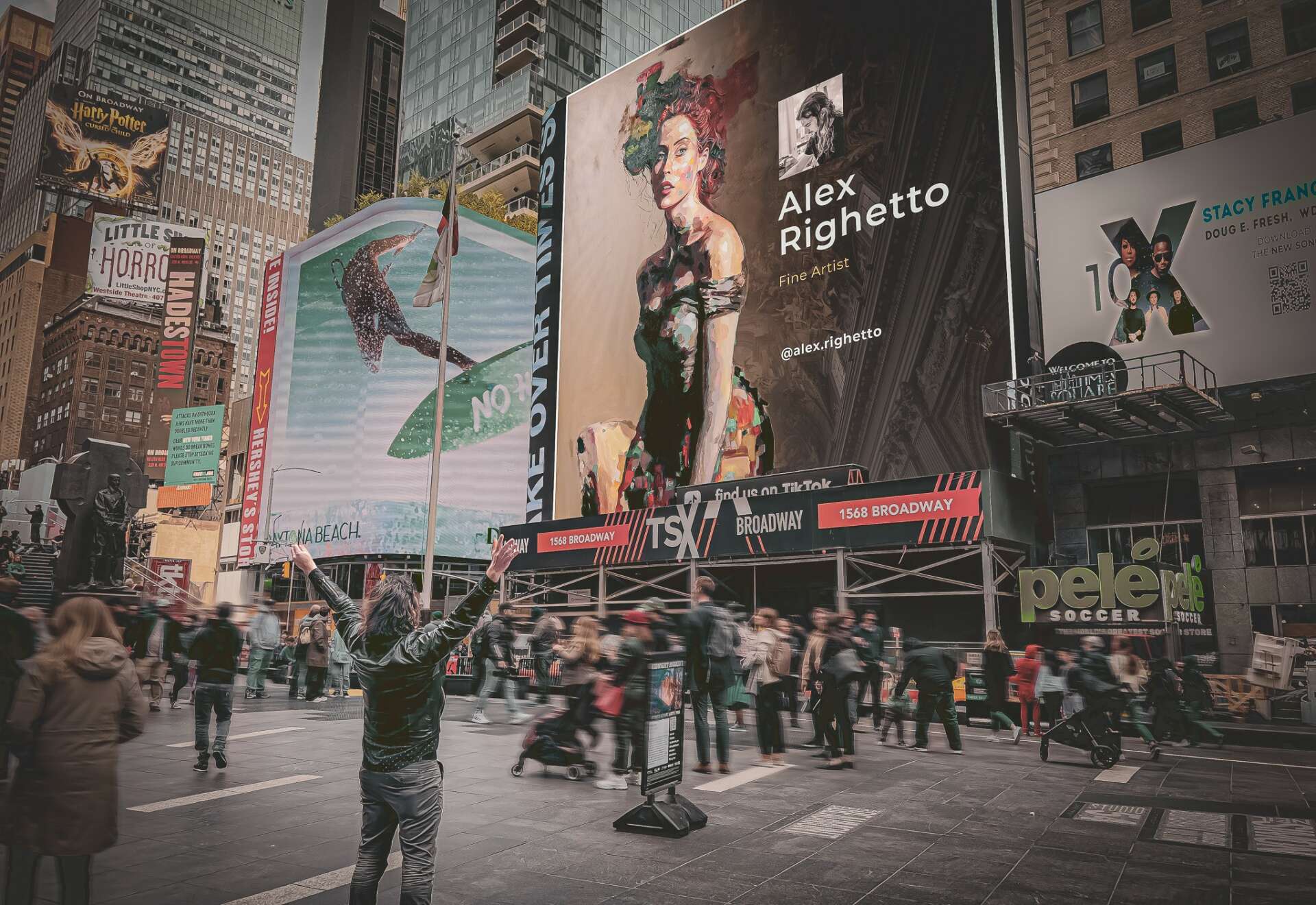
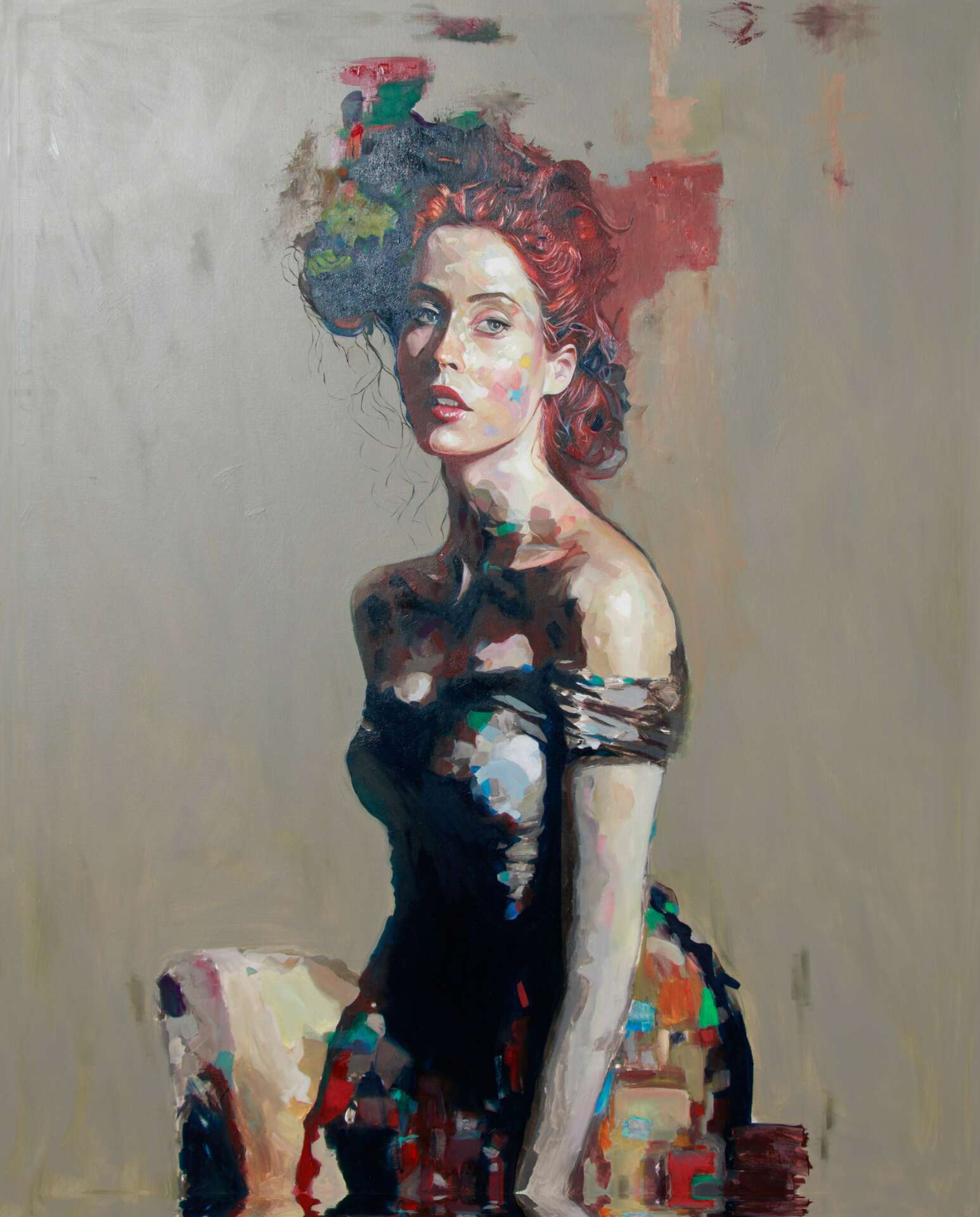
Sure, let me share the story of the most meaningful project I’ve worked on! So, back in April, my artwork titled ‘Mona Lisa’s Daughter’ got a fantastic opportunity. It was displayed on two massive screens in the iconic Times Square for a whole week, including this massive 100-foot-long screen! It was undoubtedly one of the most significant moments of my career.
The whole event was organized in collaboration with a gallery, and we had everything planned out meticulously. But here’s the crazy part – just before the launch, the gallery mysteriously disappeared! Can you believe it? The exhibition was called off, and I, along with several other artists, were left in shock, not to mention the money we invested.
But hey, I wasn’t going to let this setback ruin my chance. I had already booked my trip to New York, including flights and hotels, so I decided to go for it, regardless of the situation. No way was I going to accept a “no” for an answer. I rallied my resources and managed to make the event happen without any gallery support.
And guess what? ‘Mona Lisa’s Daughter’ ended up being featured on not one, but two different billboards! It was an absolute hit, and the event created such a buzz that people from all over the world were congratulating me. It felt surreal!
But the most meaningful part for me is the impact the painting had on people. Many were genuinely intrigued by the concept of Mona Lisa’s daughter and the story behind it. The painting was born from my exploration of the Renaissance period and the life of Lisa del Giocondo, who had a stillborn daughter.
I wanted to represent the daughter as if she were still alive, exploring the themes of life and death, transience, and the duality of human existence. The result was a profound piece of art, almost like a “memento mori,” symbolizing the complexities of life.
It was also a personal challenge for me as an artist. Instead of copying Leonardo da Vinci’s techniques for the Mona Lisa, I reinterpreted them, adding my own touch and creating a unique perspective for the daughter’s gaze.
I turned down a $60,000 offer after the New York exhibition and even recently declined a $100,000 offer following a personal exhibition in Miami. I would like the world to know more about her before we sell it.
Who would have thought that a seemingly unfortunate turn of events would lead to such a meaningful and successful project? It’s been an incredible journey, and I couldn’t be more grateful for the experience and the support from people worldwide. We are headed to Milan , Florence and London with this piece. It has also been published in Vogue, Vanity Fair and House And Garden.

As always, we appreciate you sharing your insights and we’ve got a few more questions for you, but before we get to all of that can you take a minute to introduce yourself and give our readers some of your back background and context?
I am a fine arts painter. I grew up in Italy, surrounded by art and culture, which later became a huge inspiration for my contemporary artwork. My dream is to ignite a new renaissance in the art industry. As an Italian artist, I feel the duty to embrace my past and use it to create a better future for myself and those I hope to inspire. Art has the power to bring about change, just like it did during the Renaissance, revolutionizing the world and spreading knowledge.
I had a formal art education in Verona, Italy, At the Fine Arts Academy but after facing discouragement from my teachers about making a living as an artist, I gave up my passion. I ended up working as a photographer, which was fine, but my true calling was still waiting for me.
It wasn’t until many years later, during a walk on the beach with my partner Stacy and her daughter Anastacia, that I felt inspired to paint again. That sparked my rebirth as an artist. I realized that I needed to break free from the toxic mindset that had held me back for so long.
In July 2021, I had my first exhibition in the US, and to my surprise, the response was amazing! I sold over $10,000 worth of artwork, and that motivated me even more. Soon after, I got accepted to Art Basel Miami 2022, a huge milestone in my career. Stacy and I came up with an exciting exhibition based on “Romeo and Juliet” with a new twist: what if they hadn’t died? This fresh perspective added a meaningful message to the story, reflecting on the challenges we face to maintain relationships in today’s society. Despite some last-minute hiccups, the exhibition was a hit, and one of the paintings sold just two hours after the opening. That success led to becoming a resident artist at Priano, a fantastic modern design center in Tampa, Florida, where my Romeo and Juliet collection is showcased. And another venue in Tampa called Hive living lounge host a few of my pieces that are for sale as well.
My transformation as an artist is ongoing, and it’s been scary and challenging to start over, but working with true passion makes it all worthwhile. I’ve been featured in Vogue, House and Gardens UK, Vanity Fair, and I recently signed with an art agent in Dubai and London.
I’m proud of how far I’ve come, and I’m excited to continue my artistic journey. Art has the power to bring change, and I’m determined to play my part in creating a new renaissance in the art world.

How can we best help foster a strong, supportive environment for artists and creatives?
In my view, supporting artists and nurturing a thriving creative ecosystem involves a combination of practical measures and cultural shifts.
Here are some ideas:
Financial Support: Provide more funding and grants for artists, especially emerging and independent creators. This financial support can help cover the costs of materials, studio space, and living expenses, allowing artists to focus on their craft.
Public Art Initiatives: Encourage public art installations and projects in cities and towns. Not only does this beautify public spaces, but it also exposes people to different forms of art and fosters a sense of community engagement.
Art Education: Invest in art education at all levels, from primary schools to higher education. Art should be seen as an essential part of a well-rounded education, nurturing creativity, critical thinking, and problem-solving skills.
Supportive Spaces: Create more accessible and affordable studio spaces, galleries, and exhibition venues. Artists need places to work and showcase their creations, and providing such spaces can revitalize neighborhoods and encourage creativity.
Collaboration and Networking: Foster collaboration between artists and various industries. Creative minds can bring fresh perspectives to businesses, technology, and other fields, resulting in innovative solutions and products.
Fair Compensation: Ensure that artists are fairly compensated for their work. This includes respecting copyright and intellectual property rights, as well as offering equitable payment for commissions and projects.
Cultural Awareness: Encourage cultural appreciation and diversity in the arts. Embrace different styles, narratives, and voices to create a more inclusive creative landscape that reflects society’s richness.
Art in Public Institutions: Support art in museums, libraries, and public buildings. These institutions can provide artists with exposure and also serve as educational spaces for the broader public.
Art Events and Festivals: Organize art events, festivals, and markets to bring artists and the community together. These gatherings not only promote creativity but also boost the local economy and tourism.
Media and Promotion: Increase media coverage and promotion of local artists and their work. Art should be celebrated and highlighted, giving artists the recognition they deserve.
Overall, it’s crucial to recognize the value of art in society and actively nurture an environment where artists can thrive. By providing financial, cultural, and community support, we can foster a creative ecosystem that enriches our lives and reflects the diverse expressions of humanity.


Is there a particular goal or mission driving your creative journey?
As a fine arts painter with a burning desire to make the world a better place, my creative journey is fueled by a deep sense of purpose. Through my art, I aim to tell meaningful stories, evoke emotions, and spark conversations about the pressing issues facing our society. My brush becomes a tool for change, and with every stroke, I strive to bring attention to social injustices, environmental concerns, and the beauty of diversity. I believe that art has the power to transcend boundaries, unite people, and ignite positive transformations. My ultimate goal is to use my artistic expression as a force for good, inspiring others to take action and create a world that is more compassionate, inclusive, and harmonious.
Recently, I had the opportunity to create a powerful piece dedicated to raising awareness about the pressing issue of human trafficking and the exploitation of women in the s*x trade. Through this artwork, I aimed to shed light on the dark reality faced by countless individuals and provoke a call to action against this heinous crime. It’s moments like these that truly define my creative journey, as I believe art should be a catalyst for change, amplifying the voices of the voiceless and shining a spotlight on the issues that demand our attention. By using my skills as a fine arts painter, I hope to contribute to the collective effort of making the world a safer, more compassionate, and just place for all.

Contact Info:
- Website: www.alexrighetto.art
- Instagram: www.instagram.com/alex.righetto
- Facebook: www.facebook.com/iamalexrighetto/
- Linkedin: www.linkedin.com/in/alex-righetto
- Twitter: www.twitter.com/alexrighetto
- Youtube: www.youtube.com/@alexrighettoart