

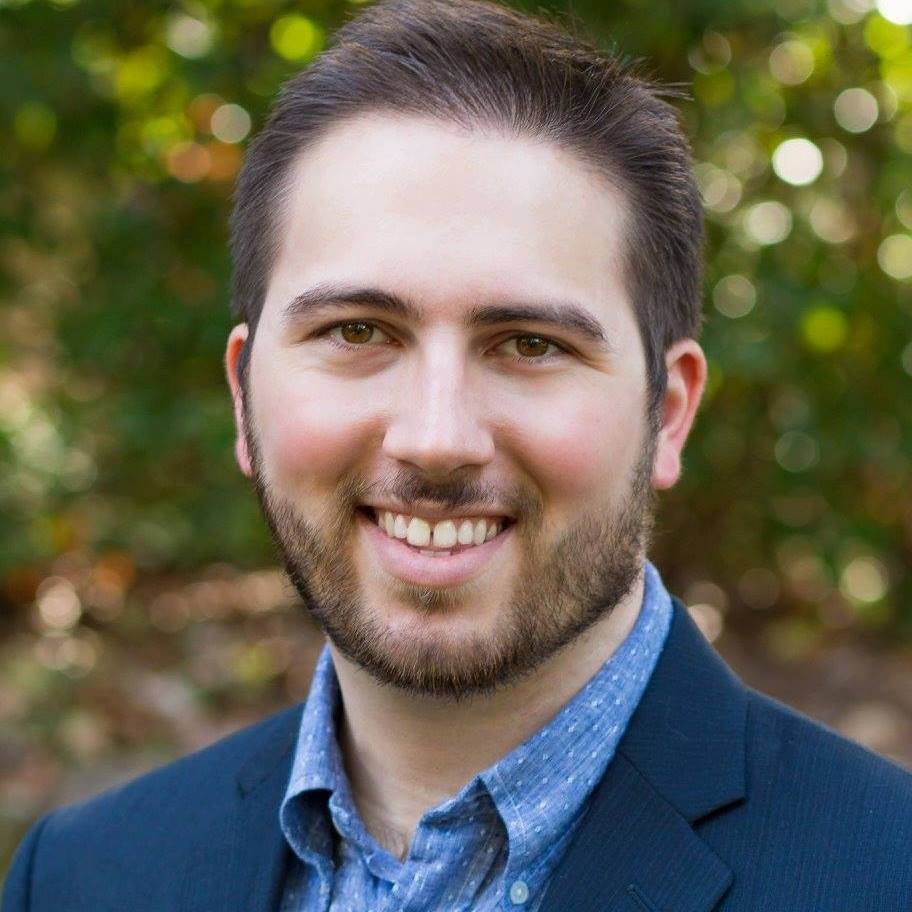

We’re excited to introduce you to the always interesting and insightful Alek Wasserman. We hope you’ll enjoy our conversation with Alek below.
Alek, looking forward to hearing all of your stories today. Have you been able to earn a full-time living from your creative work? If so, can you walk us through your journey and how you made it happen? Was it like that from day one? If not, what were some of the major steps and milestones and do you think you could have sped up the process somehow knowing what you know now?
This is an interesting one for me, since I have worked as a professional musician my entire career, but not necessarily in the most traditional sense. I have always considered myself to be a classical pianist at the core of my musical and professional identities. I have other skillsets, such as education, entrepreneurship, and soldiering, but those have always been secondary to my hard skillset as a pianist. Although I did not start my career as a business owner, every professional position I’ve held has been based on my ability to play the piano on some level.
I started my career teaching elementary music at a local charter school and teaching piano lessons on the side through another institution. I quickly joined the 440th Army Band of the North Carolina National Guard, and I worked those three jobs together for about four years.
In April of 2022, I filed “Doing Business As” paperwork with the State of North Carolina, officially creating Triad Music Academy while still working in my three aforementioned positions. I wanted to finish out the school year so as not to leave my charter school students without a music teacher, so my first major milestone was leaving that position in June of 2022. At first, I continued teaching piano lessons at the other music school, but I had enough student buildup to leave that position in August of 2022. Since then, I have only worked as a self-employed piano teacher, and as a part-time pianist for the U.S. Army. The next major milestones were forming Triad Music Academy into an LLC (February 2023), and hiring my first teacher to work underneath me (May 2023); we are now up to five total piano teachers!
If I had to go and do it all again, the main thing would be starting this journey earlier on. I think the main fear that a lot of musicians have is that they tend not to learn any business skills in music school, so they view music entrepreneurship as unobtainable. I have worked with three different music school business coaches to grow Triad Music Academy, and I have learned that it is inarguably possible to make a living with your own music business. You just need to strategize, develop consistent habits, and be a little brave in the face of uncertainty.

Alek, love having you share your insights with us. Before we ask you more questions, maybe you can take a moment to introduce yourself to our readers who might have missed our earlier conversations?
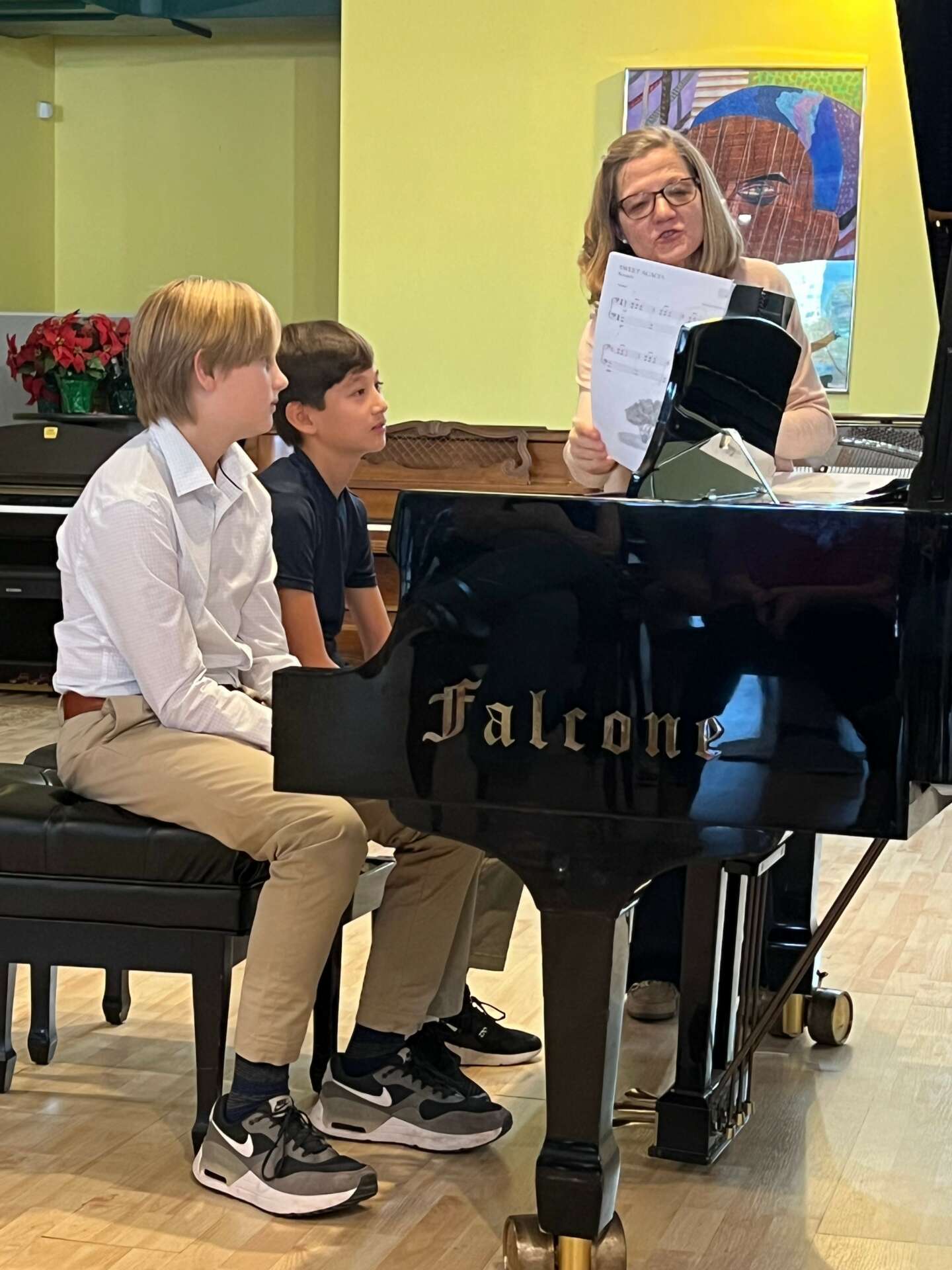
Triad Music Academy’s motto is “Building Lifelong Pianists.” Our focus is on providing piano students with an experience that strikes a balance between promoting a love of the piano and the disciplined type of educational foundation that is necessary to create a lifelong piano skillset.
This idea comes from my own upbringing. My dad was, once upon a time, a radio DJ for WFMR-FM in Milwaukee, Wisconsin. In that role, he was fortunate to interview the famous violinist Shlmo Mintz on air. Mintz told my dad that there were two kinds of people in this world: people who can play an instrument, and people who wish their parents hadn’t let them quit. While that interview struck a chord with my dad, my mom grew up playing the viola and is also an ardent supporter of the arts. Thus, my brother and I grew up in a household where playing an instrument was mandatory until the age of 18. I am now a professional pianist, and he is a professional cellist. I can honestly say that I’ve built my music school on the values that I was raised with.
As such, one of Triad Music Academy’s core values is the idea that no one piano method book is perfect, and that therefore we must adjust our approach for each student. You can read more about this on our website by visiting the newsletters section, where I have written regularly for the past few months about the pros and cons of various piano education approaches. The fact is that you cannot use a “one-size-fits-all” approach to teaching the piano because every person who enters the studio is different.
Some method books are really great at incorporating music that motivates students to practice, but they take a terrible approach to keyboard technique. Other books are great at teaching technique, but they are not very culturally accessible to today’s students. A piano educator has to use a mixture of learning materials and supplements where necessary in order to create this wholistic approach.
In piano education, there are two extremes that we strive to avoid. The first is piano lessons that focus too much on having fun, and fail to develop any tangible piano skills. These lessons are very common, and usually result in students who get stickers at their lessons but play with flat hands and struggle to play anything outside of a Middle C handshape. The second extreme is very old school: teachers who will not let a student play a single note at the instrument until they are sitting absolutely correctly and focus too heavily on technical perfection. Most students resent this type of piano lesson environment, even though its educational value is much higher.
Ultimately, both styles are in the wrong. You have to be able to reach students in order to serve them, but you also cannot in good faith teach them just to have fun. I have often said that everything you need to learn about life can be learned through playing the piano, and this includes both the ups and the downs. Students need to be sufficiently challenged, but also sufficiently loved. It is through this approach that we develop our lifelong pianists, and consequently we have enjoyed very high student retention rates.
In short, our path to building lifelong pianists runs through striking an educational balance. This is why we also offer free supplemental materials to our students as a failsafe for the holes in piano method books. If, for example, a student needs to work on learning the names of the black keys, we have a worksheet that they can print out and bring to their next lesson for further instruction. We have several packets and worksheets in that vein, and our collection is slowly growing. Relatedly, all students have Unlimited Lesson Support, so they can text or email me directly with questions in between lessons however much they need. I have had students send me videos of them at the piano to confirm that they are playing the right notes, etc. The idea is that no student should have to feel like they do not understand their lesson assignments.
Finally, we offer opportunities for every student to receive instruction from both their regular instructor and from fresh sets of ears. We hold three masterclasses a year where local piano professors come and work with our students. By the end of 2023, we will have had piano faculty in from the UNC School of the Arts, Duke University, and Winston-Salem State University. Our group makeup classes are taught by our in-house instructors on a rotating basis, and we sub for each other’s lessons as needed. We even have a handful of students who take weekly lessons with multiple instructors, focusing on different aspects of their music education in each lesson.
What’s a lesson you had to unlearn and what’s the backstory?
A huge lesson I had to unlearn was the entire structure of classical/academic music careers. I could go on about this forever, but in essence, this industry seems to largely prioritize appearances over prosperity. What I mean is that I came out of my six years of music school almost conditioned to look for the most possible ways to build my artistic bio over finding employment that would actually be fulfilling, stable, or adequately paid.
I had built my entire identity as a person around being “the guy” within my field, even if that meant trying to craft a career where I worked three jobs simultaneously. I was underpaid, underappreciated, and working towards the goal of eventually pursuing a doctorate, which would have in all likelihood set me financially backwards. After a certain point, I had to ask myself why I was doing all of this. The only answer I could come up with was that it was how I thought I could have the most profound reputation in music education and classical piano. Ultimately, going to music school had taught me to prioritize my ego over my work-life balance and even my own wellbeing.
I am fortunate now to have reached a point with Triad Music Academy where I will never look back. I used to get up in the morning to teach at my charter school day job, then go straight to a few hours of piano lessons afterschool. I would get dinner, go to bed, and rinse and repeat. Then I would drive an hour and a half each way to go to drill on the weekends. Now, I still work a lot, but it’s on my own terms. I never work two different jobs in the same day anymore, and when my military service concludes, I will have just one job for the first time in my career.
There is a strong likelihood that I will never hold a doctoral degree, and that I will never have collegiate students looking up to me. But the tradeoff is that I’m able to build a piano school how I see fit, and I’m finally fairly compensated for my efforts. As I have transitioned in life from being single to starting a family, I have no regrets about this. In fact, I wish more musicians coming out of the music school pipeline would look at their career and their purpose through this lens.
Any insights you can share with us about how you built up your social media presence?
Building a social media presence is all about consistency and sharing your values. It’s taken a lot of effort on my end, because I am not the most natural marketer of my skills. I have had to transition from viewing social media posting as a chore, to viewing it as an opportunity to share my vision for Triad Music Academy.
A mistake I made early on that I think a lot of other people make, is trying to be all things to all people. If you are going to build a business on social media, you need to be very clear and specific about your services and your goals for your clients. You also need to share “social proof,” or evidence from real clients that your services work for them. Also remember that depending on the type of business, you do not necessarily have to have tons of followers to be successful. Be an influencer if you are going to be an influencer. If your business is something else, do not try to be an influencer. Be your business.
Social media is also just one piece of the puzzle. Triad Music Academy has Facebook and Instagram pages, but our website (and therefore our Google search presence) is also a huge tool for booking calls with prospective students. We also have a growing email list, which I use to distribute monthly newsletters. I remember thinking when I first started studying marketing that newsletters would be useless because I never read the ones that get sent to my email. However, that is very much not the case for everyone. Some people do not want to read all these excess emails in their inbox, and others are interested in your services, but have not become clients yet.
My final thought here is to remember the phrase, “polarizing, but not controversial.” You see it all over marketing spaces. You never want to court controversy, but you do want to post content that gets people’s attention. In the case of piano lessons, that could be a post that starts with “99% of Piano Teachers Get This Wrong About Teaching Technique,” or something along those lines. A lot of people are averse to using these marketing techniques because they find them to be cliche, but I’ve learned over time that they work. You just have to make sure that what you post aligns with the values that you actually use in your business so you maintain your credibility over time.
Contact Info:
- Website: triadmusicacademy.com
- Instagram: https://www.instagram.com/triadmusicacademy/
- Facebook: https://www.facebook.com/triadmusicacademy
- Youtube: https://www.youtube.com/channel/UC97Vvlz28r3PmBeBClA5Bhw