

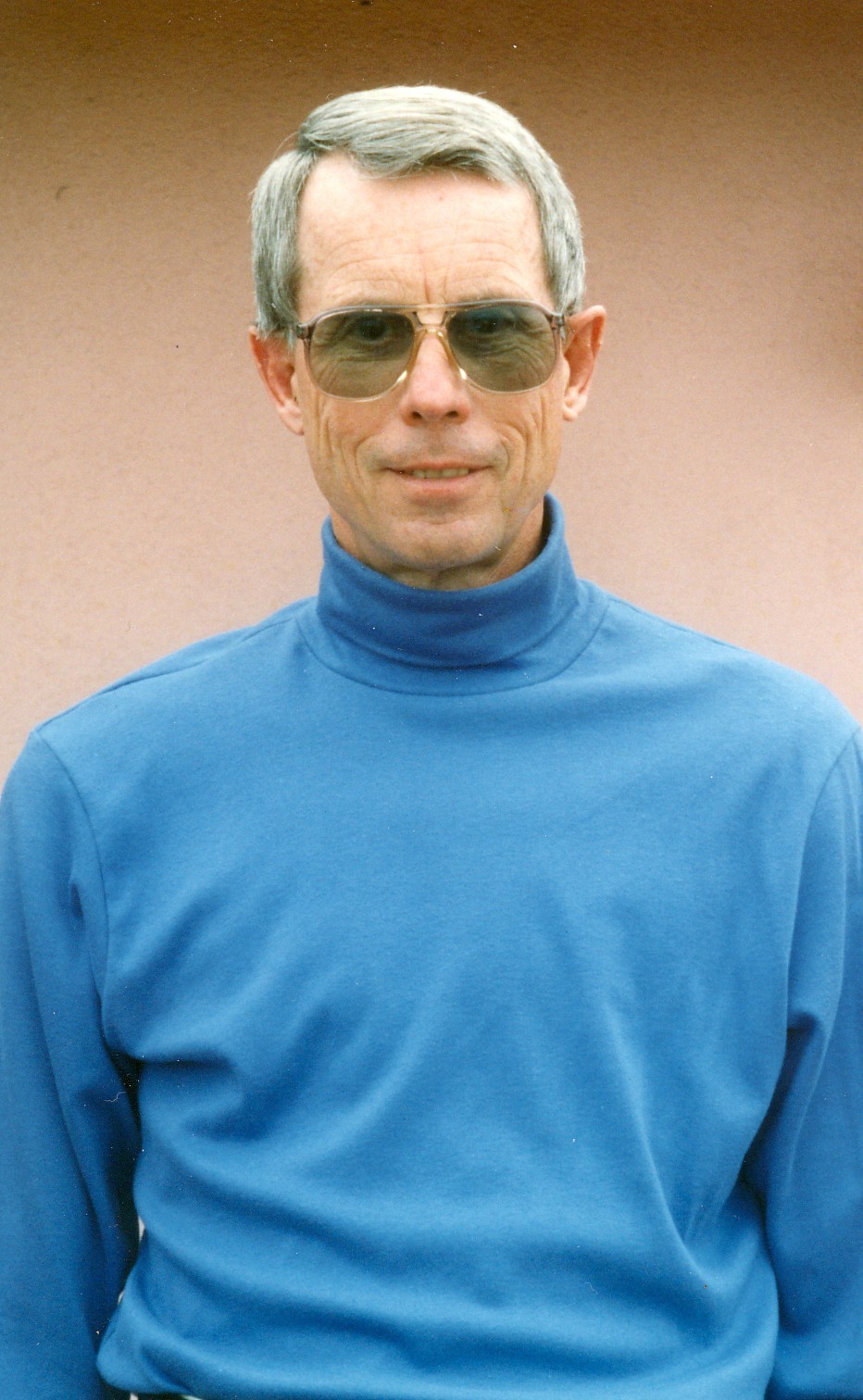

We were lucky to catch up with Alan Cook recently and have shared our conversation below.
Alright, Alan thanks for taking the time to share your stories and insights with us today. It’s easy to look at a business or industry as an outsider and assume it’s super profitable – but we’ve seen over and over again in our conversation with folks that most industries have factors that make profitability a challenge. What’s biggest challenge to profitability in your industry?
Writing for publication is a winner-take-all business. A person who writes books (fiction or nonfiction), articles, stories, or poetry, without the comfort of a salary or a contract, and attempts to sell the result, is competing against a multitude of other writers doing the same thing.
We know who the winners are in the writing game. They are the best-selling authors whose book sales rankings are reported in newspapers and online articles. They are the authors of the books in your local bookstore. We recognize their names and go to their book-signings. They make the great majority of the money in the writing business.
Since this is a fact of life, why do people write books when they don’t know in advance whether they will make a significant amount of money (or any money) from them? Or when they need to have paying jobs to cover living expenses, so they can spend time writing? One answer is that writing is a creative activity, and people need to be creative.
It used to be that a few publishers controlled the book business. If they wouldn’t publish your book, there was no alternative. In recent years it has become much easier to get a book published, thanks to companies like Amazon. You can receive online help formatting your book and creating a cover. Amazon and other companies will sell your book online. A book can be sold in traditional print format, or as an eBook or audio book. The result is that there has been an enormous increase in the number of books for sale. Of course, winner-take-all still applies.


Alan, before we move on to more of these sorts of questions, can you take some time to bring our readers up to speed on you and what you do?
Many of my ancestors were part-time writers. Some, including my mother and father, wrote at least one book. My mother and grandmother wrote poetry. When I was young, I had a poem published in a children’s magazine and received $2 for it. I received $10 for writing the words to my high school’s alma mater. I also wrote weekly stories about high school events for the town newspaper.
I worked for many years in the computer business before I started writing as a fulltime job. Since then, I have written and published 24 books, both fiction and non-fiction. Most of my books are available as eBooks on Amazon.com and other platforms, and some are available in print.
My books have won several awards, and I am proud that my short story, “Checkpoint Charlie” was selected for the Mystery Writers of America anthology: “Ice Cold: Tales of Intrigue from the Cold War”, edited by Jeffery Deaver and Raymond Benson, the only Americans who have written James Bond novels.
Under non-fiction, “Freedom’s Light: Quotations from History’s Champions of Freedom” is available free as an eBook at Smashwords.com. “Walking the World: Memories and Adventures” tells about walking adventures in the United States and other countries.
My book for older children, “Dancing with Bulls” is beautifully illustrated by Janelle Carbajal and takes place 4,000 years ago on the Greek island of Crete when the Minoans trained young captives to dance with and leap onto bulls.
My books of fiction are in two main categories: mystery and action/adventure. “Rocky Road to Denver” is the story of six people who are sponsored to walk from Los Angeles to Denver, and don’t always get along with the elements or each other.
I have several series, including the adventurous Carol Golden novels, about a young woman who has amnesia and calls herself Carol Golden because she doesn’t remember her real name. She seems to find trouble wherever she goes. Lillian Morgan is a senior citizen who solves murders while living in a retirement community, when she hasn’t been expelled from it. Charlie and Liz work together to solve crimes and are even asked to go into East Germany to gather information about a dangerous weapon while the Berlin Wall is up.
I enjoy writing, and I am pleased when readers get enjoyment out of reading my books.

Can you share a story from your journey that illustrates your resilience?
Under my picture in the high school yearbook when I was a senior it says: Ambition: Writer. However, after working for two summers at a newspaper, I didn’t see much prospect of making big money as a writer. After I finished college I worked in the business world, and soon found myself in the computer industry. After many years I was laid off at a time when my wife was working her way up to becoming a vice president of Xerox. She told me that I couldn’t take another job that would keep me from traveling with her at a moment’s notice.
Because money wasn’t a major problem for us, I decided it was a good time to pursue a writing career in earnest. Over many months I wrote a novel and sent it to a literary agent. It came back with comments that essentially said I should try again. I did, with the same result. I wrote four “practice” novels that didn’t get published.
After finishing a fifth novel, I had learned a lot, and my books were getting better and better. I decided to take a different route. I had the novel published by a company that charged for publication. I had to do my own marketing, but I found that to be fun. I have been writing ever since: books, articles, stories, and poetry. Since that time, companies like Amazon have made self-publishing cheaper and easier. I have published 24 books. It has been a very satisfying second career.
For you, what’s the most rewarding aspect of being an artist or creative?
The reward for me as a writer is knowing that people are reading and enjoying what I have written. In addition to publishing my own books, I have had my writing published in books, newspapers, and magazines. I also write poems for family members and friends. I am required to write four poems a year for my wife. When dining out in a restaurant that has paper tablecloths, I have been known to write limericks for other people at the table.
I write books, stories, poems, and articles that have never been written before. Their words produce various reactions in readers. The reactions may include joy, tension, excitement, laughter, or even a tear. Writing is often educational; the reader may learn something from what I have written.
One question that writers are facing in today’s world is whether Artificial Intelligence will write the books of the future. I decided to test the AI provided by the search engine called Bing. I asked Bing to write a limerick (a five-line poem) about a bird. It gave me a result in a few seconds, but the product was not a great poem. I haven’t asked it to write a book yet, but I’m not worried about it replacing me.

Can you share your view on NFTs? (Note: this is for education/entertainment purposes only, readers should not construe this as advice)
Charles MacKay published a book in 1841 Called “Extraordinary Popular Delusions and the Madness of Crowds.” It tells about phenomena that occurred prior to 1841 such as Tulipomania, during which people paid more and more money for Dutch tulips, thinking that their price would keep going higher. It didn’t. I recommend that anybody who is thinking about paying a lot of money for an NFT read this book (available from Amazon) before taking action.


Contact Info:
- Website: www.authorsden.com/alancook