

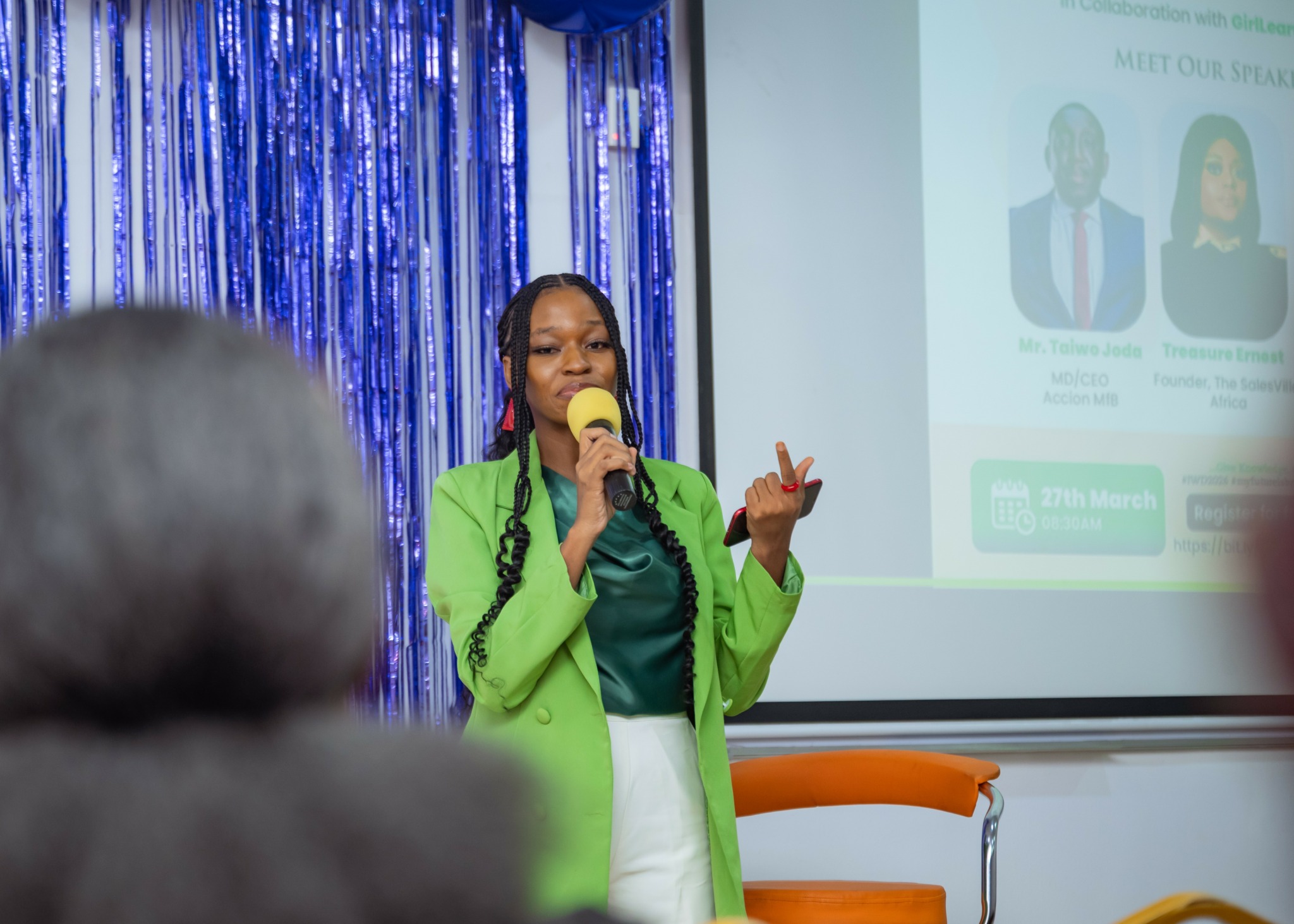

We caught up with the brilliant and insightful Ajiri Okoribe a few weeks ago and have shared our conversation below.
Hi Ajiri, thanks for joining us today. Please tell us about starting your own firm and if you’d do anything different knowing what you know now.
Starting GirlLearn Africa came from a growing awareness of the gap between opportunities in the digital economy and the number of women who had access to the skills needed to benefit from them. I have always been passionate about education, women’s empowerment, and creating pathways to economic opportunities, and I felt compelled to do something practical to address that gap.
In the early stages, my focus was on understanding the problem more deeply and validating the need for what we wanted to build. I started by creating a community where women could learn, connect, and grow together.
This gave me the opportunity to engage directly with women, listen to their challenges, and understand the barriers they faced in accessing opportunities in the digital economy.
Through these conversations, I was able to identify the skills, support systems, and resources they needed to advance their careers and improve their economic prospects. These insights became the foundation upon which GirlLearn Africa was built and helped shape our vision and direction.
Alongside community building, we began developing practical and accessible learning programs designed to equip women with relevant skills for the future of work. Our goal was not just to provide training but to create opportunities for women to build confidence, expand their networks, and position themselves for personal and professional growth.

As always, we appreciate you sharing your insights and we’ve got a few more questions for you, but before we get to all of that can you take a minute to introduce yourself and give our readers some of your background and context?
My name is Ajiri Okoribe, and I am a communications and marketing professional, entrepreneur, and Founder of GirlLearn Africa, a platform dedicated to equipping African women with the skills, opportunities, and confidence they need to thrive in the future of work.
My journey into this space was driven by a passion for education, storytelling, and human development.
Over time, I became increasingly aware of the barriers many African women face in accessing digital skills, career opportunities, and economic empowerment. Rather than simply acknowledging the problem, I wanted to be part of the solution, which led to the creation of GirlLearn Africa.
Through training programs, mentorship, community building, and career development initiatives, we help African women gain practical skills, build confidence, and position themselves for opportunities in the digital economy. Our mission is simple: to prepare African women for the future of work and unlock their potential.
Alongside my work as a founder, I have built a career in marketing, communications, content strategy, and brand development, helping organizations communicate their value, grow their visibility, and connect meaningfully with their audiences.
What sets my work apart is the belief that building brands and building people go hand in hand. Whether through education, communications, or entrepreneurship, I am passionate about creating opportunities that drive growth, impact, and transformation.
What I am most proud of is the growing community we have built and the lives we continue to impact. For anyone discovering my work for the first time, I would like them to know that GirlLearn Africa is more than a learning platform. It is a movement committed to helping African women build brighter futures through skills, opportunity, and community.

How do you keep your team’s morale high?
Managing a team and maintaining high morale starts with remembering that people are not just “resources,” they are individuals with different motivations, pressures, and strengths.
For me, the foundation is clarity. People do their best work when they understand the vision, their role in it, and what success looks like. When expectations are clear, it reduces confusion and frustration, which naturally improves morale.
The second is communication. I try to keep communication open, honest, and consistent. Not just about tasks, but also about progress, challenges, and context. When a team understands the “why” behind what they are doing, it builds ownership.
Trust is another key factor. I believe in giving people room to work in their own style once expectations are clear. Micromanaging usually lowers morale, while trust encourages creativity, responsibility, and growth.
I also pay attention to recognition. People want to feel seen. Even small wins matter, and acknowledging effort goes a long way in keeping motivation high, especially in fast moving environments where a lot of work can go unnoticed.
Finally, I try to lead with consistency. Teams feel more secure when leadership is steady, fair, and dependable, even in high pressure moments.
For me, good team management is less about control and more about creating an environment where people can do their best work, feel valued, and grow alongside the mission.

Can you open up about how you funded your business?
One of the key early supports that helped shape the foundation of the work was a grant I received. That grant played an important role in helping us move from idea to structure. It allowed us to begin formalizing our programs, support initial training activities, and create more consistency in how we engaged and delivered value to our community.
Beyond that, I have also had to be very resourceful in how the work is funded and sustained, especially since we are still the early growth stage. A lot of what we have built has come from reinvesting into the work, prioritizing what is essential at each stage, and making sure that impact and delivery remain at the center of every decision.
What I’ve learned through this process is that early-stage funding is not just about the amount of money you have, but how effectively you are able to use what is available to build credibility, traction, and proof of impact.
I also believe founders should not wait for funding before starting. In many cases, the early work of building community, testing ideas, and showing proof of concept is what eventually attracts funding or investment. When there is evidence of impact, even at a small scale, it becomes easier for grants, partners, or investors to step in and support growth.
Contact Info:
- Website: https://www.girllearnafrica.com
- Linkedin: https://www.linkedin.com/in/ajiriokoribe


