



We recently connected with Aisha Harrison and have shared our conversation below.
Aisha, looking forward to hearing all of your stories today. We’d love to hear the backstory behind a risk you’ve taken – whether big or small, walk us through what it was like and how it ultimately turned out.
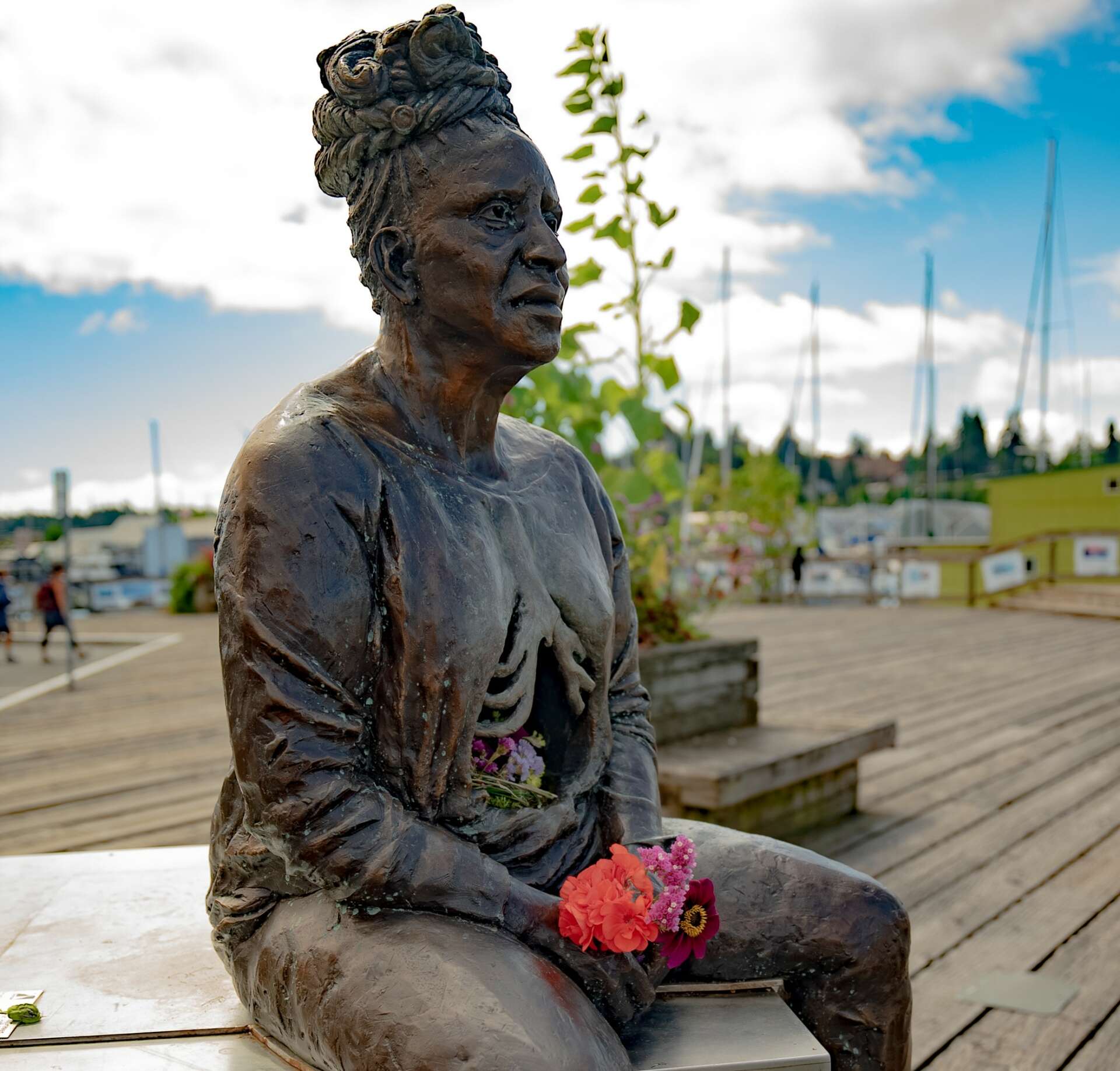
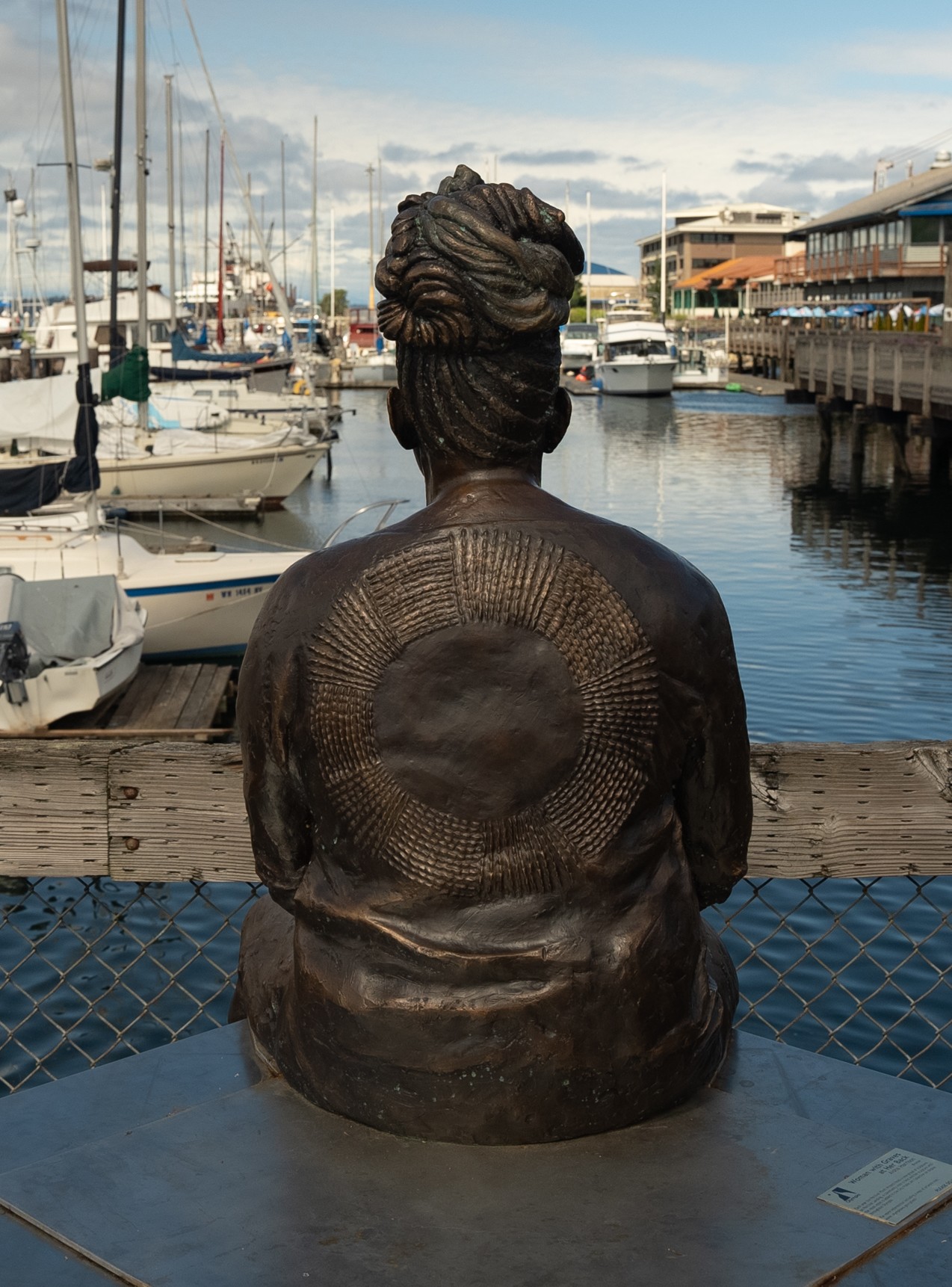
In early 2019 I decided to quit my long time adjunct teaching job and work in my studio full time. The risk was not only in reducing our household to one income (at least for a while) but also because teaching was part of my identity. My whole life I knew I was going to teach. I taught little kids to read when I was in middle school. I taught refugees English in high school. I tutored Spanish in college. I taught third and fourth grade for two years after college. I taught in graduate school and while I was a resident artist at Baltimore Clayworks. Teaching is in my blood, my mother was a professor for 35 years (she’s also an artist). So why did I quit? Just because you’re good at something and you’ve put a lot of time and energy into it, doesn’t mean you have to keep doing it. There was a feeling in my body that I was not living my full life. I wanted to do more and was being held back by the amount of time that teaching was taking from my studio. Academia didn’t suit me, the politics, the angling, the refusal to see making things with your hands as “academic” work. I wanted to get into public art, and make more studio work, and have my work shown in major cities and museums. It’s important to say that while this was a financial risk for sure, it was mitigated for a while because my spouse had a steady fairly high paying job with benefits, and we rent our home and my studio from my mother. Although our finances are challenging, it was the best decision I’ve ever made. Even with the pandemic and having a young child at home for a year and a half, I have been able to accomplish all of what I set out to do. I have a museum show coming up in 2025. I raised over 20,000 with a go fund me campaign to turn a life sized figure from clay to bronze. The piece was purchased by the city of Olympia and will be a permanent part of their collection. I am in a major book about contemporary Black ceramic artists which includes a traveling exhibition. I’ve exhibited in Seattle, Minneapolis, and Sacramento and will soon be in two shows on the East coast. I’ve made more and sold a lot more work. I received a large public art commission from the University of Washington-Tacoma through the Washington State Arts Commission. Best of all, I feel like I am doing what I was meant to do with my life.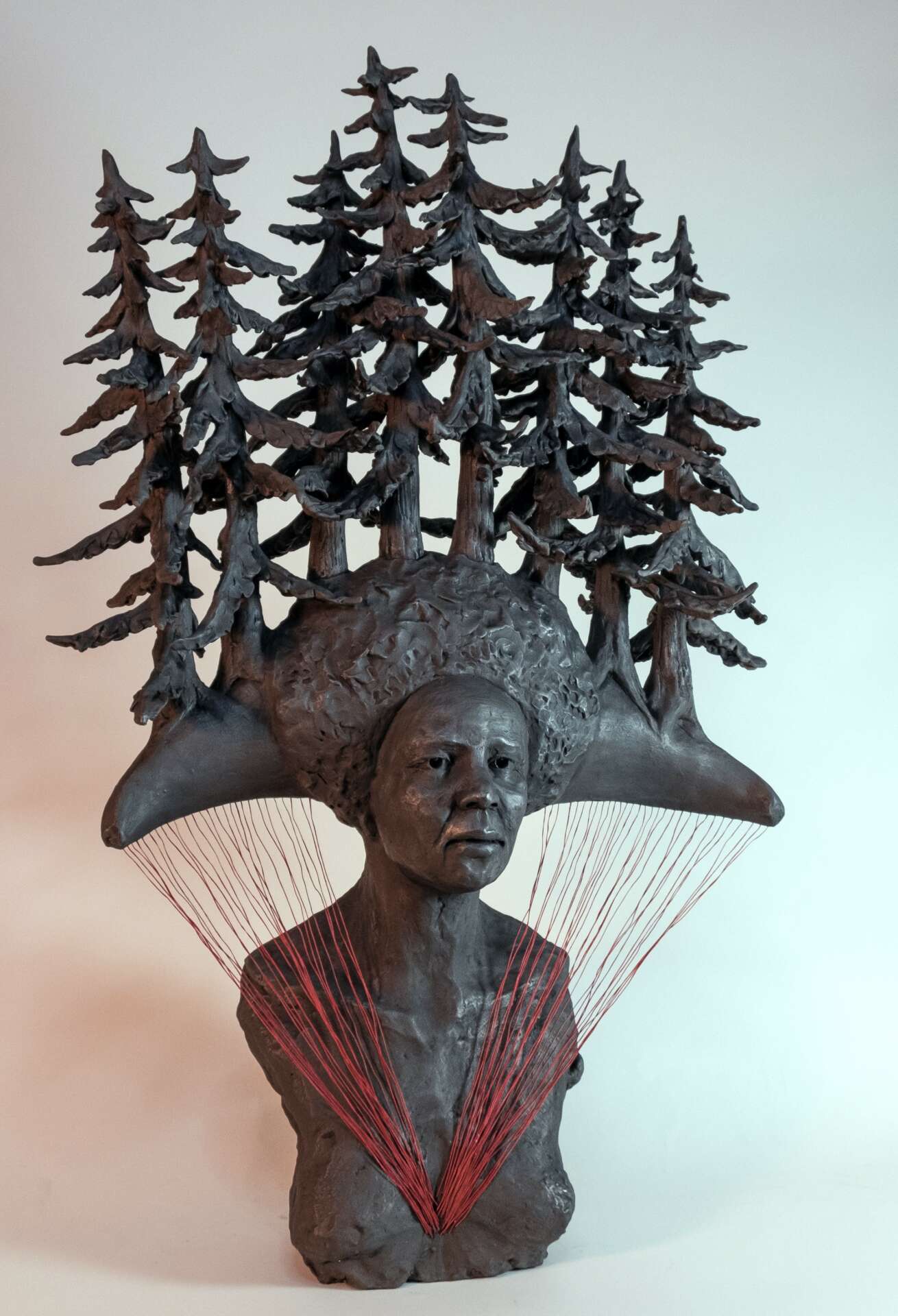
As always, we appreciate you sharing your insights and we’ve got a few more questions for you, but before we get to all of that can you take a minute to introduce yourself and give our readers some of your back background and context?
I am a sculptor working primarily in clay and bronze. I discovered clay in a community studio, while working toward a degree in Spanish at Grinnell College in Iowa. After graduating, I spent the next two years teaching third and fourth grades in Atlanta, Georgia, and exploring clay at Callenwolde Fine Arts Center in Georgia, and Penland School of Crafts in North Carolina. I decided to go back to school and received a BFA from Washington State University, and an MFA from University of Nebraska- Lincoln. My work is shown nationally with recent work at the Crocker Museum, Northern Clay Center, Public Display Art Gallery, Wa Na Wari, Bainbridge Museum of Art, and at the Leonor R. Fuller Gallery. I have done residencies at Watershed Center for the Ceramic Arts, Women’s Studio Workshop, and Baltimore Clayworks. I have taught workshops/courses/programs at Bainbridge Island Museum of Art, Penland School of Crafts, The Evergreen State College, Bykota Senior Center, Baltimore Clayworks, University of Nebraska- Lincoln, the Lux Center for the Arts and for The American’s For the Arts.
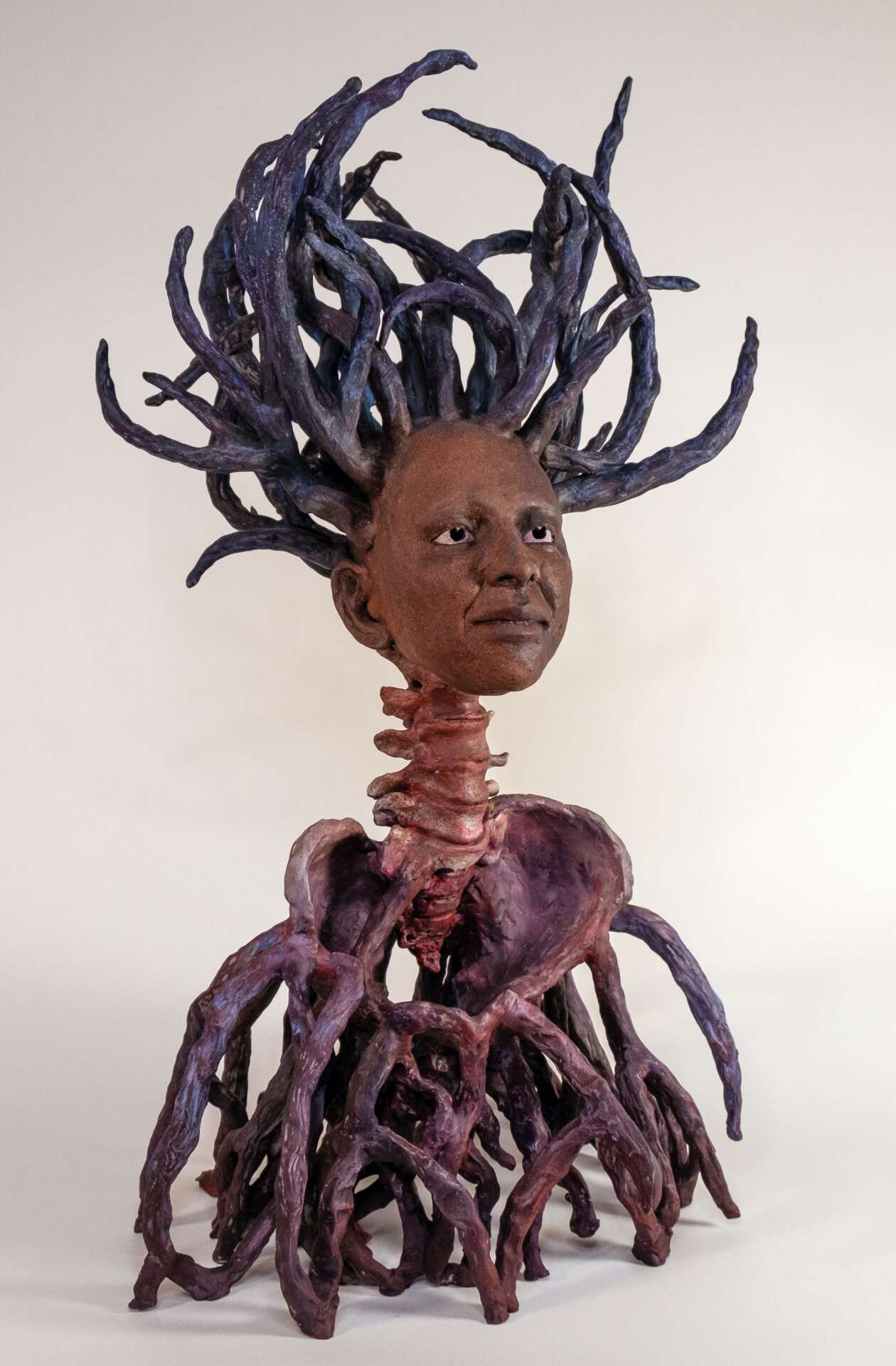
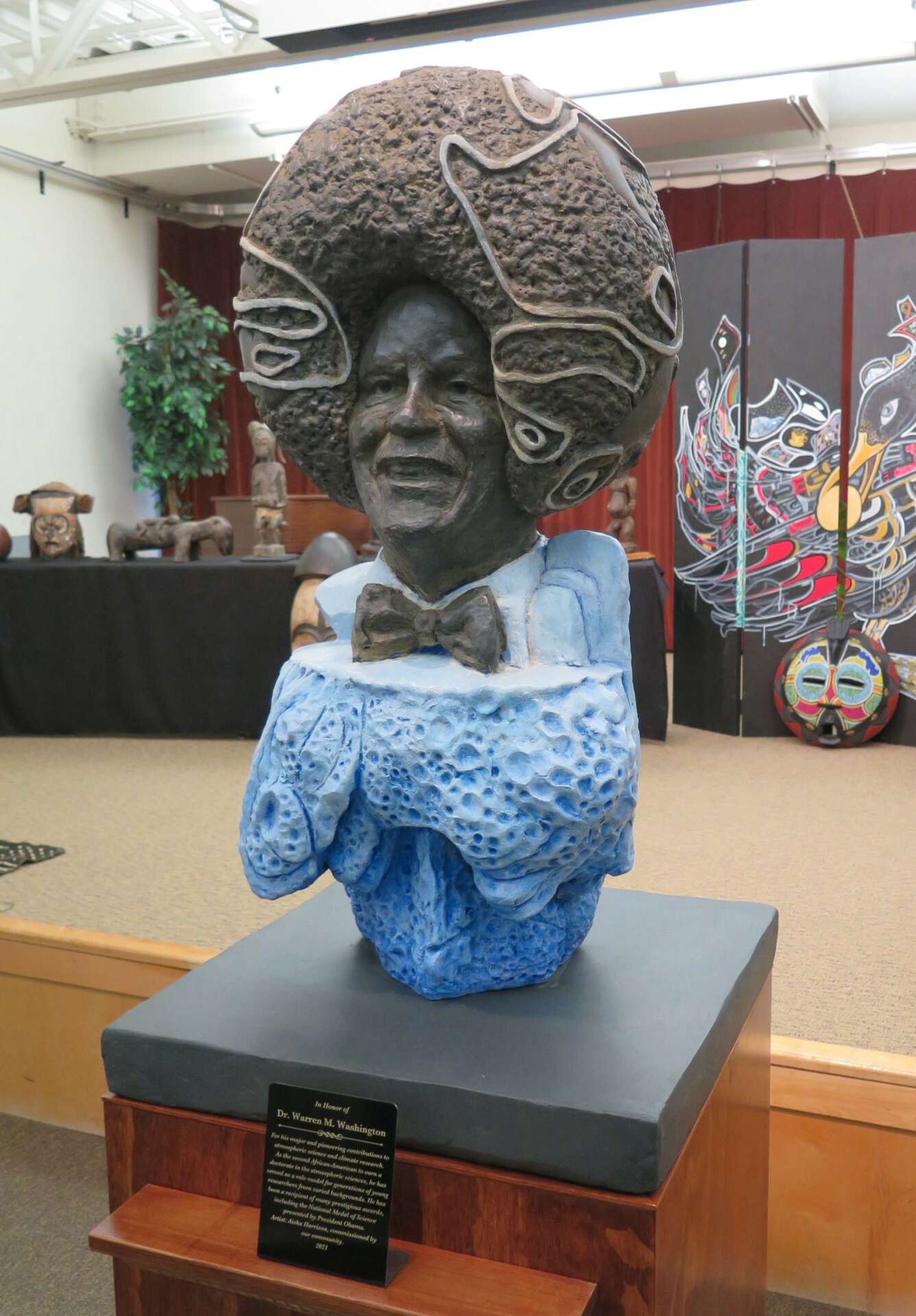
In my work, I use the body as a site to explore the lived experiences of racism, ancestral (human and non-human) connection, and the complicated blend of histories held within my body. My work shows reverence for real bodies while also incorporating elements that are physical manifestations of the intangible. The humans I make are often interconnected with elements of the natural world, many of whom are native to the Pacific Northwest where my family has lived for four generations. Trees, roots, animals, water, stars, and salt are common threads throughout my work. I love paying attention to, and learning from, our non-human relatives and incorporating their teachings. My work balances the individual and the collective. Each piece contains a unique individual but also references to a larger collective of people and/or the natural world. I want my work to encourage people to think about their relationships to each other as well as our non-human relatives that surround us. In the connections between the individual and the collective, I hope to encourage us to build community, activate webs of support for all living beings, and reflect on and act toward being the best future ancestors we can possibly be. I want my work to live in the stream of “good trouble” that is pushing our country to reckon with its past, recognize how the past is implicated in our systems now, and live up to our country’s best ideals.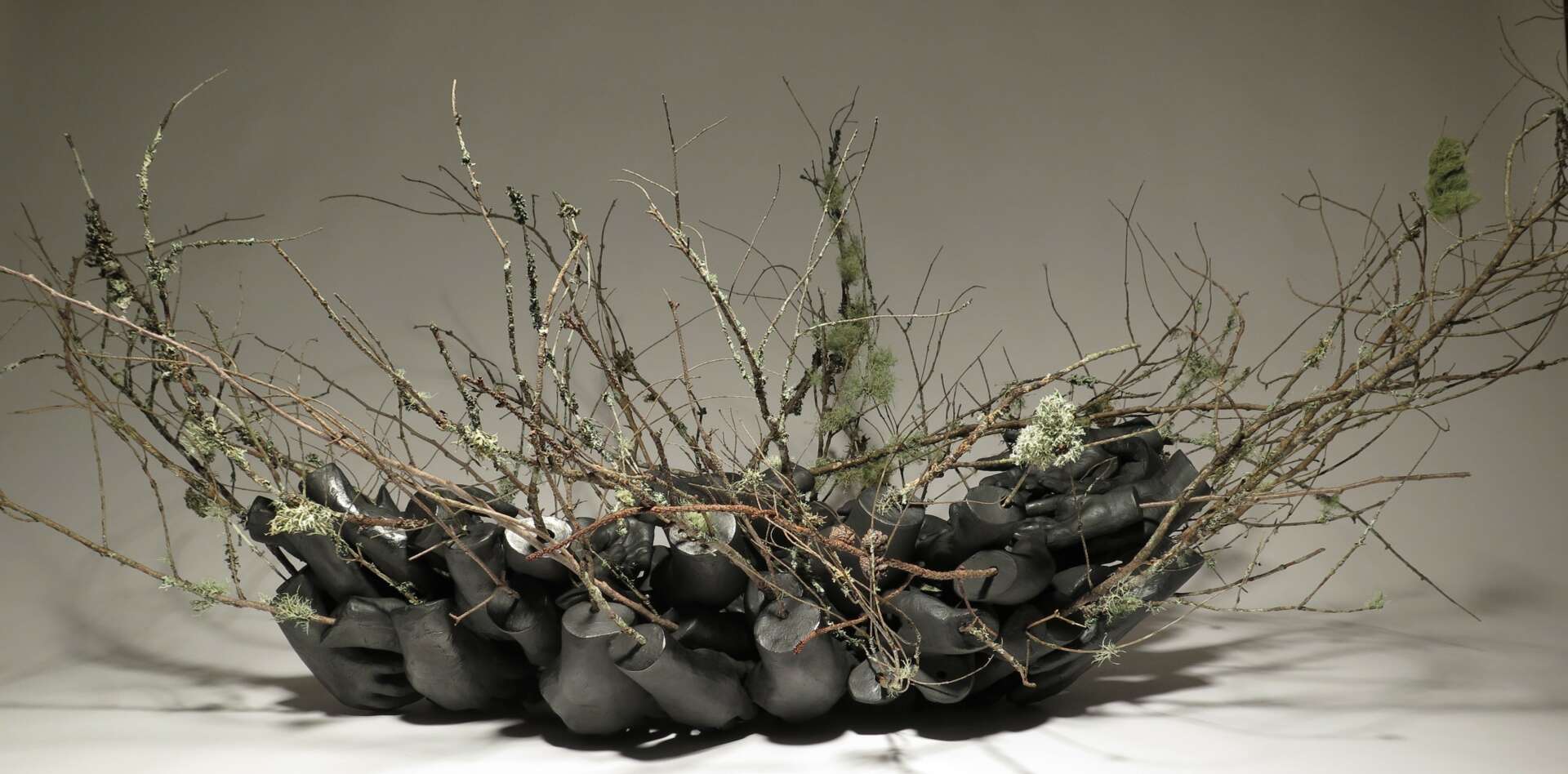
For you, what’s the most rewarding aspect of being a creative?
The most rewarding thing about being an artist is that I am doing something that I love that is constantly evolving, as am I! I love the record of my past selves that lives in my work. It is exciting to watch my growth both as a sculptor and a human being in a very tangible way. I also love that art can do something in the world. I have watched myself and others respond and change/grow from experiencing a piece of art.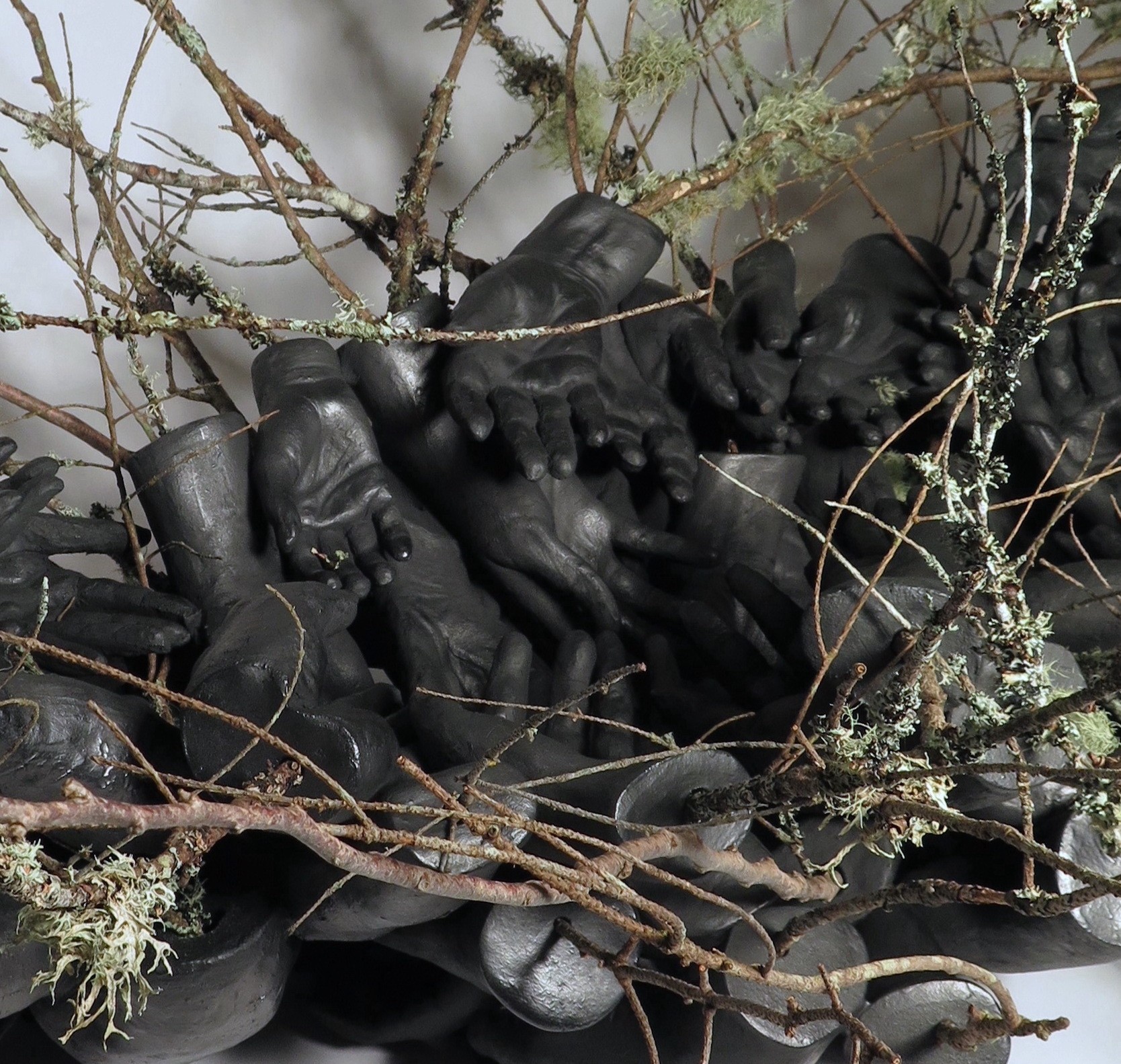
Is there something you think non-creatives will struggle to understand about your journey as a creative?
I used to think that art was extra, not really that important, that it was the spice, the beauty, the decor of life. The piece that changed my view on art (and made me decide that I would pursue art) was Yoko Ono’s Cut Piece. If you haven’t seen it, you can watch it on YouTube, but I think it is completely different to participate in it live, which is how I experienced it. It was performed by an artist (not Yoko Ono) at Penland School of Crafts in the dye shed, in the summer of 2000, the year I graduated from Grinnell College. The premise of the piece is that there is a person (in this case a woman) sitting crosslegged on the floor in the front of the room who asks people to cut off pieces of her clothing with the scissors laying in front of her. In the version I saw, she asked that participants come from the front do to the cutting so she would know they were there. This sounds so simple. She is a willing participant, who has asked the audience to do this thing. Getting naked in front of an audience isn’t that big of a deal right? My first thought was about what she was wearing and what small piece of it I would want. Then people started cutting.
I witnessed people cutting away a piece of her clothing over and over, the ritual of passing the scissors to another taker, her small flinch each time the scissors touched her skin, the way that people chose to cut parts of the clothing that would reveal more of her body like a bra strap, the way that some people came from behind her expressly against her wishes. It became a metaphor for (and an act of) violence, rape, exploitation, and dominance. It showed me how I am complicit in violence, how I so easily thought about what part of her I wanted to take for myself. I felt like I had to participate and that I had to stay with her until the end. I took my cut piece from her shirt sleeve, sobbing while I did it, and still have it on my wall in my studio as a reminder. 
Contact Info:
- Website: www.aishaharrison.com
- Instagram: @howitsheld
Image Credits
Photo credit: Misael Martínez