

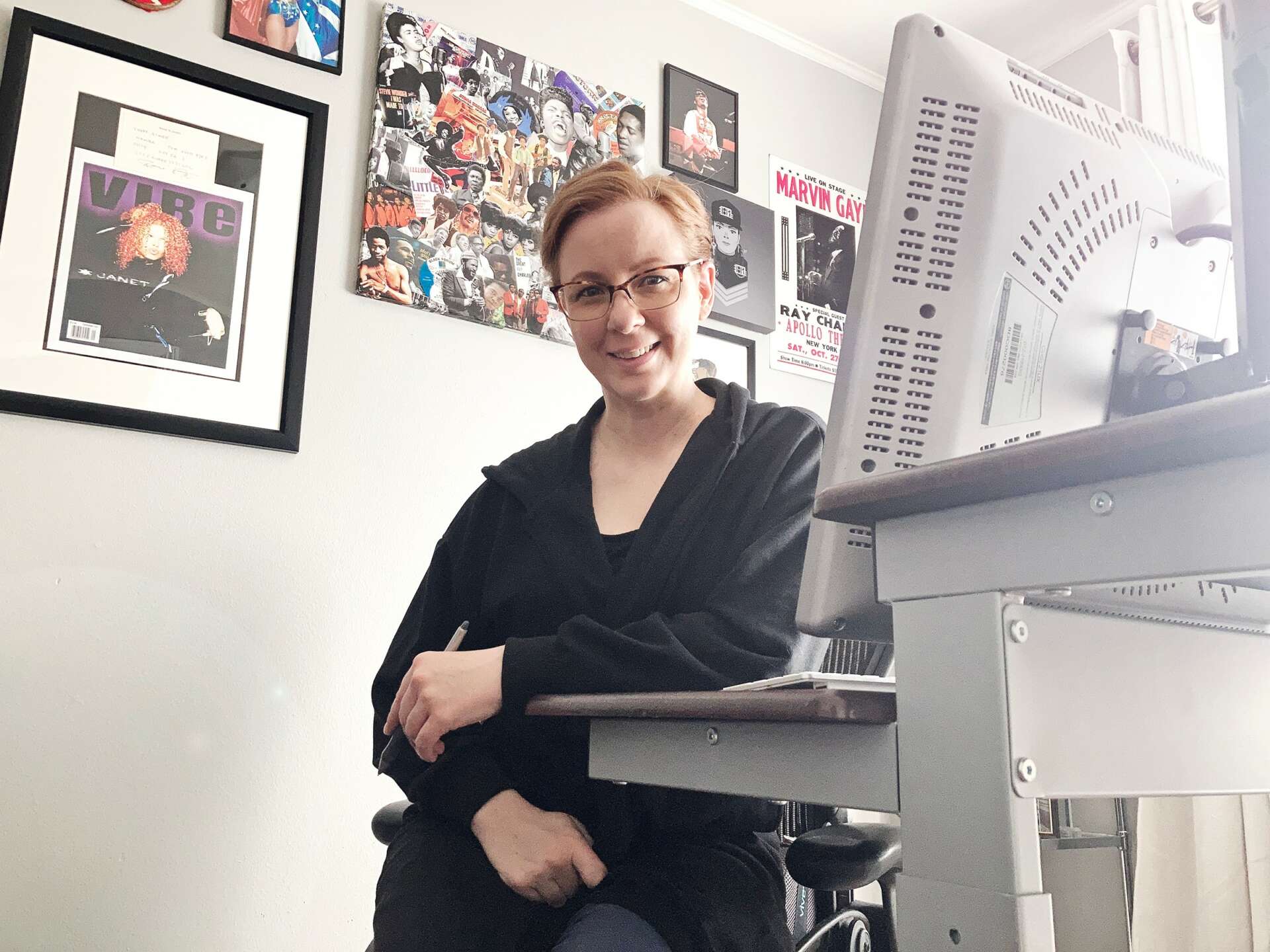

We recently connected with Aimee Stevland and have shared our conversation below.
Aimee, thanks for joining us, excited to have you contributing your stories and insights. What were some of the most unexpected problems you’ve faced in your career and how did you resolve those issues?
What happens when the work you love leads to a mysterious movement disorder? I was an artist who unexpectedly lost the function in my hand and it nearly ended my career.
Ever since I was a kid, I knew I was going to be some kind of artist someday. After high school, college wasn’t really an option for me, so I dove headfirst into the job market and worked various jobs on my way up to a design role.
When I finally landed my dream job creating designs for some of the biggest names in music, I started to notice that my hand was no longer working the way it used to. It became stiff and painful. Using a pen had become difficult, and no matter how hard I tried, my hand wouldn’t cooperate. I couldn’t understand what was happening, and it was devastating to slowly watch my ability to create and make a living drift away.
The next few years were extremely tough. It felt like every aspect of my life had been turned upside down, including physically, mentally, and financially.
I visited several doctors, but none of them could figure out what was wrong with me. They told me it was all in my head, or that I was doing this to myself.
I knew this was not normal and faced with the prospect of losing my ability to draw, I refused to give up. Eventually, I rebuilt my drawing skills from scratch, experimenting with different creative processes, including digital illustration.
But before I got to that point, I also spent time nurturing both my physical and mental health by exploring other experiences that didn’t require the use of my hand, like traveling, meditation, dancing, and roller skating. Through that exploration, I was reminded of how much music has provided a transformative and healing force in my life.
It took over a decade to find the proper experts and a definitive diagnosis of focal dystonia, a neurological movement disorder. There are treatments, but no cure.
My experience with focal dystonia made me even more passionate about doing meaningful work, giving back, and using my work to help others. I learned that being an artist is not just about an attachment to physical ability, tools, or techniques, it’s also about letting go and letting your creativity unfold in any form.


Aimee, before we move on to more of these sorts of questions, can you take some time to bring our readers up to speed on you and what you do?
My early interest in drawing and design started as a result of growing up with a kaleidoscope of album cover art from my father’s vinyl collection.
I was intrigued at an early age by the notion of telling a story with just a single image. Combined with the influence of Disney classics and Saturday morning cartoons, I could often be found on the floor with a pile of scrap computer paper turning my favorite movies and musical artists into cartoons.
Long before social media existed, my early online work caught the attention of my favorite artist, superstar Janet Jackson. This led to some early album cover exploration sketches for “The Velvet Rope,” and brief animated segments for MTV Networks.
In fact, I hold the unique distinction of creating the largest tribute of original Janet Jackson illustrations. It includes over 100 pieces and an active fan base spanning over 25 years.
As the size of album covers diminished into tiny digital thumbnails in the early 2000’s, I set my sights on the next best canvas, the rock n’ roll t-shirt.
During my tenure in music merchandising, my innovative design development in music apparel helped to refresh iconic, legacy brands for new audiences and high-end specialty retail programs which contributed to millions in revenue increases. All while other parts of the music industry were struggling with the transition to digital sales.
Then, as I mentioned previously, a rare neurological disorder struck at the height of my career,causing my drawing hand to lose dexterity and motor control. The condition was diagnosed over a decade later as focal dystonia.
Through this difficult experience, I experimented with different creative processes driven by new physical limitations.
This led to a transition to digital illustration where I refined my unique style even more. I also gained a deeper appreciation for the healing power of music as well as creativity in unexpected places, like roller skating.
Currently, I love helping brands, publishers, and artists build authentic connections and tell their stories through design and illustration. I enjoy a reputation for adapting and remixing complex or dated concepts into new and compelling images. I would welcome the opportunity to join forces with a legacy artist, estate, or brand that is passionate about their craft and looking for a bit of a refresh.
The advent of new online tools and apps has made it easy for almost anyone to call themselves a designer these days. But my professional and lived experience allows me to think beyond floating pixel boxes on social media. I understand aspects of business, legal, and production that allow for more complex projects and tangible expressions.
I hope to use my creative projects as a way to both help others and pay homage to the artists that have influenced me. To that end, I have been creating a portrait series of iconic black music artists and I recently launched a podcast series called “This is How it Starts” that shines a spotlight on the lives and careers of behind-the-scenes professionals in art and culture.
We often hear about learning lessons – but just as important is unlearning lessons. Have you ever had to unlearn a lesson?
After the onset of my focal dystonia, I had to unlearn the aspects of toxic productivity that pushed my body beyond its breaking point. My true value and personal fulfillment is no longer tied to the number of hours I work, or designs I push out.
It’s important to acknowledge that It’s not always easy or even possible to walk away from a bad situation when there are bills to pay, but it is essential to prioritize your well-being and mental health in the long term. Simply put, no one else will do this for you.


How can we best help foster a strong, supportive environment for artists and creatives?
While I don’t have any control over the way society treats artists, I do believe that as creatives, we can and should drop the burden of having to do everything alone. We often get so absorbed in our own creative pursuits that we can lose sight of the bigger picture. At times it can make us feel isolated and disconnected from others, and it can be difficult to stay motivated and inspired.
Forget the hamster wheel of clout-chasing on social media. It’s only one tool of many that are available.
If social media anxiety is taking a toll, take the time to unplug for a while. Do what feels right for you. Connect with nature. Explore a craft that’s a bit “old-school” or analog. Try a different mode of creativity altogether.
When it comes to the digital space, take the time to “like” and encourage another artist. Reach out to people who inspire you. When everyone is simply “out to get theirs” we will always struggle from the scarcity mindset that undermines our true impact. Celebrate when others win. By building our communities and working with others, we can continue to create and grow as better artists, and people.
Embracing collaboration and mutual support through creative networks makes us stronger and more connected. Society will never value our work if we don’t value ourselves and each other.
Contact Info:
- Website: aimeestevland.com
- Instagram: https://www.instagram.com/aimeetoons/
- Linkedin: https://www.linkedin.com/in/aimeestevland/
- Youtube: https://www.youtube.com/@aimeestevlanddesign
Image Credits
Randy Wong