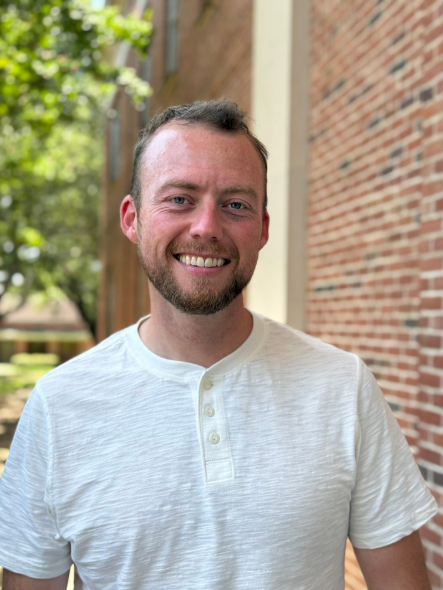

We’re excited to introduce you to the always interesting and insightful Adam Golob. We hope you’ll enjoy our conversation with Adam below.
Adam, appreciate you joining us today. Can you talk to us about a project that’s meant a lot to you?
The most meaningful project I’ve worked on as an artist is writing my novel Nemesis Rising. I’ve published a range of academic books and research which are very meaningful in a professional sense, and I have worked on projects dealing with asylum, which are perhaps the most meaningful in their impacts. However, this book project stands out at a personal level because it sits at the intersection of my professional work and my personal creativity. It was also a lifelong dream of mine since childhood to write a novel.
The backstory of this particular work actually goes back to my graduate school days. At the time, I was working at the MOSI ropes course in Tampa, Florida while attending the University of South Florida, and during slower periods—when there were no guests—I would pull out my phone and start jotting down ideas. What began as scattered notes—scenes, dialogue, “what if” questions—eventually became the foundation of the novel. After each shift, I’d email those notes to myself and slowly start building them into a manuscript. It wasn’t glamorous—it was pieced together in spare moments—but that’s part of why it means so much to me.
The ideas behind the book were heavily influenced by my academic work. I study justice systems, human trafficking, and institutional failures, and I kept coming back to a central question: what happens when systems designed to be efficient or ethical loses sight of humanity? This is a major issue across governments, states, and societies. That question became the backbone of the story. The novel imagines a “hands-off” prison system where the state removes itself entirely, and the consequences are as brutal as you might expect.
What makes the project meaningful is that it allowed me to explore those themes in a way academic writing can’t. In research, everything is structured and evidence-based. In fiction, I could humanize those ideas—show what it feels like to live inside a broken system, not just analyze it. That aligns with how I think about my work more broadly—whether I’m teaching, researching, or writing, I’m trying to get people to critically examine the systems we take for granted.
It’s also meaningful because of the process itself. This wasn’t something I wrote with unlimited time or resources—it was built in between responsibilities, during graduate school, while working, and later alongside teaching and research. Seeing it evolve from notes on my phone into a completed book reinforced something I try to instill in my students: meaningful work doesn’t require perfect conditions, just persistence and commitment.
Ultimately, Nemesis Rising is meaningful to me because it represents both who I am as a scholar and who I am as a creator. It’s where my research questions, my teaching philosophy, and my imagination all come together.
Awesome – so before we get into the rest of our questions, can you briefly introduce yourself to our readers.
I am a political scientist, educator, and artist whose work sits at the intersection of research, storytelling, and creative expression. Professionally, I serve as an Assistant Professor of Political Science at Centenary College of Louisiana, where I teach courses on governance, law, and global systems, while also conducting research on human trafficking, justice systems, and institutional failures. Alongside that work, I serve as an expert witness in asylum cases, which has deeply shaped both my academic and creative perspectives.
My path into this field was not linear, but it has always been driven by curiosity about systems—how they function, how they fail, and how people experience them. That curiosity first took shape through my academic training in political science and Latin American studies, and it has since expanded into a broader interdisciplinary approach that blends research, teaching, and art. Over time, I realized that while academic writing allows me to analyze and explain the world, creative work allows me to explore it in ways that are more human, more emotional, and often more accessible.
As an artist, I work across multiple mediums, including welding scrap metal, painting, and writing fiction. Each medium serves a different purpose, but they are all connected by a shared focus on transformation—taking raw, often overlooked materials or ideas and reshaping them into something meaningful. My visual art often reflects my love of nature and my appreciation for process, imperfection, and form. My writing, particularly my novel Nemesis Rising, is more explicitly tied to my academic work, using speculative fiction to explore questions about justice, punishment, and the limits of institutional design. It has won several book awards. I have also submitted works of short fiction, winning a few contests.
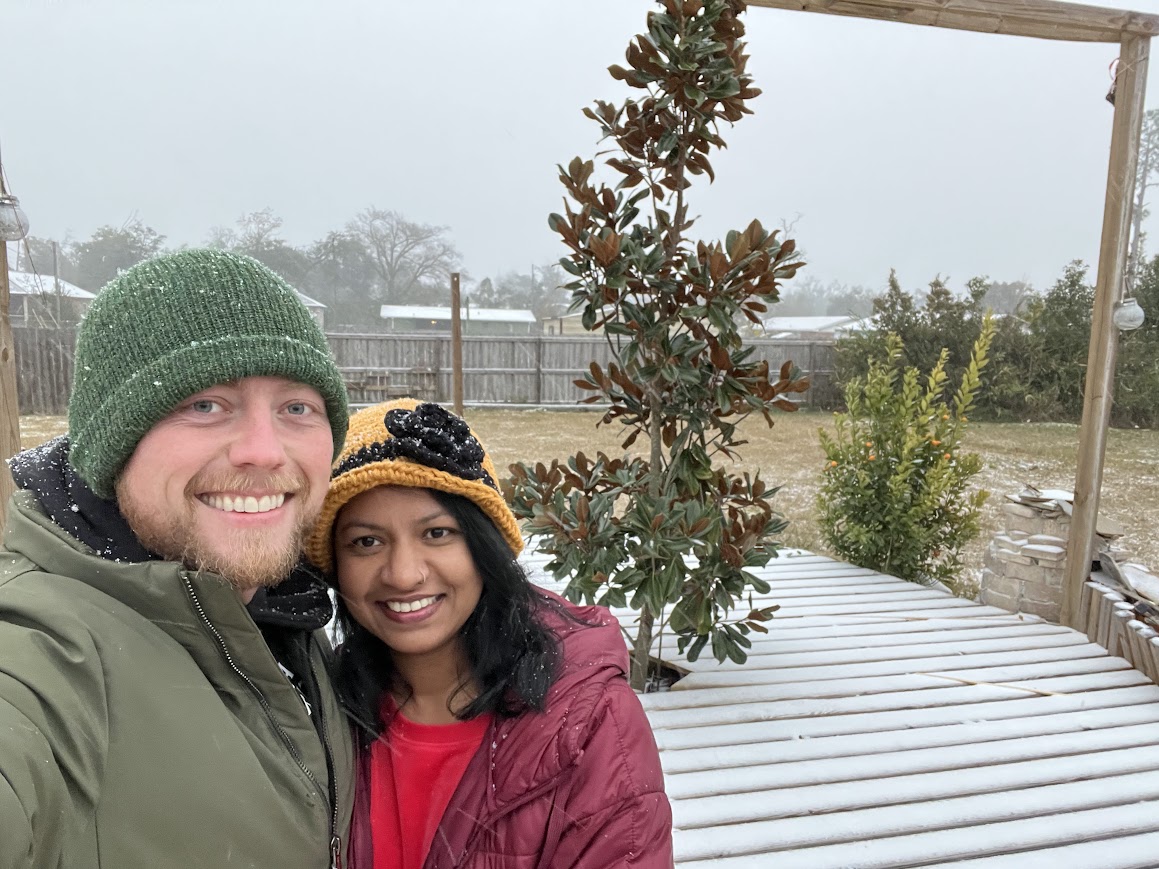
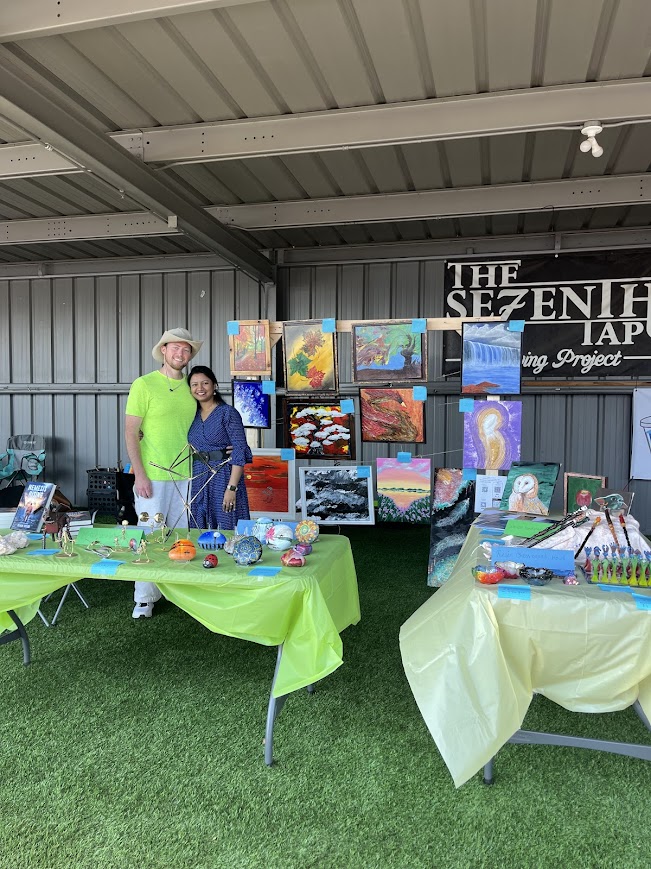
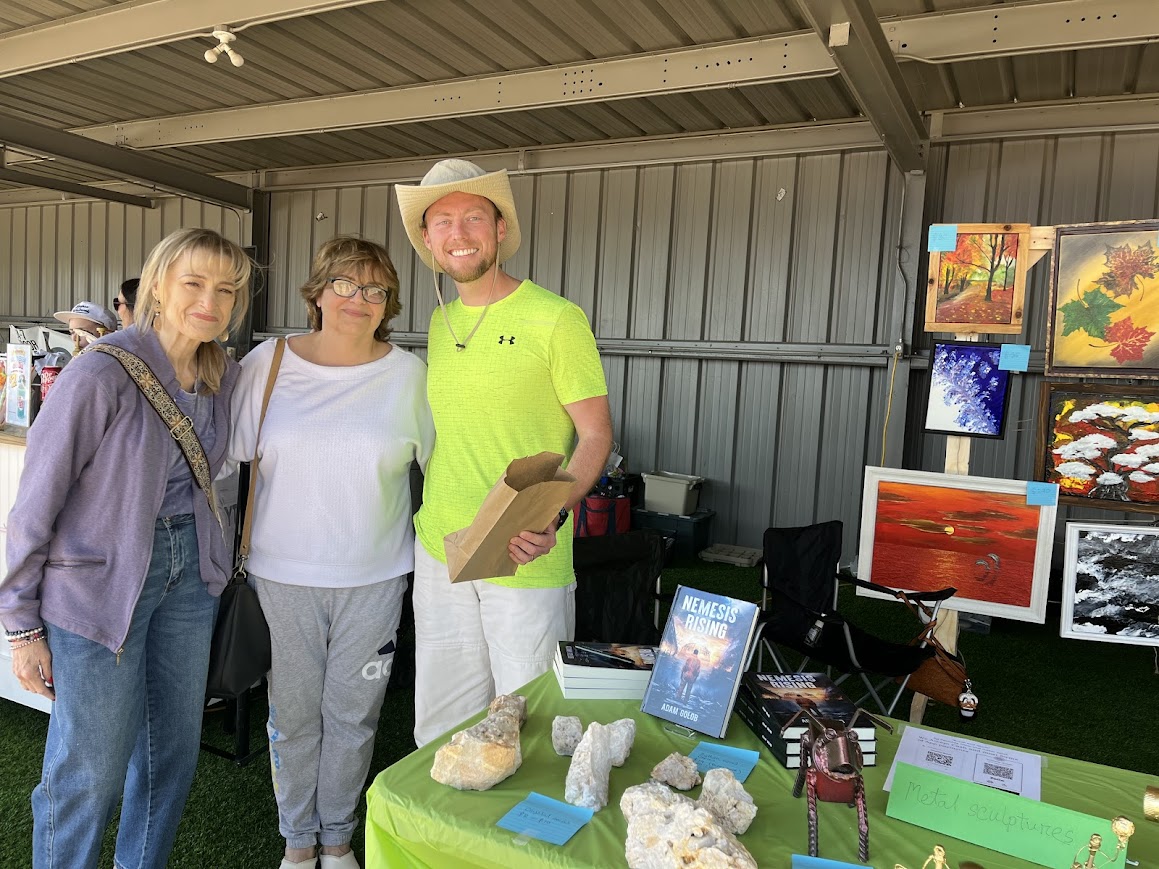
A significant part of my creative work is also collaborative. I work closely with my wife, Dr. Fahmida Akter, who is herself a scholar and researcher. Together, we create and exhibit art through shows that feature our paintings, crafts, and welded pieces, and we also bring that work into more public spaces through local markets. Our collaboration is central to my artistic identity—we challenge each other, refine ideas together, and ultimately bring out the best in one another’s work. There is something powerful about building both intellectual and creative work side by side, and that shared process continues to shape how I approach art.
In terms of what I offer, I think of my work less in terms of products and more in terms of experiences and perspectives. Whether in the classroom, in a gallery, or on the page, my goal is to challenge people to think critically about the systems they live within and the assumptions they carry. For students, that means developing analytical tools and confidence in their own voice. For readers or viewers, it means engaging with ideas in a way that is both thought-provoking and emotionally resonant.
The “problem” I try to address—if I had to define one—is the gap between systems and humanity. In my research, I study how institutions can dehumanize or fail vulnerable populations. In my creative work, I explore what that looks and feels like at the individual level. I try to bridge that gap by making abstract issues tangible, whether through storytelling, visual art, or teaching. I want people to not only understand systems intellectually, but to feel their impact.
What sets me apart is that I don’t separate these different parts of my work. My research informs my art. My art informs my teaching. My teaching informs how I communicate complex ideas to broader audiences. Rather than treating these as separate careers, I approach them as different expressions of the same core mission: to explore, question, and communicate.
What I’m most proud of is not any single publication or piece, but the ability to build a body of work that reflects both rigor and creativity. From publishing academic books and articles, to writing Nemesis Rising, to creating visual art from reclaimed materials alongside my wife, each piece represents a different way of engaging with the world. I’m also deeply proud of the impact I’ve had as an educator—helping students develop critical thinking skills, confidence, and a sense of agency in how they engage with society.
For those encountering my work for the first time, I would want them to know that everything I create—whether scholarly or artistic—is rooted in a genuine desire to understand and reflect upon the human condition. I am drawn to difficult questions, uncomfortable truths, and imperfect processes, because that is where the most meaningful insights tend to emerge. At the same time, I believe strongly in the beauty of creation itself—in the act of making something, sharing it, and allowing others to find their own meaning within it.
Ultimately, my work is about connection: between ideas and people, between systems and lived experience, and between disciplines that are often kept apart. Whether through teaching, research, or art, my goal is to create work that resonates, challenges, and endures.
Have you ever had to pivot?
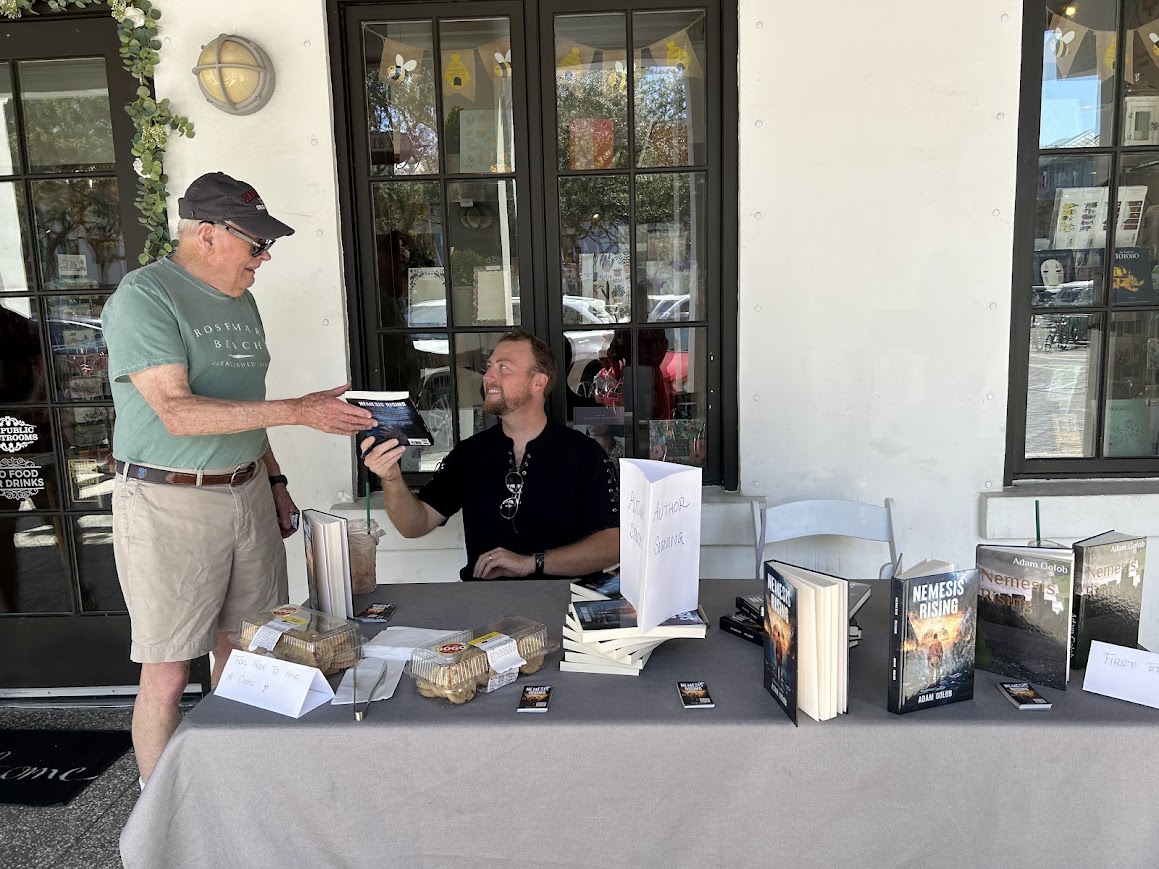
One of the most defining pivots in my career came through the process of publishing my novel Nemesis Rising. Like many writers, I initially pursued the traditional route—I spent a significant amount of time researching agents, crafting query letters, submitting materials, and waiting for responses. It became a relentless process. Only to get rejected over and over. I knew I had something good, something that would resonate with people, but I couldn’t find a way to get someone to believe in me.
What made it particularly challenging was the opportunity cost. Every hour spent querying was an hour not spent writing, creating art, teaching, or focusing on my research and professional work. Over time, I realized that I was investing enormous energy into trying to access a system that offered very little feedback and even less control. It began to feel less like progress and more like stagnation.
Eventually, I reached a point where I had to reassess. I asked myself whether my goal was to secure an agent, or to share my work. That distinction became the turning point. I decided to pivot away from the traditional publishing model and move toward self-publishing.
That decision was both practical and philosophical. Practically, it allowed me to take control of the timeline and actually bring the book into the world. Philosophically, it aligned with how I think about systems more broadly—sometimes the structures we’re told are the “right” path are not always the most effective or accessible ones. I also knew that it would likely mean that my book would never be a “best-seller.” I would likely never see a Netflix series or be the next Harry Potter. That was a hard thing to let go of.
Self-publishing required me to learn an entirely new set of skills—from formatting and editing to marketing and distribution—but it was incredibly empowering. Instead of waiting for permission, I was able to take ownership of the process and the outcome. At least it was “out there,” finally!
Looking back, I’m proud of that pivot because it reflects a broader lesson that has shaped my career: persistence is important, but so is knowing when to change strategies. Sometimes progress doesn’t come from pushing harder in the same direction, but from stepping back and choosing a different path altogether.
What’s the most rewarding aspect of being a creative in your experience?
For me, the most rewarding aspect of being an artist or creative is the moment when the work connects with someone else. Whether it’s a reader reaching out or writing a review about Nemesis Rising, someone purchasing a painting, or even a brief conversation at a market or show—those moments of engagement mean everything.
Art can often feel like a solitary process. You spend hours, days, sometimes years creating something in your own head or in your own space. For you, it is a baby. It is the end result of so much work and time. You can only hope that it connects in the way you intended. But the moment someone else sees it, feels it, or responds to it—that’s when it becomes something more. It becomes a relationship.
What I value most is that sense of connection. When someone tells me that a story made them think differently, or that a piece of art spoke to them in some way, it reinforces the idea that what we create can actually reach beyond ourselves. There’s something incredibly powerful about being seen, being heard, and knowing that you’ve made an impact on another person, even in a small way.
At the end of the day, that’s what makes all the time, effort, and uncertainty worth it—the knowledge that the work doesn’t just exist, but that it resonates.
Contact Info:
- Website: https://tgolob8.wixsite.com/author
- Instagram: https://www.instagram.com/golobadam/
- Facebook: https://www.facebook.com/adam.golob.3/
- Linkedin: https://www.linkedin.com/in/tadamgolob/
- Twitter: https://x.com/golobadam
- Youtube: https://www.youtube.com/@AdamGolob