


We’re excited to introduce you to the always interesting and insightful Abby Savell . We hope you’ll enjoy our conversation with Abby below.
Abby, thanks for taking the time to share your stories with us today What do you think Corporate America gets wrong in your industry? Any stories or anecdotes that illustrate why this matters?
In many ways, the corporate mentality is the opposite of art – but I’m not going to bail on it entirely in this statement, so hear me out. The corporate mentality aims to systemize and standardize in an effort to create maximum productivity and less liability. Corporations seem take pride in their “products” just because they created something, but with not enough regard to its impact to the earth or its living beings. Another Dollar Store is being built in my town. More stuff for landfills. And yet, the Board of the Dollar Store probably feel like they’re doing something good, while much of what they’re actually doing is distributing more things to fill landfills in short order. The corporate mentality so often sees art only as convenient to them (designing their products and ads) and I wonder if they understand that they are part of an ecosystem with artists, and that we fit inside of a world that is inspired by, and gives back, art. Because it seems like they’d like to get rid of the inconvenience of dealing with human artists. And it’s not just corporate America, but a lot of America.
I’ll keep this part short because it’s not the focus of the question, but in summary, artists can take some ideas which may be perceived as “corporate” that can help their own success: meeting new people, regularly. Learning good communication skills. Finding a process and adjusting as needed. Following through. Stepping back and analyzing processes. Getting organized, physically and digitally. Most of us didn’t go into the arts because we are passionate about any of these, but they certainly help you get out of your own way – and help you and your art get out there.
Great, appreciate you sharing that with us. Before we ask you to share more of your insights, can you take a moment to introduce yourself and how you got to where you are today to our readers.
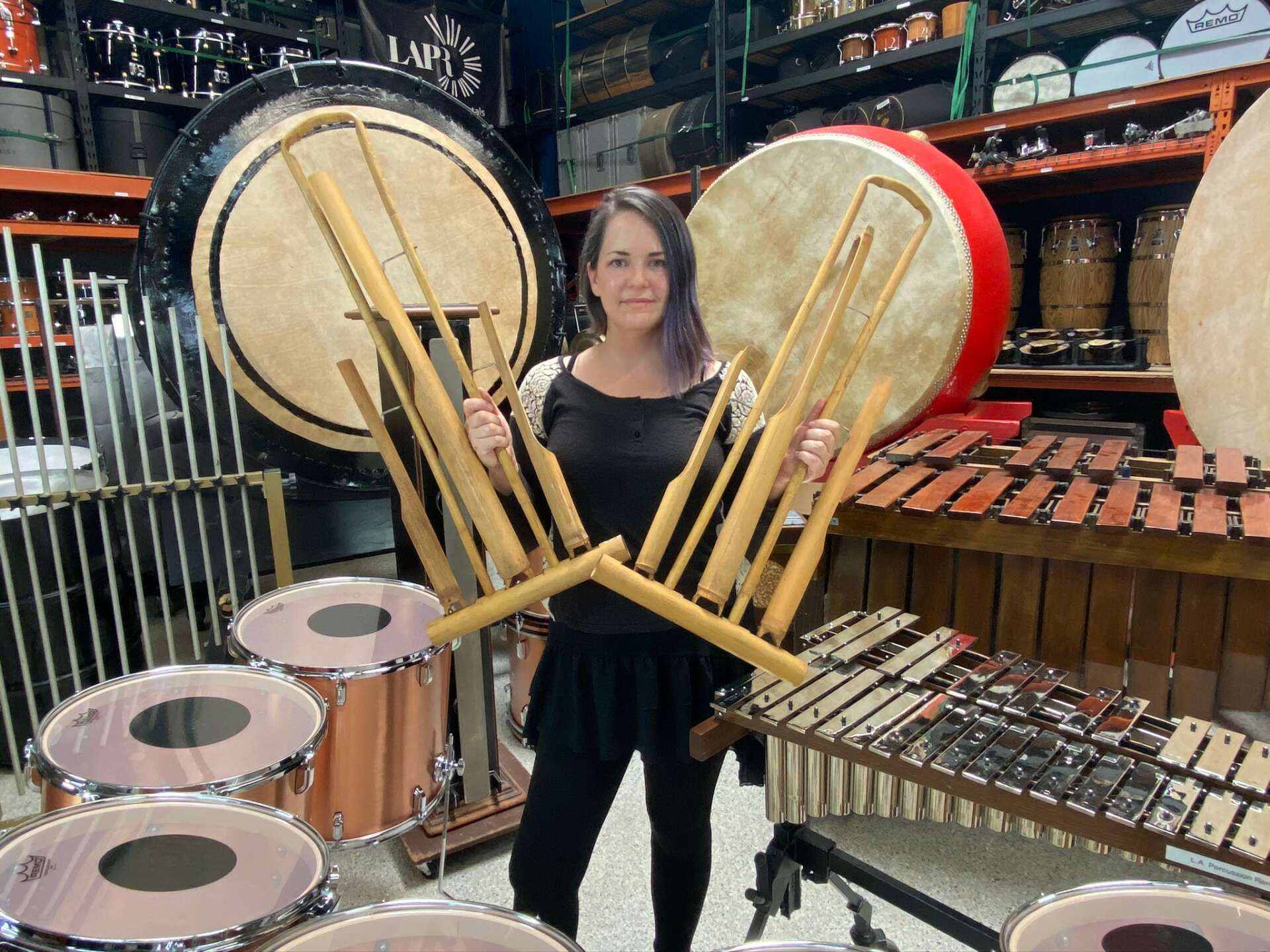
I’ve had a penchant for percussion since I was a child, and started on piano at age six. But ultimately, it wasn’t the right fit for my personality, as piano was very solitary (especially at those beginning levels) and I wanted to play music with others. I also have always had a defined wacky streak and percussion allows for plenty of this with all of the sounds and gadgets. Some of the instruments in percussion crossover with foley (acoustic sound effect) instruments, such as wind machine, flex-a-tone, marching machine, and thundersheet.
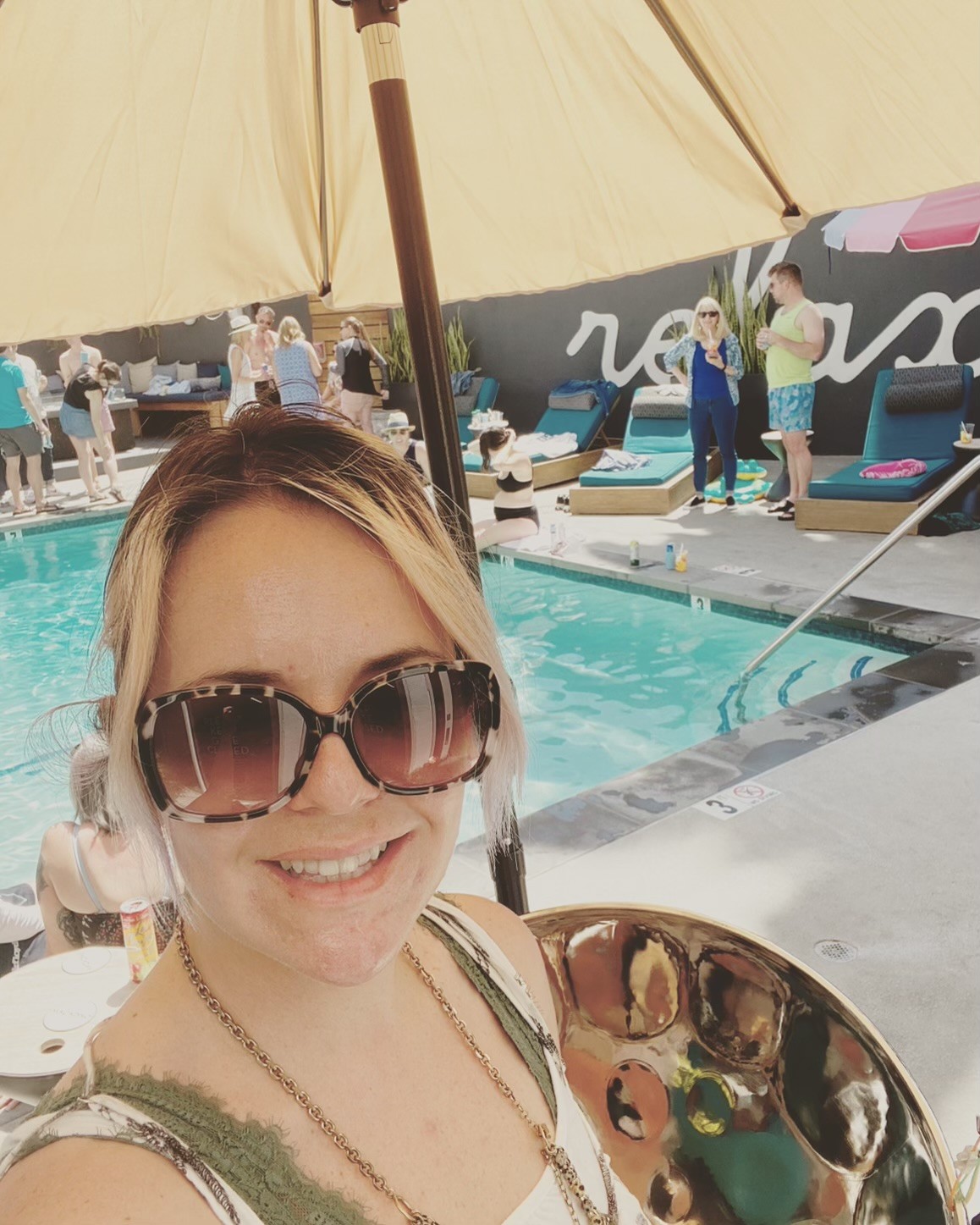
I finished school with an MFA from CalArts in multi-focus percussion, and then dove into playing steelpan (steel drum), performing for probably a thousand events over the past twenty years. It’s a specific instrument I’d been wanting to play since childhood. I made it a point to constantly listen, explore, and experiment with the instrument, trying out new ideas at every performance.
As a musician, you have days, weeks, and months where you make little progress. Or you make some progress, and then go backwards. That’s part of the process. And it’s important to understand so you don’t give up or get frustrated, or even start dreading playing. I practice regularly on multiple percussion instruments in addition to performing, and I’m at the point now where when that happens I recognize it right away, and it actually makes me chuckle a little. You just keep playing and listening, and don’t worry too much if you’re feeling inspired that day. Sometimes we have to just start playing to get into it. And sometimes we don’t, and that’s cool too. I guess I’m trying to say that we roll with it, day in and day out – and luckily, no one gets hurt if we don’t have a great practice session. Then one day, it clicks, and it’s magic.
Anyway, in percussion, you really have to roll with it because there are tons and tons of instruments you won’t be good at, being such a vast instrument family. So, I’d call myself a generalist with a specialty in steel pan.
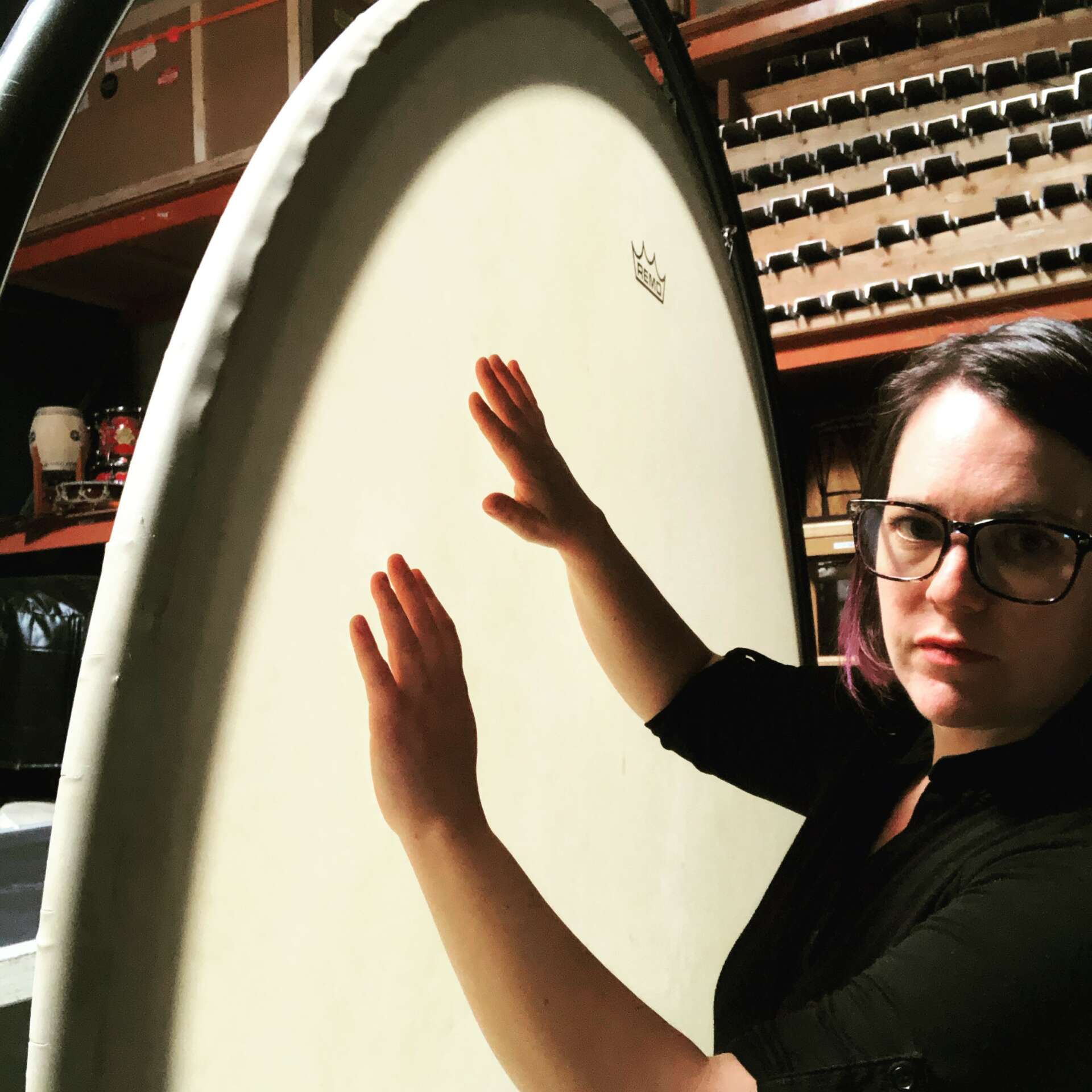
Musically-speaking, I do a lot of improvising (over chord changes or free), sight-reading, and exploring sound and texture. This leads me to my next part, that’s been a large part of my life: my huge percussion collection.
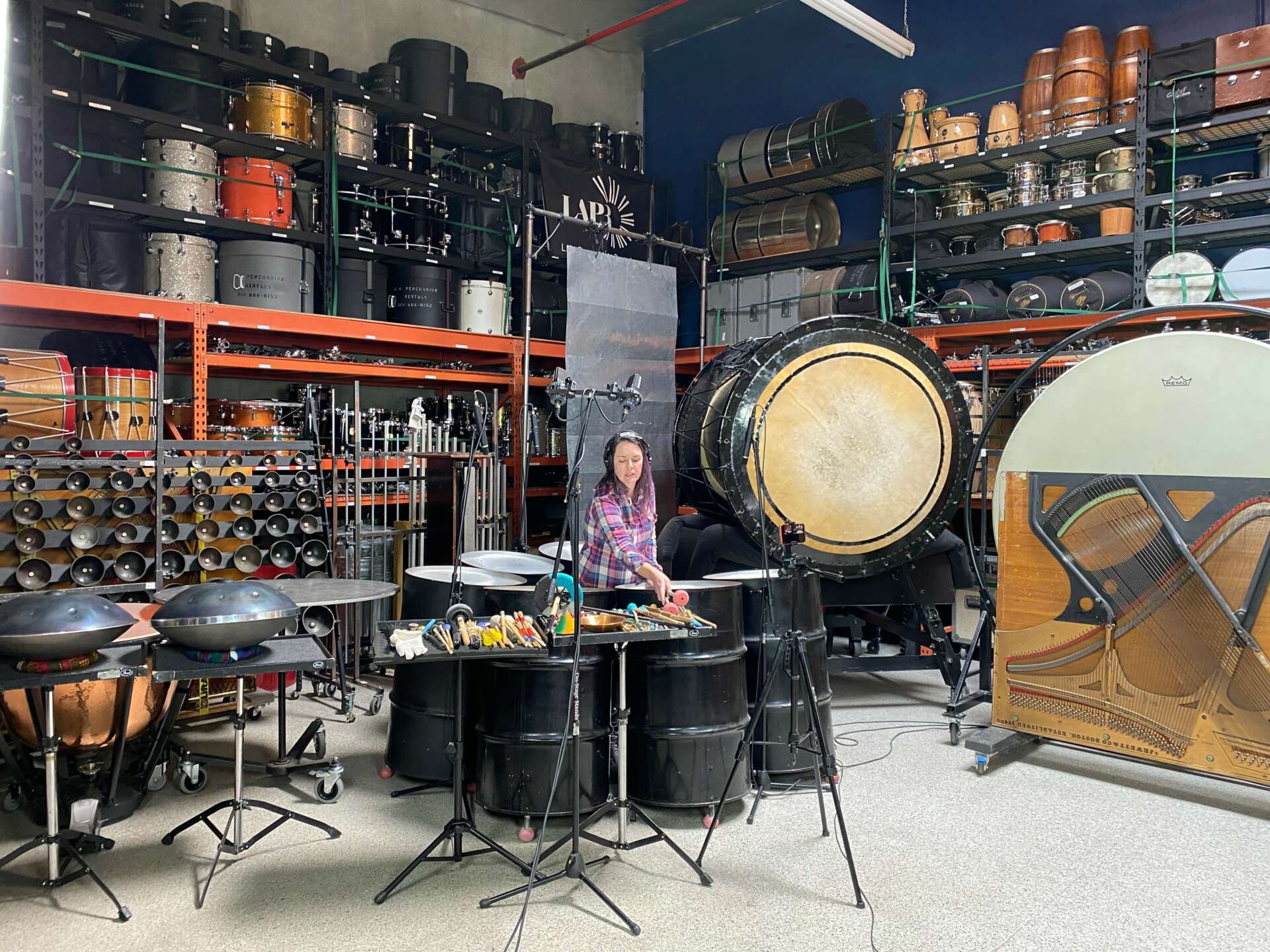
My spouse is also a percussionist (and steelpan player) and in 2004, we started L.A. Percussion Rentals. It’s been a substantial project that required a lot out of and has been an exercise in balancing entrepreneurship, a creative business, and coupledom. And we have three kids. We are 50/50 partners with no investors and have had to ride the snowball of constant reinvestment to purchase more gear and other things that small businesses do in order to grow. It’s been a challenge. But never boring. I’m more convinced than ever that when one door closes, two open, because this happens over and over again.
We work with music production staff and composers to help fulfill their logistical and musical needs, with some of our recent large-scale clients being Encanto Live, the LA Phil and Danny Elfman. We also work with many up-and-coming and established composers, ensembles, and musicians. We even do prop rentals. It’s all important and feel ourselves to be ambassadors of percussion, but not in an egotistical way – more in an open awareness way.
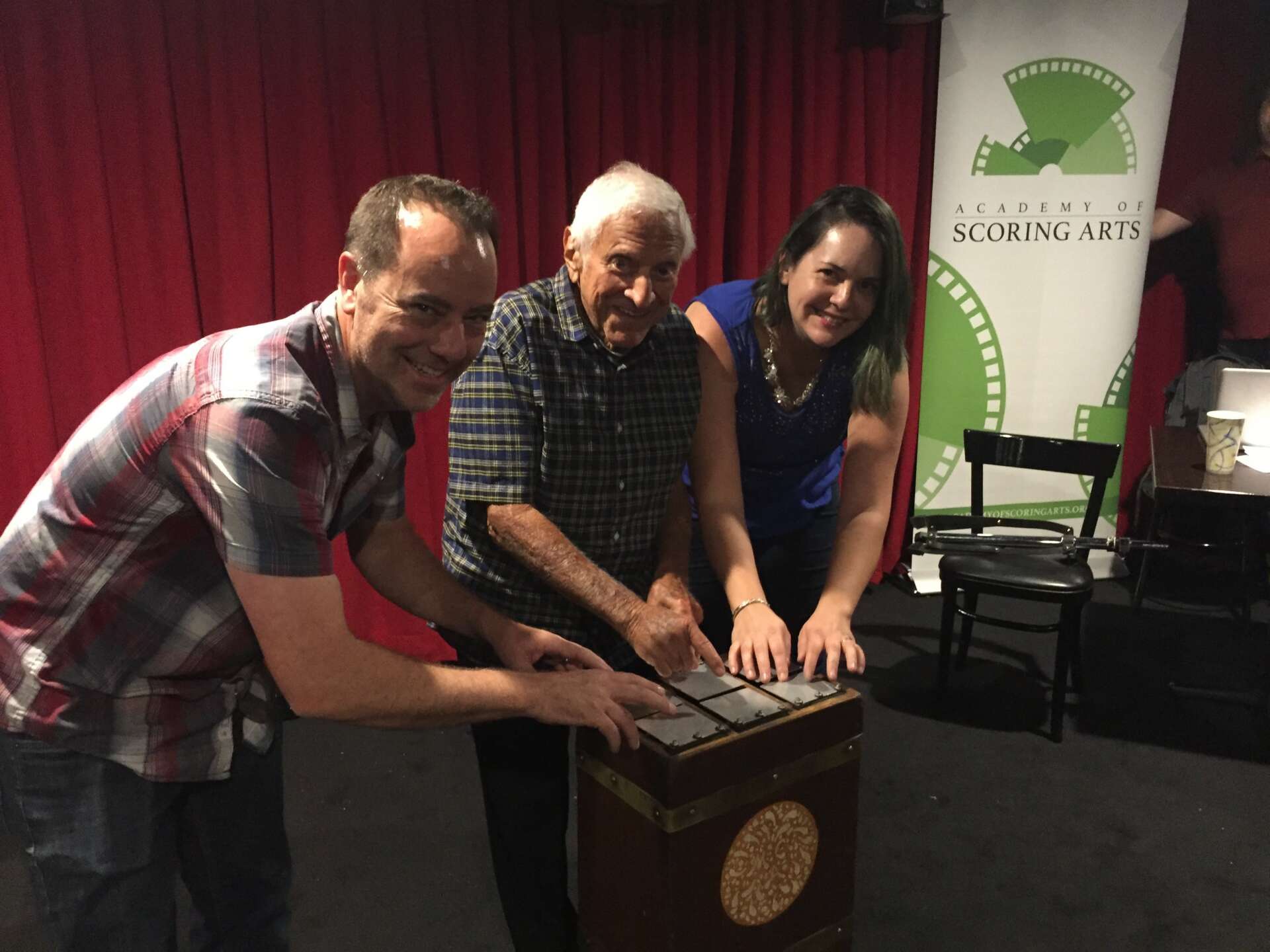
In 2011, legendary studio percussionist and percussion collector Emil Richards contacted us. He was the xylo in The Simpsons theme song, bongos in Mission Impossible, and finger snaps in The Addams Family. He was a visionary, working with film & TV composers to help them find and develop sounds for their scores. And he wanted us to take over his collection. It took a year, but we worked out a deal with him, and purchased a good part of the Emil Richards Collection in 2012. These are instruments that have had roles in soundtracks to iconic recordings, like Back to the Future, Lost, Rikki Don’t Lost that Number, Jurassic Park, and more. We restored most of the instruments and also spoke with Emil about some of his intention about them: he wanted them to live on in recordings and not a museum. He also saw a ton of possibility in writing for them, as although he worked with incredible composers, many of them wrote for the instruments in a novelty way, and explored less texturally.
So, this philosophy was something I continued with and have been sharing and applying to others in our pro music community. I’ve hosted many experimental composer / percussion workshops and also worked starting working individually with composers to help them, wider and deeper, find their percussion sound palette. I hope to be doing more recording, as well.
During the early part of the pandemic, I started a channel called, “All the Percs,” a more immersive, creative project about percussion in film, which hasn’t been covered much. Its intent was to be a more approachable unearthing of topics I have special knowledge of, like rare percussion in film scores, and of course, sprinkled with humor.
I also interviewed some major film composers, like Bill Conti, Danny Elfman, James Newton Howard, John Powell, and Michael Giacchino.
My partner and I even did a “play to filming location” stunt where we took the rare instrument used in the DeLorean reveal in Back to the Future, to the mall where they filmed this scene, and played along to the soundtrack in costume.
Any insights you can share with us about how you built up your social media presence?
We are a niche business in the creatives so this has benefitted us in the range of what we can post. A few tips we can share about what we’ve had success with:
-Behind the scenes of how it’s made
-Humor
-Diving into detail and points of interest
-Unboxing new equipment
-Experimenting
And just posting a few times per week. It doesn’t need to be super-produced, but aim for decent audio and video quality.
What’s the most rewarding aspect of being a creative in your experience?
There are a few elements that I love about being in the arts community. First would be getting to be more of myself, including wackiness, creativity, and just being able to display personality. Second is freedom, especially when it comes to performing. I like not having one right way to play music and so many possibilities. Third are the people. The people in our business who have come this far are usually the ones who know how to relate to others well, and love being part of this exclusively human creative experience.
Contact Info:
- Instagram: https://www.instagram.com/all.the.percs/
- Facebook: https://m.facebook.com/all.the.percs.abby.savell?_rdr
- Linkedin: https://www.linkedin.com/in/abby-savell/
- Youtube: https://youtube.com/channel/UCs2qYf_h0EJb9gFvcd3ROxw?sub_confirmation=1
- Other: https://www.tiktok.com/@all.the.percs