


Alright – so today we’ve got the honor of introducing you to A.W. “Tony” Scott. We think you’ll enjoy our conversation, we’ve shared it below.
A.W. “Tony”, looking forward to hearing all of your stories today. What’s been the most meaningful project you’ve worked on?
In 2000, I was living in the Silicon Valley, and received a call from my sister in Mississippi to tell me my mother had a stroke and they were on the way to the hospital. I immediately had to scramble to get to the airport, as I knew there was only one flight I could take that would get me to Jackson the same day, and it left by noon. I barely made the flight on time.
When I arrived at the hospital, my mother was paralyzed on her entire left side, and not of clear mind. The Cardiologist came to tell us they had results from the echocardiogram, and that my mother had suffered an aortic dissection – a tear in the aorta that caused blood not to get to her brain. The hole was getting bigger by the minute, and would result in certain death in 24 hours. The Cardiologist brought in the Chief Cardiovascular surgeon to talk to us. He explained that they were just about to perform a quadruple bypass on another patient, but would pull him off the schedule and put my mother on in his place if we wanted to operate. It would be a 9 hour operation, with only a 50% chance of success, and my mother would still be impaired physically and mentally even if it was successful, and would need nursing care the rest of her life. We needed to decide within 10 minutes whether or not to operate, or let her pass away peacefully.
To cut a long story short, we decided to go ahead with the operation. It was a success from a technical standpoint, but my mother had to live with 24 hour care the rest of her life, which also created many negatives for my father’s remaining life.
When I decided to study screenwriting at UCLA in the graduate film school’s Professional Screenwriting program, I decided that my second feature to write would be about this situation, and the complications that arise from the lack of clear discussion among family members about what to do in life and death circumstances, and the consequences for everyone afterwards.
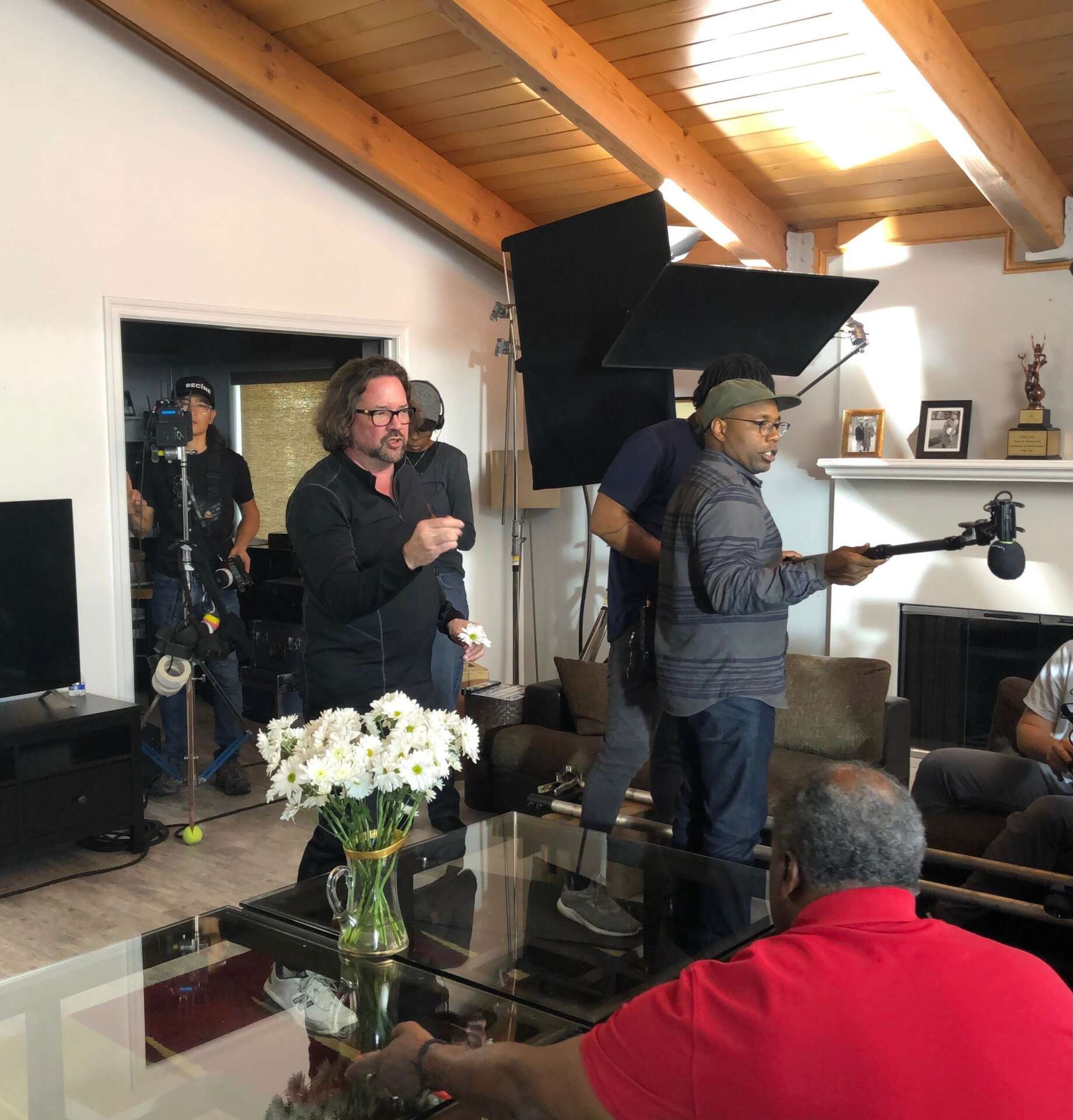
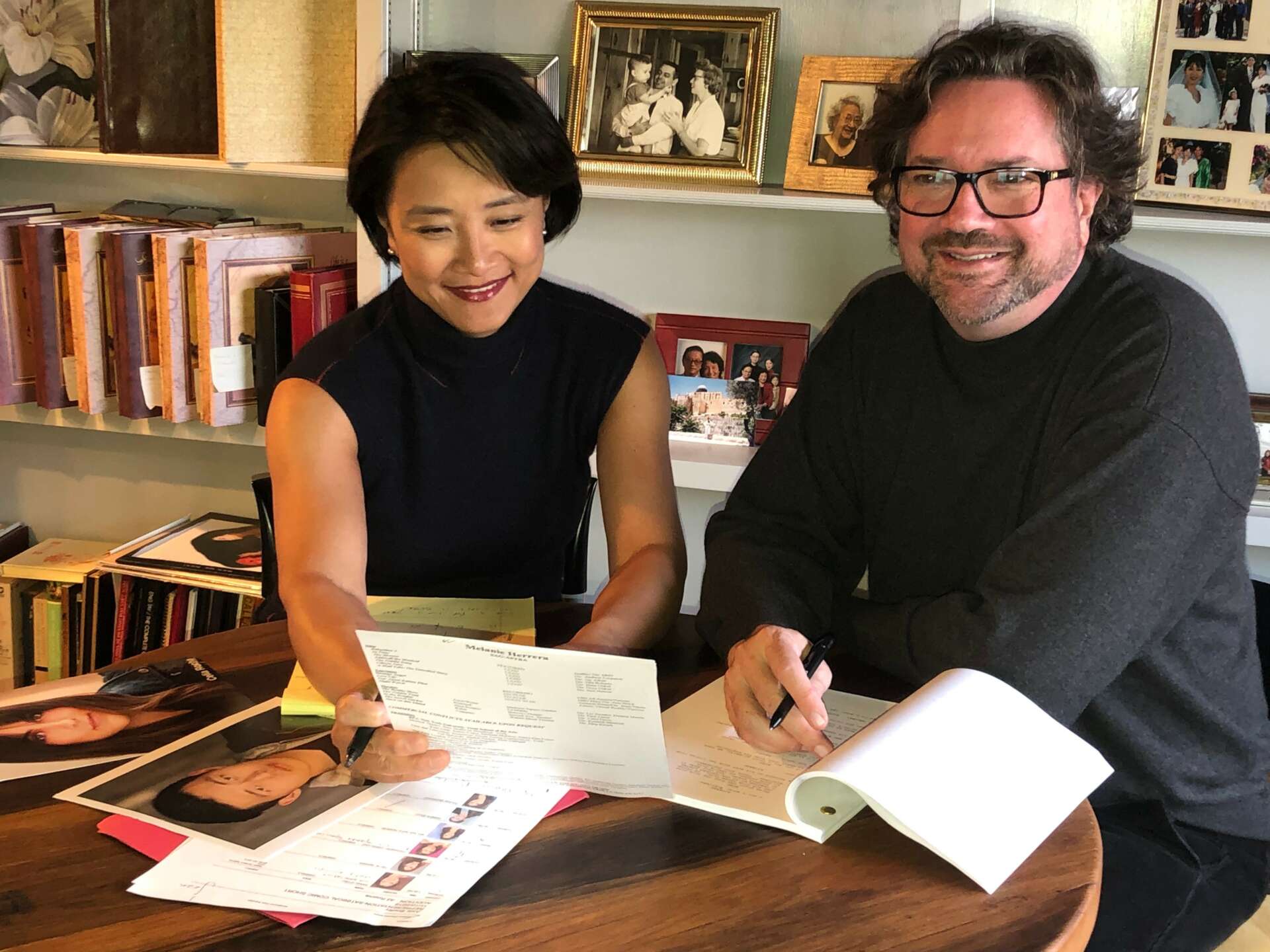
A few years later, I was encouraged by a Producer to make a short movie to show that I could direct a cinematic story and bring it to the screen successfully. I realized that I could use the first part of the screenplay inspired by my family to create a short that could stand on its own. My life and producing partner Jean Su raised funds from friends and family and built a great behind the camera team, and cast an amazing group of professional actors. The short was completed on time and at budget.
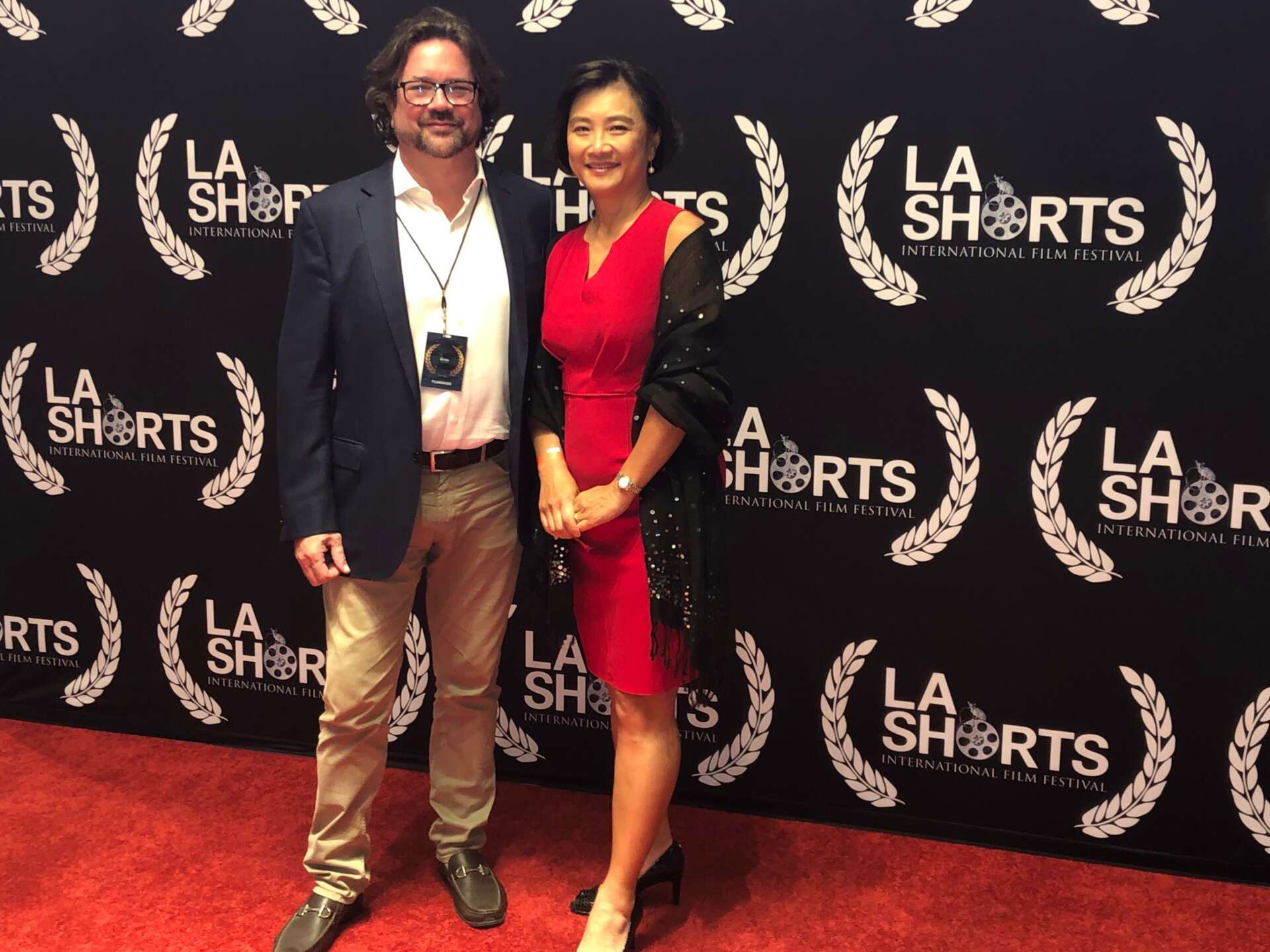
That short film – “Together” – was selected to screen in 25 film festivals around the world, including four Academy Award qualifying festivals. We won awards in 12 of them, including Best Actor, Best Actress, Best Producer, Best Director,and multiple Best Screenplay and Best Film awards. Beyond the awards, at every festival we attended we were approached by audience members who told us how moving and meaningful the story was to them, and how they or someone they knew had experienced some similar emergency health care issue that required life or death choices.
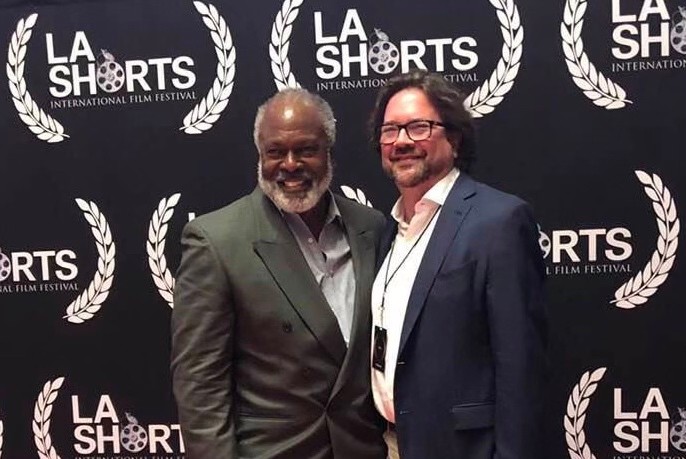
The success of the short gave us credibility to reach out to name Hollywood actors for the feature version of the project. We currently have Danny Glover, Jane Seymour and Tom Beringer attached to the project, which I will direct. We are in the process of completing financing, with the plan to film after the SAG strike is settled. The success of the short led us to being hired to write, direct and produce another short, and an image ad for a wealth management company.
Without “Together”, I would still be waiting for someone else to “green light” one of my projects, and wondering if I might ever be allowed to direct my work.
Awesome – so before we get into the rest of our questions, can you briefly introduce yourself to our readers.
I was born in New Orleans and grew up in Mississippi. The idea of being a screenwriter or director was never a concept while I was growing up.
I did a lot of non-fiction and some short fiction writing in high school and college, and acted in significant roles in few dramas and musicals while in high school. I was a photographer for the school newspaper and annual, and did some commercial fashion photography for advertisements for local stores. I was also a semi-professional musician during high school and college, playing brass instruments in R&B, rock and funk bands, as well as in the pit orchestras for touring musicals, operas and ballets. In the R&B/funk bands, I was often the only performer in the group who was not African American, typically playing at HBCU fraternity and sorority parties and nightclubs that often exclusively had Black audiences. Those experiences have given me some unique and fun stories to draw from for my fiction work.
I enjoyed the creative aspects of writing, photography, music and acting, but could not see a clear path to being able to make a living from those, so chose ultimately to study economics at the University of Mississippi with the goal of going to law or business school. I then earned my MBA from the Kellogg School at Northwestern University, and undertook a career in business, thinking in the back of my mind that one day I might be able to retire and take up music again.
After brief stints in strategy consulting and corporate banking, I ended up in executive recruiting, and moved to California to focus on serving technology companies. I ultimately became the Managing Director of the worldwide technology practice for the executive search division of major consulting firm A.T. Kearney, leading 75 professionals worldwide, generating tens of millions in annual fees. I conducted searches for CEOs for tech companies around the world, spending considerable portions of my time in Japan, China and London in addition to Silicon Valley.
When the economic downturn of 2008 happened, my life and business partner Jean Su and I moved to Napa to lower our cost of living and “try out” the area we thought we might retire to fully one day. Most of our clients at that time were outside of the U.S., so as long as we were able to get to SFO in less than 2 hours, what was left of our executive search business wasn’t really impacted. Two years later, we bought a historic house in downtown Napa where Clark Gable and Carole Lombard lived when Carole was the biggest star in the world and was filming “They Knew What They Wanted”. I liked to tell Jean that I wanted that house so I could come down the stairs and say to her: “Frankly my dear, I don’t give a damn.”
A few months later, the Napa Film Festival happened, with many of the events just a few blocks from our house. On Saturday morning, I thought it would be good for us to go to check out some of the films being screened. On the schedule that morning was a “Pitch Competition” – to come to pitch story ideas to a panel of Hollywood executives. I had been working on a couple of story ideas to try to novelize, but had not gotten very far. Jean encouraged me to go try.
A couple of hours later, I came home with a big bottle of wine – one of my two pitches had won! The judges liked both of my pitches, and asked me if they could read my scripts. Oops! I had to admit they weren’t written yet, and asked if they had any suggestions on where I could learn to write a script. As you might imagine, “social distancing” happened immediately. But, given that a number of executives thought the stories had merit, I decided that I should look into studying screenwriting.
After conducting some research, I felt the best first step to learn screenwriting would be take courses at the University level. I found courses offered by UCLA Extension and signed up for their annual “Writer’s Weekend” to take a four day intensive on the basics of screenwriting. The instructor was the wonderful Cindy Davis, who wrote the English language screenplays for Oscar-nominated “Howl’s Moving Castle”. “Ferdinand”, and the English language screenplay for the Oscar-winning “Spirited Away”. She had a career in Marine Biology before moving into screenwriting, so she was an interesting role model. She was very encouraging as I created outlines for my two projects, and suggested I consider getting an MFA or the Professional Program in Screenwriting in the UCLA Graduate School of Theater, Film & Television.
I applied and was accepted into the one year, three quarter Professional Screenwriting Program in fall, 2012, which I was able to attend remotely while still living in Napa. Before I entered the program, I completed the two screenplay ideas I pitched in the Napa Film Festival. They won or placed in multiple screenplay competitions, and were optioned by a Chinese film production company while I was studying at UCLA . The Professional Writing for Television program was introduced at UCLA in spring of 2013, so I applied to and was accepted into that program. My various screenplays continued to win awards in competitions, including my first TV pilot being named a semifinalist in the Austin Film Festival. I thought I had made it! (Ha ha!)
I was told by instructors at UCLA that a great way to learn to write better was to take acting classes, and understanding acting technique, process and craft would also help if one had aspirations to direct. I signed up for acting classes, and also took directing classes in UCLA Extension. I continued to take advanced screenwriting and writing for television courses at UCLA. In 2015 the science fiction screenplay I wrote under the guidance of Iris Yamashita, who had been nominated for an Academy Award for “Letters from Iwo Jima”, was named the best screenplay in the UCLA Professional Programs. That screenplay garnered attention from production companies, managers and agents, and it was optioned by a U.S. Production company that had the resources to fully fund the $10 million budgeted film.
With the traction that was happening, my partner Jean Su and I decided to move permanently to Los Angeles. We were able to make connections with the writer-director and producers of the feature film “Grey Lady”. We raised finishing funds for the movie, earning a Production Company credit for our newly formed company Broadvision, and an Executive Producer credit for Jean Su. I was able to work on set shadowing the Writer-Director John Shea and Cinematographer Andrzej Bartkowiak, and learned immensely from that experience. The movie was released in 2017, with our production company handling the booking and marketing for a 12 city, 25 theater limited theatrical release. My partner Jean and I created and implemented all of the marketing for the film’s release. We had to exclusively use social media marketing due to our very constrained marketing budget. Nevertheless, the film was the highest performing new independent film the week of its release, and went on to be a top 20 performer for Lionsgate at its Home Entertainment/Streaming release with no additional marketing spend. All great experience on how critical distribution and marketing are to the success of any project.
Around this time, a few things started to go “off the rails”. The Chinese production company that had optioned our first two projects went bankrupt. The founder of the production company that had optioned my science fiction screenplay decided to focus on her acting career and newly adopted son, and we had to wait three years in total to get the rights to the project back. And we found out that a partner we had trusted was actually a problem professionally and personally, costing us a huge sum of money. Welcome to Hollywood!
An a more positive note, we were hired to write two different screenplays by producers, and had co-written and produced a narrative short, gaining more set experience. As I mentioned earlier, a producer suggested that we make a short ourselves instead of waiting for someone else to green light our projects. I created a short script from the second screenplay I wrote at UCLA. In early 2019 we shot the 17 minute short over the course of two days, completing the project on time and at budget.
That short – “Together” – was selected to screen in competition in 25 film festivals around the world, including four Academy Award qualifying festivals. The film won awards in 12 of those festivals, including multiple “Best Film” awards. Audiences in the U.S., Europe, the Caribbean and Latin America responded very positively to the emotionally driven, universal story. To achieve this on my first narrative film as a Writer-Director was a huge boost to my confidence, and it is my proudest artistic achievement to date.
After “Together” was released, we were hired to write, direct and produce another short to showcase an actress. We completed the 10 minute parody “Representation Matters…?” in one day. That film went on to be screened in over 20 festivals worldwide, winning awards in 10 0f them for “Best Actress” for each of our lead actresses, “Best Actor”, “Best Director” and multiple “Best Film” awards. That then led to our being hired to write and direct an image ad for a LA-based wealth management company.
The success of the short “Together” combined with the strength of the feature script “Higher Love” gave us credibility to approach well-known actors such as Danny Glover, Tom Berenger and Jane Seymour who have agreed to play lead roles in the feature version of the film. We quickly received interest from an investor who wanted to put $1 million into the project through a producer on the Gulf Coast, but that fell apart when COVID broke out. We then found another partnership from the UK that wanted to fund the entire project. We had completed final schedules and had a start date, but then that funding fell through when the UK producer’s wealthy Indian investors pulled out due to the upsurge of the Delta variant of Covid that was ravaging India. So, it was been back to the drawing board on financing and distribution for the film.
Earlier this year another producer found and really loved our TV series “Leading Edge”. Just as we were going out to Showrunners and Directors, the Writers Guild went on strike, of course followed by SAG. All of our projects came to a screeching halt. We can take small solace in the fact that everyone in the industry has been impacted by the Covid pandemic and the strikes. Like everyone else, all we can do for now is to keep trying to come up with new ideas, and keep moving forward. As Quincy Jones like to say, “KOKO, baby.” (Keep On Keeping On!)
Have you ever had to pivot?
I have to make pivots all the time – that is the nature of business and creative projects. The one thing you can be sure of is that things are going to come up that will require you to change. You can’t fight that fact, and how well you deal the need to change will make the difference between ultimate success or failure.
As to major pivots in my career path, I’ve done that twice. First, when I was working as a professional musician, and realized that it would be unlikely for me to be able to achieve the level of financial success I desired as a working musician. It was really hard for me to give up something I loved so much, but when I made the decision to go to graduate business school, I knew I had to give up music performance. My musician friends all know that music is a very demanding mistress. If you don’t practice every day, you lose your abilities quickly. I knew I couldn’t continue to practice four to six hours a day and simultaneously pursue an MBA at a top-tier program, so I went “cold turkey” and sold all my horns. I still miss music performance, but I don’t regret my choice.
Later, I achieved a successful career in Silicon Valley and around the world as an executive search consultant, I was earning far above average annual income, and dealing with many of the elite of the tech industry around the world. However, I felt that I was short-changing the creative side of my personality. As I mentioned earlier, I decided almost on a whim to pursue screenwriting. Many of my friends and colleagues thought I was crazy to give up the life and lifestyle my former career provided, as do many of my new friends and colleagues in the entertainment industry. But to me, life is not just about making more money and having greater and greater financial success. I crave to create, and love using my creative mind.
What’s the most rewarding aspect of being a creative in your experience?
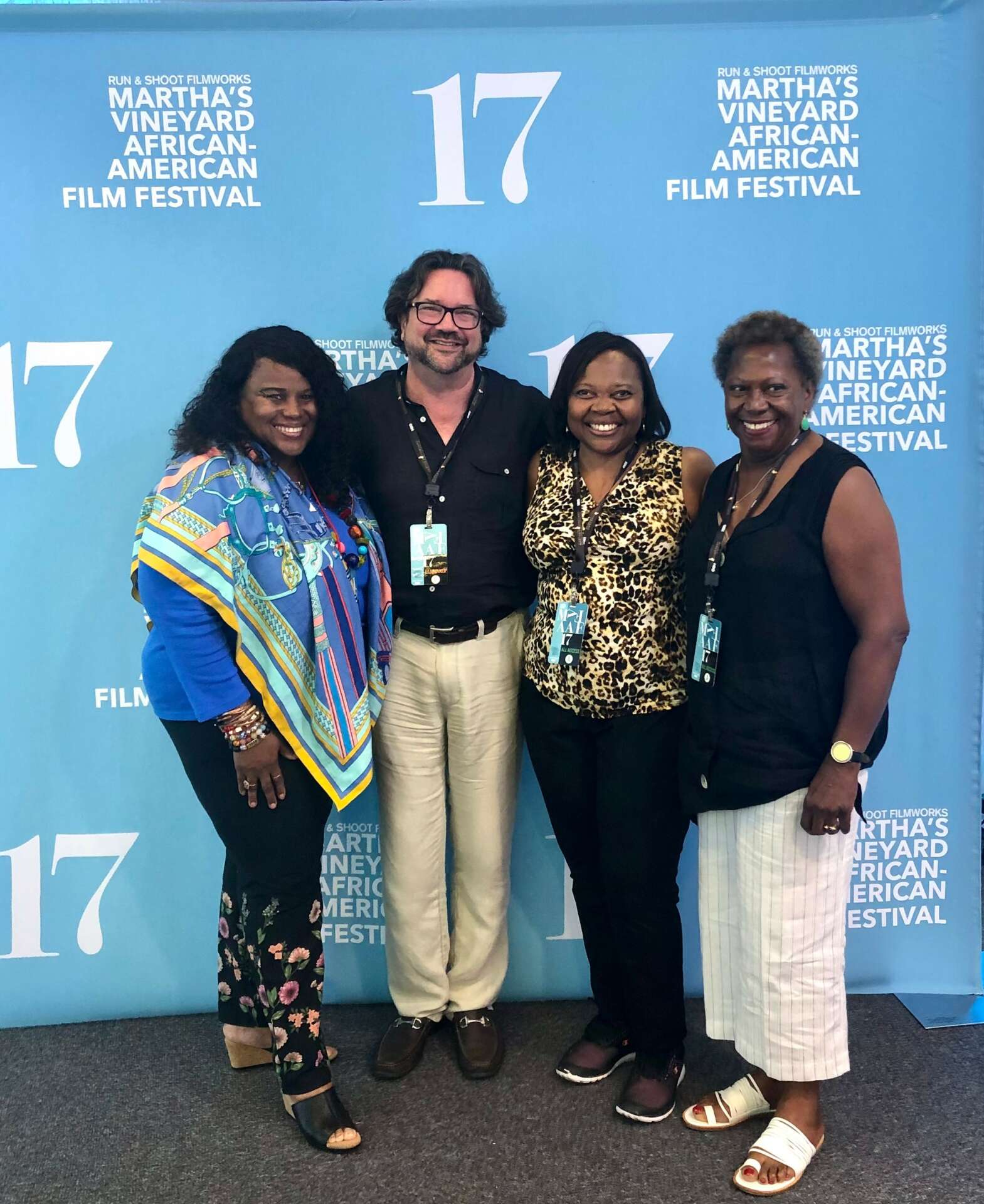
I love being able to take all of the artistic aspects of my personality and experiences and pull them together to create a wonderful piece of art. But perhaps the most rewarding aspect is when someone is moved by something I created. If I can move someone through my words or something I created that’s on the screen, that’s the greatest compliment in the world. I will never forget when we screened ‘Together” at the Martha’s Vineyard African American Film Festival – one of the first festivals where we screened. The movie is intended to be emotionally heart-rending. I was sitting in the audience as it screened, and I looked across the aisle at two big, strong middle-aged men who were crying unashamedly. It’s hard enough for men to cry at any time in our society, but to do so in public? Wow. That was a truly moving and rewarding for me, because I knew that what I created was impacting people the way I intended. That is what keeps me going as a creative, and makes we want to create more.
And to be able to use the skills I learned in my MBA program and career in business to plan and manage a project on set so we achieve results with zero drama.
Contact Info:
- Website: www.bvpictures.com
- Facebook: https://www.facebook.com/tony.scott.3388
- Linkedin: https://www.linkedin.com/in/tonyscottcsp/
- Others: Links to short films:TOGETHER: https://vimeo.com/324353260?share=copy
REPRESENTATION MATTERS…? https://vimeo.com/397089319/f940b25934?share=copy