



Today we’d like to introduce you to Russ Sharek
Hi Russ, thanks for sharing your story with us. To start, maybe you can tell our readers some of your backstory.
I didn’t start off by calling myself a clown.
Early in my performing life, a person with significantly more formal training and foolish wisdom called me that. I thought to myself that “clown” seemed like a fairly accurate warning label for the aggregation of misfit strangeness that is me, and so I ran with it.
By academic definition, I’m considered a folk artist…which is a pleasant way of saying I’m an idiot who has learned everything I could in the hardest way possible. By being willing to go and pester the living legends, I’ve been able to learn from some of the best clowns and physical performers in the world.
I’ve been personally yelled at by Aitor Basuri from SpyMonkey, slept in a barn so I could follow Avner the Eccentric around, been told by the New York Goofs that my dancing needed work, and told to “cut the crap” by the amazing Angela DeCastro of the Why Not Institute.
More importantly, I listened…and eventually learned how to do the work of the theater clown.
I spent a few years figuring out how to share the wisdom I’d collected at a cultural center in Dallas. Their artistic director gave me an incredible gift, a black box theater in which I could play! We explored there in an experimental lab of my own devising for nearly five years, and I gained a reputation for being a somewhat eccentric-yet-effective educator.
Midway into that adventure, I caught on to the possibility that there might be gentler ways to share knowledge than with a metaphoric stick. I redirected a great deal of my energy into learning the skills of a proper teacher, and my table manners are better for it.
This naturally opened doors, and I was invited to create a clown theater program at a circus center. I remained there as the clown in residence, adventures as a touring performer not withstanding, until the pandemic ended the program.
There was then a blurry montage wherein I ran several online programs, and approximately a year ago my performing company and I hatched a plan to travel across the country to renovate a 100-and-something year old building into our very own clown school, artists residency program, and theatrical play space.
Renovations to the building are currently underway.
I’m sure it wasn’t obstacle-free, but would you say the journey has been fairly smooth so far?
I have done everything the hard way.
There is something in me that adores steep learning challenges and the delightful feeling of moving the incredibly heavy word “impossible” out of my way, if only so I can discover what lies on the other side of it.
Being wired this way has led me to interpersonal conflicts and challenges wherein I had to learn how to be less of a moose in order to chase the muse.
As you know, we’re big fans of you and your work. For our readers who might not be as familiar what can you tell them about what you do?
The heart of what we do is Clown.
Clowns are emotionally present entertainers who playfuly engage their audiences to help them remember to feel optimism, silliness, and full of wonder.
As mascots of the misfits, we celebrate all of the absurd and magical things that make us all feel alive and human.
As creators of physical theater, we back up that lofty purpose with a broad array of variety performance skills, original interactive characters, and classically trained big top circus talent.
We are, as one of our young (and extremely wise) fans said, “more people-y than people,” and that’s what makes the Circus Freaks awesome.
Behind out red noses, we are an ensemble of passionate performing artists who take our creative direction from the clown-in-charge, Russ Sharek.
Russ has been described by reliable sources as a zen fool, benevolent supervillain, misanthropic community leader, clown father figure and Impish Cabaret Rasputin.
A self-described “student for life” in the world of theatrical clown, eccentric performance and variety entertainment, he has chased living circus legends around the world in hopes of gaining a small measure of the “clown wisdom” they possess.
Each time, he’s returned from these journeys with a head full of freshly acquired nonsense, and we’ve slowly evolved into a far wiser group of fools for the trouble.
Beyond our leader’s ever-helpful descent into madness, we’ve also received classical training from improvisation experts, mimes, mask performers, object manipulators, stilt dancers, and at least one grumpy Russian acrobat.
All of these experts worked with us behind the scenes for a single purpose: to expand our range of play into a superpower.
Play is more than a pleasant distraction. It is a magical ability to manifest a contagiously happy state, to discover games in the moment, and enjoy getting fully lost in them.
In a world that has gotten a little too grown-up, reclaiming that childlike state of wonder can not only re-humanize a gathering, it can inspire and remind people that they are capable of making their own magic too.
What matters most to you? Why?
Despite my minimalist sensibilities, the time I’ve recently spent up to my ears in the project that is renovating an old building into a clown school has had me thinking a lot about how we silly humans fill up our lives. We seem compelled to gather so much stuff, in both the literal and figurative sense of the word.
We pile up hills to die dramatically on. We choose personal crusades which may or may not define us. We go through cycles of obsession, collection, and emptiness.
Some even collect postage stamps, which I think is particularly perverse.
I’m pretty sure that we do all of this, and so much more, because life really is just mucking about and passing the time until something happens.
In theater, we talk about “the interruption” and how important it is to break up the monotony. In this way, the stage is a poetic magnifying glass being cast on one of the crueler truths of reality. In those scenes where something finally happens there’s a moment before it does, and in that moment it’s seldom more clear that we do all this stupid make believe stuff because the alternative where nothing happens would be so painfully lonely.
And so, we fill space with anything we can. We make families. We make friends. We assemble towering monuments to made up things, and topple the made up monuments to other people’s made up things like houses of cards. We’ll do anything, anything…because the idea that we’re otherwise alone in the universe is really too awful for most people to bear for more than a moment.
It’s also why those stamp hoarding weirdos freak me out. Why aren’t they writing letters to friends instead?
There’s a quote by a particularly well known weirdo which I particularly adore. His name was Ram Dass, and he said this thing that’s been with me ever since I first heard it:
“We’re all just walking each other home”
If you remove the possibility of there being a “home” to “walk” to, you’re left with something that reads more like a Beckett play: There’s nowhere to go, and we’re all just desperately trying to keep each other company.
How we do this varies so much.
When I dwell on this overly, one of my clown partners likes to say to me that we are all specks, who matter to each other. I think this is beautiful. Through it is this simple idea, that we’re all alone out here, except for each other.
If you think about human inflicted atrocities through this lens for even a moment, it’s boggling. Though, perhaps tragically, more comprehensible.
Contact Info:
- Website: https://circusfreaks.org
- Other: https://mastodon.art/@russsharek

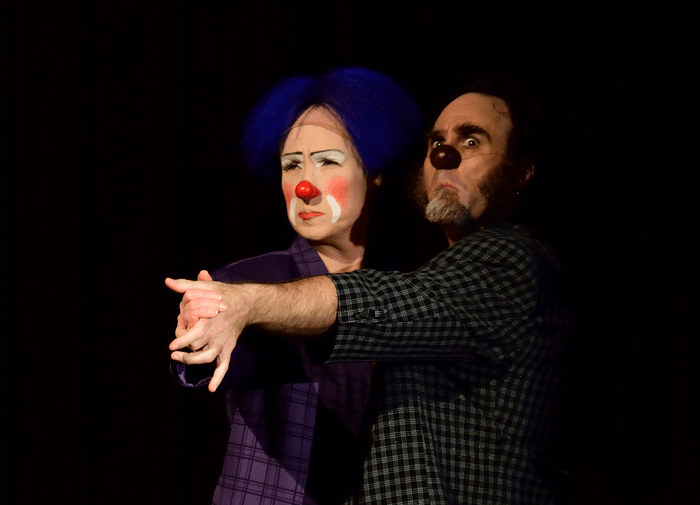

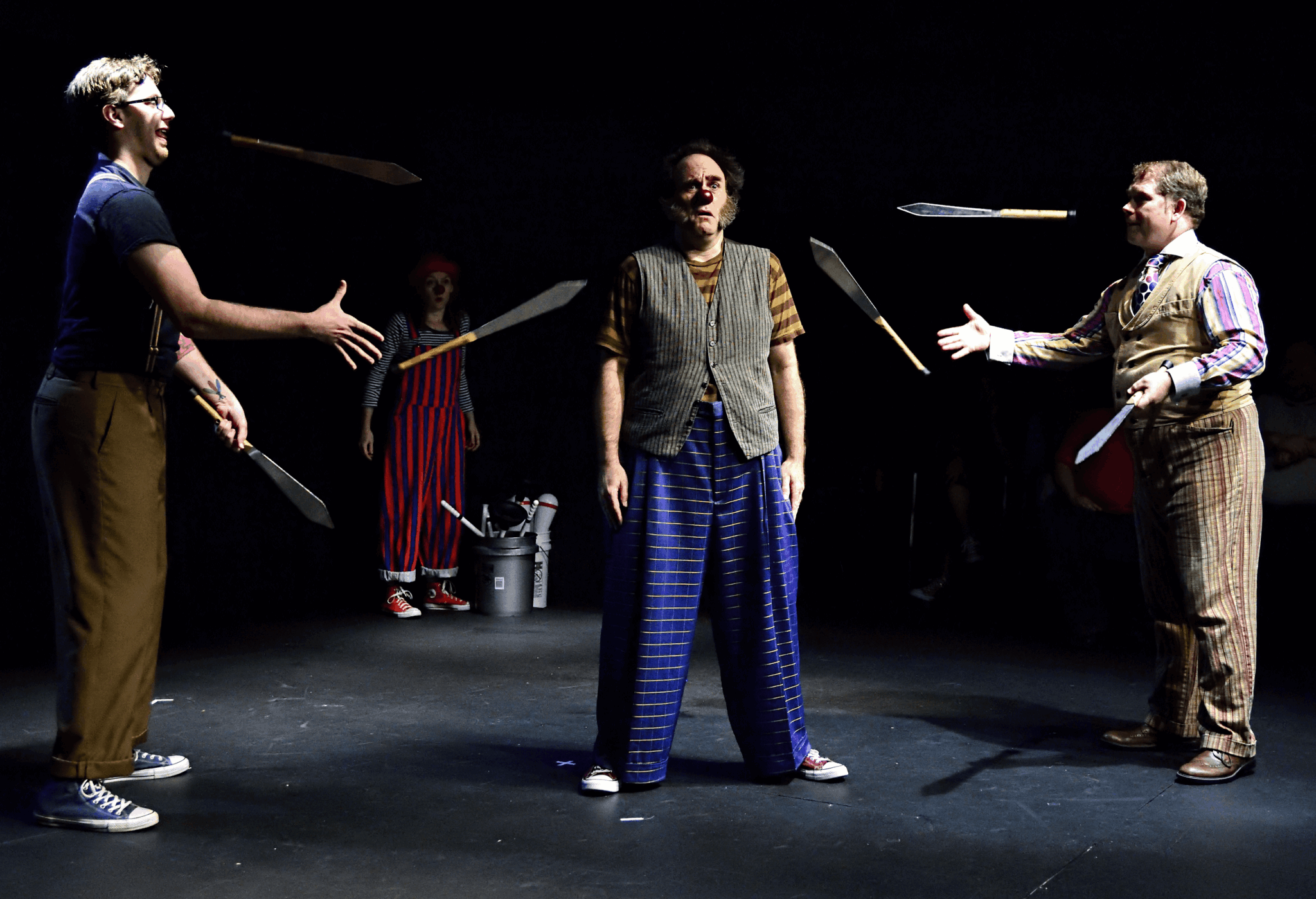
Image Credits
Ilo Mimuki
John Allen Grant
Michael Leza
CityLine Dallas