

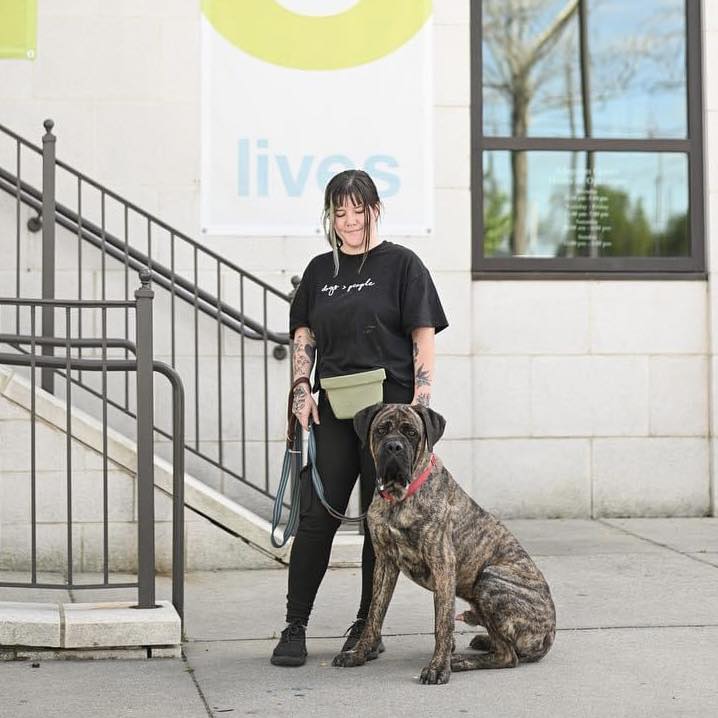

Today we’d like to introduce you to Sam Pierce.
Hi Sam, we’re thrilled to have a chance to learn your story today. So, before we get into specifics, maybe you can briefly walk us through how you got to where you are today?
Like many dog trainers, I grew up with animals and have worked with animals in some capacity for as long as I can remember. When I was a kid, I often got together with friends to make dog treats and fundraise for supplies to give to our local dog shelter before I was able to volunteer directly with the animals there. Later, I started volunteering, and grabbed onto any opportunity I was given to interact with other animals — this included volunteering as a dog walker for shelters, pet sitting for neighbors, fostering, and eventually working at a variety of businesses including dog daycares, dog walking companies, and shelters.
In 2021, I found myself working at a shelter that had a somewhat large population of dogs with maladaptive behaviors. A lot of these dogs required patience and multiple meetings before they really began to trust you — very quickly, it became my goal to befriend all of these “difficult” pups, no matter the time it took. I had considered training dogs before, but through these dogs things became crystal clear: I didn’t just want to train dogs, I wanted to help dogs who struggled emotionally, and maybe had a bad rap, find and stay in homes.
The rest is sort of history; I enrolled in the Karen Pryor Academy Dog Trainer Professional program, and started spending nearly every waking moment learning what I could about animal behavior. During that program, I joined the training team at the shelter and started teaching classes for the public as well. I also worked for a local dog walking company running their training team until they closed their doors, and was launched into small business ownership. At that point, it wasn’t really a question. I knew the kind of impact I wanted to have on dogs and their humans, and after working with a few different teams I had a good idea of how I wanted to go about it as well.
Alright, so let’s dig a little deeper into the story – has it been an easy path overall and if not, what were the challenges you’ve had to overcome?
Yes and no. I consider myself to be incredibly privileged in having access to the opportunities that I have had. I’ve worked incredibly hard to get where I am now, but doors have opened quite easily for me one way or another.
That said, those doors have not come without their challenges. Prior to starting my own business, I worked on teams whose ethics and beliefs did not align with mine, and this certainly caused a lot of turmoil. I feel very strongly about the way I approach my work with dogs, and have often been put in situations where the options are: speak up, and potentially threaten my livelihood; or stay quiet and go with the flow, but go against what I believed in. Most every time, I chose the first option. I again consider myself very lucky that I was able to do that, and land on my feet each time.
Starting my own business was a struggle of its own. I had 30 days notice that the company I worked for would be closing, which is not a lot of time to build something from the ground up — but if you really believe in something, you’ll make it happen. I am definitely the kind of person that will dive headfirst into something: if I don’t know the first thing about what I’m doing, I will focus on learning everything I can to change that, and that’s exactly what I did.
Thanks for sharing that. So, maybe next you can tell us a bit more about your business?
Dognitive is a dog training business that specializes in behavior support for dogs with big feelings, as I call them. This includes dogs who experience high levels of fear, anxiety, stress, and arousal, and those who display aggressive or maladaptive behaviors as a result. I utilize evidence-based training methods rooted in giving our companion animals more choice and agency, and supporting them through shifting their emotional responses to stressful stimuli.
There aren’t a whole lot of people who work with the kinds of behaviors that I work with, and even fewer are actually qualified to do so. I’m never going to put a shock collar on a dog and force them to be “obedient,” and I’m also never going to shame a dog’s guardian for “causing” their dog’s behaviors — those things set me apart from a lot of people who might call themselves trainers.
Dognitive is really an extension of me as a person, and that means being loud and clear about who we are. I do not hide that I am a queer disabled person who cares a whole lot about my community. Dognitive is just an avenue for me to spread that care to a wider level, and offer more support to people who need it.
I want people to know that it is perfectly normal to have big feelings about your dog’s big behaviors — we’re human after all. A lot of the people I work with are very affected by what life with their dogs looks like, and one of my primary foci is to make sure they feel supported through the training journey too.
If you had to, what characteristic of yours would you give the most credit to?
Drive. As I mentioned earlier, I am very committed to learning whatever I need to in order to succeed. I don’t know everything about anything, so I’m always learning. Since starting Dognitive in March of 2024, I have spent countless hours learning more about dog behavior, cat behavior, finance, business ownership, management, and marketing so that I’m able to keep pushing my success forward and helping more people. If you’re going to own a business, you either need to know how to do things or be able to find someone who knows how to do those things — actually, you need both of those things, and to know which is the better option for a given topic or task.
Pricing:
- Management and Planning Consultation – $200/2 hr
- Private Consulting – $160/hr
Contact Info:
- Website: www.dognitive.training
- Instagram: https://www.instagram.com/dognitivebehavior
Image Credits
Alexandra Lloyd Photography