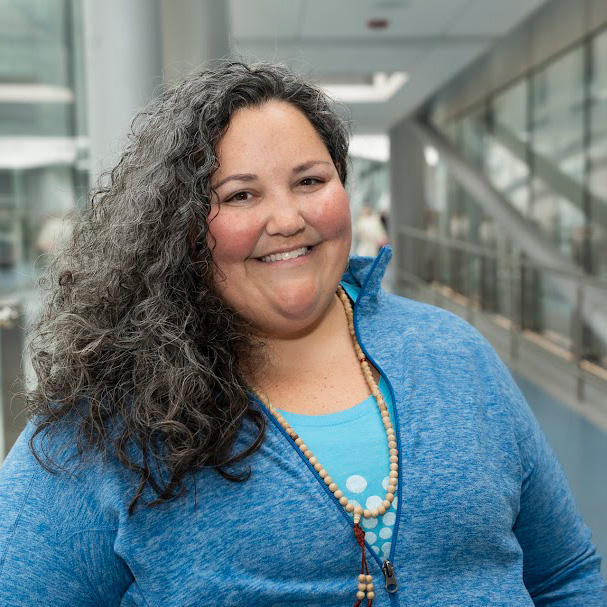

Today we’d like to introduce you to Emma Bouthillette
Hi Emma, we’d love for you to start by introducing yourself.
I was headed to a private, all girls college in Massachusetts the fall after high school with the goal of earning a business degree. My father had owned and operated his own electrical business, and while my mother hoped I would follow in her footsteps and become a nurse, I had his entrepreneurial spirit. However, the universe had a different plan for me. Less than halfway through the fall semester, I had my first major panic attack that left me in the fetal position at a rest stop on my way back to school after a weekend home. Mom and my uncle came to my rescue that day, and by the end of that week I had withdrawn my enrollment, packed up my dorm, and moved back home. This is how I ended up studying for my bachelor’s degree at the school I refused to consider when initially applying for college, the University of New England, which is one mile away from my parents’ house.
Since I started halfway through the year and enrolled after the course registration period, I was dropped into four available classes – introduction to biology, an anthropology class, English composition, and an English elective. Those two English courses reignited something inside of me I thought I lost back at that rest stop. And college English classes were more than just reading about a book to pass a test or write a report. We sat in class discussing the literature, the choices the author made, the deeper meaning to the themes and motifs. I declared my major in English literature, and later added history and fine arts as minors.
While I did not know my career path at the time, this decision set me on my journey. I took a semester during my undergraduate studies to attend the Salt Institute for Documentary Studies, where I wrote my first feature article length piece that was picked up and published in a local magazine. When I graduated in May 2008, I had a job at a weekly newspaper lined up. I worked there for a little over a year before the impacts of the Great Recession caught up to me and I was laid off. I then worked for Maine’s largest daily newspapers for a little over two years while also working toward my master’s degree in creative nonfiction writing at the University of Southern Maine’s Stonecoast program.
There was a period of time between finishing my Master of Fine Arts and starting my current job in marketing for an environmental engineering firm in which my career took quite the winding journey. I did freelance writing for several Maine-based publications, taught English composition at a local community college, worked at the bakery I had worked at as a teenager, staffed a dog and cat supply store, answered phones at a private car service, packed orders for a clothing designer, went back to the private car service where I took on more of a marketing role, and got recruited to work as a legal assistant at a law firm. While working at the law firm, I published my first book, A Brief History of Biddeford (The History Press, 2017) and completed yoga teacher training in 2018.
At my marketing job, I work with the firm’s water engineers and scientists to write about the projects we do to ensure access to clean, safe drinking water and protect the surface water bodies. I also teach vinyasa once a week, which is such a rewarding piece of my life. And after several years of thinking about writing another book, I’m finally working on a coming of body memoir in which I explore the impact of having a benign brain tumor on the course of my life and realize my own radical self acceptance in the context of the modern body positive movement.
I’m sure it wasn’t obstacle-free, but would you say the journey has been fairly smooth so far?
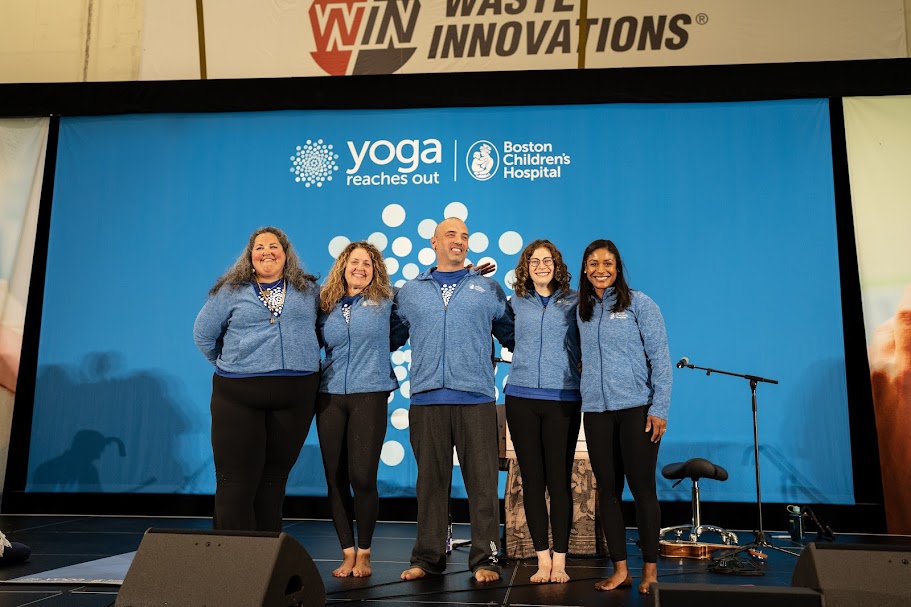
Just shy of five and a half years old, my parents had to rush me to Boston Children’s Hospital after a CT Scan ordered by my pediatrician showed a tumor at the base of my brain. Onn June 5, 1991, Dr. R. Michael Scott completed an eleven-hour surgery to remove a craniopharyngioma, a rare, benign brain tumor. When my parents signed the consent to treat form, there were so many unknowns. The outcomes ranged from a surgical success that would reinstate my normal self or I could end up in a catatonic state. Ultimately, I fell somewhere in the middle. A recent report from a craniopharyngioma survivors survey, conducted by the Raymond A. Wood Foundation, indicates I fall somewhere in the middle. Since the surgery, I have had to manage several chronic health conditions, including hypothyroidism, adrenal insufficiency, growth and hormone deficiency, chronic migraine, abnormal temperature regulation, hypothalamic obesity, peripheral vision loss, and anxiety. Despite all the inherent challenges that come with managing a myriad of conditions, including regular trips between Biddeford and Boston to see my doctors through age 18, my parents’ goal was for me to have the most normal childhood experience possible and learn to be independent, without the need of assistive services – even though there have been times where such services may have proved helpful.
It wasn’t until my mid- to late-twenties that I started to own my story, which changed my perspective on how I move through life. I owe this in part to the people I’ve surrounded myself with who understand if I have to cancel plans because of a migraine or exhaustion. I build in time for myself to rest, because if I don’t, my body will force me to stop by getting sick or bone tired. Sometimes it means spending an entire day in bed to recharge. While the tumor and resulting conditions have never stopped me from pursuing my goals and dreams, it has made the journey a little tougher, but it has made me more resilient too.
Can you tell our readers more about what you do and what you think sets you apart from others?
A Brief History of Biddeford came about in the most unusual way. My college classmate, Camille Smalley, had written a book about the history of Saco’s drive-in movie theater and was working with The History Press on a proposal for a book about Biddeford’s history. She called me up one day and said, “You’re really the person who should be writing this book.” I signed a contract a week later. I spent the next year talking to people about Biddeford’s history, researching my hometown, and writing about the city from founding to present day. I tend to minimize this accomplishment, but then friends will brag about the book on my behalf or tell me it’s prominently displayed in U.S. Senator Angus King’s Biddeford office, and I am reminded it is something for which I should be incredibly proud.
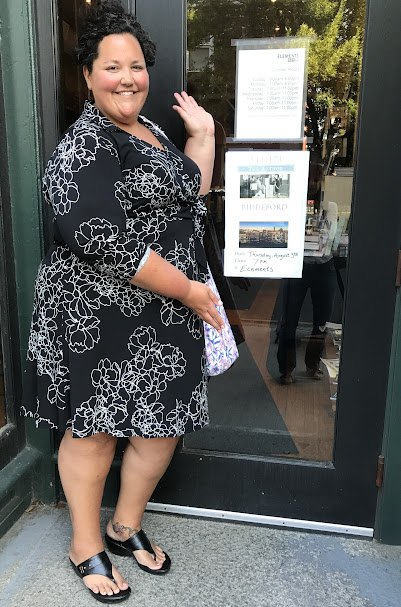
The city of Biddeford grew rapidly with the introduction of textile mills that utilized the Saco River’s flow as a power source. In the late 1800s, French Canadian immigrants traveled from southern Quebec to Biddeford for work in the mills, which ballooned the city’s population and most families stayed for generations. My ancestors were among them. After World War II, the shift to outsourcing slowly drew business away from downtown and the textile mills limped along until finally closing in 2009. The Main Street I knew as a teen was in direct contrast to the Main Street my grandparents knew. They would tell stories shopping downtown for everything they needed, meanwhile my trips downtown included going to McArthur Library and Reilly’s Bakery because there wasn’t much else to be had. But an effort was afoot to drive revitalization. By the time my book was published, a large trash incinerator, which was an eyesore that frequently stunk up the city was gone and many businesses had moved in. Now, Biddeford is making national news for its restaurants, a new boutique hotel, and more. I’m so proud of my city and to have written the book that still sells out at Elements: Books Coffee Beer and has been used by local teachers for their curriculum.
Before we go, is there anything else you can share with us?
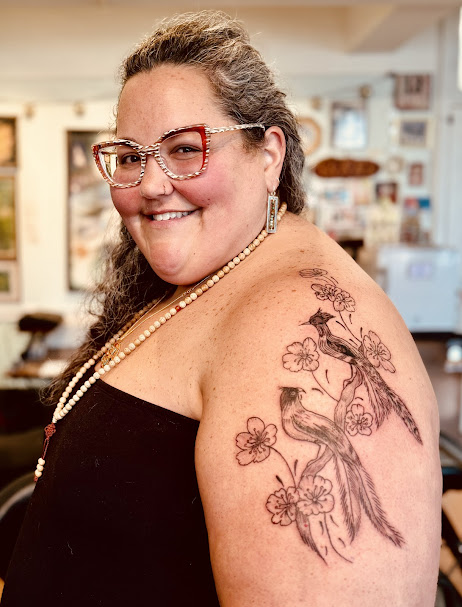
In high school, I read Anne Lamott’s book Bird by Bird for the first time. The title of the book comes from an anecdote she shares within, which reads: “Thirty years ago my older brother, who was ten years old at the time, was trying to get a report on birds written that he’d had three months to write, which was due the next day. We were out at our family cabin in Bolinas, and he was at the kitchen table, close to tears, surrounded by binder paper and pencils and unopened books on birds, immobilized by the hugeness of the task ahead. Then my father sat down beside him, put his arm around my brother’s shoulder, and said, ‘Bird by bird, buddy. Just take it bird by bird.’”
I return to this book often and recommend it to everyone I can – even non-writers. Whether you have to write a report about birds or overcome major medical events, the only way forward is one step at a time. Earlier this year, I had a tattoo artist adapt two pieces of art that my paternal grandfather brought home from Tijuana while he was on leave from the U.S. Navy during World War II. The two birds pay homage to the artwork, but also this idea of taking writing and life “bird by bird.”
Contact Info:
- Website: https://emmabouthillette.com/
- Instagram: https://www.instagram.com/emmabootsie/
- Facebook: https://www.facebook.com/emmabootsie/
- LinkedIn: https://www.linkedin.com/in/emmabouthillette/