



Today we’d like to introduce you to Parinaz Ghanbari.
Hi Parinaz, so excited to have you with us today. What can you tell us about your story?
Hello, and thank you for having me again! I’m honored to be interviewed by Bold Journey Magazine for the second time. It’s always a pleasure to share my journey and insights with your audience.
I have always believed that the fusion of science and art has the power to transform our understanding of complex concepts. My journey into scientific design began with a passion for visualizing information and simplifying knowledge for diverse audiences. Over the years, this passion evolved into a career, allowing me to collaborate with researchers, professors, and academic institutions to translate scientific data into compelling and accessible visuals.
But this was just the beginning. Through my collaborations, I realized that many educators and students are eager to learn how to visually communicate their research but often lack a comprehensive and practical resource. This realization led me to embark on a new endeavor—Designea, a book series dedicated to helping scientists and academics master the art of visual communication. The first book in the series, Designing Impactful Abstracts for Scientific Papers, focuses on crafting compelling visuals for research abstracts, while future volumes will explore grant writing and academic presentations.
Currently, alongside my design projects, I am actively creating educational content for this series. My goal is to make Designea a go-to resource for researchers looking to refine their storytelling through design. I believe scientific design is more than just a supplementary tool—it is a powerful language that can transcend words and connect research with a broader audience.
We all face challenges, but looking back would you describe it as a relatively smooth road?
My journey has not been smooth. Like any creative and scientific path, it has been full of challenges, but each obstacle has shaped me into the designer and expert I am today.
Although my academic background is in computer science, I taught myself scientific design through extensive reading, research, and practice. One of the biggest challenges was finding my place at the intersection of science and art. Scientific design is a specialized field, and at first, I had to work hard to show researchers and academic institutions its value. Many in academia were accustomed to traditional data presentation methods and didn’t recognize the power of visual storytelling. Educating clients and earning their trust took time and required persistence and effort.
Another challenge was finding the balance between creativity and scientific accuracy. Unlike other areas of design, scientific illustration requires high precision, clarity, and adherence to complex data. I constantly had to refine my approach to ensure my designs were not only aesthetically appealing but also scientifically accurate and reliable.
Now, as I work on Designea, a series of books to teach scientific design, I’m facing a new set of challenges. Creating educational content and structuring complex concepts in an easily understandable way are all parts of this exciting but difficult journey. However, I view these challenges as opportunities for growth and impact in the academic world.
Of course, I haven’t traveled this path alone. The scientific and emotional support from my husband, family, and friends has been a driving force during tough times. Their presence and belief in me have provided additional motivation to continue my journey with even more enthusiasm.
Thanks for sharing that. So, maybe next you can tell us a bit more about your work?
I specialize in scientific and medical graphic design, where I combine my background in computer science with my passion for design to help researchers communicate complex data and concepts through visual storytelling. I self-taught myself the skills of scientific illustration and graphic design, focusing on transforming abstract scientific ideas into clear, visually compelling visuals that are both accurate and engaging.
Over the years, I’ve had the privilege of working with top-tier academic institutions and renowned researchers, including Mayo Clinic, NIH, UCLA, NDSU, OHSU, and several other prestigious universities. My work spans various areas, including creating custom illustrations for research papers, designing visuals for presentations, and developing impactful designs for grant proposals. I’m known for my ability to take intricate scientific data and make it visually accessible, engaging, and easy to understand.
What I’m most proud of is the opportunity to contribute to meaningful projects that advance scientific understanding and education. Being able to work on research that can have a real-world impact, such as cancer research or drug delivery systems, is incredibly fulfilling. I also take pride in the work I’m doing for my book series Designea, where I’m teaching scientific design to researchers and students. It’s my way of giving back to the academic community and sharing my expertise with others.
What sets me apart is my unique blend of skills in both art and technology. My computer science background gives me a strong technical foundation, which allows me to approach design challenges with precision and efficiency. Additionally, my commitment to continuous learning ensures I stay ahead of trends in scientific design, bringing fresh and innovative ideas to my work. My focus on both artistic quality and scientific accuracy allows me to create visuals that are not only visually striking but also informative and valuable for the scientific community.
Can you tell us more about what you were like growing up?
Since childhood, I had a strong interest in video games, and I loved solving the toughest ones. This passion for tackling complex challenges led me to the world of technology and computers. Additionally, digital design was one of my hobbies during my teenage years, which gradually became a growing interest. This combination of art and technology inspired me to pursue computer science.
Over time, I realized that the intersection of art and technology was where I could truly nurture my passion, and it ultimately led me to scientific design. I’ve always been driven by a desire to learn and solve new challenges, and this personal trait has helped me advance in my career.
Contact Info:
- Website: https://sites.google.com/view/parinazghanbari/home
- Instagram: https://www.instagram.com/designingdiscovery/
- LinkedIn: https://www.linkedin.com/in/parinaz-ghanbari/
- Twitter: https://x.com/ParinazGhanbari
- Other: https://www.fiverr.com/s/kLrrwqL
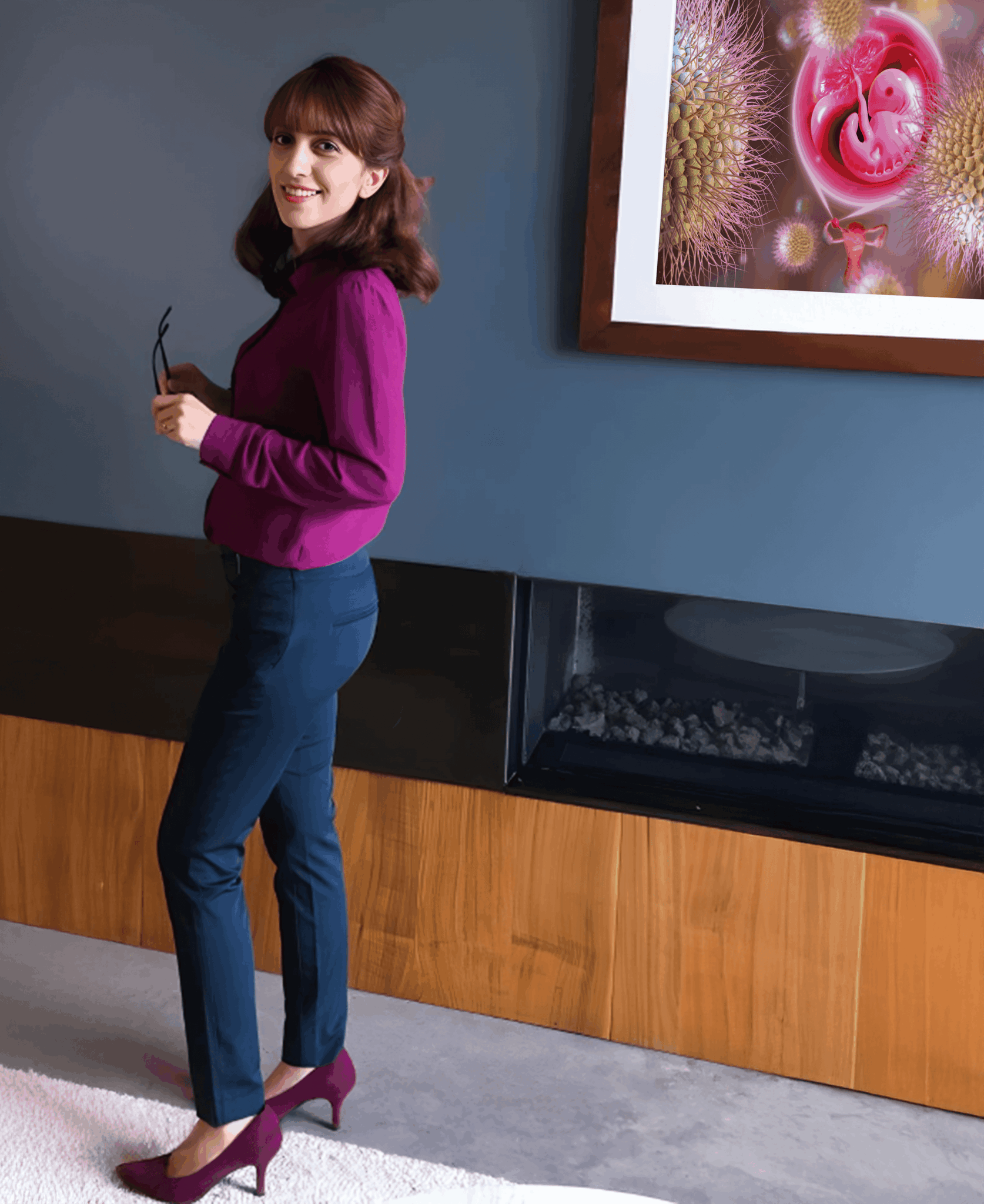
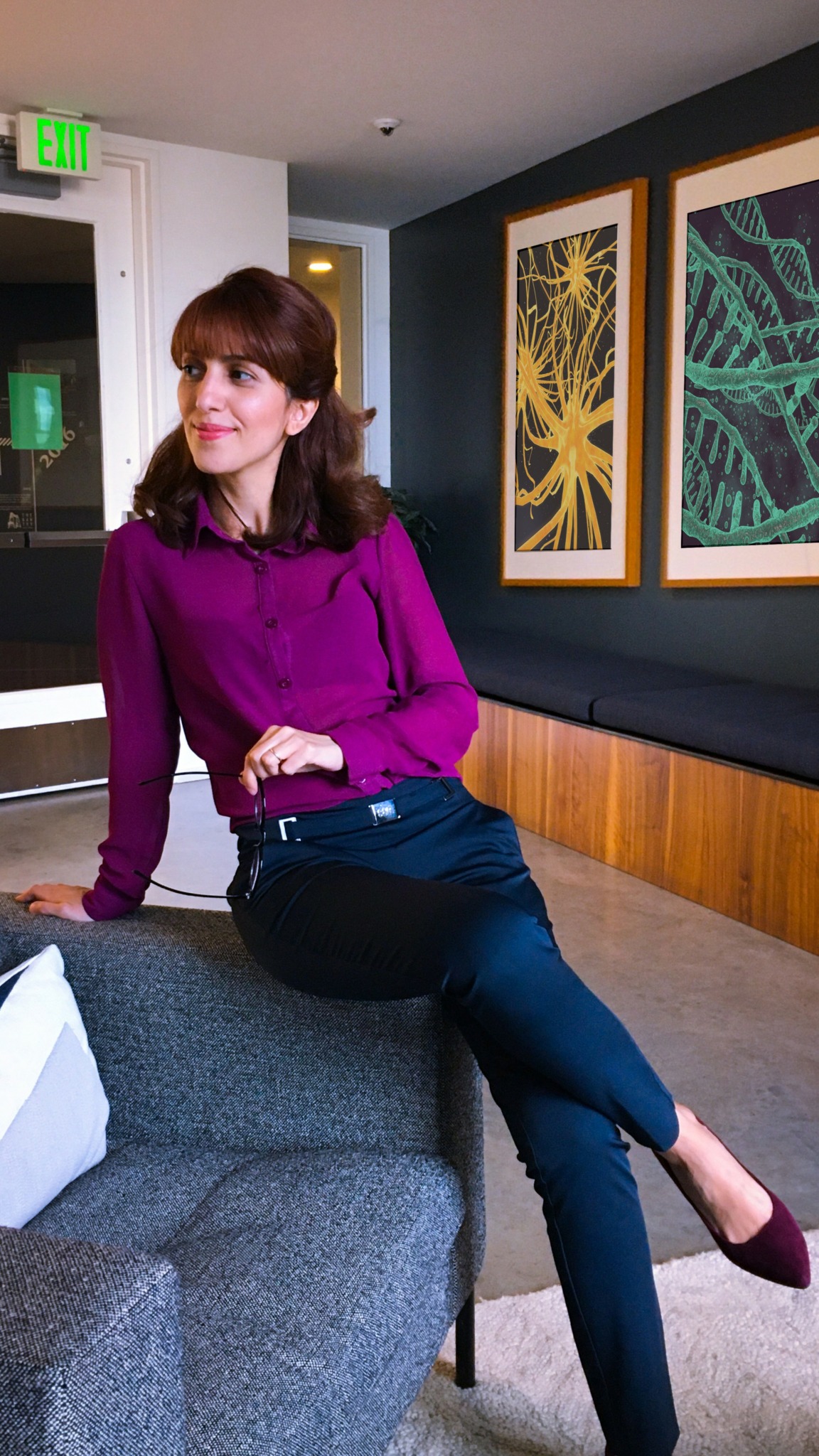
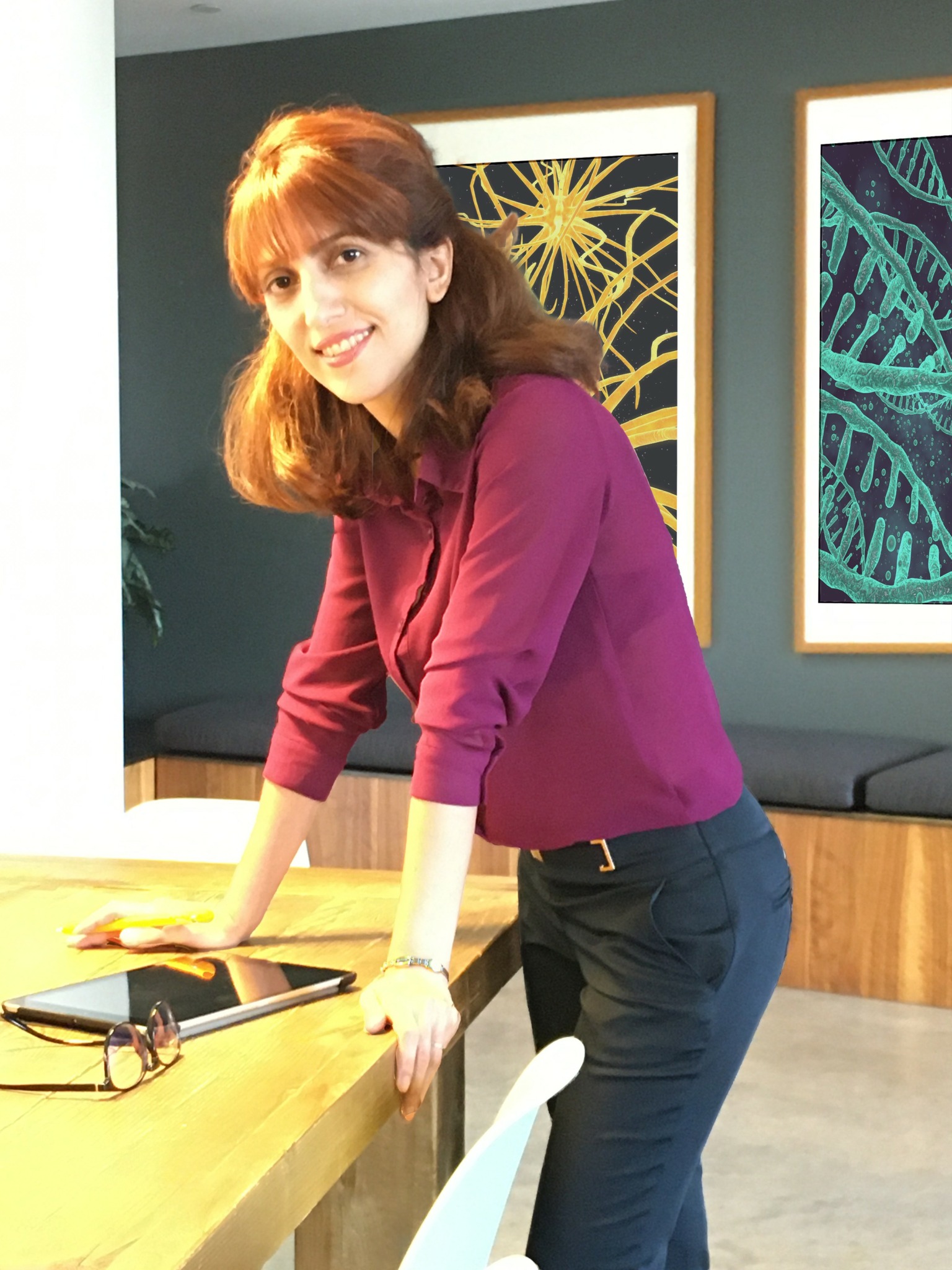

Image Credits
Image by Parinaz Ghanbari