
Today we’d like to introduce you to Jeffrey Biegel
Hi Jeffrey , thanks for joining us today. We’d love for you to start by introducing yourself.
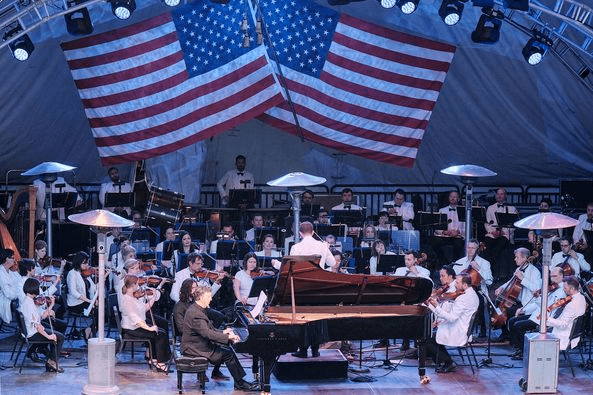
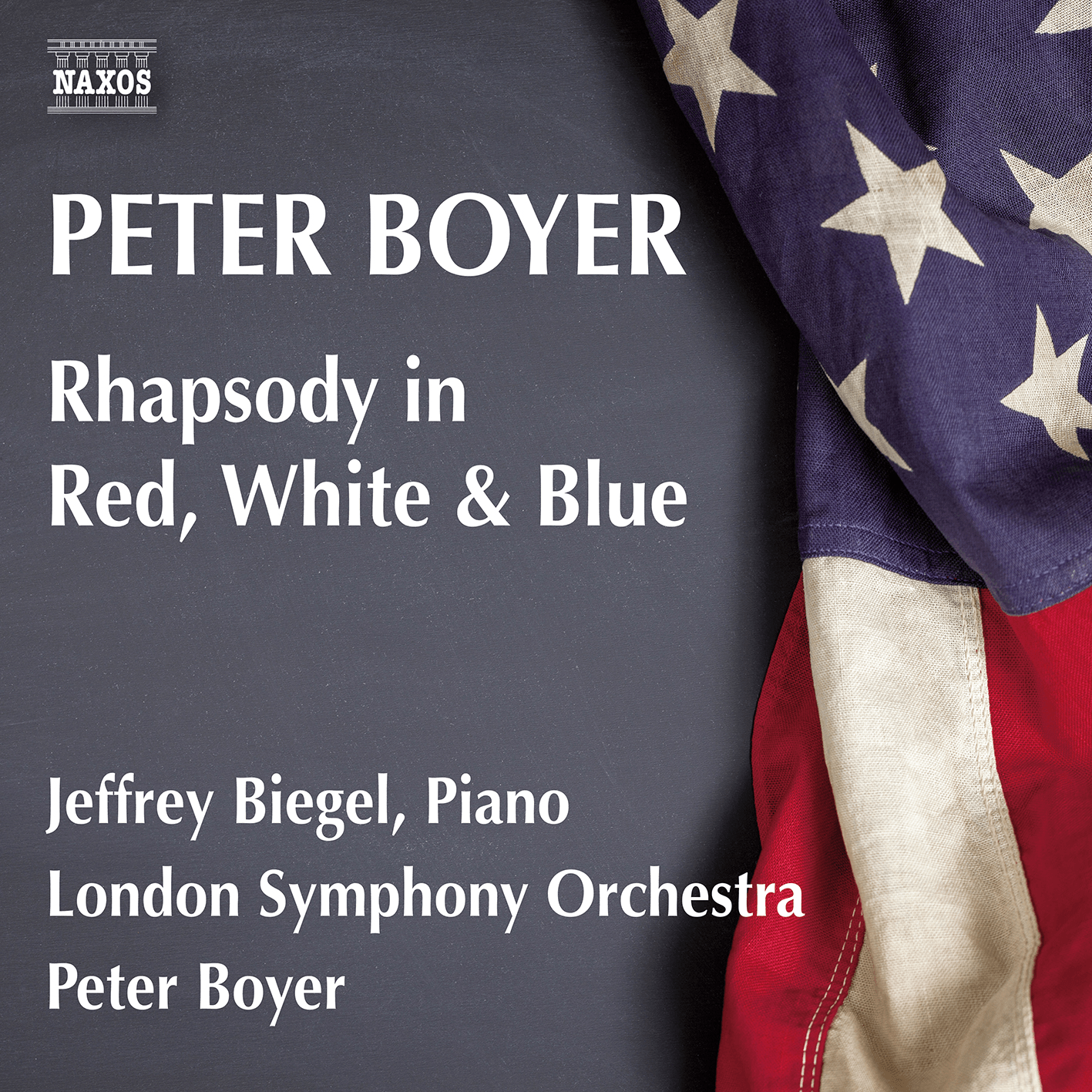
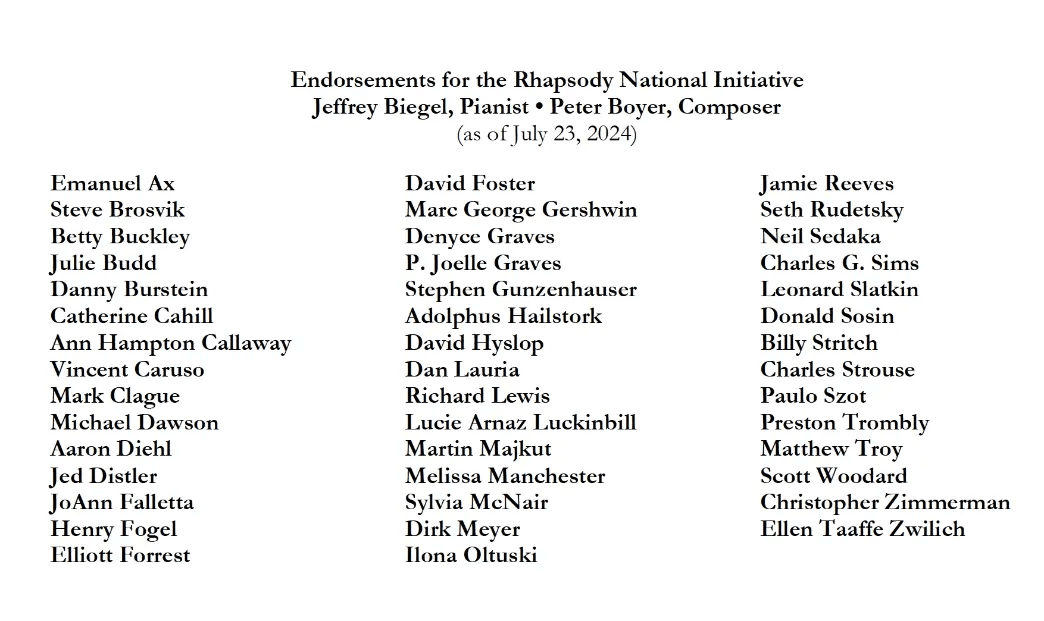
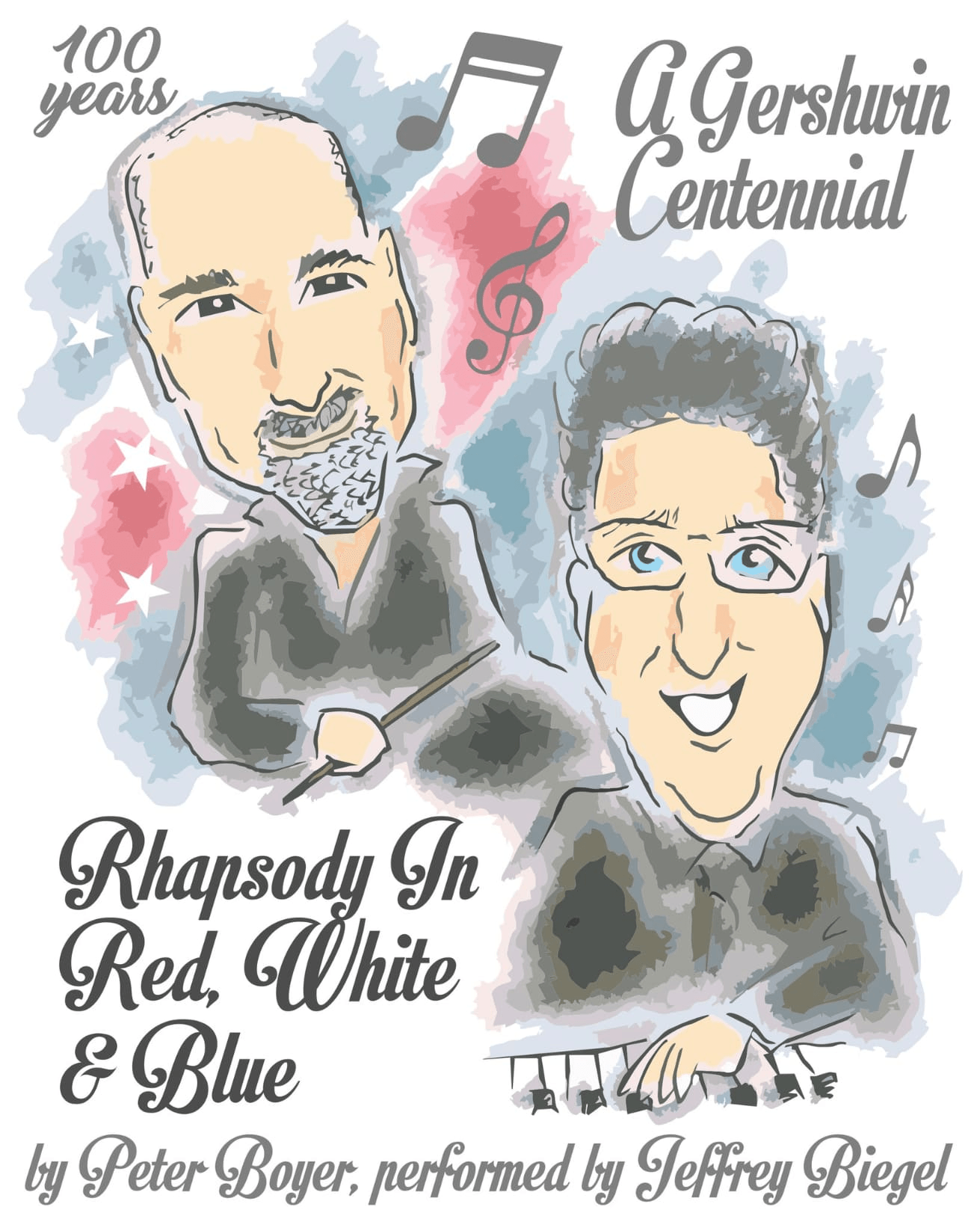
Until the age of three, I was hearing disabled. Not totally deaf, but there was fluid blocking the pathway to the eardrum, which was not functioning normally. Surgery corrected this. Soon after, I went to the piano after my sister’s inspiring piano lessons, trying to figure out how to play what I had heard. Hearing was indeed a gift. By age four, I was playing songs I heard my grandparents listen to, and heard my mother’s natural high coloratura bird-like singing. It was sweet and beautiful. At age seven, I started formal lessons, going through the John Schaum series Pre-A to D, the Amsco series Piano Pieces for Children, all twelve Sonatinas by Clementi and the Hanon book of exercises. My teacher was Karl Hupprich, director of music for Bethpage schools. He was calm, respectful and wonderful. His phrase was ‘haste makes waste’. I still remember this. My father was a police officer in the New York City Police Department, and became the youngest Captain in the NYPD. He had a stronger personality and loved music. Gershwin’s “Rhapsody in Blue” was his favorite. I’ll talk more about that later on. Mom was softer, so between the two, somehow I figured out how to make it work. Because of the hearing handicap, I was a very inhibited, shy and frightful child. By age ten, I was sent by Mr. Hupprich to Morton Estrin. He was in Hicksville and allowed my natural facility at the piano to blossom. It was a healthy six years of lessons. At age sixteen, my grandmother’s cousin, Dr. Sonia Slatin, sent me to Agustin Anievas to have him evaluate my playing. He was teaching at Brooklyn College where Sonia taught music. (We called her ‘Cyd’). ‘Gus’ sent me to Adele Marcus, his teacher at Juilliard. Of course, my parents had the unpleasant task of sharing this with Mr. Estrin. But Adele said to say, “We’re not changing anything, only adding to what he has done.” She had a very strong personality, known to many, but she knew how the piano could sound and her students had a beautiful sound from their studies with her. It wasn’t easy, but it was necessary. In my teaching, I have found ways to teach her ideals without my own personality getting involved. I enjoyed music in my schools, played sousaphone, baritone horn and attempted to sing in the choral ensembles. Sixth grade graduation was a special memory held in the gymnasium. The music teacher, Adele Dwyer, played the juxtaposing upright piano for the orchestra part reduced to piano of the last movement of Mendelssohn’s “Piano Concerto #1”. What a thrill. We stayed in touch over the years. And, actually, Mr. Hupprich attended my performance of Leroy Anderson’s “Concerto in C” with the Usdan Center Orchestra in the 1990s. I also spoke with Mr. Estrin on the video phone before he passed and thanked him for everything he did for me in his teachings. We had not spoken over the years here and there, but interestingly enough, he came to my performance of the Brahms “Concerto #2” in April 2013 with the South Shore Symphony on Long Island. That was also the last performance my father attended before he passed in November 2013. Here’s a cool story: Mr. Estrin had presented the manuscript of Meyer Kupferman’s “Sonata Mystikos” to me in 1973. He said, “I don’t have time to learn it. Here. You do it.” That was my first new piece by a living composer. I was only 12 years old. My parents drove me to Manhattan to play it for Mr. Kupferman. This was the seed of the future of new music by living composers. The first time I took a train by myself from Long Island to Manhattan was when I went to The Juilliard School at age 18. I never told Adele Marcus that I was hearing disabled as a child. Maybe it would have helped her understand me better. It took a few years until I opened up, traveled, and made myself feel felt. I always thought outside the box for communicating almost everything. I also did unorthodox things before the internet came about. I cold called conductors at their homes, mailed recordings and press material to conductors and orchestra administrators, made a career from the bottom up. I won’t go into the competitions, managers etc. There’s nothing unique in those stories. I will share one phrase told to me by then President of what was ICM Artists (now Opus 3 Artists), Lee Lamont: “Make friends in the business.” In other words, don’t rely on us solely to make you a star. She was right. During the late 1980s and through the 1990s, I created the first classical Livestream from Steinway Hall in 1997, played Leroy Anderson’s Concerto, Lalo Schifrin’s “Concerto of the Americas”, and in 1998, decided to celebrate the Millennium with a first: the largest consortium of orchestras for a new work. It would be the “Millennium Fantasy” Ellen Taaffe Zwilich. 27 orchestras covering 25 states. After this, I created the “Concerto America” project with composer, Charles Strouse. I secured the funding so it would be the first 50 state project without buy-ins from orchestras to pay the composer’s fee. September 11 ceased this project, as it didn’t seem appropriate to pursue. But, two orchestras performed it with me. From 2003-2019, I created numerous projects with living composers, bringing orchestras in Canada and Europe into the American projects. In late 2019, I realized the centennial of George Gershwin’s “Rhapsody in Blue” would be in 2024. This became a spiritual calling, based on my father’s love of the piece. I decided to celebrate this with a new piece, a “Rhapsody in Red, White & Blue”. After approaching various composers, Peter Boyer was the one to do the job. Then Covid hit hard. During the times of no performances, I decided to resurrect the 50 state project. As a result, since March 2020, I have 55 orchestras in all 50 states, through the 2026-27 season. The Utah Symphony performed the premiere in June 2023, the London Symphony Orchestra recording with me was released in February 2024. It continues to grow, as the first 50 state project without buy-ins from orchestras. There have been more than 118 orchestras in more than 25 new works in 25 years. At 63, I realize the word legacy means more and more. I love the classic repertoire, but my yellow brick road encompasses much more and I have no choice but to pursue these endeavors.
We all face challenges, but looking back would you describe it as a relatively smooth road?
It’s never a smooth road. This is actually a good thing. My piano technician was Steve Borell. He worked for Artur Rubinstein and Glenn Gould. He said this to me: “The keyboard is like a mirror. It reflects everything about the person playing it.” So true. The business obstacles are trying to sell yourself, or sell new music in the form of raising money for commissioning projects and composer fees to orchestras, conductors, foundations, and being able to accept the door closed in your email face, or ‘no’, or ‘thanks, we’ll keep it on file’, or ‘we already programmed that piece’. I’ve learned that it isn’t about me, it’s about being part of the evolution of music. And, what can I do to make that happen? Once the ‘me’ or ‘you’ is removed, it becomes about the product. People who sell anything should never take the word ‘no’ personally. The goals are: what do I have to make a difference for others, and what is my purpose and legacy?
Alright, so let’s switch gears a bit and talk business. What should we know about your work?
My work is as a musician: pianist, teacher, entrepreneur, performing older music and creating projects for the emergence of new music. I also maintain a license in New York state as a real estate salesperson. This has helped me in the music business as well.
Is there anything else you’d like to share with our readers?
The basics are respect, care, kindness, dignity, hard work, being on time for everything. I try my best to adhere to these values.
Contact Info:
- Website: https://www.jeffreybiegel.com
- Youtube: https://YouTube.com/biegel88