

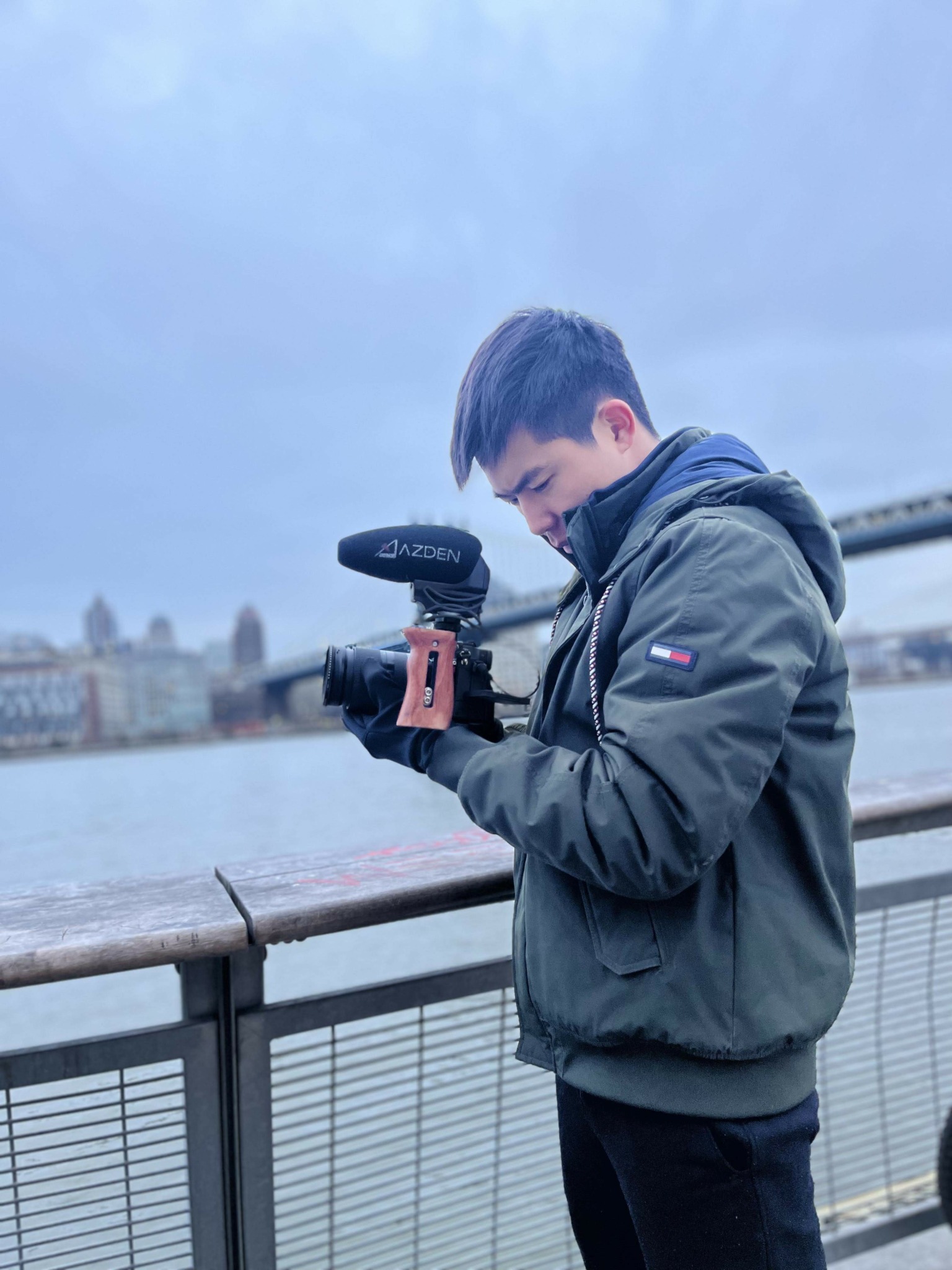

Today we’d like to introduce you to Chin-en Gau
Hi Chin-en, thanks for joining us today. We’d love for you to start by introducing yourself.
Hello! I’m Chin-En Gau, originally from Taiwan and now based in New York.
More than ten years ago, my dad brought my mom a camera. My older sister and I argued over who got to play with it, and my mom said we each had 20 minutes. It wasn’t enough for me, so the next day, I woke up early, sneaked into the room, and took out the camera. That’s where my story with film began.
After that, I volunteered to be the photographer for some school trips and made short films in high school. I was surprised by how powerfully images could carry a story. Luckily, I got into an art university where I could focus on film, learn about all kinds of movies, and meet the classics on the silver screen. After that, I moved to New York to keep pursuing my dream as a storyteller.
For me, film is all about the story. Like the fairy tales we listened to as kids, the story should carry a message to the public.
Alright, so let’s dig a little deeper into the story – has it been an easy path overall and if not, what were the challenges you’ve had to overcome?
Definitely not! It was after I got into college and found myself suddenly surrounded by talented filmmakers from across the country. I felt a bit confused about my path for the future, especially after being challenged by my cohorts in class. The most amazing part about film (or any art-related field) is that there’s no right or wrong answer. However, as a student who had suffered through all kinds of exams before college, the idea of “no right answer” actually frightened me.
It was only a few years later that I started to find my own path, developing my style and producing films that I deeply care about.
As you know, we’re big fans of you and your work. For our readers who might not be as familiar what can you tell them about what you do?
Sure!
My films mainly focus on revealing the other side of people. For example, in my short film “The Expert of Loneliness,” I depict a stubborn immigrant from Asia who is rude to his invited dinner guests, only to discover that his brother, his only relative here, is busy with his own family.
Another film of mine, “So You May Not Forget Me” follows a teenage girl who has just broken up with her boyfriend but now needs to take care of an elderly woman suffering from Alzheimer’s disease. As the story progresses, the secret in the family slowly rises. The film raises the question of whether “forgetting is happier.”
In addition to filmmaking, I teach film courses at Stony Brook University. It’s always lovely and inspiring to see my students’ work and their ambition to contribute to the world.
What sort of changes are you expecting over the next 5-10 years?
I would say that those kinds of “shorts” will definitely change the way people watch stories. Honestly, I’m not a big fan of this trend. However, as filmmakers, we need to adjust our way of thinking instead of locking ourselves in our comfort zones.
Our audience is becoming less patient, that’s for sure. Fewer and fewer people are willing to spend two hours in a dark room to watch a film about everyday life. My assumption is that either epic Marvel action films will dominate theaters, or watching a film in a theater will become a special event, much like going to the theater or a music concert, where we dress well and socialize.
However, I don’t think it’s the end of the film industry. I believe the platform has become more free, giving us more opportunities to connect with audiences. Even if they aren’t as patient as we might hope, we can still convey our messages through our artwork and spark discussions in society. This, I think, is the mission of a storyteller. We’ll have more opportunities to connect with people!
Contact Info:


Image Credits
Wei-Ta, Chen.