


Today we’d like to introduce you to Beatrice Atencah
Hi Beatrice, so excited to have you on the platform. So before we get into questions about your work-life, maybe you can bring our readers up to speed on your story and how you got to where you are today?
Having shared my personal story, I would love to go with my professional story this time. That is, being an Artist.
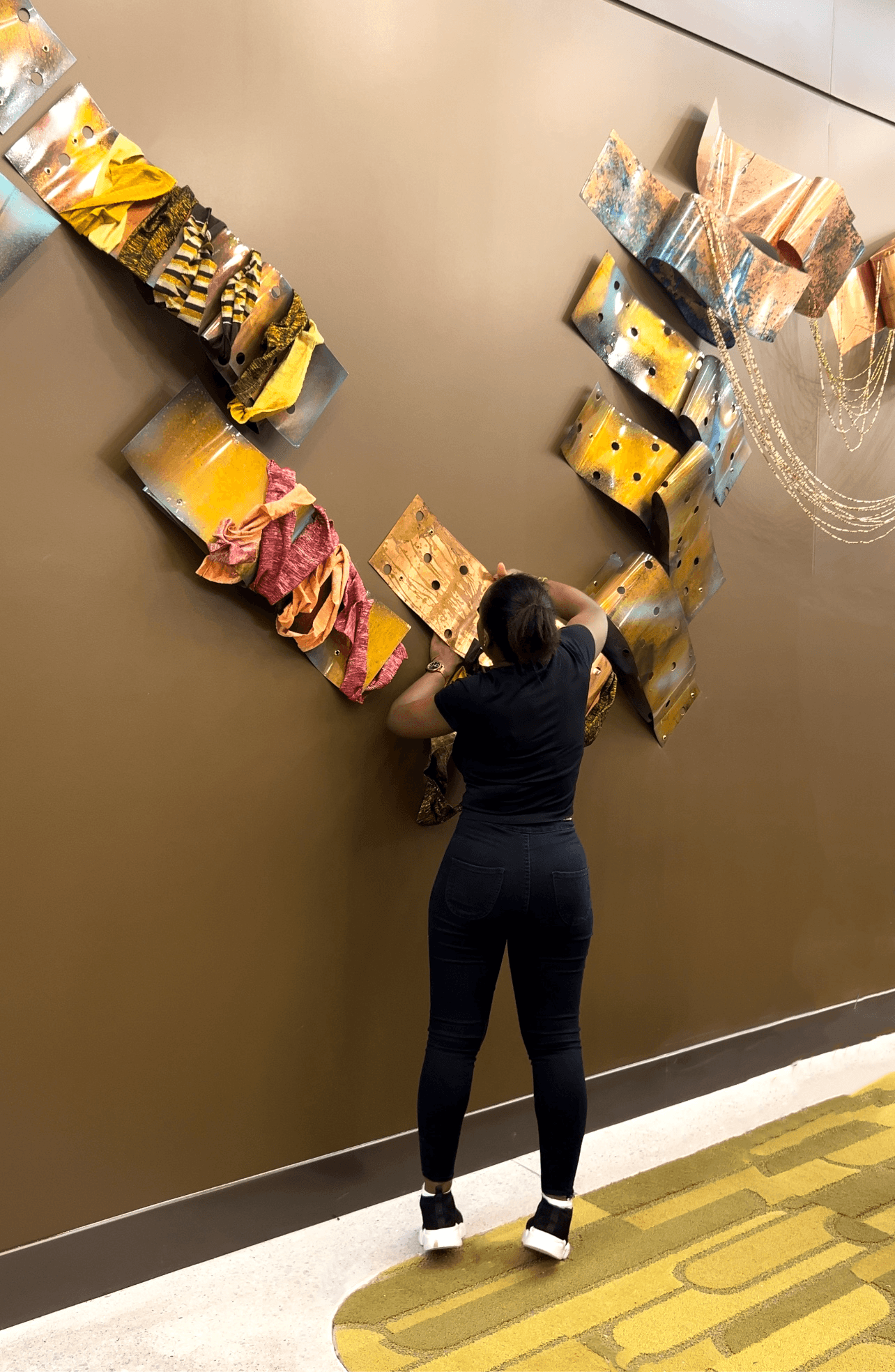
I am an artist and to stress on that, I experiment with forms and space using hard and soft materials combined with traditional craft techniques to build sculptural objects and installations. The results speak to the aftermath of migration such as alchemy of life and adaptation suffered by foreign bodies.
Art found me at age 6 in Ghana. I traded drawings and paintings for fancy materials (glitters and metallic toys) and friendships which gradually advanced my making from 2-D to 3-D forms in high school with experimentation in leather art objects. In college, my curiosity led me to explore some major art departments like ceramics, textiles, fashion and leatherworks and through that, my perception and traditional representation or placement of artworks were challenged. I was drawn to textiles mostly because of its myriad application and shift in contemporary art. It reminds me of a child climbing a tree hoping to get to the top, amidst the scars they incur.
Alright, so let’s dig a little deeper into the story – has it been an easy path overall and if not, what were the challenges you’ve had to overcome?
When I started my career, I was informed by an established artist and educator that passion in itself was not enough to fulfill my art goals and it will take nearly as much effort in growing as a person, as it will in my career should I go through that route. It hasn’t been too smooth but I am grateful for the journey, most importantly the crushing moments of receiving rejection letters, the numerous materiality tests and samples that failed, and the much needed patience I have come to embrace through my processes.
The artist was not wrong. The road has been very strategic, especially as the world never cease to revolve and grow. Your most current research you are excited about becomes outdated overnight and the cycle repeats endlessly. My work has evolved from visualizing the idea into realistically producing it for people to experience in their own way but time is the major factor. Time is more than money, it’s the acceleration of histories with choices left to the living. Personally, I struggle with time and its use in my work in the sense that, I love to tell stories that generations will recall with ease through my installations. Thus, my art are records of histories yet to come.
As you know, we’re big fans of you and your work. For our readers who might not be as familiar what can you tell them about what you do?
Well, I will say as a Ghanaian, I am always questioning my art by referencing African cultural histories and being extra curious of what is accepted and authentic versus what is not. I find my voice in challenging the status quo through my explorations of handwoven Kente strips (a traditional handwoven fabric of the Ashantis’ in Ghana) and cold hand-sculpted copper installations. When I weave Kente strips, I’m mostly finding ways of breaking away the monotony in what fabric should be made to look like and its place in the world – “on the body”. With that in mind, anytime I combine these stitched strips with patinated copper, they converse with a given space and in turn, invites viewers to soak in the rich colors and flow of the fabrics against the undulating copper forms. Alchemizing copper with heat and reactive chemicals to achieve earthy tones translate literal statements of change and eventually adaptation on the original metal, embedding multiple identities into one. The material no longer stands as pure metal but combinations of foreign materials in unison to the metal.
I feel the sensitivity of my immediate environment and often times my curiosity drives me to investigate why things are accepted in a given community and how that affects my work positively. This repetitive process almost feels like I am taxed to challenge the representation of cultural art materials and recreate my own stories and orientation that will speak to the hearts of viewers. In doing that, I take pride in knowing my research transforms my identity as an individual, artist, family-oriented woman, and hopefully transforms the viewer’s lens in seeing life as well.
Contact Info:
- Website: https://atencahb.art
- Instagram: Atencah_
- Facebook: AT ENCA
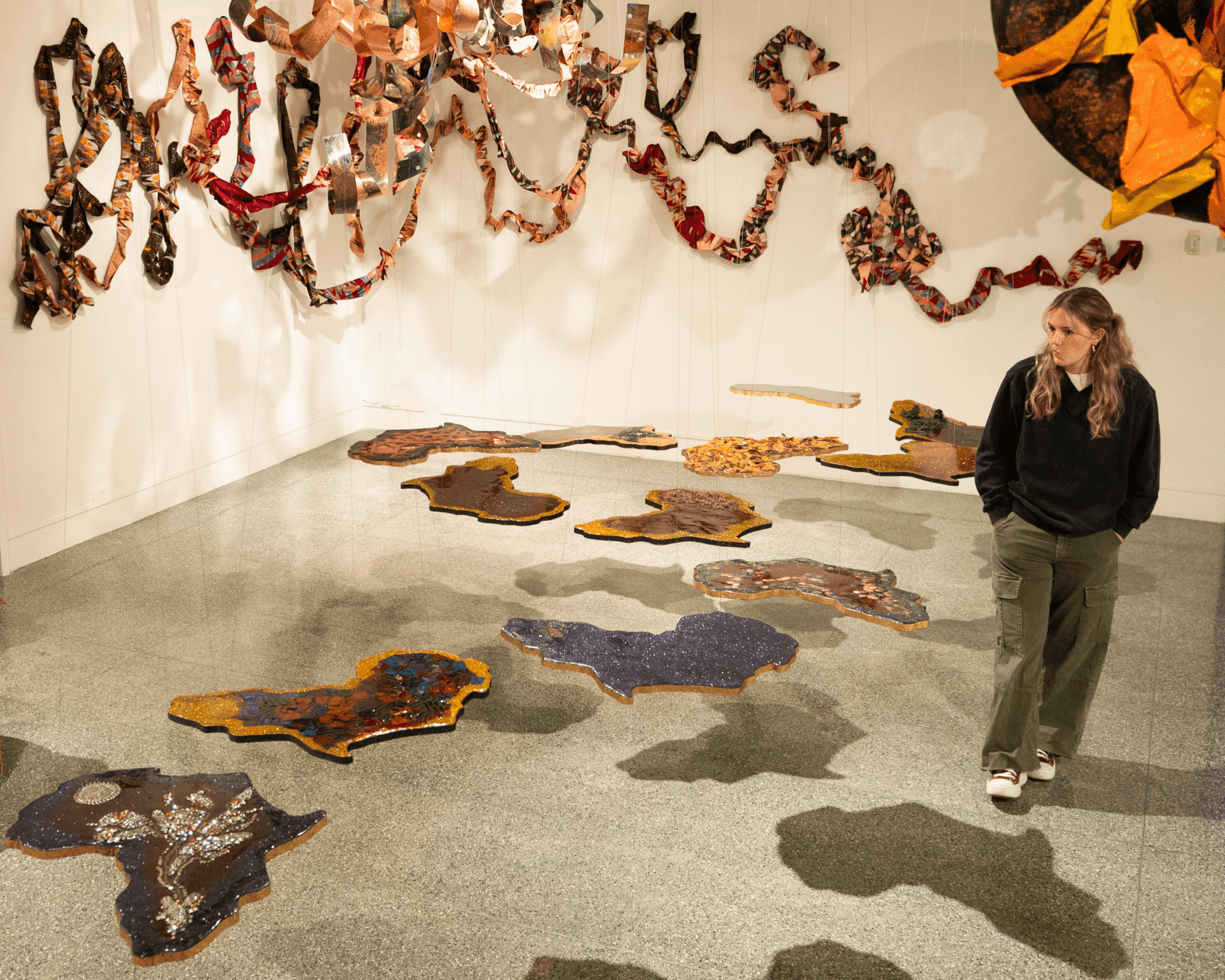
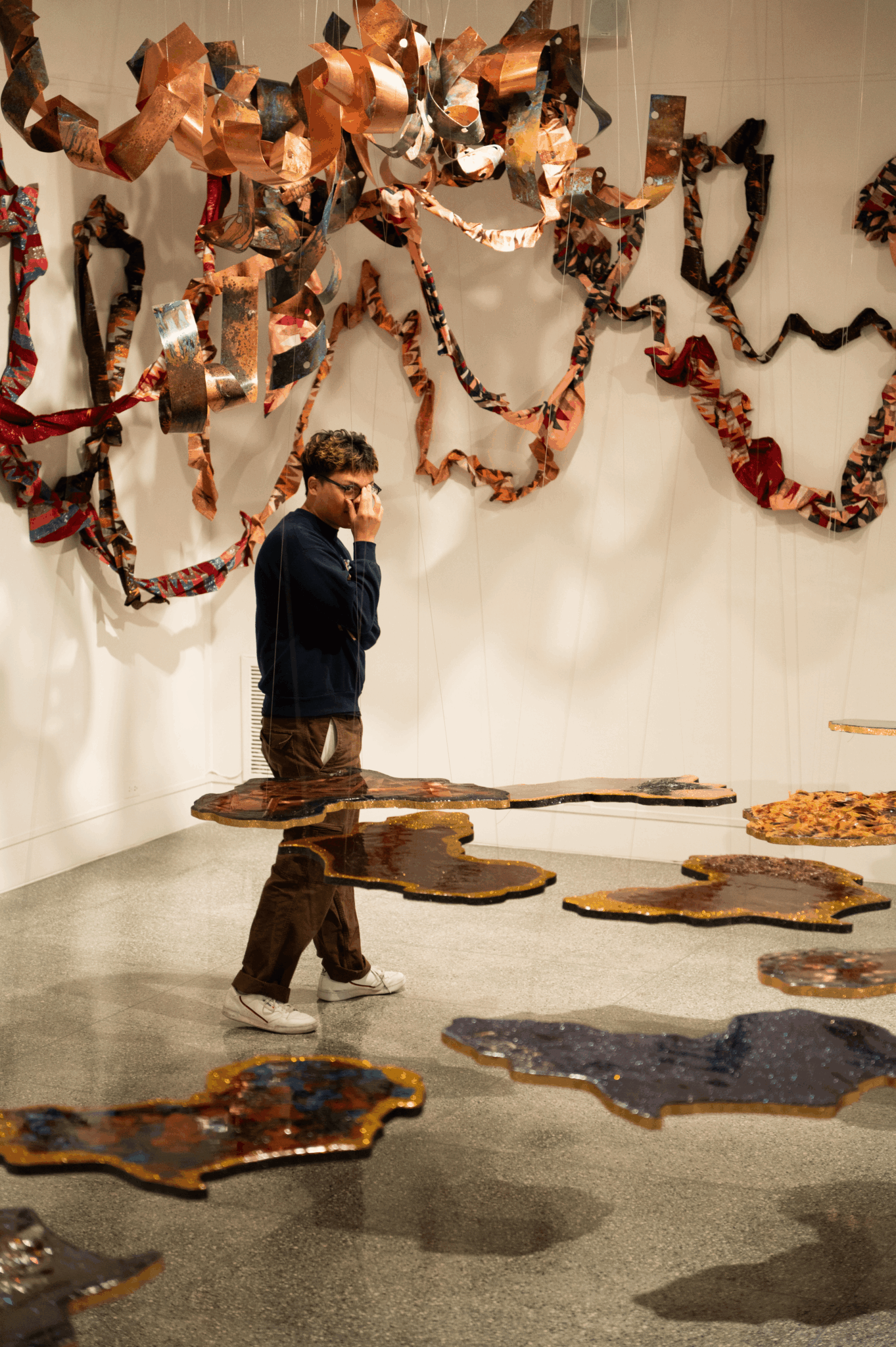
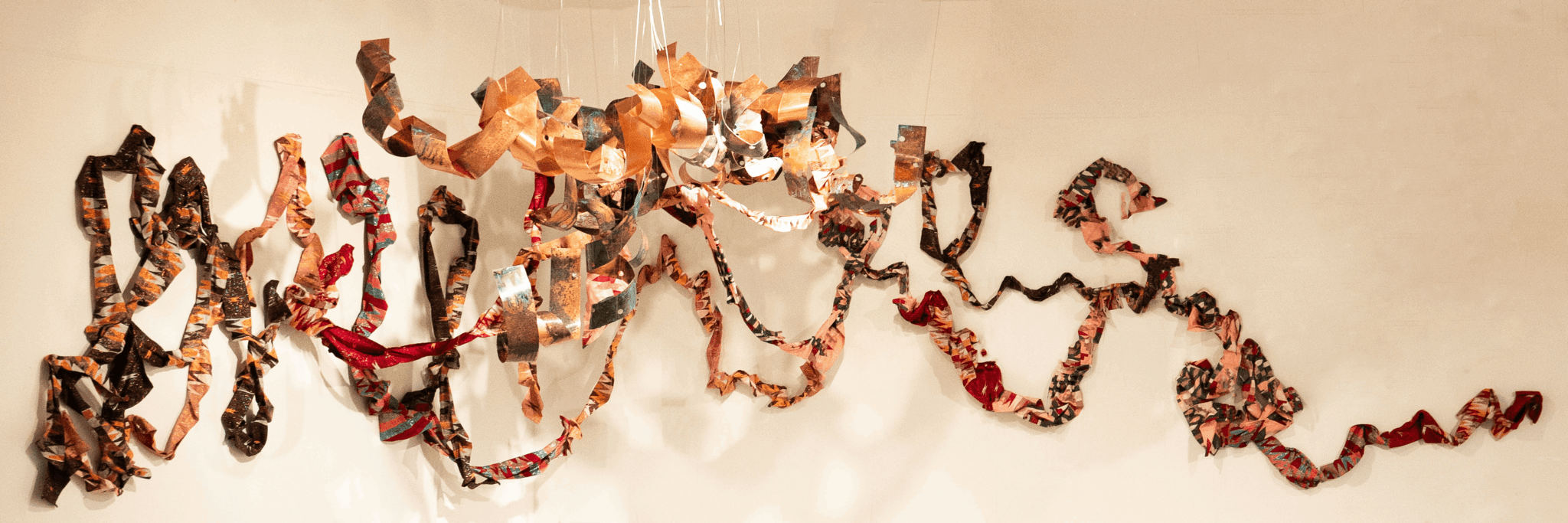
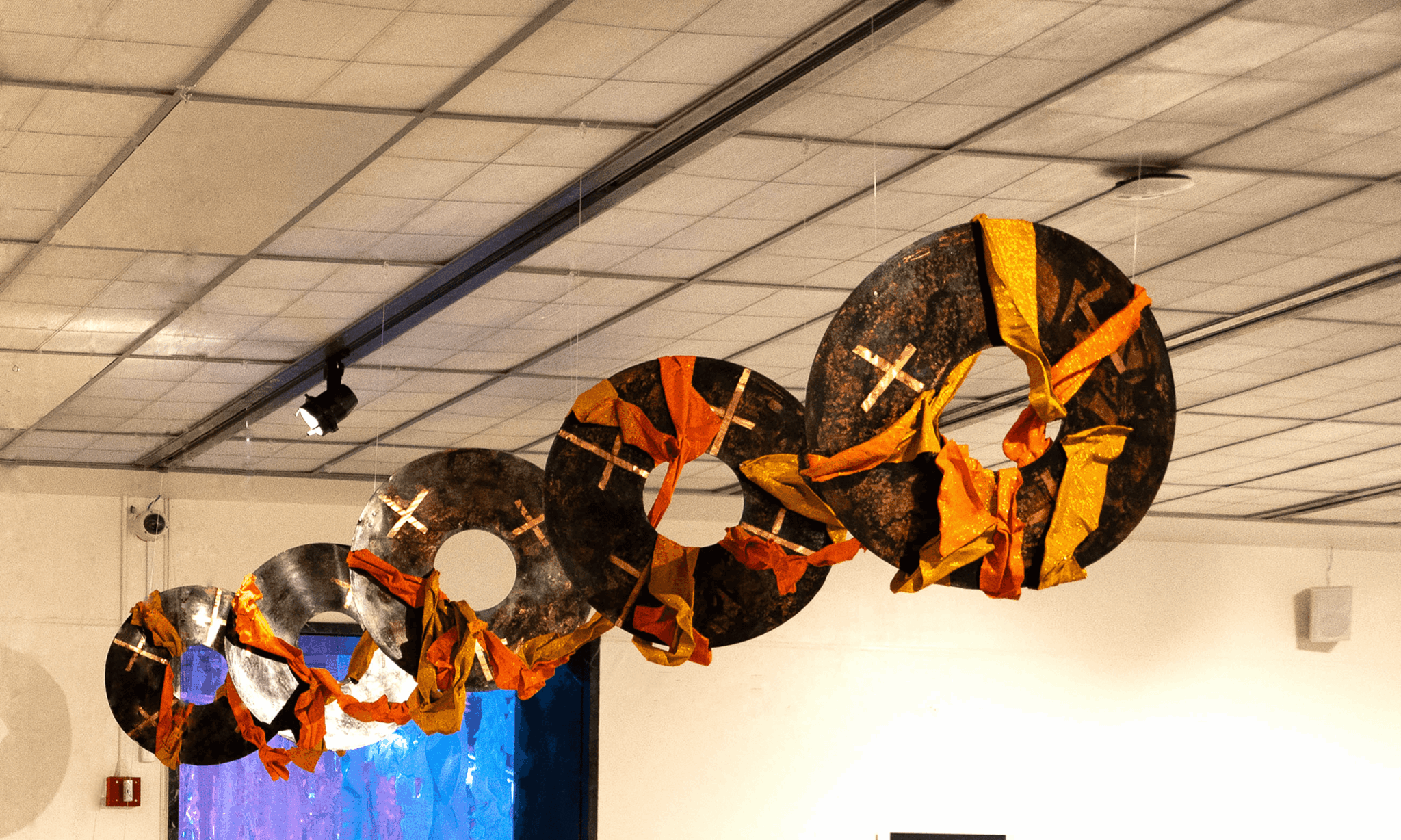
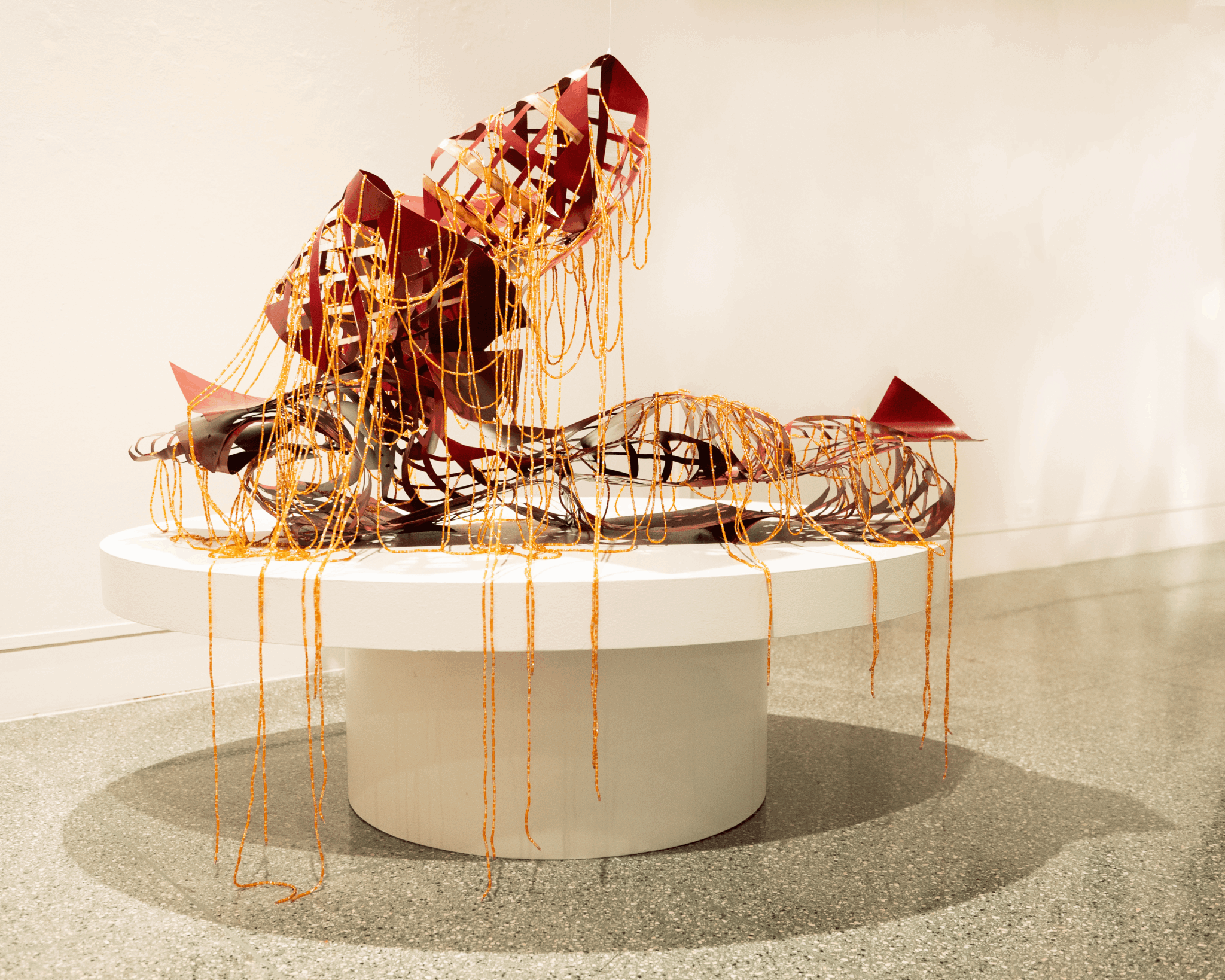
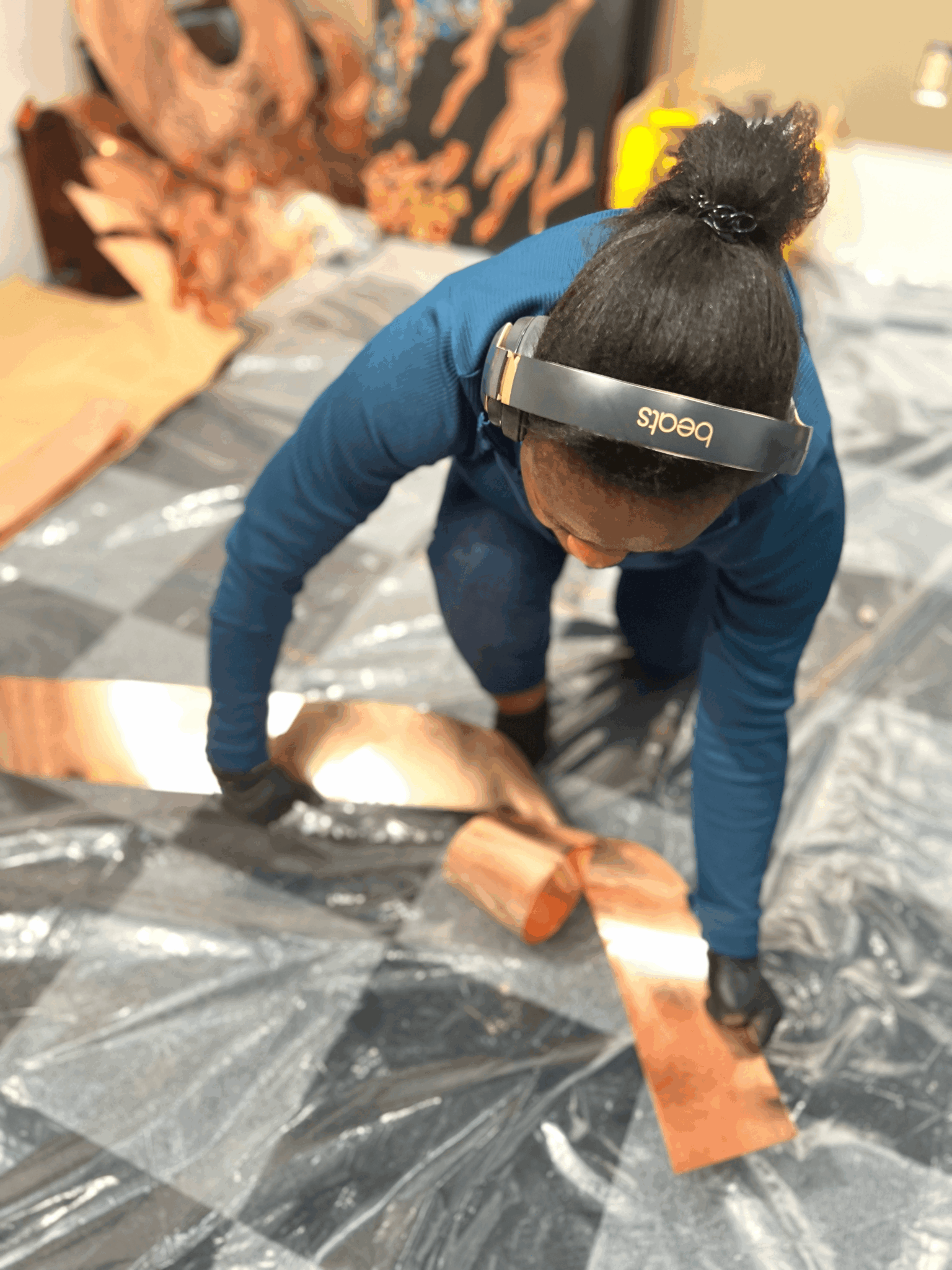
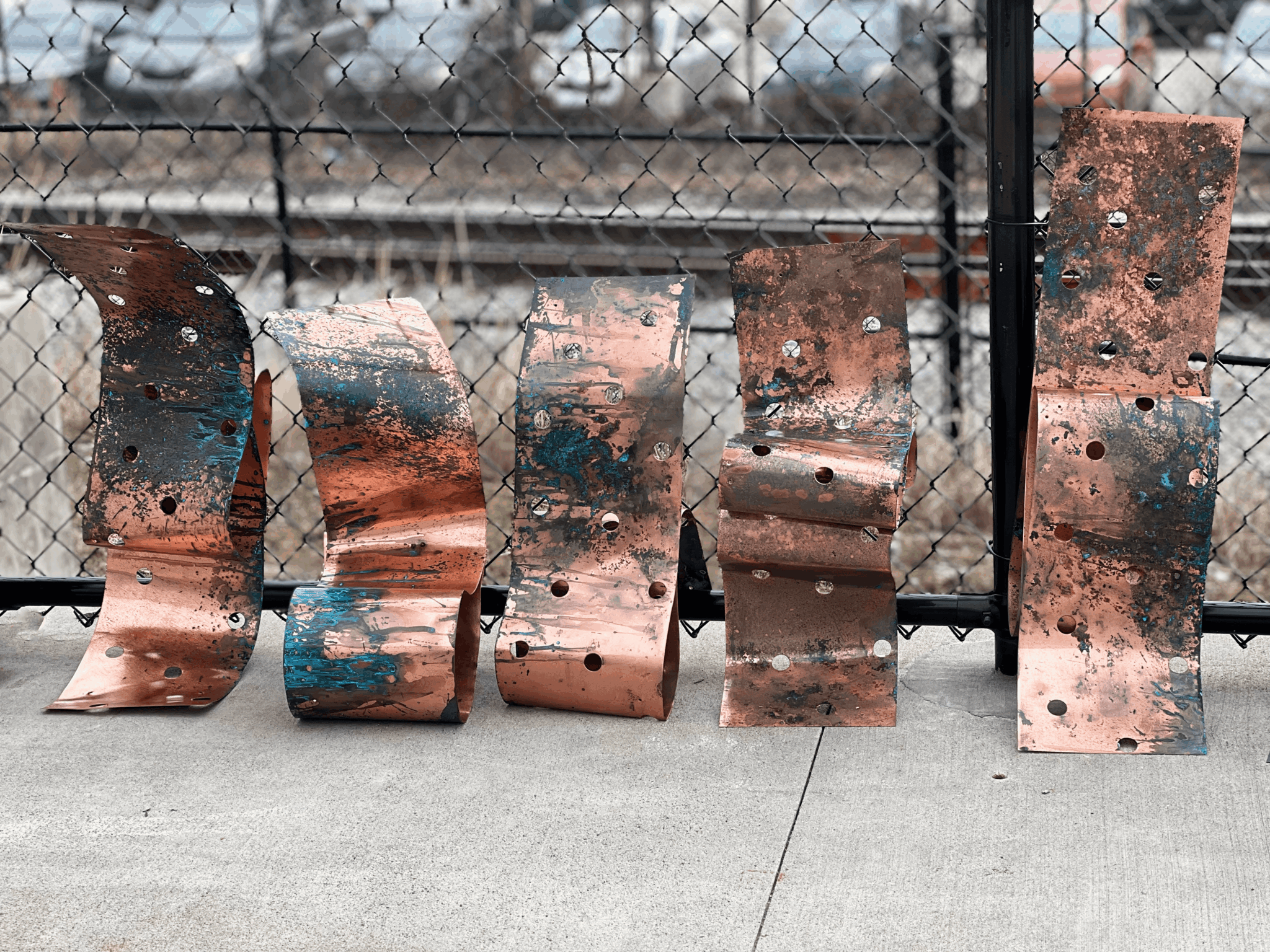
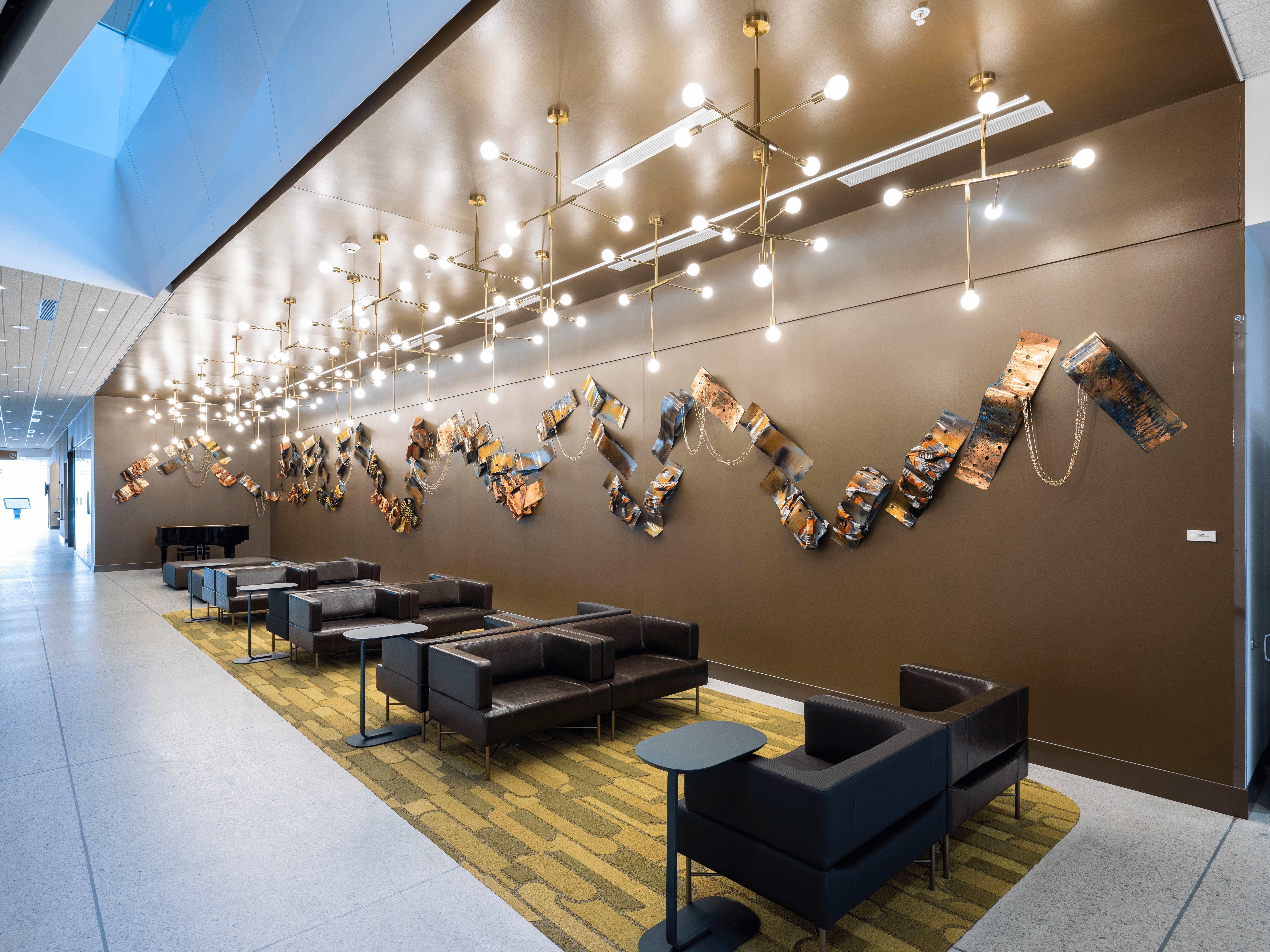
Image Credits
Artist: Atencah_
Sarah J. Slover
Eskenazi Health Hospital, Bloomington – IN