

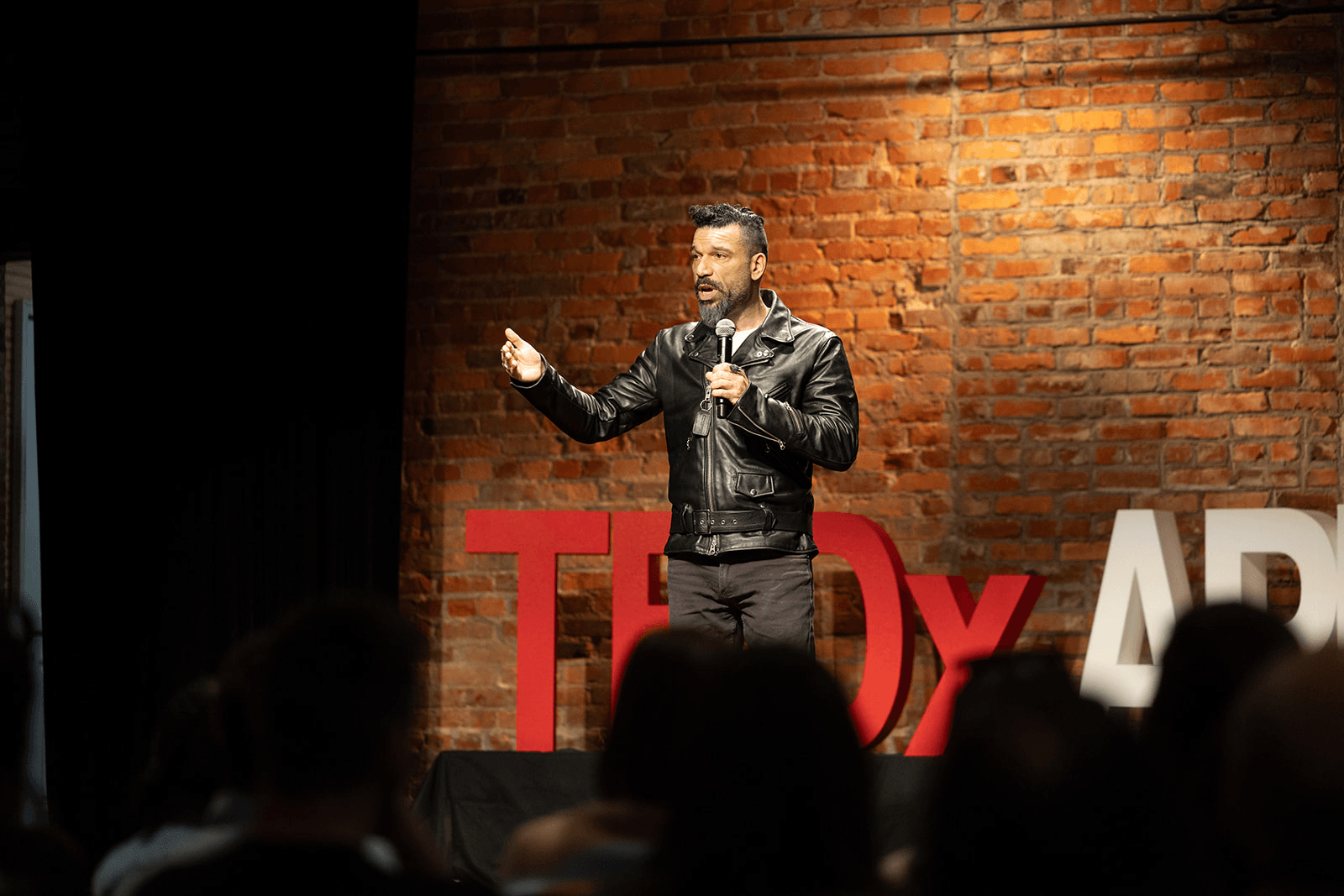

Today we’d like to introduce you to Scott Mason
Scott, we appreciate you taking the time to share your story with us today. Where does your story begin?
Childhood circumstances — and how we interpret them — serve as our personal foundation myths. What we make of them, and to what extent we let them define our futures, can determine whether our personal epics end up as tragedies, comedies, or something altogether greater.
I was born in London, England to a single woman in graduate school. She had an affair with a law student from Trinidad. Keeping the child was, apparently, not an option. As a baby, my name was changed; I was adopted by an African-American military family and raised in a rural area of Kansas.
As a visibly biracial child raised in a Black family but living in an overwhelmingly white, conservative, and highly religious social milieu, I was, to put it kindly, very singular. Life expectations were not high for kids like me. By and large, those who grew up in Kansas stayed there, and while opportunities for honorable work in government, factories, or small business abounded, opportunities for those seeking to have a truly global impact — to leave an impact on the world’s big stage — were vanishingly rare … indeed, almost beyond the ability of most of my friends and neighbors to comprehend. “It’s not about going to college and getting a fancy degree,” friends and neighbors would say. “It’s about getting a job and learning to survive.” But as someone who first remembers the Call to become something more at a very early age — in a middle school library, while checking out a book I may never remember — I always knew that I would have to someday to leave Kansas forever. I was destined for more than mere survival.
Perhaps because of having, even as a baby, changed my name and identity, the idea of leaving home behind and recreating myself as someone new always seemed within the realm of the possible. And so when the opportunity came to attend law school in the glitziest metropolis of them all, New York City, arrived, I snatched it. And so my childhood represented two things that came to dominate my thinking as life went on: (1) rejecting the myths that others have about us is always an option, if only we can see beyond those stories, and (2) the power to create new mythology about our future is always within our hands. My foundational myths, in other words, set the stage for everything in my life to come.
Later, after a lengthy career as a government and nonprofit attorney and executive, these two thought modes opened the doors to possibilities that I might never have imagined. As uplifting and exciting as my career was, I ultimately found it deeply unsatisfying. At the end of the day, even the best-intentioned projects were not serving my own agenda or connected to my own purpose. They were always driven by the visions of others. My own vision needed expression, too.
In 2012, a friend of mine introduced me to a very well-known martial artist. This man had, like me, come from humble roots but, unlike me, had created the professional life of his dreams. He truly believed in the power of entrepreneurialism and how it could change the world. Before we met, I had walked among and known hundreds of entrepreneurs and small business owners, but never truly “seen” them. However, my friend was someone whose passion and vision could not be ignored. And, although it took years to get there, eventually the seeds took root and my reinvention as an entrepreneur, and guide for others, began.
Would you say it’s been a smooth road, and if not what are some of the biggest challenges you’ve faced along the way?
I unwittingly chose a singularly challenging time to become a coach and speaker: January of 2020. The impact of the COVID lockdowns on my business (and so many others) is hard to overstate. In my case, the difficulties were magnified by the fact that, outside of generally wanting to help others and utilize my greatest talents, I had not done the deep, intensely important inner work necessary to figure out exactly who I am uniquely positioned to serve — and what I brought that justifies their attention. I thought my skills and experience would be enough for clients to work with me. While those qualities mattered, they were not as critical as I thought. In fact, they were not, I found out, critical at all.
Looking deep, deep within and finding what TRULY motivated me — where “the Call” that I mentioned above had come from, what it meant from a service perspective, and how that would translate into a message that no one else in the world could duplicate: that has been the hardest work of my entire journey. The fear of accepting how unusual my mission might be, what others would think of it, and the very real possibility of failure: facing those issues, and then doubling down on who that would make me become, has been the ultimate struggle along my road.
But once I gathered my courage and committed to truly becoming my highest self, however terrifying that might be, things slowly but dramatically changed. When mission aligns with purpose and is driven by spirit, success almost inevitably happens, even against the odds. I speak from having been there. And I’ve learned through trial-by-fire.
Appreciate you sharing that. What should we know about Scott Mason, LLC?
My coaching business focuses on lawyers looking to uplevel their careers or leadership skills — and have a future that is worthy of Mt. Olympus. Based on a trailblazing signature framework, I help my clients or the leaders in their firms/organizations become:
⚡️More connected to themselves, each other, and your mission.
⚡️Creative — leading to innovation and consistent achievement of organizational goals.
⚡️Resilient, especially when times are tough.
I help those that I work with:
⚡️ Pinpoint what’s straitjacketing their professional lives.
⚡️ Obliterate toxic internal myths.
⚡️ Uncover innate gifts while connecting to purpose and values, creating a new framework for the future.
⚡️ Electrify their charisma.
⚡️ Create an actionable roadmap to get goals met.
Most professional coaching programs are impersonal and interchangeable. In addition, too many coaches lack the executive experience and imagination necessary to guide their clients’ journeys effectively, especially those serving attorneys.
I combine the gravitas of a Columbia Law School degree, 25+ years as an attorney, and C-Suite + entrepreneurial experience with a trailblazing (and fun) process — rooted in the timeless metaphors of Greek mythology — to take my clients on a unique odyssey that changes lives. My goal: to make your future epic!
We’re always looking for the lessons that can be learned in any situation, including tragic ones like the Covid-19 crisis. Are there any lessons you’ve learned that you can share?
For attorneys in particular, but for many other highly skilled, technical professionals too, the COVID-19 crisis created what I call the “agility conundrum.” The conundrum is easy to understand, but hard to escape. Legal success, whether as a transactional attorney in a law firm, as in-house counsel, or as a small-firm advisor to businesses, is dependent on the ability to identify risk and do everything possible to avoid it.
This fact can have a massive effect on the identity of practitioners — and their professional lives both in and out of the office. Risk aversion is part of any good lawyer’s professional makeup. However, when unchecked, it can limit a lawyer’s effectiveness as an organizational, practice, or team leader. It can even limit their ability to manage their career. The struggles that the sudden, inescapable disruption of COVID-19 wrought on countless careers and businesses, as well as on practitioners’ internal well-being, made that problem very obvious when I had conversations with other professionals during the pandemic.
Because of this, I learned that an agile, well-managed relationship with risk needs to be part of any legal professional’s skillset toolbox. Coming to grips with how risk aversion can infect lawyers’ entire professional modus operandi, identifying five common leadership skills that, if developed, can heighten a lawyer’s agility, and differentiating when adaptability is not a virtue can make or break your career or your businesses’ future. And this issue will only become more extreme over time: the speed of change, especially in workforce expectations and technology — has only accelerated since the pandemic.
Contact Info:
- Website: https://www.MyFreedomRocks.com
- Instagram: https://www.instagram.com/s.scott_mason/
- LinkedIn: https://www.linkedin.com/in/themythslayer/
- Youtube: https://www.youtube.com/@Myth_Slayer

Image Credits
Photo One: Earl Morgan, Asinto Photography, LLC
Photo Two: Richard Reimer, Rotara Digital
Photo Three: John A. Demato